
Ecosystems

CITE
We have made every effort to follow citation style rules, but there may be some minor differences. If in doubt, please refer to the appropriate citation style manual.
Mountain life. (2026). In Q-files Encyclopedia, Life, Ecosystems. Retrieved from
https://www.q-files.com/life/ecosystems/mountain-life
"Mountain life." Life, Ecosystems, Q-files Encyclopedia, 23 Mar. 2026.
https://www.q-files.com/life/ecosystems/mountain-life.
Accessed 13 Sep. 2026.
Mountain life 2026. Life, Ecosystems. Retrieved 13 September 2026, from
https://www.q-files.com/life/ecosystems/mountain-life
Life, Ecosystems, s.v. "Mountain life," accessed September 13, 2026.
https://www.q-files.com/life/ecosystems/mountain-life


Mountain life
The highest mountaintops are covered with snow all year round. Those that lie in tropical regions, such as Kilimanjaro in Africa, can have hot, steamy rainforest at their foothills and freezing night-time temperatures at their summits. At high altitudes the sunlight is intense. There are strong, cold winds and a lack of oxygen in the air. Despite these dangers, mountains can host a wide variety of living things that have adapted to such harsh conditions.
Mountain zones

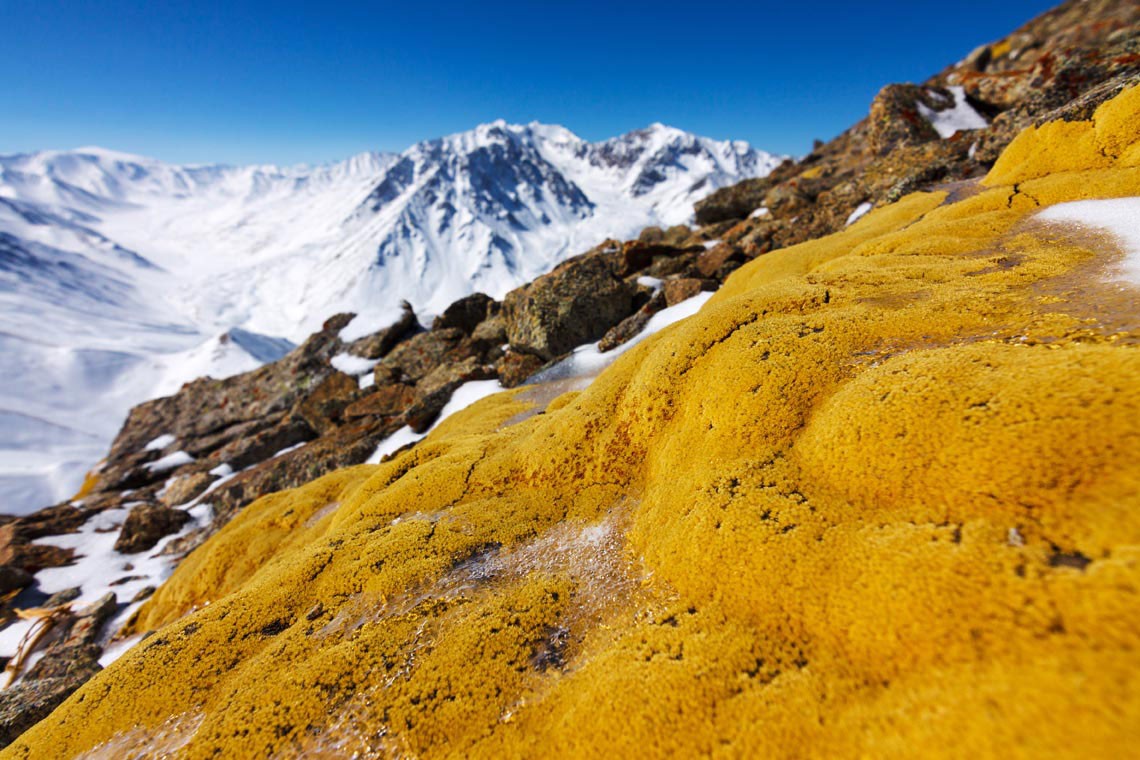
On their lower slopes, mountains are often forested, but higher up the trees give way to dry scrubland and rocky, windswept terrain. The flowering plants that grow here are short and strong, and are able to conserve water as much as possible in the drying winds. Close to the summit, only the most hardy kinds of plants, such as lichens and mosses, can grow. With the coming of spring, snow covering much of the mountain may melt and new plants emerge.

Mammals and birds
Small mammals, such as the pika in Asia or the rock hyrax in Africa, live in burrows or rocky outcrops to protect themselves from the worst of the cold and wind. Many also hibernate during the winter. Larger animals have thick fur or woolly coats to keep out the cold. Grazing animals, such as sheep and goats, live at the highest altitudes. Their nimble hooves are able to negotiate even the most treacherous slopes. They are preyed upon by wolves, snow leopards and cougars or mountain lions.
Only the strongest-flying birds, such as eagles and other birds of prey, are able to withstand the winds around the mountain summits. They soar on currents of air, swooping down to catch rodents and other small mammals.

Himalayan wildlife
The peaks of the Himalayan mountain range, in southern central Asia, are rocky and snow-covered. The highest ridges are the territory of sure-footed animals such as the Himalayan ibex. The ibex is the favourite prey of the powerful snow leopard, whose white coat camouflages it against the snow. Its coat is thick, and even its paws are covered with fur to keep out the cold. Both prey and predator head downhill to the warmer, lower slopes in winter. Pikas, small relatives of rabbits, can also fall victim to the snow leopard if they are not agile and fast enough to escape.

Yak
The largest animal in the Himalayas, the yak also has thick fur, with another coat of long hair on top. This keeps the animals so warm that they have to move higher up the mountains to cooler areas in the summer. They are well adapted to altitudes of between 3000 and 5000 metres (about 10,000 and 16,000 feet) and actually suffer from heat exhaustion in temperatures above 15°C. Most yak, a type of bovid (cattle), are domesticated, but a few hundred wild yak still survive in the Himalayas.
Andes wildlife
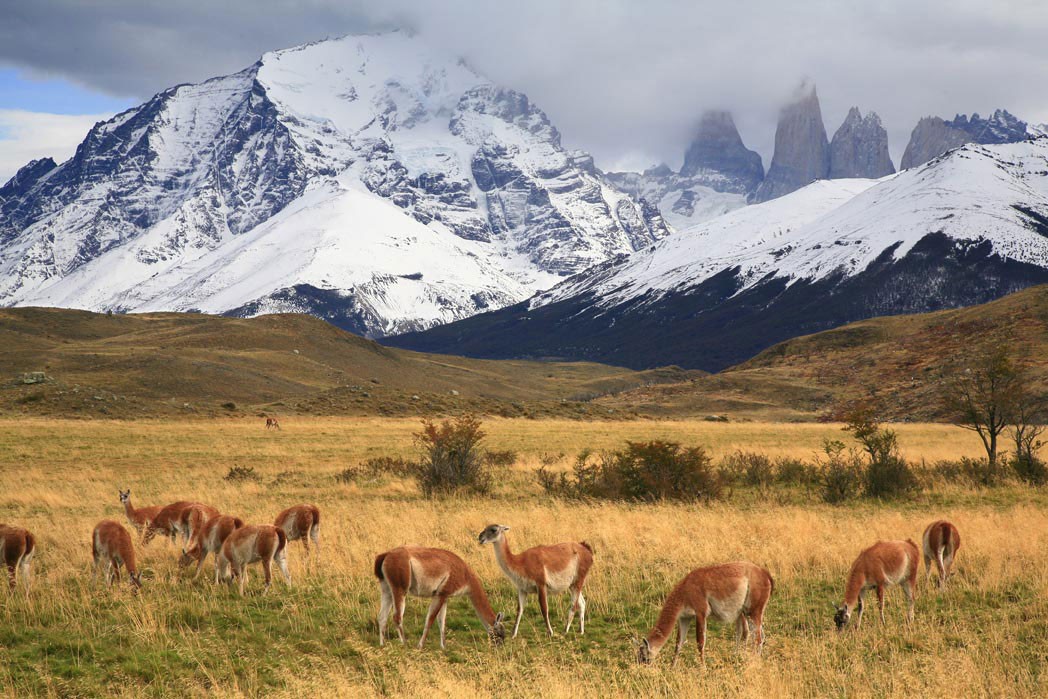
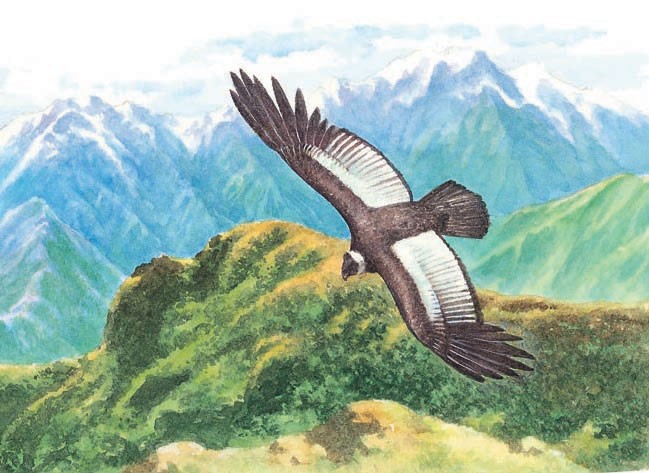
High above the Andes mountain range in South America, the Andean condor, one of the biggest birds in the world, soars for many kilometres without flapping its wings. As it soars, it searches for carrion, its principal diet. In between the summits are high, grassy plateaux, where guanacos, wild relatives of the llama, roam.

Consultant: Chris Jarvis
pics

Without in any way limiting Q-files Ltd’s exclusive rights under copyright, any use of this publication to “train” generative artificial intelligence (AI) technologies to generate text is expressly prohibited. Q-files Ltd reserves all rights to license use of this work for generative AI training and development of machine learning language models.