
Natural history of the British Isles

CITE
We have made every effort to follow citation style rules, but there may be some minor differences. If in doubt, please refer to the appropriate citation style manual.
Upland habitats of the British Isles. (2026). In Q-files Encyclopedia, Life, Natural history of the British Isles. Retrieved from
https://www.q-files.com/life/natural-history-of-the-british-isles/upland-habitats-of-the-british-isles
"Upland habitats of the British Isles." Life, Natural history of the British Isles, Q-files Encyclopedia, 24 Apr. 2026.
https://www.q-files.com/life/natural-history-of-the-british-isles/upland-habitats-of-the-british-isles.
Accessed 6 Aug. 2026.
Upland habitats of the British Isles 2026. Life, Natural history of the British Isles. Retrieved 6 August 2026, from
https://www.q-files.com/life/natural-history-of-the-british-isles/upland-habitats-of-the-british-isles
Life, Natural history of the British Isles, s.v. "Upland habitats of the British Isles," accessed August 6, 2026.
https://www.q-files.com/life/natural-history-of-the-british-isles/upland-habitats-of-the-british-isles


Upland habitats of the British Isles
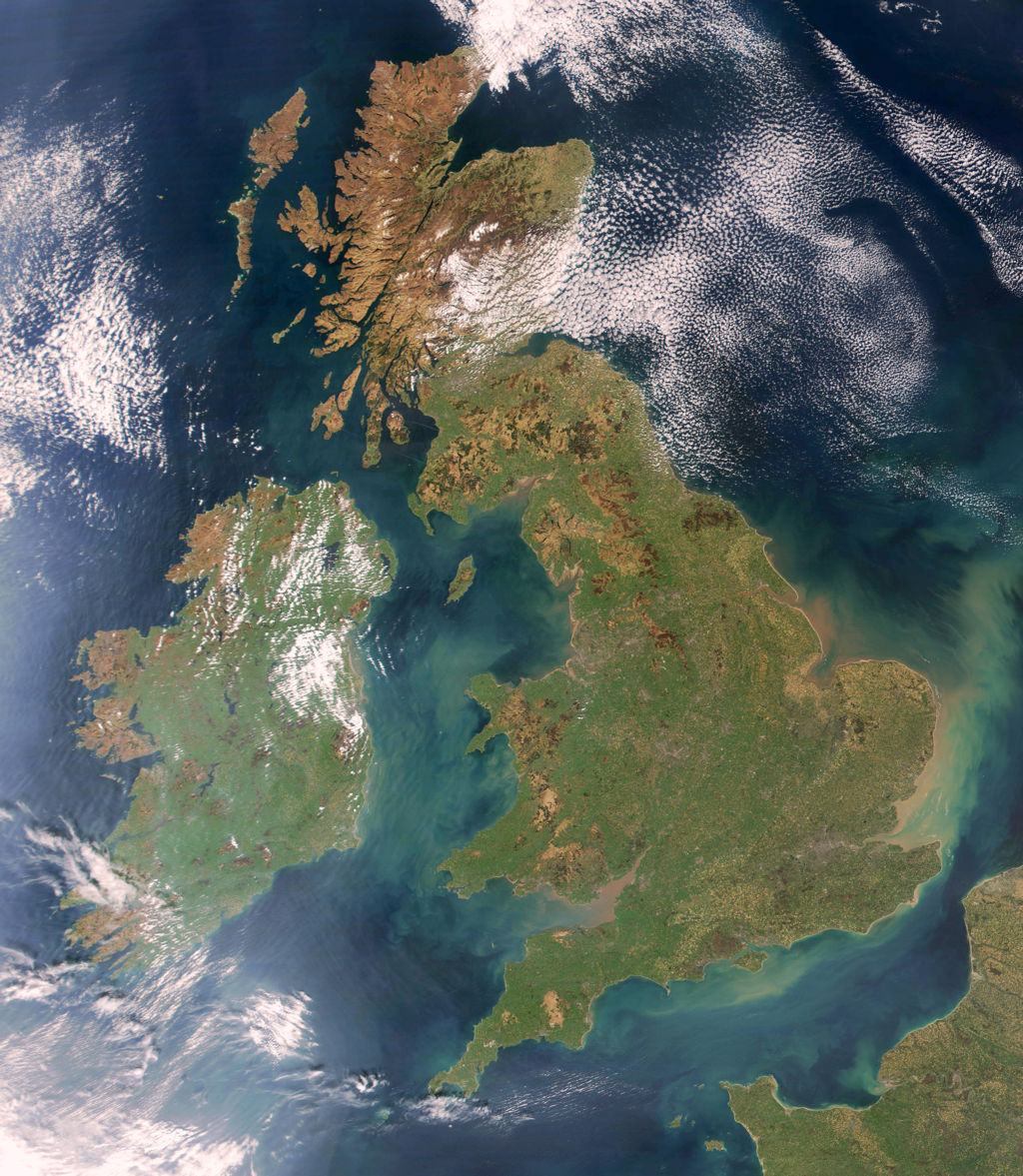
The uplands of the British Isles are mostly located in the north and west. They include the Scottish Highlands, the Lake District of northwestern England, Snowdonia in North Wales and the mountains of Ireland. Large parts of these regions are composed of older, harder igneous rocks such as granite. Despite being subjected to glaciation and weathering during the Pleistocene Ice Ages, the rocks have resisted erosion and so have remained as uplands. The plants and animals that live in the upland regions of the British Isles have to cope with harsh weather and cold temperatures.
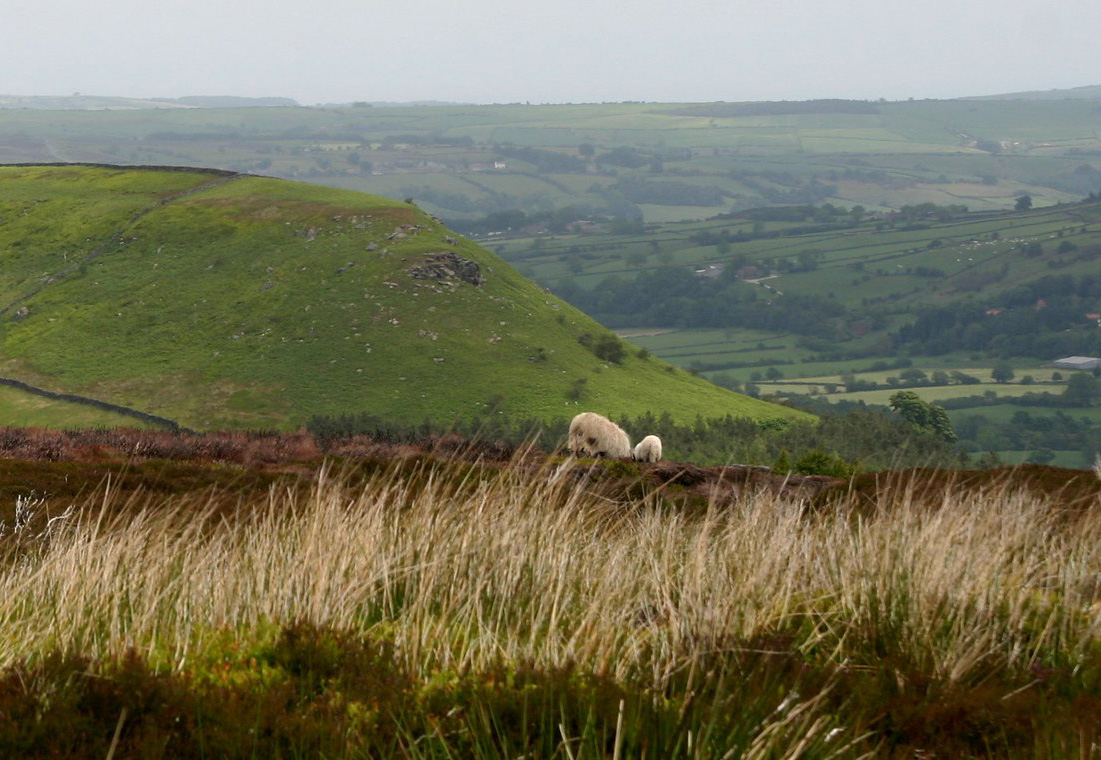
How were uplands shaped?
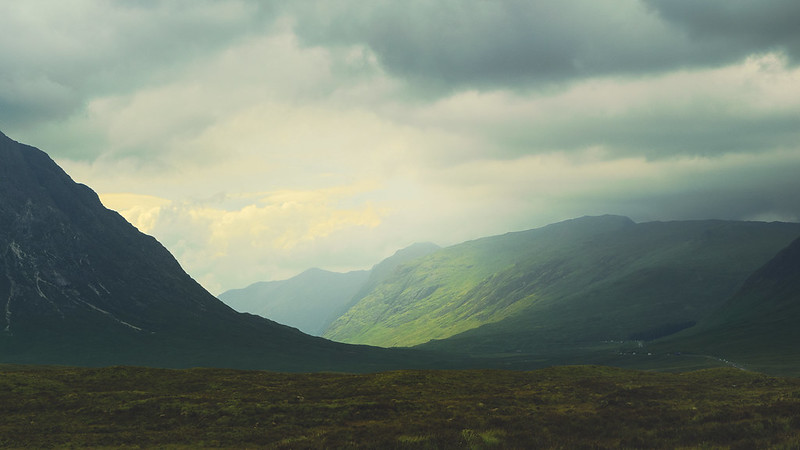
During the Ice Ages, glaciers merged to form an ice sheet thousands of metres thick in places. As the ice moved across the landscape, it carved deep, U-shaped valleys. The ice also rounded the lower hills, smoothing off the sharp edges and peaks. The results can be seen today in the Scottish Highlands, Snowdonia, Lake District and the Mourne Mountains of Northern Ireland.
Glaciation also smoothed the hills of the Pennines, the "backbone of England", an area of limestone overlain with gritstone (millstone grit). The ice did not reach as far south as southwest England, where the granite uplands of Dartmoor and Bodmin Moor rise above the surrounding lowlands.
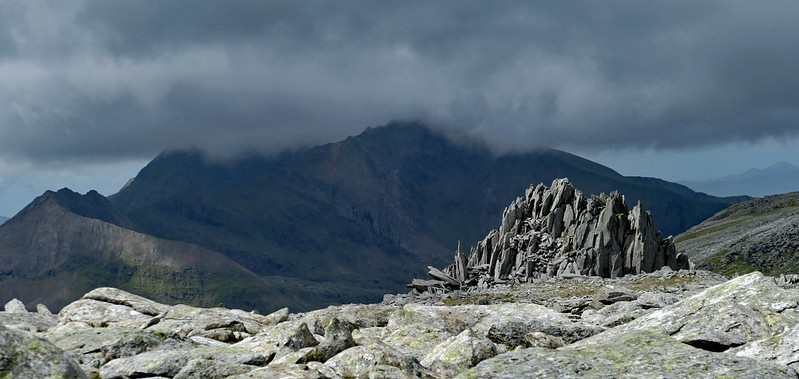
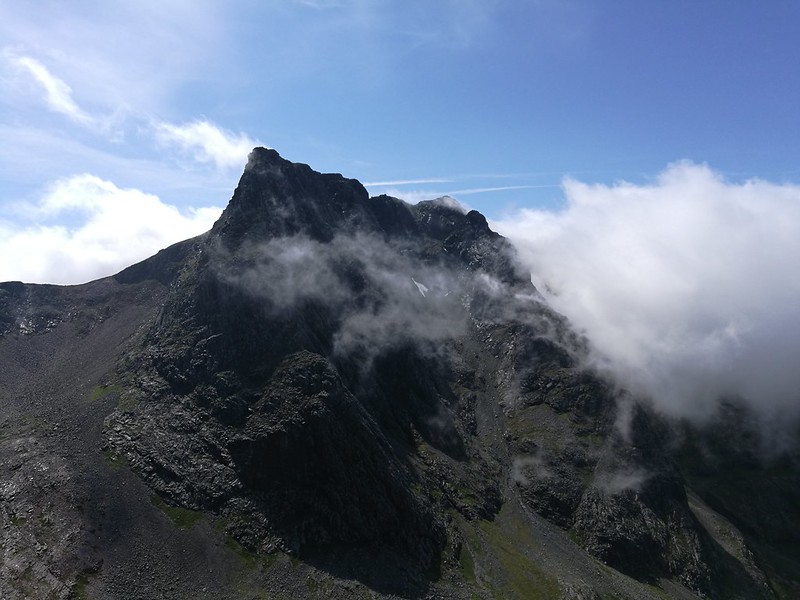
Climate has also shaped the British Isles' uplands. In the bitterly cold climate at the tops of mountains, water seeps into cracks in the rocky ground and freezes. As it freezes it expands, and the rock breaks apart. This process, called freeze-thaw weathering, formed the jagged, rocky peaks in the highest mountains of the British Isles. It also forms scree, a mass of loose shards of rock that covers mountain slopes.
Rocky habitats
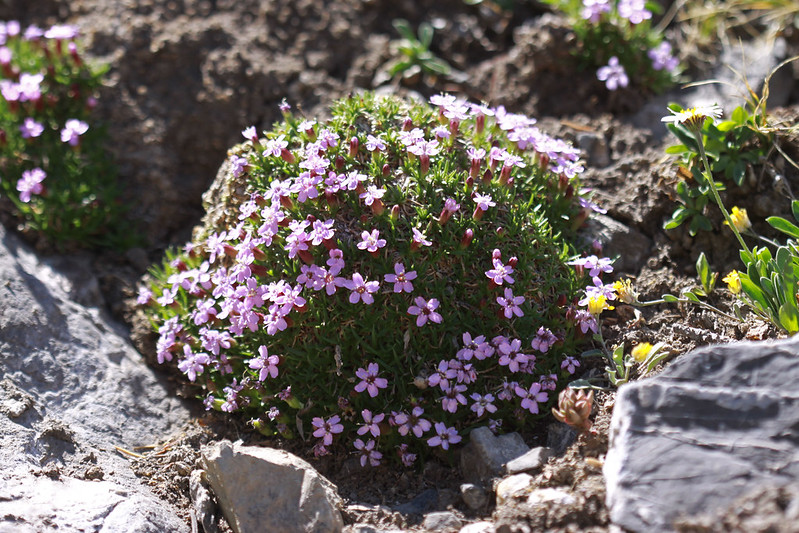
Some of the British Isles' wildest habitats lie at the tops of mountains, such as the Cairngorms in the Grampian range of the Scottish Highlands. Here, the land is rocky and bare, exposed to the wind and vulnerable to freeze-thaw weathering. Only the hardiest plant life such as lichens and mosses can survive in these tough conditions. Moss campion grows in a low mat or “cushion” shape, which helps the plants to stand firm in windy weather and trap warmth from sunlight. Golden eagles nest in rocky crags and cliffs, and soar over the landscape looking for grouse and mountain hares.
Peat
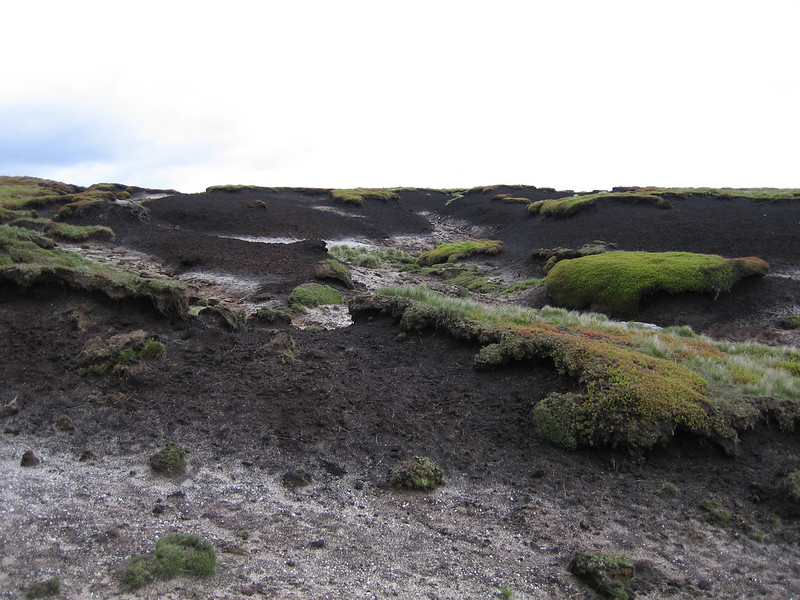
Ancient igneous rocks weather slowly, releasing few nutrients into the soil. These upland soils are often also waterlogged due to the high rainfall, a feature of the climate of Ireland and northern and western areas of Britain. Oxygen levels are low in the saturated soils, so there are fewer decomposers—micro-organisms and earthworms—present to break down dead plant material into nutrients. As layers of undecayed organic matter accumulate, a heavy, acidic soil called peat is formed. Over thousands of years, peat can reach several metres in depth.
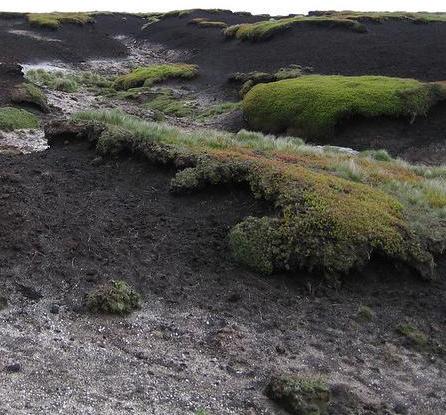
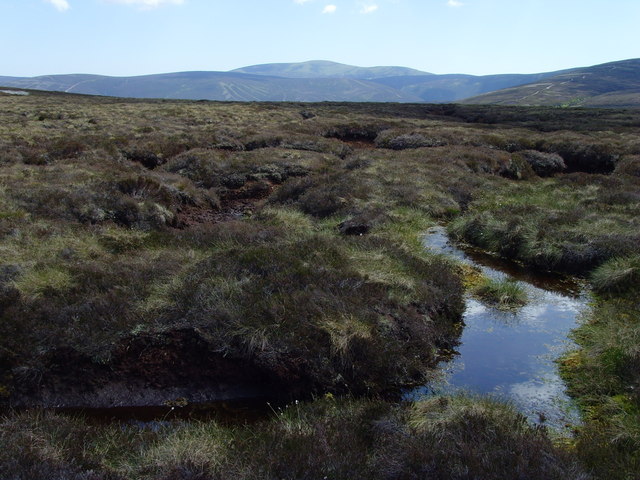
The most important plant forming peat is sphagnum moss. As it grows, it soaks up water like a sponge; it also makes the waters around it acidic. This produces the ideal conditions for new peat to form.
Blanket bog
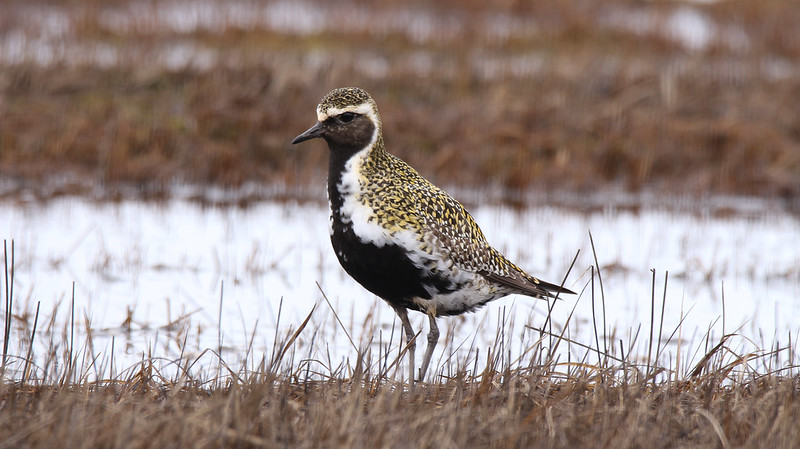
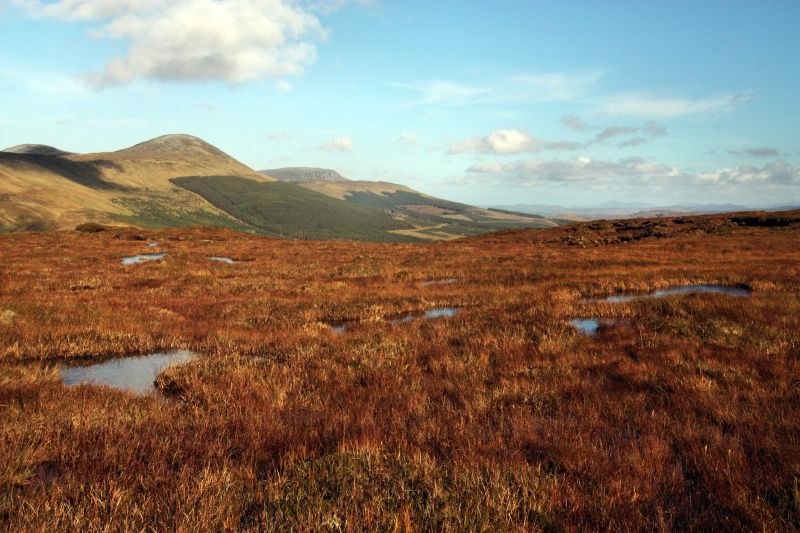
When rain falls on the peat soil, it causes the land to become further saturated with water, creating bogs, a permanently muddy, swampy habitat. Where bogs form on flat or undulating areas in the uplands, they are known as blanket bogs. A vast area of blanket bog stretches across the most northerly part of Scotland, a region known as the Flow Country. This peatland, the largest in Europe, is home to breeding birds such as dunlins, curlews and golden plovers.
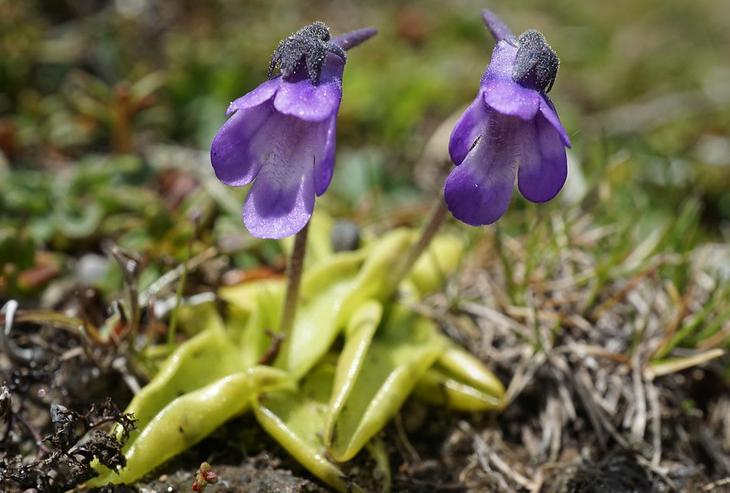
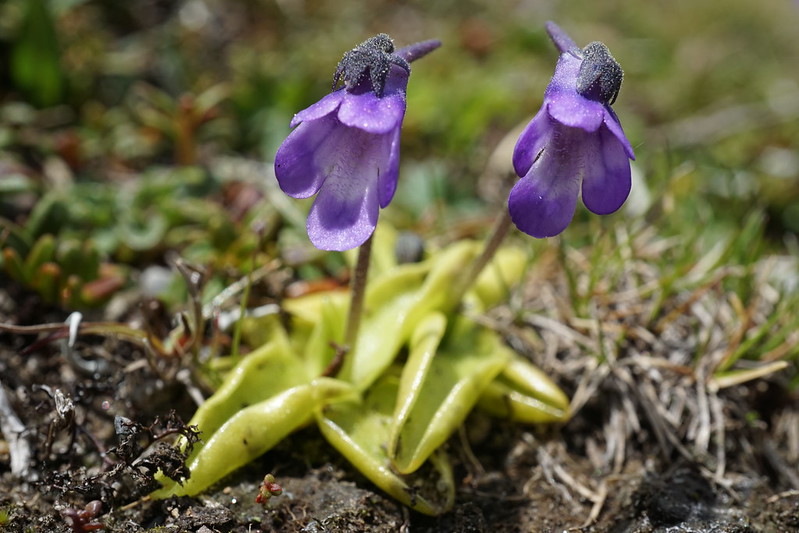
The lack of nutrients in peat soil means that plants have to be well-adapted to thrive here. Butterworts are insectivorous (insect-eating) bog plants that “hunt” for extra nutrients by using their sticky leaves to trap insects. Large heath butterflies live on bogs in northern Britain and Ireland, where they feed on the nectar from hare's-tail cottongrass.
Moorlands
For thousands of years following the Ice Ages, much of upland Britain was covered with woodland. Birch, pine and other trees gradually colonized all but the highest summits after the ice sheets melted around 10,000 years ago, and eventually formed dense forests. Major clearances of these forests began in the Middle Ages to provide grazing land for sheep, as well as timber for fuel and, later, for building ships. The clearances took place later in Scotland, where demand for open land for shooting grouse and red deer emerged in the 18th century onwards. The result was the almost complete destruction of upland forests and their replacement by heather moorland. Today, around 70% of the world's heather moorland is found in the British Isles. Elsewhere in the world this kind of habitat is rare.
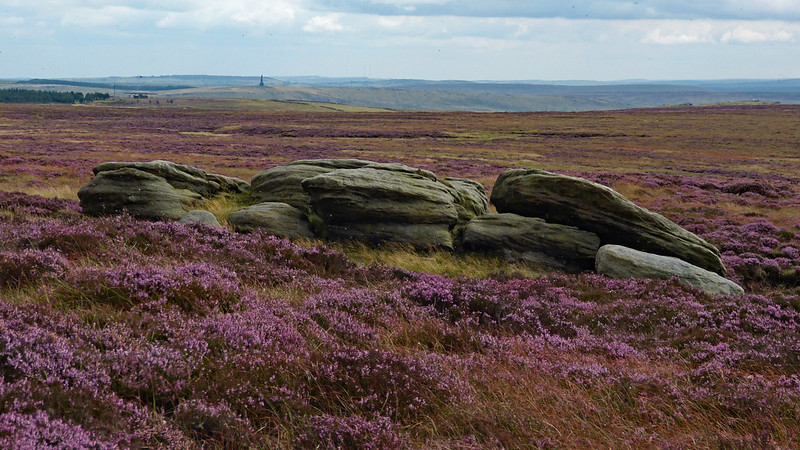
Wide areas of moorland stretch over the Scottish Highlands, the Lake District, north Yorkshire, the Pennines, Dartmoor, Exmoor, Bodmin Moor, Northern Ireland and Wales. Covered by peat from dried-out blanket bog or acid soils, moorlands are dominated by heather and tough grasses. These plants are short and strong, and able to conserve water in the drying winds.
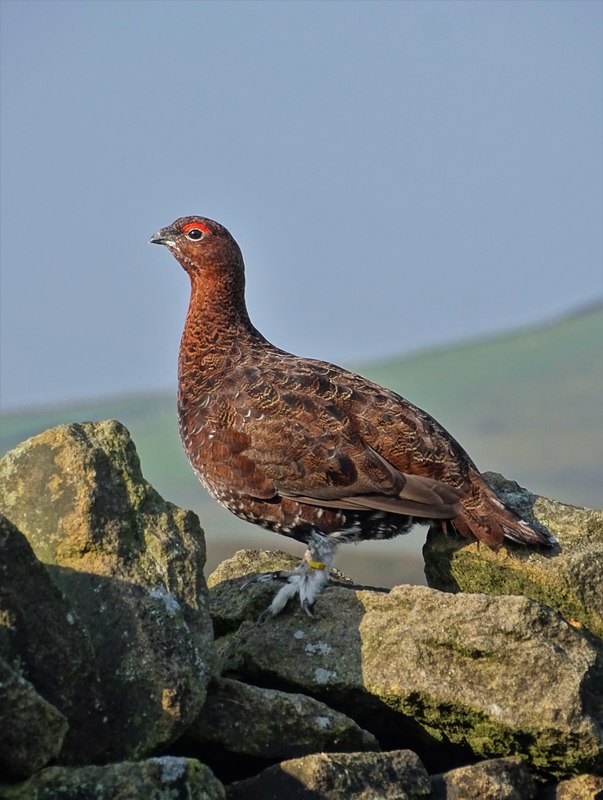
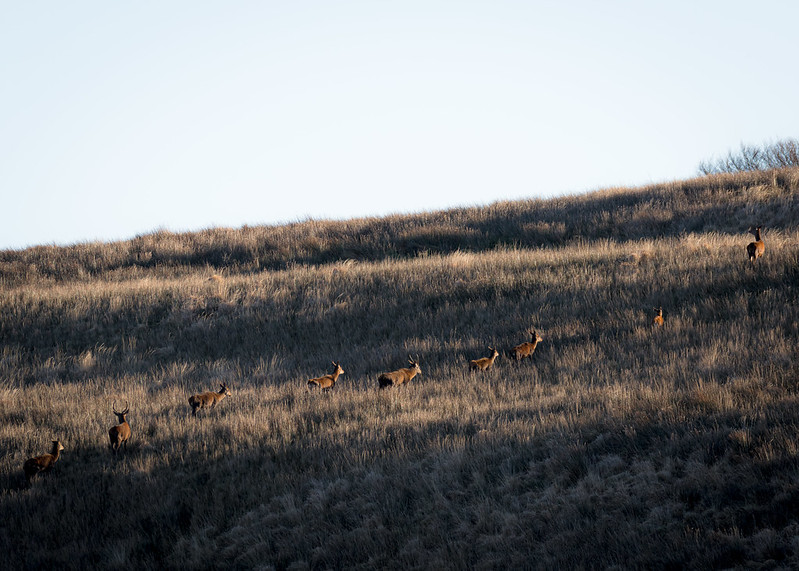
Only a few birds and animals can survive the tough conditions on the moors in winter. Red grouse have feathered legs and feet to protect them from the cold, so they can live here all year round, feeding on the shoots and flowers of young heather plants. Red deer graze the heather all year round, kept warm by their thick winter coats.
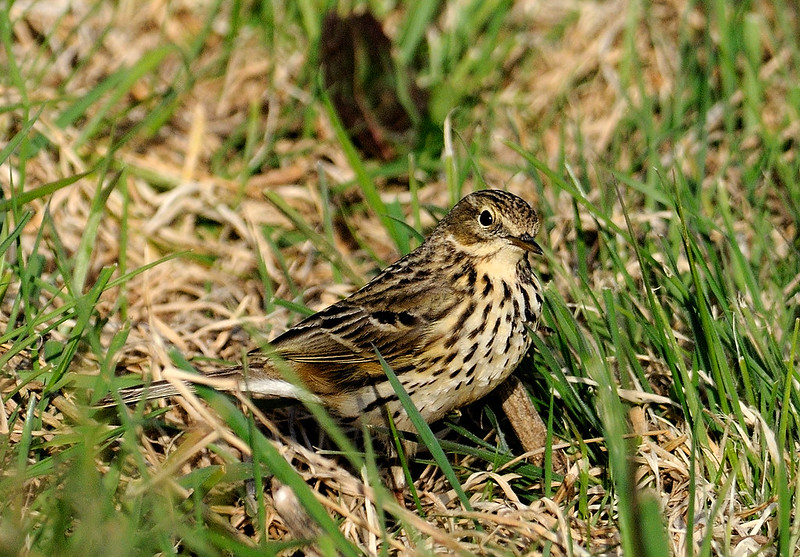
In spring, moorlands make ideal habitats for ground-nesting birds, because they offer short, scrubby vegetation to nest in and open views for spotting predators. Ring ouzels nest in the heather and feed on moorland berries such as bilberries and rowan. Meadow pipits and skylarks make their nests on the ground in grassy clumps. Merlins and kestrels hunt overhead, keeping watch for smaller birds and rodents. Short-eared owls hunt by day, looking for voles in the moorland grasses.
Managing moorlands
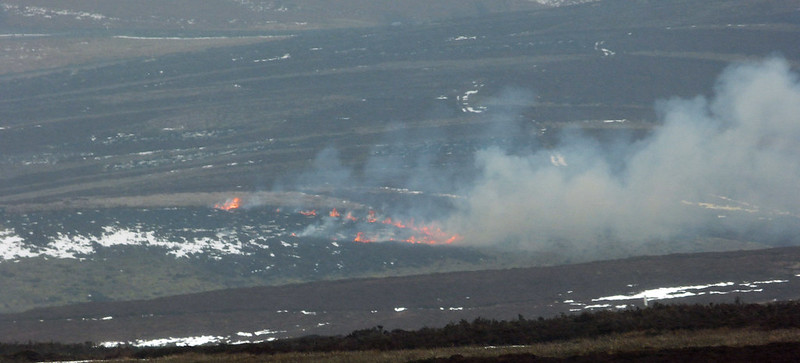
Moorlands are described as semi-natural habitats because they have been shaped by human activity as well as by natural forces such as climate. Most would turn back into woodlands if they were not carefully maintained (which they are, for purposes of grouse shooting and deer stalking). Livestock and deer graze the moors to keep the vegetation short. Strips of heather are burnt in a controlled way every 10–15 years, when the plants become old and woody. This makes room for new heather shoots to grow up in their place.
Consultant: Chris Jarvis
pics
Without in any way limiting Q-files Ltd’s exclusive rights under copyright, any use of this publication to “train” generative artificial intelligence (AI) technologies to generate text is expressly prohibited. Q-files Ltd reserves all rights to license use of this work for generative AI training and development of machine learning language models.