
Natural history of the British Isles

CITE
We have made every effort to follow citation style rules, but there may be some minor differences. If in doubt, please refer to the appropriate citation style manual.
Marine mammals of the British Isles A-Z. (2026). In Q-files Encyclopedia, Life, Natural history of the British Isles. Retrieved from
https://www.q-files.com/life/natural-history-of-the-british-isles/marine-mammals-of-the-british-isles-a-z
"Marine mammals of the British Isles A-Z." Life, Natural history of the British Isles, Q-files Encyclopedia, 24 Apr. 2026.
https://www.q-files.com/life/natural-history-of-the-british-isles/marine-mammals-of-the-british-isles-a-z.
Accessed 21 Sep. 2026.
Marine mammals of the British Isles A-Z 2026. Life, Natural history of the British Isles. Retrieved 21 September 2026, from
https://www.q-files.com/life/natural-history-of-the-british-isles/marine-mammals-of-the-british-isles-a-z
Life, Natural history of the British Isles, s.v. "Marine mammals of the British Isles A-Z," accessed September 21, 2026.
https://www.q-files.com/life/natural-history-of-the-british-isles/marine-mammals-of-the-british-isles-a-z


Marine mammals of the British Isles A-Z
Dolphins
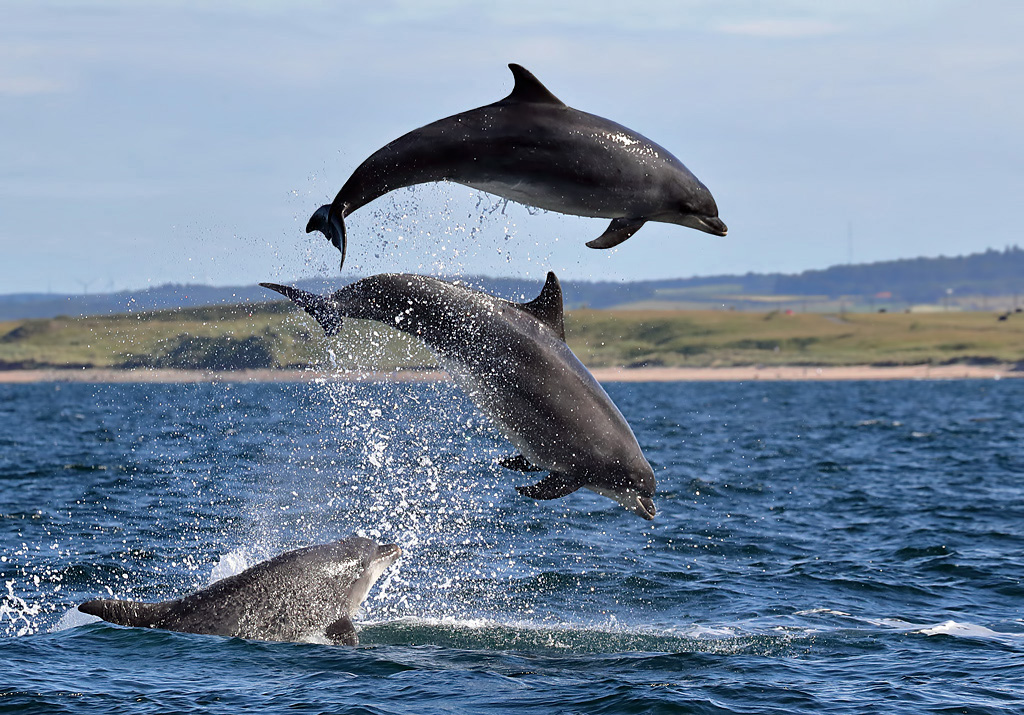
Tursiops truncatus (Bottlenose dolphin), Delphinus delphis (Common dolphin), Orcinus orca (Orca), Grampus griseus (Risso’s dolphin),
The British Isles are home to seven species of dolphin. These sociable creatures spend all their time underwater, living in groups called pods, which usually stay together for life. Bottlenose dolphins have rounded heads and stubby snouts, or “beaks”. Their colouring can range from light to dark grey, with their bellies usually a paler colour. Bottlenose dolphins live all around the Irish coast, as well as in Scotland’s Moray Firth, Cardigan Bay in west Wales, and off the coast of Cornwall. Length: up to 4 m (13 feet). Eats: fish, squid, cuttlefish, crustaceans.
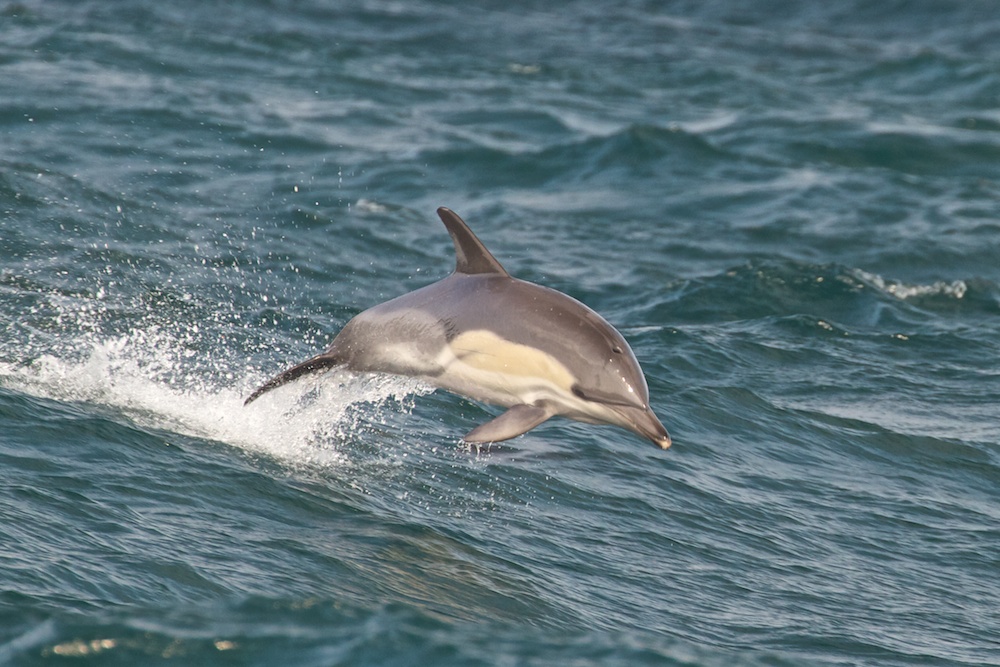
Common dolphins, smaller than bottlenose dolphins, have slim, curved bodies with grey and yellow colouring and short “beaks”. They usually live in pods of between 10 and 30 individuals, but can sometimes join together with hundreds of others to form “superpods”. Common dolphins swim in the deep water off the western coasts of England, Scotland and Wales, and all around Ireland. Length: 1.5–2.5 m (5–8 feet). Eats: fish, squid.

Orcas live in the waters around the most northerly Scottish isles, such as the Orkney and Shetland Isles. Known also as killer whales, they are in fact dolphins—by far the largest members of the dolphin family. Orcas have distinctive black and white colouring, with white eye patches and tall, narrow dorsal fins. They can be fierce hunters, but are peaceful towards humans. Length: up to 10 m (33 feet). Eats: fish, squid, marine mammals
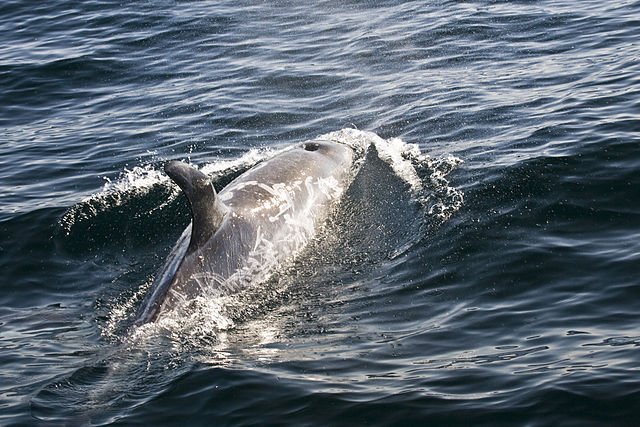
Risso’s dolphins are seldom spotted close to shore. They usually live in deep water, in pods of between 10 and 50 individuals. They are dark grey with white bellies, and their heads and faces are blunt. As they grow older, their skin becomes covered in pale scars from battles with squid, their favourite food. Risso's dolphins live in southwest England, northwest Scotland and the Irish Sea. Length: up to 3.5 m (11 feet). Eats: squid, octopus.
Harbour porpoise
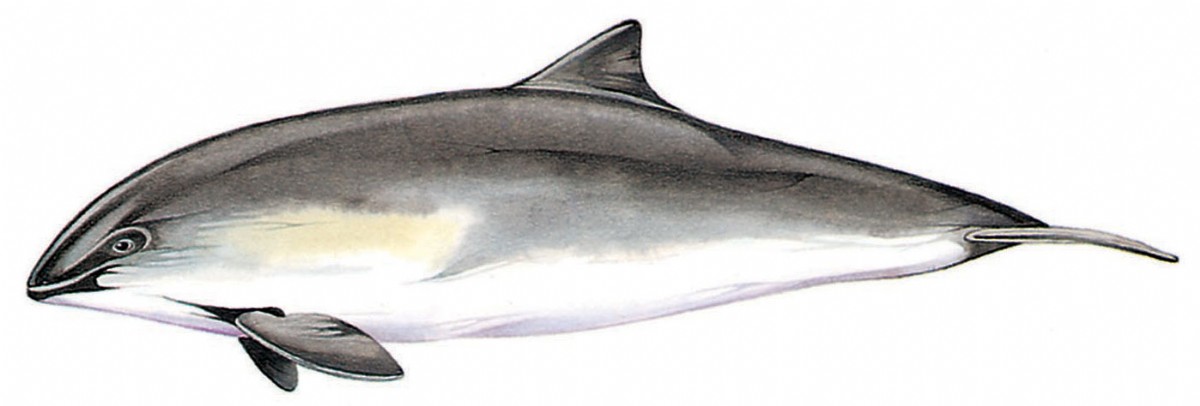
Phocoena phocoena
Harbour porpoises live in coastal waters around the northern and western parts of the British Isles. Often mistaken for dolphins, these animals are smaller and much shier—they keep well away from boats and stay below the surface of the water as often as possible. They can sometimes be spotted surfacing, when just the top of their backs and triangular dorsal fins show above the water. Harbour porpoises usually live alone or in small groups of two or three, but can sometimes form groups of as many as 20. Length: 1.5–2 m (5–6.5 feet). Eats: fish, especially sand eels, herring, mackerel and whiting.
Seals
Halichoerus grypus atlantica (Atlantic grey seal), Phoca vitulina (Harbour seal)
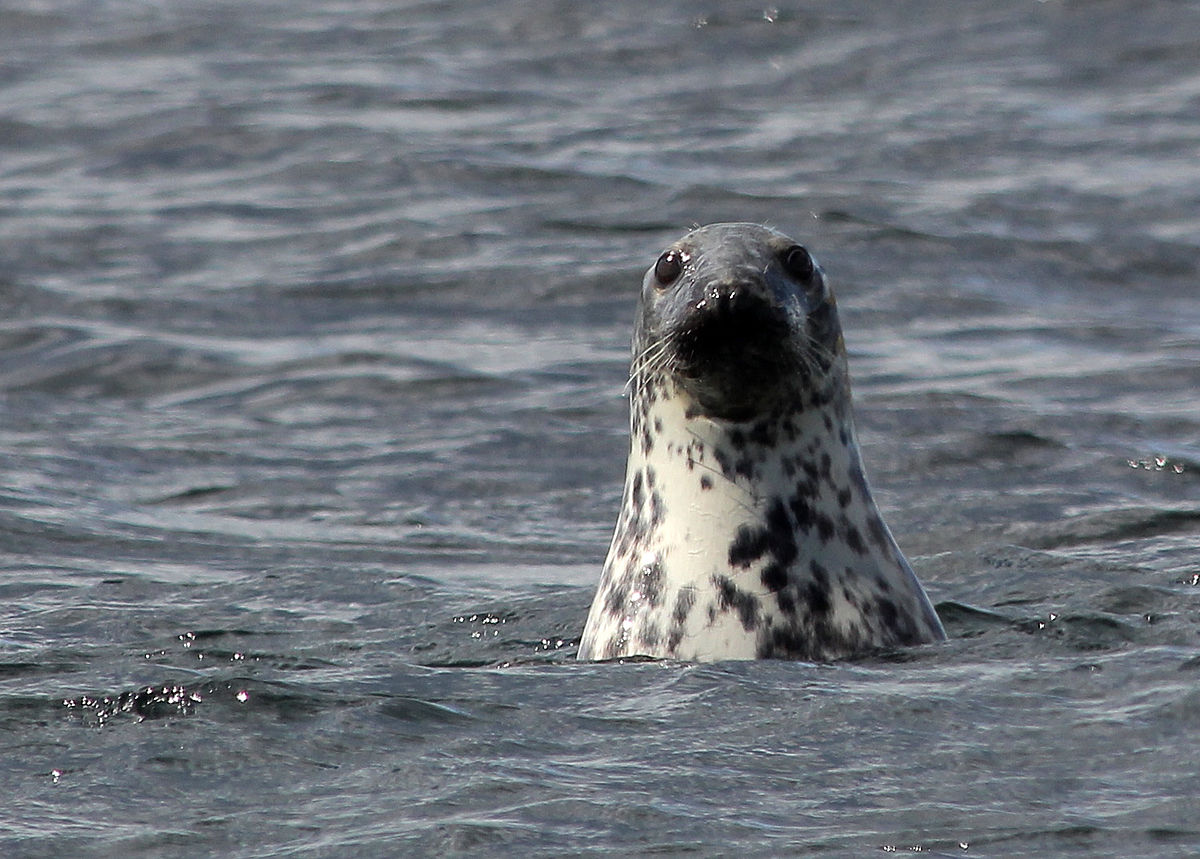
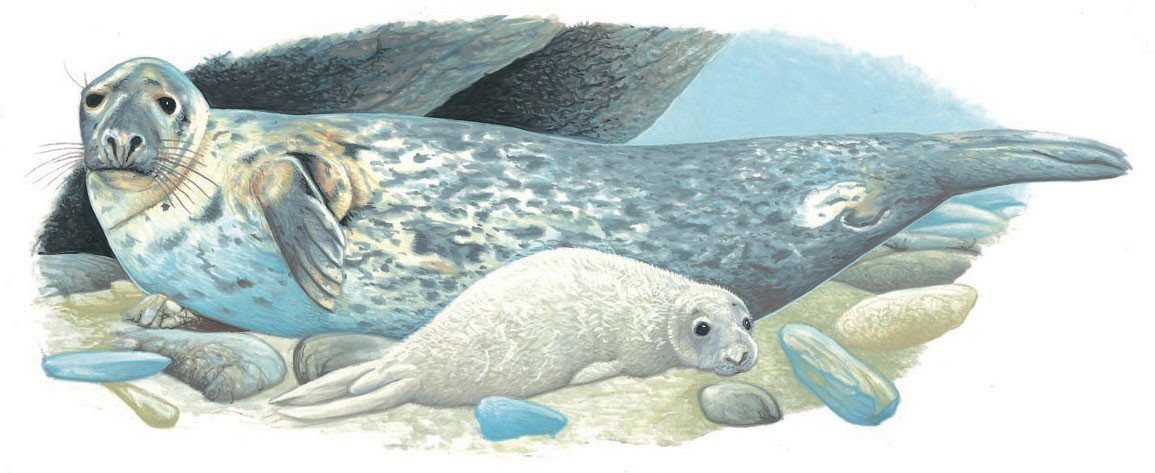
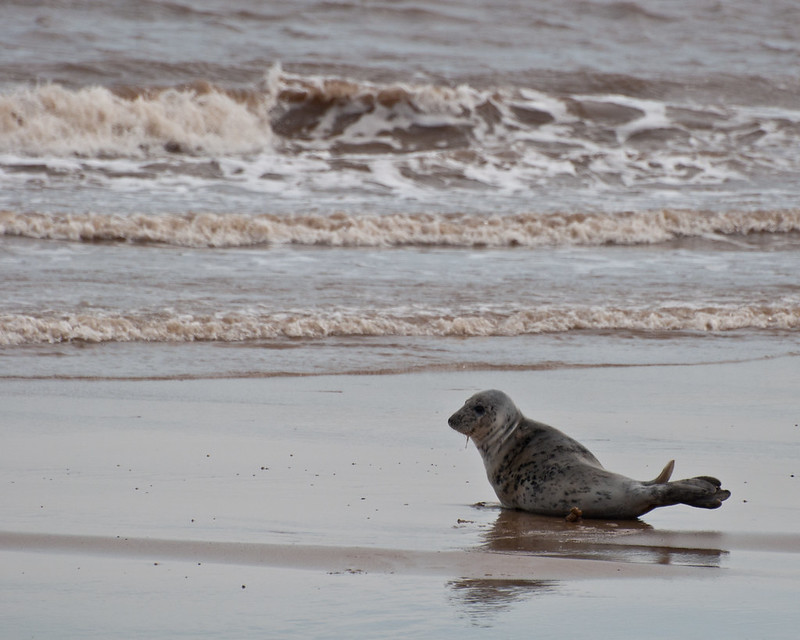
The British Isles are home to two native species of seal: the Atlantic grey and harbour seal. Atlantic grey seals live in coastal waters all around Britain and Ireland. Males are dark grey with pale spots, while females' colouring is the other way round: pale silver-grey with dark spots. Males have a large, hooked snout. Pups are born in autumn on sheltered, stony beaches. For the first month of their lives they are kept warm by a layer of thick white fur. They feed on rich milk from their mothers until they have built up a layer of blubber, then shed their white fur to reveal waterproof coats, well-adapted for swimming. Length: 2.5–3 m (7.5–10 feet). Eats: fish.
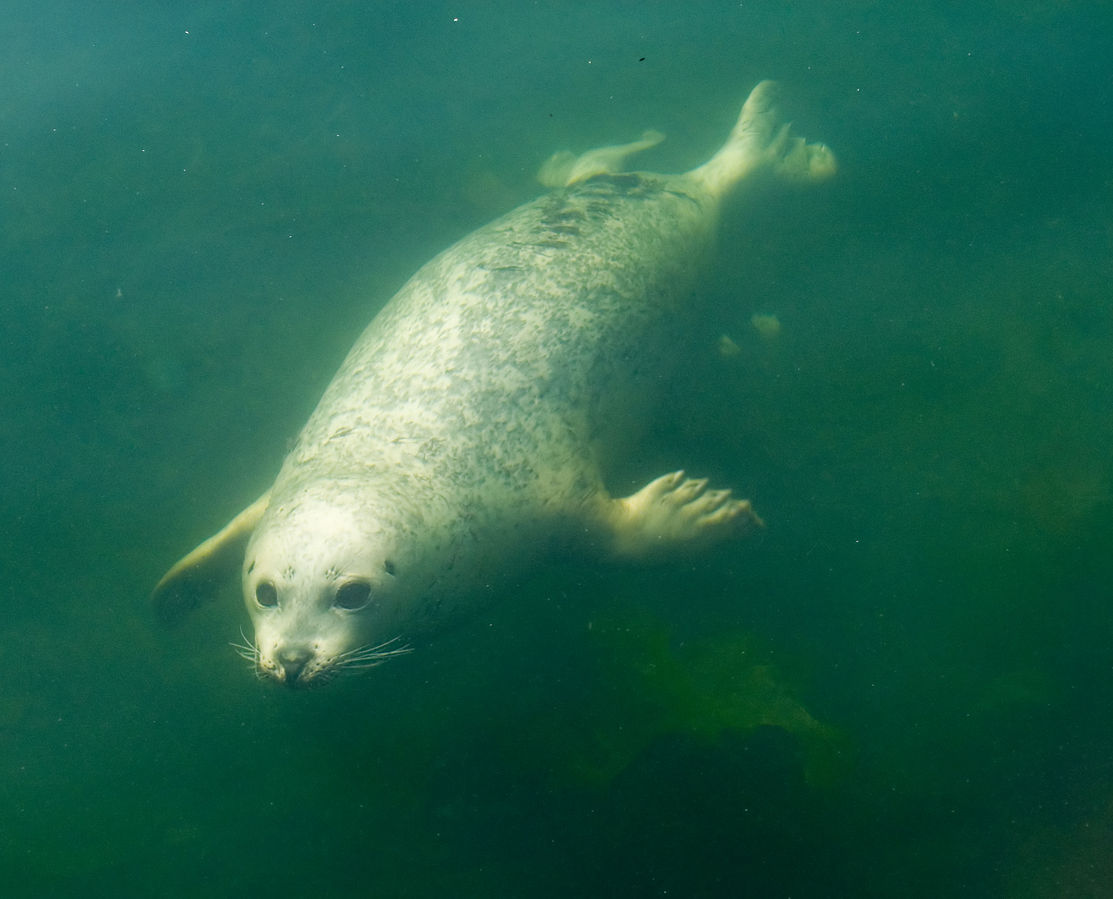
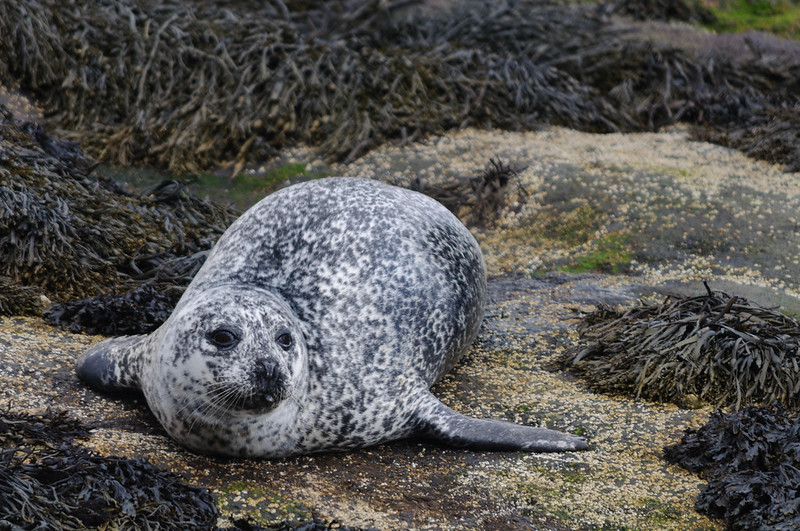
Harbour seals (also known as common seals) are smaller than grey seals and have rounder heads. They have light grey or brown fur with a mottled pattern of darker spots. When resting out of the water, they hold their tails upward in a curved shape. Harbour seals are most common in Scotland, although they also live in the Wash, the Thames and the Irish Sea. Pups are born in summer with a fully waterproof coat so they are ready to swim within a few hours. They sometimes “piggyback” on their mothers’ backs in the water as they build up their strength. Length: up to 1.6 m (5.5 ft) Eats: fish, crustaceans, squid

Whales
Balaenoptera physalus (fin whale), Megaptera novaeangliae (humpback whale), Balaenoptera acutorostrata (minke whale)
Several species of whale live in, or regularly visit, British and Irish waters. The minke whale is the most commonly seen, especially along the west coast of Scotland. It is the smallest species of baleen whale. Black with a white belly and white rings around its flippers, its head is long and pointed. Minke whales are usually solitary or live in small groups. Length 8–9 m (25–30 feet) Eats: krill, small fish.
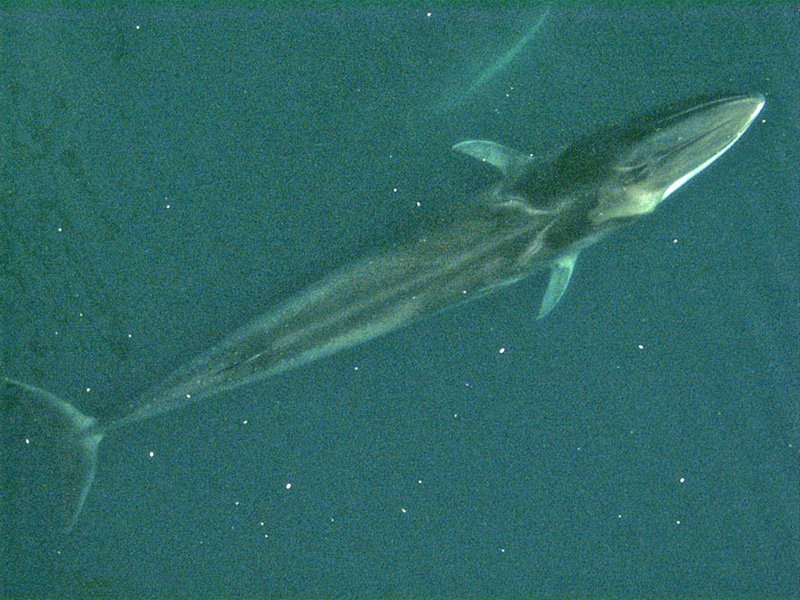
Fin whales are rare visitors to the British Isles, but can sometimes be spotted in early spring when they pass through Irish waters or the English Channel. These enormous whales are among the largest animals on Earth. They have long, slim bodies with unusual colouring: the left side of their jaw is dark, while the right side is bright white. The reason for this is still unknown. Fin whales live alone or in pairs. They are fast, powerful swimmers. Length: up to 27 m (90 feet). Eats: krill, small fish
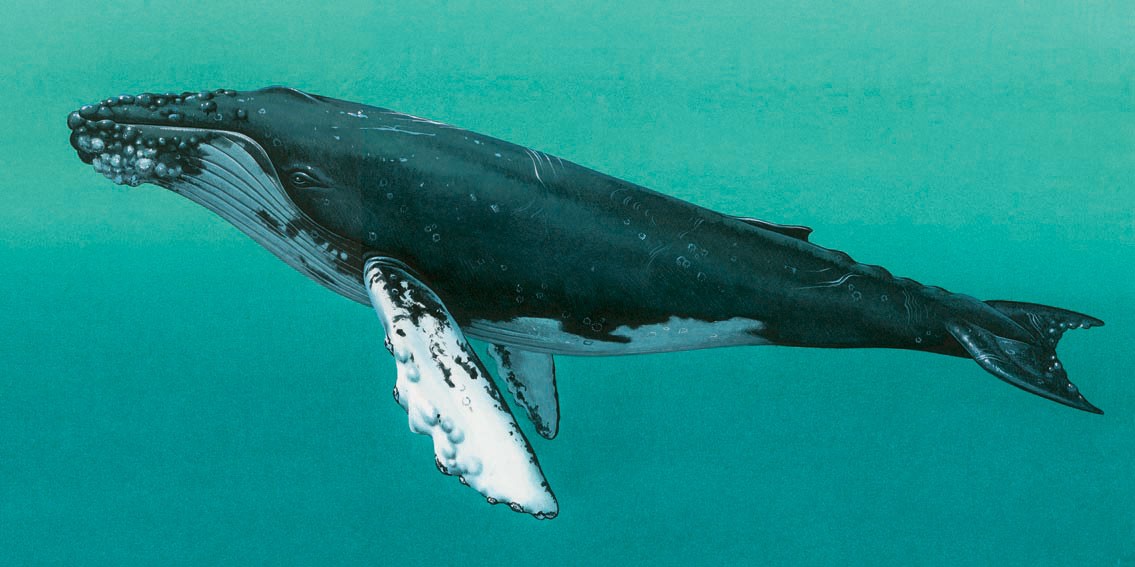
Humpback whales can sometimes be spotted off the west coasts of Ireland and Scotland as they migrate between the Arctic Ocean and warmer, tropical waters to the south. These large baleen whales have very long flippers. Their heads are covered in wart-like knobs called tubercles, which act like cats' whiskers, helping the whales to detect motion in the water around them. Humpbacks often leap out of the water and splash down on their backs. They are known for their loud and complex “songs”, which may last for hours at a time. Length: up to 18 m (60 feet). Eats: krill, small fish.
Consultant: Chris Jarvis
pics

Without in any way limiting Q-files Ltd’s exclusive rights under copyright, any use of this publication to “train” generative artificial intelligence (AI) technologies to generate text is expressly prohibited. Q-files Ltd reserves all rights to license use of this work for generative AI training and development of machine learning language models.