
Ocean life

CITE
We have made every effort to follow citation style rules, but there may be some minor differences. If in doubt, please refer to the appropriate citation style manual.
Surface waters. (2026). In Q-files Encyclopedia, Life, Ocean life. Retrieved from
https://www.q-files.com/life/ocean-life/surface-waters
"Surface waters." Life, Ocean life, Q-files Encyclopedia, 24 Mar. 2026.
https://www.q-files.com/life/ocean-life/surface-waters.
Accessed 13 Sep. 2026.
Surface waters 2026. Life, Ocean life. Retrieved 13 September 2026, from
https://www.q-files.com/life/ocean-life/surface-waters
Life, Ocean life, s.v. "Surface waters," accessed September 13, 2026.
https://www.q-files.com/life/ocean-life/surface-waters


Surface waters
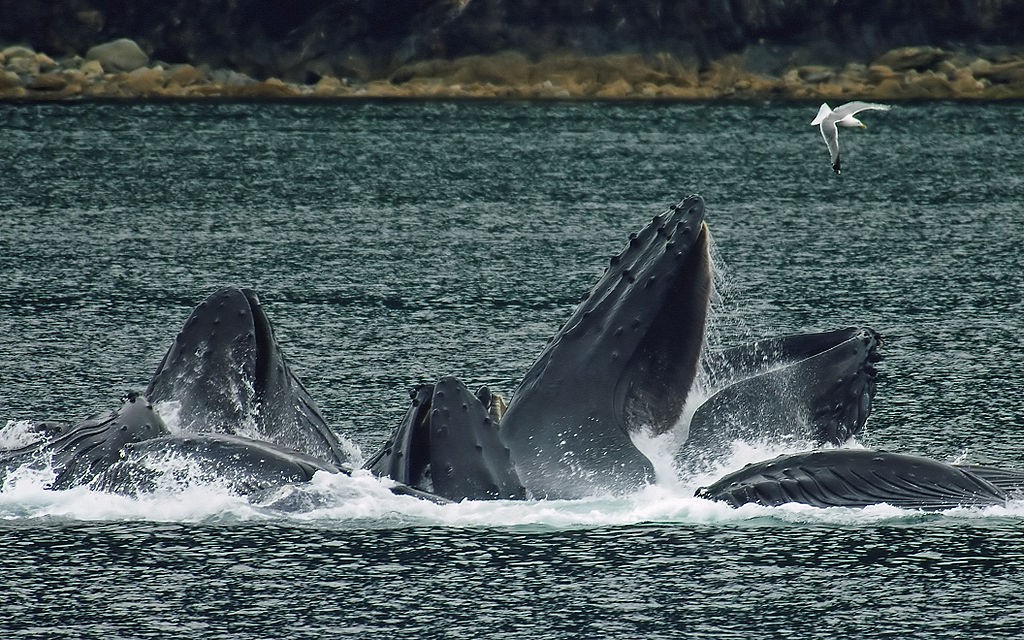
The richest variety of life in the oceans is found in the top 200 metres (about 660 feet): the “roof” of the ocean. Here, light from the sun penetrates the water, allowing tiny plants, called phytoplankton, to grow. This is food for tiny animals called zooplankton, which forms a vital part of the ocean food web, to which all ocean creatures are linked. Small fish, for example, feed on the zooplankton and are themselves preyed upon by larger predatory fish, such as tuna or sharks. They also fall prey to sea turtles, and mammals such as seals, dolphins and whales.


Plankton
Unlike land plants, oceanic plants cannot put down roots into the ground. Instead, ocean plants, called phytoplankton, are microscopic in size and float around in the ocean currents, living off the chemical nutrients dissolved in the water.
Phytoplankton are fed upon by tiny animals called zooplankton. These include the larvae (young) of fish, as well as tiny relatives of crabs and shrimps, known as copepods. Both kinds of plankton provide food for a wide range of animals, including jellyfish, shrimp, fish and even huge whales. Other kinds of fish, mammals, turtles and diving birds prey on some of the plankton-eaters.
Sea birds
For many birds the oceans are a rich source of food. Albatrosses, with their long, slender wings, can soar in the wind above the waves for days and days, scanning the waters for prey. They catch fish by snatching them from near the surface with either their beaks or claws. The red-tailed tropicbird and blue-footed booby actually plunge into the water to claim their prize. Air trapped in the feathers of diving birds enables them to rise to the surface quickly and fly away with their catch.
Some birds cleverly make use of others to help them. Black noddies hover in wait for small fish that have been chased to the surface by larger ones. The frigatebird—named after a kind of warship—will pursue other birds, causing them to
drop their catch.

Above the surface
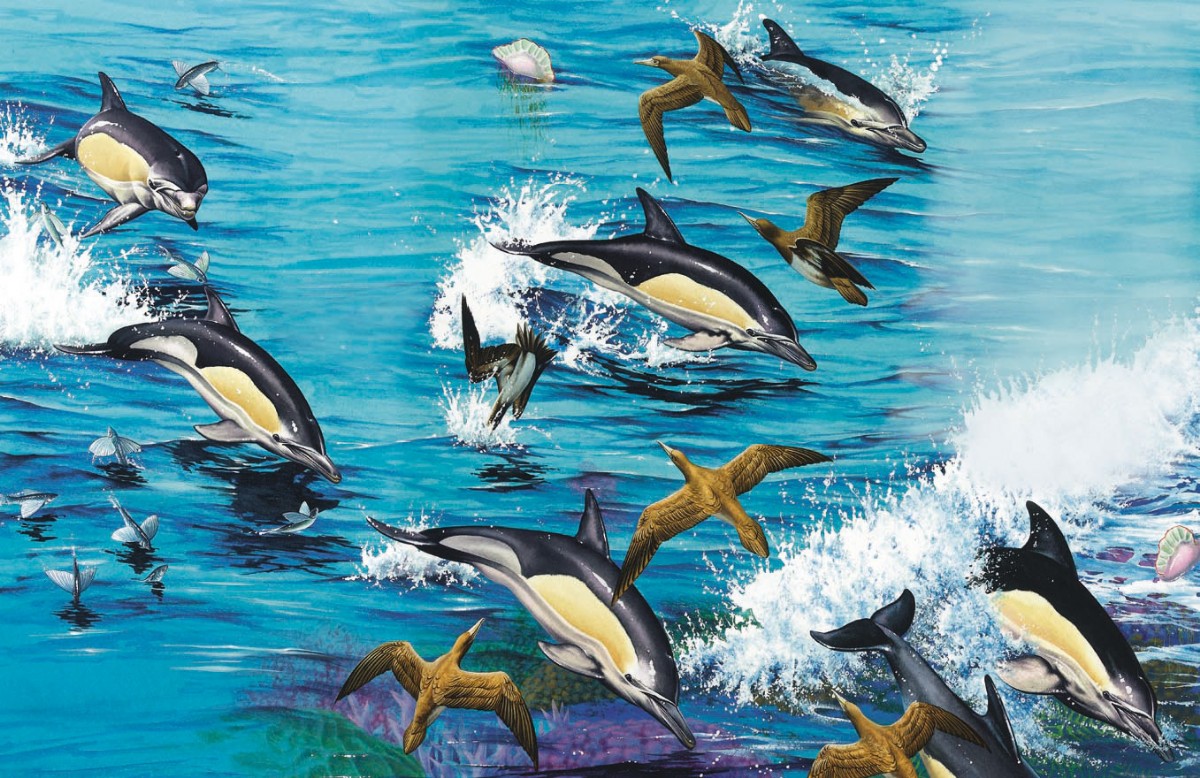
A number of ocean animals sometimes temporarily leave their watery home for the air above. Many whales and dolphins leap out of the water, a feat known as breaching. Some smaller species can go very high and often perform somersaults while they are in the air. Flyingfish frequently skim the surface of the water, gliding for distances of up to 100 metres (330 feet) or so. Their “wings” are actually long, taut fins. They “fly” to escape predators in the water but they risk being taken in mid-air by birds, such as tropicbirds and boobies.
A few creatures live half above and half below the water. The upper part of a Portuguese man-o'-war consists of an air sac, giving it buoyancy. Carried by the wind and currents, its stinging tentacles trail in the water, trapping small fish.

Sargassum
Some fish live among floating seaweed (a form of algae), such as sargassum weed, lines of which can stretch for many kilometres. The clumps are concentrated by winds and waves created by the Gulf Stream current in the North Atlantic Ocean. The sargassum weed provides shelter and food for a number of marine species, especially juveniles.
Thick masses of sargassum collect in a region of the Atlantic Ocean, named the Sargasso Sea. Portuguese sailors, who first came across the weed on early voyages of exploration, named it "sargassum" after a species of rock rose called sargaço in Portuguese, that grew in ponds and springs back home.
Fed by rivers such as the Congo, Amazon and Mississippi, which carry sewage and fertilizers from intensive soya cultivation inland, vast areas of sargassum have bloomed in the Atlantic Ocean since around 2011. They form what is known as the Great Atlantic Sargassum Belt, which stretches between the Gulf of Mexico and West Africa. Global warming has increased sea surface temperatures, encouraging the seaweed's growth.
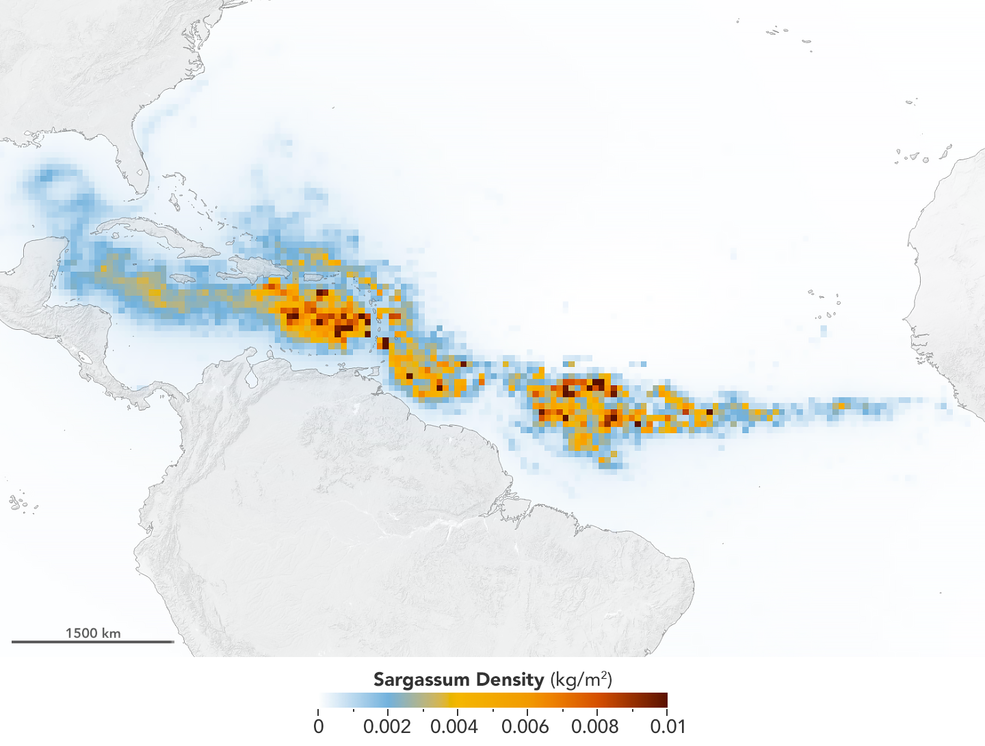

Huge rafts of golden sargassum frequently wash up on the coasts of Florida and the Caribbean islands, usually in calm summer weather. Blocking out light to the seabed in shallower waters, the sargassum is harmful to fish and seashore life. Sometimes it piles up metres high on beaches, turning brown and releasing foul-smelling hydrogen sulphide gas (toxic to humans) as it rots. At present, there is no known way of converting the sargassum for fertilizer or industrial use, although it could potentially be used as a building material or biofuel—or stored on the seafloor as a carbon sink.
Consultant: Chris Jarvis
pics


Without in any way limiting Q-files Ltd’s exclusive rights under copyright, any use of this publication to “train” generative artificial intelligence (AI) technologies to generate text is expressly prohibited. Q-files Ltd reserves all rights to license use of this work for generative AI training and development of machine learning language models.