
North America

CITE
We have made every effort to follow citation style rules, but there may be some minor differences. If in doubt, please refer to the appropriate citation style manual.
Caribbean islands. (2026). In Q-files Encyclopedia, Geography, North America. Retrieved from
https://www.q-files.com/geography/north-america/caribbean-islands
"Caribbean islands." Geography, North America, Q-files Encyclopedia, 1 Apr. 2026.
https://www.q-files.com/geography/north-america/caribbean-islands.
Accessed 13 Sep. 2026.
Caribbean islands 2026. Geography, North America. Retrieved 13 September 2026, from
https://www.q-files.com/geography/north-america/caribbean-islands
Geography, North America, s.v. "Caribbean islands," accessed September 13, 2026.
https://www.q-files.com/geography/north-america/caribbean-islands


Caribbean islands
There are 700 islands, islets and cays (coral islands) in the Caribbean Sea. Amongst them are 16 independent nations, and several island groupings that are territories of Britain, France, Netherlands or the US. The Caribbean islands have a wet, tropical climate, and often experience hurricanes. The mixed population is largely made up of Africans who were brought to the Caribbean to work as slaves on the sugar plantations and settlers from Europe and Asia. Many Caribbean nations today are popular tourist resorts. Geographically, the islands divide into three regions: Greater Antilles, Lesser Antilles and, lying to the southeast of Florida, the Lucayan Archipelago, which includes the Bahamas and Turks and Caicos Islands.


Greater Antilles
The Greater Antilles island group is made up of the larger islands of Cuba, Hispaniola (divided between the Dominican Republic and Haiti), Puerto Rico and Jamaica, along with the smaller Cayman Islands. Over 90% of the Caribbean's population lives on these four large islands.

Lesser Antilles
The Lesser Antilles is an arc of small islands, forming the eastern boundary between the Caribbean Sea and the Atlantic Ocean. Some of these islands are independent countries, such as Trinidad and Tobago, Barbados and Grenada. Others are dependencies or territories of the UK (such as Anguilla), France (for example, Martinique), the Netherlands (Aruba) and the USA (US Virgin Islands).
Leeward and Windward
The Leeward Islands are a group of islands in the northeastern Caribbean Sea—the northern islands of the Lesser Antilles. The extend from the Virgin Islands southeast to Guadeloupe and include Antigua and Barbuda, Saint Kitts and Nevis and Saint Martin. The Windward Islands—the southern islands of the Lesser Antilles—start with Dominica and include Martinique, Saint Lucia, Saint Vincent, Grenada and Trinidad and Tobago.
The names come from sailing terms: "windward" means towards the source of the wind, while "leeward" is the opposite direction. The prevailing winds of the region, known as the trade winds, blow from the northeast. When the British first took possession of the islands, all the islands to the north of Dominica were called the British Leeward Islands, while those to the south were the British Windward Islands—for reasons that are not clear. In Spanish, French and Dutch, all the Lesser Antilles are known as the Windward Islands.


Geology
Much of the Caribbean Sea is situated on the tectonic plate known as the Caribbean Plate. Geological activity along the boundaries with neighbouring plates has a significant impact on the islands. Volcanoes rise from the sea floor along the boundary with the South American Plate, forming the volcanic islands of the Lesser Antilles. Today, there are a number of extinct volcanoes on these islands, such as the Quill on Sint Eustatius and Morne Trois Pitons on Dominica.
The pressure of the South American Plate has triggered a number of devastating volcanic eruptions in the same region. They include Mount Pelée (Martinique) in 1902 and Soufrière Hills (Montserrat) in 1995.
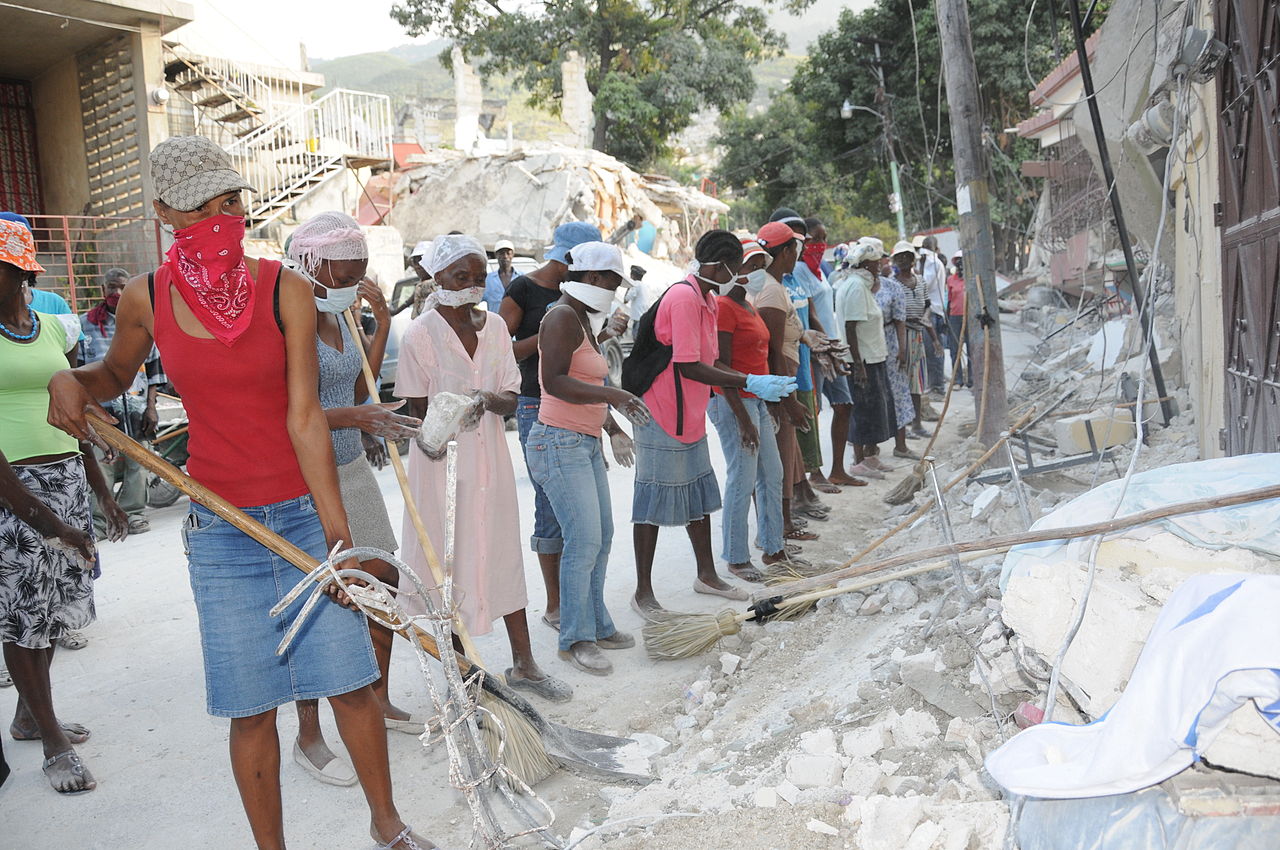
Movement along the boundary with the North American plate also puts the Caribbean area at a high risk of earthquakes. A 7.2-magnitude earthquake struck Haiti in August 2021 causing much destruction and loss of life.
Environment
The Caribbean islands are home to a wide range of ecosystems in the world, including mountain cloud forest, tropical rainforest and cactus scrubland. The region's coastal waters also contain about 8% of the world's coral reefs along with extensive seagrass meadows. Like many other regions,
Caribbean island ecosystems have been devastated by deforestation, pollution and development. The region's coral reefs are also threatened with extinction, being particularly vulnerable to global warming and ocean acidification, but also tourism, overfishing and the pollution of coastal waters. Many animal species have become endangered. Ecotourism is nowadays catering for tourists who wish to experience the natural environment without damaging it or disturbing its habitats.


History
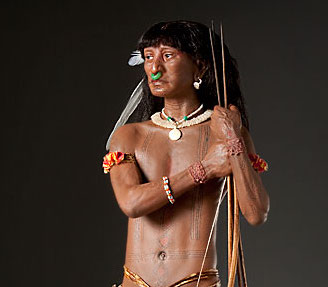
The Caribbean has been occupied by people since at least 6000 BC. At the time of the the arrival of European explorers, three major Amerindian indigenous peoples lived on the islands: the Taíno (also called Arawaks, after their language) in the Greater Antilles, the Bahamas and Leeward Islands, the Island Carib and Galibi in the Windward Islands and the Ciboney in western Cuba. Trinidad was inhabited by both Carib-speaking and Arawak-speaking groups. With European colonization following the voyages of Christopher Columbus in 1492–1504, the native population of the Caribbean islands was quickly decimated by enslavement and diseases such as smallpox and measles, to which, unlike Europeans, they had no natural immunity. A number of indigenous peoples intermarried with the European settler and, later, Africans.
The first Spanish settlements were established in the Caribbean in the early 1500s. From the 1620s and 1630s onwards, settlers from England, France, the Netherlands and other European states established colonies and trading posts on the islands neglected by Spain. The Caribbean also became known for pirates and privateers (pirates working with the support of governments), especially in the 17th and 18th centuries. They used the islands as bases to attack Spanish treasure ships and ports on the coasts of Central and South America, known as the Spanish Main.


Europeans set up plantations, initially growing tobacco, then sugar cane, on their island colonies and brought captive Africans across the Atlantic Ocean to work on them as slaves. The Atlantic slave trade lasted from the late 16th century to the early 19th centuries. Colonial rivalries and European conflicts led to colonies frequently changing hands between the powers. Slavery was abolished by the mid-19th century, but the islands remained under European rule, many with the great majority of their populations of African ancestry. Immigrants from India, China, Indonesia and other countries arrived in the Caribbean in the mid-19th century as indentured labourers and servants.
Following its successful slave revolt, Haiti was the first Caribbean nation to gain independence from a European power, France, in 1804, followed by the Dominican Republic (from Spain) in 1856. Cuba remained a Spanish colony until the Spanish–American War in 1898, but was a US possession until 1902. Puerto Rico, also ceded by Spain to the US, remains a US territory today. Between 1958 and 1962, most of the British-controlled Caribbean islands became the West Indies Federation before they separated into many nations, achieving their independence in the 1960s, 70s and 80s. Some Caribbean islands remain dependencies of European states to this day.

Consultant: Nicholas Harris
pics

Without in any way limiting Q-files Ltd’s exclusive rights under copyright, any use of this publication to “train” generative artificial intelligence (AI) technologies to generate text is expressly prohibited. Q-files Ltd reserves all rights to license use of this work for generative AI training and development of machine learning language models.