
North America

CITE
We have made every effort to follow citation style rules, but there may be some minor differences. If in doubt, please refer to the appropriate citation style manual.
St Vincent and the Grenadines. (2026). In Q-files Encyclopedia, Geography, North America. Retrieved from
https://www.q-files.com/geography/north-america/st-vincent-and-the-grenadines
"St Vincent and the Grenadines." Geography, North America, Q-files Encyclopedia, 1 Apr. 2026.
https://www.q-files.com/geography/north-america/st-vincent-and-the-grenadines.
Accessed 30 Oct. 2026.
St Vincent and the Grenadines 2026. Geography, North America. Retrieved 30 October 2026, from
https://www.q-files.com/geography/north-america/st-vincent-and-the-grenadines
Geography, North America, s.v. "St Vincent and the Grenadines," accessed October 30, 2026.
https://www.q-files.com/geography/north-america/st-vincent-and-the-grenadines


St Vincent and the Grenadines
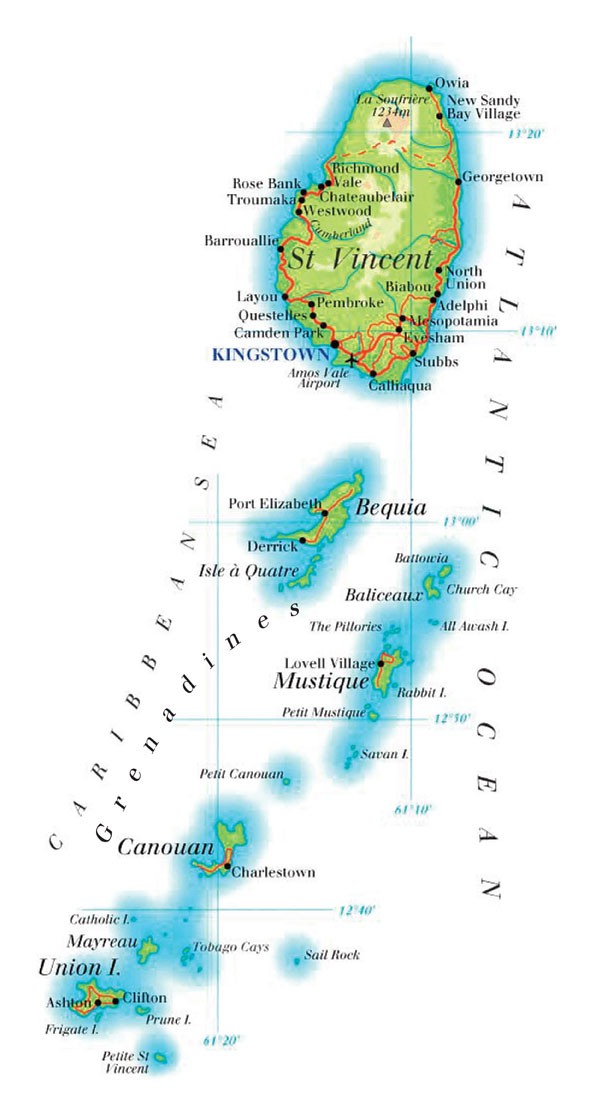
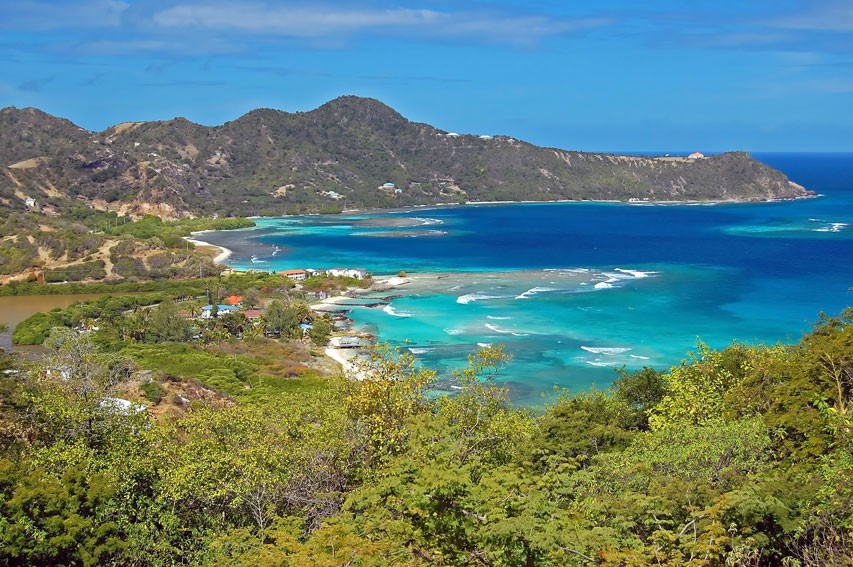
St Vincent and the Grenadines is situated in the southern Windward Islands. It is made up of the main island of St Vincent and a chain of smaller islands to the south called the Grenadines. St Vincent itself is a rugged, forested volcanic island with high mountains in the centre. Its highest peak, La Soufrière, is an active volcano that violently erupted in April 2021 (it previously erupted in 1979), generating highly dangerous pyroclastic flows and causing the evacuation of tens of thousands of people. The island's beaches are made of black volcanic sand. The Grenadines are lower-lying, with tropical shrubs and white sandy beaches. The islands have a hot, tropical climate, and like other eastern Caribbean islands, are sometimes struck by hurricanes. Tourism is a major industry for St Vincent and the Grenadines. Some of the Grenadine islands, such as Mustique, are completely owned by tourism companies and have been turned into resorts.

People
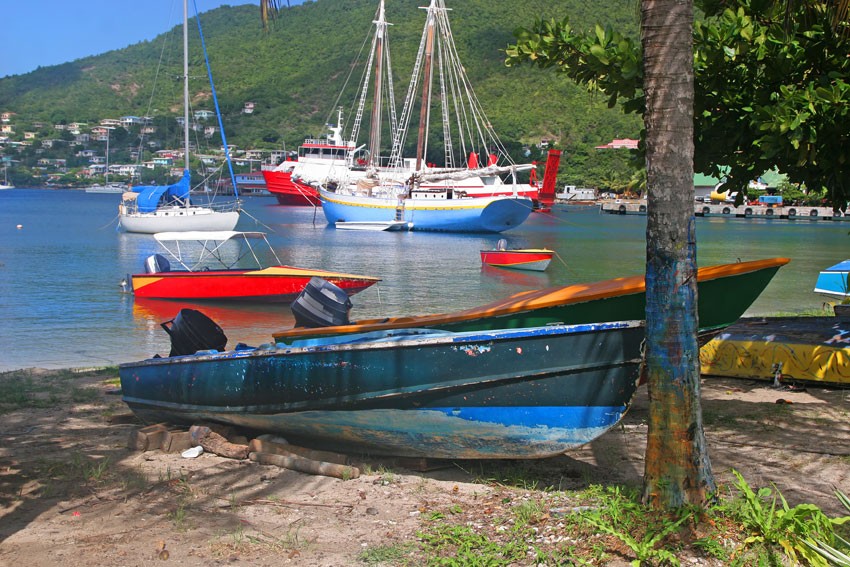
Most Vincentians are descended from enslaved Africans brought to work on plantations growing cotton, sugar cane and indigo (a plant used for making dye). Others can trace their ancestry to the Caribs, early inhabitants of the islands. English is the main language but many Vincentians speak Vincentian Creole, a language made up of English, French, native and African languages. Most people live on the main island of St Vincent; those on the tiny Grenadines make a living from fishing or tourism.
Consultant: Nicholas Harris
Facts about St Vincent and the Grenadines
Population 110,872 (2022 estimate)
Area 389 sq km
Highest Point La Soufrière 1234 m (4049 ft)
Capital Kingstown, population 13,045
Languages English, Creole
Religions Christian (Protestant) 75%, Christian (Roman Catholic) 13%, others 12%
Ethnicity black African 66%, mixed 19%, Indian 6%, European 4%, Carib 2%, others 3%
Currency East Caribbean dollar (XCD)
Chief exports bananas, taro (a root vegetable), arrowroot starch (a cooking ingredient), tennis racquets, boats


History of St Vincent and the Grenadines
c. 1300
Carib people from South America conquer the islands from the native Arawaks
1498
Christopher Columbus visits the main island on 27th September, St Vincent’s Day
16th century
Escaped African slaves from Barbados, St Lucia and Grenada flee to St Vincent and intermarry with its Carib people
1719
French settlers set up coffee, tobacco, sugar and indigo plantations and bring Africans to work on them as slaves
1783
St Vincent becomes part of the colony of the British Empire
1795–97
Conflict between British and black Caribs; Britain deports (sends back) 5000 black Caribs to Belize
1834
Slavery abolished throughout the British Empire
1860s–90s
Workers brought from East India to replace freed slaves on plantations
1902
La Soufrière volcano erupts, killing 2000 people
1951
All adults are given the right to vote
1958–62
St Vincent is part of the West Indies Federation
1969
St Vincent is granted the right to govern itself, with Britain controlling its foreign affairs
1979
St Vincent becomes fully independent
1999
Hurricane Lenny causes extensive damage to the west coast of the island
2009
In a referendum, voters reject by 56% to 43% a proposal to make the country a republic and replace the British monarch as head of state with a non-executive president
2021
(April) La Soufrière violently erupts, generating highly dangerous pyroclastic flows. Around 16,000 people from northern parts of St Vincent are evacuated in the days leading up to the eruption.
pics

Without in any way limiting Q-files Ltd’s exclusive rights under copyright, any use of this publication to “train” generative artificial intelligence (AI) technologies to generate text is expressly prohibited. Q-files Ltd reserves all rights to license use of this work for generative AI training and development of machine learning language models.