
North America

CITE
We have made every effort to follow citation style rules, but there may be some minor differences. If in doubt, please refer to the appropriate citation style manual.
Guatemala. (2026). In Q-files Encyclopedia, Geography, North America. Retrieved from
https://www.q-files.com/geography/north-america/guatemala
"Guatemala." Geography, North America, Q-files Encyclopedia, 1 Apr. 2026.
https://www.q-files.com/geography/north-america/guatemala.
Accessed 30 Oct. 2026.
Guatemala 2026. Geography, North America. Retrieved 30 October 2026, from
https://www.q-files.com/geography/north-america/guatemala
Geography, North America, s.v. "Guatemala," accessed October 30, 2026.
https://www.q-files.com/geography/north-america/guatemala


Guatemala
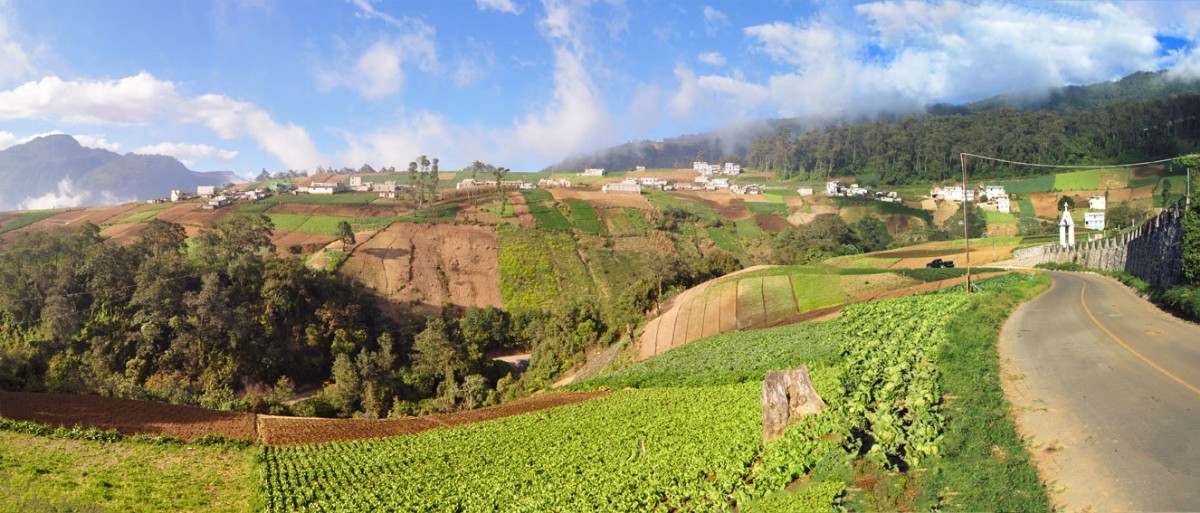
Home to nearly 18 million people, Guatemala is Central America’s most populous country. Apart from lowlands along the coasts and in the north, nearly all of its land is mountainous. The northern region, called the Petén, is a land of lush tropical rainforests. Further south the land rises steeply to the grassy central highlands where most of Guatemala’s cities are situated. These highlands are part of the Sierra Madre, a mountain range that includes the towering volcano Tajumulco. Guatemala often suffers from severe earthquakes. In the past, some have devastated whole areas of cities. The lowlands of Guatemala have a hot, humid climate. Most people live in the mountains where it is cooler.


People
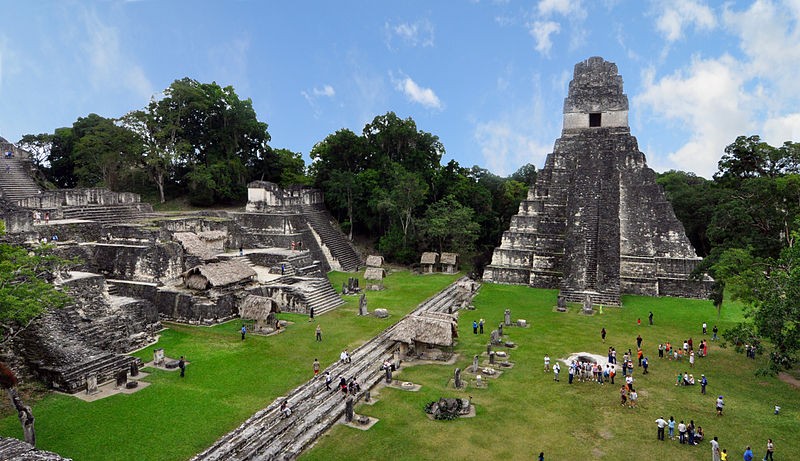
Guatemala has a higher population of Native Americans than any other Central American country. Peoples such as the K'iche, Mam and Kaqchikel are all Maya—descendants of those who founded a great ancient civilization. Many of these people still live a traditional way of life in mountain villages.
Although a few Guatemalans—mostly urban-dwellers—can afford to live well, more half the population lives below the poverty line. The Maya are especially disadvantaged. A low standard of healthcare and education has led many people to emigrate to Mexico, the USA and Canada in search of a better life.

Economy
Guatemala’s hot, wet climate and rich, volcanic soil provide ideal conditions for farming. Much of the land was once covered by thick forest, but more and more areas have recently been cleared for farming, threatening both the wildlife and people who still live there. In the countryside, many people live and work on small farms growing vegetables, corn and beans to feed their families. Others work on large plantations growing bananas, coffee and cotton, Guatemala’s biggest export crops. In the capital, Guatemala City, people work in factories producing textiles, machinery and processing foods.
Consultant: Nicholas Harris
Facts about Guatemala
Population 17,980,803 (2023 estimate)
Area 108,889 sq km
Highest point Volcán Tajumulco 4220 m (13,842 ft)
Capital Guatemala City, population 1,221,739
Other major cities Villa Nueva (pop. 618,397), Mixco (465,773), Cobán (212,047)
Languages Spanish, Native American languages
Religions Christian (Roman Catholic) 50%, Christian (Protestant) 40%, others and none 10%
Ethnicity mestizo (mixed Native American / Spanish) 59%, Maya (K'iche) 9%, Maya (Mam) 8%, Maya (Kaqchikel) 8%, Maya (Q'eqchi) 6%, others 10%
Currency Guatemalan quetzal (GTQ)
Chief exports coffee, sugar, oil, clothing, bananas, fruits and vegetables, cardamom

History of Guatemala
12,000 BC
Hunter-gatherers live in the region of Guatemala
c. 1000 BC
Maya people start to build monumental structures in the region
250 BC–900 AD
Maya build great cities such as El Mirador and Tikal in the northern lowlands of Guatemala
c. 900
Classic Maya civilization collapses: the Maya abandon many of the cities of the central lowlands, possibly as a result of drought-induced famine. Post-Classic Maya period begins, with regional kingdoms established in the Petén and in the highlands.
1523–24
Led by Pedro de Alvarado, the Spanish conquer the Guatemalan Highlands and make them a Spanish colony
1697
After decades of fighting, the Spanish bring neighbouring territories under their control, enlarging the colony
1821
The country gains independence from Spain and becomes part of the Mexican Empire
1823
Guatemala joins the United Provinces of Central America, a group of countries including Costa Rica, El Salvador and Nicaragua. It is later known as the Federal Republic of Central America.
1839
Guatemala becomes fully independent, becoming a republic in 1847 with Rafael Carrera its first president.
1917–18
Guatemala earthquakes almost completely destroy Guatemala City and severely damage the ruins in Antigua Guatemala that had survived the 1773 Guatemala earthquakes.
1930s
US-owned United Fruit Company invests heavily in Guatemala, taking control of 40% of its farmland
1944–54
Guatemalan Revolution (Ten Years of Spring): period of liberal democracy during which social, political and agrarian reforms are implemented, firstly by President Juan José Arévalo then President Jacobo Árbenz.
1960–96
Guatemalan Civil War, fought between the government of Guatemala and various rebel groups supported by Maya peoples and peasants; it is estimated that 200,000 civilians were killed or "disappeared" during the conflict, nearly all at the hands of the military or police
1976
Major earthquake kills over 27,000 people and leaves a million homeless
1992
Native Guatemalan Rigoberta Menchú wins the Nobel Peace Prize for her work ensuring rights for Guatemala’s Native Americans
2015
Massive anti-corruption protests across Guatemala force the resignations of both vice-president and president
2018
At least 109 people killed and hundreds injured by the eruption of Volcán de Fuego
pics
Without in any way limiting Q-files Ltd’s exclusive rights under copyright, any use of this publication to “train” generative artificial intelligence (AI) technologies to generate text is expressly prohibited. Q-files Ltd reserves all rights to license use of this work for generative AI training and development of machine learning language models.