
North America

CITE
We have made every effort to follow citation style rules, but there may be some minor differences. If in doubt, please refer to the appropriate citation style manual.
United States of America. (2026). In Q-files Encyclopedia, Geography, North America. Retrieved from
https://www.q-files.com/geography/north-america/united-states-of-america
"United States of America." Geography, North America, Q-files Encyclopedia, 30 Jun. 2026.
https://www.q-files.com/geography/north-america/united-states-of-america.
Accessed 20 Aug. 2026.
United States of America 2026. Geography, North America. Retrieved 20 August 2026, from
https://www.q-files.com/geography/north-america/united-states-of-america
Geography, North America, s.v. "United States of America," accessed August 20, 2026.
https://www.q-files.com/geography/north-america/united-states-of-america


United States of America
By area the fourth largest country in the world, the United States of America (USA), often simply known as "America" or "the States", stretches from the Atlantic to Pacific oceans. It is made up of 50 states, including Alaska—which is separated from the rest of the country by Canada—and Hawaii, a group of islands in the Pacific Ocean. Each state has its own elected government and passes its own laws. The federal government is based in the capital, Washington, D.C. The USA is the world's most important trading nation and has its most powerful military forces.


Landscapes
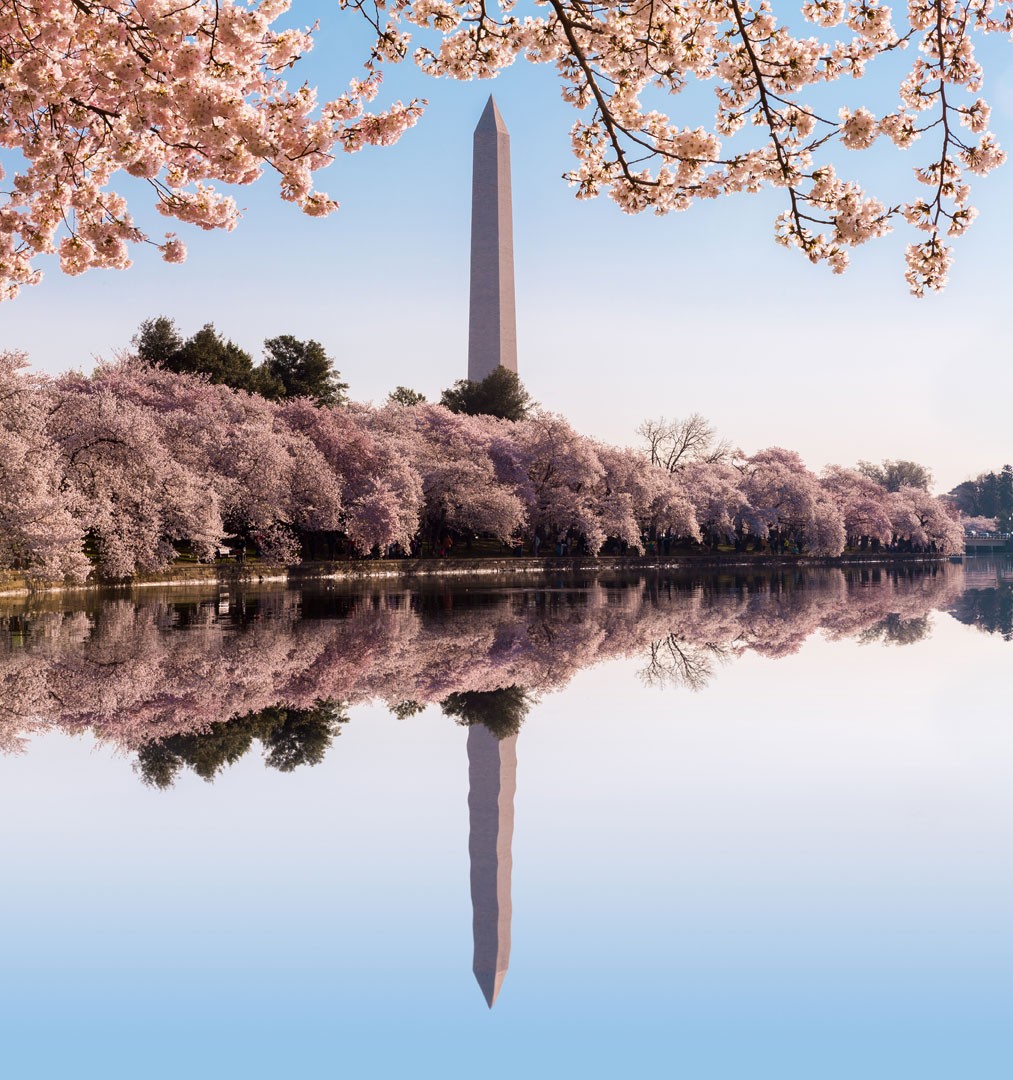
Running down the northeastern side of the USA are the densely forested Appalachian Mountains. To the northwest of this range lie the Great Lakes, while to the east lie the coastal lowlands, where Europeans first settled the country and where great cities, such as New York, Boston, Philadelphia and Washington, have grown up.
The basin of the Mississippi River and its tributaries forms the central part of the USA, called the Midwest—a vast, flat area of farmland. West of the Mississippi, the land gradually rises. The prairie grasslands of the Great Plains eventually meet the high Rocky Mountains. Further to the west, between the Rockies and the mountains of the Pacific coast, the climate is drier, and the landscape more rugged. Wide areas of hot desert or scrub stretch across the southwestern United States.
The Pacific coast is a land of forested mountains and fertile valleys with a warm, wet climate that makes it ideal for farming. This region has grown to become one of the richest and most densely populated parts of the United States.

Climates
The USA is a huge country and has a wide range of climates. Alaska, close to the Arctic, has a polar climate, while the southern tip of Florida lies in the tropics. The central and eastern states have very warm or hot summers, but cold winters. The southern states have mild winters. Further west it becomes drier, turning to semi-desert west of the Rockies, and full desert in the southwest. The Pacific coast is milder: California has a climate similar to the Mediterranean in Europe, while the northwest is cooler and wetter.


East coast
The USA’s eastern coast is where Europeans first settled the country and where great cities, such as New York, Boston and Philadelphia have grown up. Today it has the densest population in the United States. The Appalachians, a range of forested hills and low mountains, peppered with lakes, separate this region from the rest of the country. Urban areas crowd the coastal plains and Hudson-Mohawk valley. The six states of Maine, New Hampshire, Vermont, Massachusetts, Rhode Island and Connecticut make up the region of New England, named after the home country of the first European settlers.
New York City
New York City is the USA’s largest: the city and its suburbs are home to around 20 million people. The city is situated by a large natural harbour at the mouth of the Hudson River. its location has helped it to grow into an important trading port and major world city. New York is built on three islands: Long Island, Manhattan and Staten Island. New land to build on is in short supply, so many people live and work in high-rise buildings or skyscrapers. New York has been a major point of entry for immigrants to the USA. New Yorkers today come from all over the world—more than a third were born overseas.
Many people consider New York to be the cultural capital of the world; its art, fashion, media and entertainment industries are amongst the world’s most important and influential. It can also be considered its financial capital: Wall Street, in Manhattan, is the world’s leading financial centre. The United Nations (UN) also have their headquarters in New York.


Great Lakes
Northwest of the Appalachians lie the Great Lakes. These enormous inland seas were filled by the meltwaters from the ice cap that once covered parts of North America during the Pleistocene Ice Ages. Lakes Superior, Huron, Erie and Ontario lie partly within Canada, while Lake Michigan is entirely within the USA. Situated on its southwestern shores is Chicago, the USA’s third most populous city.
Rust Belt
The USA’s northeastern states were once the heartland of the country’s industry. In the 19th century, they became known for their heavy industry, producing iron and steel. Companies founded by Henry Ford and Ransom Olds manufactured the first mass-production cars in Michigan in the early 1900s. Millions of migrant workers from from the southern states, Europe and elsewhere flocked to work in the factories, settling in Chicago, Buffalo, Detroit and Milwaukee.
By the mid 20th century, these industries began to decline; new technologies meant many more jobs could be done by machines, and huge numbers of people lost their jobs. Many of the industrial cities fell into disrepair along with the industries that once supported them, giving region its nickname, the “Rust Belt”.

In more recent years, competition from the East Asia has hit the US car industry hard. Factories have closed and the population of Detroit, known as "Motor City" or "Motown" has fallen by more than a quarter since 2000.
Southern states
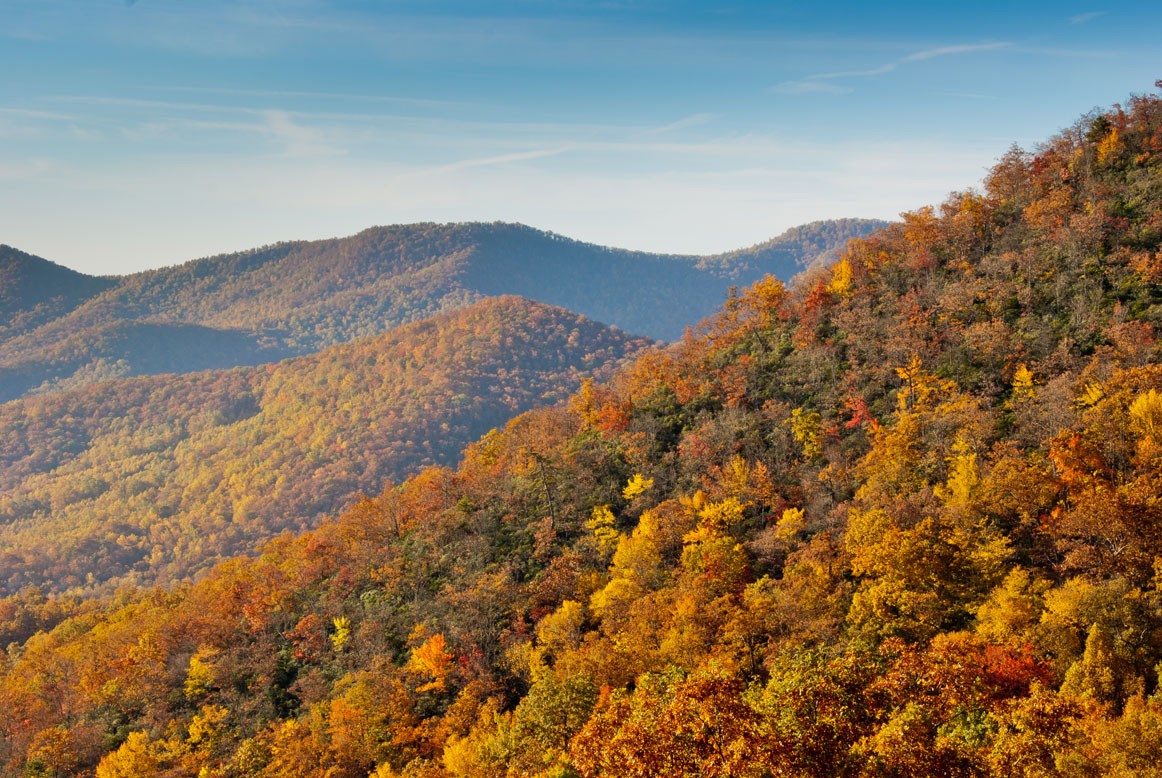
The southeastern corner of the US is known as “The South”, a region that extends as far west as Arkansas and Louisiana. On the Atlantic side is a flat plain, called the Eastern Seaboard, which stretches between the Appalachians and the sandy beaches and islands of the coast. The plain widens the further south you go.

The western part of the region occupies the basin of the lower Mississippi River south of the Ohio River. The Gulf Coast, which stretches from Florida in the east round to, and beyond, the Mississippi delta in Louisiana, is made up of swampy bays and islands. Here the climate is hot and humid; the risk from flooding and hurricanes is ever-present. The southern states have a high population of African Americans, the descendants of Africans brought to the USA to work as slaves on cotton plantations since the early 17th century, but especially in the early 1800s.

Midwest
The central part of the USA, called the Midwest, is covered by a vast, flat area of farmland. In the north, crops such as wheat, maize and sugar beet are grown, while cotton, tobacco and groundnuts are cultivated farther south. A large part of this region lies in the fertile basin of the great Mississippi and Missouri rivers, which meet near St Louis. West of the Mississippi, the land gradually rises: these are the prairie grasslands of the Great Plains. Once vast herds of bison roamed here. Today, much of the land, from the Dakotas and Minnesota in the north to Oklahoma and Texas in the south, has been turned over to extensive fields of wheat and maize, and cattle are grazed on huge ranches.


Tornado Alley
More tornadoes occur in the USA than in any other country on Earth. Most of them touch down in the central states of Nebraska, Kansas, Oklahoma and northern Texas, giving this region the nickname “Tornado Alley”. Tornadoes are most common during the thunderstorms of spring and summer. People who live in the region usually have tornado shelters in their houses. Many towns have tornado sirens to warn people of approaching tornadoes.
Rockies
Rising steeply from the Great Plains are the Rocky Mountains, a chain of rugged peaks continuing from over the border with Canada in the north and extending to the Mexican border in the south. The highest peaks of the Rockies rise in Colorado state. Forests grow on the mountain slopes, and valleys between the peaks are covered by alpine scrubland. The mountains attract thousands of tourists each year who come to ski, snowboard, hike and camp in their wild places.

Great Basin


West of the Rockies lies the Great Basin, a huge, arid expanse of low mountains and wide valleys. Among the features of this landscape are mesas (steep-sided, tabletop mountains), buttes (isolated, flat-topped hills), salt lakes, sandy deserts and plateaus. To the south is the Mojave Desert, lying between California and Nevada, which contains Death Valley. Surrounded by high mountains, this long, narrow basin, which lies at 86 metres (282 feet) below sea level, is one of the hottest and driest places on Earth.
Lying to the southeast of the Great Basin is the Colorado Plateau. It is cut through by deep gorges, including the Grand Canyon of the Colorado River.
Pacific Coast
Rising on the western edge of the Great Basin are the high peaks of the Sierra Nevada. On their western slopes grow the giant sequoia trees, the world's largest living things. Lying between this range and the Coast Range—which runs the length of the Pacific Coast—are the warm, wet lowlands of the Sacramento and San Joaquin valleys in California. Grapes and citrus fruits are grown in what is some of the USA’s most productive farmland.


The states of California and Washington have become some of the wealthiest and most densely populated parts of the United States. Some of the world's largest and most important hi-tech businesses, including aerospace, computer hardware and software and internet, are located here.
Silicon Valley
The southern part of San Francisco Bay Area, centred on the Santa Clara Valley, is home to many of the largest technology companies in the world. It was nicknamed “Silicon Valley” after the high number of companies making semiconductors—computer and electronic components made from the chemical element silicon. It was in Silicon Valley that the microprocessor and microcomputer were first developed.


Alaska
The northern state of Alaska is separated from the rest of the USA by Canada. It is by far the largest state, but the least populated. Most of Alaska is a mountainous wilderness. The icy northern tundra lies within the Arctic Circle. Winters are long, cold and dark, while for much of the summer, the sun never sets. In the south are glaciers and snowcapped mountains with forested slopes. Alaska’s jagged coast is scored deep with inlets and fjords; it has more coastline than all the other US states put together. Most Alaskans work in the fishing or timber industries, or are involved with mining, drilling for oil and natural gas.

Hawaii
The state of Hawaii is made up of the Hawaiian Archipelago, a group of volcanic islands spread out over 2400 kilometres (1500 miles) of the Pacific Ocean. Most people live on the islands of Oahu and Molokai. Hawaii’s population is made up of people of Japanese, Filipino, Chinese, German and native Hawaiian descent. Tourism is Hawaii's most important industry. Hawaii has warm, humid weather all year round.


America's people
America's vast population has ballooned in recent centuries with several waves of immigrants. The first people to live in the USA were Native Americans. They had the whole of North America to themselves for around 10,000 years before the first European settlers arrived in the 16th century. Between the 17th and 19th centuries, Africans arrived, brought by European settlers to work as slaves on their plantations. Immigration from Europe boomed in the 19th century. By the late 20th century, large numbers of Mexicans and other Hispanic (Spanish-speaking) peoples migrated north from Latin America.
Cities
Most Americans live in towns and cities. Some cities have spread out so extensively, their suburbs have merged together to produce a megalopolis of tens of millions of people. This is particularly the case in parts of northeastern USA and California. There are still many remote regions of the USA—deserts, mountains, forests and wilderness—that are sparsely populated. Although the USA is an extremely wealthy, developed country, around 15% of Americans live in poverty. Some of its poorest people live in the countryside.


Economy
The USA has the world’s largest and most powerful economy. Although it is rich in natural resources such as oil, natural gas, coal and timber, its giant manufacturing industry has brought about much of its success. The Midwest was once a major centre for the production of cars, trucks and other vehicles. This region, home to most of the country’s farmland, also has a large food-processing industry. Chemicals—including soaps and medicines—are another major industry, especially in the northeast.
Around a third of Americans work in service industries such as tourism, banking, education and government. Many of the world’s biggest software and technology companies are based in California's Silicon Valley and the Seattle area in the northwest.

Consultant: Nicholas Harris
Facts about the United States of America
Population 340,110,988 (2024 estimate)
Area 9,826,675 sq km
Highest point Denali (Mt McKinley, Alaska, USA) 6194 m (20,321 ft)
Capital Washington, D.C, population 5,174,759
Other major cities New York (pop. of urban area 19,426,449), Los Angeles (12,237,376), Chicago (8,671,746), Miami (6,077,522), Houston (5,853,575), Dallas-Fort Worth (5,732,354), Philadelphia (5,696,125), Atlanta (5,100,112)
Languages English, Spanish
Religions Christian (Protestant) 51%, Christian (Roman Catholic) 24%, Christian (Mormon) 1.5%, other Christian 1.5%, Jewish 1.5%, others and none 20.5%
Ethnicity white 65%, Hispanic 15%, black 13%, Asian 4%, native American/Alaskan 1%, native Hawaiian/Pacific Islander 0.1%, others 1.9%
Currency United States Dollar (USD)
Chief exports chemicals, vehicles, computers, fruit and vegetables, corn, soybeans, medicines, crude oil

History of the United States of America
10,000 BC–16th century AD
Native American peoples live in the USA
1565
Spanish found the first European settlement, St Augustine, in present-day Florida
1600s
Settlers from France, Britain and the Netherlands begin arriving in eastern North America
1607
First permanent British settlement built at Jamestown, Virginia
1620
A group of British Protestants, the Pilgrims, arrive in Massachusetts seeking religious freedom, and found Plymouth Colony.
1626
Dutchman Peter Minuit purchases Manhattan Island from the Native Americans and founds the Dutch colony of New Amsterdam
1664
During the Second Anglo-Dutch War, New Amsterdam surrenders to English troops. The English rename it New York. The entire Dutch colony of New Netherland is ceded to England under the terms of the Treaty of Breda in 1667.
1681
The Province of Pennsylvania is founded by Englishman William Penn. Over the next few decades, thousands of Baptists and Quakers from England, along with Protestants from Germany and Switzerland, come to settle there.
1682
French explorer René-Robert de La Salle claims the land stretching from the Great Lakes to the Gulf of Mexico and from the Appalachians to the Rockies for France. It becomes known as French Louisiana (La Louisiane).
17th–18th centuries
Hundreds of thousands of Africans are brought by ship to be sold into slavery in the American colonies
1754–63
French and Indian War (Seven Years' War): the British win a decisive victory over France and gain control of Canada and all the French possessions east of the Mississippi. Spain cedes Florida to Britain.
1773
Boston Tea Party: a group of American Patriots disguised as Mohawk Indians board three ships in Boston harbour and dump more than 300 crates of tea overboard as a protest against the British tea tax.
1775–83
American Revolutionary War fought between rebels from the British Thirteen Colonies seeking independence and British forces
1776
The Thirteen Colonies declare independence from Britain on 4th July and found the United States of America
1783
Following surrender of British general Cornwallis to George Washington, commander of the American Continental Army at Yorktown, Virginia, in 1781, Britain formally acknowledges American independence at the Treaty of Paris. Spain regains Florida.
1789
George Washington is unanimously elected President of the United States. Congress meets for the first time.
1803
France sells its American territories—the land west of the Mississippi River—to the United States in what is called the Louisiana Purchase
1812–14
War of 1812 breaks out between the US and Britain over British interference with American shipping during the Napoleonic Wars. The British capture Washington, D.C, and set fire to White House and Capitol.
1819
Adams-Onis Treaty: Spain cedes Florida to the United States
1820
Missouri Compromise: in order to maintain the balance between free and slave states (states where slavery is permitted), Maine (formerly part of Massachusetts) is admitted as a free state so that Missouri can be admitted as a slave state.
1836
Texas declares its independence from Mexico.
1840s
United States expands to include Texas (annexed in 1845), Oregon, on the northwest coast (1846), and—following victory in the Mexican-American War (1846–48)—California and New Mexico,
1848–49
Discovery of gold brings 100,000 people from all over America and the world to California to seek their fortunes
1854
Congress passes the Kansas-Nebraska Act, which enables residents of the new territories of Kansas and Nebraska to decide whether to permit slavery or not. This results in outbreaks of violence between anti- and pro-slavery factions, known as “Bleeding Kansas".
1861–65
American Civil War: pro-slavery southern states, called the Confederate States, secede (break away) from the Union, following the election of anti-slavery Abraham Lincoln as president. Confederates attack Fort Sumter in Charleston, South Carolina, in April 1861, marking the start of the war.
1862
Homestead Act passed to encourage people to move westward and farm the land of the Great Plains
1863
Lincoln issues Emancipation Proclamation, declaring all slaves in the Confederate states free. Lincoln delivers his Gettysburg Address.
1865
Union General Ulysses S. Grant captures Richmond, Virginia, the capital of the Confederacy, bringing an end to the Civil War. Lincoln is assassinated by John Wilkes Booth in Washington, D.C. The Thirteenth Amendment to the Constitution is ratified, prohibiting slavery in the USA.
1869
Central Pacific and Union Pacific railroads meet at Promontory Summit, Utah, creating the first transcontinental railroad.
1870s
Huge ranches set up on the Great Plains, staffed by cowboys and linked by railroad to the cities of the east
1876
US army crushed at the hands of Sioux warriors at the Battle of Little Bighorn
1880s–1910s
Millions of European immigrants, including Irish, German, Italian, Russian and Jewish people flood into to the United States.
1890
Last major battle of the Indian Wars occurs at Wounded Knee in South Dakota, where US troops defeat the Sioux.
1898
After emerging victorious in a war with Spain, US gains control of Puerto Rico, Guam and the Philippines. US also annexes Hawaii by an act of Congress.
1906
San Francisco earthquake destroys a large part of the city and leaves 500 dead.
1914
Following US acquisition of the Panama Canal Zone in 1903, the Panama Canal is completed and opened to shipping
1916–30
Great Migration: around 1.6 million African American people move from mostly rural areas in the South to industrial cities in the North
1917
Following the sinking of several American ships by German submarines, the United States declares war on Germany and enters World War I.
1920
Sale of alcoholic liquors is outlawed, beginning the Prohibition era of gangsterism. The Nineteenth Amendment to the Constitution is ratified, granting women the right to vote.
1924
New law passed giving Native Americans the right to become US citizens
1929–33
Great Depression: Wall Street Crash causes millions of people to become unemployed
1930s
Dust Bowl: a period of severe dust storms in the Great Plains forces tens of thousands of poverty-stricken families to abandon their farms and travel west to California.
1933
Franklin D. Roosevelt is inaugurated as president and launches the New Deal. The National Industrial Recovery Act (NIRA) is passed by Congress.
1941
Japanese warplanes attack US fleet at Pearl Harbor in Hawaii. US enters World War II by declaring war on Japan.
1945
United States drops two atomic bombs on the Japanese cities of Hiroshima and Nagasaki, ending world War II
1947
Truman Doctrine: a policy of giving aid for nations threatened by Communism is announced. It marks the beginning of the Cold War with Soviet Union.
1950–53
US soldiers fight in United Nations force supporting South Korea against Communist North Korea.
1959
Alaska and Hawaii become the 49th and 50th states.
1962
John Glenn becomes the first US astronaut to orbit the Earth. Cuban Missile Crisis: President Kennedy accuses Soviet Union of secretly installing nuclear missiles on Cuba and orders a naval blockade of the island. The Soviet Union agrees to withdraw weapons in a secret deal.
1963
Black civil rights leader Martin Luther King delivers his “I Have a Dream” speech during the civil rights march on Washington, D.C. President Kennedy is assassinated in Dallas, Texas by Lee Harvey Oswald.
1964
Civil Rights Act aims to end discrimination against people because of their race, colour, nationality or religion
1965–73
Vietnam War: United States forces fight against Communist North Vietnam
1969
US astronauts Neil Armstrong and Edwin Aldrin become the first men to walk on the Moon.
1974
President Nixon resigns over his role in the Watergate scandal, after members of his re-election campaign are caught breaking into rival Democratic headquarters at the Watergate complex in Washington, D.C
1986
Space Shuttle Challenger explodes shortly after take-off; all seven crew members are killed.
1991
Gulf War: US leads international coalition in military operation, codenamed “Desert Storm”, to drive Iraqi army out of Kuwait.
1995
Bombing of federal office building in Oklahoma City kills 168 people
2001
Terrorist attacks on the World Trade Centre, New York and the Pentagon, Washington (9/11) kill nearly 3000 people (September); US leads campaign of air strikes against Afghanistan (October)
2003
US forces invade Iraq
2005
Hundreds of people are killed when Hurricane Katrina sweeps through gulf coast states; much of the city of New Orleans is submerged by floodwaters
2008
(September) US and international financial markets thrown into turmoil as major Wall Street investment bank Lehman Brothers collapses, triggering Global Financial Crisis
2009
(January) Barack Obama becomes the first black president of the United States
2010
Deepwater Horizon oil rig disaster in the Gulf of Mexico leads to major oil spill
2011
Final Space Shuttle mission is completed with the landing of Atlantis, bringing to an end the 30-year programme
2013
Former National Security Agency (NSA) employee Edward Snowden leaks information on extensive internet and telephone surveillance by US intelligence
2014
Shooting of an unarmed black teenager by a white policeman sparks riots in the Missouri town of Ferguson (August–November); US and Cuba begin steps to restore diplomatic relations after more than 50 years (December)
2017
President Donald Trump takes office; he signs executive orders restricting visas for people seeking to enter the US from certain Muslim-majority countries
2020
George Floyd, an African American, is killed after white police officer Derek Chauvin kneels on his neck for more than eight minutes during an arrest in Minneapolis. The event triggers nationwide demonstrations amid anger over racism and police brutality against black Americans.
2021
(January) Following a rally at the White House, a group of supporters of President Trump violently storm the US Capitol during the formal counting of electoral votes.
2021
(August) Hurricane Ida strikes Louisiana. The storm also causes catastrophic flooding across the Northeastern United States
2021
(August) American troops are withdrawn from Afghanistan, ending their involvement in the war that began in 2001. Forces of the Taliban, a militant Islamic fundamentalist group, rapidly overrun Afghanistan and capture Kabul without resistance. Amid chaotic scenes at Kabul airport, personnel from US and allied countries are evacuated.
2025
Donald Trump, the first since Grover Cleveland to be elected president for a separate second term, is inaugurated as president. At 78 years old he is the oldest president at his inauguration, beating his predecessor Joe Biden.
2026
(28th February / March) US and Israel launch a series of air and missile attacks on Iran. Iran's supreme leader, Ayatollah Ali Khamenei, along with several senior military figures, is assassinated by an airstrike on the presidential compound in Tehran. In response, Iranian missiles and drones are launched at Israel and at US bases across the Gulf region, including in Qatar, Kuwait, the UAE and Bahrain.
pics




Without in any way limiting Q-files Ltd’s exclusive rights under copyright, any use of this publication to “train” generative artificial intelligence (AI) technologies to generate text is expressly prohibited. Q-files Ltd reserves all rights to license use of this work for generative AI training and development of machine learning language models.