
Construction

CITE
We have made every effort to follow citation style rules, but there may be some minor differences. If in doubt, please refer to the appropriate citation style manual.
Skyscrapers. (2026). In Q-files Encyclopedia, Technology, Construction. Retrieved from
https://www.q-files.com/technology/construction/skyscrapers
"Skyscrapers." Technology, Construction, Q-files Encyclopedia, 7 Sep. 2026.
https://www.q-files.com/technology/construction/skyscrapers.
Accessed 21 Sep. 2026.
Skyscrapers 2026. Technology, Construction. Retrieved 21 September 2026, from
https://www.q-files.com/technology/construction/skyscrapers
Technology, Construction, s.v. "Skyscrapers," accessed September 21, 2026.
https://www.q-files.com/technology/construction/skyscrapers


Skyscrapers
Skyscrapers are very tall buildings, usually more than 20 storeys high. Their weight is supported by a steel frame rather than outside walls. They are a feature of many large cities, especially in North America, the Gulf states and East Asia, where the high price of land leads developers to build tall, thin buildings that occupy the minimum amount of land space, rather than low-rise, sprawling ones.

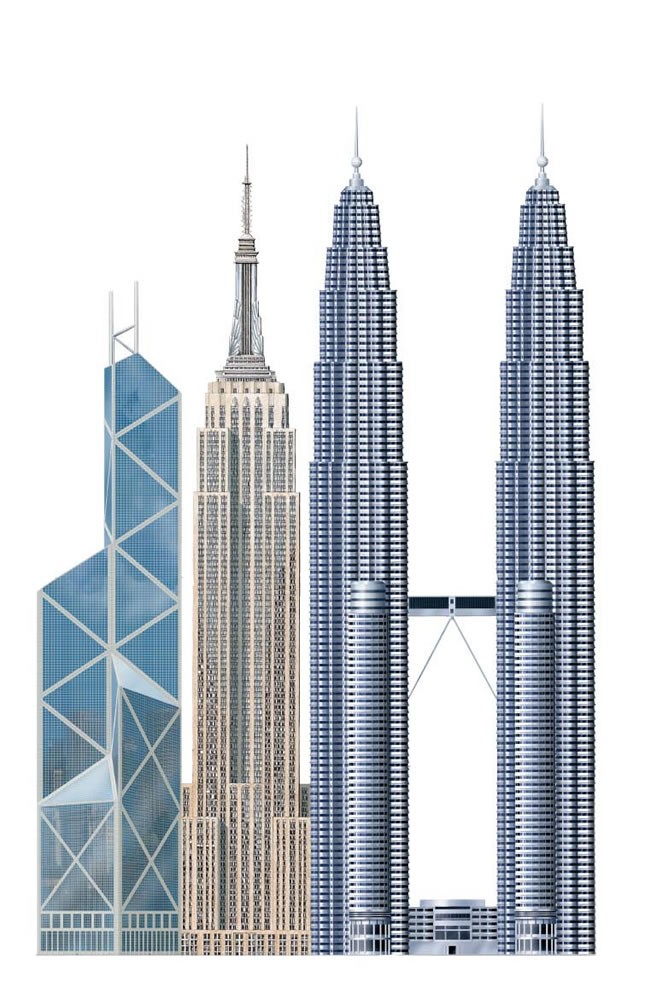

History of skyscrapers
The first skyscraper was built in Chicago in 1884 following a fire that devastated the city. Architects took the opportunity to put up new types of buildings there. The 10-storey Home Insurance Building was the first to be be built using an iron and steel frame to support its weight, rather than its outside walls. The invention of mechanical lifts (known as elevators in the US) by Elisha Graves Otis in 1854 made it possible for people to get up tall buildings easily. Soon, skyscrapers started to appear in New York as well as Chicago, often being built higher and higher in competition with one another. In recent years, China, Malaysia, Taiwan, Saudi Arabia and the United Arab Emirates are among nations where new skyscrapers are being built.
Skyscraper construction

Skyscrapers are usually supported on caissons, a type of pile in which a steel tube is driven into the ground and filled with concrete. When the caissons are in place, the thick concrete basement walls are built. The frame of the skyscraper is built up from this base. Tower cranes hoist steel girders into position and concrete lift (elevator) shafts are put in place. As the frame is completed, glass and metal panels, known as curtain walls, are fixed to the outside of the building.
875 North
Michigan Avenue
Chicago's 875 North Michigan Avenue, formerly the the John Hancock Center, was completed in 1968. A skyscraper with both offices and residential apartments, it is the 54th tallest building in the world (it was 2nd in 1968 and 6th in 1995). It is 344 metres (1128 feet) high but its twin antennae add a further 105 metres, making it a total of nearly 450 metres (1475 feet). It has a hull and core construction—a strong central concrete core with an open space between it and the steel frame. The frame has a triangular grid to give the structure maximum strength.
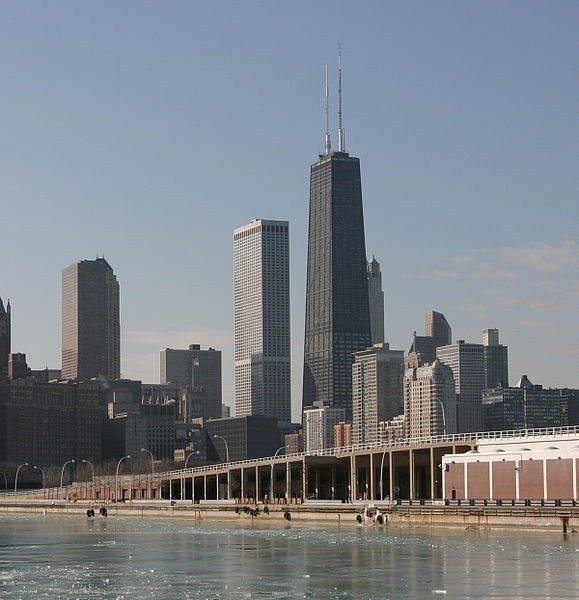
This skyscraper is like a city in a tower. It has shops, a bank, a post office, a restaurant, a swimming pool and a fitness centre. There are 50 lifts (elevators): it takes only 39 seconds to ascend to the 94th floor. A car park with spaces for 1200 cars takes up the first seven floors. Cars drive up a spiral ramp to get to it.
The building has more than 2000 kilometres (1200 miles) of electric wiring, carrying enough electricity to supply the equivalent of a city of 30,000 people. More than 2.75 million litres (600,000 gallons) of water are consumed each day. Computers warn of any fault in the skyscraper’s service systems.
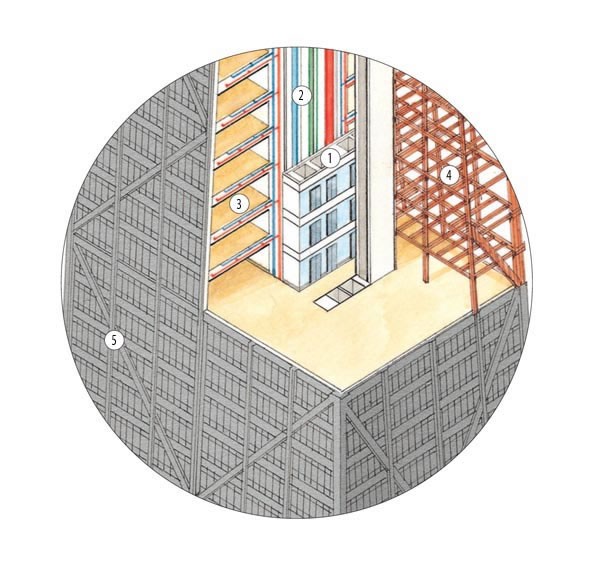
A core of reinforced concrete runs up the middle of the skyscraper. It forms the lift shaft (1) of the building and provides a duct for air conditioning and other services (2). Concrete beams link the core to the outside wall and support the floors (3). The weight of the building is taken by the steel frame (4), strengthened by massive X-shaped girders (5).
Lifts (elevators)
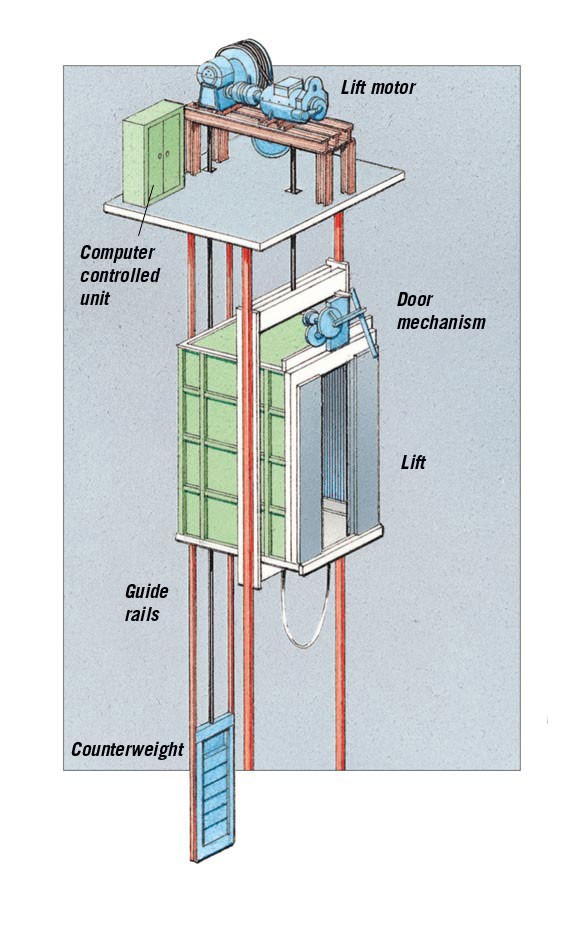
Living or working in a skyscraper would not be practical without an efficient lift system. Lifts are winched up and down on a steel cable pulley by an electric motor. The motor is worked by computerized control gear. Guide rails on either side of the shaft prevent the lift from swaying. The weight of the loaded car is nearly—but not quite—balanced by a counterweight at the other end of the main cable; the motor needs only to hoist the small difference in weight between them. If the steel cable were to snap, spring-loaded safety brakes would automatically grip the guide rails to prevent the lift from falling.
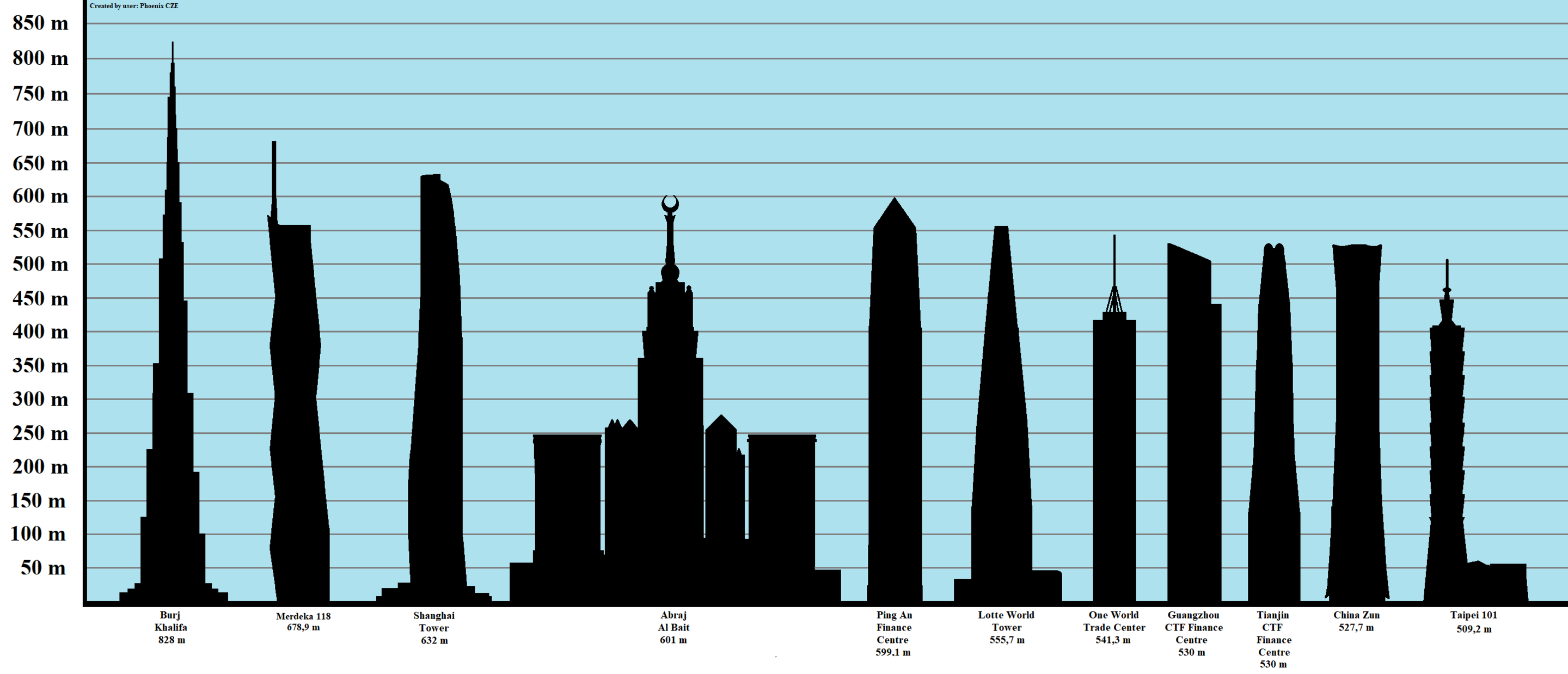

Burj Khalifa
Burj Khalifa (“Khalifa Tower”), a skyscraper in Dubai, United Arab Emirates, is, at 829.8 metres (2722 feet) high, the tallest manmade structure in the world. Completed in October 2009 and opened in January 2010, it also holds the record for the building with most floors (163) and the building with the highest occupied floor.
The design of Burj Khalifa is based on pattern in traditional Islamic architecture. In plan view (looking down), it has three parts, or elements, arranged around a central core, forming a Y-shape. As the tower rises, there are "setbacks" (width reductions) in each element in turn. In this way, the cross-section of the tower becomes narrower and narrower in an upward spiralling pattern until a single spire is reached at the top.
The lower floors make up a hotel. Further up are private apartments, an outdoor swimming pool, offices and an observation deck with far-reaching views across the Persian Gulf.
Taipei 101
Taipei 101, in Taiwan’s capital city, is 509.2 metres (1671 feet) high measured to the tip of its spire. It was the world's tallest building on its completion in 2004, holding the record until the completion of Burj Khalifa in 2009. It has 101 floors above ground, as well as five basement levels.
The tower was designed to withstand strong typhoon winds and earthquakes, both common occurrences in Taiwan. Its structure includes eight “mega-columns”, packed with concrete. The foundations are reinforced by 380 piles driven 80 metres (262 feet) into the ground. Suspended from the 92nd to the 87th floor, there is a steel pendulum, or damper, that sways to offset movements in the building caused by strong gusts. Popularly known as Damper Baby, it consists of 41 circular steel plates of varying diameters.
The name, Taipei 101, is a statement of “going one better” on 100, a traditional number of perfection. The tower is made up of eight segments of eight floors each. These make it look a little like an Asian pagoda (a tower linking earth and sky), a stalk of bamboo or even a stack of ancient Chinese money boxes.


Jeddah Tower
Jeddah Tower, also known as the Kingdom Tower, is a skyscraper under construction in Jeddah, Saudi Arabia. The centrepiece of the Jeddah Economic City project, it is located around 20 kilometres (12 miles) north of the city centre. Jeddah Tower is planned to be the world's first 1-kilometre-tall (3281-foot) building. On completion, it will be the world's tallest building, standing at least 180 metres (591 feet) taller than the Burj Khalifa. The building has been designed to a height of at least 1008.2 metres (3308 feet), although the exact height is being kept secret while the project is in development.
Jeddah Tower was designed by American architect Adrian Smith + Gordon Gill. Construction began on 1st April 2013. Piling was completed in December 2013 and above-ground construction started in September 2014. Progress was halted in January 2018, when only about a third of the tower had been built, but construction restarted in January 2025. By early January 2026 the Jeddah Tower had surpassed the 80th floor mark. The building is expected to be completed by 2028.
Jeddah Tower will house a hotel, apartments and offices, and will have the world's highest observation deck. There will 59 lifts, five of which will be double-deck (in which one cab is stacked on top of another, allowing passengers on two consecutive floors to use the lift at the same time), as well as 12 escalators.
Wooden skyscrapers
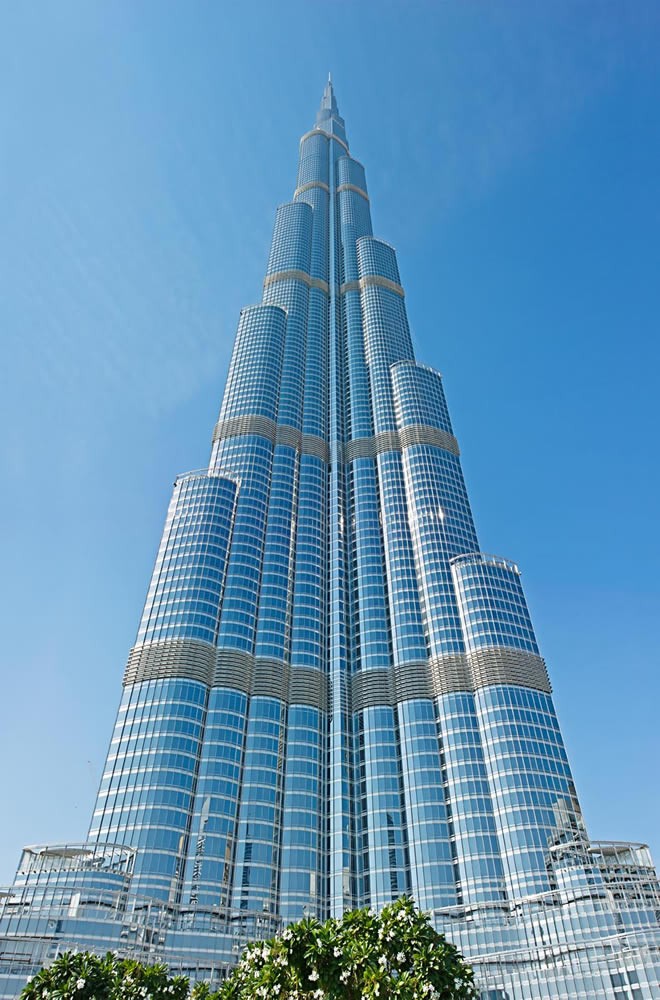
A skyscraper made—at least partly—of wood is known as a plyscraper ("ply" means a layer of wood). The world's tallest plyscraper wholly made of wood is the 85.4-metre (280-foot) tall, Mjøstårnet (“Tower of Mjøsa”) in Norway. (The Ascent MKE apartment building in Milwaukee, Wisconsin, which is 87 metres or 284 feet tall, is a hybrid—it is only partly made of wood.) Mjøstårnet is constructed from blocks of timber that are held together with an extremely strong adhesive, creating what is known as glulam (short for glued laminated timber).
As a material, wood is much more environmentally friendly than concrete, which accounts for between 7 and 8% of global carbon emissions. Vast quantities of sand—a natural resource in short supply across the world—are also needed to make it. Trees, on the other hand, are carbon sinks: they take carbon dioxide out of the atmosphere and store it. The cost of building a plyscraper is, however, significantly more expensive than one built entirely of steel and concrete.
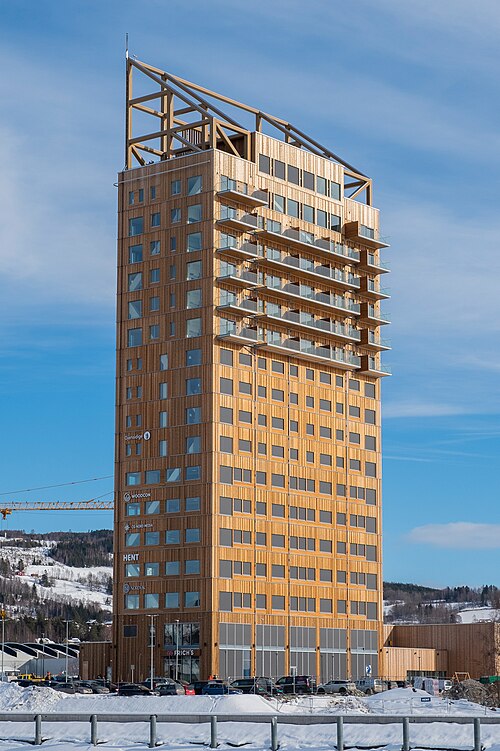
The world's tallest skyscrapers 2026
1 Burj Khalifa, Dubai, UAE 830 m (2722 ft)
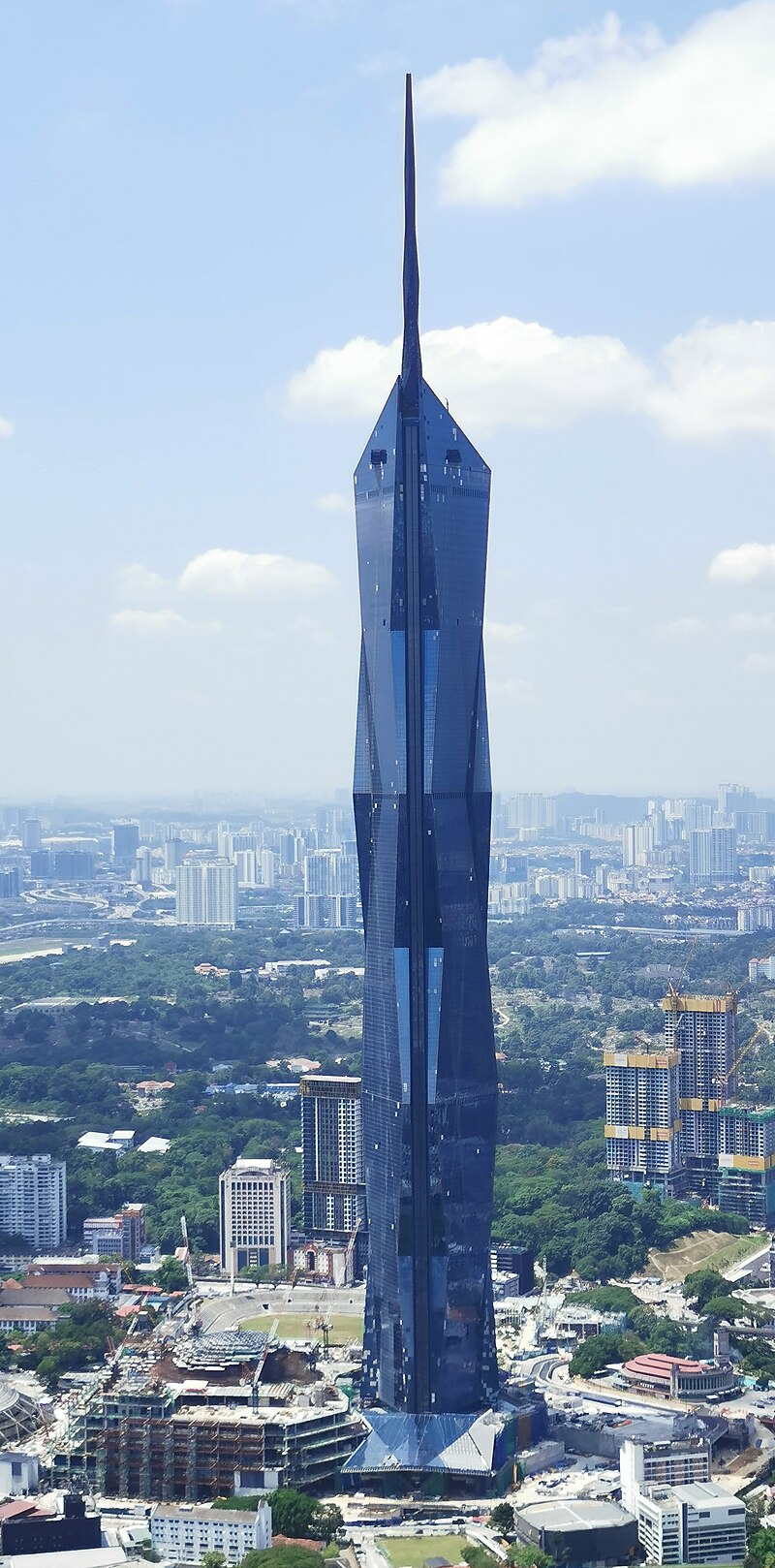
2 Merdeka 118, Kuala Lumpur, Malaysia 679 m (2227 ft)
3 Shanghai Tower, Shanghai, China 632 m (2073 ft)
4 Abraj Al-Bait Royal Clock Tower Hotel, Mecca, Saudi Arabia 601 m (1971 ft)
5 Ping An Finance Centre, Shenzhen, China 599 m (1965 ft)
6 Lotte World Tower, Seoul, South Korea 554.5 m (1819 ft)
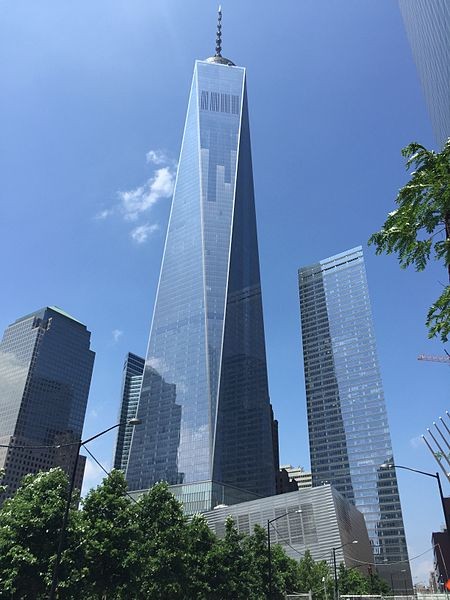
7 One World Trade Center, New York City, US 541 m (1776 ft)
8= CTF Finance Centre, Guangzhou, China 530 m (1739 ft)
8= Tianjin CTF Finance Center, Tianjin, China 530 m (1739 ft)
10 CITIC Tower (China Zun), Beijing, China 528 m (1732 ft)
11 Taipei 101, Taipei, Taiwan 509 m (1671 ft)
12 Shanghai World Financial Centre, Shanghai 492 m (1614 ft)
13 International Commerce Centre, Hong Kong 484 m (1588 ft)
14 Wuhan Greenland Center, Wuhan, China 476 m (1560 ft)
15 Central Park Tower, New York City, US 472 m (1550 ft)
16 Lakhta Center, St Petersburg, Russia, 462 m (1516 ft)
17 Landmark 81, Ho Chi Minh City, Vietnam, 461 m (1513 ft)
18 Chongqing International Trade and Commerce Center, Chongqin, China 458 m (1503 ft)
19 The Exchange 106, Kuala Lumpur, Malaysia 454 m (1488 ft)
20 Changsha IFS Tower T1, Changsha, China 452.1 m (1483 ft)
21 Petronas Towers, Kuala Lumpur, Malaysia 451.9 m (1483 ft)
22= Zifeng Tower, Nanjing, China 450 m (1476 ft)
22= Suzhou IFS, Suzhou, China 450 m (1476 ft)
24 Wuhan Centre, Wuhan, China 443 m (1454 ft)
25 Willis Tower (formerly Sears Tower), Chicago, US 443 m (1450 ft)
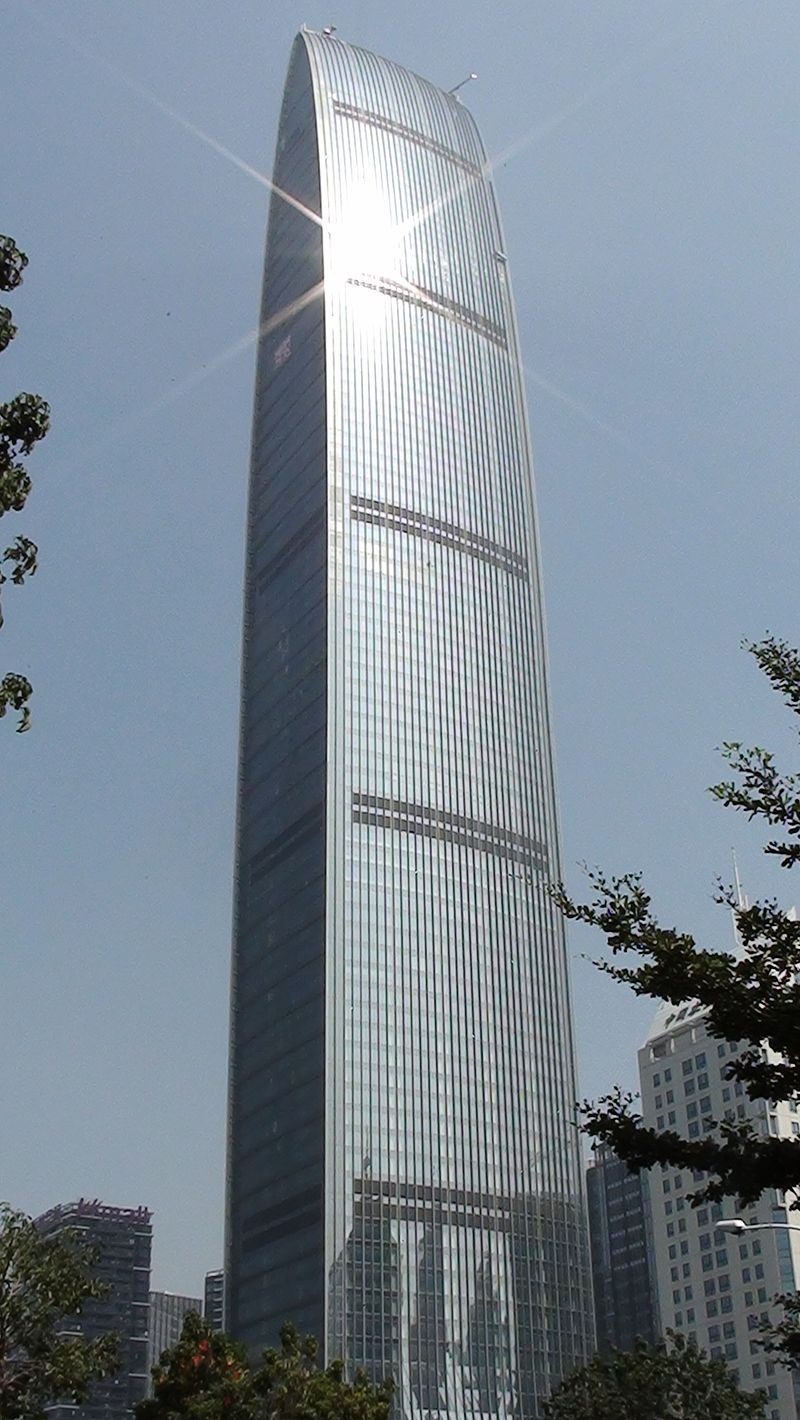
26 KK100, Shenzhen, China 442 m (1449 ft)
27 Guangzhou International Finance Centre, Guangzhou, China 440 m (1440 ft)
28 111 West 57th Street, New York City, US 435 m (1428ft)
29 Shandong International Financial Center, Jinan, China, 428 m (1404 ft)
30 One Vanderbilt, New York City, US 427 m (1401 ft)
Consultant: Chris Oxlade
pics
Without in any way limiting Q-files Ltd’s exclusive rights under copyright, any use of this publication to “train” generative artificial intelligence (AI) technologies to generate text is expressly prohibited. Q-files Ltd reserves all rights to license use of this work for generative AI training and development of machine learning language models.