
Asia

CITE
We have made every effort to follow citation style rules, but there may be some minor differences. If in doubt, please refer to the appropriate citation style manual.
Japan. (2026). In Q-files Encyclopedia, Geography, Asia. Retrieved from
https://www.q-files.com/geography/asia/japan
"Japan." Geography, Asia, Q-files Encyclopedia, 31 Mar. 2026.
https://www.q-files.com/geography/asia/japan.
Accessed 30 Oct. 2026.
Japan 2026. Geography, Asia. Retrieved 30 October 2026, from
https://www.q-files.com/geography/asia/japan
Geography, Asia, s.v. "Japan," accessed October 30, 2026.
https://www.q-files.com/geography/asia/japan


Japan
Japan is made up of four main islands, where most of the population lives, and nearly 7000 smaller ones. The four large islands are, in order of size: Honshu, Hokkaido, Kyushu and Shikoku. These islands are linked together by bridges and tunnels. Japan is covered by thickly forested mountains, many of them volcanic. The few lowland areas near the coast or along river valleys are shared between great cities—like Tokyo, the capital, Osaka and Nagoya—and farmland. The south of the country has mild winters and hot summers, while in the north, winters can be very cold. The cone of Mount Fuji, a volcano that rises above Tokyo, is snow-capped for several months of the year.


People
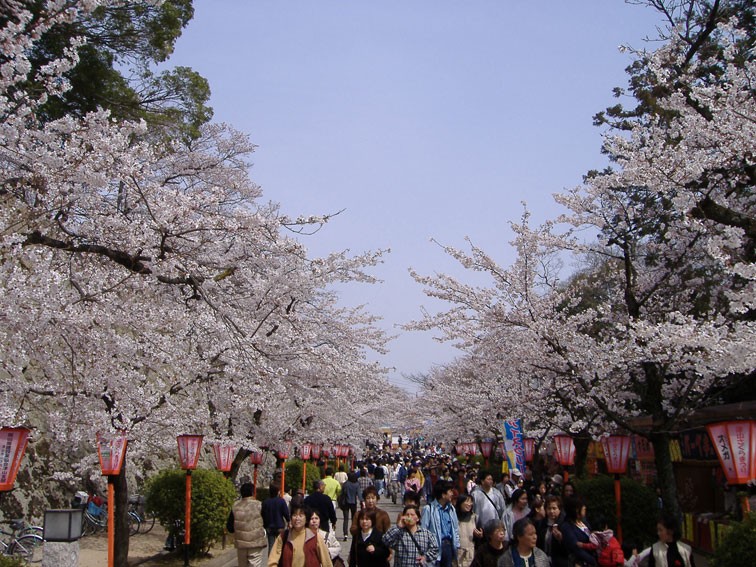
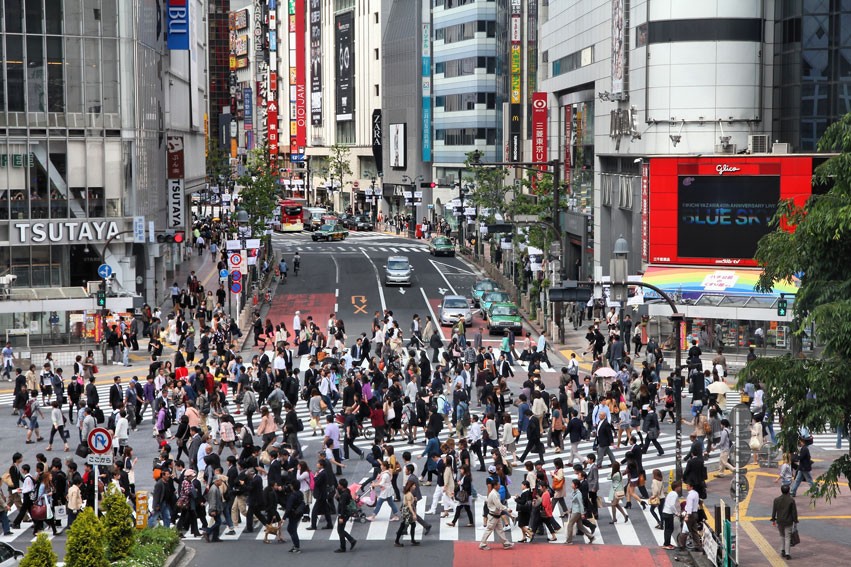
Nearly all Japan's people are ethnic Japanese, descended from peoples who settled on the islands after around 14,000 BC. A small number of Ainu, a people native to Hokkaido and the islands to the north, still live there today. Japan’s mountainous landscape means that land for building is in short supply, and nearly everybody lives in crowded cities along the coast.
Schools
Children in Japan work hard to get a place at good senior high schools (for ages 15 to 18) and universities, as entry to both is very competitive. Many children take extra classes after school at evening schools called jukas. As a result, Japan has a very well-educated population, and 99% of people can read and write. A typical school day in Japan includes time when the pupils help to clean the classroom.

Economy
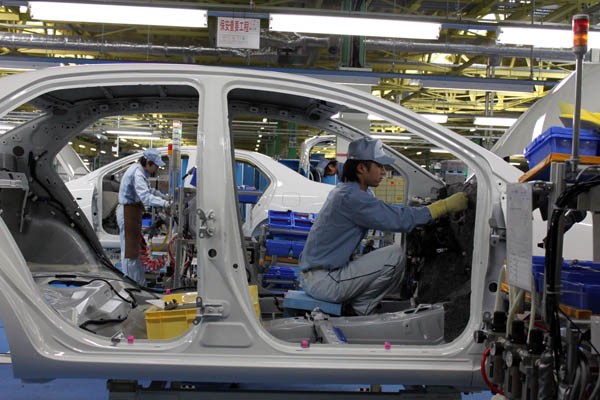
Since the 1960s, Japan’s economy has grown and advanced dramatically. Tokyo’s Central Business District is one of the world's most important financial centres. Japan is a leading producer of cars, ships and electronic goods such as computers, televisions and cameras. It is also the world leader in robotics: 45% of the world’s industrial robots (robots used in factories) were produced or designed by Japanese companies.

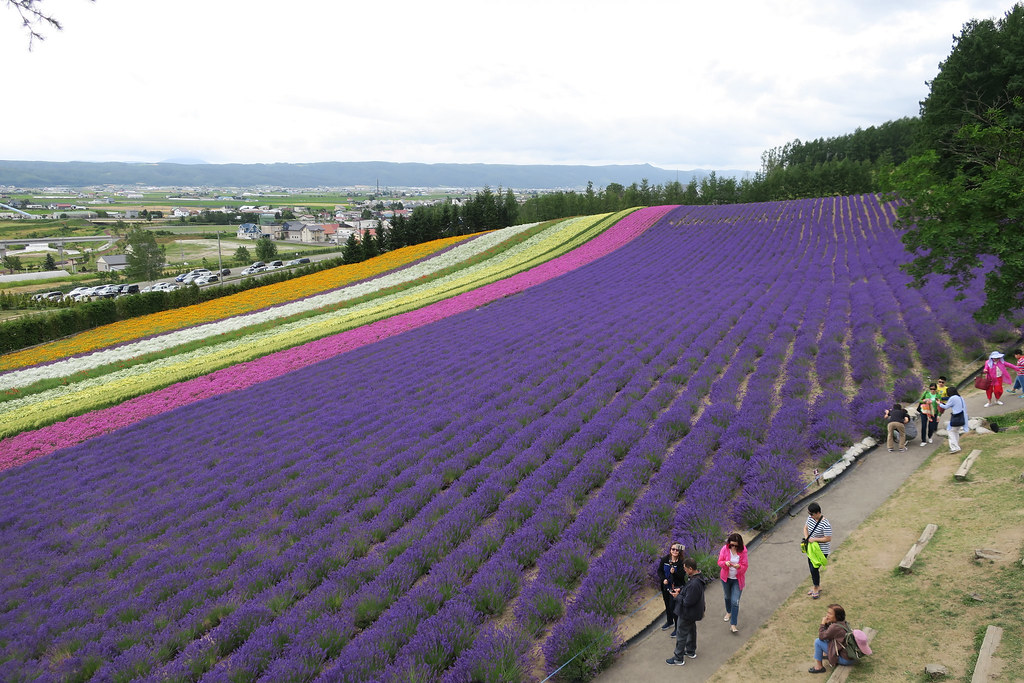
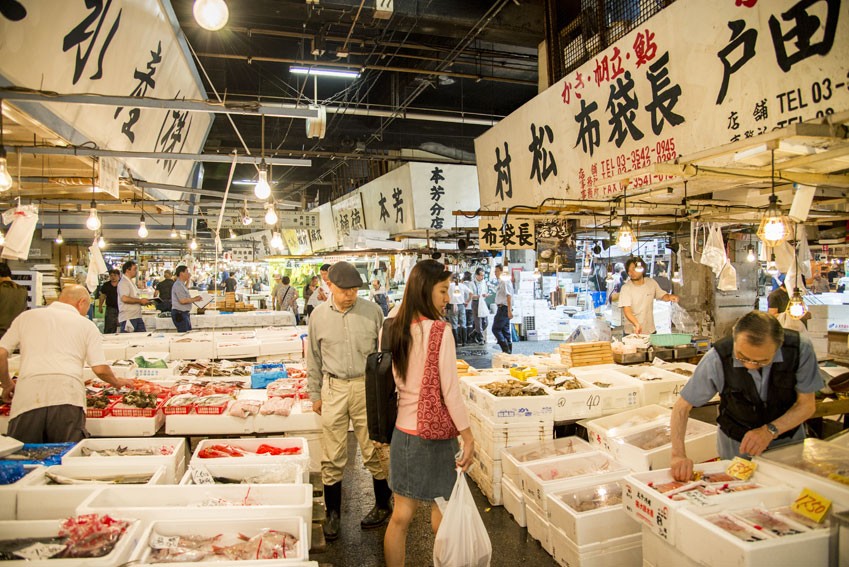
Only about a tenth of the country’s land is suitable for farming—the rest is too hilly. In some places, terraces have been cut into the mountain slopes to make maximum use of the land. Despite these difficult conditions, Japan still produces all the rice it needs, and imports very little food. Fishing is a major industry. Japan is second only to China in the amount of fish it catches. Along with rice, fish makes up an important part of the Japanese diet.


Earthquakes
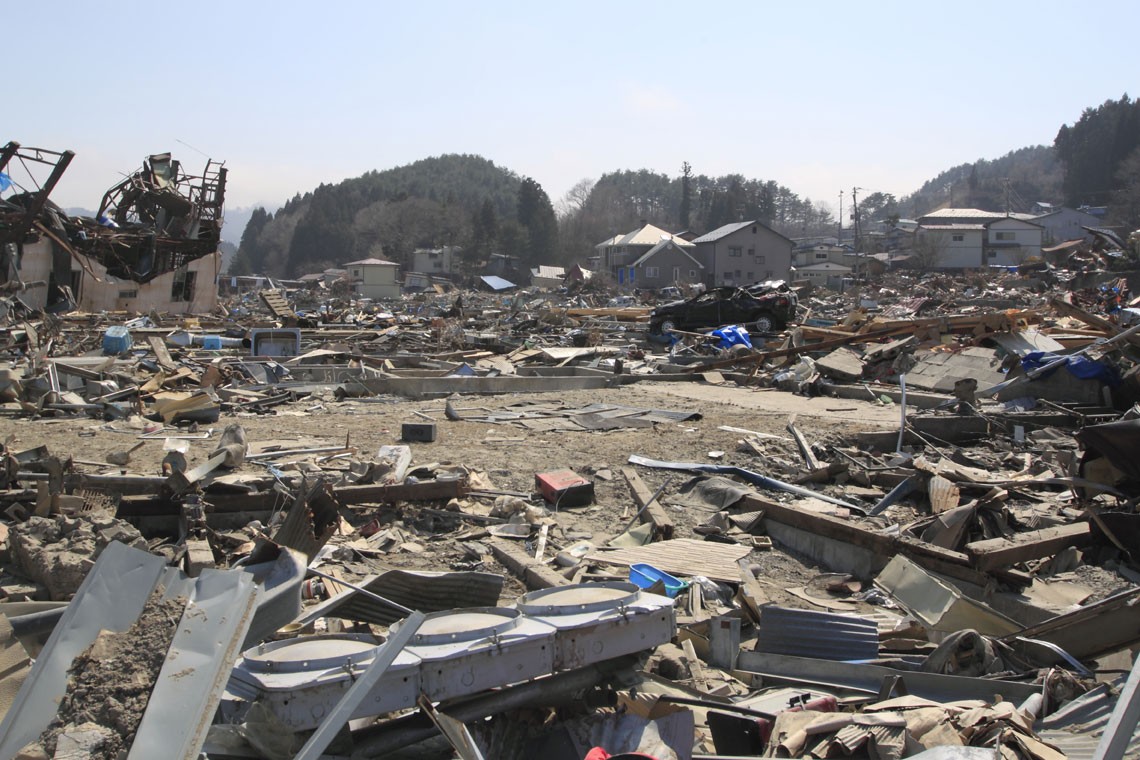
Japan is located on the Pacific Ring of Fire, where several major tectonic plates meet. This means that it is constantly at risk from earthquakes, triggered when the plates suddenly shift against one another. Most earthquakes are small: Japan experiences hundreds of tremors, or minor earthquakes, every day. Some are enormous, such as the 1995 Kobe earthquake, which measured 6.8 on the Magnitude Scale and killed over 6000 people. In 2011, the biggest earthquake ever recorded in Japan (9.1 on the Magnitude Scale) struck off the northeastern coast of Honshu, near Tohoku, triggering tsunami waves and devastating many coastal areas. Over 15,000 people were killed and whole towns were destroyed.
Many buildings in Japan are earthquake-proof. Some have reinforced steel columns which are sunk deep into the ground to keep them standing, and skyscrapers are built on pads that can absorb earthquake shockwaves. In schools and workplaces, people constantly practise “earthquake drills”, taking shelter under their desks.
Culture
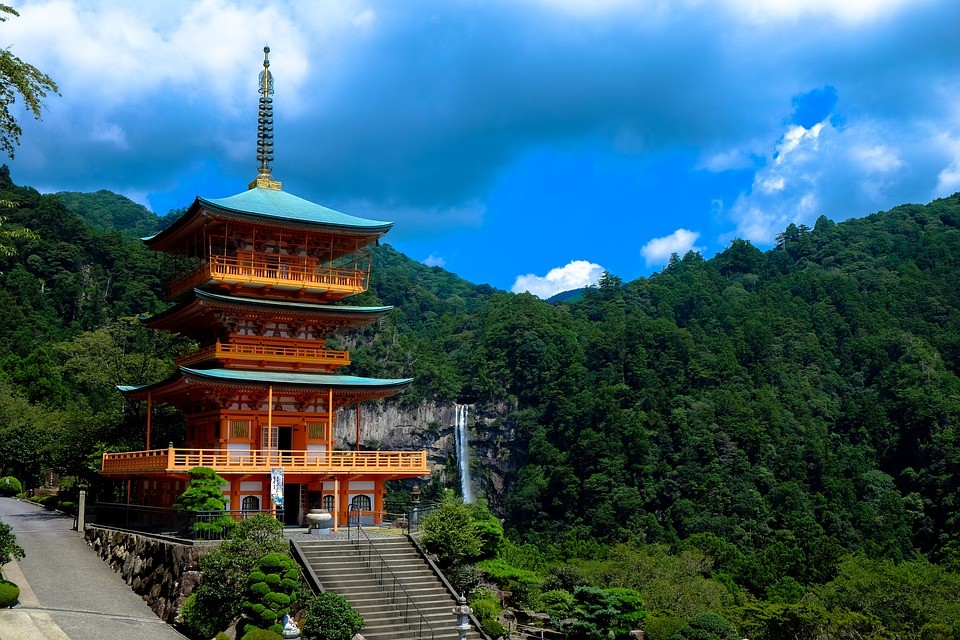
Japanese culture is influenced by Buddhism and Shintoism, religions that teach respect for other people and nature. Children learn to be respectful to their parents and teachers, and politeness is an important aspect of all areas of society.
Japanese art and sculpture are part of an ancient artistic tradition dating back to at least 300 BC. After the 6th century AD, Japanese art was influenced by Chinese silk paintings. In the 17th and 18th centuries, Japanese prints lent a strong influence to Western art. Other traditional arts include flower-arranging, or ikebana, and origami, a type of paper-folding.

Environment
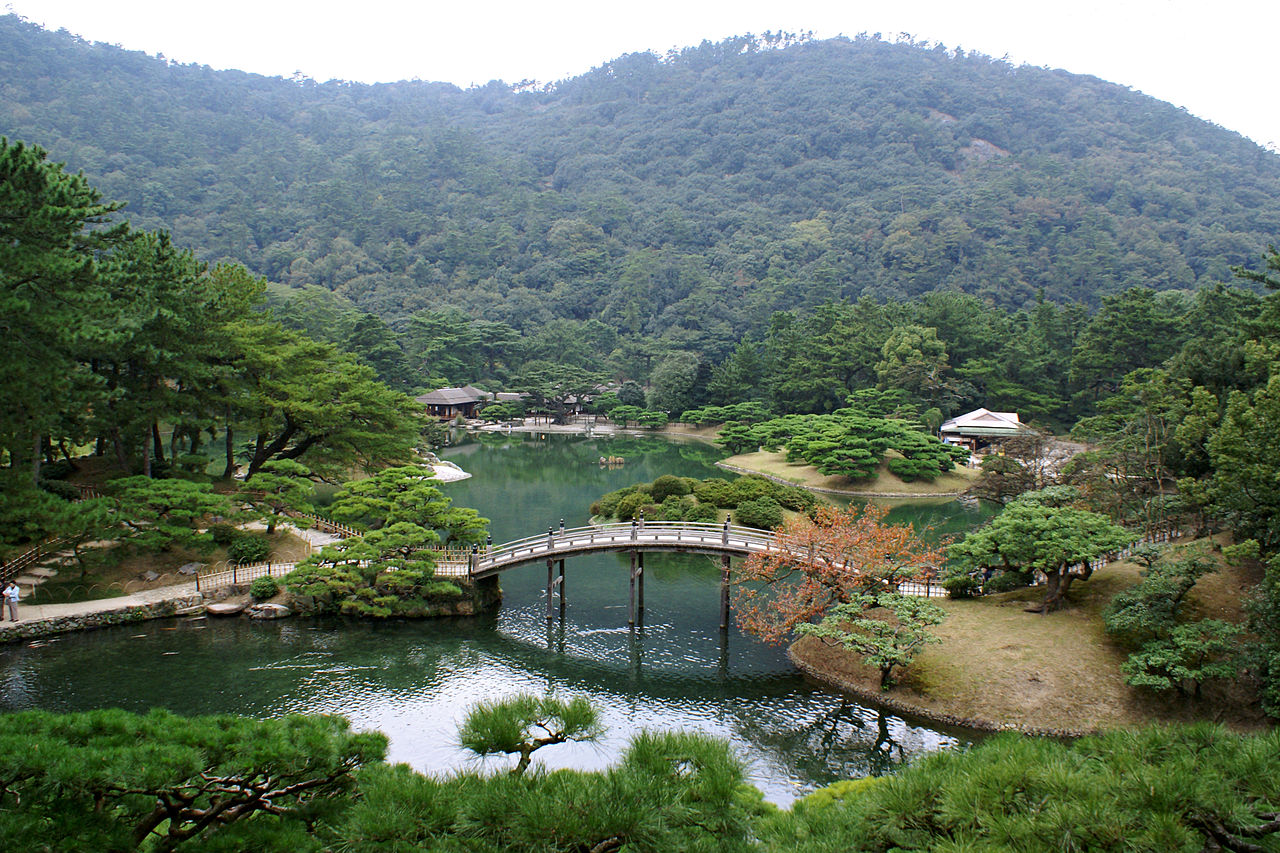
The environment is important to Japanese people, as respect for nature is central to Japanese religions and culture. There are many followers of the ancient Shinto religion, which teaches that all things—including rocks, trees, animals and people (both alive or dead)—have spirits. People worship these spirits, known as kami.
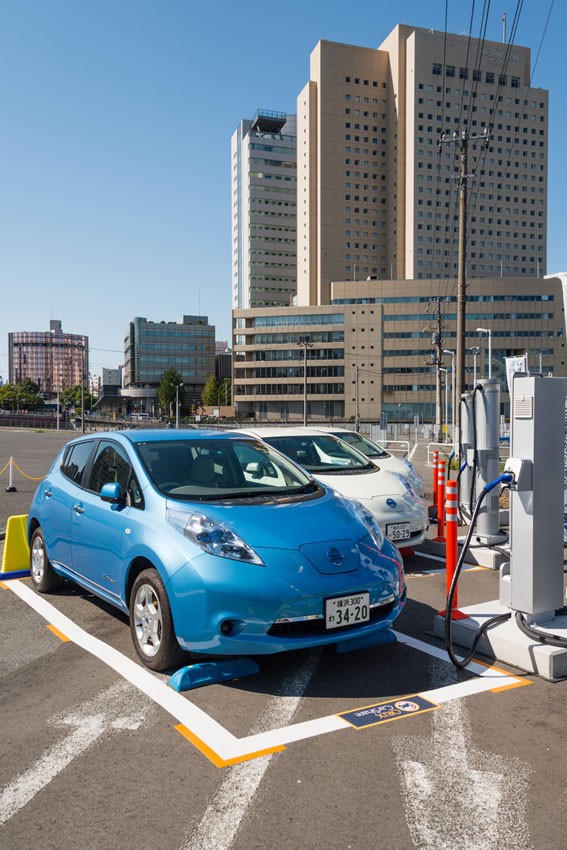
As a result of Japan’s industrial success, its environment has been damaged. Between the 1960s and 90s, the country suffered from severe air and water pollution. The government introduced tighter pollution laws in the late 1960s but air quality in many Japanese cities is still poor, and there is still widespread water pollution. The Kyoto Treaty was drawn up in Kyoto, Japan, in 1997: 37 countries signed it, agreeing to reduce their emissions of greenhouse gases.
Consultant: Nicholas Harris
Facts about Japan
Population 121,561,801 (2024 estimate)
Area 377,815 sq km (145,880 sq miles)
Highest point Mount Fuji (Fujiyama) 3776 m (12,389 ft)
Capital Tokyo (population of Tokyo-Yokohama metro area 33,400,000; population of Tokyo city 14,187,176)
Other major cities Osaka-Kobe (metro area 19,300,000), Nagoya (10,240,000), Fukuoka-Kitakyushu (5,503,000)
Languages Japanese, Aynu Itak, Ryukyuan languages
Religions None declared 61%, Shintoist / Buddhist 37%, other 2%
Ethnicity Japanese 98.5%, Korean, Chinese and other 1.5%
Currency Japanese yen (JPY)
Chief exports Vehicles, metals, iron and steel products, car parts, machinery, plastics, electrical goods
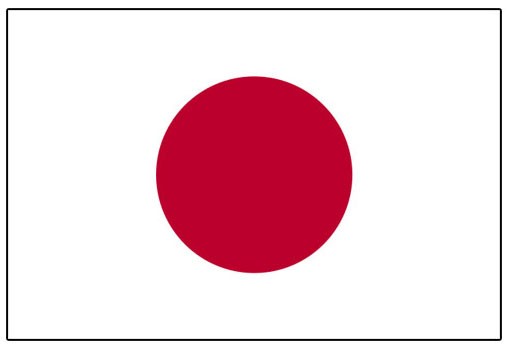
History of Japan
35,000 BC
The first settlers arrive in Japan by crossing land bridges from mainland Asia.
14,000 BC
The Jomon period begins: people live as hunter-gatherers, using stone tools and making simple pottery.
500–300 BC
Yayoi people arrive in Honshu from the Asian mainland, introducing new skills to the islands, such as weaving and rice-farming.
c.40–10 BC
Japan’s first emperor, Jimmu, rules, although legend has it that his rule began in 660 BC.
AD 3rd century
A powerful family, the Yamato, takes control of most Yayoi regions and clans, and comes to dominate Japan.
c.550
Buddhist monks from Korea visit Japan. Promoted by Prince Shotoku during his regency (593–622), Buddhism becomes the national religion.
735–37
A major smallpox epidemic may have killed as much as one third of Japan's entire population
1192–1867
Japan is governed by a series of powerful military rulers called shoguns, while the emperors are little more than figureheads.
1274 and 1281
Mongol armies try to invade Japan but are defeated by severe storms, known to the Japanese as “kamikaze” (divine winds).
15th–16th centuries
Sengoku (Warring States) period: almost continuous civil wars between daimyo clans, Japanese feudal lords and their families
1603
Having defeated rival clans, Tokugawa Ieyasu is appointed shogun by Emperor Go-Yozei. He establishes the Tokugawa shogunate at Edo (modern Tokyo), beginning the Edo Period
1638–1868
The Sakoku policy: in an effort to control foreign trade and stop the spread of Christianity, Japan’s rulers close the country off from the rest of the world, stopping Japanese people from leaving, and restricting all foreign trade.
1854
An American expedition led by Commodore Matthew Perry results in treaties (called the Unequal Treaties) that open up trade with the USA and other Western countries
1867
The last of the Japanese shoguns resigns, bring an end to the Tokugawa shogunate. The emperor, Meiji, regains power in 1868 and his government begins to modernize Japan, an event known as the Meiji Restoration. Japan will now rapidly industrialize and adopt Western ideas and production methods.
1894–95
First Sino-Japanese War (Jiawu War): victory gives Japan control of Taiwan and adds Korea to its sphere of influence
1904–05
The Russo-Japanese War: war with Russia ends with Japanese victory; Japan gains the southern half of Sakhalin and ports on the Liaodong peninsula
1931
Japan invades China and occupies Manchuria, leading to the establishment of puppet state of Manchukuo in 1932
1937
Second Sino-Japanese War breaks out with Japan's full-scale invasion of the rest of China. It captures Nanjing and the Chinese capital of Wuhan, but war reaches a stalemate by 1939 after resistance by Chinese forces
1941
On 7th December Japan launches a surprise attack on Pearl Harbor and declares war on the United States. It also invades the US-held Wake Island, Guam and the Philippines and launches attacks on British forces in Malaya, Singapore and Hong Kong beginning World War II in the Pacific.
1942
Allying with Thailand, Japan also occupies Burma, Borneo, the Dutch East Indies, New Britain, the Solomon and Gilbert Islands and parts of New Guinea. It is decisively defeated at the Battle of Midway by the US Navy in June.
1943–45
Following defeat at Guadalcanal in the Solomon Islands, Japan loses possession of its occupied territories
1945
(August) To force the Japanese to surrender unconditionally, the USA drops atomic bombs on the Japanese cities of Hiroshima (6th August 1945) and Nagasaki (9th August 1945), killing up to 240,000 people. On 15th August, Emperor Hirohito announces Japan’s surrender.
1947
Japan adopts a new constitution based on liberal democratic values.
1960s–80s
Japan’s economy develops rapidly
1989
Emperor Hirohito dies, succeeded by his son Akihito
1995
(January) An earthquake hits central Japan, killing thousands and causing widespread damage, especially in the city of Kobe
1995
(March) A religious sect, Aum Shinrikyo, releases the deadly nerve gas sarin on the Tokyo underground railway system, resulting in 12 people dead and thousands injured
2009
Japan’s economy has been declining since 1997; the country is now said to be facing its worst economic crisis since World War II
2011
The strongest earthquake ever recorded in Japan hits the Tohoku region. It triggers a tsunami and meltdowns at the Fukushima nuclear power plant.
2012
Dispute with China over ownership of Senkaku Islands in the East China Sea (claimed by China as the Diaoyu Islands)
2017
Japan’s government approves a bill that will allow Emperor Akihito to abdicate in favour of his eldest son, Crown Prince Naruhito
2019
(April) Emperor Akihito abdicates in favour of his son, Crown Prince Naruhito. A new era, called Reiwa, meaning order and harmony, begins. Akihito is the first Japanese emperor to stand down in more than 200 years
2019
(October) Typhoon Hagibis, the worst storm to hit the country in decades, strikes central Japan, causing destruction, landslides and flooding. At least 40 people lose their lives. The Rugby World Cup, which is being held in Japan, is disrupted with the cancellation of three matches, but Japan v Scotland goes ahead and Japan win 28-21 to reach the quarter finals for the first time
2022
Former prime minister Shinzo Abe is assassinated while delivering a election campaign speech in Nara
2024
A 7.6 magnitude earthquake strikes the remote Noto peninsula (northwest of Tokyo, on the Sea of Japan coast), toppling buildings in the cities of Wajima and Suzu and sparking a major fire. More than 160 people lose their lives, while 100 remain missing.
pics




Without in any way limiting Q-files Ltd’s exclusive rights under copyright, any use of this publication to “train” generative artificial intelligence (AI) technologies to generate text is expressly prohibited. Q-files Ltd reserves all rights to license use of this work for generative AI training and development of machine learning language models.