
Asia

CITE
We have made every effort to follow citation style rules, but there may be some minor differences. If in doubt, please refer to the appropriate citation style manual.
Qatar. (2026). In Q-files Encyclopedia, Geography, Asia. Retrieved from
https://www.q-files.com/geography/asia/qatar
"Qatar." Geography, Asia, Q-files Encyclopedia, 31 Mar. 2026.
https://www.q-files.com/geography/asia/qatar.
Accessed 30 Oct. 2026.
Qatar 2026. Geography, Asia. Retrieved 30 October 2026, from
https://www.q-files.com/geography/asia/qatar
Geography, Asia, s.v. "Qatar," accessed October 30, 2026.
https://www.q-files.com/geography/asia/qatar


Qatar
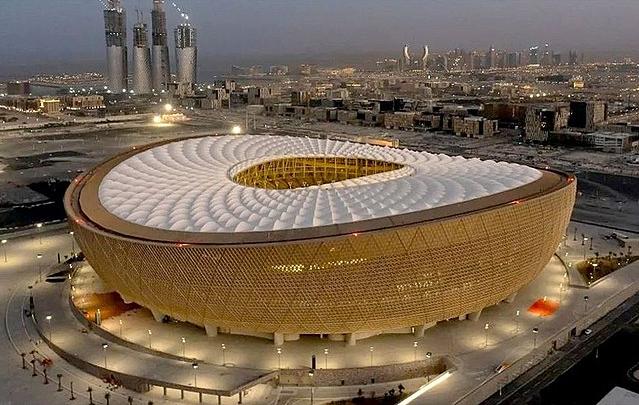
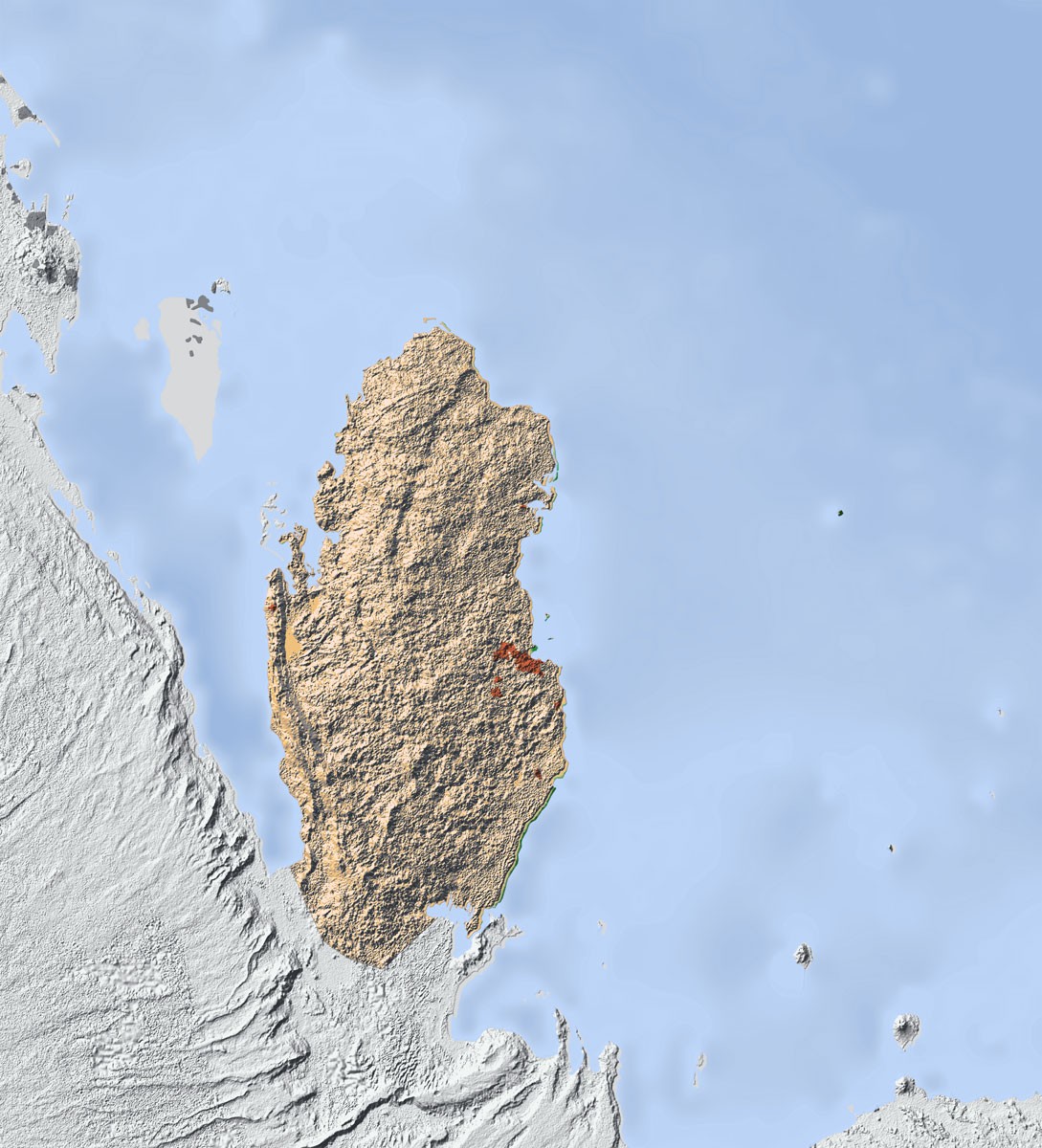
Qatar occupies a small peninsula that juts out into the Persian Gulf. Sandy desert plains cover most of the country. In the southeast is the Khawr al 'Udayd (“Inland Sea”), a sea inlet surrounded by tall sand dunes. Qatar has a desert climate; summers are long, hot and humid, while winter months are milder. Dust storms often blow in from the plains, darkening the skies of the capital city, Doha. Along with many of its neighbours in the Persian Gulf, Qatar was transformed by the discovery of oil in the late 1930s. Today, it is among the wealthiest countries in the world, and its citizens enjoy a high standard of living. It is ruled by a monarch, called the emir, who has absolute power. Qatar hosted the 2022 FIFA World Cup, becoming the first Arab and Muslim-majority country to do so.

People
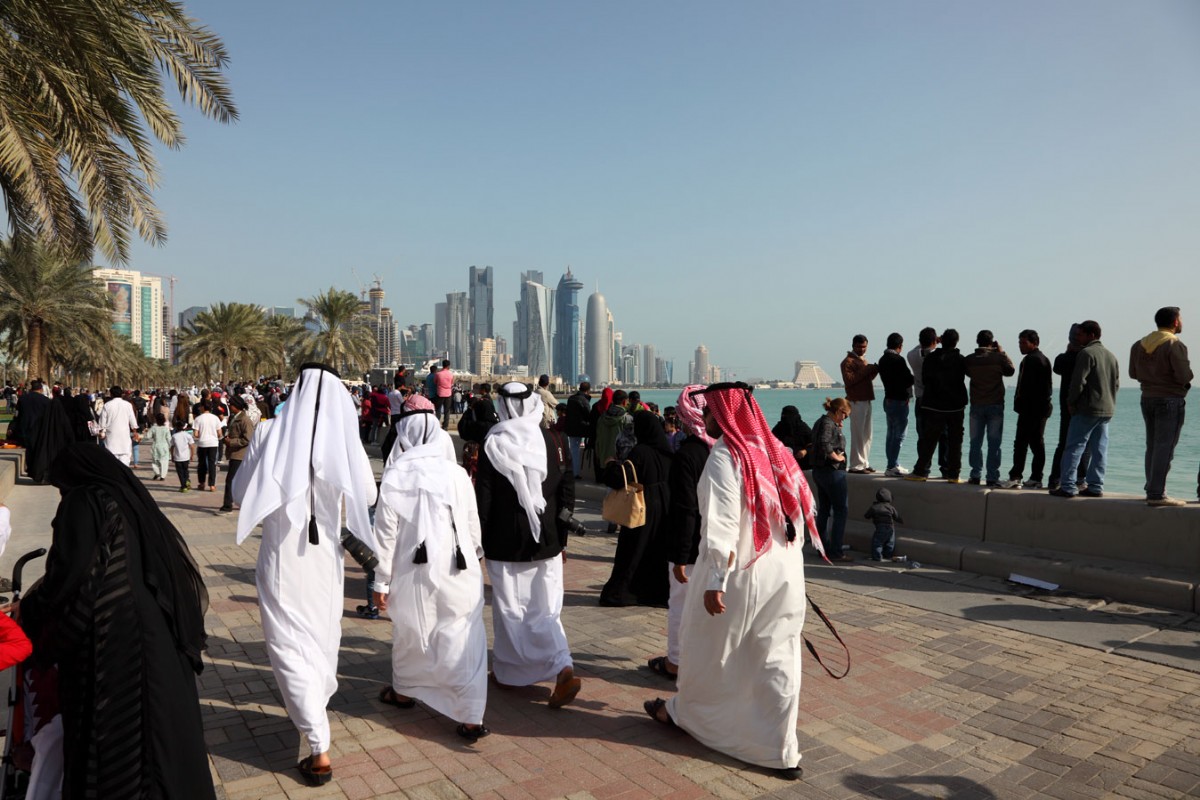
Most people in Qatar live in and around the capital, Doha, on the east coast. Qatar’s population includes a large number of foreign workers who have come to work in the oil and gas industries. They come from countries such as India, Nepal, Pakistan, Bangladesh and the Philippines—and nearly all are men, tipping Qatar’s gender balance: around three-quarters of the population is male. Native Qataris—just 12% of the population—are descended from the original inhabitants of the Arabian Peninsula. Historically, many nomadic Bedouin herdsmen also lived in the region, travelling from place to place.

Economy
Before oil was discovered in 1939, people on the Qatar Peninsula made a living from fishing and pearl diving. From the mid-20th century, Qatar began to use its new wealth from oil to modernize the country, improving its services, roads and buildings. Qatar’s main oil-drilling area is in the west around the city of Dukhan, while its huge natural gas reserves are found off its northwest coast. The North Field / South Pars field, shared between Qatar and Iran, is by far the world's largest natural gas field. Oil and natural gas are still Qatar’s largest exports and these industries provide most of the country’s income. Qatar’s dry, sandy land is difficult to farm, and nearly all its food has to be imported.
Consultant: Nicholas Harris
Facts about Qatar
Area 11,586 sq km (4473 sq miles)
Population 3,063,005 (2023 estimate)
Highest point Tuwayyir al Hamir 103 m (338 ft)
Capital Doha (population 1,186,023)
Other major cities Al Rayyan (779,000), Lusail (198,600)
Language Arabic
Religions Muslim 77.5%, Christian 8.5%, other 14%
Ethnicity Arab 40%, Indian 18%, Pakistani 18%, Iranian 10%, other 14%
Currency Qatari riyal (QAR)
Chief exports Natural gas, oil and petroleum products, fertilizers, steel


History of Qatar
661–1521
The region which makes up present-day Qatar is ruled by a succession of Muslim dynasties. Pearling (diving for pearls) and trading settlements grow up along Qatar’s coast.
1521
Bahrain and mainland Qatar are seized by the Portuguese. They then build a series of fortresses along the Arabian Coast, including one at Ruwayda (some experts say it may be Ottoman) in northern Qatar. From their trading posts, the Portuguese export gold, silver, silks, cloves, amber, horses and pearls until they are expelled from the area in 1602 by the Dutch and British.
1670–1783
Bani Khalid, an Arab tribal confederation, rule the area that includes modern Qatar.
1783–1868
Bahrain rules Qatar.
1825
House of Thani, the ruling family of Qatar, is established, with Sheikh Mohammed bin Thani as the first leader.
1867–68
Qatari–Bahraini War, in which Bahraini and Abu Dhabi forces sack and loot Qatar; Doha is all but destroyed
1868
Britain signs a treaty which recognizes Qatar as a separate entity, rather than a dependency of Bahrain
1871–1913
The Ottoman Empire builds a fort at Doha, stationing its soldiers there.
1916
Qatar becomes a British protectorate
1939
Oil reserves are discovered in Qatar; oil production begins after World War II ends in 1945.
1971
Qatar becomes independent from Britain.
1991
Qatar sends troops to Saudi Arabia to fight in the Gulf War on the side of Kuwait, the USA and allies.
1995
Emir Hamad bin Khalifa Al Thani seizes control of Qatar from his father Khalifa bin Hamad Al Thani, with the support of the armed forces, neighbouring states and France
1996
The influential Qatar-based satellite TV channel Al-Jazeera is launched.
2010
Qatar wins its bid to host the 2022 FIFA World Cup.
2017
Egypt, Saudi Arabia, United Arab Emirates, Bahrain, Yemen and Libya cut off diplomatic relations with Qatar, accusing it of funding terrorism
2021
(January) Qatar and Saudi Arabia agree to a resolution of the crisis, and Saudi Arabia re-opens its border with Qatar.
2022
Qatar hosts the 2022 FIFA World Cup, becoming the first Arab and Muslim-majority country to do so.
2025
(June) During the Twelve-Day War fought between Israel, US and Iran, Iran launches a missile attack on Qatar's Al Udeid Air Base, the largest US military base in the Middle East.
2026
(February onwards) Qatar comes under multiple drone and missile attacks launched by Iran during the 2026 Iran War. Ras Laffan Industrial City and Mesaieed Industrial Area are struck by Iranian drones. Qatar ceases all production of natural gas.
pics


Without in any way limiting Q-files Ltd’s exclusive rights under copyright, any use of this publication to “train” generative artificial intelligence (AI) technologies to generate text is expressly prohibited. Q-files Ltd reserves all rights to license use of this work for generative AI training and development of machine learning language models.