
Asia

CITE
We have made every effort to follow citation style rules, but there may be some minor differences. If in doubt, please refer to the appropriate citation style manual.
Singapore. (2026). In Q-files Encyclopedia, Geography, Asia. Retrieved from
https://www.q-files.com/geography/asia/singapore
"Singapore." Geography, Asia, Q-files Encyclopedia, 31 Mar. 2026.
https://www.q-files.com/geography/asia/singapore.
Accessed 31 Oct. 2026.
Singapore 2026. Geography, Asia. Retrieved 31 October 2026, from
https://www.q-files.com/geography/asia/singapore
Geography, Asia, s.v. "Singapore," accessed October 31, 2026.
https://www.q-files.com/geography/asia/singapore


Singapore
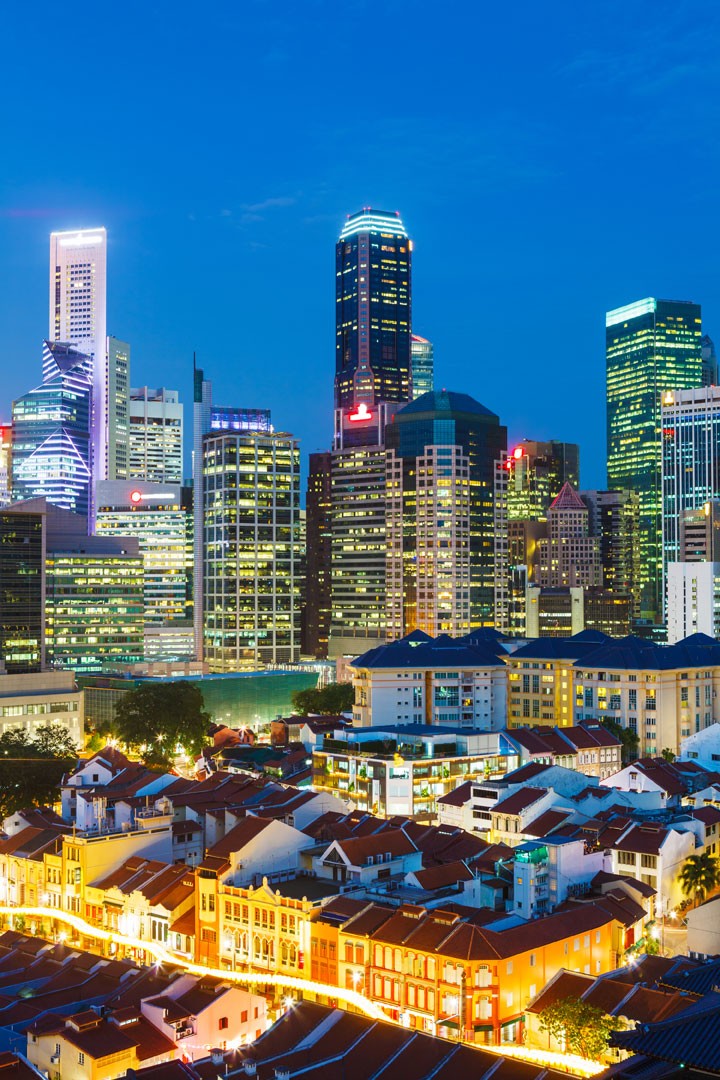
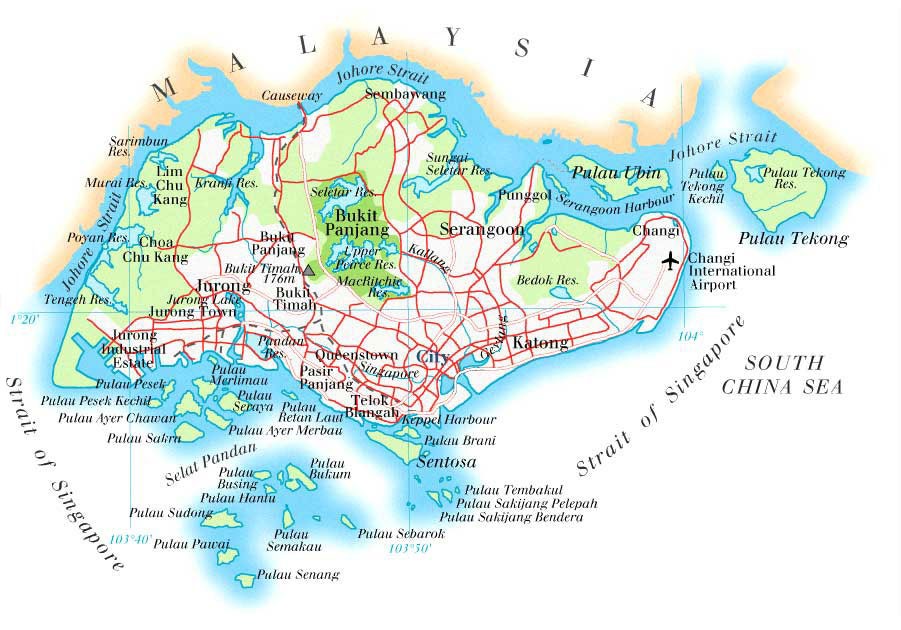
The island city of Singapore forms a country all of its own called a city-state. With over 6 million people crowded into just 736 square kilometres (284 square miles), it is the world’s second most densely populated country, after Monaco in Europe. Singapore is made up of a main island, known as Pulau Ujong in Malay, and 63 smaller surrounding islands. The city of Singapore and its suburbs cover much of the main island, although a region of nature reserves and rainforest remains in the island’s centre. Road and rail bridges connect Singapore with neighbouring Malaysia. Lying just north of the equator, Singapore has a tropical climate with hot, wet weather all year round and a rainy monsoon season between November and January.

People
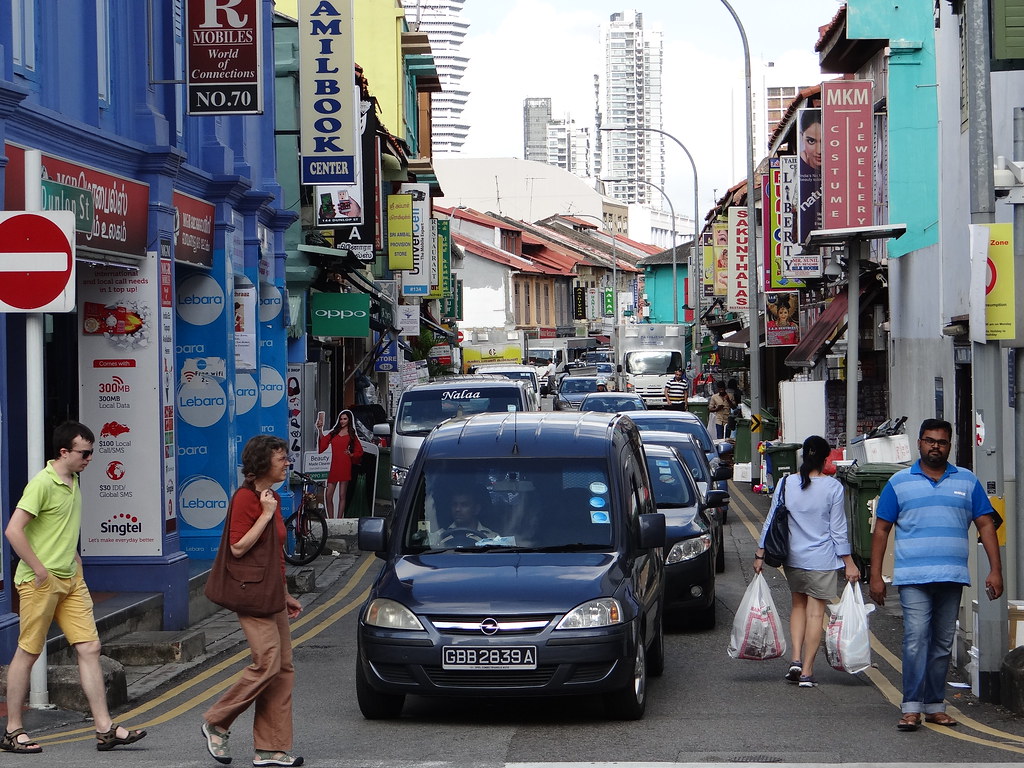
Before the state of Singapore was created by the British in 1819, there were fewer than 1000 people living on the islands, most of them Malays or other native tribes. Today, around three-quarters of Singaporeans are of Chinese descent. Singapore has one of the highest standards of living in Asia, and it attracts many immigrants from neighbouring Asian countries to work and study. Around a quarter of the population was born outside Singapore.
Singapore City
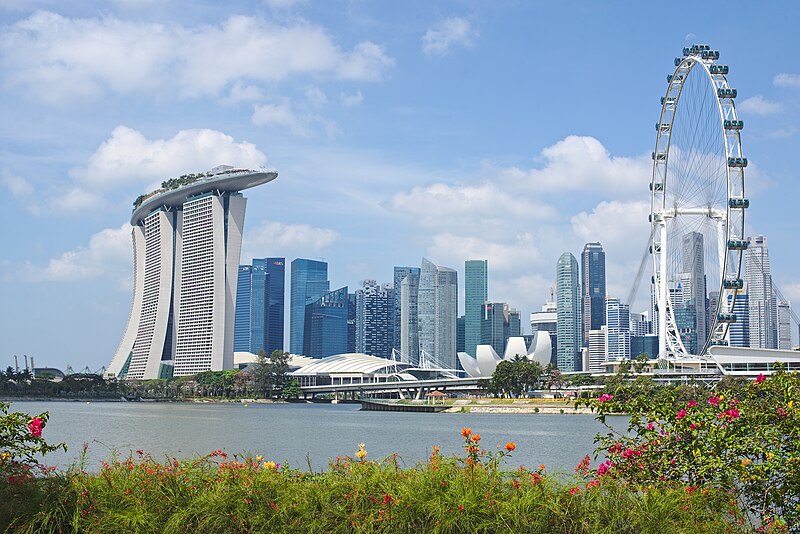
Skyscrapers and high-rise office buildings line the banks of the narrow Singapore River, while the shops, hotels and clubs of the city centre lie at the mouth of the river near the busy port. Singapore is sometimes known as “The Garden City” because of the parks, trees and green spaces found throughout the city.
To avoid congestion and pollution, the number of cars on the roads is restricted, and most Singaporeans get around by bus, train or bicycle. Since the 1960s, the city has grown so large that, today, it covers nearly the entire island. Most people in Singapore live in flats provided by the government; these high-rise apartment buildings are built around schools and shops, forming communities.
Port

Since it was created as a trading post in 1819, Singapore has been a thriving port city. Today, its location on one of the busiest shipping routes makes it one of the world’s busiest ports. The port of Singapore specializes in moving goods between other countries. Historically, the city made a lot of money serving as an entrepôt, a port that bought goods and sold them at a high price to ships on onward trade routes. The success of Singapore’s shipping industry has helped it to develop one of the strongest economies in the world. Businesses from all over the world, such as banking and insurance companies, have set up in Singapore.

Reclaiming land
To cope with the shortage of space on Singapore Island, new land has been reclaimed from the sea. Since the 1960s, reclamation projects have increased the land area by over 130 square kilometres (50 square miles). Rocks and earth are used to build up the land from the seabed.
In some places, several islands have been joined together using this method. Completed in 2009, Jurong Island in southwest Singapore was created out of several smaller islands to house oil, petrochemical and chemicals plants.

Consultant: Nicholas Harris
Facts about Singapore
Population 6,040,000 (2024 estimate)
Area 735.6 sq km (284 sq miles)
Highest point Bukit Timah 163.6 m (537 ft)
Capital Singapore (population 6.04 million)
Languages Chinese (Mandarin), English, Malay and Tamil (official languages)
Religions Buddhist 34%, Christian 18%, none 16%, Muslim 14%, Taoist 10%, Hindu 5%, other 3%
Ethnicity Chinese 74%, Malay 13%, Indian 9%, other 4%
Currency Singapore dollar (SGD)
Chief exports Machinery, electrical equipment, medicines, chemicals, oil and petroleum products


History of Singapore
7th–13th century
The island of Singapore is controlled by the Srivijaya Empire, based on Sumatra in modern-day Indonesia.
1299
The Kingdom of Singapura is founded by Sang Nila Utama, a prince from Palembang in Sumatra. The kingdom is established around a fortified settlement on an island known as Temasek.
1398
Temasek is sacked, possibly by the Javanese Majapahit empire. The last king, Parameswara, flees to the west coast of the Malay Peninsula to establish the Malacca Sultanate in 1400. Temasek becomes part of the Sultanate in 1414.
1511
Malacca falls to Afonso de Albuquerque of the Portuguese Empire. Malacca's laksamana (naval commander) flees to Singapore, which then becomes a trading centre for the Johor Sultanate, Malacca's successor state.
1613
Forces of the Portuguese Empire burn down the trading outpost at the mouth of Singapore River
1819
The trading settlement of Singapore is founded by Sir Stamford Raffles, a British statesman and East India Company employee.
1826
Along with Malacca and Penang in modern-day Malaysia, Singapore becomes a British colony, part of the Straits Settlements.
1832
Singapore becomes capital of the Straits Settlements, attracting thousands of migrants from China and India, arriving to work on the plantations of pepper and gambier (a substance taken from a shrub that is used both as tanning agent for leather and in traditional medicine).
1869
The Suez Canal opens, increasing trade between Europe and Asia. Singapore quickly becomes one of the busiest ports in the world.
1890s
As the rubber industry becomes established on the Malay Peninsula, Singapore becomes a rubber export hub.
1920s
Singapore is Britain’s main naval base in East Asia.
1941
During World War II, Singapore comes under air attack from Japanese forces
1942
Japan invades Singapore. Following a siege, the British defence force is defeated at the Battle of Singapore and 60,000 troops surrender on 15th February. The Japanese rename the island Syonan-to (Light of the South) and occupy it until their surrender to the Allies in August 1945
1945
(September) British return to Singapore and establish the British Military Administration of the Straits Settlements.
1946
The Straits Settlements is dissolved and Singapore becomes a separate crown colony.
1948
Rubber plantations and tin mines in Malaya are destroyed by communists. The British declares a State of Emergency over Singapore and Malaya.
1950
Maria Hertogh riots: following a ruling by the British colonial court that Maria, then a 13-year-old girl, be returned from her Malay Muslim carer to her Dutch parents, outraged Muslims riot in Singapore. 18 people are killed and 173 injured.
1959
Lee Kuan Yew (LKY) becomes the first Prime Minister of Singapore. He will remain in office until 1990.
1963
Singapore becomes independent from Britain, joining with the Federation of Malaya, Sabah (previously North Borneo) and Sarawak to form the Federation of Malaysia.
1964
A riot between Malays and Chinese breaks out on the birthday of the Prophet Mohammed. 23 people are killed.
1965
Singapore is expelled by the Federation of Malaysia and forms the independent Republic of Singapore (9th August).
2003
Outbreak of pneumonia-like Sars virus
2013
First rioting in Singapore in more than 30 years: it involves about 400 foreign workers protesting over the death of an Indian migrant worker knocked down by a bus
2016
The world's first driverless taxi service is launched in Singapore
pics


Without in any way limiting Q-files Ltd’s exclusive rights under copyright, any use of this publication to “train” generative artificial intelligence (AI) technologies to generate text is expressly prohibited. Q-files Ltd reserves all rights to license use of this work for generative AI training and development of machine learning language models.