
Asia

CITE
We have made every effort to follow citation style rules, but there may be some minor differences. If in doubt, please refer to the appropriate citation style manual.
Saudi Arabia. (2026). In Q-files Encyclopedia, Geography, Asia. Retrieved from
https://www.q-files.com/geography/asia/saudi-arabia
"Saudi Arabia." Geography, Asia, Q-files Encyclopedia, 17 Apr. 2026.
https://www.q-files.com/geography/asia/saudi-arabia.
Accessed 31 Oct. 2026.
Saudi Arabia 2026. Geography, Asia. Retrieved 31 October 2026, from
https://www.q-files.com/geography/asia/saudi-arabia
Geography, Asia, s.v. "Saudi Arabia," accessed October 31, 2026.
https://www.q-files.com/geography/asia/saudi-arabia


Saudi Arabia
Occupying most of the Arabian Peninsula is the oil-rich nation of Saudi Arabia. Since oil was discovered along the Persian Gulf in 1938 it has become one of the world’s wealthiest countries. Most of Saudi Arabia is made up of the Arabian Desert. Along the western Red Sea coast, mountains rise steeply; these gravelly uplands are scattered with Moon-like lava fields. Inland there is a large central plateau that slopes down to the Persian Gulf in the east. In the south of the country lie the vast expanses of the Rub’ Al Khali (Empty Quarter), a sandy desert. Saudi Arabia has an arid climate, with hot, dry weather all year round. Some regions receive no rainfall for years at a time, making it one of the driest countries on Earth.


People
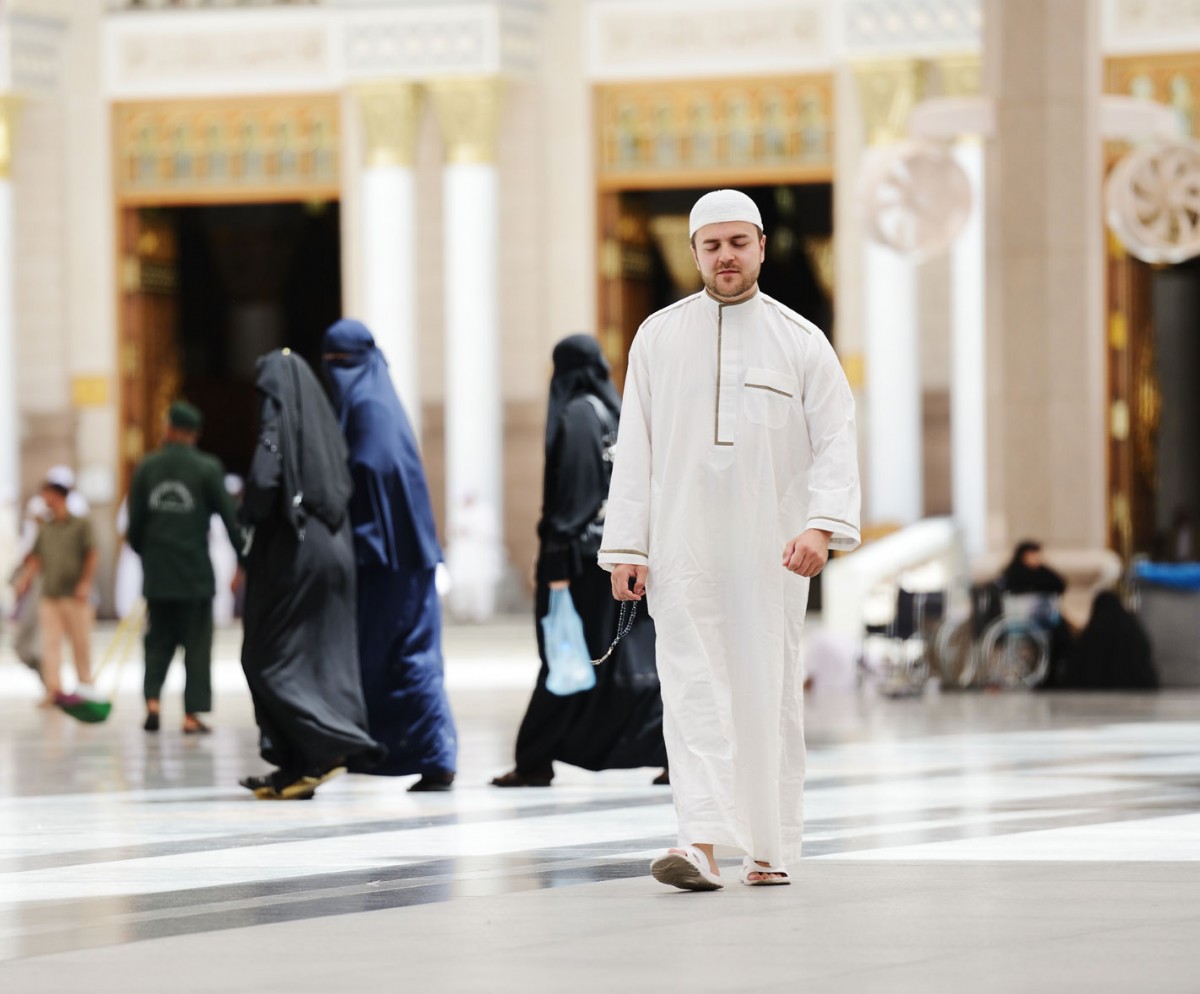
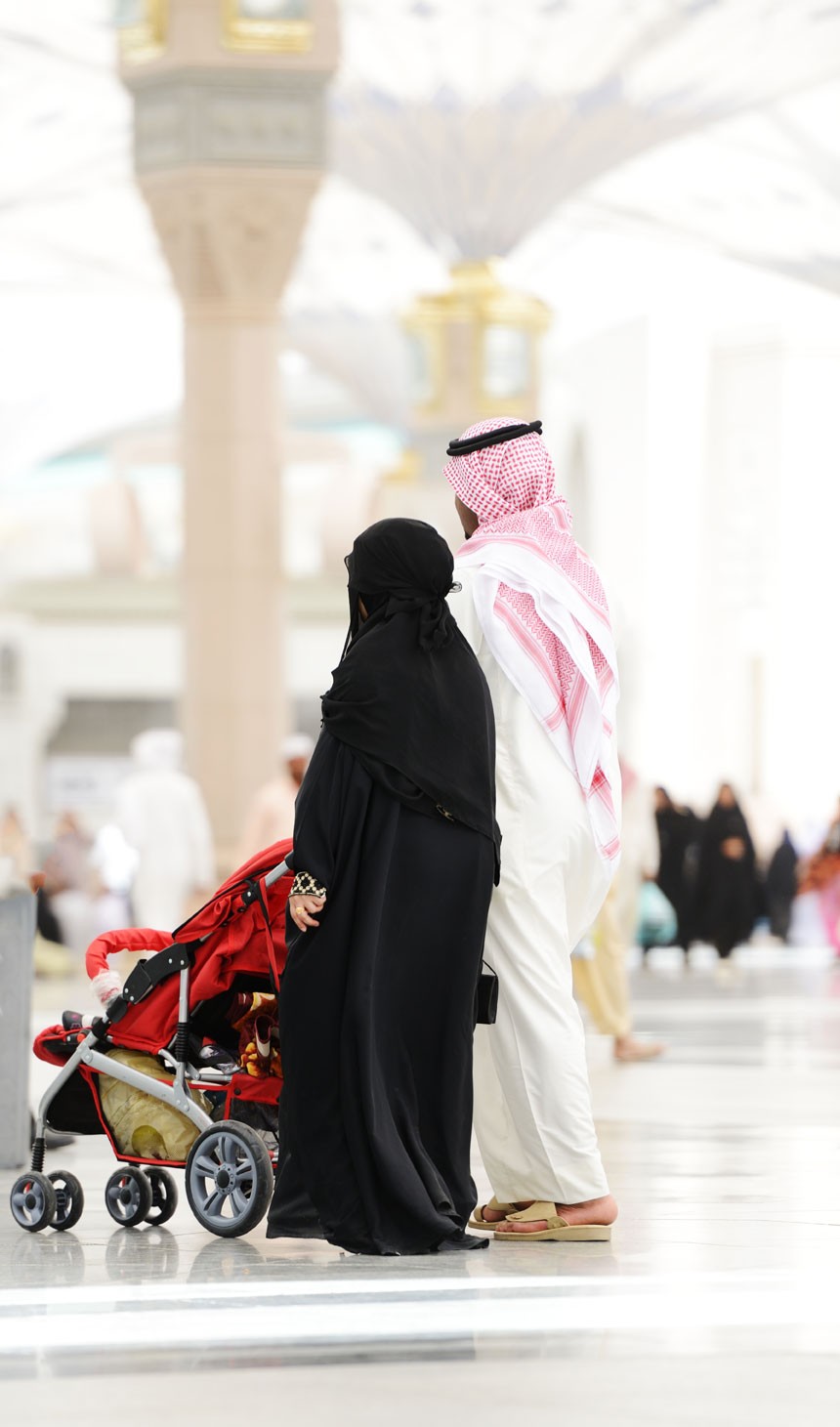
Most Saudis are Muslim Arabs. The country’s major religion, Sunni Islam, is an important part of everyday life and most people attend prayers at the mosque five times a day. The Muslim holy book, the Qur’an, is also the basis for many of the country’s laws.
Saudi Arabia’s Bedouin people, numbering around 1.3 million, are nomads. For centuries, they have moved from place to place in the desert, living in tents and herding camels, goats and sheep.
Until the 1960s, most Saudis lived a nomadic way of life but today nearly everyone lives in its cities, benefiting from a modernized water supply. Saudi Arabia is home to between 13 and 14 million foreigners (more than 40% of the entire population) who have come to live and work in the country’s oil and construction industries. Many migrants from Asia and Africa are employed on construction projects or in domestic work under the kafala system, by which migrant workers are bound to an employer for their period of residence in the country.
Oil
Saudi Arabia posseses around a quarter of the Earth’s known oil reserves. It is third largest producer and the largest exporter of petroleum in the world. The country also has the sixth largest natural gas reserves. Most of the oil is produced in the east of the country, along the Persian Gulf. Money from oil exports provides two-thirds of Saudi Arabia’s foreign income, and has enabled it to become a rich and developed country. Its government has modernized transport, communication and farming methods, and improved water resources. Many Saudis today have an extremely high standard of living.
The Vision 2030 programme aims to reduce the Saudi economy's reliance on oil through the development of other sectors, such as technology (including renewables), tourism and sports. However, the country remains heavily reliant on oil.
Rub’ Al Khali
This huge desert is one of the driest and most barren places on the planet, and remains virtually unexplored. Known as the Empty Quarter, nobody lives there at all. Conditions are hostile: temperatures as high as 56°C (133°F) have been recorded here, and its fine, reddish-orange sands are easily whipped up by the wind into enormous dust storms. About 2000 years ago, traders and their caravans crossed the desert, but today’s conditions make much of the desert almost completely impassable.


Consultant: Nicholas Harris
Facts about Saudi Arabia
Population 34,566,328 (2025 census)
Area 2,149,690 sq km (830,000 sq miles)
Highest point Jabal Sawda' 3133 m (10,276 ft)
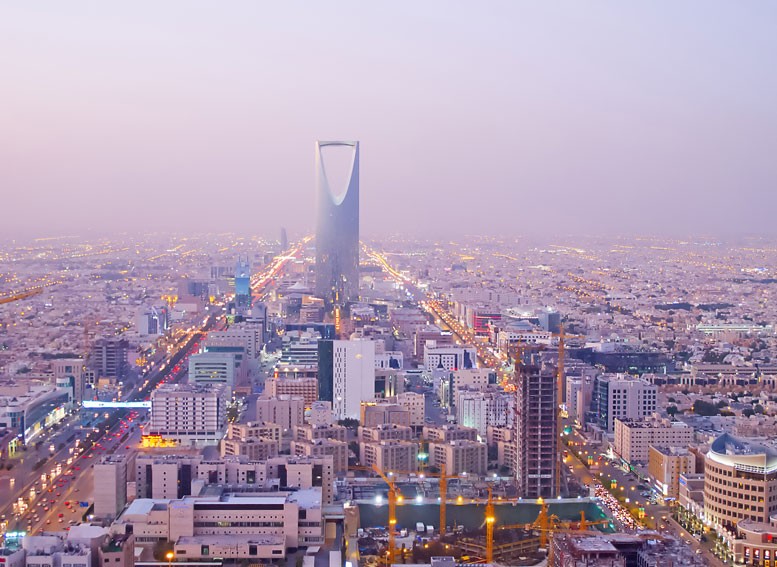
Capital Riyadh (population 4,205,961)
Other major cities Jeddah (pop. 2,867,446), Mecca (1,323,624), Medina (1,300,000), Sultanah (946,697), Ad Dammam (768,602), Hofuf (Al-Ahsa, 729,606)
Language Arabic
Religion Muslim 100% (excluding foreign workers)
Ethnicity Arab 90%, Afro-Asian 10%
Currency Saudi riyal (SAR)
Chief exports Oil and petroleum products, chemicals, plastics, processed foods


History of Saudi Arabia
11th century BC
The land of Midian, with its capital city at Qurayyah, flourishes in northwestern Saudi Arabia
65 BC–7th century AD
Ancient kingdom of Lihyan in northwestern Saudi Arabia falls to Nabataeans, an Arab people. Their kingdom is annexed into the Roman Empire by Emperor Trajan in 106 AD, and it becomes the frontier province of Arabia Petraea
7th century
The tribes of the Arabian Peninsula are united by the Prophet Mohammed. Following his death in 632, his followers expand the territory under Muslim rule beyond Arabia.
661–1258
The Arabian Peninsula is ruled by the Umayyad, Abbasid and other dynasties as part of the Islamic Empire.
16th century
The Arabian Peninsula becomes part of the Ottoman Empire.
1744
Mohammed bin Saud and the Muslim leader Mohammed bin Abdul Wahhab create the first Saudi state, whose territories quickly expand to include the whole central plateau.
1818
The Ottoman army attacks the Saudi state, destroying the powerful city of Diriyah.
1824
The Al-Saud family regains control of the central Arabian Peninsula, and establishes its capital at Riyadh.
1865
Ottoman armies capture parts of the Saudi state, forcing its ruler, Abdulrahman bin Faisal Al-Saud, into exile in the Rub’ al Khali desert.
1902
Abdulrahman’s son Abdulaziz, later known as Ibn Saud, recaptures the city of Riyadh in a night raid, regaining control of the state and eventually uniting its warring tribes.
1916–18
Arab Revolt: an armed uprising by the Hashemite-led Arabs of the Hejaz against the Ottoman Empire. Beginning in Mecca, its goal is to establish an independent and unified Arab state which the British government promises to recognize. The Hashemite Kingdom of Hejaz is self-proclaimed in June 1916 with Hussein bin Ali as king.
1926
Ibn Saud, who became the Sultanate of Nejd in 1921, conquers and annexes the Kingdom of Hejaz, declaring himself king
1932
The two kingdoms of Hejaz and Nejd are unified as the Kingdom of Saudi Arabia with Ibn Saud, Abdulaziz, as its king, on 23rd September (present-day Saudi National Day)
1938
Oil is discovered along the coast of the Persian Gulf.
1953
Abdulaziz dies and is succeeded as king by his son Saud. He is deposed by his half-brother Faisal in 1964.
1960
Saudi Arabia is one of the founding members of OPEC (Organization of Petroleum Exporting Countries).
1975
King Faisal is assassinated by his nephew and his half-brother Khalid becomes king.
1979
Grand Mosque (Al-Masjid al-Haram) seizure: insurgents calling for the overthrow of the House of Saud (Al-Saud) take over Grand Mosque in Mecca; the siege ends after two weeks (November); Qatif Uprising: revolt by the Shiite Muslim minority in the oil-rich Al-Hasa province (December)
2006
363 Hajj pilgrims are killed in a crush during a stone-throwing ritual in Mecca (January); in a separate incident, more than 70 pilgrims are killed when a hostel in Mecca collapses.
2011
Saudi women take part in protest drive in defiance of ban on female drivers (June)
2015
King Salman, 25th son of Abdulaziz, ascends throne after King Abdullah dies (January); Saudi Arabia launches campaign of air strikes against Houthi rebels in Yemen (March); Hundreds die in stampede near Mecca during annual Hajj pilgrimage, days after 109 people perish when a crane collapses at the Grand Mosque (September)
2016
A United Nations report accuses the Saudi-led coalition fighting Houthi rebels in Yemen of killing and injuring hundreds of children
2017
Saudi Arabia leads an air, land and sea blockade by Arab countries on Qatar, in an attempt to get Qatar to cut its ties with terrorism. It lasts until January 2021.
2017
Mohammed bin Salman, seventh son of King Salman, becomes Crown Prince and de facto ruler (ruler in practice) of Saudi Arabia. He takes the office of Prime Minister in 2022.
2018
Ban forbidding women to drive in Saudi Arabia is lifted
2024
(December) Saudi Arabia is confirmed as the host for the 2034 men's FIFA World Cup
2026
In response to US-Israeli strikes against it, Iran launches a series of missile and drone strikes on targets across Saudi Arabia, including Prince Sultan Air Base, Riyadh airport and oil refineries.
pics
Without in any way limiting Q-files Ltd’s exclusive rights under copyright, any use of this publication to “train” generative artificial intelligence (AI) technologies to generate text is expressly prohibited. Q-files Ltd reserves all rights to license use of this work for generative AI training and development of machine learning language models.