
Asia

CITE
We have made every effort to follow citation style rules, but there may be some minor differences. If in doubt, please refer to the appropriate citation style manual.
Laos. (2026). In Q-files Encyclopedia, Geography, Asia. Retrieved from
https://www.q-files.com/geography/asia/laos
"Laos." Geography, Asia, Q-files Encyclopedia, 31 Mar. 2026.
https://www.q-files.com/geography/asia/laos.
Accessed 30 Oct. 2026.
Laos 2026. Geography, Asia. Retrieved 30 October 2026, from
https://www.q-files.com/geography/asia/laos
Geography, Asia, s.v. "Laos," accessed October 30, 2026.
https://www.q-files.com/geography/asia/laos


Laos
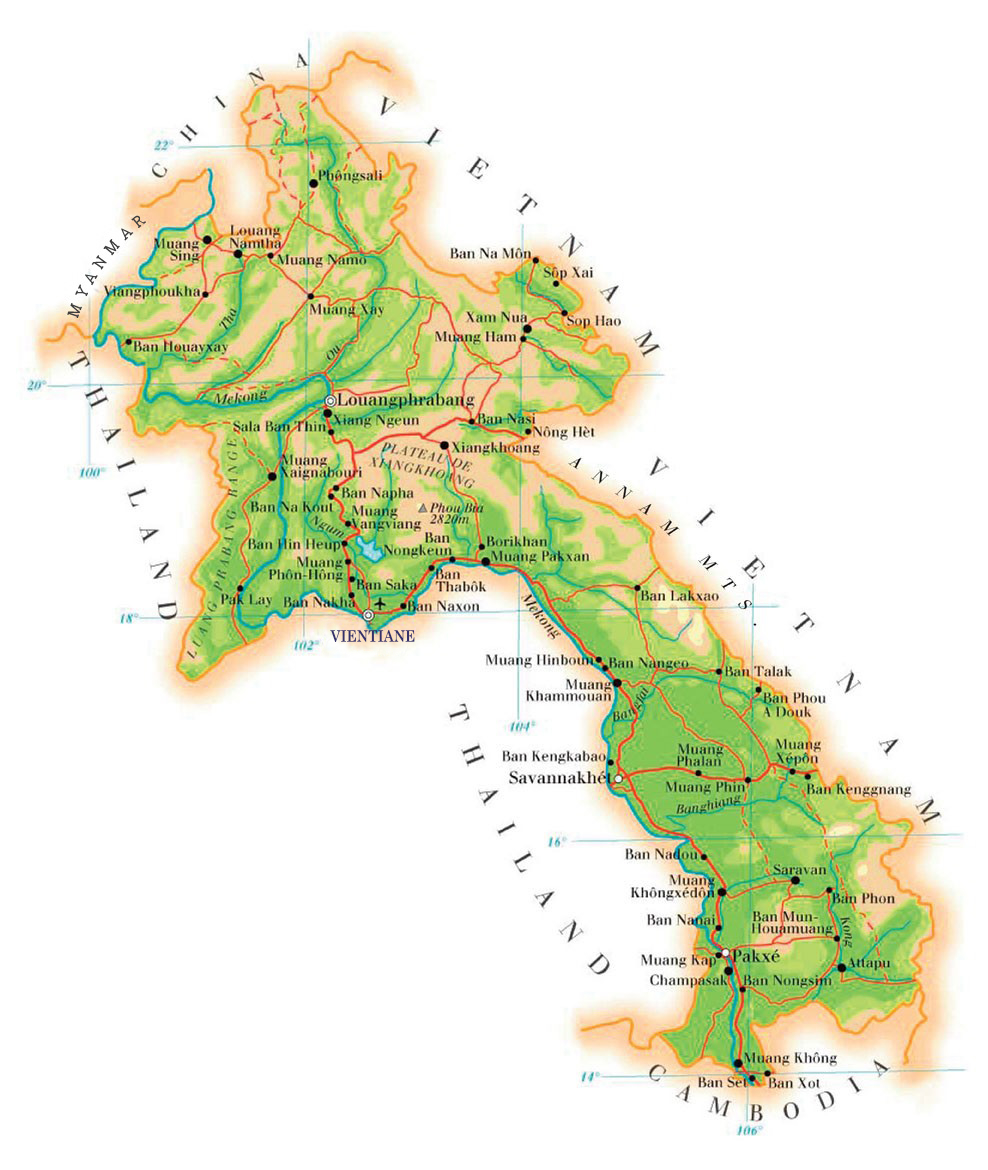
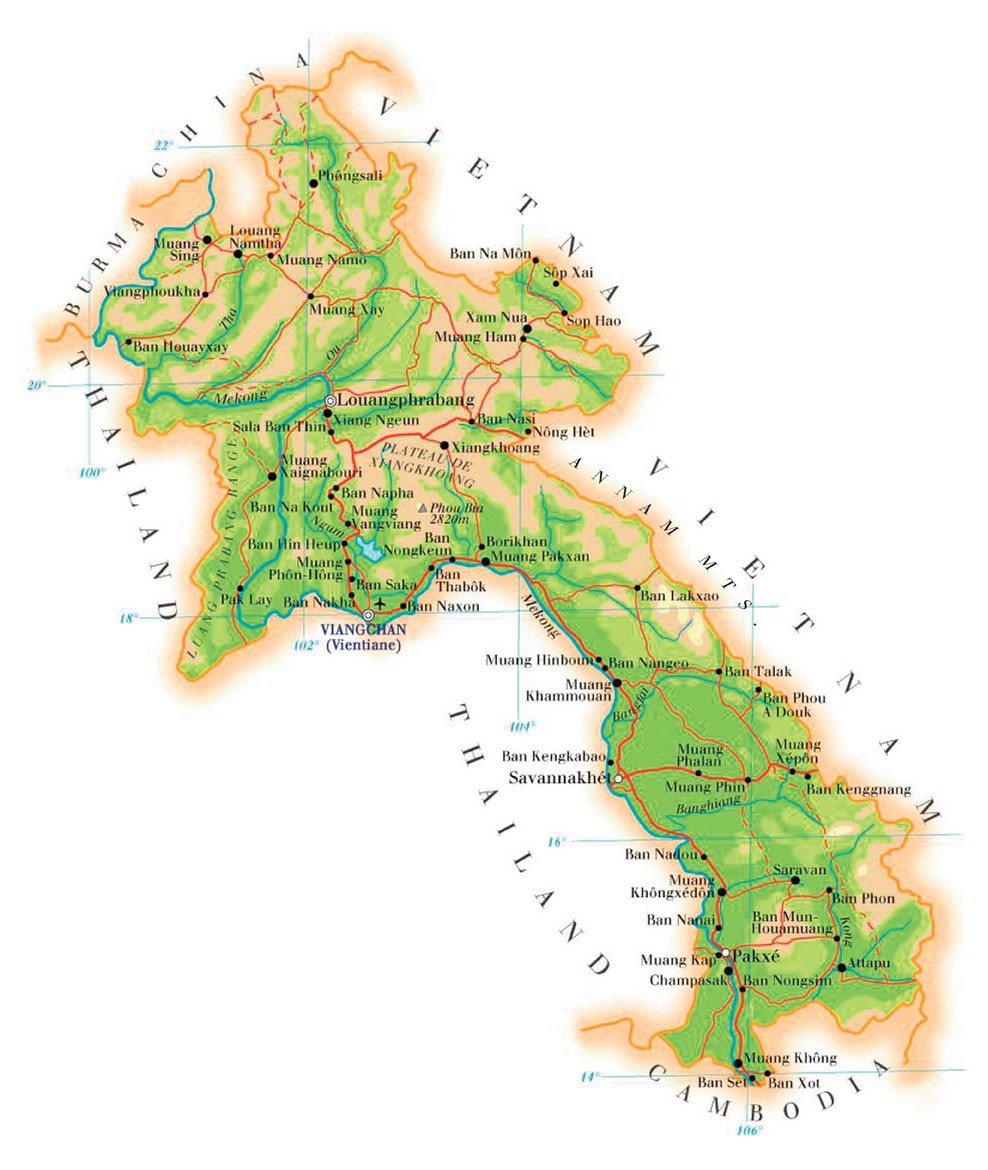
Laos is a land of steep, forested mountains. The highest peaks are in the north, where the rugged landscape is criss-crossed by deep river gorges. In the east, the mountains of the Annam range mark the border with Vietnam, while in the west, the River Mekong creates a natural border with Thailand for much of its route. The green plains of the Mekong Valley are the only lowlands in Laos. They are home to most of the nation’s people, and where the capital, Vientiane, is located. Laos has a hot, tropical climate with a wet monsoon season between May and October.

People
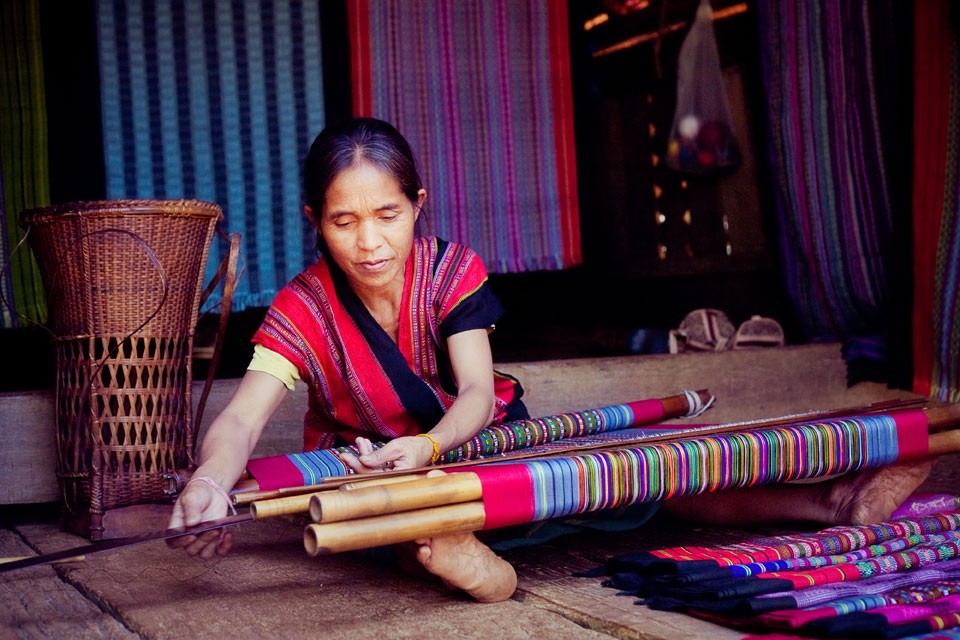
Over 140 ethnic groups live in Laos. Just over half of the people are ethnic Lao, a group closely related to Thais. They live mainly in the lowlands. The uplands are home to hill peoples, including the Hmong and Yao. For many years Laos was under French rule, which ended in the 1950s, and French is still widely spoken.
Two-thirds of Laotians are Buddhists, while nearly one-third follow Satsana Phi. This is the name for a group of religions that worship many gods and the spirits of ancestors and things. People often place offerings of flowers and incense at spirit houses, small shrines that offer shelter to particular spirits.

Economy
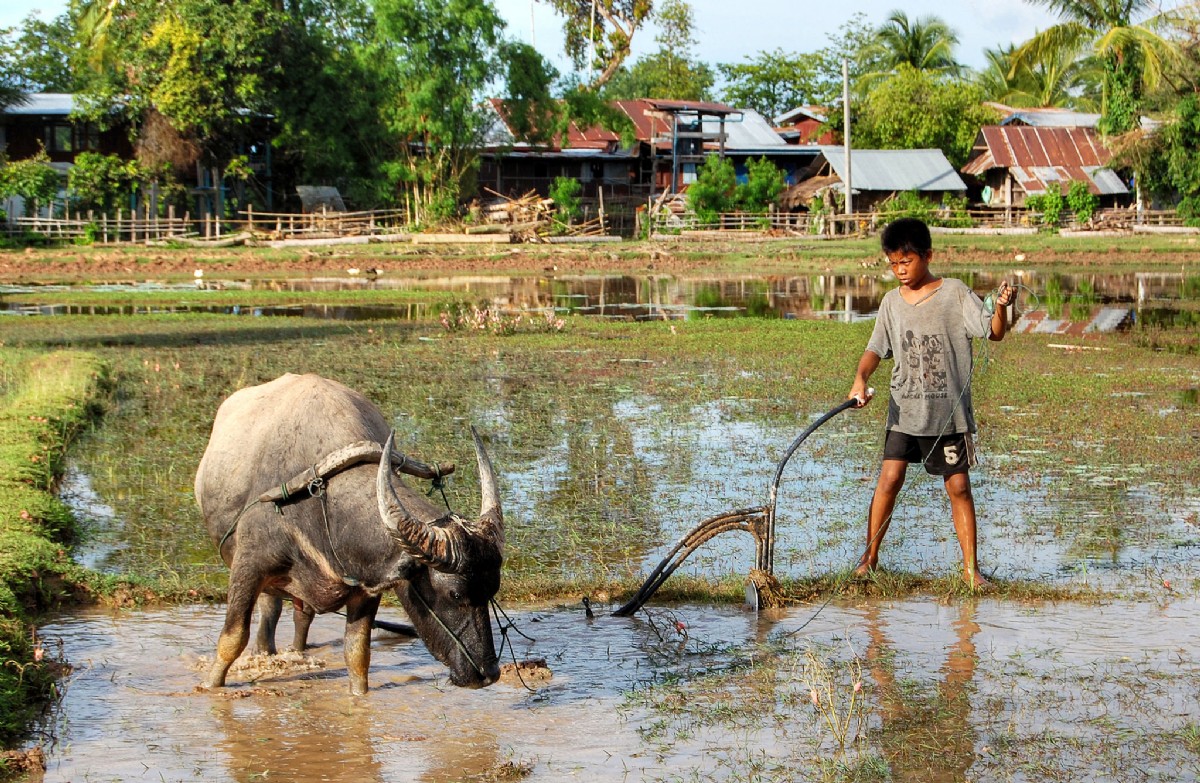
Laos is one of the poorest and least developed countries in Southeast Asia. Around 10% of its people live in extreme poverty (having an income of less than $2.15 or £1.72 per day). Most people work as subsistence farmers, growing rice and vegetables for their own families on small farms. In the cool southern highlands, farmers grow coffee beans for export.

Laos does not make enough money from exports to balance its imports: nearly all manufactured goods, oil and some foods have to be imported, and the country receives large amounts of foreign aid to help with the cost. Tourism is the fastest-growing industry and employs one out of every 10 people. Laos produces increasing amounts of electricity from hydropower, both for its own use and to sell to neighbouring Thailand, Vietnam and China.
Consultant: Nicholas Harris
Facts about Laos
Population 7,953,556 (2024 estimate)
Area 236,800 sq km (91,429 sq miles)
Highest point Phu Bia 2820 m (9250 ft)
Capital Vientiane, population 768,743
Other major cities Savannakhet (pop. 125,760), Pakse (88,332), Luang Prabang (47,378)
Languages Lao (official language), French, Khmu, Hmong
Religions Buddhist 67%, Satsana Phi 30%, Christian 1%, other 2%
Ethnicity Lao 55%, Khmu 11%, Hmong 8%, Thai 4%, Puthai 3%, Lü 2%, Katang 2%, other 15%
Currency Lao kip (LAK)
Chief exports Coffee, wood products, electricity, tin, copper

History of Laos
AD 4th–8th centuries
Settlements along the River Mekong begin to join together to form city-states.
9th–13th centuries
The Khmer Empire, with its capital at Angkor in modern Cambodia, rules the region that is now Laos.
14th century
The kingdom of Lan Xang ("million elephants") is founded by Prince Fa Ngum.
1637
Sourigna Vongsa becomes king of Lan Xang, beginning Laos’ “Golden Age”: a period of peace and wealth that lasts nearly 60 years.
1694
Lan Xing breaks into three separate kingdoms: Luang Prabang in the north, Vientiane in the centre, and Champassak in the south.
Late 18th century
Thailand takes control of much of modern-day Laos.
1893
Laos comes under French rule as part of the colony of French Indochina.
1941–5
Japan occupies Laos during World War II.
1945–6
When Japan surrenders at the end of World War II, Lao nationalists declare independence. France re-occupies the country in 1946.
1953
Laos becomes fully independent from France.
1953–75
The Laotian Civil War: Royal Lao Government forces battle the Communist Pathet Lao for control of the country.
1959–75
During the Vietnam War, Laos is used as a supply route by Communist North Vietnam, and is severely bombed by the United States.
1975
Pathet Lao takes control of Laos, renaming the country the Lao People’s Democratic Republic.
1979
Severe food shortages beset Laos; hundreds of thousands of refugees flee to Thailand
2001
UN World Food Programme (WFP) launches three-year plan to feed 70,000 malnourished children in Laos
2016
US provides funds to help clear unexploded bombs the US dropped on Laos during the Vietnam War
2021
The 422-kilometre Boten–Vientiane railway, a key link in China's Belt and Road Initiative (BRI), is opened.
pics

Without in any way limiting Q-files Ltd’s exclusive rights under copyright, any use of this publication to “train” generative artificial intelligence (AI) technologies to generate text is expressly prohibited. Q-files Ltd reserves all rights to license use of this work for generative AI training and development of machine learning language models.