
Asia

CITE
We have made every effort to follow citation style rules, but there may be some minor differences. If in doubt, please refer to the appropriate citation style manual.
Taiwan. (2026). In Q-files Encyclopedia, Geography, Asia. Retrieved from
https://www.q-files.com/geography/asia/taiwan
"Taiwan." Geography, Asia, Q-files Encyclopedia, 31 Mar. 2026.
https://www.q-files.com/geography/asia/taiwan.
Accessed 6 Aug. 2026.
Taiwan 2026. Geography, Asia. Retrieved 6 August 2026, from
https://www.q-files.com/geography/asia/taiwan
Geography, Asia, s.v. "Taiwan," accessed August 6, 2026.
https://www.q-files.com/geography/asia/taiwan


Taiwan
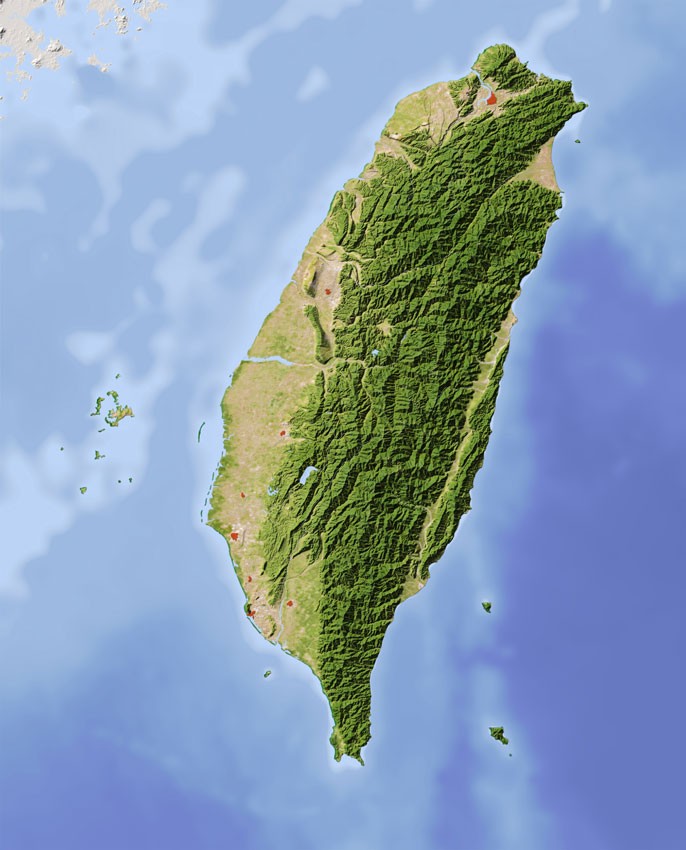
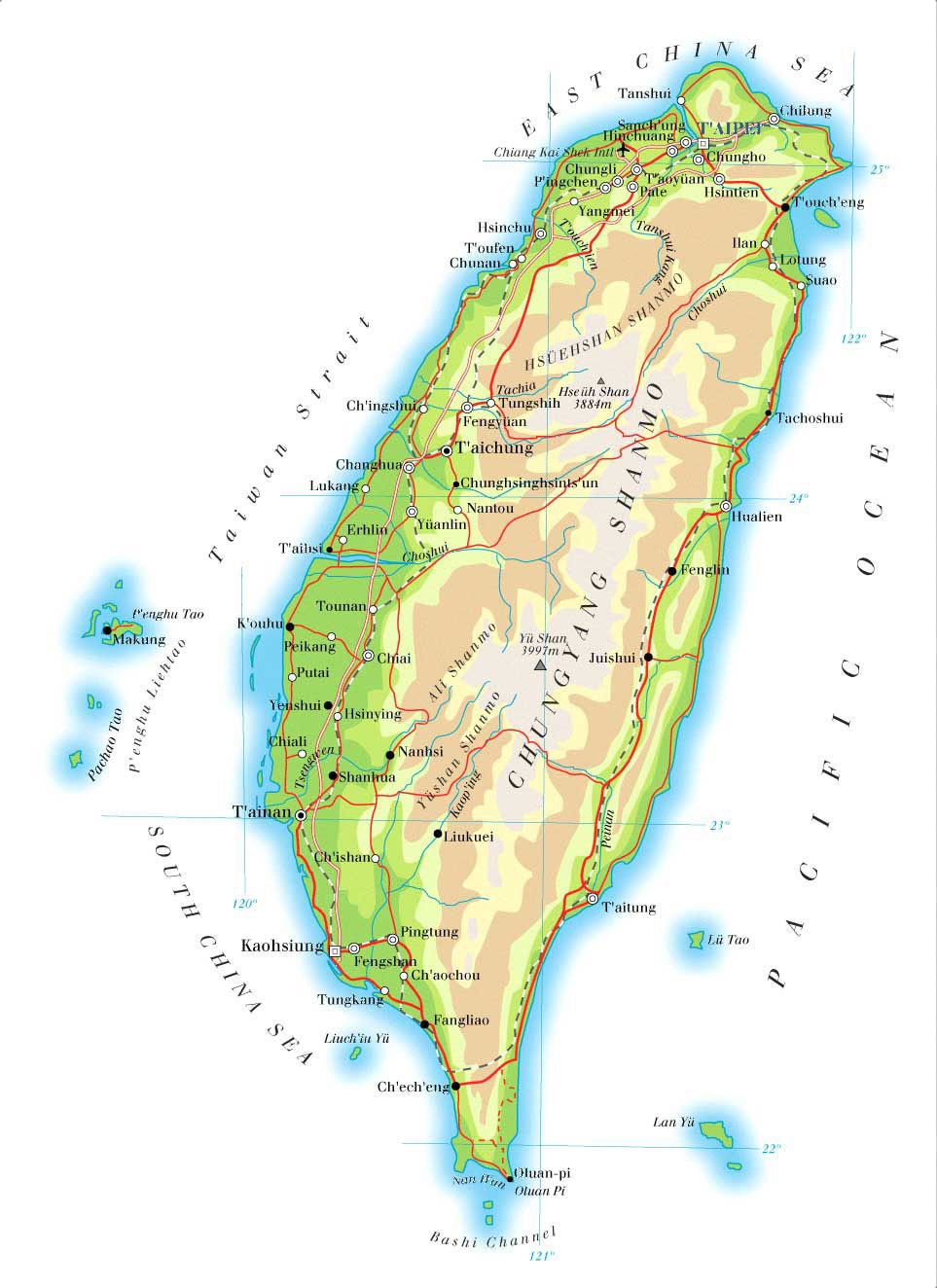
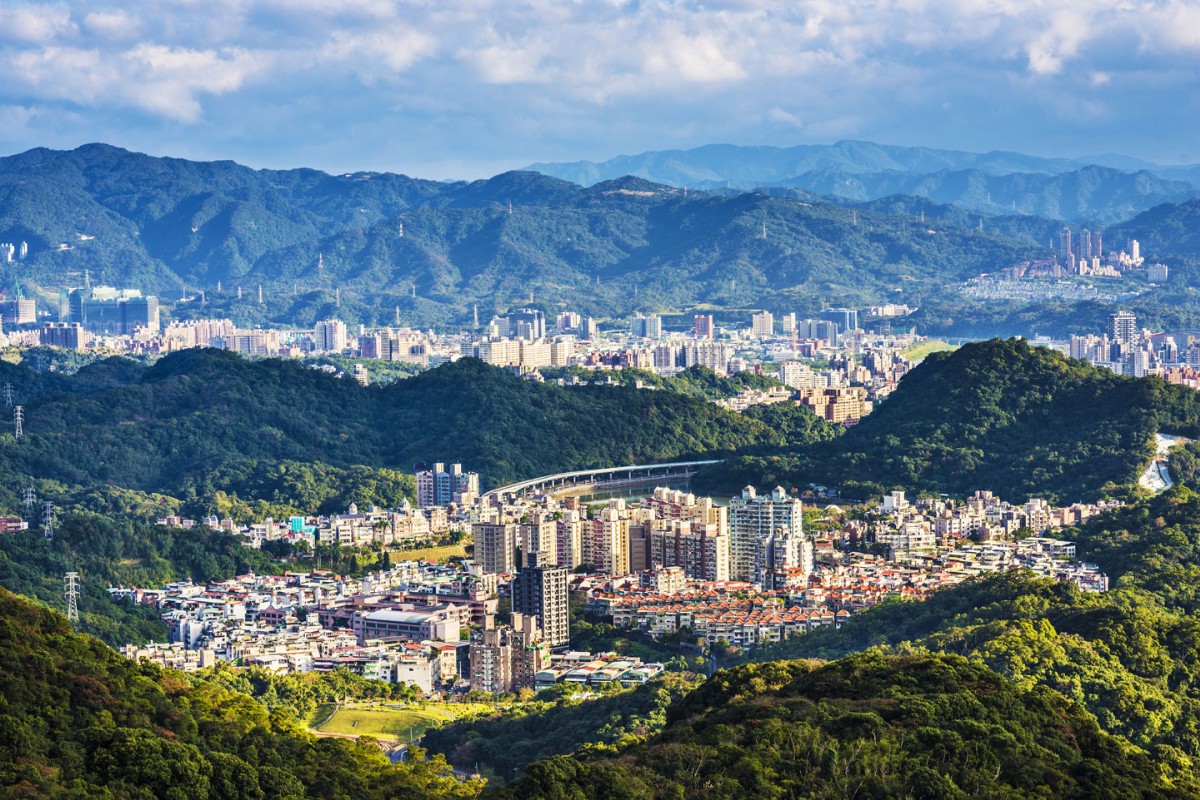
Located around 180 kilometres (110 miles) off the coast of China is the island of Taiwan. Taiwan’s status is complicated: China regards it as Chinese territory, but it has its own independently elected government. The eastern two-thirds of the island is covered by densely forested mountains. The main range is called the Chungyang Shanmo, which runs north to south. Along the east coast the land falls away to the sea in high, dramatic cliffs. In the west are gently rolling plains, on which are situated most of the country’s population and its major cities. Taiwan has a subtropical climate: the weather is warm and humid all year round, cooled by breezes from the ocean. Taiwan lies near the edge of the Pacific Ring of Fire, causing it to experience many earthquakes each year. Most of them are minor and cause little damage.
Taiwan's status
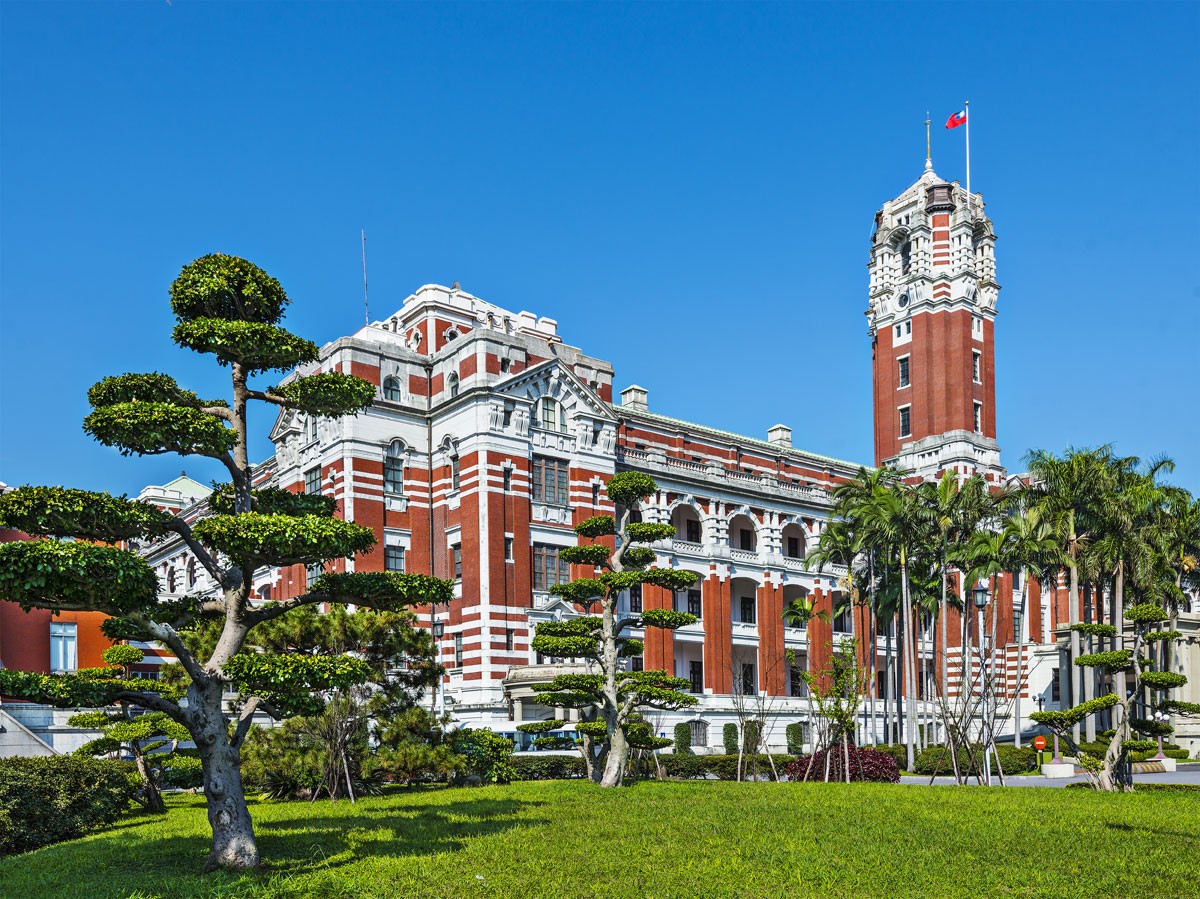
Taiwan’s official name is the Republic of China (ROC). The Republic of China was established in mainland China in 1912. Following the Chinese Civil War, in 1949 the Communist Party took control of mainland China, founding the People’s Republic of China, its official name today. The Republic of China moved its government to Taiwan. Its rule is limited to Taiwan and small islands (including Kinmen, Matsu and Wuqiu, which lie near the coast of mainland China).
China regards the island as Chinese territory—one of its provinces—and refuses to accept its existence as an independent state. Taiwan is also not recognized as an independent state by the United Nations. However, Taiwan does have its own independently elected government.

People
People have been living on Taiwan and the surrounding islands for millennia, but most of the present-day population is descended from migrants from mainland China who started to arrive in large numbers in the 17th century. Only around 2–3% of the population is descended purely from the indigenous Austronesian people. After 1949, more people arrived from mainland China, fleeing Communist rule.
Everybody in Taiwan understands or speaks Mandarin Chinese, the island’s official language, but many people also speak Taiwanese Hokkien. This language has its roots as a Chinese dialect, but it also contains many words from Japanese and indigenous Taiwanese languages.
Economy
Taiwan’s modern, busy cities are home to most of its people, as well as being important centres of industry and finance. Since the 1950s, Taiwan’s economy has grown quickly to become one of the most advanced in Asia. It is known for being a leading manufacturer and exporter of hi-tech products such as computer parts, machinery and precision tools for use in medicine. Taiwan is a key producer of advanced microchips.

Typhoons

Along with the nearby Philippines, Taiwan is the most typhoon-prone country in Southeast Asia. Each year, three or four typhoons (tropical cyclones) from the Pacific Ocean enter the east of the country, bringing heavy rains which refill Taiwan's reservoirs. On some occasions severe typhoons cause landslides, flooding, damage to buildings and loss of life. Climate change in recent years has meant that the number of typhoons crossing Taiwan has fallen, but the intensity and quantity of rainfall has risen. This could increase the occurrence of both droughts and flooding in Taiwan.
Consultant: Nicholas Harris
Facts about Taiwan
Area 35,590 sq km (13,740 sq miles)
Population 23,396,049 (2025 estimate)
Highest point Yu Shan 3997 m (13,110 ft)
Capital Taipei (population 2,494,813)
Other major cities New Taipei City (pop. 4,004,367), Taichung (2,850,285), Kaohsiung (2,737,660)
Languages Mandarin Chinese (official language), Taiwanese Hokkien, Hakka, Fuzhou dialect, Formosan languages
Religions Buddhist 35%, Taoist 33%, Yiguandaoist 4%, Christian 4%, atheist 14%, other 10%
Ethnicity Han Chinese (including Hokkien and Hakka) 98%, indigenous 2%
Currency New Taiwan dollar (TWD)
Chief exports Electronics, machinery, chemicals, photographic equipment, medical and measuring equipment, computer parts
History of Taiwan
6000 BC
Austronesian peoples settle on Taiwan.
1544
Taiwan is first discovered by Portuguese sailors, who name it Formosa, from the Portuguese ilha formosa, meaning "beautiful island".
1624
Dutch East India Company (VOC) establish Fort Zeelandia on the coastal islet of Tayouan. They encourage Chinese farmers to immigrate and by the 1660s, some 30,000 to 50,000 Chinese are living on the island.
1626
Spanish Empire occupies northern Taiwan as a trading base, first at Keelung then building Fort Santo Domingo at Tamsui. This colony lasts until 1642, when it falls to Dutch forces.
1662
Koxinga (Zheng Chenggong), loyal to the Ming dynasty which was overthrown by the Qing, establishes the Kingdom of Tungning on the island and expels the Dutch.
1683
China’s Qing dynasty takes control of Taiwan.
1887
China makes Taiwan into its own province and begins a programme to modernize it.
1895
After China loses the First Sino-Japanese War, Taiwan comes under Japanese rule. Chinese rebels proclaim the Republic of Formosa, but Japanese troops quell the resistance.
1912
The Republic of China is founded, encompassing mainland China.
1930
The Wushe Rebellion (also called the Musha Incident): indigenous Seediq people rebel against Japanese rule, the last of several unsuccessful uprisings against Japanese rule by the people of Taiwan.
1935
Shinchiku-Taichu earthquake occurs with a magnitude of 7.1 in April with its epicentre in Taichung. It is the deadliest earthquake in Taiwan's recorded history, claiming 3276 lives and causing extensive damage.
1945
At the end of World War II, control of Taiwan passes to the Republic of China (ROC).
1947
Martial law (direct military control of civilian government) is declared and is not repealed until 1987; it is used to suppress political opposition; during the White Terror, as this period is known, 140,000 people are imprisoned or executed for being considered anti-government or pro-Communist.
1949
Chinese Nationalists (Kuomintang or KMT), the government of ROC, are defeated by the Chinese Communist Party in the Chinese Civil War. Their leader, Chiang Kai-shek, moves his government to Taiwan, along with about two million refugees
1971
People’s Republic of China assumes China's seat at the UN (previously held by Taiwan, as the Republic of China), causing Taiwan to lose its UN membership.
1979
Pro-democracy protest known as the Kaohsiung Incident takes place to celebrate Human Rights Day; the protest is rapidly crushed by the authorities
1986
Democratic Progressive Party (DPP) is formed and becomes the first opposition party to the KMT in the Taiwan. Martial law (rule by the military), in place since 1949, is lifted in 1987.
1996
The first democratic presidential elections are held: Lee Teng-hui is elected.
1999
Jiji earthquake: a 7.7-magnitude earthquake occurs in Jiji (Chi-Chi), on 21st September 1999, claiming the lives of 2415 people and injuring 11,305 people
2008
President Ma Ying-jeou makes an official apology for the White Terror
2009
Typhoon Morakot hits southern Taiwan, leaving hundreds dead in floods and mudslides.
2009–10
Leaders of China and Taiwan directly exchange messages for the first time and sign a trade agreement.
2014
China and Taiwan hold their first government-to-government talks since the Communists came to power in China in 1949
2022
A visit to Taiwan by Nancy Pelosi, Speaker of the US House of Representatives, to Taiwan leads to increased tensions between Taiwan and China. The PLA (armed forces of China) conducts military exercises around Taiwan, included missile launches which fly over the island.
2024
Hualien earthquake: a 7.4-magnitude earthquake strikes near Hualien City on 3rd April. At least 17 people are killed and over 1100 injured.
pics
Without in any way limiting Q-files Ltd’s exclusive rights under copyright, any use of this publication to “train” generative artificial intelligence (AI) technologies to generate text is expressly prohibited. Q-files Ltd reserves all rights to license use of this work for generative AI training and development of machine learning language models.