
Famous leaders

CITE
We have made every effort to follow citation style rules, but there may be some minor differences. If in doubt, please refer to the appropriate citation style manual.
Joseph Stalin. (2022). In Q-files Encyclopedia, History, Famous leaders. Retrieved from
https://www.q-files.com/history/famous-leaders/joseph-stalin
"Joseph Stalin." History, Famous leaders, Q-files Encyclopedia, 10 Feb. 2022.
https://www.q-files.com/history/famous-leaders/joseph-stalin.
Accessed 6 Aug. 2026.
Joseph Stalin 2022. History, Famous leaders. Retrieved 6 August 2026, from
https://www.q-files.com/history/famous-leaders/joseph-stalin
History, Famous leaders, s.v. "Joseph Stalin," accessed August 6, 2026.
https://www.q-files.com/history/famous-leaders/joseph-stalin


Joseph Stalin
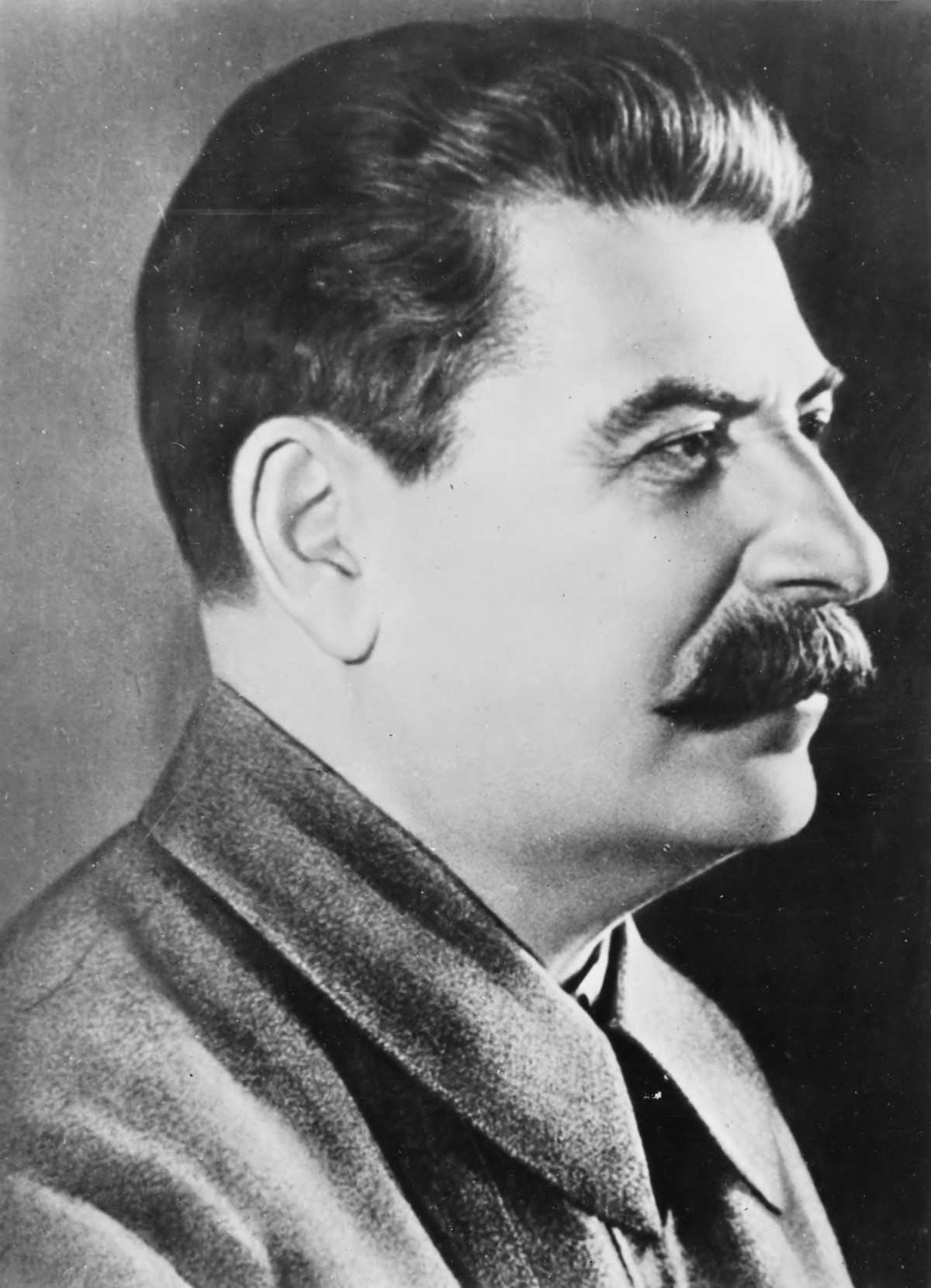
Joseph Stalin (1879–1953) was one of the most ruthless leaders of modern times. As secretary-general of the Soviet Communist Party, he ruled the Soviet Union as a dictator. He transformed the country into a world power, driving through a programme of rapid industrialization and changing outdated farming methods. However, he also presided over a regime of terror that saw the deaths of millions of people, particularly during the purges of 1934–1939, known today as the Great Terror. Despite his achievements in modernizing the Soviet Union, his record as a ruthless murderer will never be forgotten.

Early life
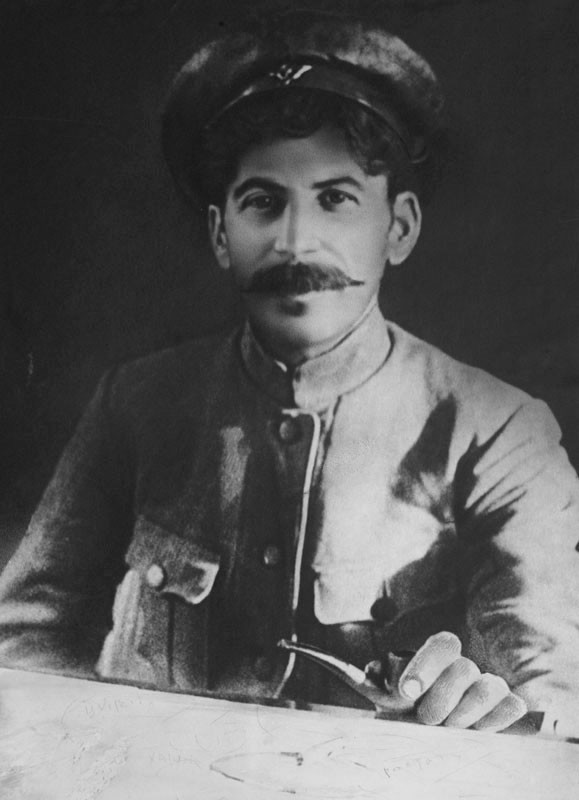
Stalin was of Georgian rather than Russian origin. He was born on 18th December 1879 in a small town called Gori in Georgia, which was at that time part of the Russian Empire. His full name was Iosif (Joseph) Vissarionovich Dzhugashvili (he adopted the name Stalin in 1912 from the Russian word for "steel"). His father, a cobbler, died when Stalin was 14, and the boy was sent to Tiflis, Georgia's capital, to study to be a priest. Instead he secretly read the works of Karl Marx, and became involved in the revolutionary movement against the Russian tsar (emperor). He joined the Bolsheviks (a Marxist revolutionary group) and was imprisoned and exiled to Siberia a number of times for his revolutionary activities.
Communism
Communism is a society in which all property is owned by the community. In a Communist society, everyone enjoys equal social and economic status. The ideas of political thinkers Karl Marx and Friedrich Engels turned Communism into a revolutionary movement. In the 19th century, the time when they were writing, a tiny minority of people owned or controlled nearly all the wealth in the world: they were the capitalists, the ruling class. The vast majority of people owned and controlled very little: they were the working class—those that worked in the factories or mines in industrial countries—or peasants who worked on the land.

Communists wanted to see workers' revolutions and the redistribution of wealth into the hands of the working class, called the proletariat. A temporary "dictatorship of the proletariat" would be needed, however, before the establishment of a Communist society, which Marx thought would follow inevitably.

The 1905 Revolution
In 1905, Tsar Nicholas II ruled over Russia's huge empire, which stretched from central Europe to the Pacific Ocean, from the Arctic to the Middle East. The empire was home to nearly 150 million people, of more than 100 different nationalities. Nicholas believed that the tsar held absolute power as given to him by God, and that the people would remain naturally loyal to him. But he did little to help his people. The peasants of Russia, as well as the poor working class, were living in very bad conditions.
On 22nd January 1905, a crowd of unarmed demonstrators marched to present a petition to Tsar Nicholas II in St Petersburg. However, the soldiers protecting the tsar's palace opened fire on the protesters. Hundreds of people were killed. This event, known as Bloody Sunday, sparked the 1905 Revolution. Revolts and uprisings across Russia forced the tsar to concede civil rights and a parliament to the Russian people.
World War I
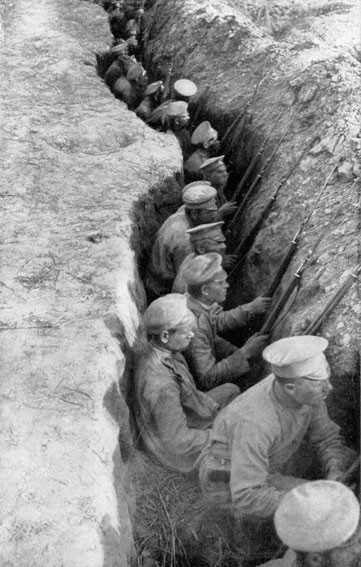
Russia's problems were greatly worsened by World War I. By November 1916 Russia had suffered 1,700,000 dead and 5,000,000 wounded, a fact many people put down to incompetent military leadership. Food riots, demonstrations and mutiny forced Nicholas II to abdicate (stand down as monarch) in February 1917.
A Provisional Government was proclaimed, and its leaders tried to conduct the war more effectively. A new military offensive was launched in June, but the soldiers, many of them peasants, would not obey their officers, and many soldiers deserted. Support was growing for the Bolsheviks and their Communist Russian Social Democratic Labour Party (RSDLP), led by Vladimir Ilyich Ulyanov, known as Lenin.
October Revolution
Under the influence of Lenin, Stalin worked his way up through the ranks of the Bolshevik Party. His chief rival in the party was Leon Trotsky. In 1917, Stalin helped Lenin, Trotsky and others to plan the coup in which the Bolsheviks seized power from the Provisional Government. This coup became known as the October Revolution. Stalin was a member of the Politburo, the policy-making committee made up of seven members designed to give strong leadership throughout the uprising. During the Civil War that followed the October Revolution, Stalin showed his ability as a skilled military strategist. His successful defence of the city of Tsaritsyn between 1918 and 1920 resulted in the city being renamed Stalingrad (modern-day Volgograd) in his honour in 1925.
Grasping power
The Bolsheviks emerged victorious in the Civil War. The Russian Empire was renamed the Union of Socialist Soviet Republics, or Soviet Union for short. By 1922 Stalin was secretary-general of the Communist Party, which is what the Bolsheviks were now calling themselves. This post gave him power to build up support, and to undermine his opponents, including Trotsky. Lenin suffered a stroke in 1922, and was forced into semi-retirement.
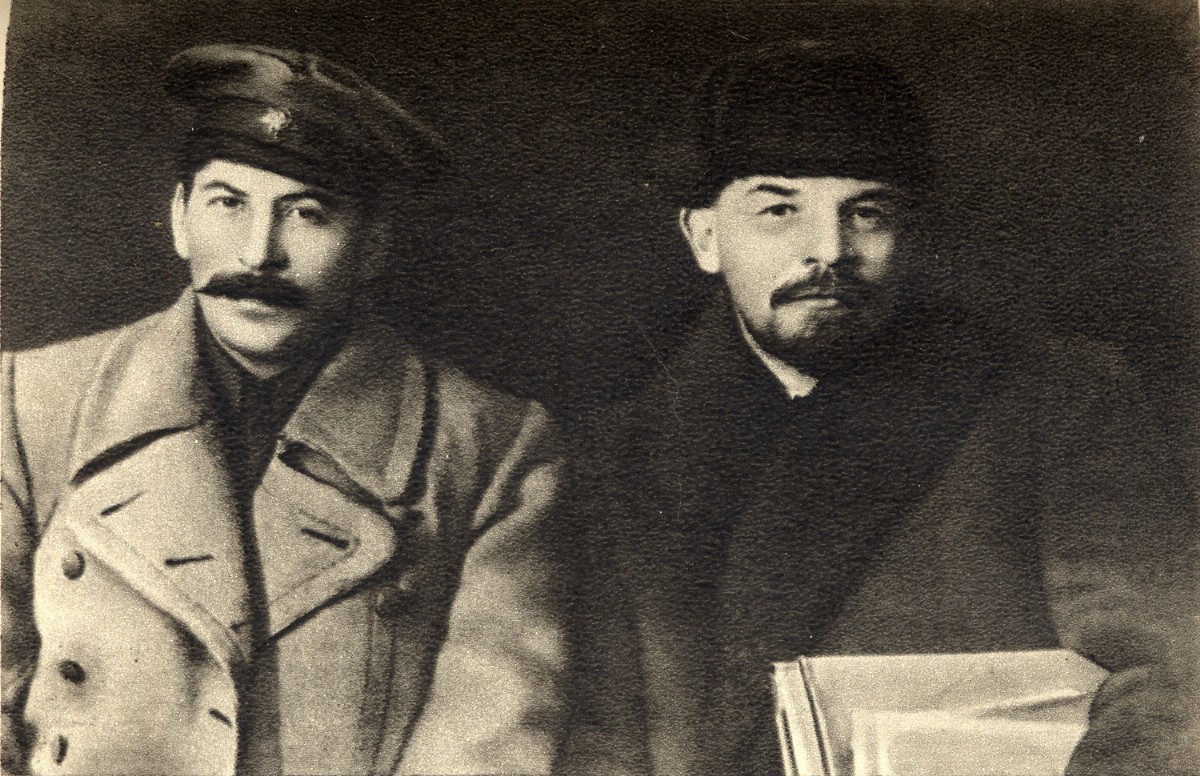
When Lenin died two years later, a power struggle for the leadership between Stalin and Trotsky immediately followed. Lenin’s criticisms of Stalin—Lenin had accused Stalin of excessive ambition and ruthlessness—were suppressed by Stalin’s supporters. Stalin forced Trotsky’s resignation in 1927, and had him exiled from the Soviet Union in 1929. Stalin dealt with his other rivals in a similar manner, and assumed total control of the country by the late 1920s.
Collectivization and industrialization
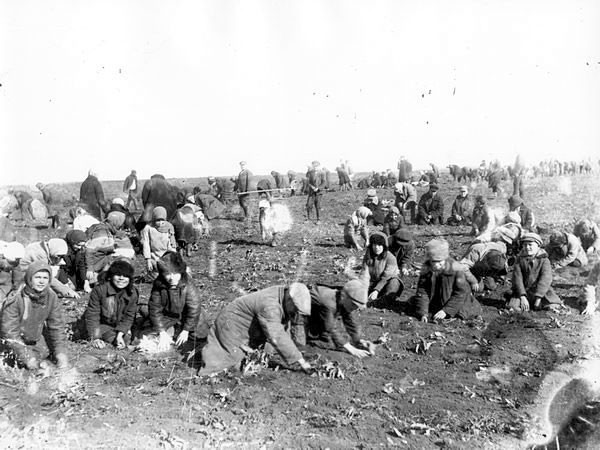
As supreme ruler, Stalin was determined to modernize the Soviet Union. He launched his Five Year Plan, the first of a series, in 1928. He drove through a programme of rapid industrialization. He also dealt with outdated farming methods by ordering peasant farmers to merge their farms into huge organizations called collectives. In 1932–1933, Stalin’s agricultural reforms resulted in a famine in Ukraine during which hundreds of thousands of people died.
The Great Terror
The period from 1934 to 1939 became known as the Great Terror. During this time, Stalin's critics or opponents, whom he called "enemies of the people", were arrested, killed, exiled or worked to death in the "gulag" system of slave-labour camps. Many leaders of the Communist Party and the amy were executed. Countless peasants, artists, writers and many others were executed or sent to camps. Some historians think that tens of millions of people died as a result of Stalin’s purges.


World War II
In 1939, Stalin signed a non-aggression pact (an agreement not to attack one another) with Adolf Hitler, the leader of Nazi Germany. But in June 1941, Hitler broke the pact and invaded the Soviet Union. German troops surged deep into Soviet territory. The German army began a siege of Leningrad (modern-day St Petersburg) in September 1941. By December, the Germans had reached Moscow. It looked as if the Soviet Union would soon fall to the Germans.
But Stalin took command, and, during the winter of 1941–1942, Soviet forces fought back. The fighting on the Eastern Front continued until 1945, with bitter battles such as the Battle of Stalingrad (1942–1943) and the Battle of Kursk (1943). The siege of Leningrad was finally lifted in 1944. The Soviet armies forced the German armies into retreat, and it was Soviet troops who, in 1945, marched into the capital of Germany, Berlin, as the war neared its end. The Soviet Union emerged victorious—but it had suffered millions of casualties by the end of the war.
The Iron Curtain
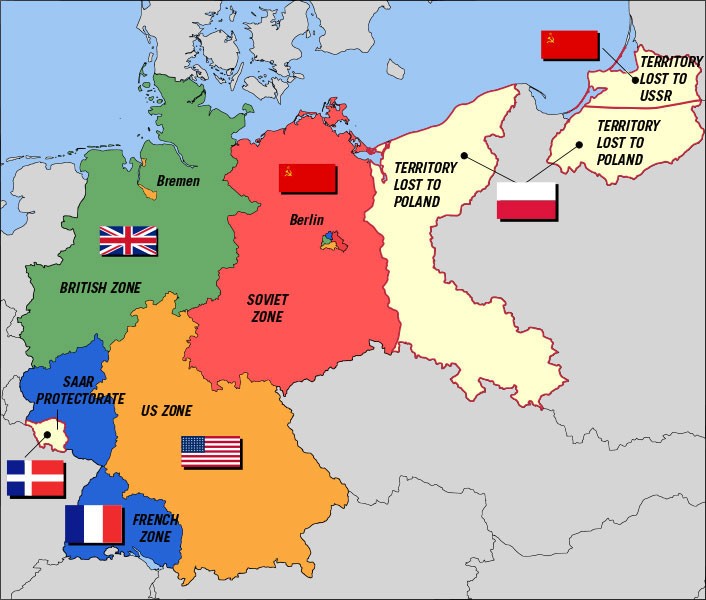
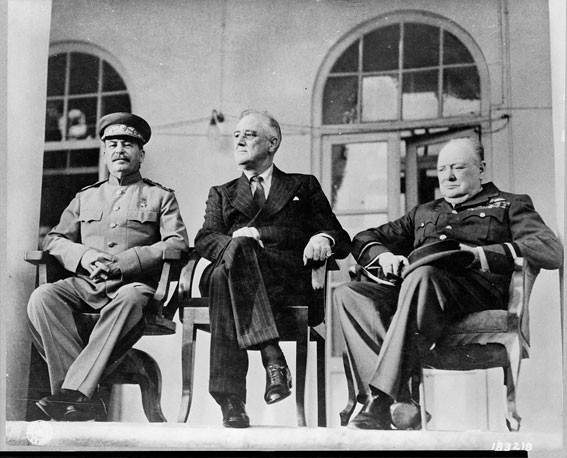
Both during and after the war, Stalin met with the Allied leaders British Prime Minister Winston Churchill and US President Franklin D. Roosevelt for talks. At the Yalta Conference in February 1945, the three leaders discussed the reorganization of Europe after the war. Stalin was a skilled negotiator, and he demanded Soviet control of much of eastern Europe. Soviet forces remained in what were called the Eastern Bloc countries after the war: Soviet-controlled East Germany (after the war, Germany was divided into four sectors controlled by US, British, French and Soviet forces), Poland, Czechoslovakia, Hungary, Romania, Yugoslavia and Bulgaria.
It was this Soviet control that prompted Churchill to liken the dividing line between western and eastern Europe to an "Iron Curtain". To the east of the Iron Curtain, Stalin ruled over a new Communist empire with the same ruthlessness he had shown in earlier times. The United States and Britain, former allies, were now treated as enemies, marking the beginning of what was termed the Cold War.
Death
As he got older, Stalin became increasingly fearful that his enemies were plotting to remove him from power. At the time of his sudden death on 5th March 1953, he had ordered a new purge, this time of mostly Jewish doctors accused of murdering senior Communists. Stalin’s body was laid to rest alongside that of Lenin in Moscow’s Red Square. The harshness of his rule was later heavily criticized by members of the Communist Party, notably his eventual successor as leader, Nikita Khrushchev.
Consultant: Philip Parker
pics
Without in any way limiting Q-files Ltd’s exclusive rights under copyright, any use of this publication to “train” generative artificial intelligence (AI) technologies to generate text is expressly prohibited. Q-files Ltd reserves all rights to license use of this work for generative AI training and development of machine learning language models.