
Famous leaders

CITE
We have made every effort to follow citation style rules, but there may be some minor differences. If in doubt, please refer to the appropriate citation style manual.
Charlemagne. (2022). In Q-files Encyclopedia, History, Famous leaders. Retrieved from
https://www.q-files.com/history/famous-leaders/charlemagne
"Charlemagne." History, Famous leaders, Q-files Encyclopedia, 10 Feb. 2022.
https://www.q-files.com/history/famous-leaders/charlemagne.
Accessed 22 Sep. 2026.
Charlemagne 2022. History, Famous leaders. Retrieved 22 September 2026, from
https://www.q-files.com/history/famous-leaders/charlemagne
History, Famous leaders, s.v. "Charlemagne," accessed September 22, 2026.
https://www.q-files.com/history/famous-leaders/charlemagne


Charlemagne
Charlemagne (AD 742–814) became king of the Franks in 768. At the time, the Frankish lands covered most of modern-day France and Belgium. Charlemagne means "Charles the Great", and he is remembered for his military conquests, his reforms, and his love of scholarship and learning. He was the son of Pepin III, also known as Pepin the Short, the first of the Carolingian dynasty (ruling family) to be elected king of the Franks. When Pepin died in 768, his kingdom was divided between his two sons, Charles and Carloman. Carloman died three years later, leaving Charles as sole ruler of the Frankish kingdom.

The Franks
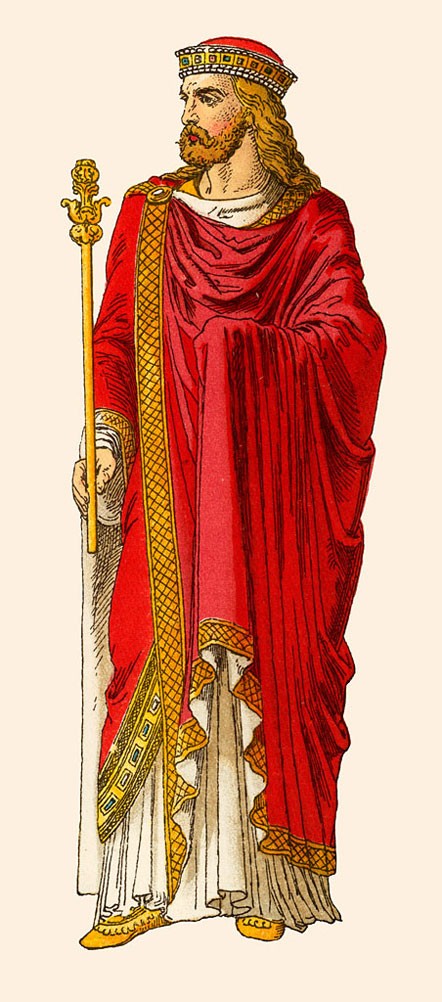
The Franks were originally a Germanic tribe, one of many peoples sometimes called barbarians. In the 5th century, they invaded parts of the western Roman Empire and extended their power into much of present-day Belgium and northeastern France. In the 6th century, the Franks converted to Christianity. Until 751, they were ruled by the Merovingian family, but then the Carolingian family took power, when Charlemagne's father, Pepin the Short, took the crown.
Becoming king
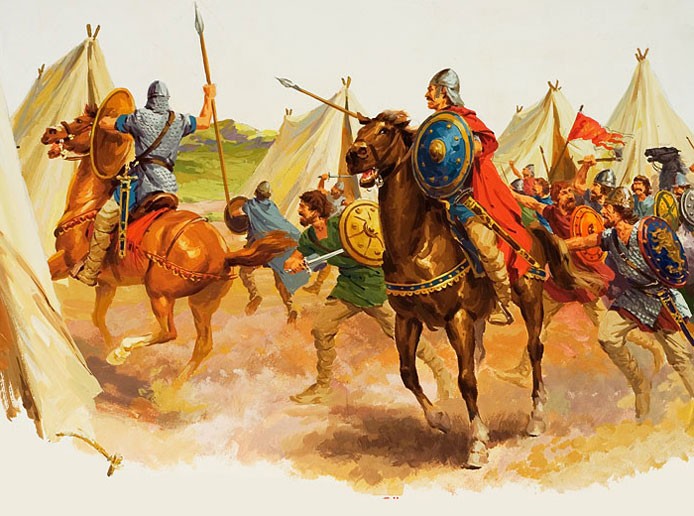
When Charlemagne became king in 768, he started a series of military campaigns to extend his kingdom and to spread Christianity. He invaded Saxony in 772, as well as sending military expeditions south into the Lombard region of Italy. He also invaded Spain, which at that time was mostly under Muslim rule. This venture was not so successful, but by 800 Charlemagne had become ruler of most of western Europe.
Great reformer
Charlemagne ruled his empire through a mixture of diplomacy (talks with other leaders) and military force. He was a good administrator, and a tireless reformer. He tried to introduce new and better ways of farming and improve education. He set up standard weights and measures, and introduced new laws. He regularly sent representatives out to every part of his kingdom to proclaim his will, and to gather information. He required all his subjects to swear an oath of loyalty to him.

At his court, Charlemagne promoted culture and learning. For that reason, this period is known as the Carolingian Renaissance. Charlemagne brought scholars from all over Europe to work and teach at his court. He built up a royal library, and a new writing system was developed—although Charlemagne himself never learned to write. Charlemagne’s favourite royal residence was at Aachen (in modern Germany, close to the border with Belgium and the Netherlands) and it was here that he built a large palace and cathedral.
Holy Roman Emperor
In 799, a rebellion broke out against Pope Leo III in Rome. The pope fled to the court of Charlemagne. In 800, Charlemagne travelled to Rome to restore Leo as pope. On Christmas Day 800, Charlemagne went to Mass at St Peter’s in Rome. There the pope crowned him emperor. Although Charlemagne never used the title, he is considered to have been the first emperor of the Holy Roman Empire.


Death
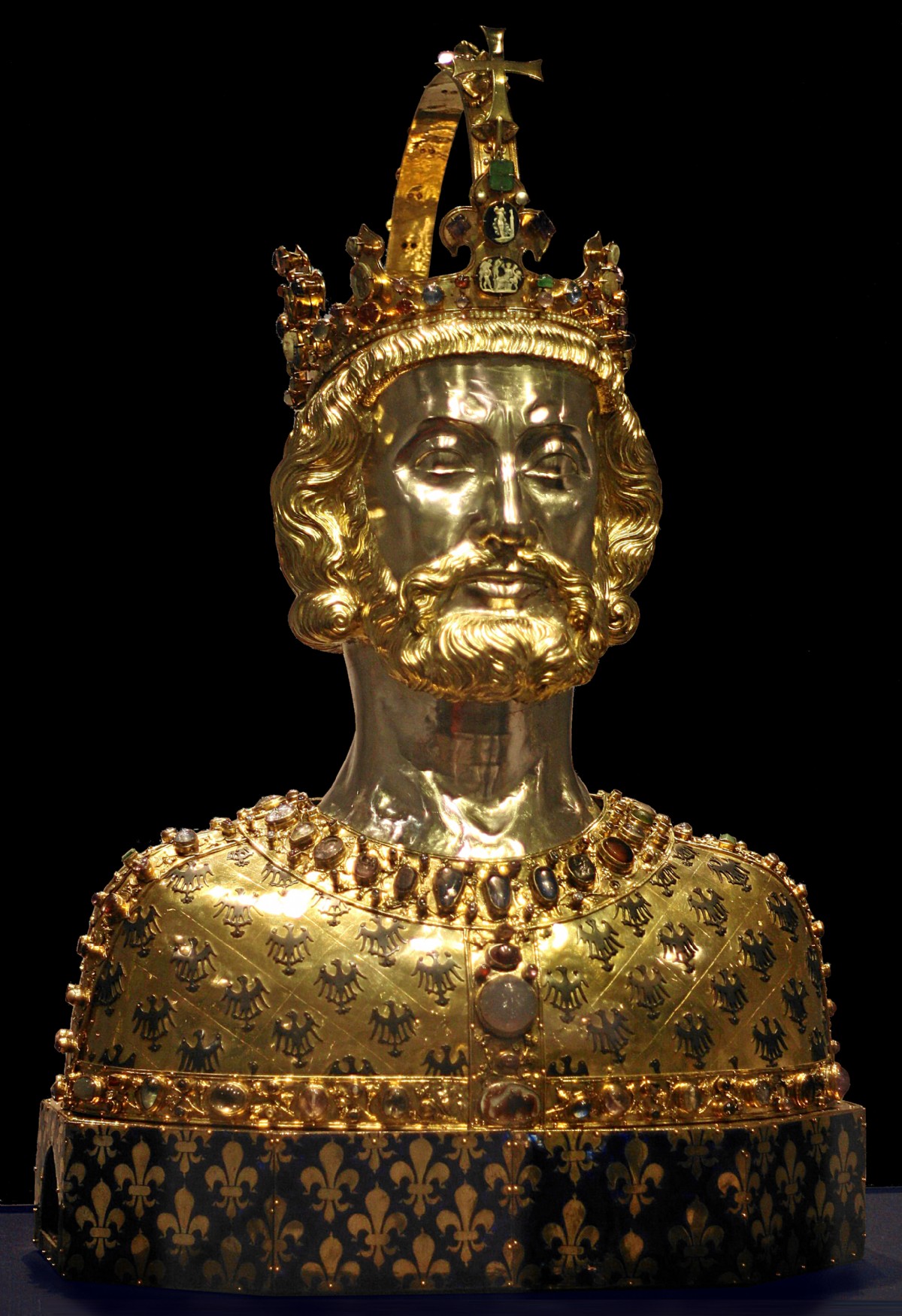
Charlemagne fell ill with pleurisy (an inflammation of the lining of the lungs) and died in January 814. He is buried in the cathedral at Aachen. His son, Louis, succeeded him. He is known as Louis the Pious (ruled 814–833 and 834–840).
Louis was a weak ruler and, although he made some conquests in Spain, Charlemagne’s empire soon began to fall apart. When Louis died, the empire was split between his three sons and rapidly fell into decline.
Consultant: Philip Parker
pics

Without in any way limiting Q-files Ltd’s exclusive rights under copyright, any use of this publication to “train” generative artificial intelligence (AI) technologies to generate text is expressly prohibited. Q-files Ltd reserves all rights to license use of this work for generative AI training and development of machine learning language models.