
Famous leaders

CITE
We have made every effort to follow citation style rules, but there may be some minor differences. If in doubt, please refer to the appropriate citation style manual.
Boudicca. (2022). In Q-files Encyclopedia, History, Famous leaders. Retrieved from
https://www.q-files.com/history/famous-leaders/boudicca
"Boudicca." History, Famous leaders, Q-files Encyclopedia, 10 Feb. 2022.
https://www.q-files.com/history/famous-leaders/boudicca.
Accessed 22 Sep. 2026.
Boudicca 2022. History, Famous leaders. Retrieved 22 September 2026, from
https://www.q-files.com/history/famous-leaders/boudicca
History, Famous leaders, s.v. "Boudicca," accessed September 22, 2026.
https://www.q-files.com/history/famous-leaders/boudicca


Boudicca
In around AD 60, the Iceni tribe of eastern England rose in revolt against the Romans. The king of the Iceni had died and left his kingdom jointly to his daughters and to the Roman emperor. The Romans ignored his wishes and took over his kingdom entirely. The old king's wife, Boudicca (also spelled Boudica or Boadicea), led a rebellion. Her armies destroyed Colchester, London and St Albans. Eventually, however, the Romans overcame the Iceni and their allies at the Battle of Watling Street. Boudicca killed herself and the rebellion ended.
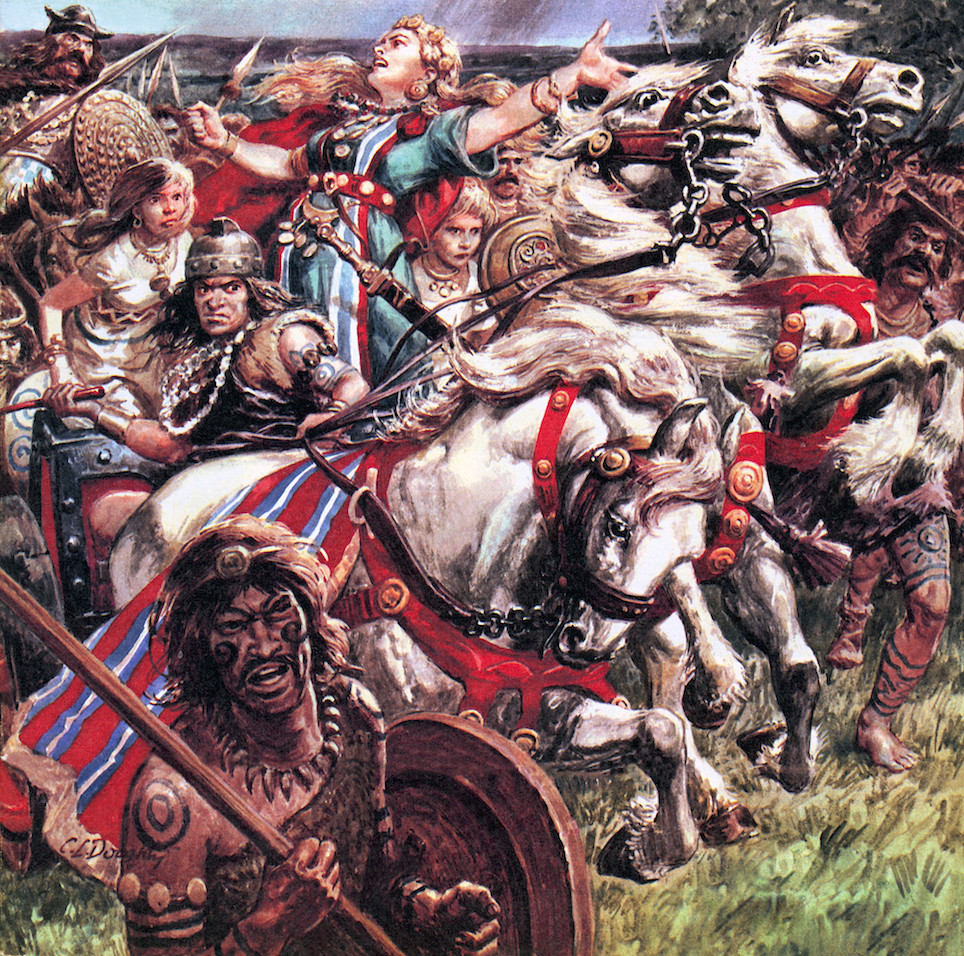
Telling the story of Boudicca
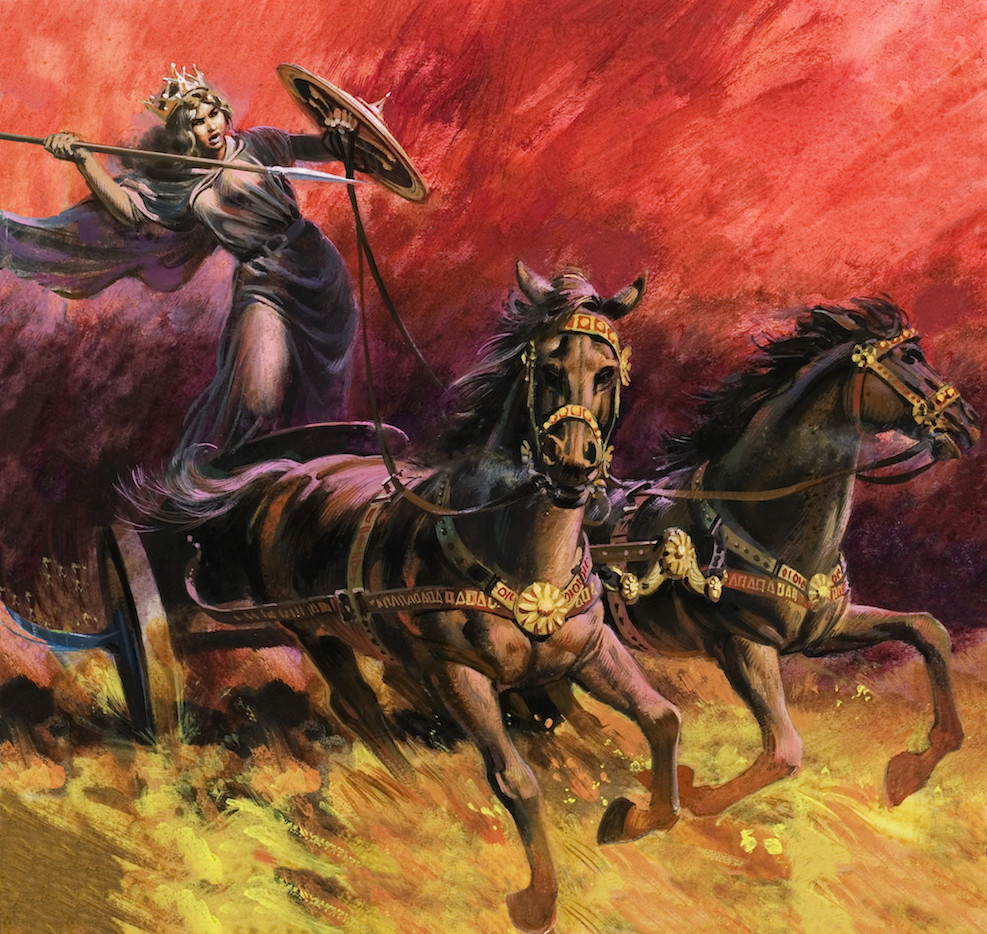
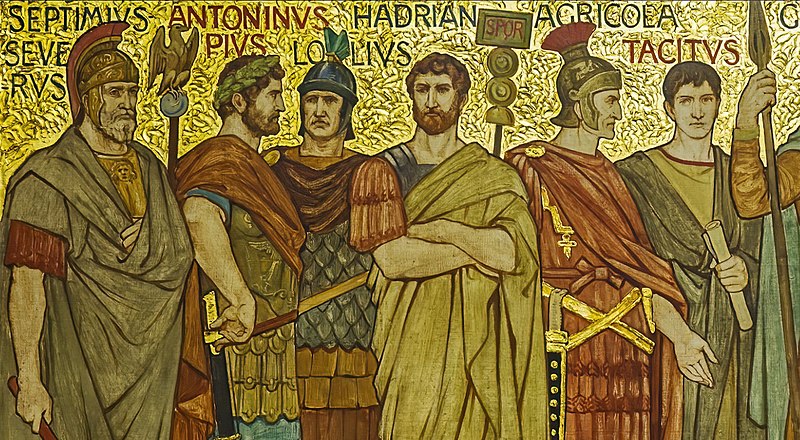
The only sources of the story of Boudicca's revolt are two Roman historians: Publius Cornelius Tacitus (AD 56–117) and Cassius Dio (AD 150–235). Their versions are quite different. Tacitus, for example, says that the Iceni rebelled because the Romans treated them badly after the death of their king, Prasutagus. Dio, on the other hand, is more supportive of the Romans, asserting that the cause of the uprising was a dispute over a loan.
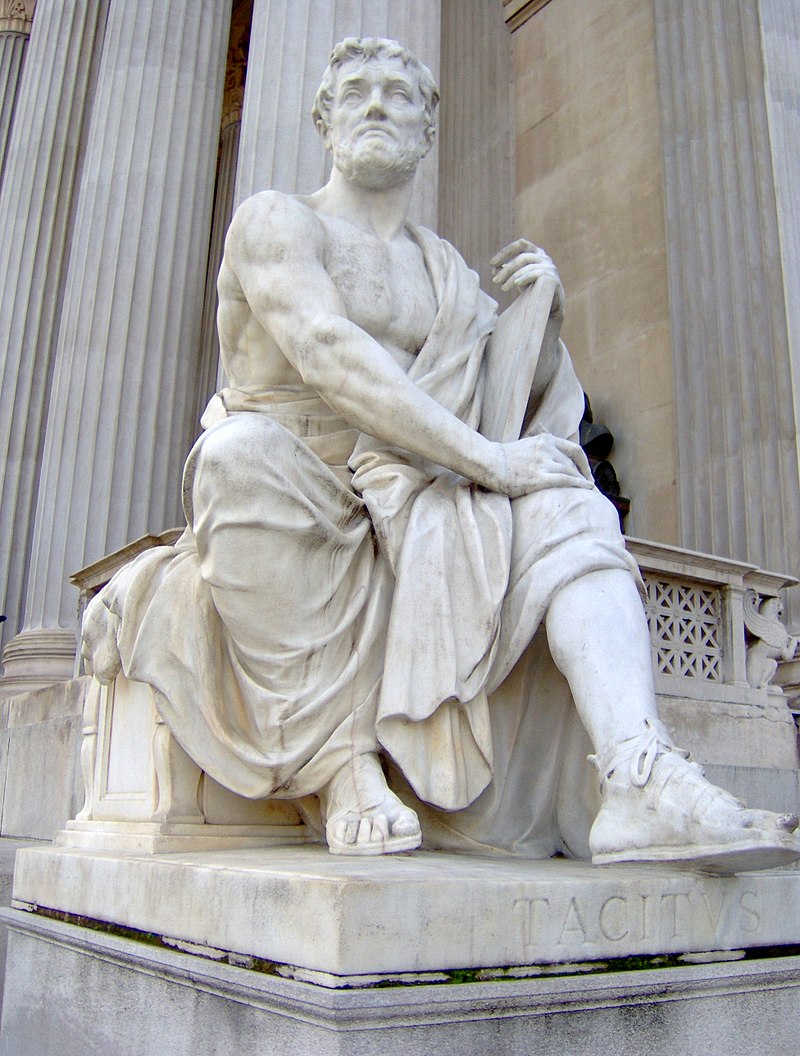
The account of Tacitus is generally accepted as being more accurate, because his father-in-law and chief source of information, Gnaeus Julius Agricola (AD 40–93 ), was the governor in Britain at the time. Tacitus also served as a young soldier under Suetonius in AD 61. Although a member of the Roman elite himself, Tacitus disapproved of government by dictators. For this reason, he presented both sides of Boudicca's story, by describing the suffering endured by the Britons, and by using the example of the rebellion to question the Romans' brutal treatment of them.

Prasutagus
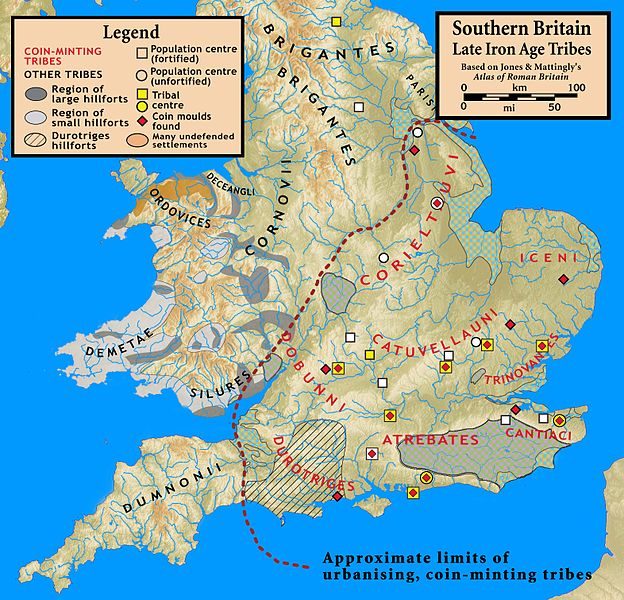
In the first century AD, the population of Britain was made up of a large number of independent peoples, or tribes, each with their own king. The Roman conquest of southern England in AD 43 was a major victory. It resulted in the surrender of 11 British kings at what is today the town of Colchester in Essex. Most tribes were forced to submit to Roman rule, but it seems that the Romans let Prasutagus, king of the Iceni, a tribe of modern-day East Anglia, remain as king (some historians say they appointed him king). This may have been because the Romans saw Prasutagus as a leader who could keep the peace between the rebellious Iceni and Rome. Prasutagus was, in any case, a forced ally of Rome.
As part of the deal, Prasutagus made the Roman emperor Nero (ruled AD 54–68) the joint heir to his kingdom, along with his two daughters—but not his wife, Boudicca (perhaps because he knew she was hostile to the Romans). Prasutagus believed that this agreement would ensure his kingdom would be preserved, his wife and daughters protected.
A young queen
Little is known about Boudicca's early life. It is believed she was born into a noble family in Camulodunum (modern Colchester) in around AD 30. She married Prasutagas when she was 18. Like other Celtic women, Boudicca had trained as a warrior, including fighting techniques and the use of weapons. Without any previous experience we know of, it appears she quickly became a brilliant war leader. As Dio wrote: "the person ... who directed the conduct of the entire war, was Boudicca, a Briton woman of the royal family and possessed of greater intelligence than often belongs to women."
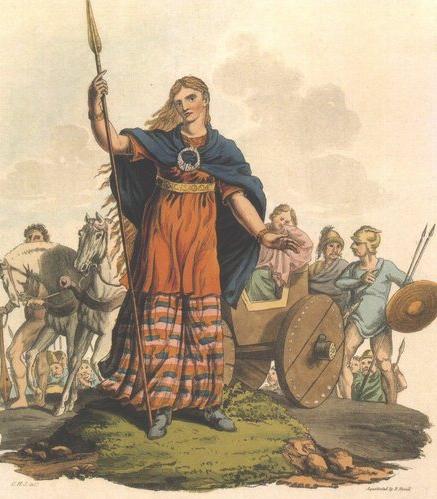
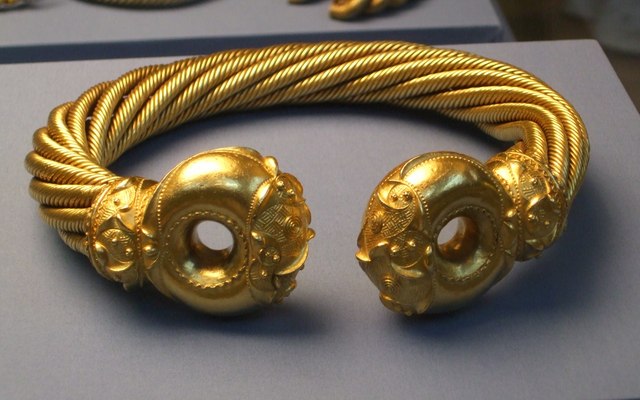
Dio describes the queen as tall and terrifying with fierce eyes and long “tawny” hair. When rallying her troops, she grasped a spear and wore a golden torc—a symbol of high status in Celtic Britain—around her neck, a colourful tunic and a cape around her shoulders fastened by a brooch.
Dio’s is the only surviving detailed description of a Briton during Roman times, but the source of his information—written well more than a century after Boudicca's death—is not known. His depiction of her appearance and leadership style may have been deliberately exaggerated to shock Roman readers, unaccustomed to women of this kind.
Revolt of the Iceni
On the death of Prasutagus in AD 60, the king's wishes were ignored by the Romans. Roman officials were angered to learn that Prasutagus had not left all his holdings to Rome, his ally. So they plundered his kingdom and its people as if they were prizes of war, seizing his property and treating his family like slaves. Once a proud kingdom, the Iceni's homeland was to become a mere province of the Roman Empire. When Prasutagus's wife, Boudicca, objected, she was publicly flogged by the Roman authorities.
Enraged by this humiliation, the Iceni under the leadership of a vengeful Boudicca rebelled. They were soon joined by another tribe to south resentful of Roman rule, the Trinovantes.
Boudicca's war
Boudicca's army made for the Camulodunum. The Roman governor of Britannia, Gaius Suetonius Paulinus, was at the time engaged in putting down an uprising on Mona, the island of Angelsey. Camulodunum's Roman citizens made an urgent appeal to the imperial agent, Catus Decianus, for reinforcements. But Catus sent a force of just 200 men—no match for Boudicca's much larger forces. The Romans then sent the Ninth Roman Legion, led by Petillius Cerealis, to relieve Camulodunum. They, too, were routed by the Britons.
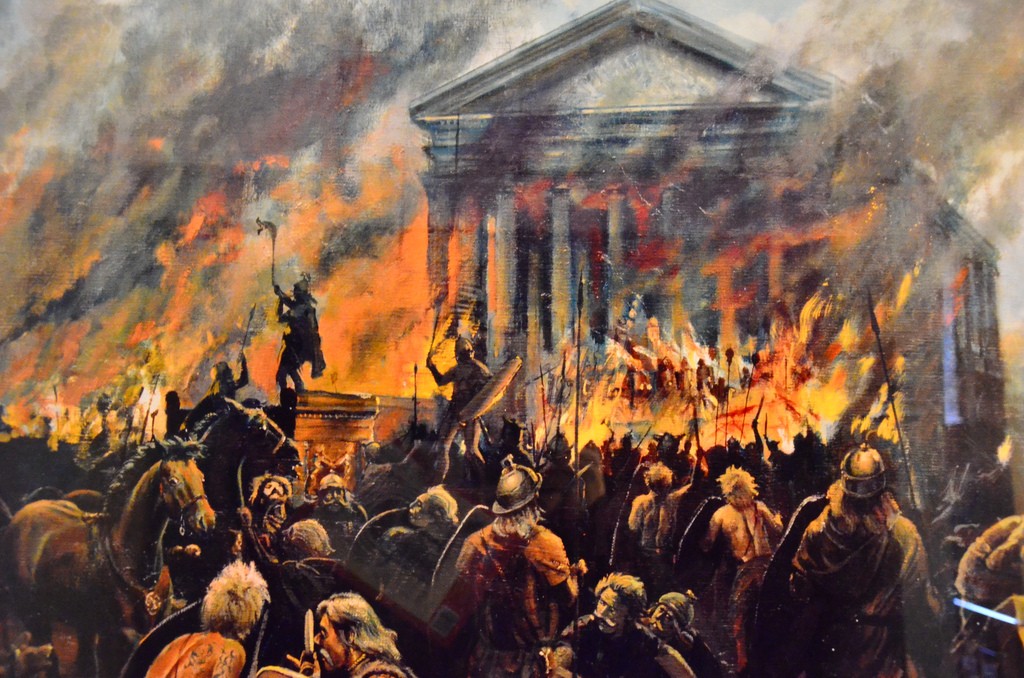
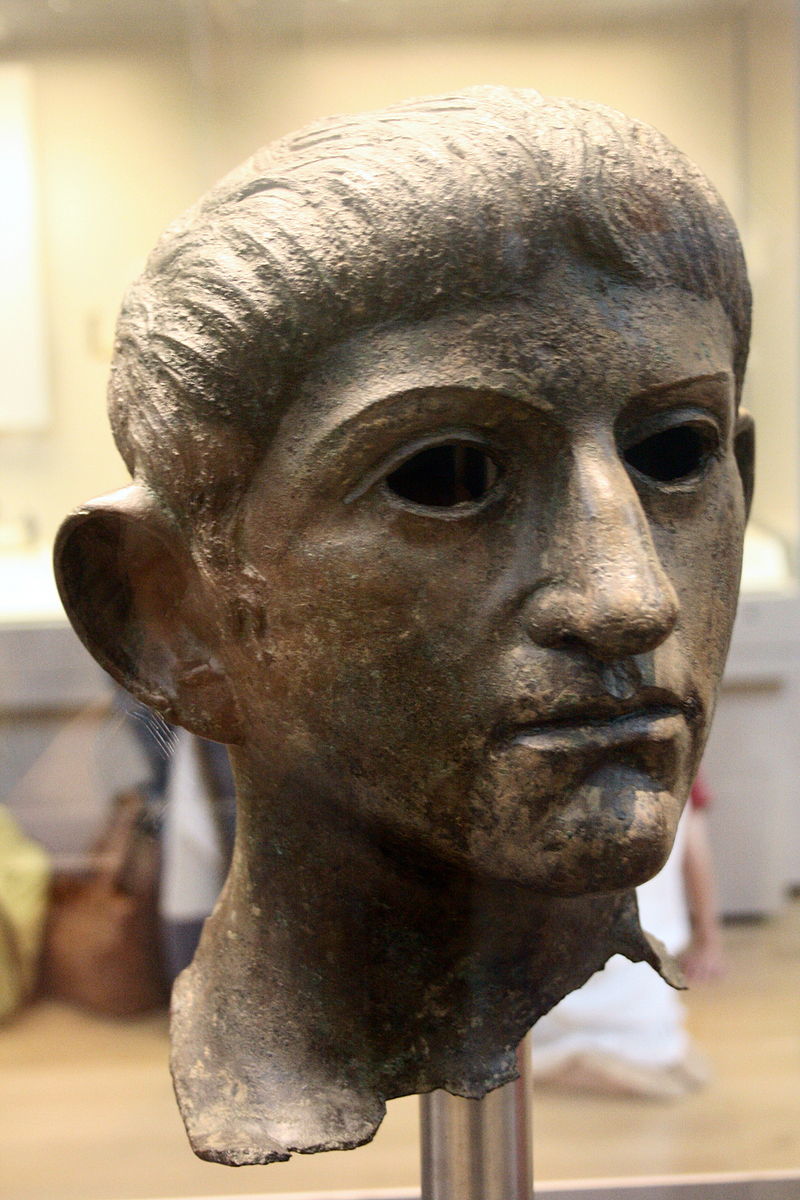
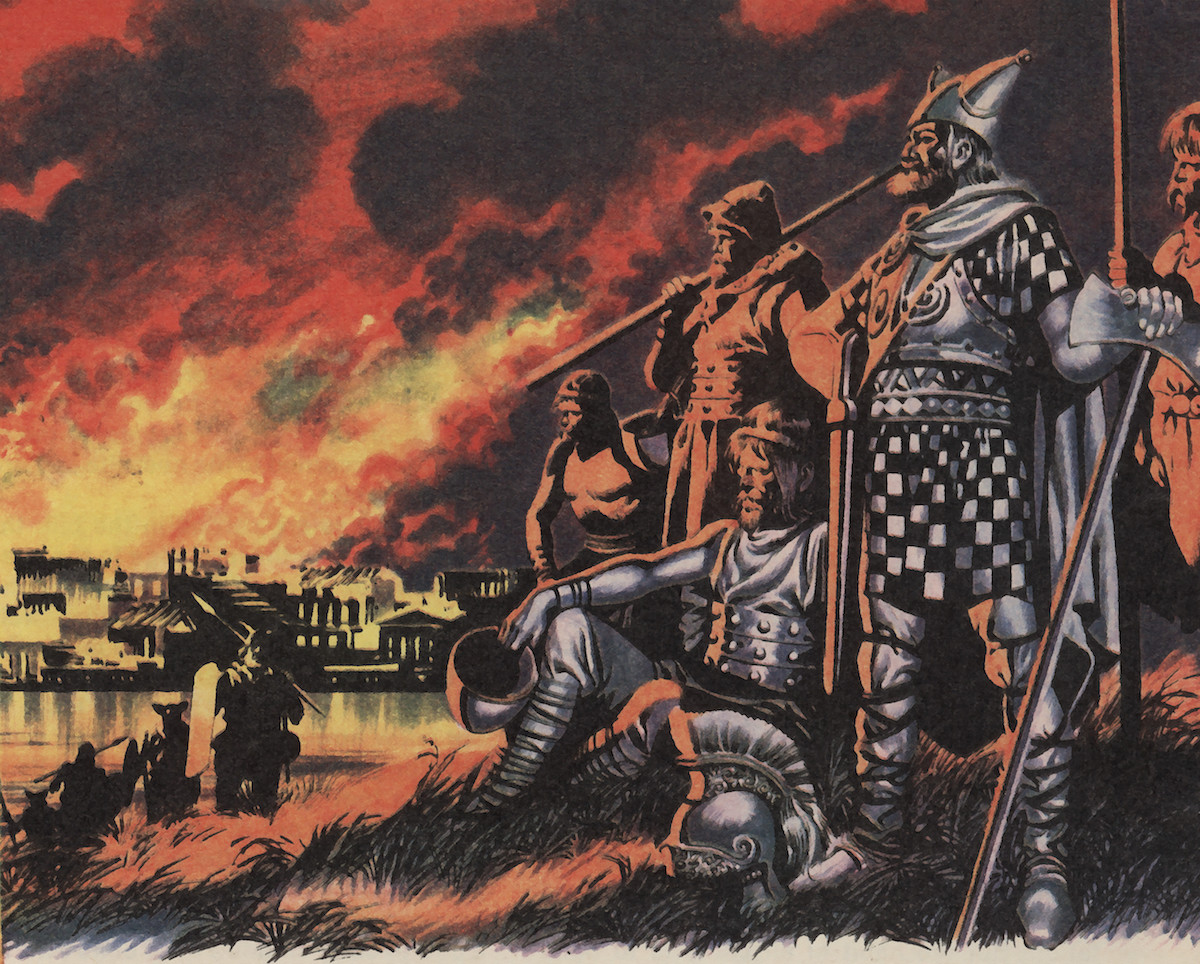
Boudicca's troops burned down Camulodunum's huge stone temple, dedicated to Emperor Claudius and built in commemoration of his conquest. They also decapitated the bronze statue of the emperor. The entire city was destroyed, its inhabitants—mostly Romans—massacred.
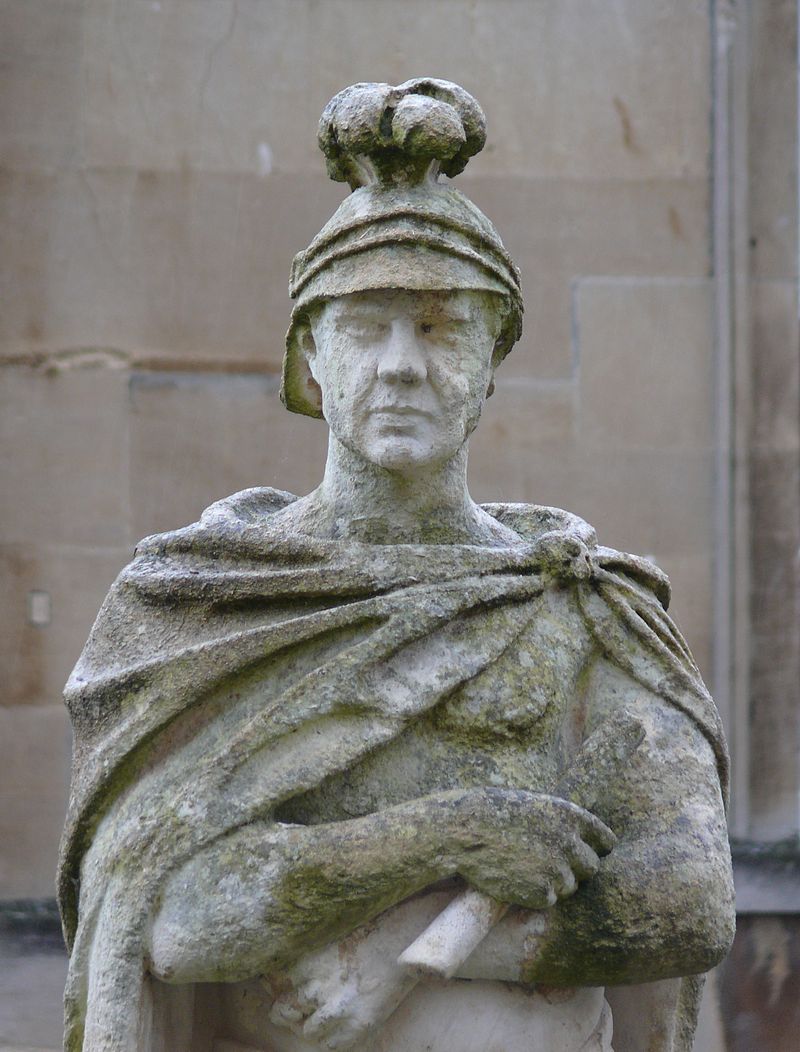
Boudicca's army now headed for Londinium (modern London). Suetonius, returning from Mona, marched towards the city, but on learning that Boudicca's forces far outnumbered his own, turned away, abandoning Londinium to its fate.
Boudicca's army sacked Londinium and, soon after, attacked and destroyed Verulamium (modern St Albans), a city largely populated by Britons who had co-operated with the Romans. As at Camulodunum, the inhabitants of both Londinium and Verulamium were slaughtered. In all, a total of 70,000 to 80,000 people, Romans and Britons, perished at the hands of Boudicca's troops.
Battle of Watling Street
While the Britons were destroying Verulamium, Suetonius sought a place where he could improve his chances of overcoming an army much greater than his own. According to Tacitus, he "chose a position in a defile [a narrow valley] with a wood behind him. There could be no enemy, he knew, except at his front, where there was open country without cover for ambushes". Suetonius stationed his men, an army of around 10,000 men drawn from the 14th and 20th Legions, supplemented by auxiliary soldiers, in this place.
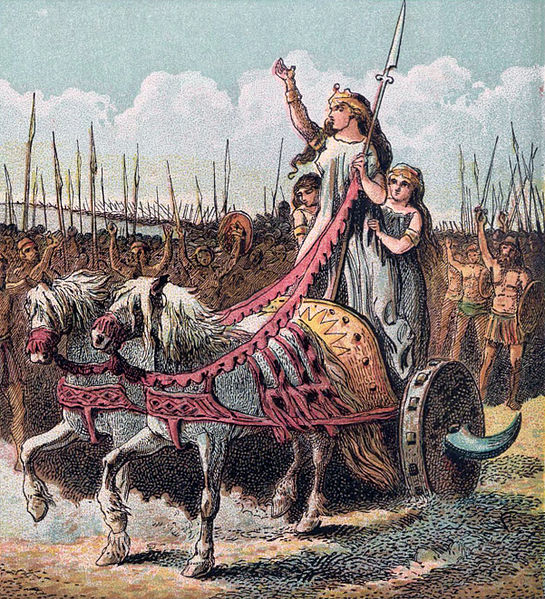
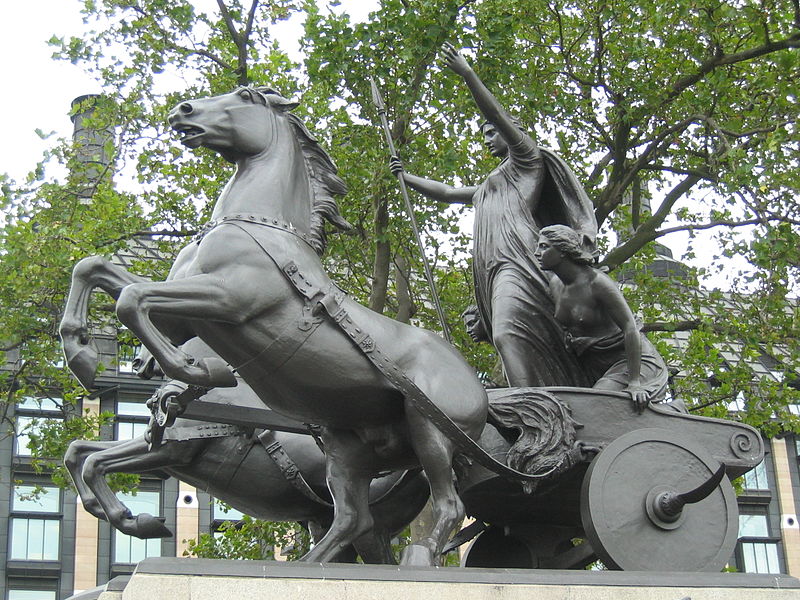
Boudicca's men were so confident of victory that they brought their wives with them to watch their victory from supply wagons positioned around the edge of the battlefield. Before the battle, Tacitus wrote that Boudicca rode around the battlefield in her chariot declaring to her troops: "On this spot we must either conquer, or die with glory. There is no alternative. Though a woman, my resolution is fixed: the men, if they please, may survive with infamy, and live in bondage."
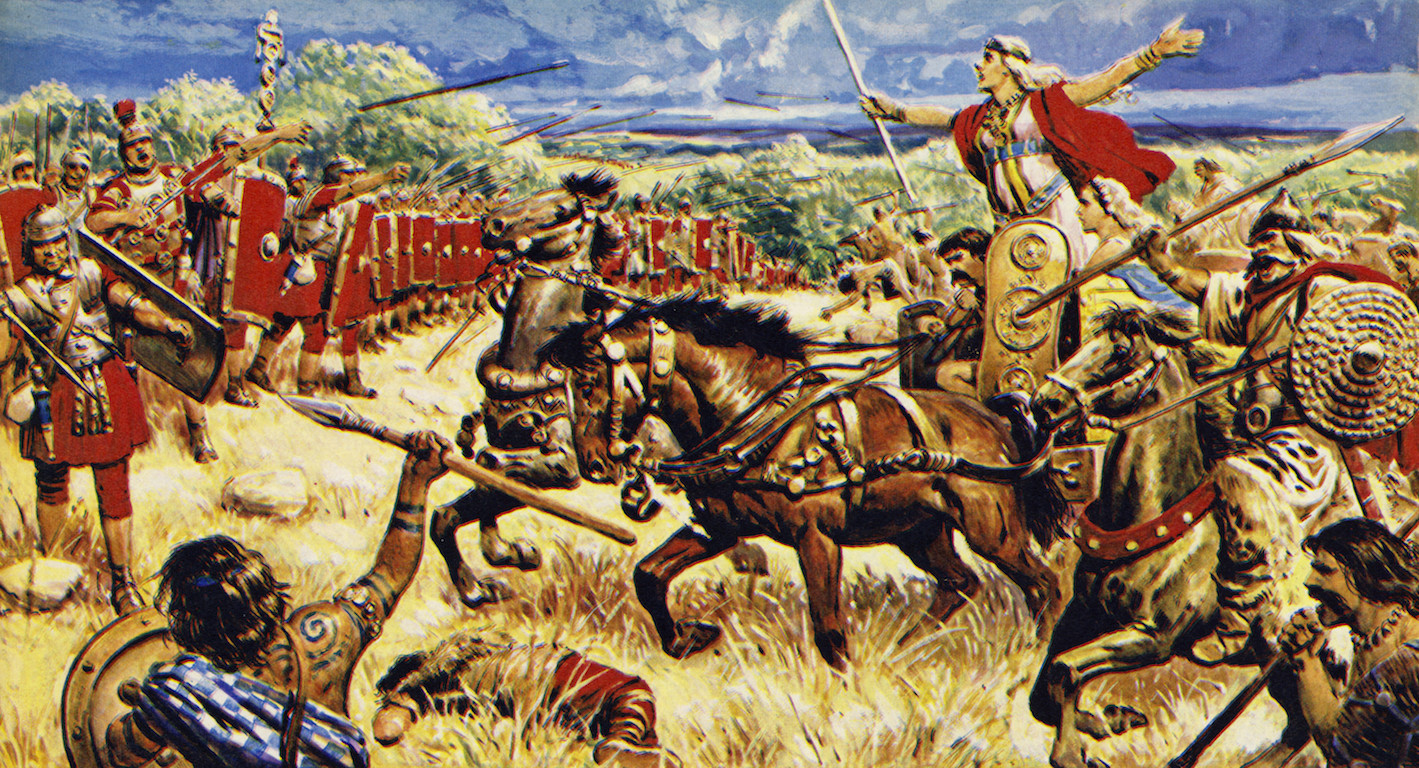
Once the battle had begun, Boudicca's superior numbers proved of little advantage in the narrow field Suetonius had cunningly chosen. Her men were pushed together, which made them easier targets for the Roman spear-throwers. The Britons fell back as the Roman infantry advanced in wedge formation, then turned to flee as the Roman cavalry entered the battle. But the wagons the Britons had positioned behind them cut off their escape route, enabling the Roman soldiers to complete the massacre. Thousands Britons were killed, while Roman casualties amounted to no more than 400.
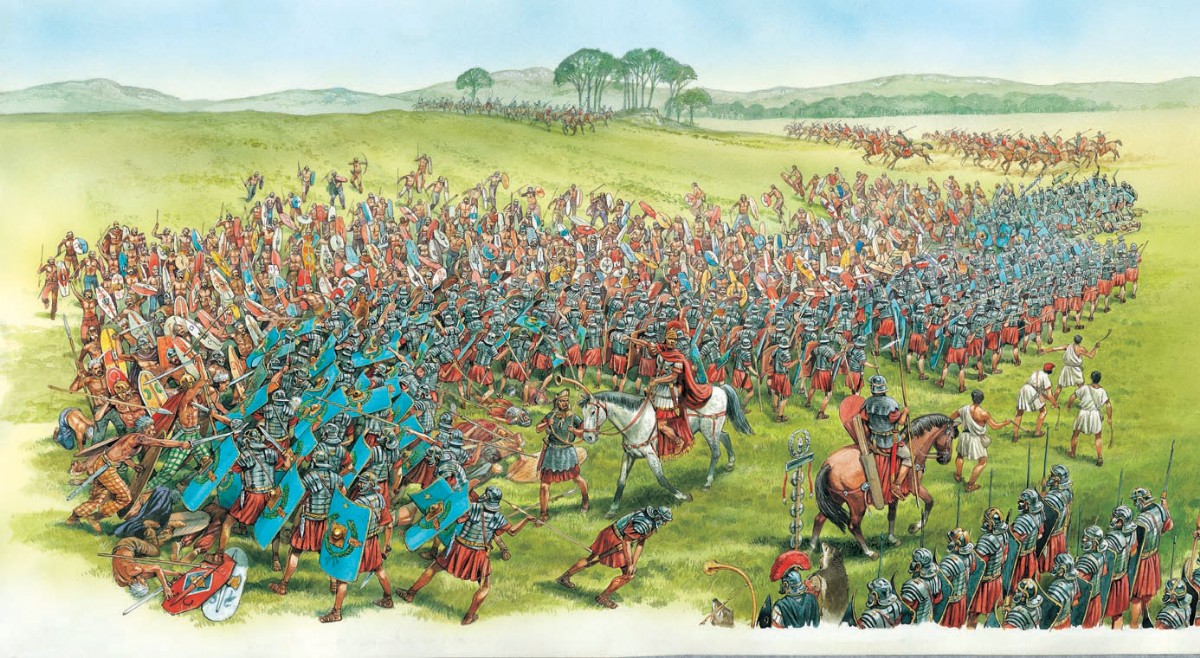
According to Tacitus, the Romans did not spare even the Iceni women. Boudicca and her daughters did manage to escape but, soon after, poisoned themselves to escape capture (although Dio insisted she died later of her wounds and was given an elaborate burial).
After Boudicca
The Roman reprisals for the British rebellion were severe. Tacitus described how many settlements in the lands of the Iceni and Trinovantes were ravaged by fire, their inhabitants put to the sword. In the years following Boudicca's defeat, Suetonius imposed harsher laws on the people of Britain under Roman rule. The Romans resumed their conquest of Britain, and, by AD 84, the governor, Gnaeus Julius Agricola, had conquered much of the north of the country. Other rebellions were mounted following the Iceni revolt, but none were successful. The Romans would continue to hold Britain until their withdrawal in AD 410.
Though defeated, from Victorian times onwards, Queen Boudicca has been celebrated as a great national heroine of Britain and as a symbol for freedom and justice.
Consultant: Philip Parker
pics

Without in any way limiting Q-files Ltd’s exclusive rights under copyright, any use of this publication to “train” generative artificial intelligence (AI) technologies to generate text is expressly prohibited. Q-files Ltd reserves all rights to license use of this work for generative AI training and development of machine learning language models.