
Russia

CITE
We have made every effort to follow citation style rules, but there may be some minor differences. If in doubt, please refer to the appropriate citation style manual.
Russian Revolution. (2026). In Q-files Encyclopedia, History, Russia. Retrieved from
https://www.q-files.com/history/russia/russian-revolution
"Russian Revolution." History, Russia, Q-files Encyclopedia, 1 May. 2026.
https://www.q-files.com/history/russia/russian-revolution.
Accessed 21 Sep. 2026.
Russian Revolution 2026. History, Russia. Retrieved 21 September 2026, from
https://www.q-files.com/history/russia/russian-revolution
History, Russia, s.v. "Russian Revolution," accessed September 21, 2026.
https://www.q-files.com/history/russia/russian-revolution


Russian Revolution
The Russian Revolution was a period of political and social uprising that took place in the Russian Empire, beginning in 1917, during World War I, and lasting until 1922 when, following victory in a civil war, the new Bolshevik government established the USSR (Soviet Union). There were two revolutions in Russia in 1917. The first, in February, was focused on Petrograd (the name for Saint Petersburg 1914–24), then the capital of Russia, and saw the end of Tsar Nicholas II's rule. The second revolution took place in October followed a chaotic period in which a Provisional Government and a network of soviets (workers' councils) shared power. After growing unrest and support for the sovets, the Bolsheviks under the leadership of Lenin overthrew the Provisional Government and seized power.
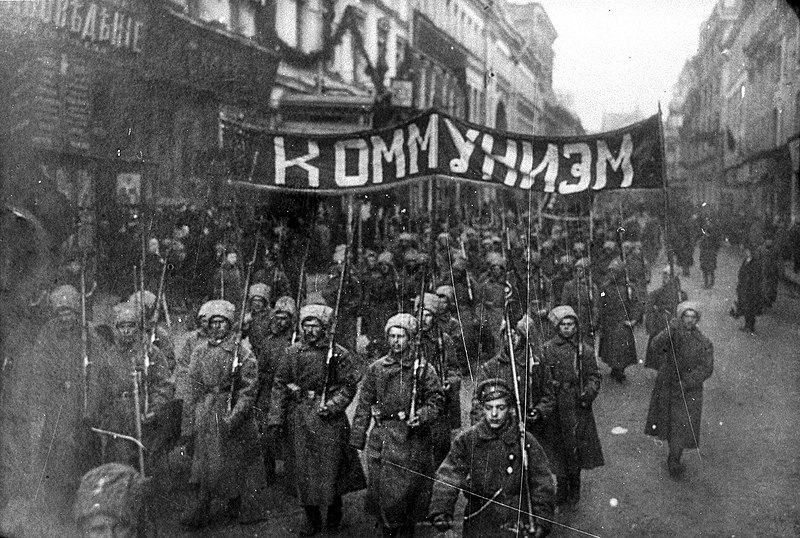
NOTE: All the dates on this page are from the Julian calendar, which was still used in Russia until February 1918. It was 13 days behind the Gregorian calendar, used in Europe and the US. The October Revolution (for example) is so-called because it took place on 25th–26th October in the Julian calendar, although it occurred on 7th–8th November according to the calendar in use today.
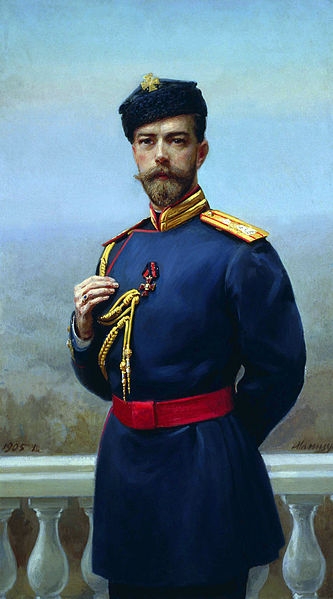
Tsar Nicholas II
At the beginning of the 20th century, Tsar Nicholas II ruled over Russia's huge empire, which stretched from central Europe to the Pacific Ocean, and from the Arctic to the Middle East. Nicholas believed that the tsar held absolute power as given to him by God, and that the people would remain naturally loyal to him. But Nicholas was a poor ruler and did little to help his people. The peasants of Russia, as well as most of the factory workers, lived in terrible poverty.
Lenin
Vladimir Ilyich Ulyanov (1870–1924), better known as Lenin, became a revolutionary and a follower of the ideas of Karl Marx (1818–83) in around 1887. In 1897 he was arrested for participating in protests against the Russian Empire's Tsarist government and exiled to eastern Siberia. In July 1900, Lenin left Russia for western Europe, travelling to Switzerland, Munich and then London.
In his pamphlet What Is To Be Done? (1902), Lenin set out his thoughts on the need for a party to lead the working class (the "proletariat") to revolution. In his version of Marxism, a temporary "dictatorship of the proletariat" would be needed, however, before the establishment of a Communist society, which Marx thought would follow inevitably.
Lenin was a member of the Russian Social Democratic Labour Party. At its conference, held in London in July 1903, a split emerged between Lenin's supporters and those of Julius Martov. Martov argued that members should be able to express views independently of the leadership, while Lenin emphasized the need for a strong leadership with complete control over the party.
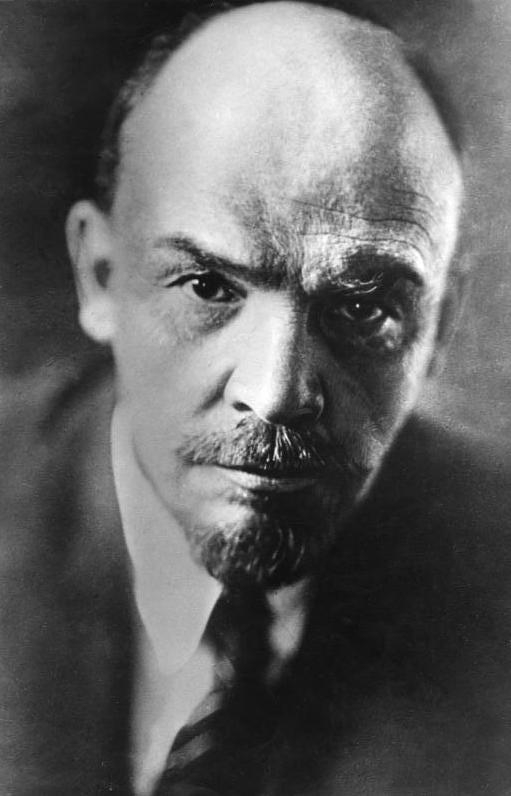
Lenin's supporters were in the majority, so he called them the "majoritarians" (bol'sheviki in Russian, or Bolsheviks), while Martov's followers were the "minoritarians" (men'sheviki in Russian, or Mensheviks). Arguments were to continue between Bolsheviks and Mensheviks until 1917.
1905 Revolution
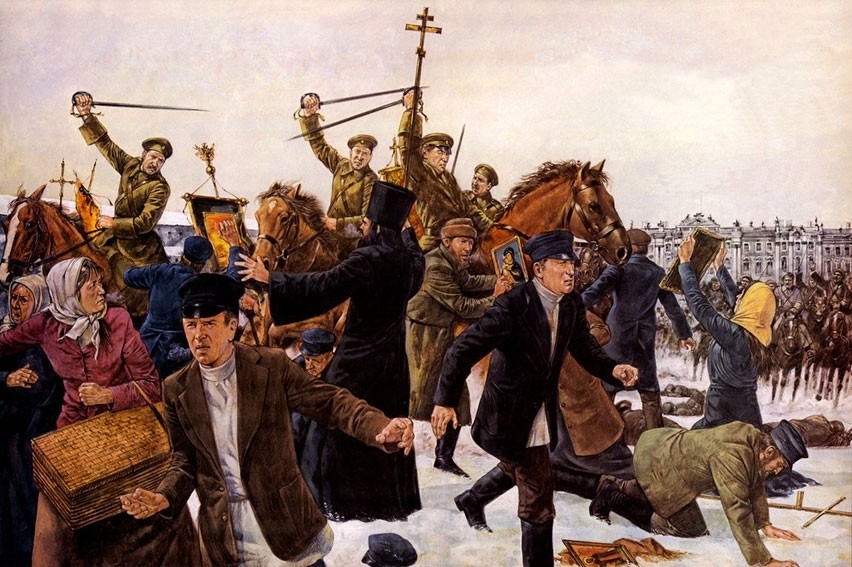
In 1904 Russia went to war with Japan over control of Korea and Manchuria, but was heavily defeated. This defeat furthered discontent at home. On 9th January 1905, a crowd of unarmed demonstrators marched to present a petition to Tsar Nicholas II in St Petersburg. However, the soldiers protecting the tsar's palace opened fire on the protesters. Hundreds of people were killed.
This event, known as Bloody Sunday, sparked a revolution. Strikes and revolts across Russia forced the tsar to concede civil rights and agree the establishment of a democratically elected parliament called the Duma—though with limited rights. These concessions, outlined in what was called the October Manifesto, were enough for the tsar to stay in power.
Social unrest
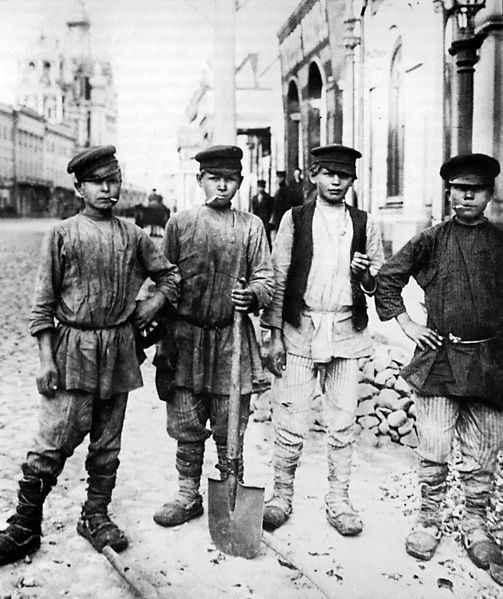
Russia's peasants had been emancipated (freed) from serfdom in 1861, but they remained poor and were denied ownership of the land they worked. Meanwhile, factory workers in the cities lived in overcrowded housing with often terrible sanitary conditions. They worked long hours, suffered harsh discipline and received inadequate wages—made worse after 1914 by price inflation. New ideas about radically reforming the social and political order in Russia were taken up readily by these discontented city-dwellers. For many, the tsar was to blame.
World War I
Growing tensions between Russia's rulers and its population were quietened by the outbreak of World War I in August 1914. For a time, hostilities were directed against the common enemies: Germany and Austria-Hungary.
But the war rapidly became a disaster. The Russian army invaded eastern Germany with two large armies, but it was completely routed by smaller German forces at the battles of Tannenberg and the Masurian Lakes. At Tannenberg, more than 30,000 Russian troops were killed or wounded and 90,000 captured. By the end of 1914—only five months into the war—around 390,000 Russian men had been killed, with nearly 1,000,000 injured. Poorly trained recruits were soon called up as the huge losses continued to mount. The soldiers ran short of guns and ammunition. In May 1915, Germany launched a major onslaught on the Eastern Front, the Gorlice–Tarnów Offensive. The German army, which was better led, better trained and better supplied, drove back the ill-equipped Russian troops deep into Russia itself.


That autumn, seeking to turn his country's fortunes around, Tsar Nicholas declared himself Commander-in-Chief. Tsarina Alexandra was left in charge of the government. But Nicholas had no experience of organizing large military forces, and the series of disastrous defeats continued.
The Brusilov Offensive, mounted in June 1916, was a great Russian triumph, but it came at huge cost: up to 1 million Russian solders perished. By the end of October, Russia had suffered around 1.7 million soldiers dead, 5 million wounded, with 2 million held prisoner and 1 million missing. Soldiers went hungry and lacked basic equipment and medical supplies. Morale, already undermined by a string of defeats, reached new lows. Many of the soldiers who had been loyal to the tsar were dead, and had been replaced by discontented conscripts from the cities who had little love for him.
Tsar Nicholas was now seen by the public—including the peasants and working class men who made up its armed forces—as personally responsible for Russia's humiliation on the battlefield.
Tsarina Alexandra
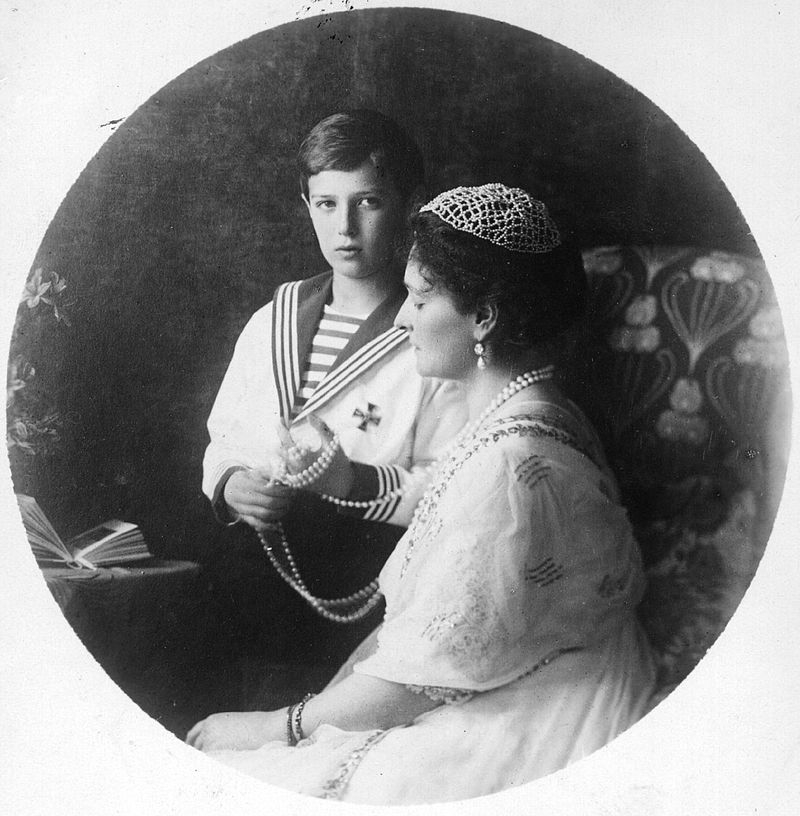
Tsarina Alexandra, left to rule in while the Tsar commanded at the front, was not popular in Russia. The fact she was German-born fuelled false rumours that she was attempting to interfere with the war effort. Her relationship with Rasputin, the controversial priest who had won her confidence by apparently curing her son of the disease haemophilia, also drew criticism. Rasputin's influence led to a series of disastrous ministerial appointments made by the tsarina. Reports of corruption and incompetence in the Russian government began to emerge, and the royal family took the blame.
Economic problems
As the war dragged on, Russia's economic problems grew steadily worse. Vital raw materials from overseas could no longer get through. Millions of peasants, who worked the land and produced Russia's food, had been conscripted into the army, so production fell steeply, leading to severe food shortages. The abandonment of territory in western Russia as troops retreated in 1915 also deprived the country of much productive farmland.

Meanwhile, the government decided to print millions of roubles in an attempt to pay for the war. As a result, price inflation soared to 200% by 1916. Farmers hoarded the crops they produced for themselves, adding to the food shortages. At the same time, rising prices led to demands for higher wages in the factories. Early in 1916, strikes started to break out across Russia.
Government officials responsible for public order worried about how long people's patience would last. In October 1916, the Petrograd branch of the security police, the Okhrana, warned of "the possibility in the near future of riots by the lower classes of the empire enraged by the burdens of daily existence."
February Revolution
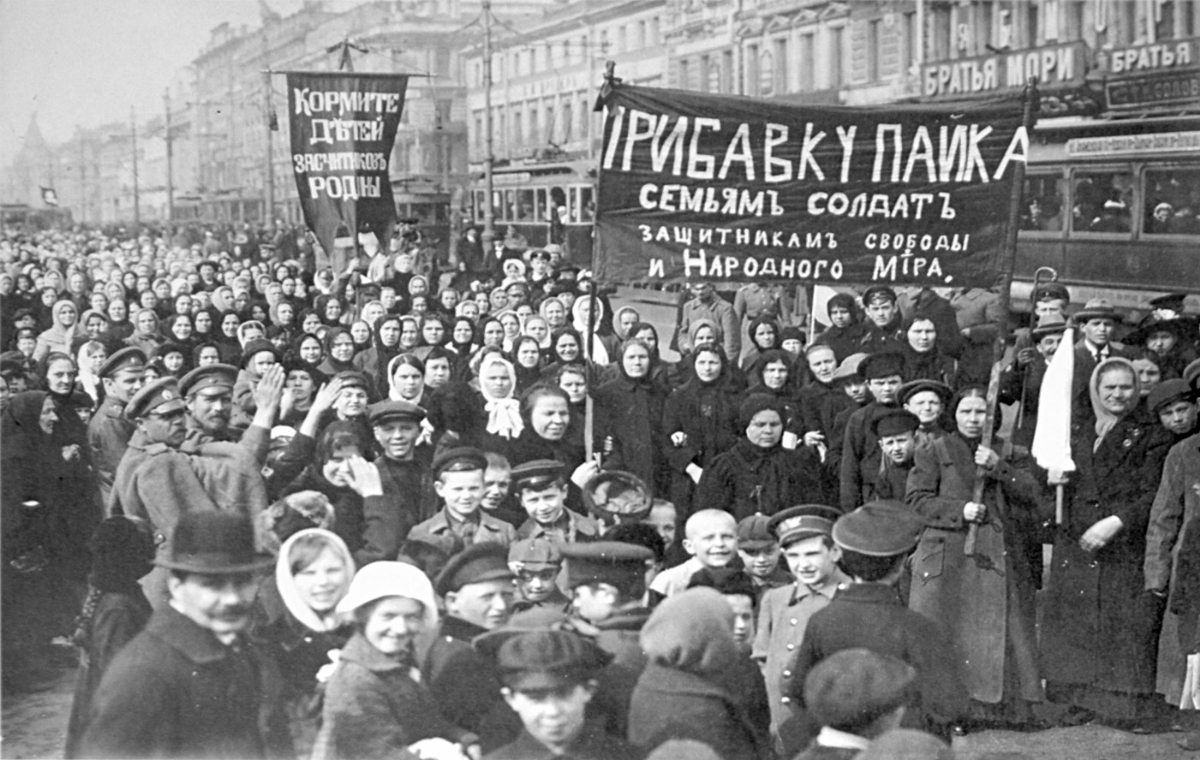
Winter 1916 brought further shortages of food and fuel—and deepening discontent. On 22nd February 1917, workers at the Putilov works in Petrograd went on strike after the failure of pay talks. On 23rd February, International Women's Day, thousands of female factory workers protested, demanding more generous rations, an end to the war and the right to vote. Other workers, students and teachers, male as well as female, joined them in marches. By the 25th, the numbers of strikers and protesters had swollen to 250,000. The army was ordered to restore order in Petrograd and fire on the demonstrators.
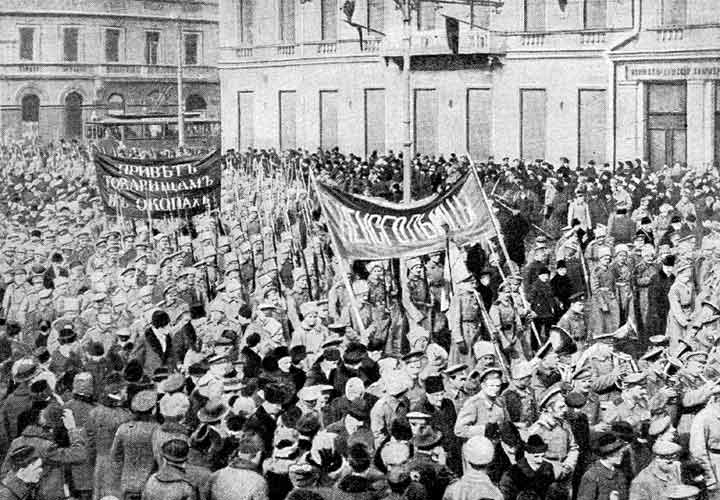
Despite their firm belief that a revolution would soon take place, figures in the revolutionary movement decided not to act. The Bolsheviks had little support and most of their leaders, including Lenin, were in exile. In any case, Lenin believed that revolution should be organized, not emerge from unorganized protest. One leading Bolshevik said: “Give the workers a pound of bread and the movement will peter out.” Tsar Nicholas dismissed the protesters as a "hooligan movement".
Nonetheless, banners soon began to appear amongst the protesters, calling for the downfall of the monarchy. After Tsar Nicholas called in the army, many soldiers revolted, some joining the protesters; a few even fired on their own officers. On 27th February, the Petrograd Soviet was elected to represent the protesting workers and soldiers. On 1st March, leaders of the Duma formed a Provisional Government and the Petrograd Soviet agreed to support it.
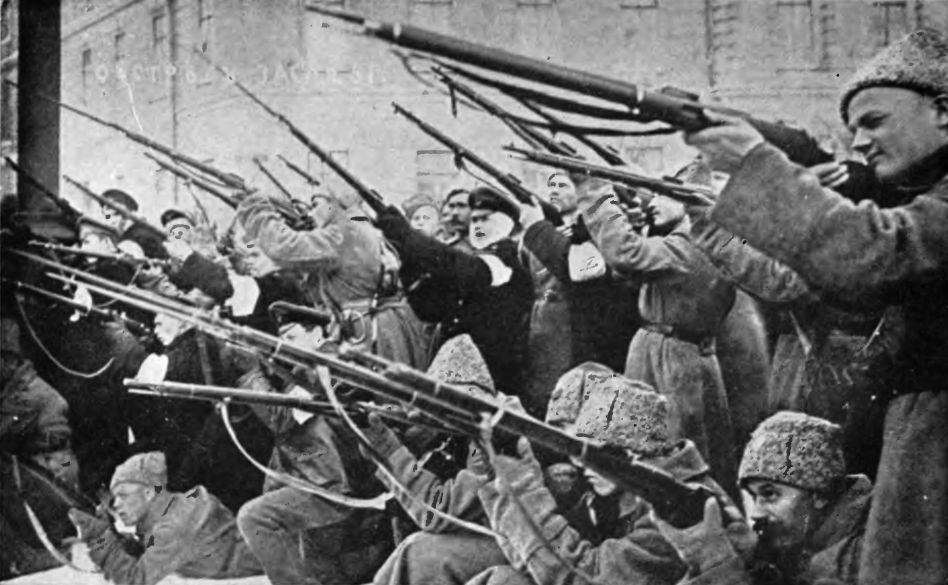
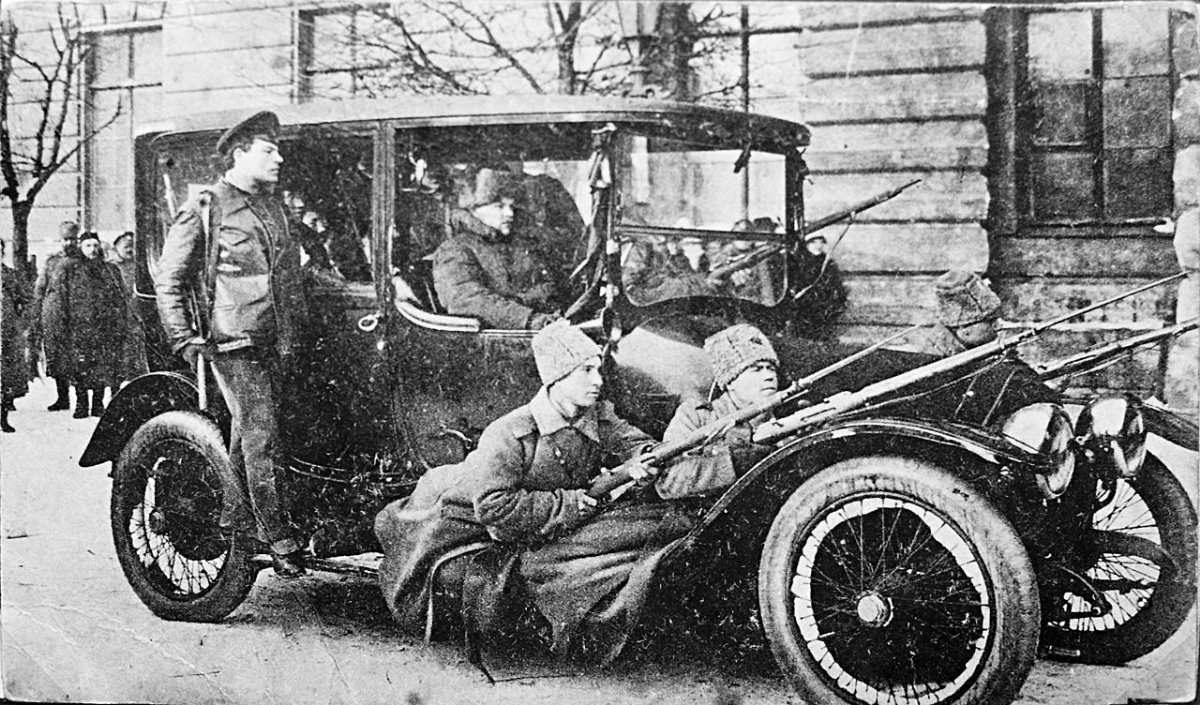

With his authority now seriously threatened, Nicholas travelled back from the war front by train, bound for Petrograd. But revolutionaries diverted his train to Pskov. Powerless without the support of the army, Nicholas had no choice but to heed the advice of his Army Chief and Duma leaders: on 2nd March he abdicated (gave up) the throne, naming his brother, the Grand Duke Michael, as his successor. But soon realising he lacked the support of both the military and the public, Michael refused the position. Later in March, Nicholas and his family were placed under house arrest by the Provisional Government. The end of the monarchy was marked by scenes of jubilation throughout Russia.
Provisional Government
The Provisional Government was intended to be a temporary body that would govern Russia in place of the tsar until elections could be held. Led by the prime minister, Prince Georgy Lvov, a liberal reformer, and Minister of Justice Aleksander Kerensky (1881–1970), a socialist and member of the Petrograd Soviet, the new government made immediate changes: it swept away the old laws of the tsarist regime against freedoms of speech and assembly.
The Provisional Government, however, had a rival: the Petrograd Soviet, which represented the workers and soldiers of the city. A period of dual power began, during which the Provisional Government, along with the Duma that created it, ran the country, while the national network of soviets, led by socialists, sought to ensure that the interests of the workers, peasants and soldiers were taken into account.

Lenin's return
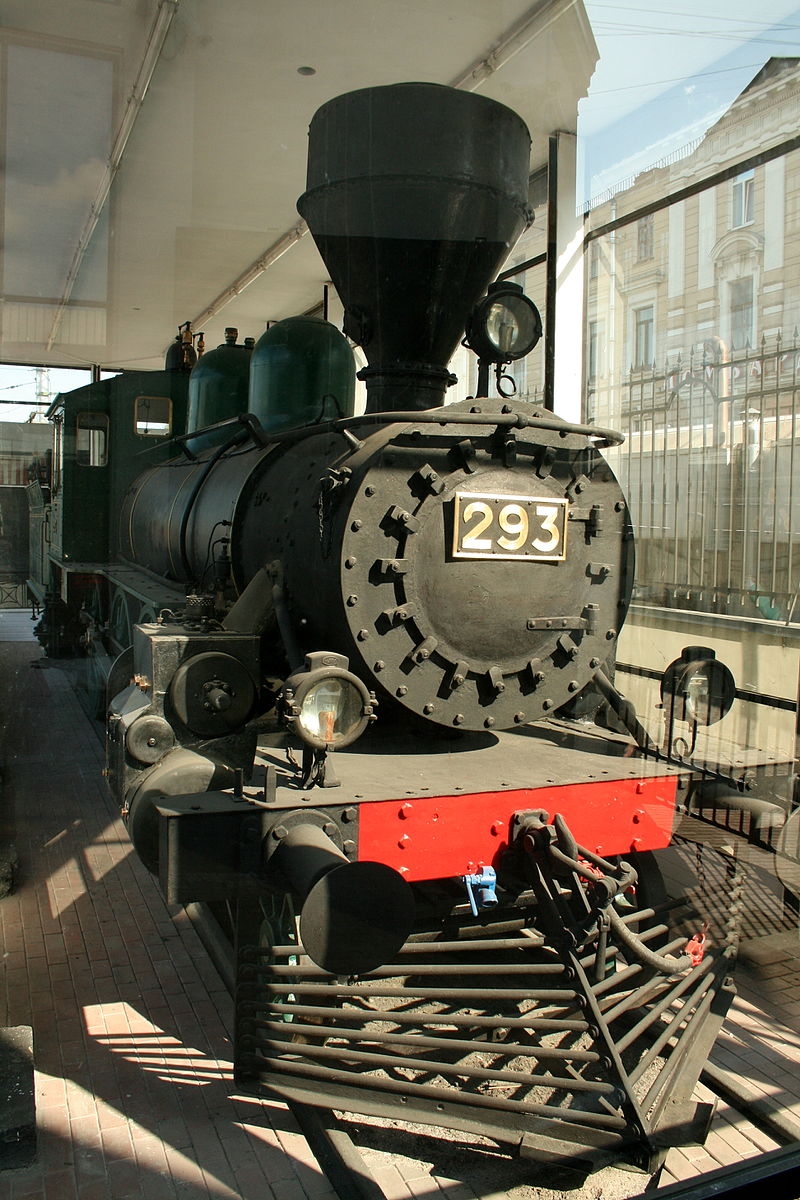
In April 1917, Lenin returned to Russia from exile in Switzerland on a "sealed train". It was provided by the Germans, who calculated (correctly) that his opposition to the war would help undermine the Russian war effort.
Lenin was determined that the Bolsheviks should seize power from the Provisional Government. He saw that the way to do it was by winning control of the Petrograd Soviet and the soviets in other cities. The Petrograd Soviet, however, was dominated by Social Revolutionaries and Mensheviks, who were content to work with the Provisional Government. The Bolsheviks were in the minority.
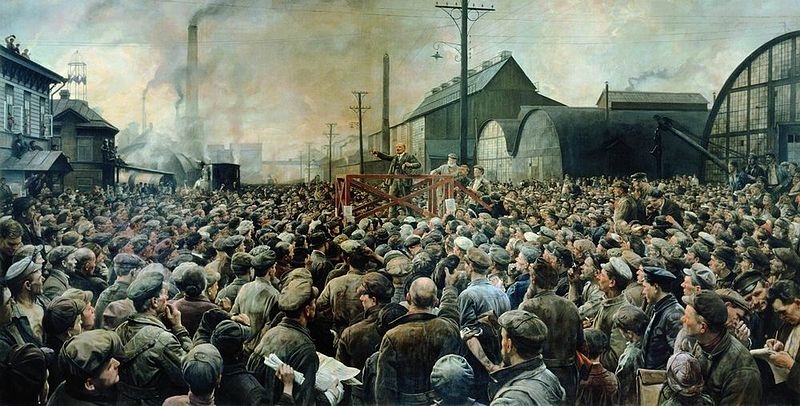
Arriving at Petrograd’s Finland Station on 3rd April, Lenin outlined his policies in what were called his April Theses. He declared “All power to the Soviets”, in effect withdrawing co-operation from the Provisional Government and the Duma. He also promised “Peace, Land and Bread”: making peace with the Germans, offering land to the peasants and solving the food shortages that existed in the towns and cities. A wing of the Revolutionary-Socialist Party (which had huge support among the peasants), who opposed Russia's participation in the war, now supported Lenin's position.
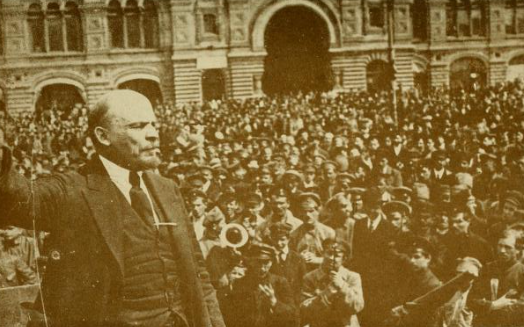
Displaying great persuasive energy, Lenin succeeded in attracting workers and soldiers, dissatisfied with the Provisional Government and the war, to join the Bolsheviks.

June Offensive
The Provisional Government tried to conduct the war with Germany more effectively than the tsar. Kerensky believed that victory would unite the people behind his government. In any case, Russia relied on vital financial loans from Britain and France and the government feared these would be withdrawn if Russia pulled out of the war.
Kerensky ordered the June Offensive of 1917. For two days the Russians advanced, but on the third day they were pushed back by a German counter. The morale of the army declined further. The soldiers, many of them peasants, would not obey their officers, and many deserted. The shortages of food and fuel continued as before, and many Russians began to think the Provisional Government was no more competent at running the country than the tsar before it. More and more industrial workers were becoming swayed by Bolshevik propaganda arguing for revolution.
July Days

Demonstrations were held in Petrograd in the first week of July 1917. They were peaceful at first. Sailors from the Kronstadt naval base protested in the city on 4th July, and soldiers joined them. Violence broke out, and the protesters looked to the Bolsheviks to lead a revolt. But, perhaps because at the time the Bolsheviks still lacked support, Lenin gave no call for an uprising. The three-day protest, known as the "July Days", was suppressed by loyal troops brought in by the Provisional Government. Police stormed the Bolshevik headquarters and a number of Bolshevik leaders were arrested. Lenin escaped Petrograd in disguise.
Lenin now realised that the workers' revolution could not wait any longer. Marx had envisaged that a "bourgeois" revolution—one carried out by the middle classes—would happen before a workers' revolution. But Marx's ideas were more suited to advanced capitalist societies like Britain or Germany, not one like Russia's, still dominated by peasants. From now on, Lenin directed his efforts to seizing power and establishing a dictatorship of the workers. He argued for an armed uprising, but the Bolshevik party's leadership rejected this idea. Still on the run from the authorities, Lenin departed for Finland.
Following the July Days protest, Lvov resigned as head of government. Kerensky became prime minister on 8th July. He was regarded as the only politician who had popular support yet was also acceptable to the military leaders and Russia's middle classes. Meanwhile, the Bolsheviks' lack of direction lost them support among the soldiers and workers. But it would prove only temporary.

Kornilov Affair
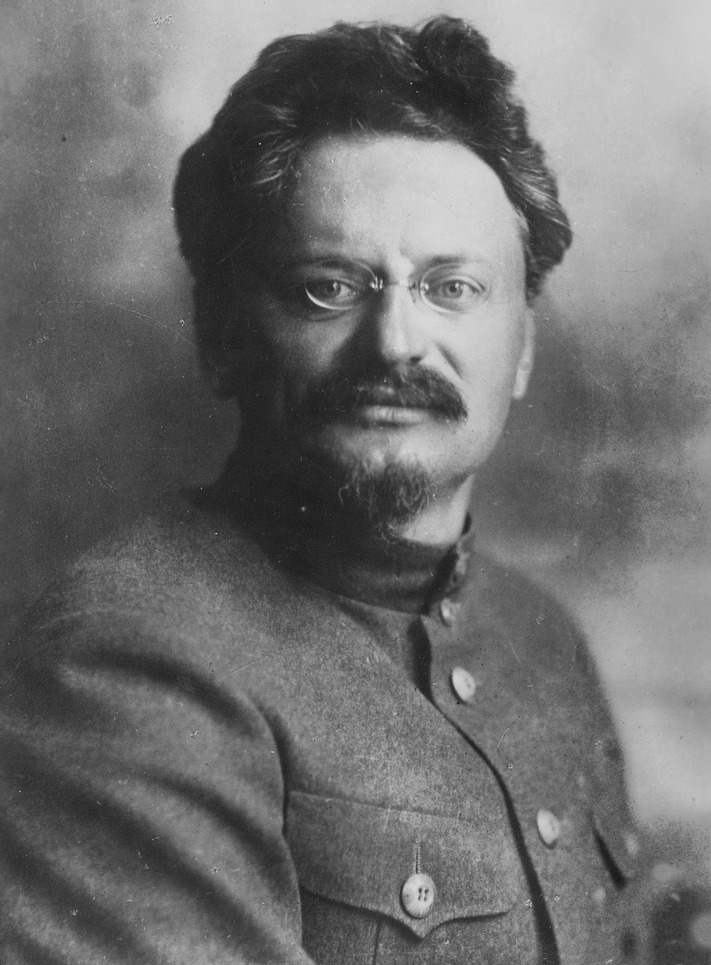
In August 1917, General Lavr Kornilov, Commander-in-Chief of the army, made an attempt to seize power, demanding the imposition of martial law (rule by the army). As troops loyal to Kornilov advanced on Petrograd, Kerensky sought help from the Petrograd Soviet to defend the city. The Bolshevik leaders were released. Under the direction of one of them, Leon Trotsky (1879–1940), the Red Guards (workers' militias under Bolshevik control) organized the defence of the factories. Bolshevik agents joined Kornilov's troops and encouraged them to desert. Railway and telegraph workers were encouraged to strike, thus slowing the movement of Kornilov's troops. Kornilov's attempted coup duly failed, and he was put under arrest.
With their success, the Bolsheviks started to gain public approval. By September, they won control of the Petrograd Soviet, as well as soviets in Moscow, Riga and Saratov. Trotsky became chairman of the Petrograd Soviet.

October Revolution
Lenin returned to Petrograd in early October sensing the opportunity for revolution had arrived. The Provisional Government had announced that elections would take place in November, but Lenin still doubted that the Bolsheviks would perform well enough in the poll to gain power. He needed to seize the moment.
At a meeting of the Bolshevik Central Committee on 10th October, Lenin again argued that the party should lead an armed uprising to topple the Provisional Government. This time he won the party round: the resolution was passed by 10 votes to 2. The Military Revolutionary Committee (MRC) was formed on 21st October. Trotsky took charge of planning the Bolshevik coup for the end of October.
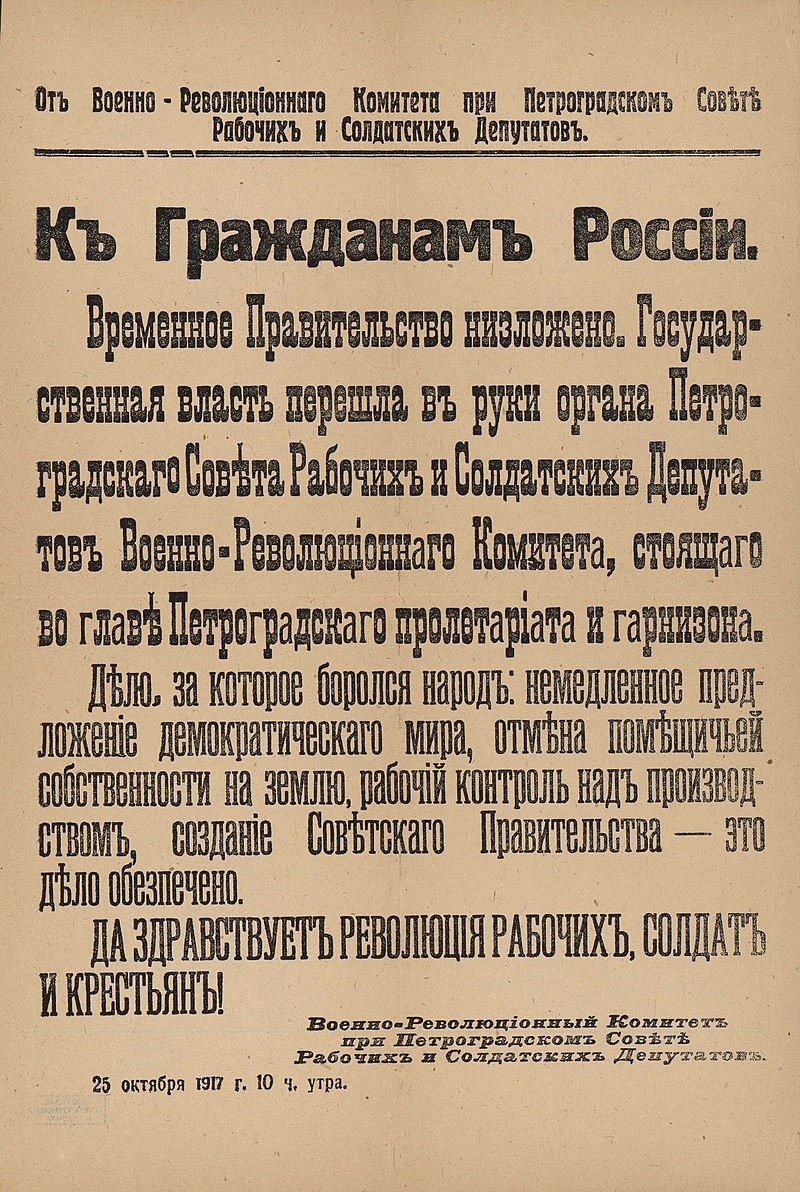

On 24th October, Kerensky's government ordered the closure of Bolshevik newspapers. The MRC now went into action. On the night of the 25th October, the Petrograd garrison, supported by the Kronstadt sailors—who had arrived in the city on board the cruiser Aurora—surrounded the Winter Palace, where the Provisional Government met. At 9.45 p.m. Aurora fired a blank shot from the harbour, the signal to storm the palace. It was captured the following morning. Members of the government were arrested; Kerensky avoided arrest and fled Petrograd.
The Congress of Soviets, representing soviets from across Russia, met on the morning of the 26th. It resolved to form a government, but most of the Menshevik and Socialist Revolutionary Party delegates walked out in protest at "the seizure of power by the Bolsheviks by military conspiracy against the ... rights of the people". This gave the Bolsheviks a majority in Congress and the resolution was passed. A governing institution, the Council of People's Commissars, or Sovnarkom, was formed and Lenin was named Chairman—head of government. He gave a speech declaring: "Long live the revolution!".
Cheka
It seemed unlikely that the Bolsheviks would remain in power for long. The news of its coup was greeted in Petrograd with widespread strikes, and its support in other cities and provinces of Russia remained weak. Fearing Congress might vote against him, Lenin ensured that the Sovnarkom had the right to pass laws without Congress's approval.
Elections to the Constituent Assembly, already announced by the old Provisional Government, took place in late November. The Bolsheviks polled just 24%. But Lenin consolidated his grip on power regardless. In early December, the MRC was abolished, and replaced by the Extraordinary Commission for Combating Counter-revolution and Sabotage, or Cheka for short (in Russian), headed by Felix Dzerzhinsky. Answerable only to Lenin himself, “the Party’s sword and shield”, as he described it, was set up to find and punish those he considered to be "enemies of the people". Modelled on similar organizations founded during the French Revolution's Reign of Terror, the Cheka—the Bolshevik secret police—soon became one of the most feared organizations in Russia.
On 5th January 1918, the new Constituent Assembly opened, but was immediately closed down by Bolshevik guards.


Peace with Germany
Lenin came to power on a promise of "peace, land and bread" for the people of Russia. The most immediate of these was peace: an end to Russia's participation in World War I. With the Russian Army disintegrating rapidly—more than 2 million soldiers had deserted since the war began—Lenin had no choice but to sue for peace with Germany. An armistice (ceasefire) was agreed on 2nd December 1917.
Following negotiations, led on the Russian side by Trotsky, the Treaty of Brest-Litovsk was signed on 3rd March 1918 (the date is as the new, Gregorian calendar). The terms were ruinous for Russia: it ceded its territorial claims to Poland, Ukraine, Finland, Estonia, Latvia and Lithuania. As a result, Russia lost a third of its agricultural land, more than half of its factories and nearly all its coalmines.
Nevertheless, these sacrifices secured Lenin’s position as head of government. He could now focus on achieving victory in the Civil War that had already broken out.

Civil War
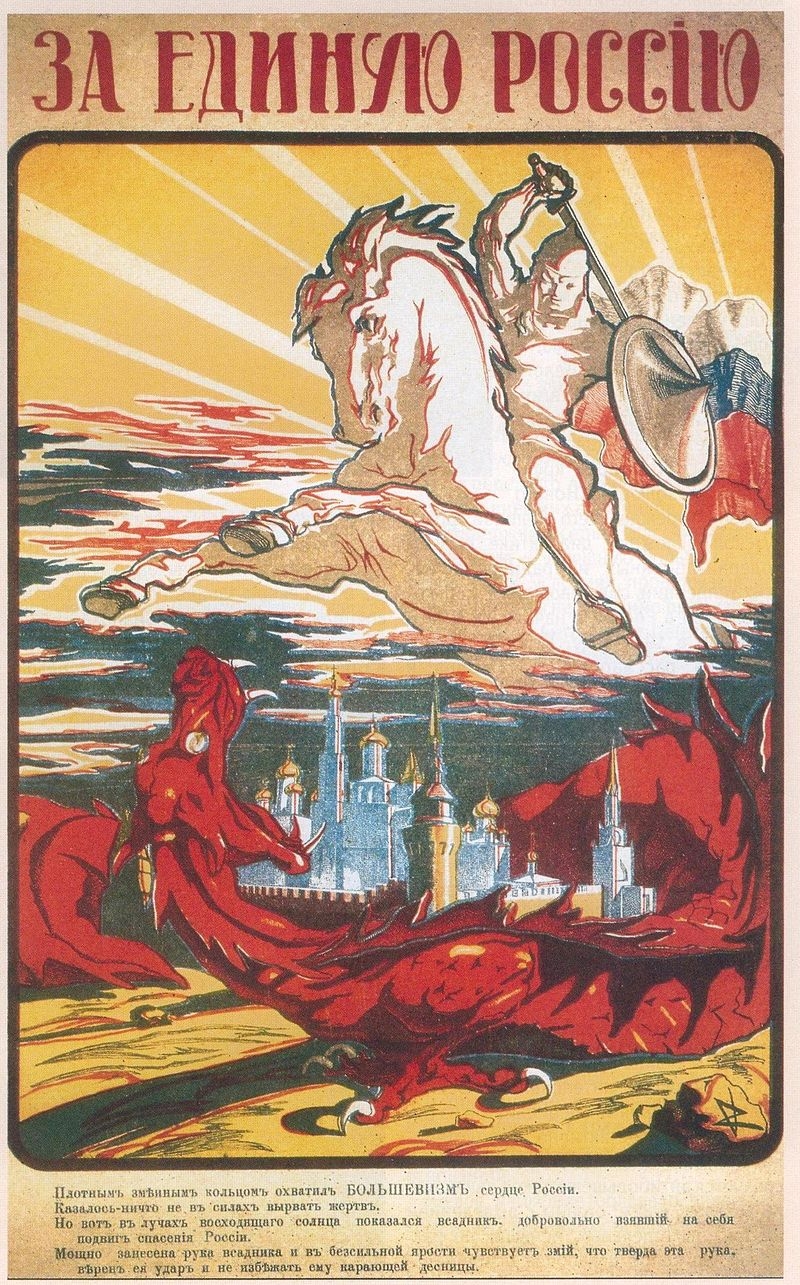
Liberal and Tsarist forces led by former generals organized what was called the White Army and went to war against the Bolsheviks in early 1918. By the autumn, other countries including Britain and France, sent troops and weapons to support the Whites.
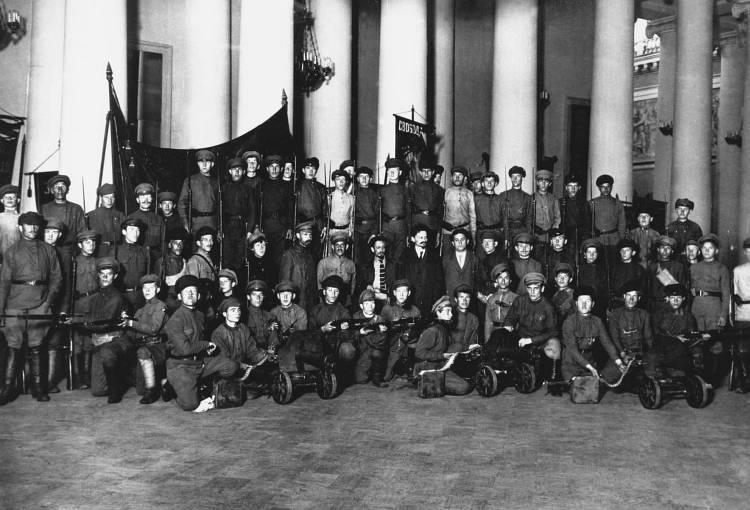
Trotsky became Commissar for War in the Bolshevik government in March 1918. He created the Red Army out of the Red Guards and the remains of the old Tsarist army. Hundreds of thousands of peasants were drafted into the Red Army. Trotsky introduced strict discipline and rewarded initiative and courage.
Once the war began, the Bolsheviks took the measures they deemed necessary to secure victory. They banned all other political parties and arrested their leaders. They also closed down newspapers that opposed them.
Under what was called "War Communism", the new government was entitled to seize supplies of grain from the peasants. Russia’s industry—much of which was located in areas the Bolsheviks controlled—was nationalized, giving the government complete control of production. Unlike in the war against Germany, their troops were well supplied with weapons, ammunition and food.
The Bolsheviks organized a highly effective propaganda campaign in the areas they controlled, persuading people that their living conditions would soon improve and wealth would be spread more fairly. They claimed they were the patriotic party who would defend Russia from foreign interference. Their opponents the White Army, the Bolsheviks said, would destroy all the achievements of the Revolution, hand Russia over to foreign powers or possibly even bring back the tsar to rule Russia once again.
Since the Whites had support from Britain, France, Japan and the US among others, this message carried some weight.

Execution of the tsar
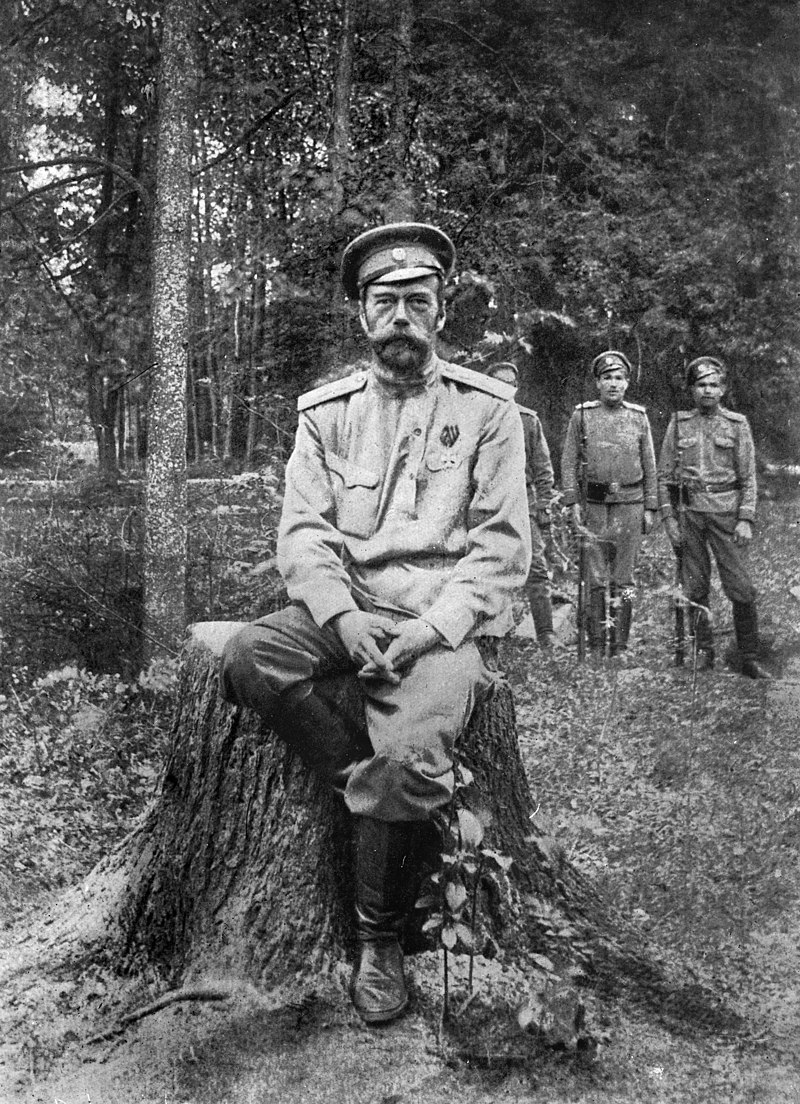
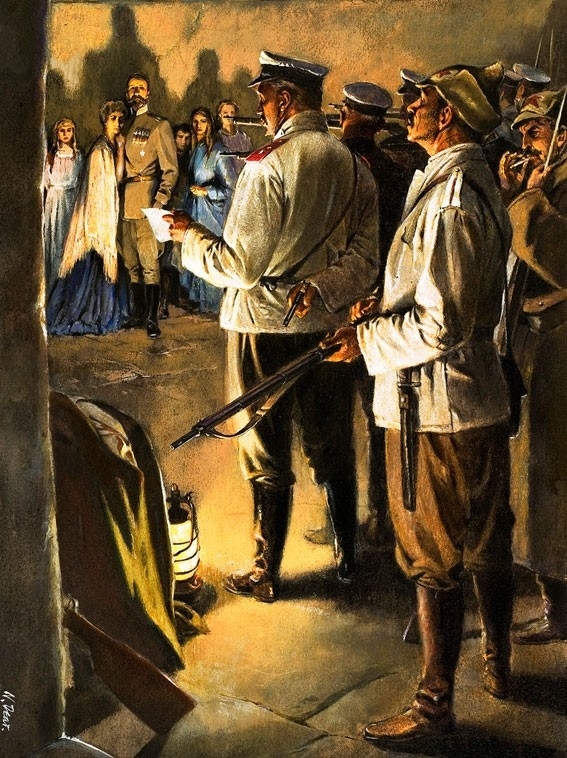
Former Tsar Nicholas and his family had been kept under house arrest near Petrograd by the Provisional Government since March 1917. In August, they were moved to Tobolsk in the Urals, to protect them from the onset of revolution. After the October Revolution and the eruption of the Civil War, the Romanovs were moved again in May 1918 to Yekaterinburg, a Bolshevik stronghold. Fearing that approaching White Army forces might seek to free the tsar, the order came for Bolshevik soldiers to execute them. Nicholas, his wife, son and four daughters were killed by a firing squad on 17th July 1918.
Bolshevik victory
Although the White Army had experienced military commanders, foreign support and vast areas of Russia under their control, their generals, Yudenich, Kolchak, Denikin and Wrangel, led independent armies, each seeking to gain power for themselves. Their only cause was to defeat the Red Army. They lost support in the country by acting brutally towards local people and by laying waste to the areas they controlled. As the Civil War went on, more and more soldiers deserted from the White Army.
The Civil War ended in 1921 with the defeat of the White Army by the Bolsheviks' Red Army. Rival political parties had been outlawed (made illegal) and, thanks to the Cheka, people who disagreed with the new government's policies had been silenced. Lenin had achieved his goal of steering his small Bolshevik party to secure its grip on power.

The Bolsheviks turned themselves into the Communist Party. They also established Soviet rule in the republics of Armenia, Azerbaijan, Byelorussia (Belarus), Georgia and Ukraine, which agreed to unite with Russia to form the Union of Soviet Socialist Republics (USSR) in 1922.
Russia in 1921


At the end of the Civil War, Russia was close to collapse. Droughts in 1920 and 1921, as well as a terrible famine in 1921 which killed about 5 milion people, made the situation worse. Millions died of diseases, while pogroms (violent riots) against the Jews in Ukraine and southern Russia caused even more deaths. By 1922, at least 7 million children lived on the streets of Russia's cities. Up to 2 million people, called "White émigrés", fled the country at the end of the war, including many educated and skilled Russians.
The Russian economy was devastated by the war, with many factories, mines and bridges destroyed. The total output of factories and mines in 1921 had fallen to a fifth of that of 1913. War Communism had led to drastically reduced food production. Because the peasants refused to till the land, the area under cultivation had shrunk by more than a third. The road to recovery would be long and hard.
Consultant: Philip Parker
pics


Without in any way limiting Q-files Ltd’s exclusive rights under copyright, any use of this publication to “train” generative artificial intelligence (AI) technologies to generate text is expressly prohibited. Q-files Ltd reserves all rights to license use of this work for generative AI training and development of machine learning language models.