
Construction

CITE
We have made every effort to follow citation style rules, but there may be some minor differences. If in doubt, please refer to the appropriate citation style manual.
Dams. (2026). In Q-files Encyclopedia, Technology, Construction. Retrieved from
https://www.q-files.com/technology/construction/dams
"Dams." Technology, Construction, Q-files Encyclopedia, 13 Mar. 2026.
https://www.q-files.com/technology/construction/dams.
Accessed 13 Sep. 2026.
Dams 2026. Technology, Construction. Retrieved 13 September 2026, from
https://www.q-files.com/technology/construction/dams
Technology, Construction, s.v. "Dams," accessed September 13, 2026.
https://www.q-files.com/technology/construction/dams


Dams
A dam is a barrier or structure built across a river or waterway to stop or restrict the flow of water. Dams vary in size from small earth embankments to massive concrete structures. The water that builds up behind the dam forms an artificial lake called a reservoir, which can be used for water supply, irrigation and generating hydro-electrical power. Reservoirs are also often used for fishing, boating and other leisure activities. Dams are vital to the management of rivers, preventing flooding when flow is excessive, or releasing water when it is needed for human use. Spillways release water from the reservoir, preventing it from overtopping the dam when water levels rise.

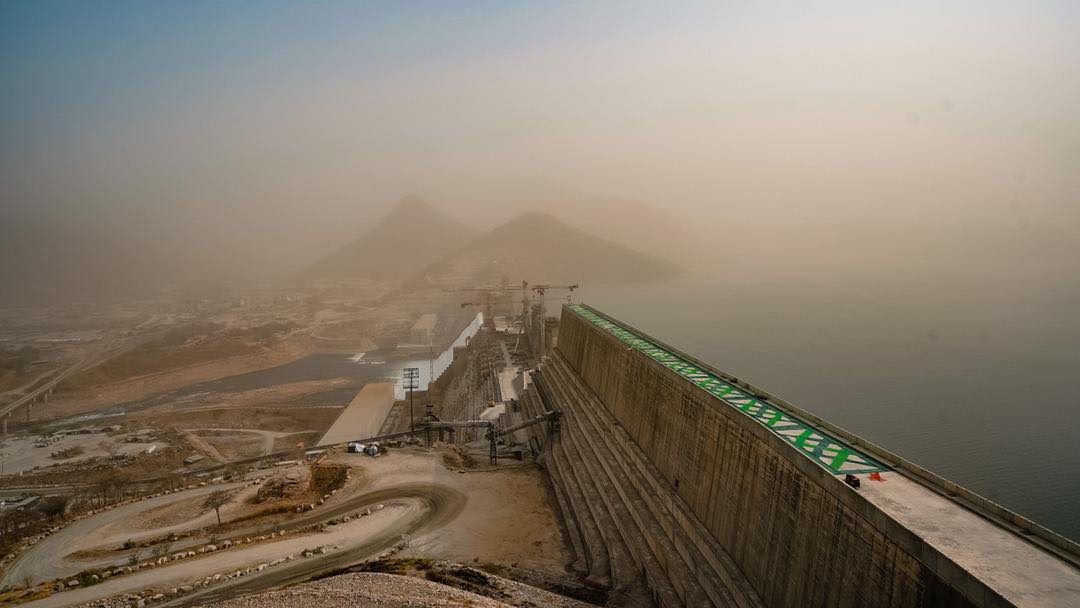

Gravity dams
A gravity dam is so-called because the force that holds it in place against the mass of water pushing against it is Earth's gravity pulling down on the mass of the dam. Triangular in cross-section, a gravity dam is constructed using massive amounts of concrete or stone, which provides the necessary weight to stop the water in the reservoir pushing it over. Gravity dams can be built where the river valley is wide, so long as the bedrock beneath it is sound. Examples of gravity dams are the Bhakra Nangal Dam in Himachal Pradesh, India and the Three Gorges Dam in China.
Buttress dams are gravity dams which are supported by triangular-shaped walls called buttresses. Spaced at intervals on the downstream side of the dam, the buttresses resist the force of the water in the reservoir on the other side. The use of buttresses strengthens the dam, reducing the quantity of material needed to construct it.

Arch dams

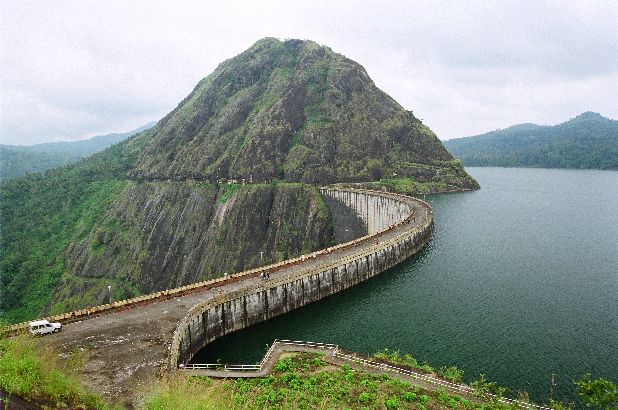
Arch dams are curved in the shape of a horizontal arch, with the top of the arch pointing backwards into the water. An arch is a strong shape for resisting the force of the water pushing against the dam. This means the dam can be thinner than other dam types, so it requires much less construction material. Made from concrete, arch dams are usually constructed in narrow, steep-sided valleys. The rock against which the dam is built needs to be firm in order to resist the forces on the dam. Examples of arch dams are the Katse Dam in Lesotho, southern Africa, and the double-curvature Idukki Dam constructed across the River Periyar in Kerala, India.
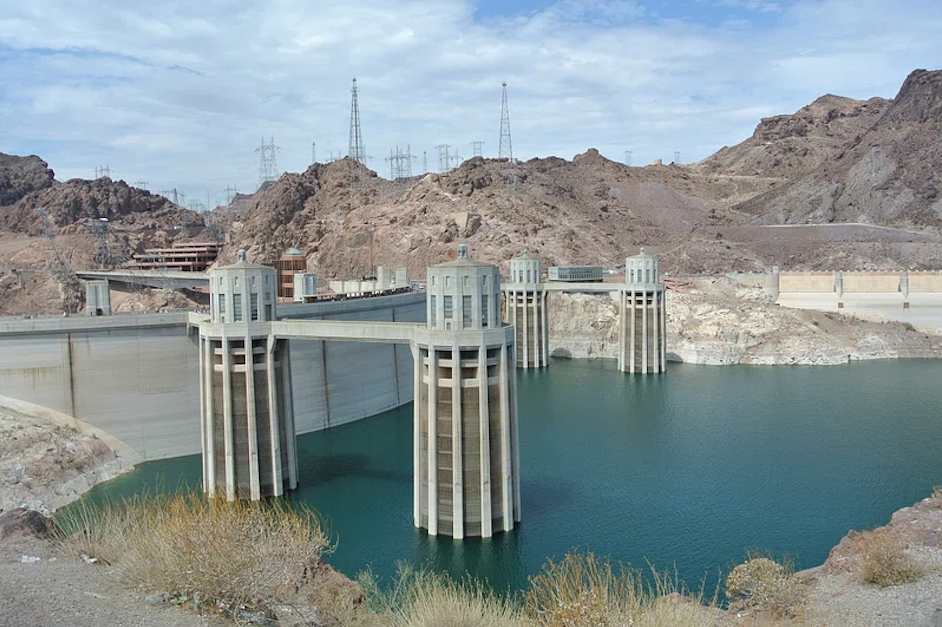
Combining the design of gravity dam with that of an arch dam enables the construction of a dam on rivers with high water flow but in areas where there is less material available to build a pure gravity dam. The arch design reduces the gravitational force required of the dam, meaning it does not need to be so massive. The Hoover Dam (see below) is an example of an arch-gravity dam.
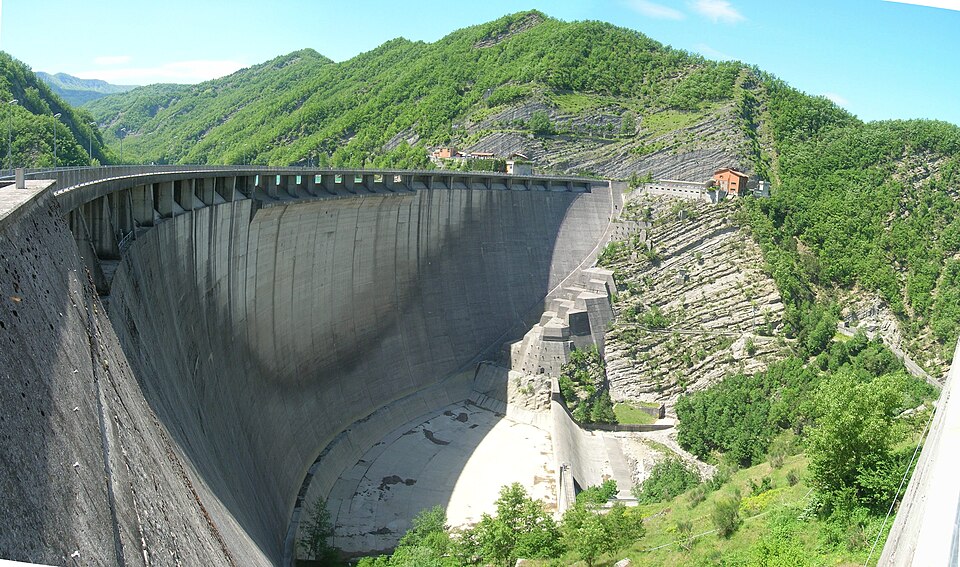
Embankment dams

Embankment dams are made of natural materials, and are of two main types: rock-filled and earth-filled. As with a gravity dam, it is the embankment dam's weight that counters the force of water held in the reservoir behind it. Triangular in cross-section, most embankment dams have a central core made from an impermeable material, such as clay, to stop water passing through it.

Embankment dams are usually chosen for sites with wide valleys where other types of dam could not be built. Examples are the 143-metre-high (470-foot) Tarbela Dam on the River Indus in Pakistan, the largest earth-filled dam in the world, and the 260.5-metre (855-foot) Tehri Dam, Uttarakhand, the tallest dam in India.
Earth-filled embankments are also built to create tailings dams. These are dams not built to restrict the flow of water, but to contain tailings, the waste (and often toxic) materials produced during mining operations. The tailings form a slurry, a mixture of solids suspended in a liquid. You can find out more about tailings dams here.
Spillways
A spillway is a section of a dam, lower than its crest, designed to allow water to flow from the upstream side of a dam to the downstream side. Many spillways have floodgates designed to control the flow through them. The floodgates open prevent the water over-topping the dam when the reservoir becomes too full.
In some dams, a large section of the dam face—or even the entire face—acts as an overflow spillway. Side channel spillways (also called auxiliary spillways) are often built to the sides of dams. Water from the reservoir flows down chutes and joins the river downstream of the dam.


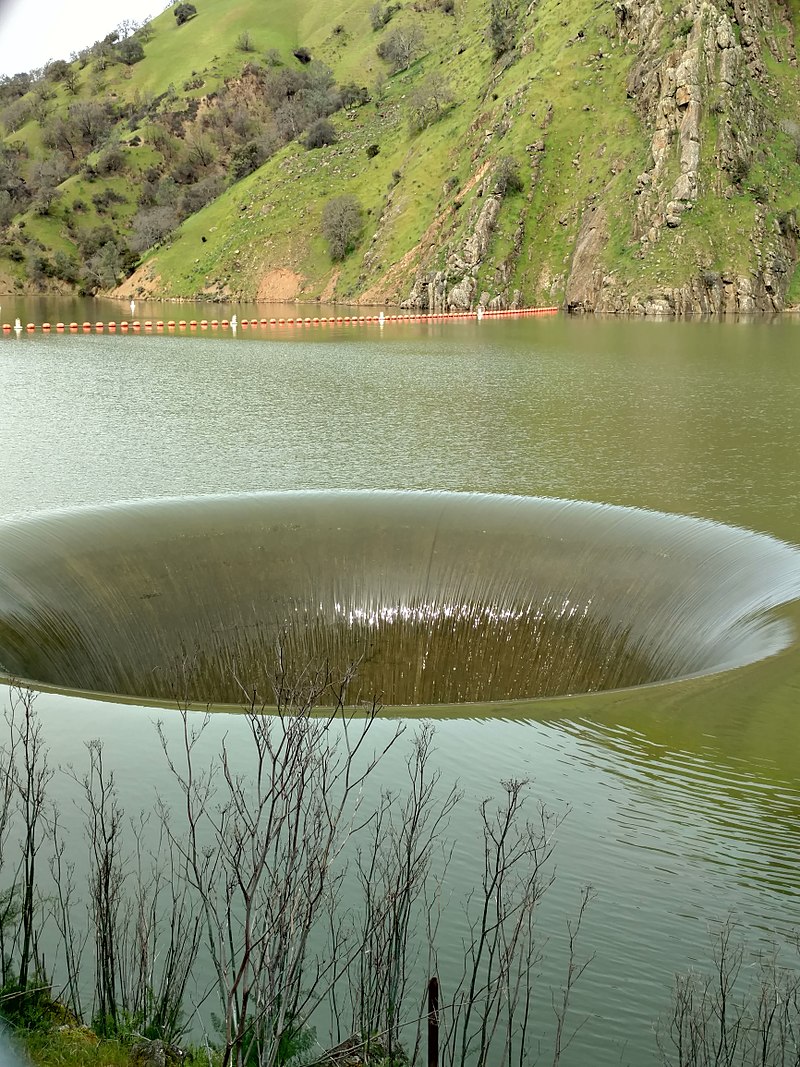
A shaft (or bell-mouth) spillway is a circular, hollow tower built in the reservoir near the dam. When the water level rises to the top of the spillway, the water flows over its sides and down into the shaft. At the bottom of the shaft, it enters a tunnel. The water flows through it, joining the river downstream of the dam.
An intake tower (or outlet tower) is a vertical structure with one or more openings used for ducting water from the reservoir and conveying it through a pipe to a hydro-electric power station or water treatment plant.
A scour, or flood tunnel, is a large outlet pipe that runs through the bottom of the dam. It is designed to be opened to let water out of the reservoir very quickly in an emergency—for example, when heavy rain threatens to raise the reservoir waters to dangerously high levels, or when the dam is damaged or poses a threat of imminent collapse. The scour is also opened to flush sediment out of a reservoir when too much has collected behind the dam.


Locks and lifts
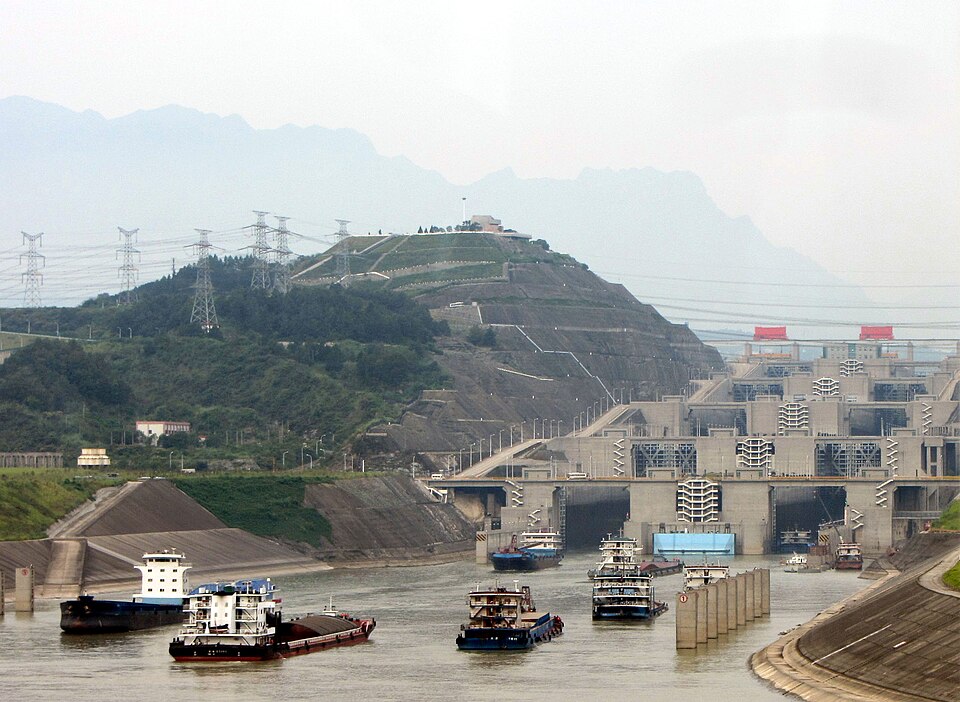
A dam forms a barrier to river vessels. To get round this, locks can be constructed to one side of the dam, or special lifts installed for raising and lowering vessels. A ship lift and a navigation lock at the Three Gorges Dam allow the passage of ships along the River Yangtze in China. The lock has two channels, each 1.6 kilometres (1 mile) long. There are five steps in each channel to raise or lower vessels over a height of 113 metres (370 feet).
Barrages and weirs
A barrage dam consists of a line of large gates that can be opened or closed to control the amount of water flowing through it. Barrage dams are often used to control water flow for irrigation systems and are usually built across wide rivers. Some barrage dams are used to dam a tidal lagoon or estuary to harness the power of the tides for hydro-electricity. Unlike reservoir dams, a barrage dam raises the water level by only a few metres.


Reservoirs

Reservoir water can be used to supply water to homes, offices, schools, factories and hospitals. Storing rainwater that falls during the wetter periods of the year (either directly, or from rivers or groundwater that flow into the reservoir), provides a continuous supply of water for drier periods. Water from reservoirs is cleaned at a water treatment works before it can be used. From there it is delivered through a system of pipes.

Irrigation water may be stored in reservoirs during the rainy season, then released in the drier seasons and distributed over surrounding areas through a system of aqueducts or pipelines. This enables farmers to cultivate crops all year round.
Sand dams are low concrete walls built across a seasonal rivers in semi-arid regions. They provide a clean, local water supply for homes and crop irrigation across Africa and in parts of Asia. Eventually they fill with sand.
Hydro-electric power

At many dams, the water stored in the reservoir is used to supply hydro-electric power stations. The energy from water released from the reservoir and channelled at speed down through pipes is used to turn turbines, generating electricity. Their value as generators of electrical power with zero carbon emissions is the reason why many modern dams are constructed.
The power station is located in front of, or inside, the dam. Some water from the reservoir is allowed to flow out through an inlet, down along a pipe, called a headrace or a penstock, and past a turbine. The turbine has angled blades that are spun by the force of the water. A shaft connects the turbine to a generator.

Flood control
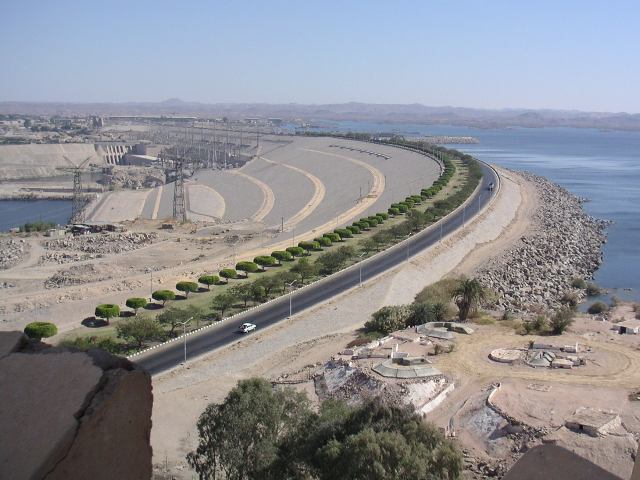
A dam can be used to control the amount of water flowing downstream after heavy rain and so prevent the flooding that might otherwise result. Rivers and streams swollen with water flow into the reservoir, which holds it back. When the reservoir gets too full, floodgates at the top of spillways are opened to release the water downstream. The Aswan High Dam on the River Nile in Egypt is one of many dams around the world that performs the vital role of flood control.
Dams and the environment
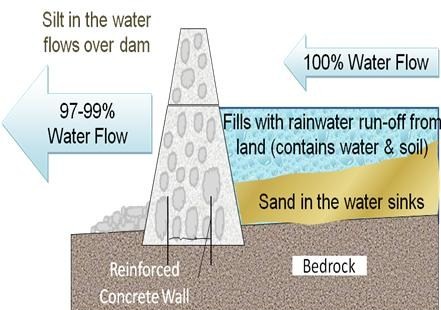
Rivers carry sediments—sand, silt and gravel. When a river enters a reservoir, the speed of the flowing water slows down and sediment is deposited on the reservoir bed. Much of it would normally be carried downstream. The reservoir may eventually become filled with sediment, ending the usefulness of the dam. Sediment can be sluiced out through the dam's spillways or flood tunnels, or removed from the reservoir bed by excavation and dredging.


A dammed river may result in farmland downstream becoming deprived of silt and nutrients that are normally deposited on it when the river overflows on to its floodplain. Reduced sediment flow also has the effect of causing erosion in areas downstream of dams such as the Grand Coulee Dam on the Columbia River in the US state of Washington.
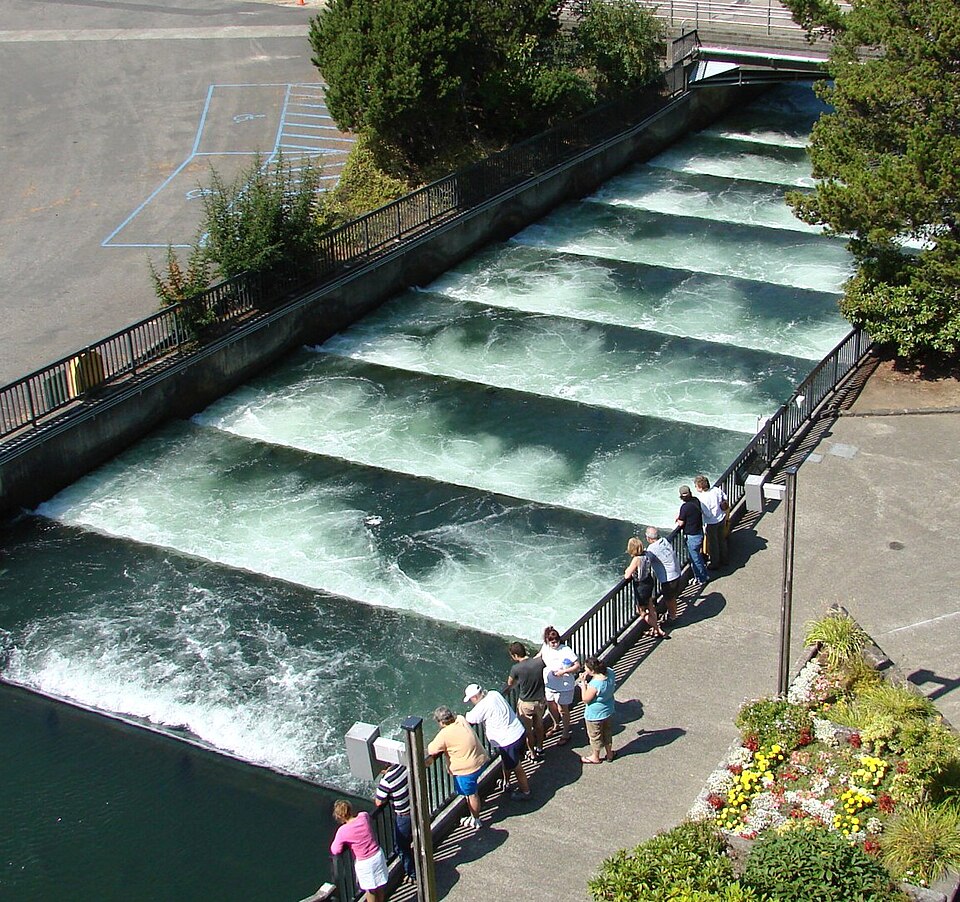
The presence of a dam may upset the natural balance of a river, affecting the animal and plant life in and around it. When a river valley is inundated with water to form a reservoir, animals are forced to leave the area. A dam built across a river can form a barrier to fish that migrate along it, such as salmon. Fish passes—ladders and locks—are now usually included in the design of a dam to allow adult fish to swim upstream to spawn, and back downstream later with their young.
Dams and people
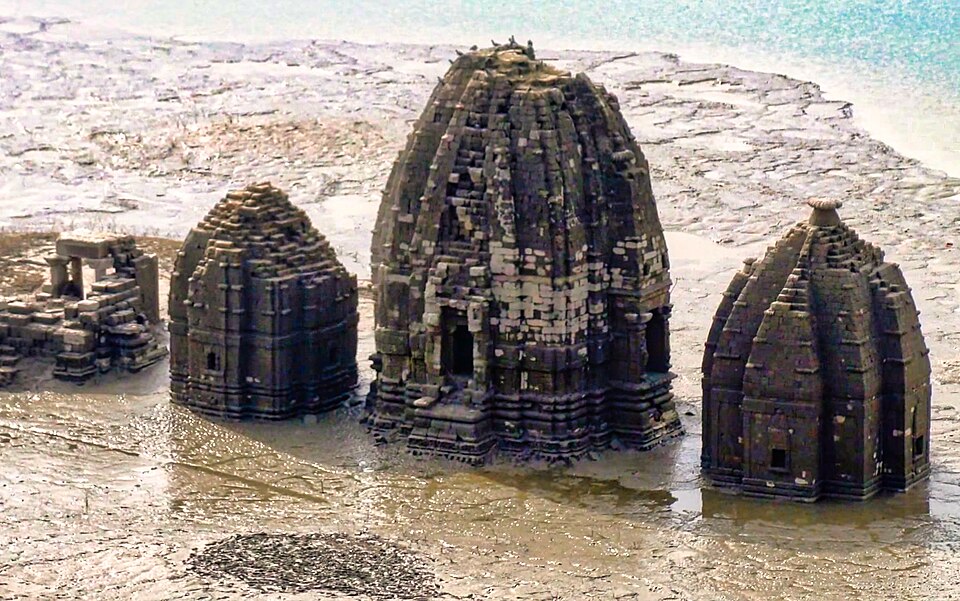
People and their livelihoods are affected when a dam is built in the area where they live and work. When large reservoirs are created, thousands of people are often forced to leave their homes. Land previously used for farming is lost when it disappears under water. Sacred sites, such as temples or churches—often greatly treasured by the local inhabitants—may also be lost forever when the land is submerged.

A dam failure or dam burst, resulting from some type of structural failure, causes the sudden, rapid release of vast amounts of water that can have catastrophic consequences for people living downstream. Dam failures are rare, but can cause immense damage and loss of life when they do occur. In 1975, the collapse of the Banqiao Reservoir Dam in Henan, China, killed around 171,000 people, the deadliest dam failure in history. Some 11 million people lost their homes.
Large reservoirs formed behind dams have been shown to increase the likelihood of earthquakes. The presence of a heavy body of water may significantly increase the downward pressure on an underlying fault, either through its sheer weight or by increasing the pressure of water inside pores in the rocks.
Dam construction
For full-scale dams to be built across wide rivers with large volumes of flowing water, it is sometimes necessary to divert the entire river through specially built tunnels or channels. If this is not possible, a dry construction pit is created to one side of it. Cofferdams, temporary embankment dams, may be erected for this purpose. One half of the dam is constructed in the dry pit with openings left in it. When this is complete, the river is diverted to flow through the openings while the other half of the dam is built in a dry area created on the other side of the river. The openings are closed up and the reservoir can start to fill up behind the dam.

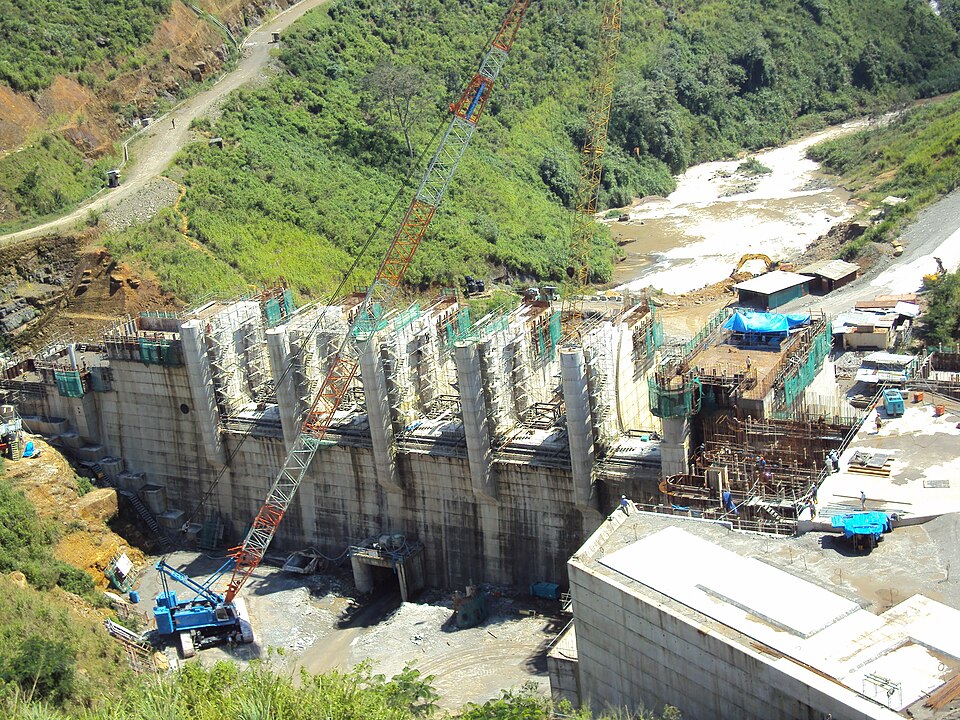

The foundations must be strong enough to carry the weight of the dam and the water behind it. Any weak rocks have to be removed and replaced with stronger materials, while any cracks and fissures in the rock must be filled to stop water leaking out once the dam is completed.
Concrete is mixed in on the construction site in a building called the concrete batching plant. The concrete is placed in the dam by one of two different methods. The traditional method is to pour the wet concrete into a mould or formwork usually made from wood. The dam wall is then built upwards in stages. Roller Compacted Concrete (RCC) dams are built using a drier concrete mix. Once a layer is placed, it can immediately support the earth-moving equipment to place the next layer. As the layers build up, the downstream slope of the dam resembles a concrete staircase.

History of dams
Dams built in Mesopotamia and China in ancient times were designed to control the flow of water, especially in dry areas. The earliest known dam is the Jawa Dam in Jordan, dating to around 3000 BC. The Great Dam of Marib in Yemen, built between 1750 and 1700 BC, was one of the engineering wonders of the ancient world. Kallanai in Tamil Nadu, India, built in the 2nd century AD, is one of the oldest water-diverting structures still in use today.


Roman engineers built dams using materials such as concrete and waterproof mortar, a mixture of sand, lime and water. The Romans also introduced advanced construction techniques, designing the first arch, buttress and gravity dams. This enabled them to build larger structures creating reservoirs, such as the Lake Homs Dam and the Harbaqa Dam, both in Syria. The Romans also built low dams from earth embankments: one of these, the Cornalvo Dam in Spain, 24 metres high by 185 metres long (78 by 606 feet), is still in use today.
During the Middle Ages, earth-filled embankment dams were built in the Netherlands to prevent the sea from flooding the low-lying cultivated lands. In the 19th century, advances in engineering techniques and construction materials made it possible for large-scale arch dams to be built. The 21-arch Mir Alam dam was buiilt in 1804 to supply water to the city of Hyderabad in central India.
The era of large dams began with the construction of the Aswan Low Dam in Egypt by British engineers in 1898–1902. A gravity dam on the River Nile, it was designed to provide storage of the annual floodwaters, which would be released in the dry season to provide irrigation water.


The Hoover Dam, a massive concrete arch-gravity dam, was built between 1931 and 1936 in the Black Canyon of the Colorado River, on the border between the US states of Arizona and Nevada. By the end of the 20th century, there were roughly 800,000 dams worldwide, with around 40,000 of them over 15 metres (50 feet) high.

pics


Without in any way limiting Q-files Ltd’s exclusive rights under copyright, any use of this publication to “train” generative artificial intelligence (AI) technologies to generate text is expressly prohibited. Q-files Ltd reserves all rights to license use of this work for generative AI training and development of machine learning language models.