
States of the US

CITE
We have made every effort to follow citation style rules, but there may be some minor differences. If in doubt, please refer to the appropriate citation style manual.
Arizona. (2026). In Q-files Encyclopedia, Geography, States of the US. Retrieved from
https://www.q-files.com/geography/states-of-the-us/arizona
"Arizona." Geography, States of the US, Q-files Encyclopedia, 2 Sep. 2026.
https://www.q-files.com/geography/states-of-the-us/arizona.
Accessed 21 Sep. 2026.
Arizona 2026. Geography, States of the US. Retrieved 21 September 2026, from
https://www.q-files.com/geography/states-of-the-us/arizona
Geography, States of the US, s.v. "Arizona," accessed September 21, 2026.
https://www.q-files.com/geography/states-of-the-us/arizona


Arizona
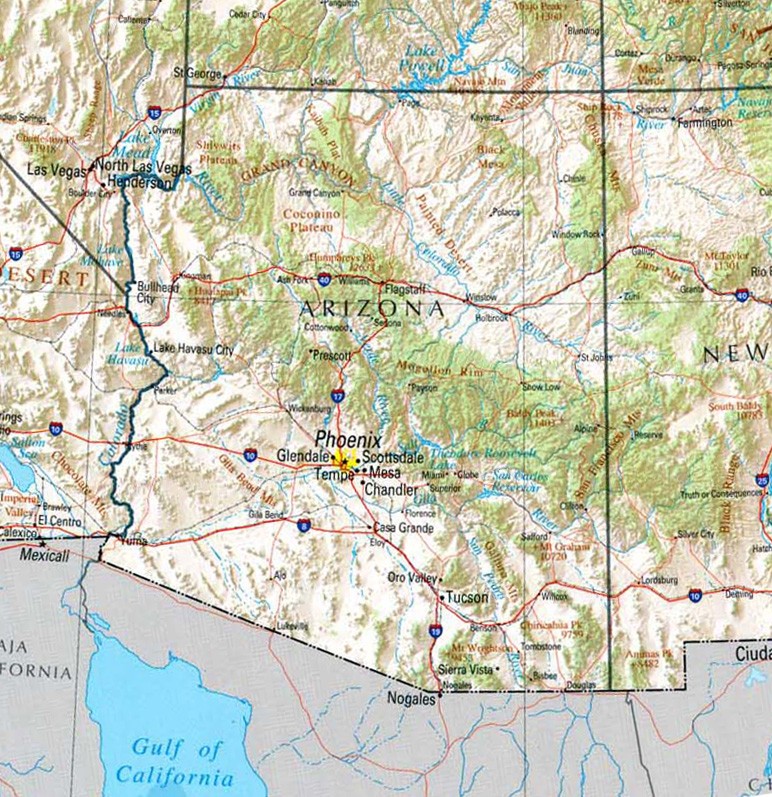
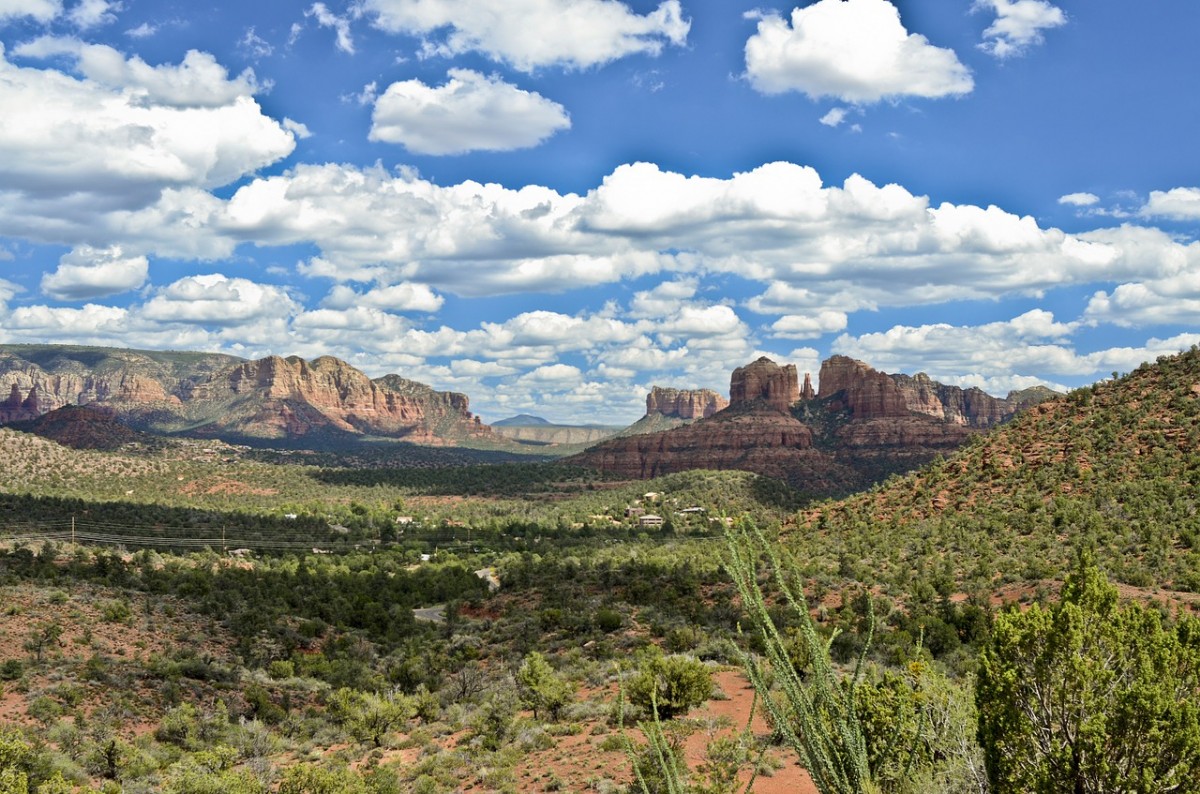
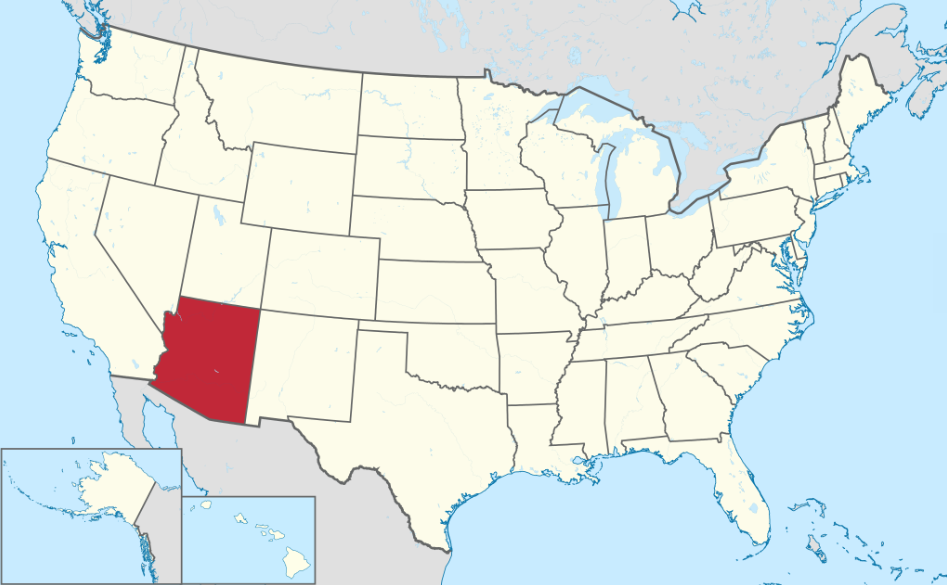
Arizona is situated in the southwestern region of the United States. The Colorado Plateau makes up its northern part. Flowing across the plateau, the Colorado River has carved a long, deep gorge famous around the world as the Grand Canyon. It is 446 kilometres (277 miles) long, and ranges in width from 6 to 29 kilometres (4 to 18 miles) at a depth of more than 1.6 kilometres (1 mile). The river and its tributaries have cut through layer after layer of rock as the Colorado Plateau uplifted, exposing nearly two billion years of Earth's geological history. Also part of the Colorado Plateau is Monument Valley, a cluster of sandstone buttes (flat-topped “islands” of rock edged by near-vertical cliffs) on the Arizona–Utah border. Marking the southwestern edge of the Colorado Plateau is the Mogollon Rim, a 600-metre (2000-foot) escarpment, which cuts across the centre of the state. To the south is Basin and Range country, a series of mountain ranges interspersed with wide valleys. Much of this area is desert.

Name
The name Arizona may have come from the Native American (O’odham) words ali sonak, meaning “small spring”, describing a small area around a silver mining camp in what later became part of Arizona. To the Europeans, the local pronunciation sounded like "Arissona". Another possible origin may be the Basque phrase haritz ona (“the good oak”) used by shepherds who originally came from the Basque area of northern Spain. Although the origin is uncertain, “Arizona” definitely did not originate from the Spanish term for “arid zone”, as some have thought. The Spanish for arid zone would be zona árida.
Climate
Southern Arizona has a desert climate, with extremely hot summers and mild winters. Northern Arizona, with its extensive coniferous forests, has milder summer temperatures and cold winters, during which major snowfalls are not uncommon. In the south, a monsoon season occurs towards the end of summer. Hot moisture in the air brings thunderstorms and brief torrential downpours, often causing flash floods.

Economy

Cattle farming is the principal agricultural activity in Arizona. Cotton, sorghum and vegetables are the chief crops grown. Copper is mined from the large open-pit and underground mines, making up two-thirds of the output of the US. The extensive pine and fir forests of northern and central Arizona support an important timber industry. The state’s manufacturing industries include electronics, printing and publishing, food processing and aerospace.
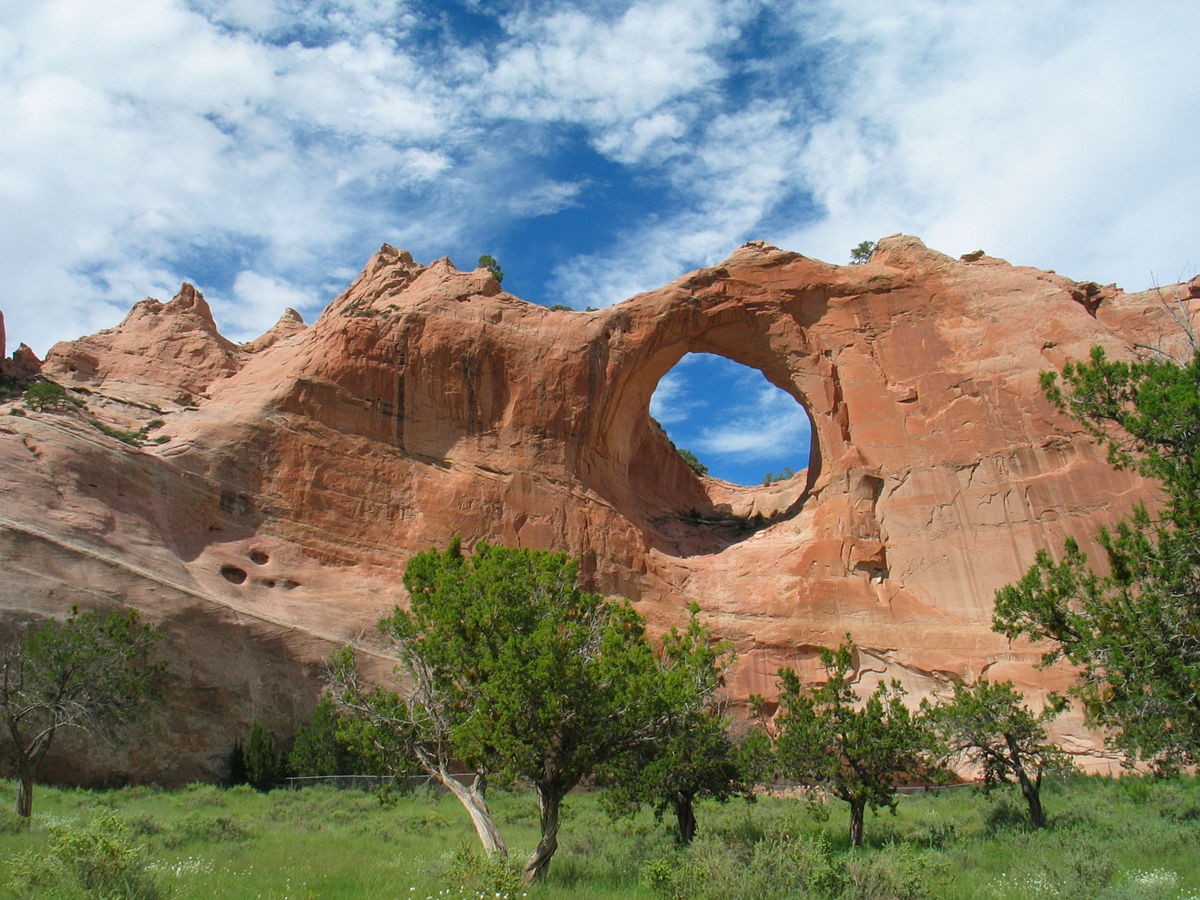
Arizona’s extraordinary landscape draws millions of tourists every year, with the Grand Canyon, the Painted Desert, the Petrified Forest, meteorite craters, ancient Native American sites and Spanish colonial ruins the top attractions.
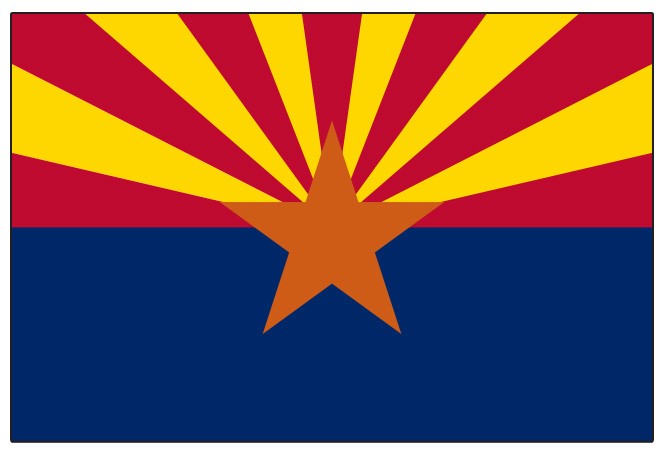
Facts about Arizona
Area 113,595 sq miles (294,315 sq km)
Highest point Humphreys Peak 12,637 ft (3852 m)
Population 7,431,344
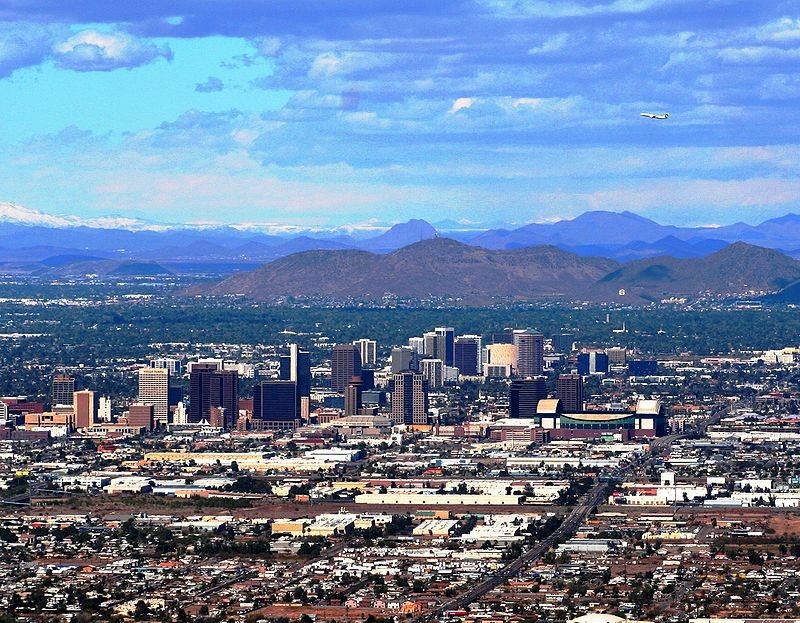
Capital Phoenix
Largest cities Phoenix, 1,650,070; Tucson, 547,239; Mesa, 511,648; Chandler, 280,167; Gilbert, 275,411
Nicknames The Grand Canyon State, The Copper State
State bird Cactus wren
State flower Saguaro cactus
State tree Palo verde
Consultant: Nicholas Harris
History of Arizona
before 16th century
Arizona is home to Native American peoples, including Pueblo, Hohokam, Mogollon, Navajo and Apache. The Puebloans live in towns made up of multi-storey buildings built from adobe (mudbrick), stone and other local materials.
1540–42
Spanish explorer Francisco Vásquez de Coronado explores the area
1752
Spanish found a presidio ("fortified town") at Tubac (also at Tucson in 1775)
1821
Mexico achieves its independence from Spain in 1821; Arizona becomes part of Nueva California, also known as Alta California, a territory of Mexico
1847
US pursues its claim to much of northern Mexico, including what later will become Arizona, during the Mexican-American War
1848
Following US victory in the war, the US purchases the northern part of the area from Mexico by the Treaty of Guadalupe Hidalgo
1853
The US acquires the land south of the Gila River from Mexico in the Gadsden Purchase; Arizona becomes part of the Territory of New Mexico
1861
The southern portion of the Territory of New Mexico secedes (breaks away) from the Union as the Confederate Territory of Arizona
1863
The western half of the Territory of New Mexico becomes Arizona Territory
late 19th century
The Mormon leader Brigham Young sends his Mormon followers to settle northern and central Arizona; they found Mesa, Snowflake, Heber, Safford and other towns
1912
Arizona becomes the 48th state, the last of the contiguous states to be admitted into the Union
1919
Grand Canyon National Park is created
1936
Construction work on the Hoover Dam in the Black Canyon of the Colorado River, on the border between Nevada and Arizona, is completed. Named the Boulder Dam when opened, its original name, the Hoover Dam, is restored in 1947.
1993
Central Arizona Project (CAP) a 541-km (336-mile) aqueduct is completed. Created by the Colorado River Basin Project Act of 1968, it diverts water from the Colorado River to central and southern Arizona.
2011
US Representative Gabby Giffords and 18 others are shot in a supermarket parking lot in the Tucson metropolitan area.
pics
Without in any way limiting Q-files Ltd’s exclusive rights under copyright, any use of this publication to “train” generative artificial intelligence (AI) technologies to generate text is expressly prohibited. Q-files Ltd reserves all rights to license use of this work for generative AI training and development of machine learning language models.