
States of the US

CITE
We have made every effort to follow citation style rules, but there may be some minor differences. If in doubt, please refer to the appropriate citation style manual.
Alabama. (2026). In Q-files Encyclopedia, Geography, States of the US. Retrieved from
https://www.q-files.com/geography/states-of-the-us/alabama
"Alabama." Geography, States of the US, Q-files Encyclopedia, 2 Sep. 2026.
https://www.q-files.com/geography/states-of-the-us/alabama.
Accessed 21 Sep. 2026.
Alabama 2026. Geography, States of the US. Retrieved 21 September 2026, from
https://www.q-files.com/geography/states-of-the-us/alabama
Geography, States of the US, s.v. "Alabama," accessed September 21, 2026.
https://www.q-files.com/geography/states-of-the-us/alabama


Alabama
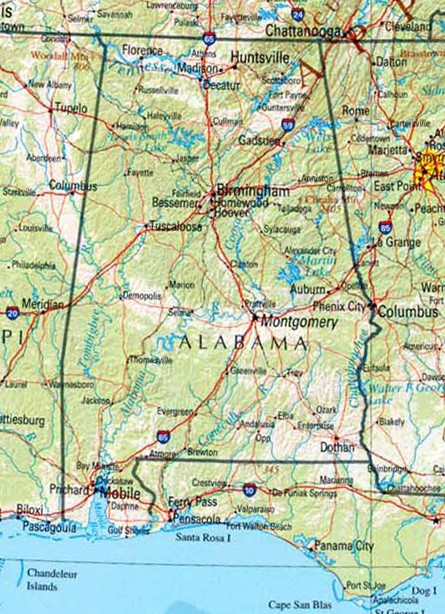
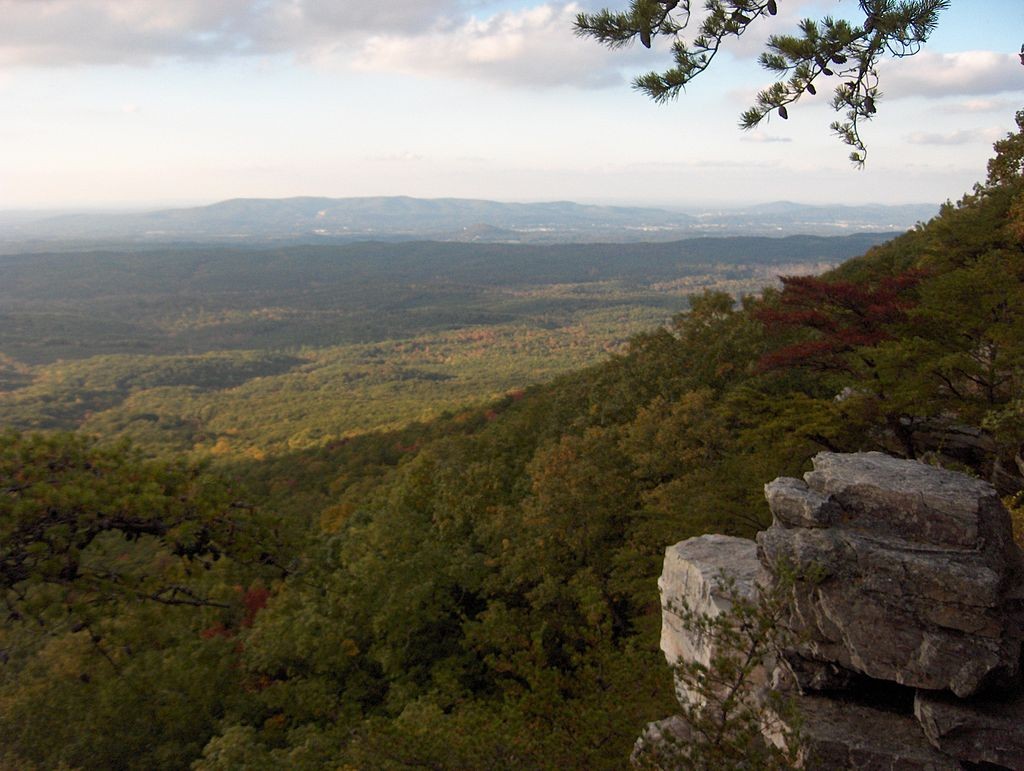
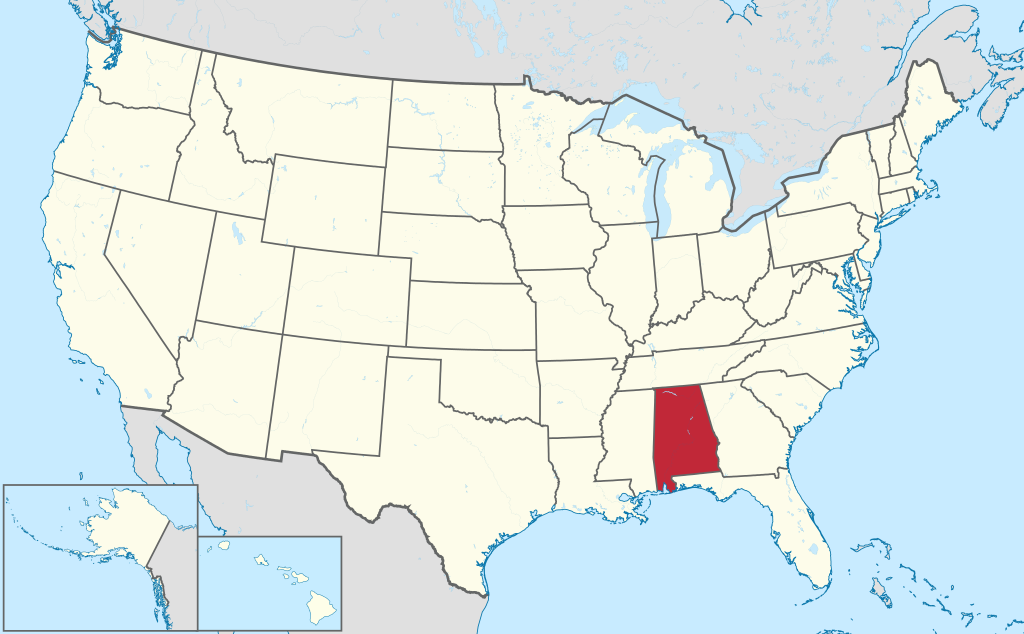
Alabama is located in the southeastern region of the United States. Much of the state is made up of a rolling plain that slopes gently down towards the Gulf of Mexico. A number of rivers, including the Alabama and its tributaries, flow across it in a generally southwards direction. In the north of the state, the Tennessee River cuts a deep valley across the mountains that make up the far southwestern corner of the Cumberland Plateau—part of the Appalachian range. Alabama was once covered by vast areas of pine forest. Today, although it still has the second most extensive forests of all the states in the contiguous United States after Georgia, it is mostly agricultural.

Name
The naming of both the state and Alabama River comes from the Alabama people, a Muskogean-speaking tribe who once lived in the area close to where the Coosa and Tallapoosa rivers meet the Alabama river. The Spanish explorer Hernando de Soto first used the name, which he wrote as “Alibamu”, when describing his expedition there in 1540.
Climate
Alabama has very hot summers—among the hottest in the US—and mild winters, with high levels of rainfall throughout the year. Temperatures are generally warmer in the southern part of the state, close to the shoreline of the Gulf of Mexico, while northern parts, especially in the Appalachian Mountains in the northeast, tend to be cooler.

In some parts, Alabama is prone to tornadoes, tropical storms and hurricanes. In 2005, Hurricane Katrina caused major flooding and destruction along the coast.
Economy
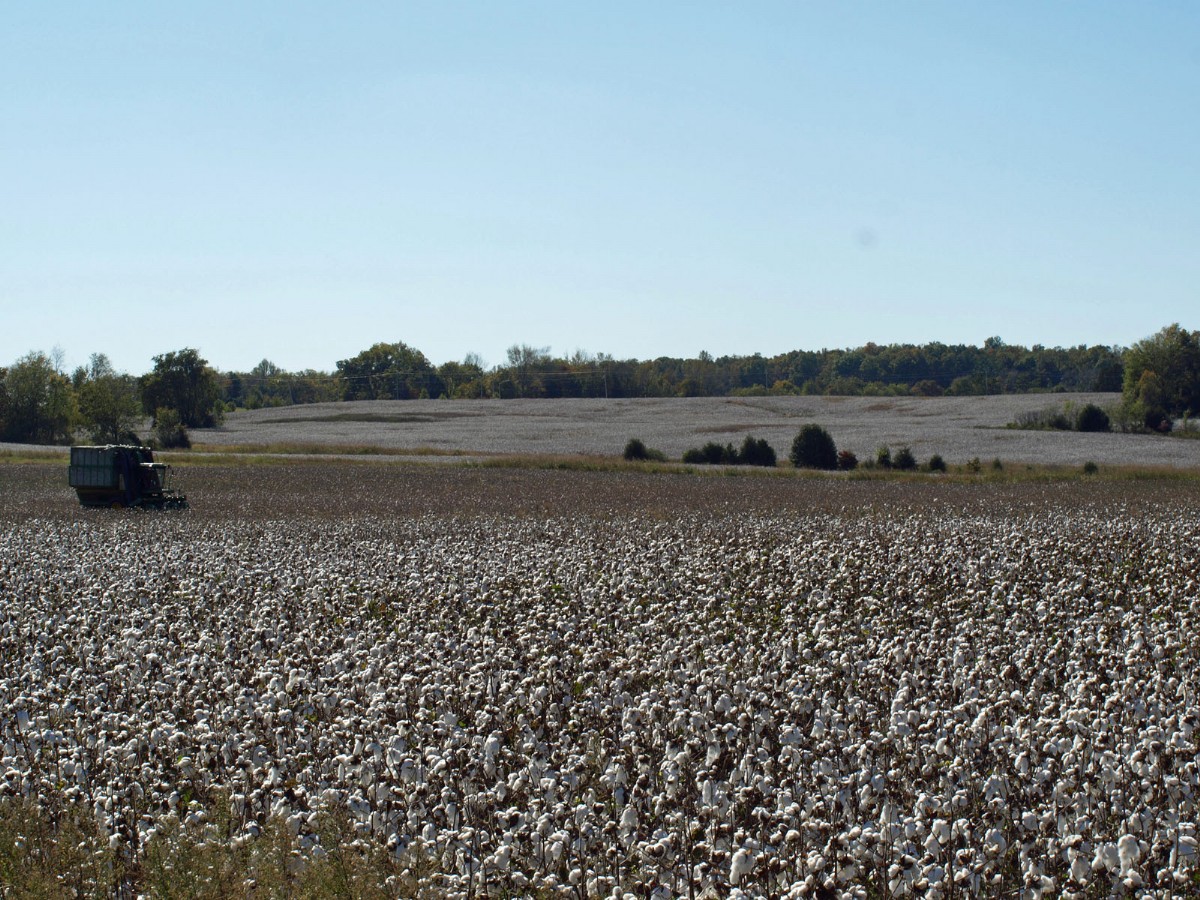
Although about half of Alabama's area is devoted to farming, manufacturing accounts for a much larger share of the state's income. While Alabama is still known as "The Cotton State", its central “Black Belt”, which was once the chief cotton-growing area, is now given over to raising poultry and cattle. Other agricultural products include peanuts, maize, vegetables and soya beans.
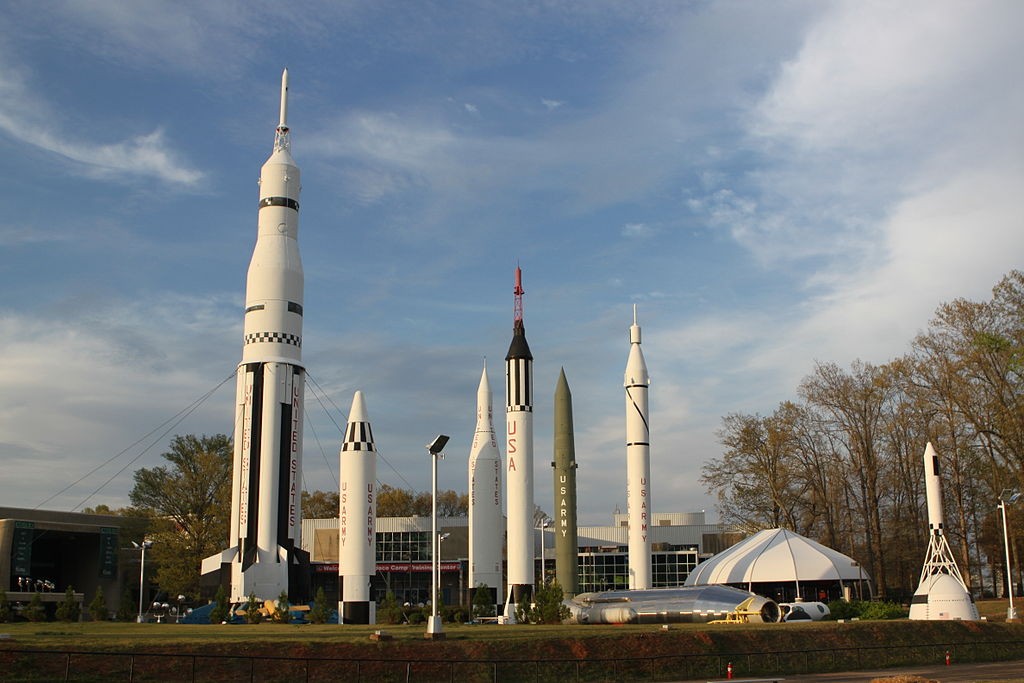
Much of Alabama's economic growth since the 1990s has been due to its growing vehicle manufacturing industry. Once known as a coal mining state, Alabama’s other main industries include paper, chemicals, rubber, plastics, textiles and iron and steel.

Commemoration of slavery
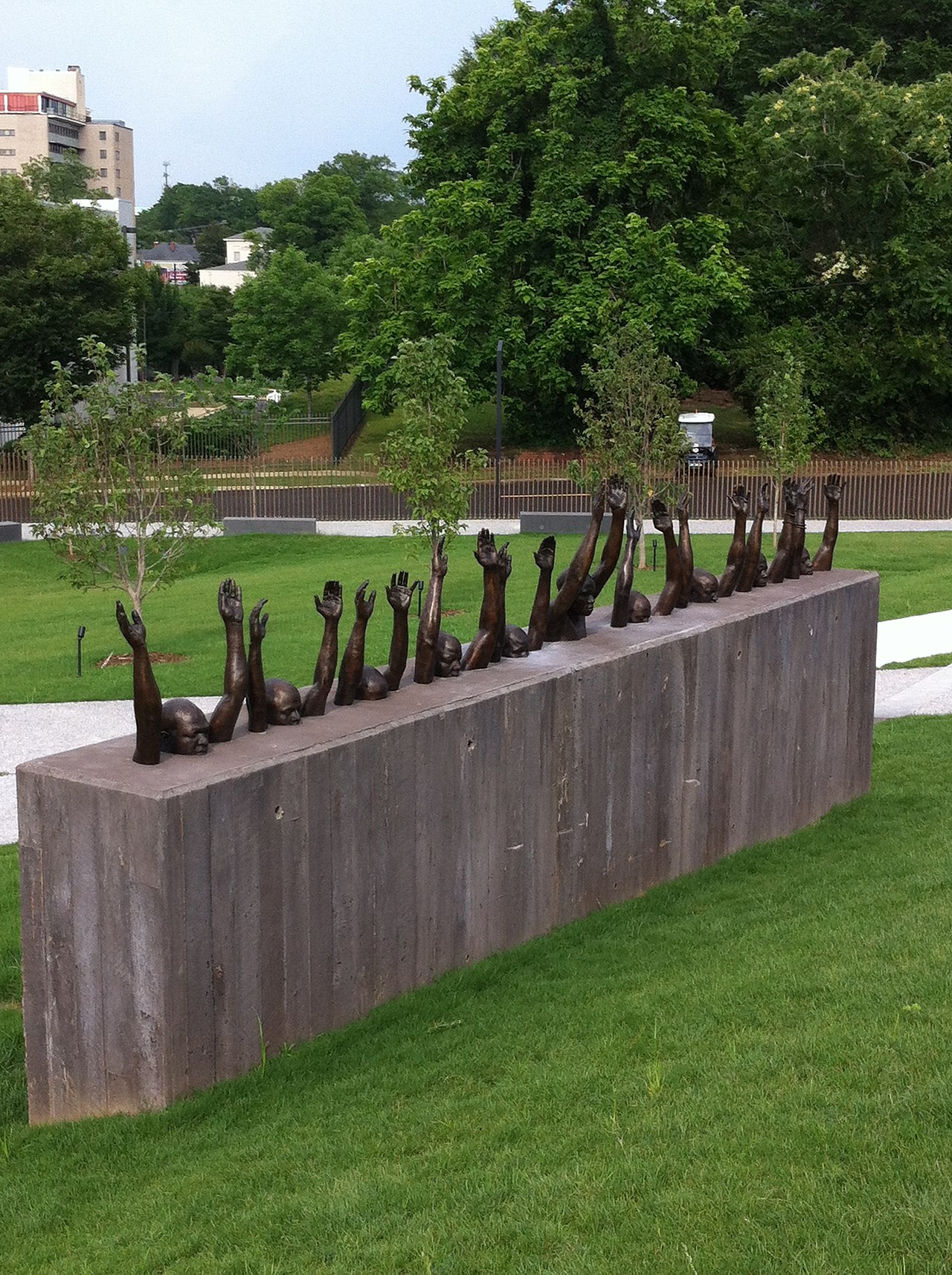
Before the 1990s, there was little acknowledgement in Alabama's state capital Montgomery of the painful history of slavery in the state. The city had developed a Civil Rights trail marking such events as the 1965 Selma to Montgomery marches. With the opening of the Legacy Museum and the National Memorial for Peace and Justice in 2018, and the Freedom Monument Sculpture Park in 2024, the history of slavery in Alabama has been given permanent memorials.
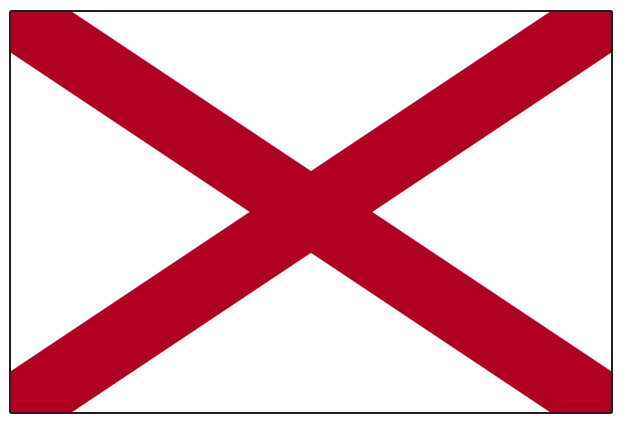
Facts about Alabama
Area 52,419 sq miles (135,775 sq km)
Highest point Mount Cheaha 2413 ft (736 m)
Population 5,108,468
Capital Montgomery
Largest cities Huntsville, 225,564; Birmingham, 196,644; Montgomery, 195,287; Mobile, 182,595;
Nicknames The Yellowhammer State, The Cotton State
State bird Yellowhammer
State flower Camellia
State tree Southern longleaf pine
Consultant: Nicholas Harris
History of Alabama
16th century
Among the Native American peoples living in the area at the time of European contact were the Iroquoian-speaking Cherokee and the Muskogean-speaking Alabama (Alibamu), Chickasaw, Choctaw, Creek and Koasati peoples
1540
Spanish explorer Hernando de Soto passes through the area
1702
The French claim the area of present-day Alabama as part of French Louisiana (La Louisiane) and found the first European settlement at Fort Louis de la Mobile (later moved to the current site of Mobile in 1711)
1763
Alabama, then known as the Yazoo lands, becomes part of British West Florida by the Treaty of Paris
1767
The area is claimed by the Province of Georgia
1783
After the US victory in the American Revolutionary War, what is now Alabama is split between the US and Spain
1798
The Territory of Mississippi, which includes parts of present-day Alabama, is established; the land is still largely a wilderness
1813
The Spanish garrison at Mobile surrenders to US forces, leading to a US takeover of the Spanish lands
1814
Andrew Jackson defeats a Native American force at Horseshoe Bend
1817
Alabama Territory is created by the US Congress, with Saint Stephens as its capital
1819
Alabama is admitted to the Union as the 22nd state; “Alabama Fever” gets underway as settlers, bringing slaves with them, pour into the state to claim the fertile lowlands for cotton cultivation
1830
Alabama’s population has increased to more than 300,000 people (it was under 10,000 in 1810); most Native American tribes are removed from the state after the Indian Removal Act
1861
Alabama secedes (breaks away) from the Union; it joins the Confederate States of America at the outbreak of the Civil War
1868
Alabama is officially restored to the Union
1870
Birmingham is founded; its first blast furnace (for the production of steel) begins operations in 1880
1880s
Coal mining and cotton textile industries are developed
1901
Constitution of Alabama effectively disenfranchises (removes the right to vote from) nearly all African Americans, as well as many poor whites
1915
Boll weevil devastates the cotton fields
1920s
Major migration of African Americans out of Alabama to the manufacturing cities in the northern US
1955–56
Montgomery Bus Boycott: African American Rosa Parks refuses to give up her seat on a bus to a white passenger, and is arrested for violating the city’s segregation laws
1963
In Birmingham, 16th Street Baptist Church bombing is carried out by members of the local Ku Klux Klan white supremacist terrorist group. Described by Martin Luther King Jr. as "one of the most vicious and tragic crimes ever perpetrated against humanity", the explosion kills four African American girls. The atrocity causes a national outcry and gains support for the civil rights cause.
1965
“Freedom March” from Selma to Montgomery; federal civil rights legislation enforces the constitutional rights of black inhabitants as citizens
1972
Governor George C. Wallace of Alabama, a segregationist, is shot in Maryland while campaigning for the Democratic nomination for president. The assassination attempt leaves him paralysed from the waist down.
2007
Alabama Legislature passes a resolution expressing "profound regret" over slavery and its impact.
2011
Super Outbreak: 62 tornadoes across the state, a record amount, cause widespread devastation
pics
Without in any way limiting Q-files Ltd’s exclusive rights under copyright, any use of this publication to “train” generative artificial intelligence (AI) technologies to generate text is expressly prohibited. Q-files Ltd reserves all rights to license use of this work for generative AI training and development of machine learning language models.