
States of the US

CITE
We have made every effort to follow citation style rules, but there may be some minor differences. If in doubt, please refer to the appropriate citation style manual.
Kansas. (2026). In Q-files Encyclopedia, Geography, States of the US. Retrieved from
https://www.q-files.com/geography/states-of-the-us/kansas
"Kansas." Geography, States of the US, Q-files Encyclopedia, 2 Sep. 2026.
https://www.q-files.com/geography/states-of-the-us/kansas.
Accessed 21 Sep. 2026.
Kansas 2026. Geography, States of the US. Retrieved 21 September 2026, from
https://www.q-files.com/geography/states-of-the-us/kansas
Geography, States of the US, s.v. "Kansas," accessed September 21, 2026.
https://www.q-files.com/geography/states-of-the-us/kansas


Kansas
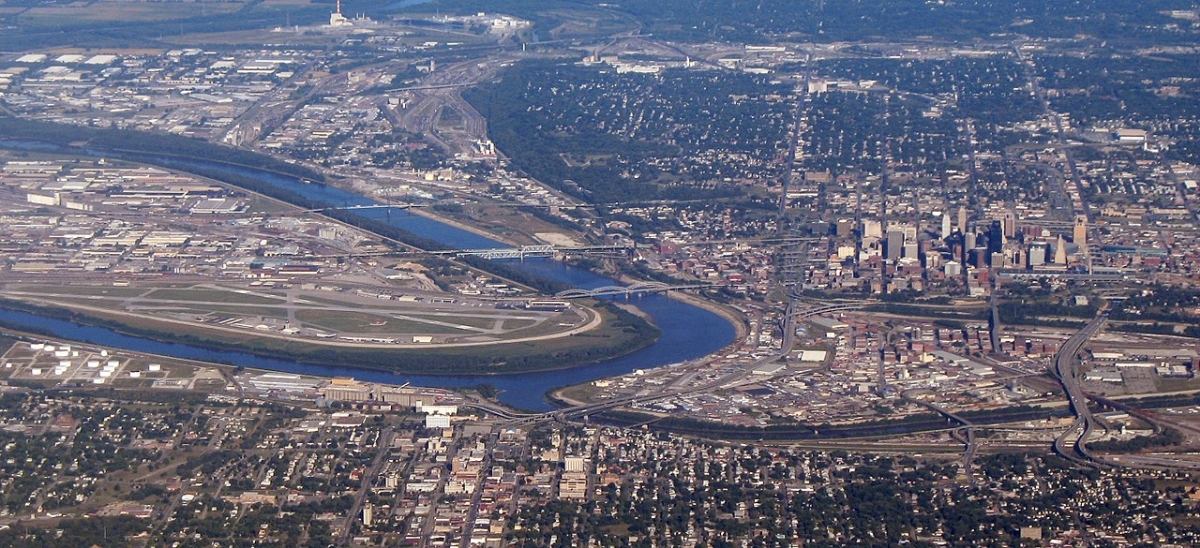
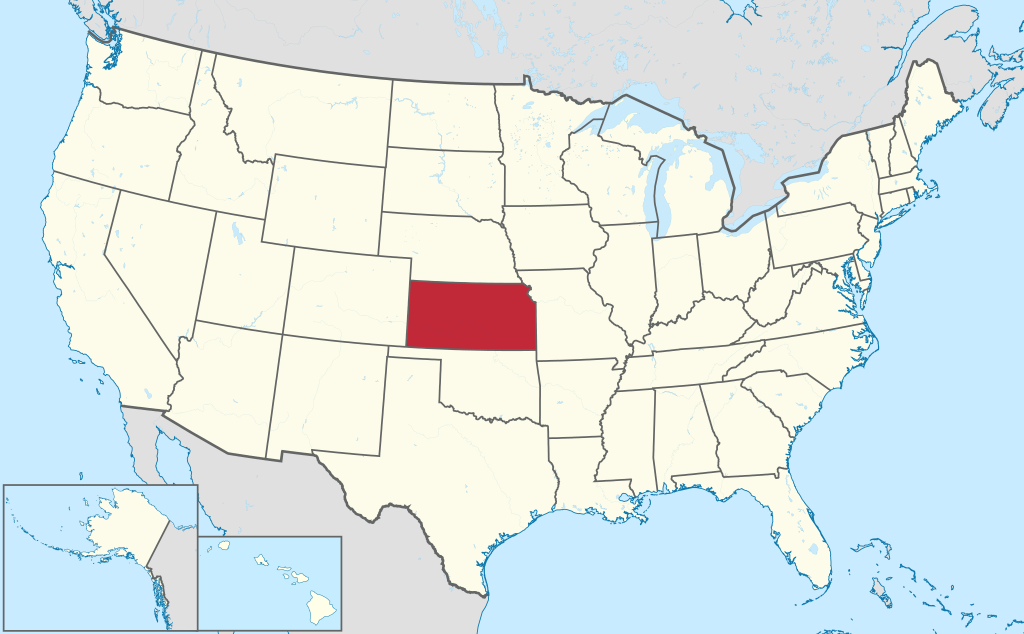
Kansas is located in the Midwest region of the United States. All of Kansas lies in the Great Plains. Mostly flat, it gradually increases in elevation from east to west by about 3000 feet (900 metres). Once covered in prairie grassland, today Kansas is famous for its endless fields of wheat, although the eastern third of the state features many hills and forests. The state is drained chiefly by the Kansas (known locally as the Kaw) and Arkansas rivers, both of flow from west to east across the state.


Name
The name "Kansas" comes from the Native American Kansa or Kaw people, whose name means "people of the south wind” in their own language (part of Siouan group), although this was probably not the phrase’s original meaning. The French named what is now the Kansas River the Cansez after the local people, and it became the name of the whole area after the United States acquired it from France in the early 19th century.
Climate
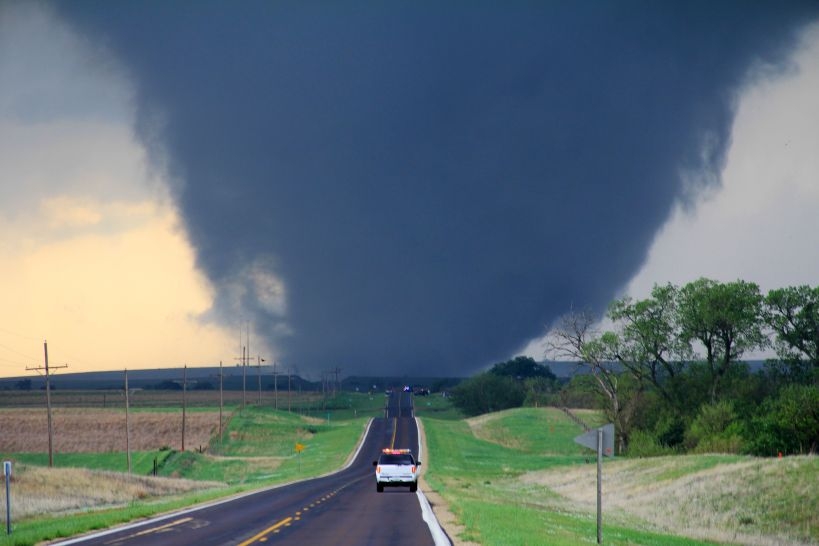
Kansas has a continental climate, with cold winters and hot summers. In some places, temperatures regularly reach 100°F (38°C) or more in summer. Chinook winds in winter can sometimes warm western Kansas to as much as 80°F (27°C). The eastern part of the state is wetter than the semi-arid west. Kansas lies in Tornado Alley, where cold and warm air masses come together, frequently triggering tornadoes, most often in spring and autumn. Blizzards, floods, drought and dust storms are other climatic hazards that farmers and ranchers, especially in western Kansas, have to contend with.
Economy


Farming is an important part of Kansas's economy. The main crop is wheat, with sorghum also widely grown—Kansas has the highest output of both these crops of any state. Sunflowers are another major crop, while maize, oats, barley, hay, soya beans and potatoes are also cultivated. Cattle are raised on the western plains.
The state is a major producer of crude oil and has large reserves of natural gas and helium. Wichita is home to many of the nation's leading aircraft manufacturers, especially of light aircraft. Kansas City is an important telecommunications, transportation, milling and meat-packing centre.

Facts about Kansas
Area 81,815 sq miles (211,901 sq km)
Highest point Mount Sunflower 4041 ft (1232 m)
Population 2,940,546
Capital Topeka
Largest cities Wichita, 396,119; Overland Park, 197,089; Kansas City, 152,933; Olathe, 147,461; Topeka, 125,475
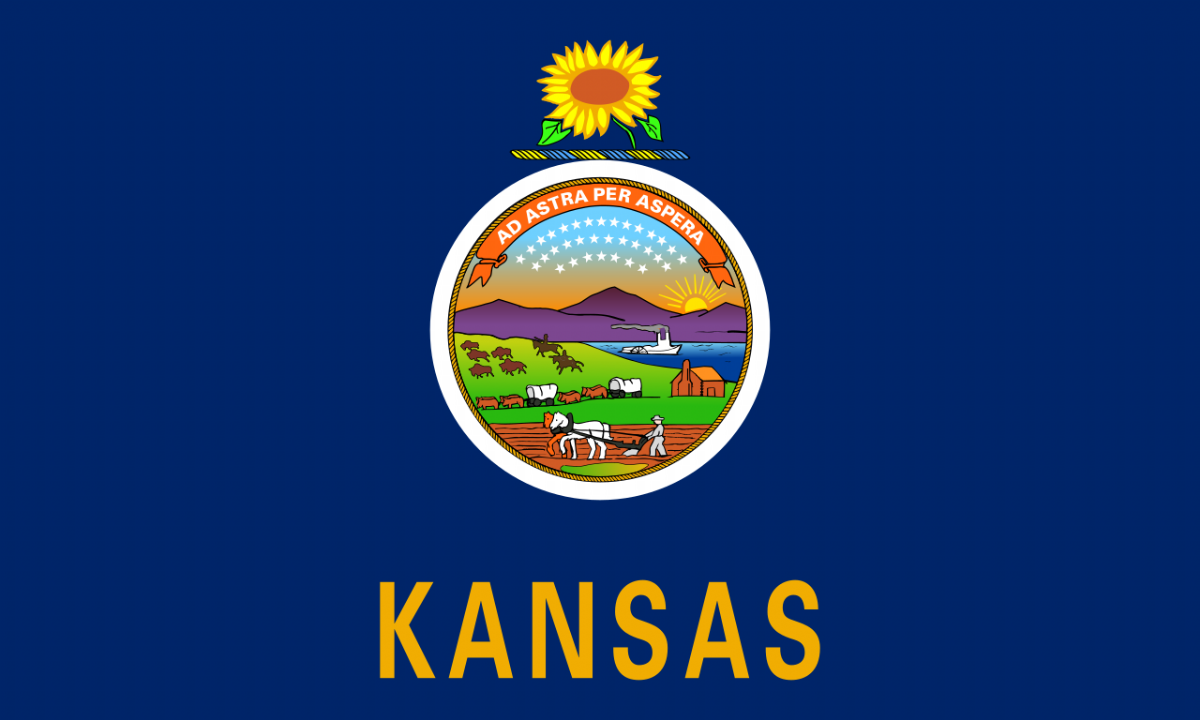
Nickname The Sunflower State
State bird Western meadowlark
State flower Sunflower
State tree Cottonwood
Consultant: Nicholas Harris
History of Kansas
16th century
Native American peoples, including the Wichita and Pawnee, live in the Kansas area at the time of the arrival of the first Europeans
1541
Spanish explorer Francisco Vásquez de Coronado visits the Kansas area in his search for Quivira, a fabled kingdom of riches. On encountering the Spanish, the Plains Indians see horses for the first time
1601
Spanish explorer Juan de Oñate arrives in Kansas in 1601
1682
La Salle claims for France the entire Mississippi basin, including Kansas
1724
French explorer Étienne de Bourgmont leads an expedition to the Great Plains of Kansas to establish trading relations with the Padouca (Apache)
1763
By the Treaty of Paris ending the French and Indian Wars, France cedes the territory of West Louisiana (including Kansas) to Spain
late 18th century
Kansa and Osage Native Americans have become dominant in the eastern part of today’s Kansas. At the same time, the Pawnee are dominant on the plains to the west, where there are massive herds of bison
1803
Louisiana Purchase: United States acquires land west of the Mississippi from France (who re-acquired the land from Spain in 1800)
1804
Lewis and Clark camp for three days at the confluence of the Kansas and Missouri rivers (Kaw Point) in present-day Kansas City, Kansas
1806
Zebulon Pike passes through Kansas, labelling it "the Great American Desert" on his maps. Considering the area unsuitable for American settlers, the government sets it aside as land reserved for Native American resettlement
1821
Santa Fe Trail is opened across Kansas, connecting Missouri with Santa Fe, New Mexico
1825
Land in eastern Kansas is ceded by the Kansa Nation to the United States (the Kansa tribe is limited to a reservation in northeastern Kansas). The land will be used to resettle Native peoples from eastern and northern US, including the Shawnee, Delaware, Ottawa, Kickapoo and Pottawatomie
1827
Fort Leavenworth is built by the US army
1840s–60s
Kansas is crossed by California and Oregon trails
1854
The Kansas-Nebraska Act establishes the Nebraska Territory and Kansas Territory; settlers in Kansas Territory are given the vote on whether to allow slavery within its borders; rival governments are set up in Kansas and tensions rise between pro- and anti-slavery groups
1855–58
Violence breaks out between pro-slavery groups allied with armed Missourians known as "Border Ruffians" and abolitionist “Free-Staters”. The territory becomes known as “Bleeding Kansas”. During the Wakarusa War of 1855, the Missourians lay siege to the Free-Stater town of Lawrence. In the Pottawatomie massacre of May 1856, a band of abolitionists kill five pro-slavery settlers
1859
After a number of proposed constitutions are rejected, the Wyandotte Constitution, which forbids slavery, is finally accepted by US Congress
1861
Kansas is admitted to the Union as the 34th state, with the capital at Topeka
1861–65
During the Civil War, Kansas fights with the Union and suffers the highest rate of fatalities of any state in the Union
1863
Lawrence Massacre: William Clarke Quantrill and his force of 300 to 400 Confederates destroy the anti-slavery town of Lawrence
1870s–80s
The construction of the Kansas Pacific railway west of Kansas City makes towns such as Abilene and Dodge City shipping points for herds of cattle driven overland from Texas. Pioneer homesteaders attempt to make a living by farming the Great Plains, but suffer droughts, dust storms, occasional grasshopper invasions and floods
1870s
Thousands of Volga Germans and Mennonites arrive in Kansas; they bring a variety of winter wheat to Kansas, helping Kansas to become the Wheat State. Maize also becomes a major cash crop
1879
Thousands of Freedmen (African Americans released from slavery) move from Southern states to set up farms in Kansas, where they known as “Exodusters”
1881
Kansas prohibits all alcoholic drinks; prohibition is not repealed until 1948, with a ban on public bars continuing until 1987
1930s
Dust Bowl: Kansas experiences severe soil erosion during the long drought years, causing failing harvests and leading hundreds of thousands of people to abandon the area
1966
Topeka is struck by a powerful tornado
pics

Without in any way limiting Q-files Ltd’s exclusive rights under copyright, any use of this publication to “train” generative artificial intelligence (AI) technologies to generate text is expressly prohibited. Q-files Ltd reserves all rights to license use of this work for generative AI training and development of machine learning language models.