
States of the US

CITE
We have made every effort to follow citation style rules, but there may be some minor differences. If in doubt, please refer to the appropriate citation style manual.
Tennessee. (2026). In Q-files Encyclopedia, Geography, States of the US. Retrieved from
https://www.q-files.com/geography/states-of-the-us/tennessee
"Tennessee." Geography, States of the US, Q-files Encyclopedia, 2 Sep. 2026.
https://www.q-files.com/geography/states-of-the-us/tennessee.
Accessed 22 Sep. 2026.
Tennessee 2026. Geography, States of the US. Retrieved 22 September 2026, from
https://www.q-files.com/geography/states-of-the-us/tennessee
Geography, States of the US, s.v. "Tennessee," accessed September 22, 2026.
https://www.q-files.com/geography/states-of-the-us/tennessee


Tennessee
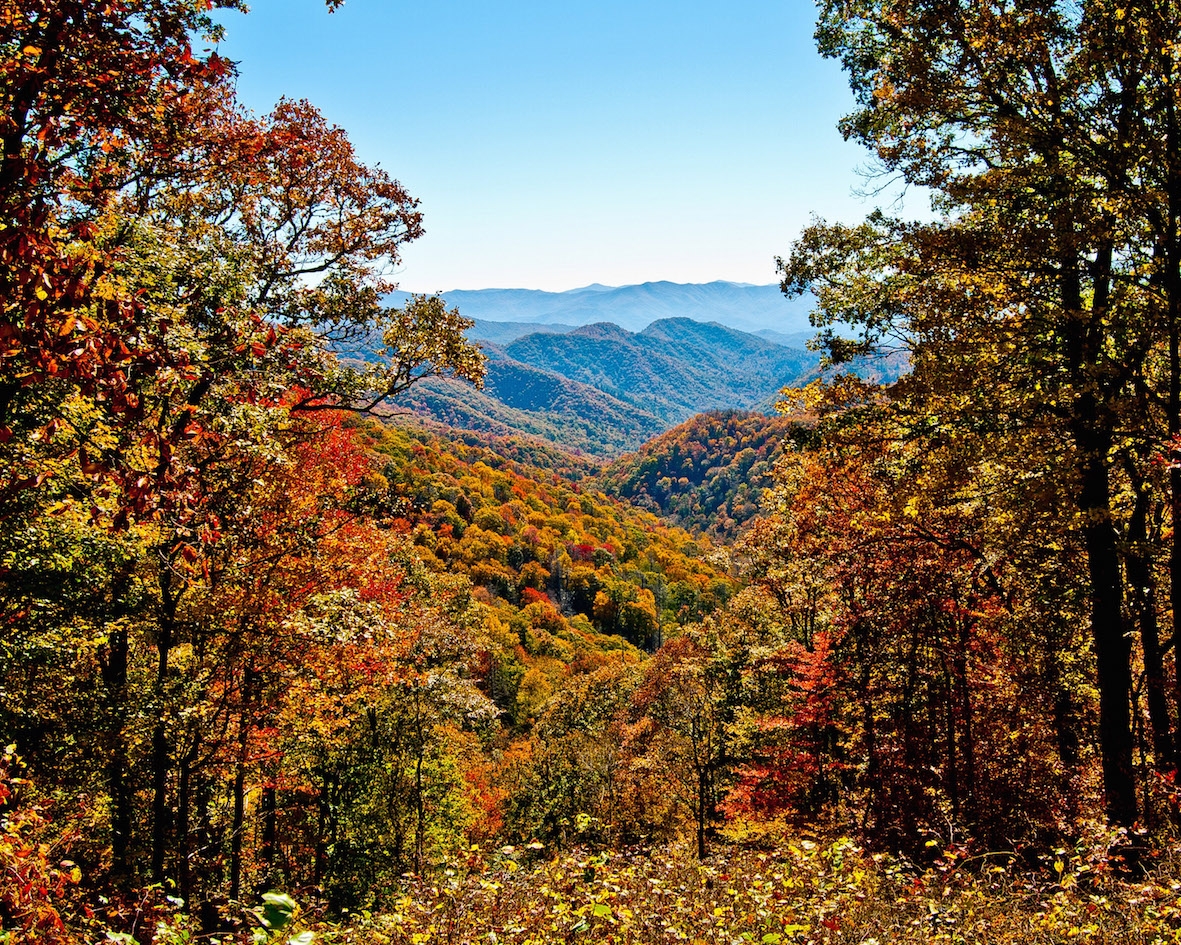
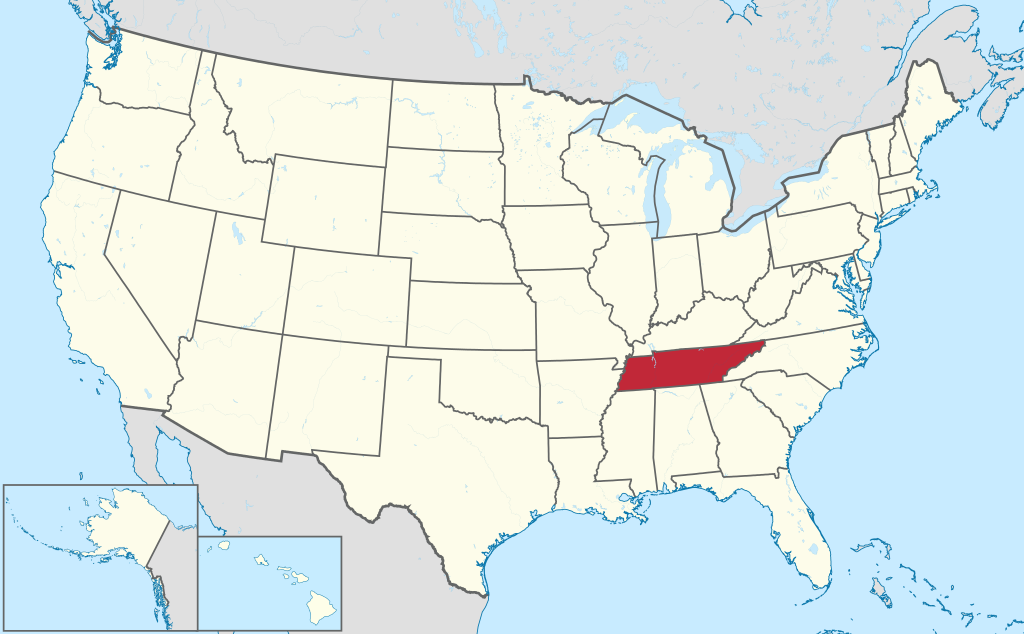
Tennessee is located in the central-southeast region of the United States. Rising on its eastern border are the Great Smoky Mountains, part of the Appalachian range. Stretching to the west is the Valley and Ridge region, a landscape of fertile valleys separated by wooded ridges. West of the Tennessee River lies the flat-topped Cumberland Plateau, which gives way to the rolling, bluegrass pastures of Middle Tennessee. West Tennessee is made up of the Mississippi alluvial plain.


Name
Tennessee was probably named after a Native American village—although it is not certain which one. The earliest version was recorded by the Spanish explorer, Juan Pardo, who passed through a village named Tanasqui in 1567 while travelling inland from the South Carolina area. British traders in the early 18th century came across a Cherokee town named Tanasi (in present-day Monroe County), but it is unlikely to have been the same place as Pardo's Tanasqui (thought to be near modern Newport). Whatever its origin, the modern spelling, Tennessee, was in use by the 1750s.

Climate
Apart from eastern areas, most of the state has a subtropical climate, with hot summers and mild winters. The mountainous east has a temperate climate, with average temperatures becoming increasingly cool at higher elevations. Winds from the Gulf of Mexico in the south bring most of the state's annual precipitation, which is fairly high throughout the year. Tennessee averages around 50 days of thunderstorms per year, often coming with large hailstones and high winds. Occasionally, strong tornadoes occur.


Economy
Although most Tennesseans live in the cities, many people still earn their livelihood from the land. The state's leading crops are soya beans, cotton and tobacco. Beef cattle, poultry, dairy products and pigs are also major farm products. The state's leading industrial products are chemicals, foods, electrical machinery, furniture, metals such as zinc and aluminium, cars, textiles, stone, clay and glass. Tennessee has long been a major tourist destination, centred on the many reservoirs created in the state by the Tennessee Valley Authority (TVA), the Great Smoky Mountains National Park and the city of Memphis.

Facts about Tennessee
Area 41,217 sq miles (106,752 sq km)
Highest point Clingmans Dome 6643 ft (2025 m)
Population 7,126,489
Capital Nashville
Largest cities Nashville, 687,788; Memphis, 618,639; Knoxville, 198,162; Chattanooga, 187,030; Clarksville, 180,716
Nicknames The Volunteer State
State bird Mockingbird
State flower Iris
State tree Tulip poplar

Consultant: Nicholas Harris
History of Tennessee
before the 16th century
Native American Creek and Coyaha (Yuchi) peoples inhabit the Tennessee region at the time of the first European expeditions. Later, the Cherokee, Chickasaw and Choctaw peoples, displaced by European colonists in the east, spread into the area
1540
Expedition led by Spanish explorer Hernando de Soto arrives in Tennessee. Later expeditions are led by Tristan de Luna (1559) and Juan Pardo (1567)
1682
French explorer Louis Joliet, Sieur de la Salle, builds Fort Prudhomme, possibly on the site of present-day Memphis. The French establish other trading posts in the area, but are frequently attacked by the Chickasaw
1756
The first British settlement is built by fur traders and hunters at Fort Loudoun, near present-day Vonore
1760
Fort Loudoun surrenders to Cherokee forces after a siege
1763
Great Britain acquires the area after defeating the French in the French and Indian Wars
1769
European settlers, mostly of English and Scottish-Irish descent, arrive in Tennessee from Virginia and, soon after, the Carolinas. First settlement made in the Watauga River valley in east Tennessee.
1772
The settlers form the Watauga Association, a community built on lands leased from the Cherokee peoples.
1777
East Tennessee settlements organized into Washington county, part of North Carolina
1784
Three counties of the Washington District (now part of Tennessee) break off from North Carolina and form the State of Franklin, but later rejoin North Carolina
1790
North Carolina cedes the area of East Tennessee to the US federal government. US Congress creates the Territory of the United States South of the River Ohio (Southwest Territory)
1796
Tennessee is admitted to the Union as the 16th state, with its capital at Knoxville.
late 18th century–early 19th century
Settlers pour into Tennessee from the Carolinas, Virginia, Pennsylvania and New England, via overland routes such as the Wilderness Road and Cumberland Gap.
1838–39
The Cherokee (along with their 2000 black slaves) and Chickasaw are forcibly removed more distant Indian Territory west of Arkansas. Around 4000 Cherokee die along the way. The event is part of what became known as the “Trail of Tears”.
1861
In a referendum, Tennessee votes for secession from the Union (after previously voting to stay in).
1861–65
American Civil War: after Virginia, Tennessee is the biggest and bloodiest battleground, with major conflicts in Nashville, Shiloh, Murfreesboro, Franklin and Chattanooga. It is occupied by Union forces from 1862.
1907–17
Prohibition begins. In a series of laws, Tennessee becomes the first state to ban the sale and production of alcohol. Illegal production of moonshine (home-produced spirits) becomes common in the mountains of East Tennessee until the ban is lifted in the 1930s
1925
Scopes Trial, sometimes called the Scopes Monkey Trial: Dayton high school teacher, John T. Scopes, is accused of violating a Tennessee state law which makes it an offence to teach human evolution in any state-funded school. Scopes is found guilty, but the verdict is overturned on a technicality. The trial highlights the controversy between Modernists, who believe evolution is not inconsistent with religion, against Fundamentalists, who argue that the Word of God takes priority over all human knowledge
1933
Establishment of the Tennessee Valley Authority (TVA), providing abundant, cheap hydro-electric power to the state. The TVA is responsible for the significant growth of industry in Tennessee.
1942
Oak Ridge, a planned city in East Tennessee, is constructed as a production site for the Manhattan Project, a secret international operation to develop the atomic bomb
1960
Sit-ins at segregated lunch counters in Nashville result in the desegregation of facilities in the city
1968
James Earl Ray assassinates civil rights leader Martin Luther King Jr. in Memphis. King travelled there to support striking African American sanitation workers. Riots and civil unrest erupted in African American areas in many cities across the nation, resulting in widespread injuries
1977
American singer and actor Elvis Presley, known as the "King of Rock and Roll", dies suddenly in 1977 at his Graceland estate near Memphis at the age of 42
1982
World's Fair is held in Knoxville. Also known as the Knoxville International Energy Exposition, the fair's theme is "Energy Turns the World".
2008
The largest industrial waste spill in US history occurred at TVA's Kingston Fossil Plant when more than 1 billion gallons of coal ash slurry is accidentally discharged into the Emory and Clinch rivers. The clean-up takes until 2015 to complete
2010
Disastrous floods affect extensive areas of Middle and West Tennessee as a result of torrential rains in May. Two-day rain totals in some areas were greater than 19 inches (480 mm)
2011
Parts of East Tennessee are devastated by the 2011 Super Outbreak, the largest tornado outbreak in US history
pics


Without in any way limiting Q-files Ltd’s exclusive rights under copyright, any use of this publication to “train” generative artificial intelligence (AI) technologies to generate text is expressly prohibited. Q-files Ltd reserves all rights to license use of this work for generative AI training and development of machine learning language models.