
States of the US

CITE
We have made every effort to follow citation style rules, but there may be some minor differences. If in doubt, please refer to the appropriate citation style manual.
Alaska. (2026). In Q-files Encyclopedia, Geography, States of the US. Retrieved from
https://www.q-files.com/geography/states-of-the-us/alaska
"Alaska." Geography, States of the US, Q-files Encyclopedia, 2 Sep. 2026.
https://www.q-files.com/geography/states-of-the-us/alaska.
Accessed 22 Sep. 2026.
Alaska 2026. Geography, States of the US. Retrieved 22 September 2026, from
https://www.q-files.com/geography/states-of-the-us/alaska
Geography, States of the US, s.v. "Alaska," accessed September 22, 2026.
https://www.q-files.com/geography/states-of-the-us/alaska


Alaska
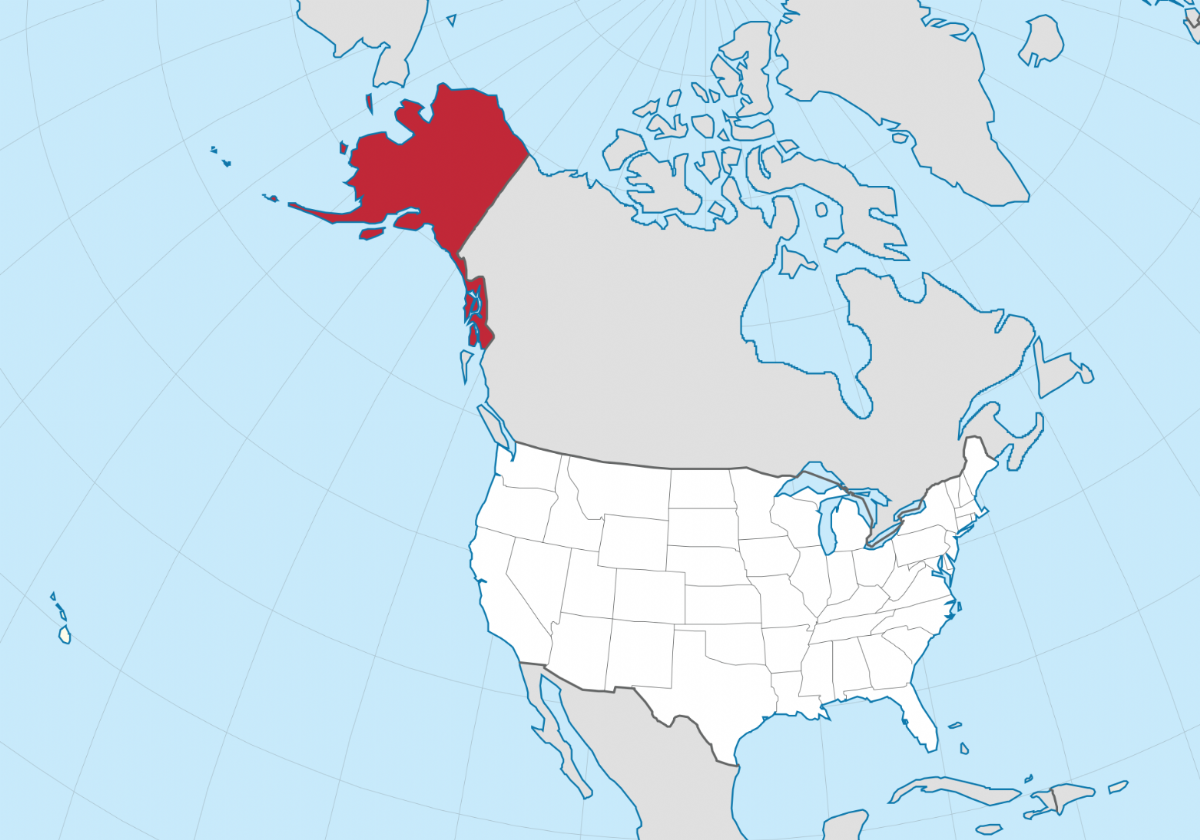
Alaska is located in northwestern North America, separated from the rest of the United States by Canada. At the tip of the Seward Peninsula, Alaska lies only a few miles from the far eastern tip of Russia across the narrow Bering Strait. The southern coast, extending from the Panhandle in the southeast to the Alaska Peninsula and the Aleutian Islands in the southwest, is made up of numerous inlets and offshore islands. Mountains rise steeply inland. The Yukon flows through Alaska's interior wilderness, the Brooks Range to the north and the Alaska Range to the south.


Name
The name "Alaska" was introduced when the territory was under Russian rule. It comes from word Alaxsxaq (also spelled Alyeska) in the language of the Native Aleuts, who are the indigenous people of the Aleutian Islands. The word means, literally, "the object towards which the action of the sea is directed”. This refers to the Alaska Peninsula, the “great land”, or “mainland”, as it might also be translated.
Climate
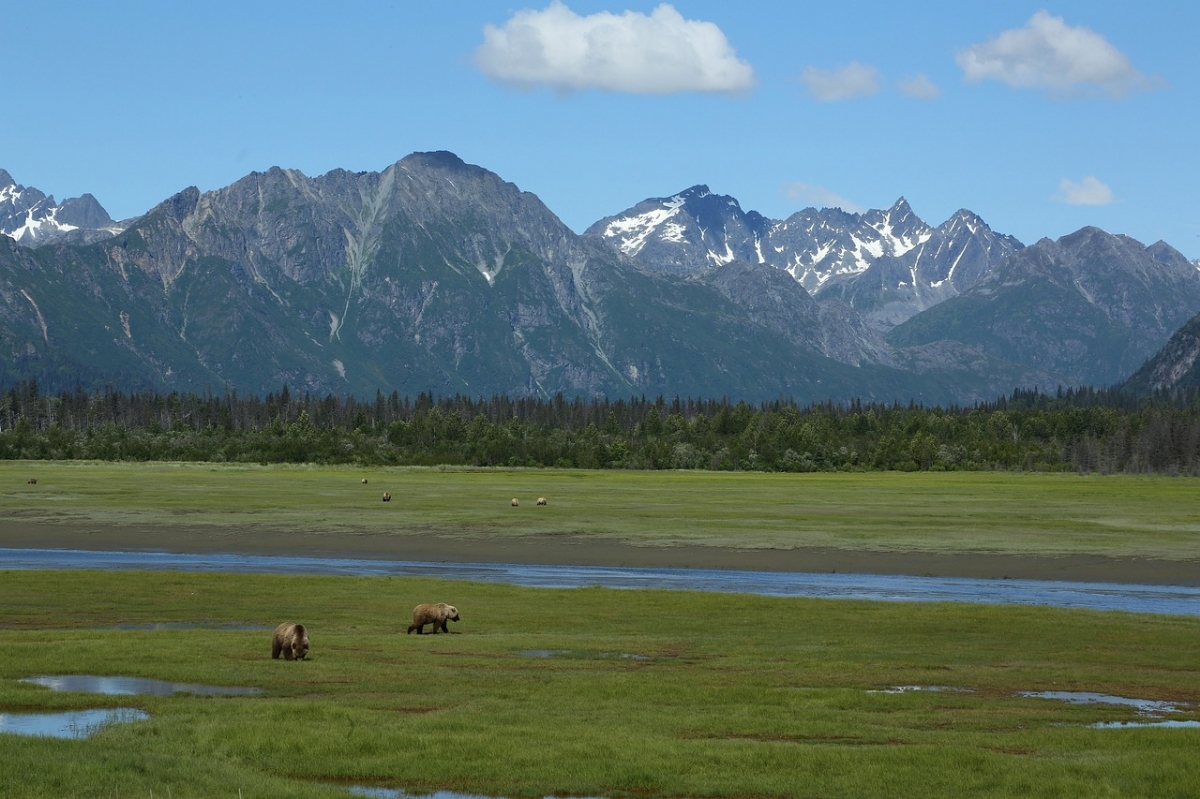
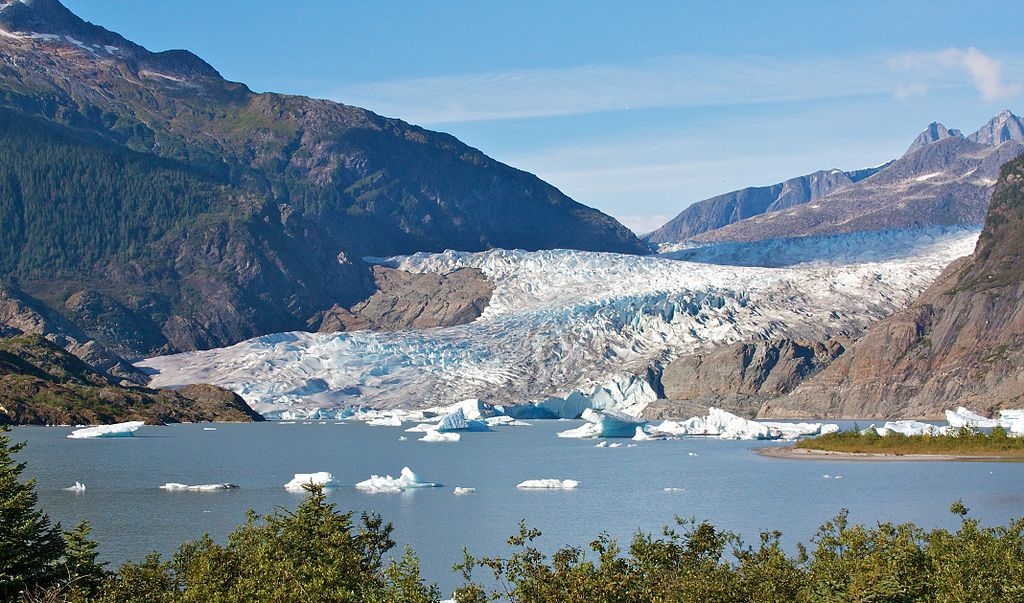
The climate of Alaska, a vast area about one fifth the size of the rest of the United States, varies from one region to another. The climate of south central Alaska (the area around Anchorage) and the southwest is subarctic, with brief, cool summers. Winter temperatures are milder than in areas farther north because of the region's proximity to the ocean. The same is true of the Panhandle in the southeast, which has higher precipitation throughout the year than other regions.


The interior of Alaska, away from the coast, has a continental subarctic climate: very cold winters and short, hot summers. The climate in the extreme north of Alaska is Arctic, with long, very cold winters and short, cool summers. Even in July, the temperatures in Barrow average just 34°F (1°C). Precipitation is low in the north, with many places averaging less than 10 inches (25 cm) per year, mostly as snow.
Economy
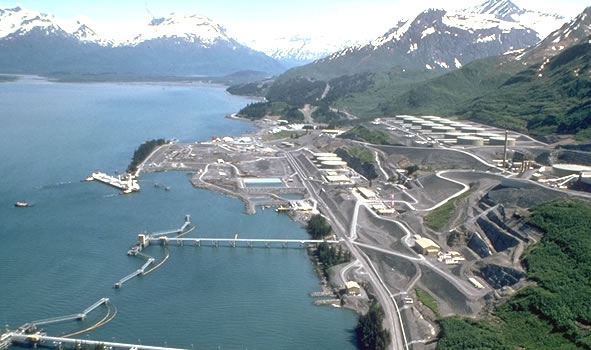
In 1968 vast reserves of oil and natural gas were discovered in northern Alaska, a region known as the Alaska North Slope (ANS), near Prudhoe Bay. The reservoir, which contains an estimated 10 billion barrels of oil and 27 trillion cubic feet of gas, is said to be twice as large as any other oil field in North America. The 800-mile (1300-kilometre) Trans-Alaska pipeline, leading from the North Slope to the ice-free port of Valdez opened in 1977, following controversy over its damaging effect on the environment. Since then, the oil and gas industry has dominated the Alaskan economy, although production has recently fallen behind that of Texas, North Dakota and California.

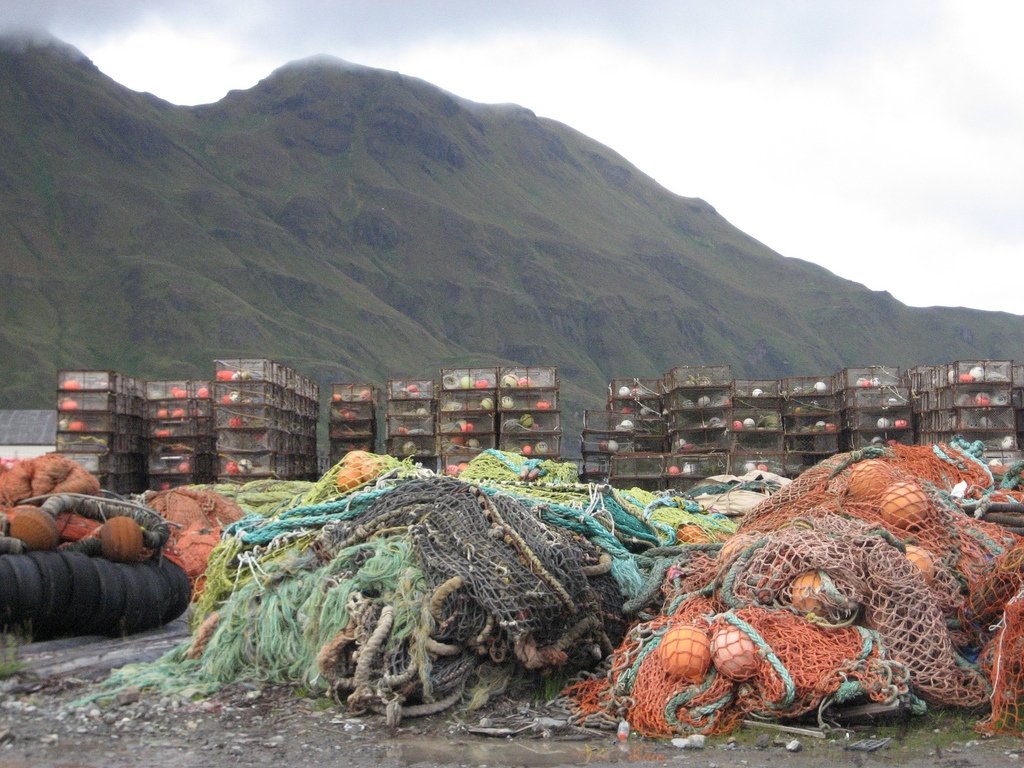
Alaska leads the nation in the value of its commercial fishing catch, chiefly salmon, cod, pollock and crab. Anchorage and Dutch Harbor are its major fishing ports. The freezing and canning of fish dominates the food-processing industry. Wood and wood products, furs and tourism are other important industries.
Alaska has very little agriculture, with the best arable land in the Matanuska Valley north of Anchorage and the Tanana Valley around Fairbanks. Greenhouse vegetables, dairy and potatoes are the main products.
Aleutian Islands
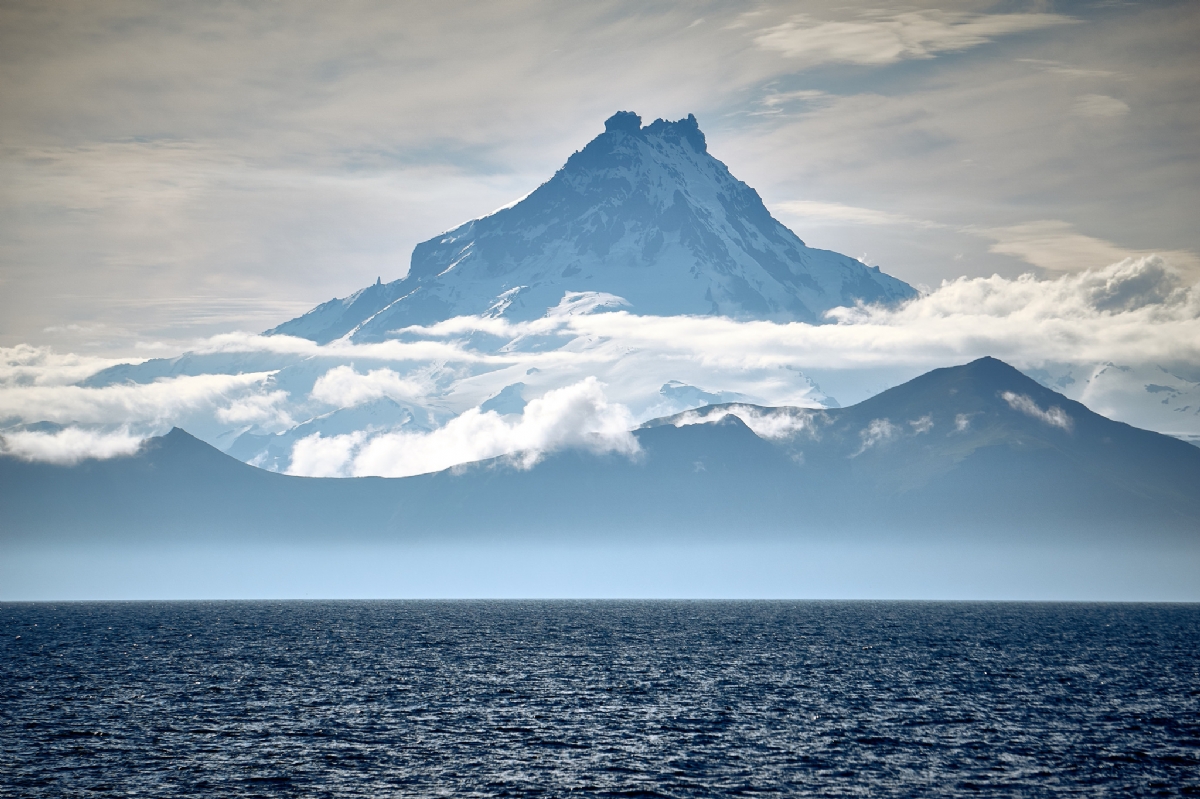
More than 300 small volcanic islands make up the Aleutian Island chain, which extends over 1200 miles (1900 km) from the southern tip of the Alaska Peninsula. The islands divide the Bering Sea to the north from the Pacific Ocean to the south. Some of them fall in the Eastern Hemisphere, but the International Date Line is angled west of 180° to keep the whole state in the same time zone (and the same day). At the extreme western end of the chain are the Commander Islands, which belong to Russia. Many active volcanoes are found in the Aleutians.

Facts about Alaska
Area 570,641 sq miles (1,477,953 sq km)
Highest point Denali (Mount McKinley) 20,321 ft (6194 m)
Population 733,406
Capital Juneau
Largest cities Anchorage, 286,075; Fairbanks, 31,856; Juneau, 31,555
Nickname The Last Frontier
State bird Willow ptarmigan
State flower Forget-me-not
State tree Sitka spruce
Consultant: Nicholas Harris
History of Alaska
18th century
Alaska is populated by several indigenous groups, the Inupiat, Yupik, Aleut, Eyak, Tlingit, Haida, Tsimshian and a number of Northern Athabaskan peoples, at the time when the first European explorers arrive
1732
Russian explorers travelling in the ship St Gabriel, commanded by M. S. Gvozdev and I. Fyodorov, are the first Europeans to reach Alaska
1741
Vitus Bering, a Dane working for the Russians, leads an expedition to the Alaskan mainland and the Aleutian Islands. After he and his crew return to Russia with sea otter pelts, Russian fur-hunters rush to the Aleutian Islands
1774–1800
Spain sends several expeditions to Alaska in order to assert its claim over the Pacific Northwest. The Spanish give names to places such as Valdez and Cordova
1784
Russian Grigory Shelekhov founds the first permanent settlement in Alaska, on Kodiak Island
1789
A Spanish settlement and fort are built in Nootka Sound
1799
Aleksandr Baranof’s Russian American Company dominates the fur trade in Alaska, extending operations down the west coast of North America as far as North California
1804
Sitka (New Archangel), on Baranof Island in the Alexander Archipelago in what is now southeast Alaska, becomes the capital of Russian America
1824
Russians agree to set the southern boundary of Alaska at latitude 54°40’ N (the present southern boundary of Alaska)
1867
US purchases Alaska from Russia for $7.2 million
1884
Alaska is administered as a district, with a governor appointed by the US President
1898–99
Gold Rush: Discovery of gold at Nome brings miners and prospectors (sourdoughs) to Alaska
1906
Juneau replaces Sitka as Alaska's capital
1912
Alaska is organized as a territory
1942–43
Japanese troops occupy the Aleutian Islands of Attu and Kiska during World War II
1959
Alaska is admitted into the Union as the 49th state
1964
Good Friday Earthquake: the strongest earthquake ever recorded in North America occurs in south central Alaska, 12.4 miles (20 km) north of Prince William Sound, causing the loss of 133 lives
1968
A massive oil and gas reservoir near Prudhoe Bay on the Arctic Coast is discovered
1977
The 800-mile (1300-kilometre) Trans-Alaska pipeline from Prudhoe Bay to the port of Valdez is completed
1989
The oil tanker Exxon Valdez runs into a reef in Prince William Sound, spilling 11 million gallons of crude oil along 1500 miles (2400 km) of coastline; the clean-up effort takes more than three years
2015
Mount McKinley is officially renamed Denali, the name by which it has been known to the native Koyukon people for centuries
2020
An oil field in Alaska's North Slope region with a potential of 1.8 billion barrels of oil is discovered
2021
A reading of 19.4°C (67°F) at Kodiak is the highest December temperature ever recorded in Alaska
2023
The Willow Project, an oil-drilling project on the North Slope, is given the go-ahead by the US government. The controversial project, which also involves the building of pipelines, roads, a gravel mine and processing plant, is expected to generate 9.2 million tonnes of carbon a year.
2025
(August) A massive megatsunami wave, almost 500 m (over 1600 ft) tall, sweeps through Tracy Arm, a fjord in southeast Alaska. It is caused by a huge landslide when some 64 million cubic metres of rock (the equivalent of 24 Great Pyramids) crumbles into the sea.
pics

Without in any way limiting Q-files Ltd’s exclusive rights under copyright, any use of this publication to “train” generative artificial intelligence (AI) technologies to generate text is expressly prohibited. Q-files Ltd reserves all rights to license use of this work for generative AI training and development of machine learning language models.