
States of the US

CITE
We have made every effort to follow citation style rules, but there may be some minor differences. If in doubt, please refer to the appropriate citation style manual.
Kentucky. (2026). In Q-files Encyclopedia, Geography, States of the US. Retrieved from
https://www.q-files.com/geography/states-of-the-us/kentucky
"Kentucky." Geography, States of the US, Q-files Encyclopedia, 2 Sep. 2026.
https://www.q-files.com/geography/states-of-the-us/kentucky.
Accessed 21 Sep. 2026.
Kentucky 2026. Geography, States of the US. Retrieved 21 September 2026, from
https://www.q-files.com/geography/states-of-the-us/kentucky
Geography, States of the US, s.v. "Kentucky," accessed September 21, 2026.
https://www.q-files.com/geography/states-of-the-us/kentucky


Kentucky
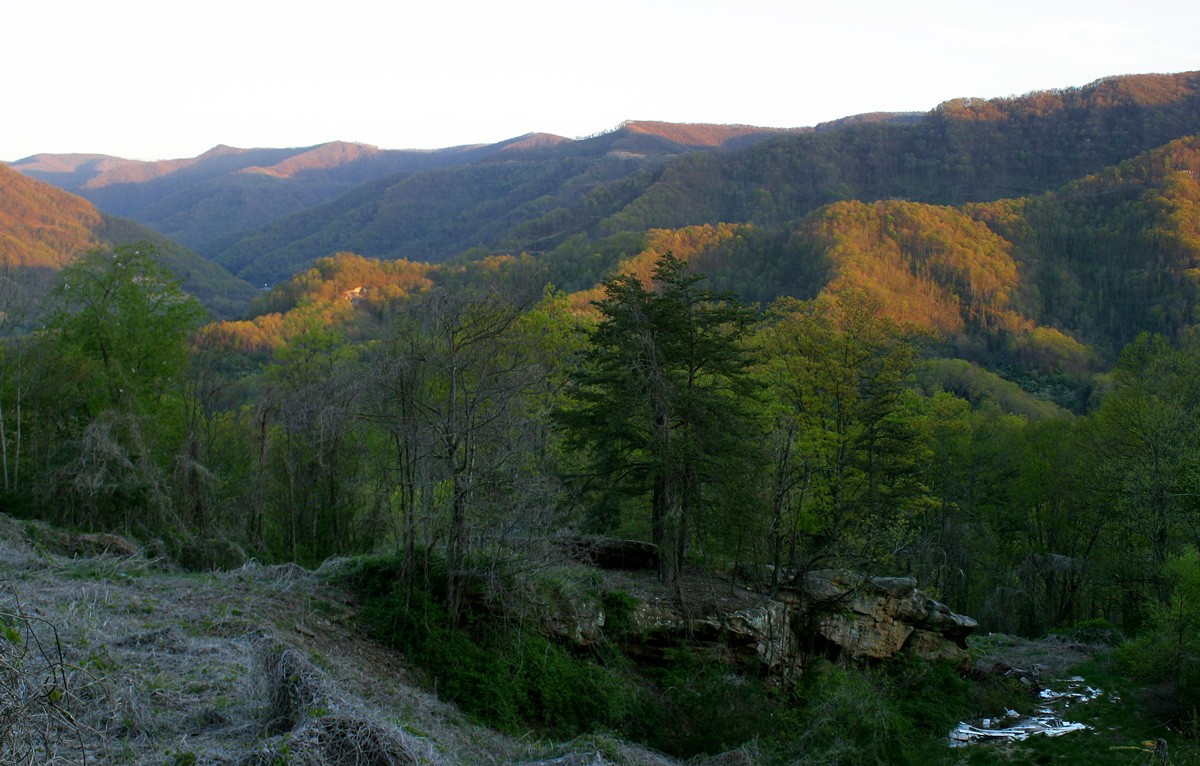
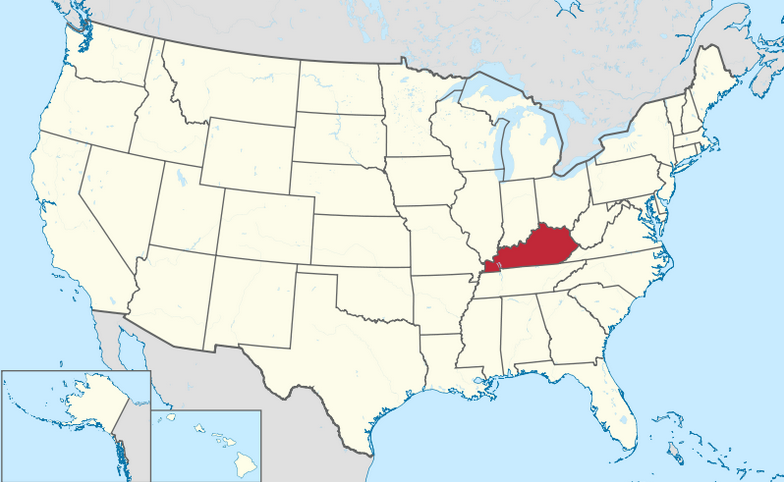
Kentucky is a state located in the central southeastern United States. Rising in the southeast is the Cumberland Plateau, part of the Appalachian Mountains. Here, the narrow valleys and ridges are covered by dense forest. To the north, the uplands give way to a plain dotted with isolated, conical peaks, known as knobs. This is the Bluegrass region, named after the blue-flowered grass that once grew there. To the west lies the rolling terrain of the Mississippi (or Pennyroyal) Plateau, an area that includes two major coalfields.


Name
The name Kentucky probably comes from the Iroquoian word kenhtake, meaning "meadowlands” or “prairie lands”. Before Europeans first settled in the Bluegrass region, various Native American peoples roamed the countryside—then covered by grasslands interspersed with huge oak trees—hunting herds of bison and other game. In 1776, the area of Virginia that lay beyond the Appalachian Mountains became known as Kentucky County, named after Kentucky River.
Climate
Kentucky has a humid subtropical climate, with abundant rainfall. It rarely experiences the extreme low temperatures of the states to the north, nor the extreme heat of the Deep South states. The state usually has warm, rainy summers and moderately cold, snowy winters. Occasionally there are tornadoes, the most notorious being the Mississippi Valley tornado, which destroyed parts of Louisville in 1890.


Economy
Tobacco has long been Kentucky’s chief crop. Maize, soya beans, wheat, fruit, pigs, cattle, goats, hay and dairy products are are also important. The Bluegrass country around Lexington is where some of the world's finest thoroughbred racehorses are bred: the high calcium content of the soil is of great benefit to them.
The state's chief manufactures include electrical equipment, food products, cars and trucks, machinery, chemicals and clothing. It is one of the major producers of coal in the US. Kentucky is also famous for the distilling of Bourbon whiskey.


Facts about Kentucky
Area 39,728 sq miles (102,896 sq km)
Highest point Black Mountain 4145 ft (1263 m)
Population 4,526,154
Capital Frankfort (population 28,285)
Largest cities Lexington 320,154; Louisville, 622,981; Bowling Green, 76,212; Owensboro, 60,140; Covington, 40,972
Nickname The Bluegrass State
State bird Kentucky cardinal
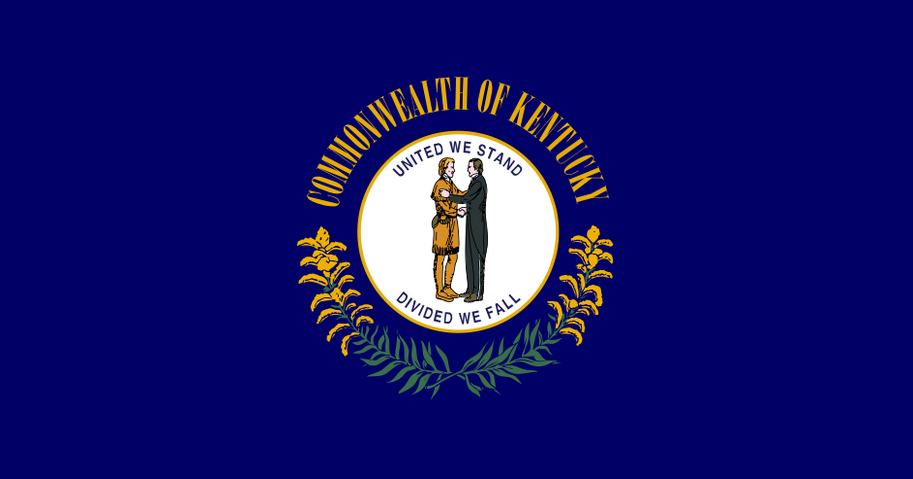
State flower Goldenrod
State tree Tulip poplar
Consultant: Nicholas Harris
History of Kentucky
18th century
At the time the first European settlers, the Kentucky area serves as the traditional hunting grounds for the Iroquois, Shawnee and Cherokee Native American peoples
1767
Daniel Boone visits the Kentucky region; he returns in 1769 and spends two years in the area
1774
James Harrod establishes the first permanent US settlement at Harrodsburg
1775
Boone establishes the Wilderness Trail through the Cumberland Gap and founds Boonesboro
1776
Kentucky is made a county of Virginia; new settlers arrive via the Cumberland Gap or down the Ohio River
1778
Virginia lays claim to the lands in the Kentucky area settled by Boone and others
1786
George Rogers Clark leads attacks against Shawnee towns on the Wabash River, thus beginning the Northwest Indian War
1792
The Commonwealth of Kentucky is admitted to the Union as the 15th state; it is the first state west of the Appalachians to join the Union
1794
General Anthony Wayne is victorious against Native American forces at Fallen Timbers, securing the Kentucky area for future US settlement
1795
Pinckney's Treaty between the US and Spain grants Americans the right to navigate the Mississippi; Kentucky grows fast as river traffic along the Ohio and Mississippi increases
1818
The far western corner of Kentucky, bounded by the Mississippi, Ohio and Tennessee rivers, is purchased from the Chickasaw Indians by Andrew Jackson; the area becomes known as the Jackson Purchase
1833
Importation of slaves into Kentucky is forbidden
1850
Anti-slavery law changes: Kentucky slaveholders sell unneeded slaves to the Deep South, with Louisville becoming a major slave market
1861
Kentucky attempts to remain neutral at the outbreak of the Civil War, but several counties secede (break away) from the Union; Confederate forces occupy part of the south of the state but forces under Ulysses S. Grant later secure the state for the Union
1870s
Coal mining begins on a large scale
1875
The first Kentucky Derby is run at Churchill Downs. It is won by a horse named Aristides ridden by African American jockey, Oliver Lewis
1954
Cassius Clay (later Muhammad Ali), born and raised in Louisville, begins training as an amateur boxer at the age of 12.
1968
Following the assassination of Martin Luther King Jr., riots break out in Louisville's West End
1976
Mae Street Kidd leads the campaign for Kentucky to ratify the 13th Amendment (abolishing slavery), 14th Amendment (defining citizenship) and 15th Amendment (granting all men the right to vote).
2021
Powerful tornadoes surge through Kentucky, levelling buildings, bringing down power lines and causing scores of deaths
2022
(July) Flash flooding on a massive scale hits Kentucky, leading to a state of emergency being declared. Hundreds of homes are destroyed while many roads and bridges are swept away. The catastrophic floods claim 39 lives.
pics
Without in any way limiting Q-files Ltd’s exclusive rights under copyright, any use of this publication to “train” generative artificial intelligence (AI) technologies to generate text is expressly prohibited. Q-files Ltd reserves all rights to license use of this work for generative AI training and development of machine learning language models.