
United States history

CITE
We have made every effort to follow citation style rules, but there may be some minor differences. If in doubt, please refer to the appropriate citation style manual.
European settlement of America. (2025). In Q-files Encyclopedia, History, United States history. Retrieved from
https://www.q-files.com/history/united-states-history/european-settlement-of-america
"European settlement of America." History, United States history, Q-files Encyclopedia, 5 Mar. 2025.
https://www.q-files.com/history/united-states-history/european-settlement-of-america.
Accessed 21 Sep. 2026.
European settlement of America 2025. History, United States history. Retrieved 21 September 2026, from
https://www.q-files.com/history/united-states-history/european-settlement-of-america
History, United States history, s.v. "European settlement of America," accessed September 21, 2026.
https://www.q-files.com/history/united-states-history/european-settlement-of-america


European settlement of America
While Spain and Portugal established colonies in their newly claimed lands in Central and Southern America, the other great powers of Europe—England, France and the Netherlands—started to do the same on the Caribbean Islands and the eastern coast of North America. European settlers first started to arrive in eastern North America after 1600. By then, most of the Native Americans living in the region had died from diseases, which had already been introduced by European explorers and sailors. No more than 1 million European settlers arrived in North America in the 17th and 18th centuries. Immigration did not increase until the 1820s: then over the next century, more than 30 million Europeans arrived.

New France
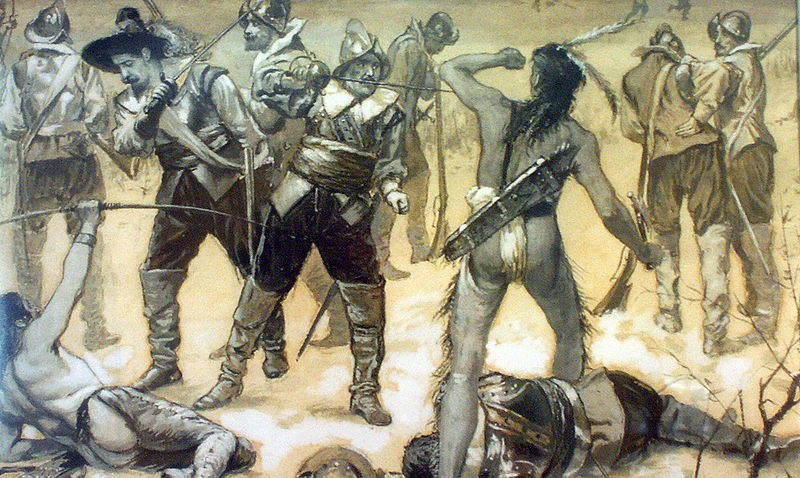
In 1534, the French explorer Jacques Cartier landed on the east coast of Canada. The following year he travelled up the St Lawrence River, encountering the native Huron peoples. Later French explorers, including Samuel de Champlain and René-Robert de la Salle, travelled across the American interior in the 1600s, claiming the lands they discovered for France. These territories, which included large areas of Canada and the American Midwest, was called New France. The colonists lived by trading furs with Native Americans.
New Spain and Florida
Following the conquest of the Aztecs in 1521, Spain claimed much of what is now the southern and central United States as well as Mexico. The territory became part of its colony of New Spain. Explorers such as Hernando do Soto (1539–43) and Francisco Vásquez de Coronado (1539–42) journeyed inland, while Juan Rodríguez Cabrillo sailed up the Pacific coast to explore California (1542). In 1565, the first Spanish settlement, Saint Augustine, was founded in Florida. By 1610, another was established at Santa Fe in New Mexico. But finding no gold or silver in these lands, settlers from Spain chose to head for Mexico. Missions (misiones) and forts (presidios) were set up across Spanish territory instead.
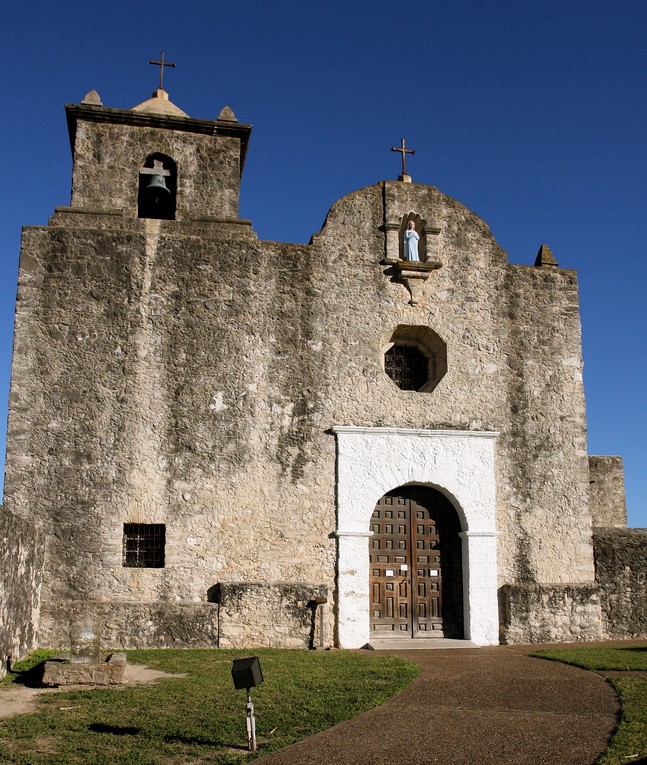
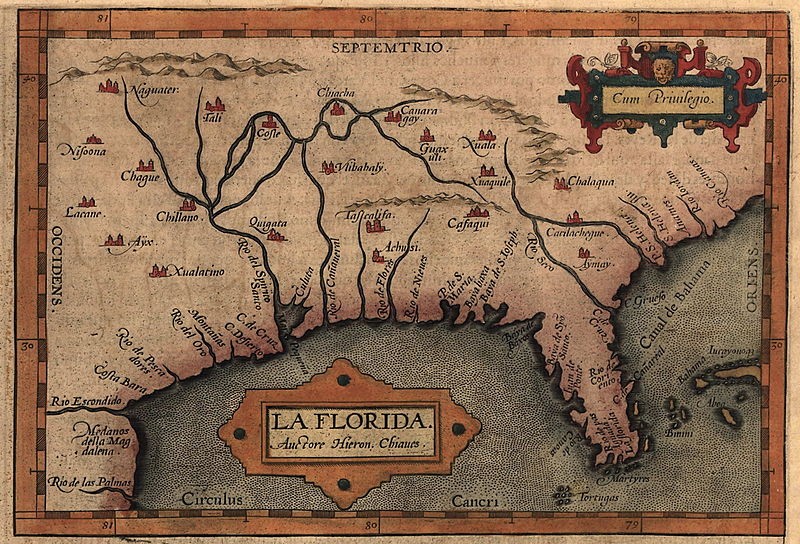
Florida was discovered and named by Juan Ponce de León in 1513. The native population declined drastically as they caught diseases to which they had no resistance. During the 1700s, the area was settled by the Seminoles (Native American exiles from further north) and African Americans fleeing slavery ("Black Seminoles"). Florida eventually became part of the United States in 1819. Spain’s territories to the west were lost when Mexico (formerly the major part of New Spain) declared its independence in the same year.
English colonies
The first permanent English settlement was Jamestown, Virginia, which was established in 1607. To begin with, many settlers died, but the survivors were able to make a living from growing and selling tobacco, and the colony started to grow. Many immigrants were farmers wanting new lands and young unmarried men and women seeking a new life and happy to work as servants.

Other groups of colonists came to North America searching for the right to practise their religion without persecution. The first group to arrive, the Pilgrims, were a small Protestant English sect, who wanted to establish a separate church. They sailed on the Mayflower and settled in Plymouth, Massachusetts, in 1620. Much larger numbers arrived soon after. About 20,000 Puritans settled in what became known as New England between 1629 and 1642. From the 1680s onwards, many Baptists, Quakers and German and Swiss Protestants flocked to Pennsylvania, a colony set up by the English Quaker William Penn and offering religious freedom.

Dutch colonies
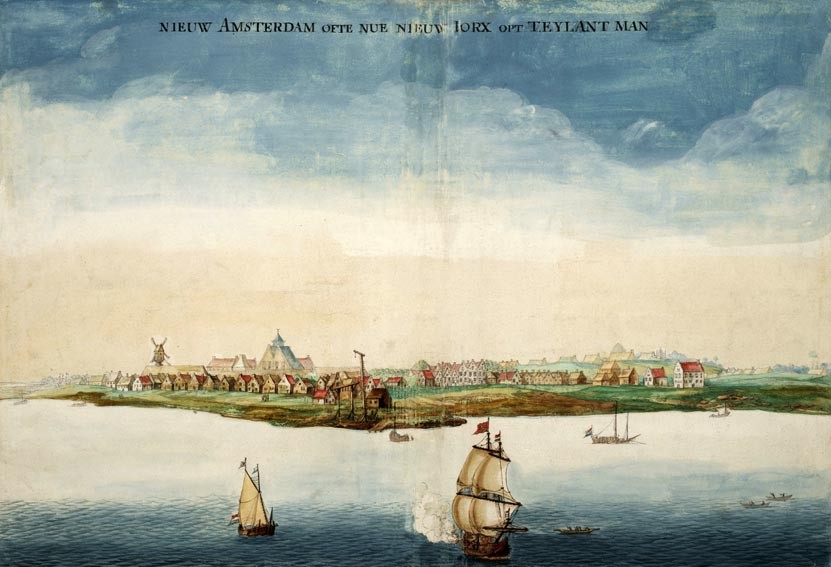
Nieuw-Nederland, or New Netherland, was a colonial province of the Netherlands in eastern North America, formally established in 1614. The colony's capital, New Amsterdam, founded in 1625, was at the southern tip of the island of Manhattan. The city was captured by the English in 1664. They took full control of the colony ten years later, and renamed it New York.
The French and Indian War
The French and Indian War (1754–1763) was part of the conflict between Britain and France going on in Europe, known as the Seven Years' War. The British and French colonists were starting to compete for lands around the Great Lakes region. The French were outnumbered by the British, so they made alliances with Native American peoples. Nevertheless, the British were victorious, and gained all France's colonies in North America east of the Mississippi River.
Thirteen Colonies
The Thirteen Colonies were all the British colonies on the eastern seaboard of North America, including New England, New York, Virginia and others as far south as Georgia.

Although they remained loyal to the British crown, in 1754, after colonist Benjamin Franklin proposed a Plan of Union for the colonies, they began to work together to demand their rights. United in opposition to the rule of King George III, they eventually declared independence from Britain in 1776 and formed the United States of America.
Consultant: Philip Parker
pics

Without in any way limiting Q-files Ltd’s exclusive rights under copyright, any use of this publication to “train” generative artificial intelligence (AI) technologies to generate text is expressly prohibited. Q-files Ltd reserves all rights to license use of this work for generative AI training and development of machine learning language models.