
Exploration

CITE
We have made every effort to follow citation style rules, but there may be some minor differences. If in doubt, please refer to the appropriate citation style manual.
North American exploration. (2024). In Q-files Encyclopedia, History, Exploration. Retrieved from
https://www.q-files.com/history/exploration/north-american-exploration
"North American exploration." History, Exploration, Q-files Encyclopedia, 12 Jan. 2024.
https://www.q-files.com/history/exploration/north-american-exploration.
Accessed 21 Sep. 2026.
North American exploration 2024. History, Exploration. Retrieved 21 September 2026, from
https://www.q-files.com/history/exploration/north-american-exploration
History, Exploration, s.v. "North American exploration," accessed September 21, 2026.
https://www.q-files.com/history/exploration/north-american-exploration


North American exploration
When Christopher Columbus first made landfall in the Americas in 1492, he believed he had arrived in Asia, not an island in the Caribbean. After it became clear that a new continent and another vast expanse of ocean—the Pacific—lay between the Atlantic and Asia, other European expeditions set off to visit the "New World" looking for lands to settle and riches to plunder. The Spanish, who colonized Mexico, Central America and the Caribbean in the early 1500s, soon started to explore the lands to the north of their territory: Florida, the region of what is now the southeastern United States, the Gulf Coast and the American Southwest. They also ventured up the Pacific coast. The French sailed up the Atlantic coast north of Florida, eventually focusing on the region around the St Lawrence River, inland to the Great Lakes and south into the heart of the North American continent.
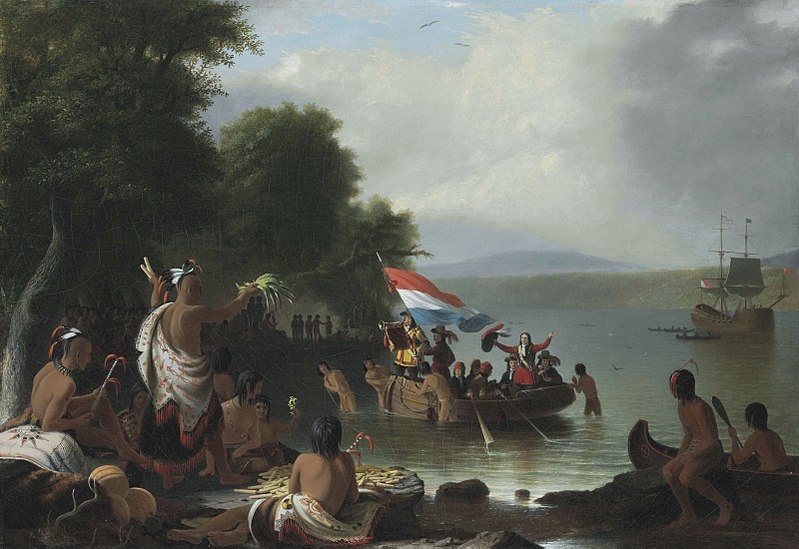
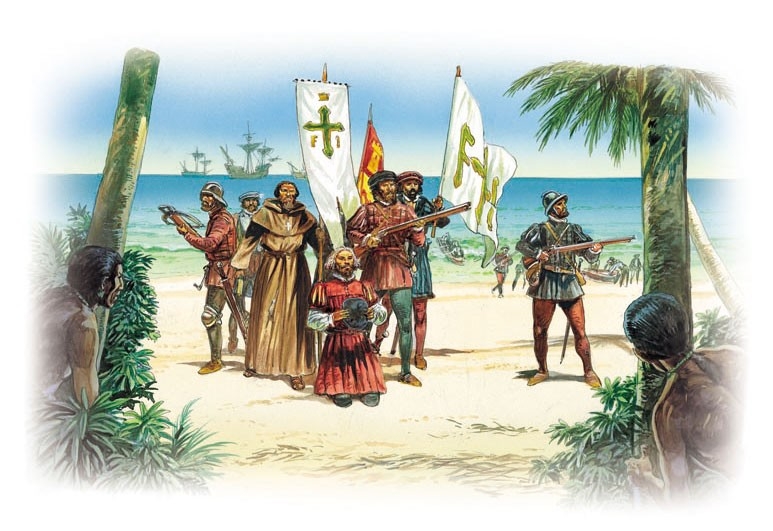
Christopher Columbus
At the end of the 15th century, a number of expeditions were launched from European nations in search of a sea route to East Asia (or "the Indies" as the region was called). One was desperately needed now that the overland Silk Route had been closed off by the fall of Constantinople to the Ottoman Turks in 1453.
The Genoese navigator Christopher Columbus (1451–1506) believed the east could be reached more easily by sailing west across the Atlantic Ocean (most educated people of the time believed the world was round) than by taking the longer and hazardous route around the southern tip of Africa. But Columbus drastically underestimated the size of the Earth and, like all Europeans, he was unaware of the existence of the Americas—the Viking voyages to North America in the 10th and 11th centuries had been long forgotten. So when Columbus set foot on an island in the Bahamas in 1492, he was convinced that he had arrived in Asia, not in the Americas.
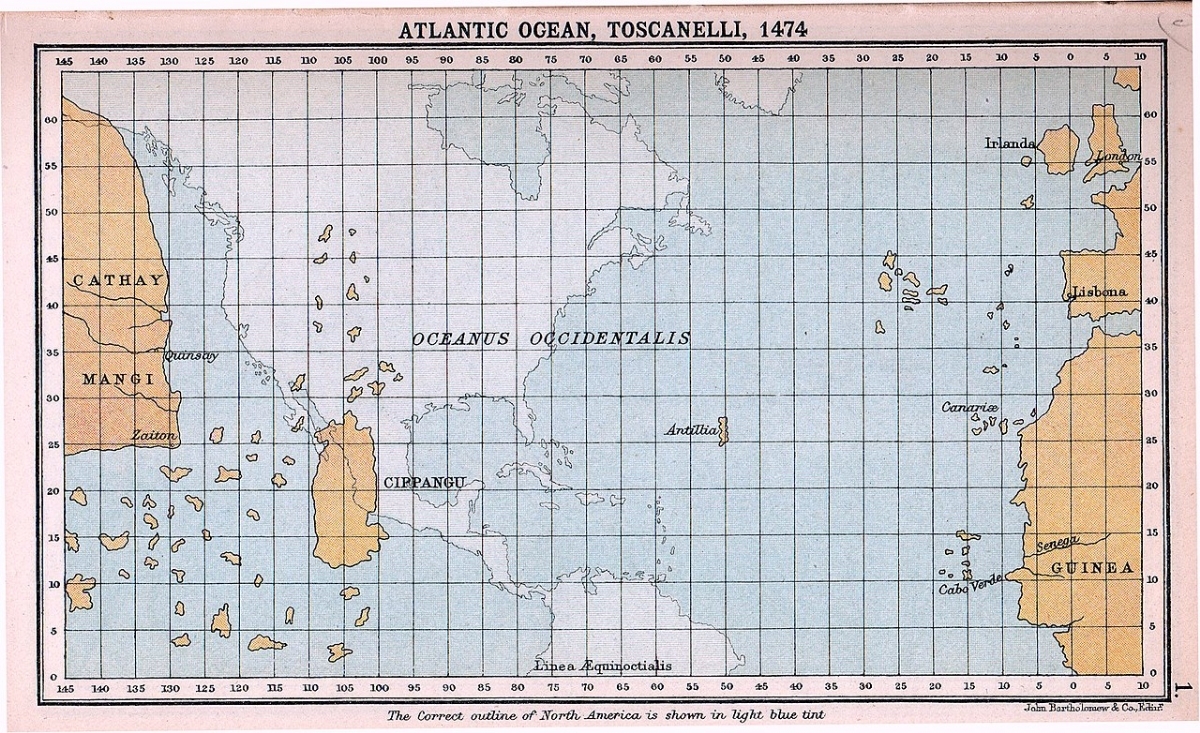
"New World"
The Italian navigator Giovanni Caboto (known in English as John Cabot), sailing in the service of the King Henry VII of England, was the first to reach North America when he landed in Newfoundland on 24th June 1497, although he too thought he had arrived at an island off Asia. It is from another Italian, the explorer Amerigo Vespucci, that we get the name "America". His exploration of the east coast of South America between 1501 and 1502 confirmed that the lands Columbus had discovered were part of a new continent. The German mapmaker, Martin Waldseemüller, wrote a version of his first name, Amerigo, on a world map published in 1507. Other European expeditions now eagerly set out to explore the “New World”.

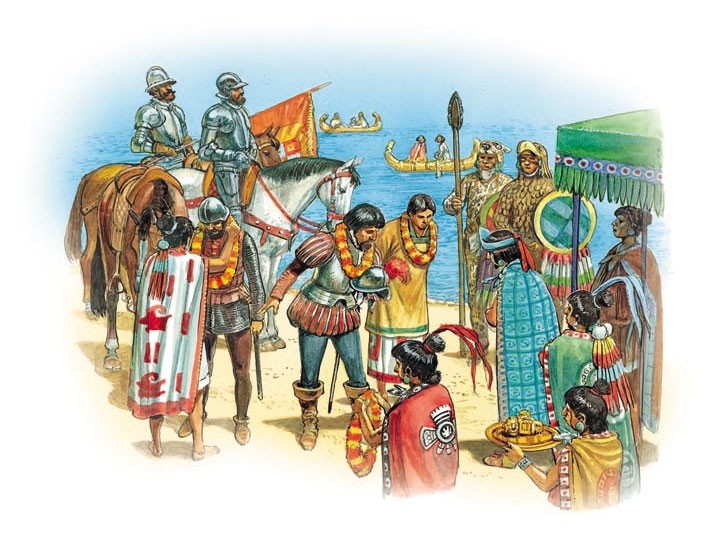
Spanish explorers
By 1500, the first Spanish colonists had arrived and founded settlements on the Caribbean island of Hispaniola (today divided into Haiti and the Dominican Republic), which Columbus had explored. The first Spanish settlement on the American mainland was Santa María la Antigua del Darién, in present-day Colombia, which was founded in 1510.
By 1521, the Spanish conquistador Hernán Cortés had conquered the Aztec Empire of Mexico and founded Mexico City on the ruins of the Aztec city of Tenochtitlán. Soon, the Spanish began to explore the vast continent that lay to the north of their Caribbean and Mexican colonies.
Ponce de León
In 1513, Spanish explorer and conquistador Juan Ponce de León (1474–1521) was sent from Hispaniola to find out whether the rumour that a large area of land lay to the northwest of that island was true. Making landfall on 2nd April 1513, during the Easter season, which is called Pascua Florida (“Feast of Flowers”) in Spanish, he named it La Florida (“Land of Flowers"). Ponce de León became the first known European to set foot on the mainland of the present-day United States.
Having landed somewhere on Florida's northeast coast (it is not known exactly where), he sailed down the Atlantic coast to the Florida Keys, then north along Florida's Gulf coast, possibly as far as Charlotte Harbor. It is said Ponce de León was searching for the Fountain of Youth, a spring that supposedly restored the youth of anyone who drunk or bathed in it, but this is a myth.

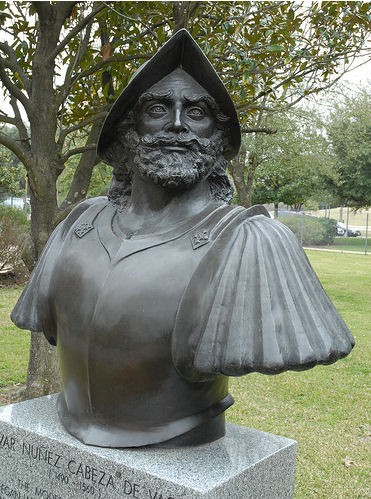
Cabeza de Vaca
Spanish explorer Álvar Núñez Cabeza de Vaca (c.1488–c.1460) was part of the 1528 expedition led by Pánfilo de Narváez to conquer Florida for the Spanish Crown. Starvation, disease and battles with Native Americans reduced the expedition to a few survivors. Setting sail back to Mexico City, de Narváez's ship disappeared in a storm, while Cabeza de Vaca and a few others made land again near modern-day Galveston, Texas. They were rescued by Karnankawa tribesmen with whom the men lived for the next four years. They set off once more in 1534, spending the next four years trekking across what is now Texas, New Mexico, Arizona and northern Mexico. They eventually made it back to Mexico City.
Hernando de Soto
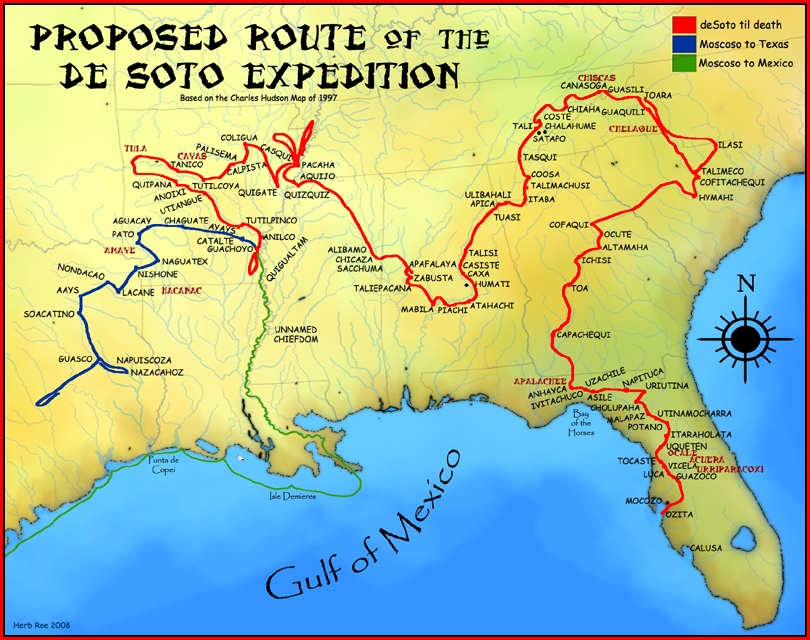
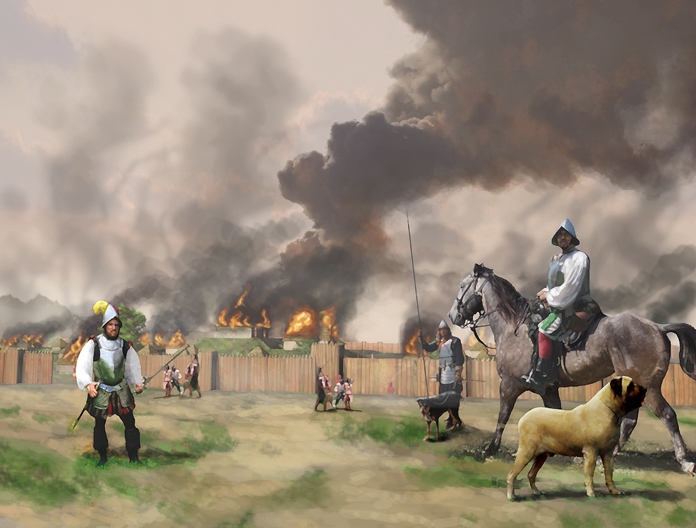
Spanish conquistador Hernando de Soto (1500–42) led an expedition to Florida in search of riches and the ideal place to create a new settlement. After arriving near modern-day Tampa Bay in late May 1539, de Soto and his men travelled across what are today the states of Florida, Georgia, South Carolina, Tennessee, Alabama and Mississippi, encountering the native tribes and kingdoms. Their populations were soon devastated by smallpox, spread by the Spanish explorers themselves and to which the local people had no resistance. De Soto's men were the only Europeans ever to come into contact with Native Americans who lived through the last days of the great Mississippian civilization.
De Soto and his men survived harsh winters and frequent native attacks before reaching the Mississippi River in May 1541. After crossing the river—becoming the first Europeans to do so—they explored Arkansas searching for gold, but in vain. De Soto fell ill with a fever and died on 21st May 1542.
Vázquez de Coronado
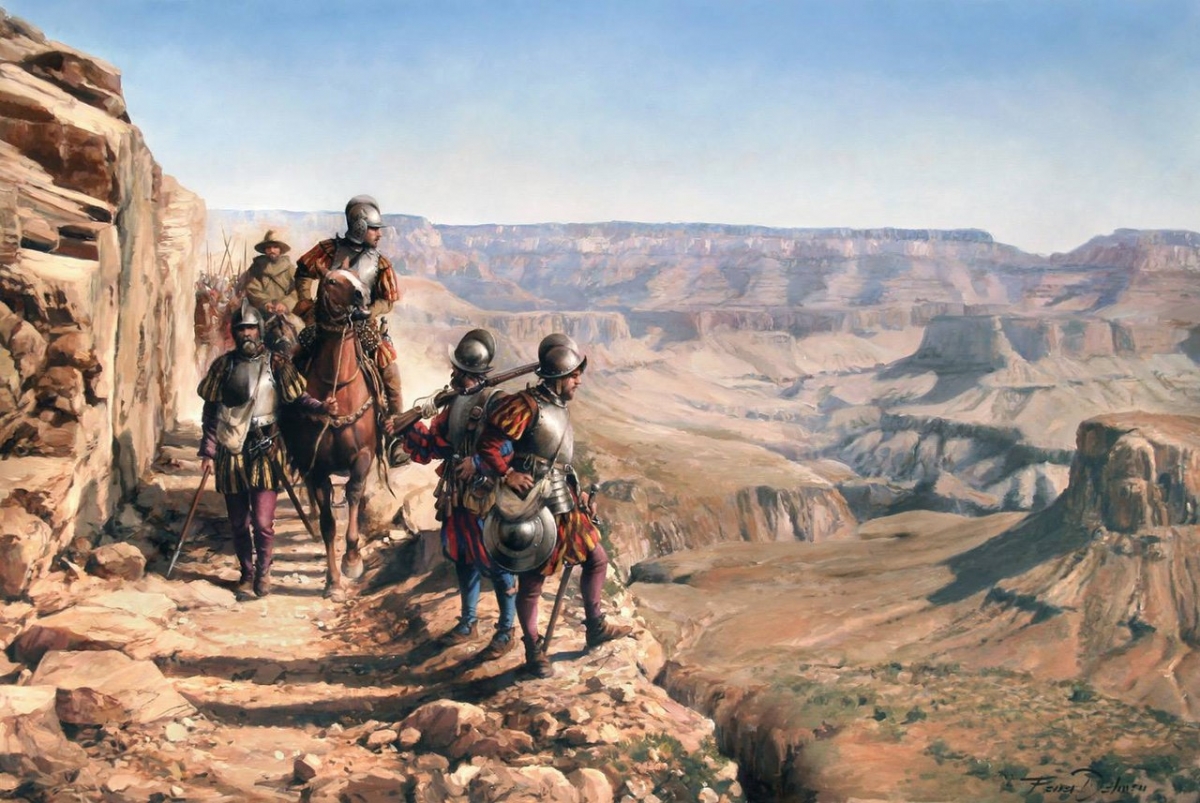
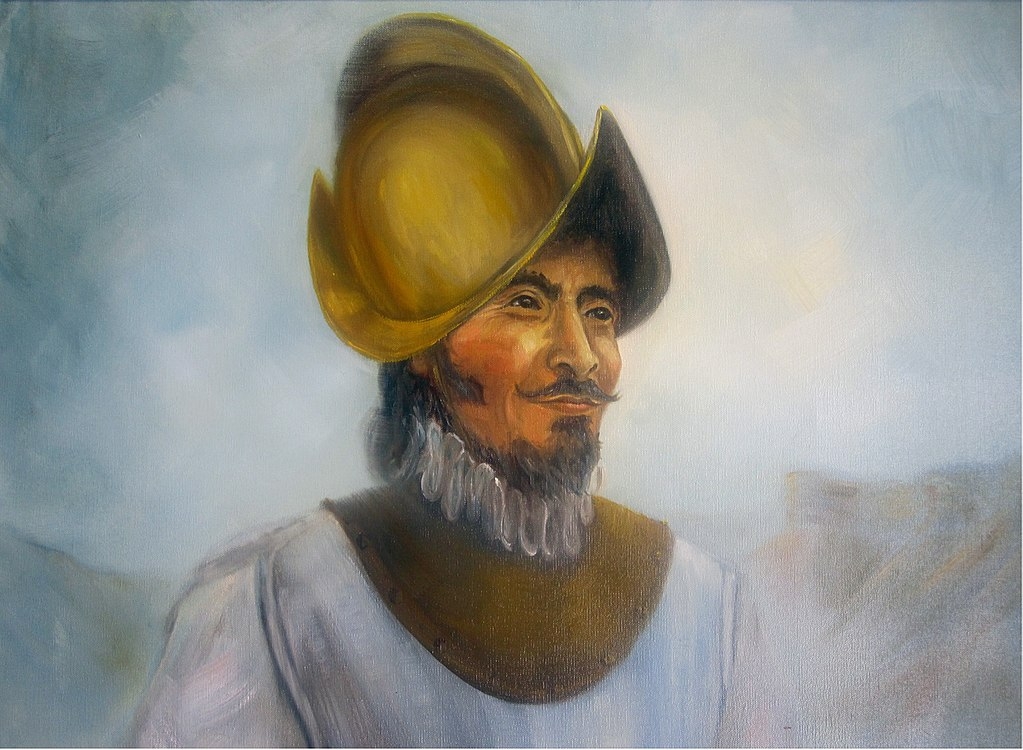
Between 1540 and 1542, Spanish conquistador Francisco Vázquez de Coronado (1510–54) led a large expedition overland north from Mexico City to what are today the southwest and Great Plains regions of the United States. Vázquez de Coronado was in search of the mythical "Seven Cities of Gold" (Hawikuh, Halona, Matsaki, Quivira, Kiakima, Cibola and Kwakina), believed to be places of vast wealth.
Although he failed to find them, Vázquez de Coronado and his men became the first Europeans to see the Grand Canyon and the Colorado River. The expedition crossed the vast featureless plain called the Llano Estacado in modern-day Texas and New Mexico, where they encountered vast herds of bison. As they travelled from place to place, the Spaniards fought with the native Puebloan peoples, causing a great loss of life among them.

Juan Rodríguez Cabrillo
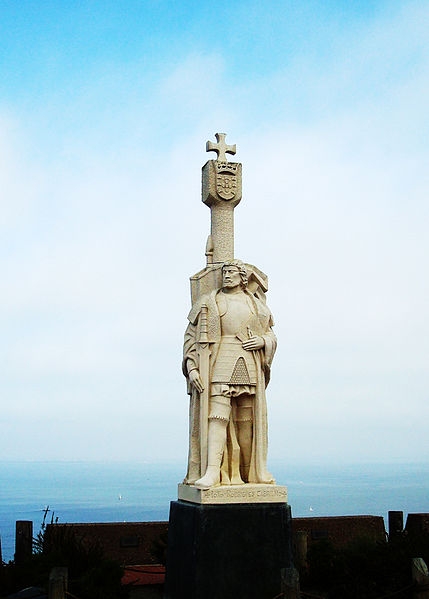
Juan Rodríguez Cabrillo (1497–1543) was a Spanish explorer (although he is also claimed by tradition as a native of Portugal). He was the first European to navigate the coast of present-day California. Cabrillo was commissioned by the Viceroy of New Spain to lead an expedition up the Pacific coast, perhaps to find a way to China, or to find the mysterious Strait of Anián (Northwest Passage), supposedly connecting the Pacific Ocean with Hudson Bay. In 1542, Cabrillo set out with three ships. On 27th September he landed in what is now San Diego Bay, naming it San Miguel. He sailed to Santa Catalina Island and on up the Californian coast. Missing the entrance to San Francisco Bay, storms forced them to turn back, to overwinter on San Miguel Island. As Cabrillo stepped out of his boat he splintered his shin. The injury became infected and he died on 3rd January 1543. (See more on Pacific coast exploration below.)
French explorers
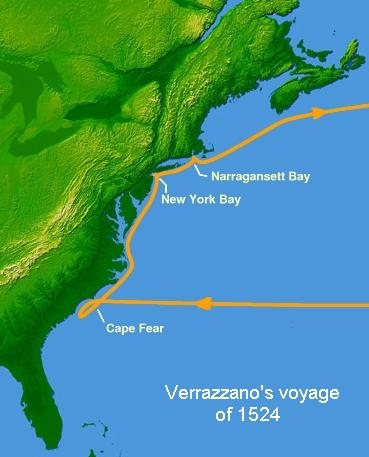
Meanwhile, the French were exploring the east coast of North America north of La Florida. In 1524, Florentine explorer Giovanni da Verrazzano (1485–1528), sailing in the service of King Francis I of France, arrived off the coast of what is now North Carolina at Cape Fear. He sailed north, entering the Pamlico Sound—believing it to be the entrance of a sea route to the Pacific Ocean. Verrazzano later sailed past the entrance to New York Harbor and on to Long Island, Narragansett Bay, Cape Cod, Nova Scotia and Newfoundland.
Jacques Cartier
Ten years later, Francis I commissioned Breton explorer Jacques Cartier (1491–1557) to discover a western passage through the Americas that might lead to Asia. Arriving off Newfoundland in 1534, he explored the Gulf of Saint Lawrence, claiming the Gaspé Peninsula for France. The following year he sailed up the St Lawrence River. He befriended the Huron Indians, who led him to a small town named Hochelaga (now Montréal). Although many French fur traders and fishermen used the route discovered by Cartier, it was not until the 1600s that the French began to settle in the land they named New France.
Samuel de Champlain
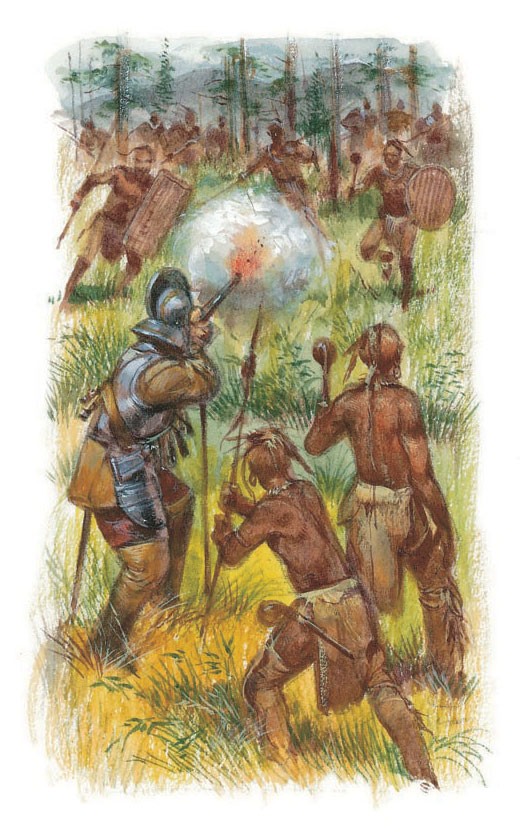
French navigator and mapmaker Samuel de Champlain (1567–1635) began exploring North America, founding the first permanent European settlement north of Florida, Port Royal, Acadia in 1605. In 1608 he founded what is now Quebec City, the capital of what would become the colony of New France. He spent many years exploring the region, discovering what he named Lake Champlain in 1609.
By 1615, Champlain had travelled by canoe up the Ottawa River through Lake Nipissing and Georgian Bay. During these voyages, he fought alongside Wendat warriors (also called the Hurons) against the Iroquois League. As a result, the Iroquois would become enemies of the French.
René-Robert
de la Salle
By the 1600s, a chain of French, Dutch and English colonies had been established along the east coast of North America. However, the vast American interior remained largely unexplored. French explorer René-Robert de la Salle was keen to expand the territory occupied by France. He formed a plan to build a chain of French forts along the Mississippi River, the upper reaches of which had already been explored by Jacques Marquette, a French missionary, in 1673.
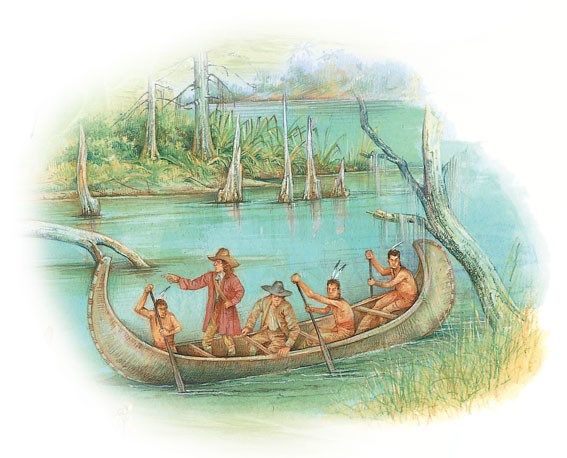
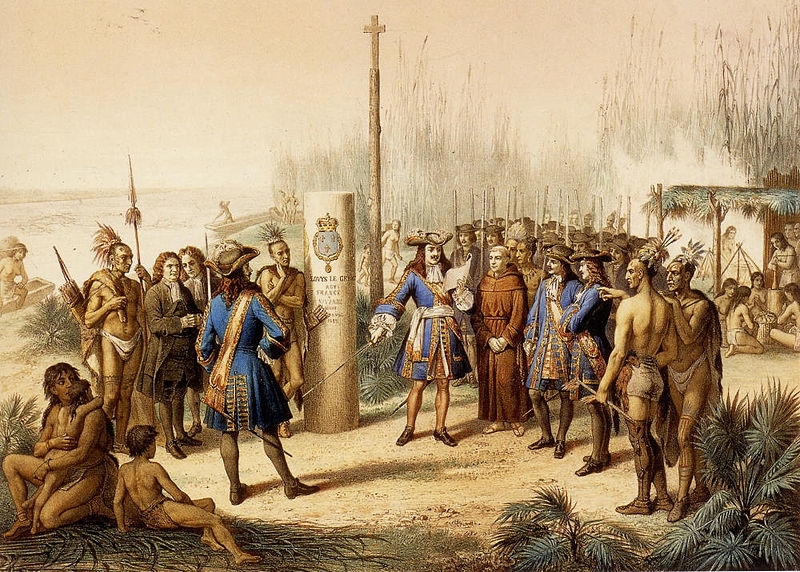
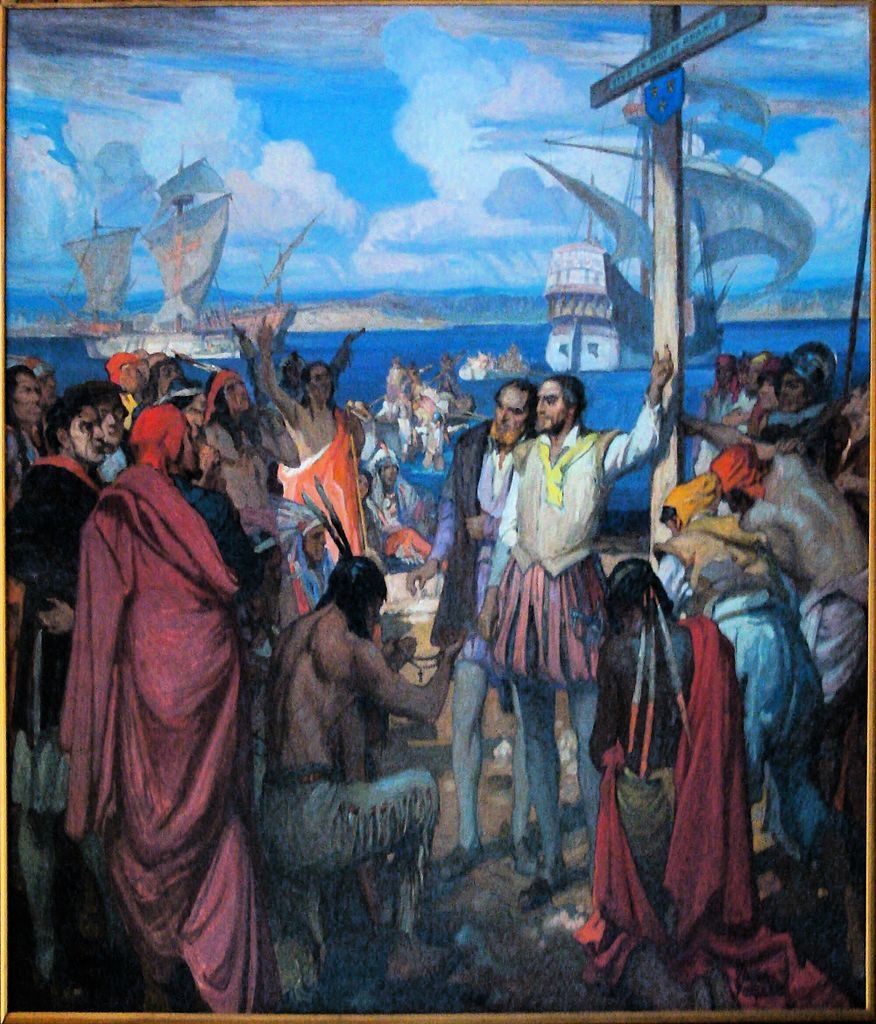
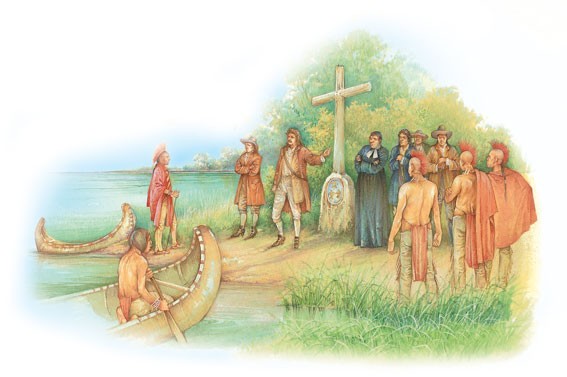
Although the French king, Louis XIV, approved of La Salle’s proposal, he refused to provide any money. La Salle had to raise his funds for the expedition by trading furs. He finally began his voyage down the “father of waters” in December 1681. In April 1682, he reached the mouth of the Mississippi. La Salle placed a wooden cross in the ground and proudly claimed the region for France. He named it La Louisiane (Louisiana) in honour of the king.
Pacific coast
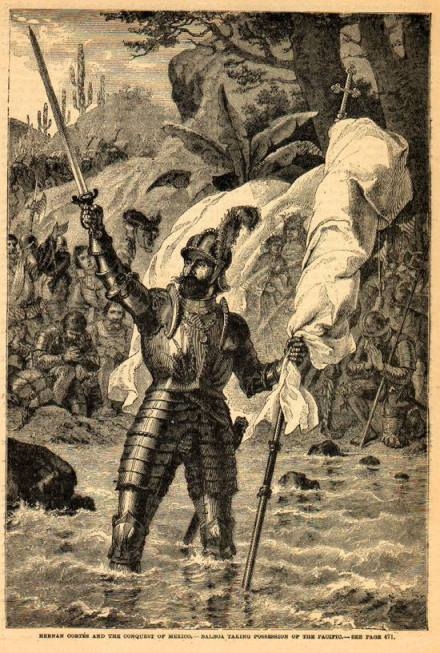
Spanish claims to the west coast of North America were originally set out in the Treaty of Tordesillas with Portugal in 1494 (which divided the world up between the two nations). This claim was reinforced by Spanish explorer Vasco Núñez de Balboa, who became the first European to sight the Pacific Ocean when he crossed the Isthmus of Panama in 1513. Núñez de Balboa claimed all the lands bordering the ocean for the Spanish Crown.
The English adventurer Sir Francis Drake (1540–96) landed on the coast of California in 1579 during his circumnavigation of the world. He claimed the land he found for the English Crown, naming it Nova Albion, Latin for "New Britain" (it is now identified as Drakes Bay). To the English, this proclamation asserted their right to pursue an empire in North America.
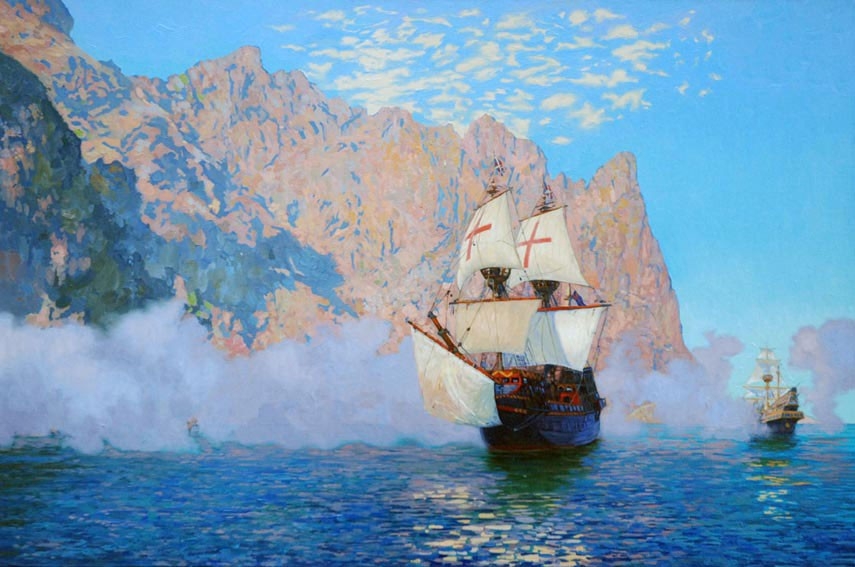
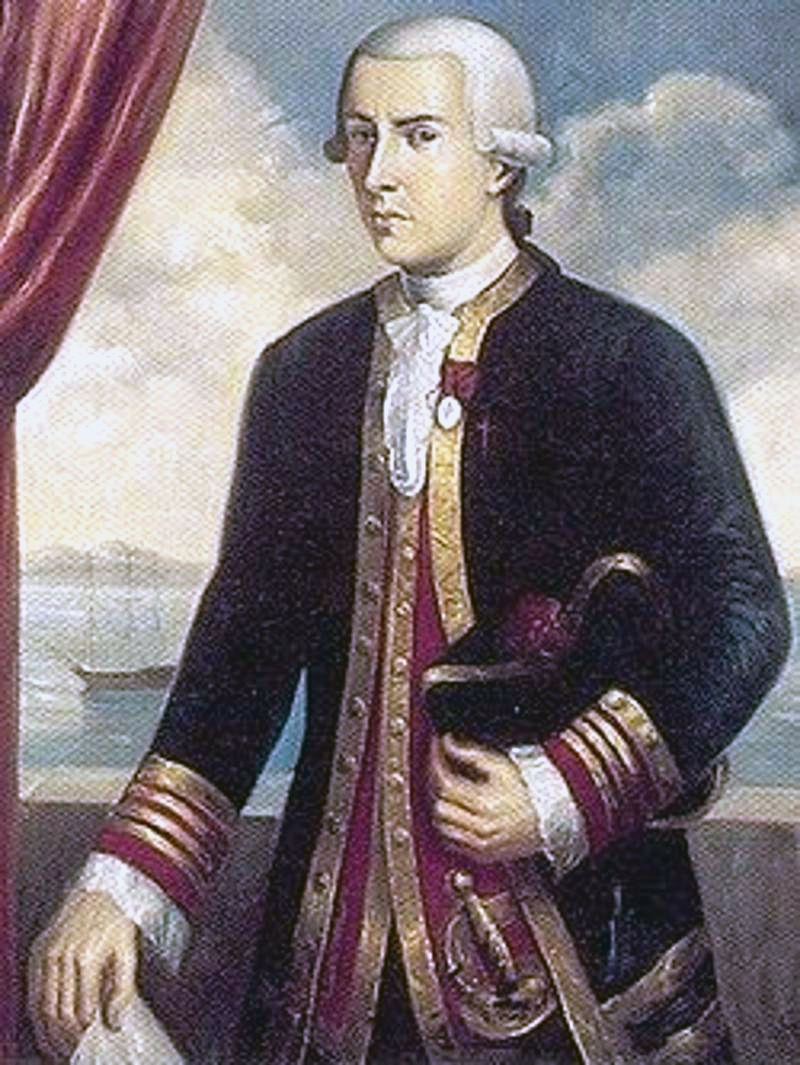
Spain only started to colonize the Pacific coast north of present-day Mexico in the 18th century, when the first settlements were founded in California. King Charles III of Spain and his successors ordered a number of expeditions up the Pacific northwest coast between 1774 and 1793, to counter the challenge of Russian and British colonizers, who were establishing settlements there. Spanish expeditions reached as far as Kodiak Island in Alaska, naming and claiming parts of the coastline as they went.
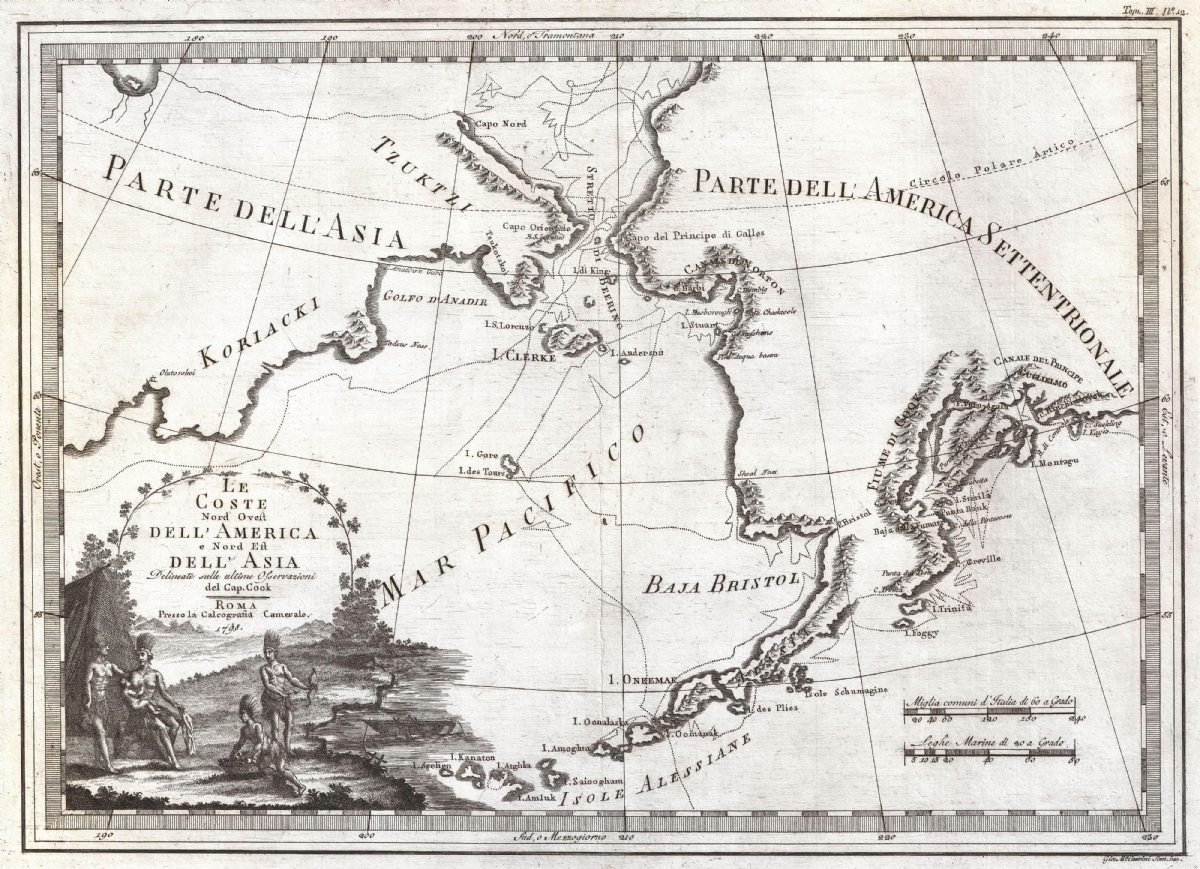
In 1778, the British explorer Captain James Cook, on his third and final voyage of exploration, sailed along the west coast of North America, mapping the coast from California all the way to the Bering Strait. The northern stretch of the this coastline was thus claimed by the British, which brought it into conflict with Spain. War was averted by the Nootka Conventions, signed in 1790–94. The agreement allowed the British to expand their presence in the Pacific Northwest, including today's British Columbia, Oregon and Washington.
Lewis and Clark
In 1783, the United States won independence from Britain. The new nation extended inland from the Atlantic coast as far as the Mississippi River. The French still owned the land to the west of the river, known as Louisiana, but they agreed to sell it to the United States in 1803. That same year, President Thomas Jefferson ordered US Army volunteers Meriwether Lewis and William Clark to make preparations to explore this new territory.
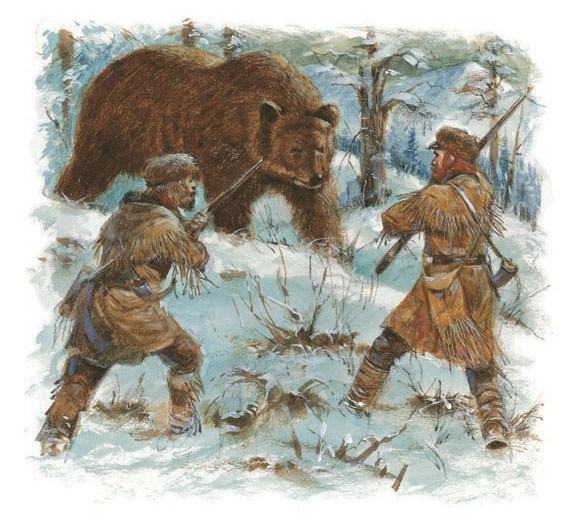

Setting out in May 1804, Lewis and Clark canoed up the Missouri River and crossed the Rocky Mountains on horseback. Then they journeyed down the Columbia River to the Pacific coast, returning to St Louis in 1806, a round trip of more than 12,000 kilometres (7500 miles). Their encounters with the Native Americans who inhabited the region were mostly friendly. Within a few years, people began to settle in the American West, using routes that Lewis and Clark had opened up.
The search for the Northwest Passage
Many Europeans believed that it was possible to reach the Far East by sailing round the north coast of North America. From the late 16th century onwards, the English led the quest for the elusive Northwest Passage. In 1576, Martin Frobisher got as far as Baffin Island off northern Canada. On finding what he thought was gold, he returned to England. However, his cargo turned out to be worthless iron pyrites, “fool’s gold”.
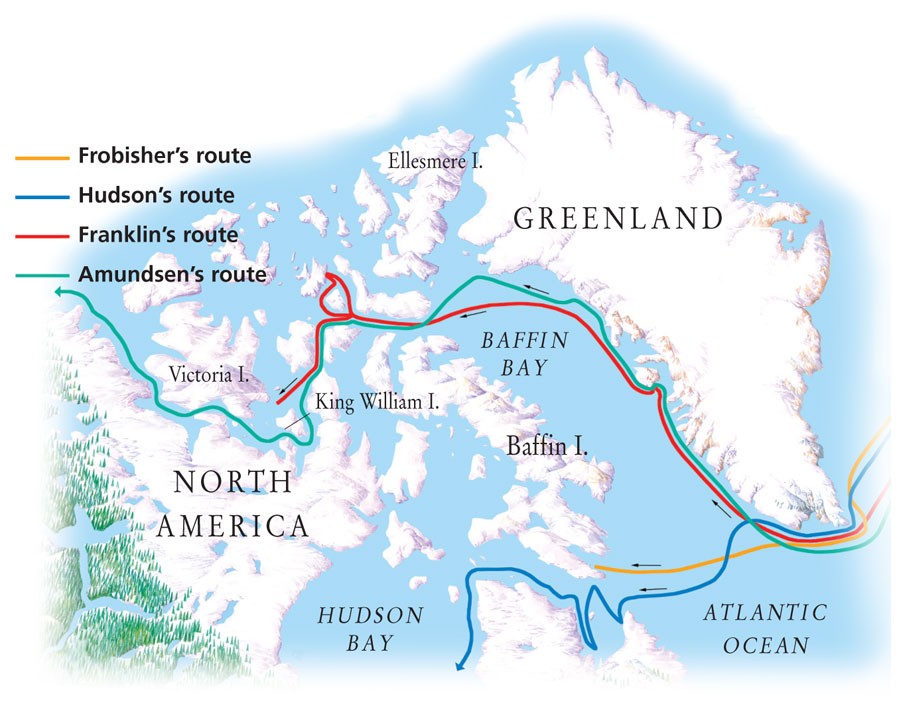
In 1610, Henry Hudson, an experienced English navigator, believed he had found the route to the Pacific Ocean. However, he had sailed into what is now known as Hudson Bay in northern Canada. His ship, the Discovery, became trapped in ice. When the ice melted, the crew mutinied and left Hudson, his son and several loyal sailors to die.
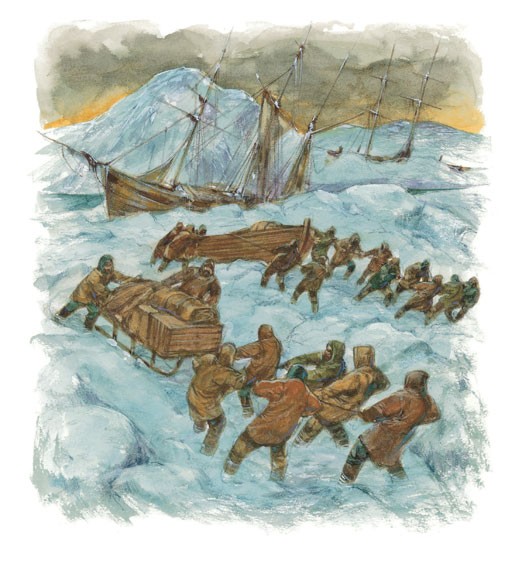
In May 1845, English explorer Sir John Franklin set off in search of the Northwest Passage. However, he and his expedition party went missing. Ships were sent in an effort to find him, but without success. Then, in 1859, a tin cylinder was found on King William Island, Canada. It contained the last message Franklin had written. It said that his ships had been stuck in ice for over a year. The explorers had attempted to trek overland to safety, but no one survived.
It was not until 1906 that an expedition successfully sailed through the Northwest Passage. It was led by Norwegian explorer Roald Amundsen.
Consultant: Philip Parker
Timeline
c. 1000
Viking explorer Leif Ericson visits the coastline of Labrador and Newfoundland
1492
Christopher Columbus makes landfall in the Caribbean. News of the Americas soon reaches Europe.
1497
Venetian navigator Giovanni Caboto (John Cabot) lands at Cape Bonavista in Newfoundland
1500
Portuguese explorer João Fernandes Lavrador sights the coast of Labrador.
1501–02
Portuguese Corte-Real brothers explore Newfoundland (Terra Nova) and Labrador.
1513
Spanish conquistador Juan Ponce de León lands in Florida and claims the region for Spain.
1524
Florentine explorer Giovanni da Verrazzano explores the Atlantic coast, including New York Bay.
1527–28
Spanish conquistador Panfilo de Narvaez explores the Gulf of Mexico.
1528–36
Spanish conquistador Alvar Nuñez Cabeza de Vaca explores Texas.
1534–35
French explorer Jacques Cartier (a Breton, from the French region of Britanny) sails up the St. Lawrence River.
1539–42
Spanish conquistador Hernando de Soto leads an expedition into what is now the southeastern United States in search of gold. He is the first European to see the Mississippi.
1540–42
Spanish conquistador Francisco Vázquez de Coronado leads an expedition from Mexico to present-day Kansas through the American Southwest. He is the first European to see the Grand Canyon and the Colorado River.
1542–43
Spanish naval expedition, led by Juan Rodríguez Cabrillo, explores the coast of California.
1576
English explorer Martin Frobisher reaches Baffin Island.
1579
English adventurer Francis Drake explores and claims part of the California coast for England.
1609
Sailing for the Dutch East India Company, English explorer Henry Hudson enters New York Bay and claims the region for the Dutch.
1609
French explorer Samuel de Champlain travels south from the St Lawrence valley to what is now Lake Champlain
1610–11
Henry Hudson explores Hudson Bay while searching for the Northwest Passage.
1673–74
French explorers Louis Jolliet and Jacques Marquette explore Illinois Country
1682
French explorer René-Robert de la Salle explores the Ohio River valley and the Mississippi River valley, and claims the entire territory for France.
1774
Spanish explorer Juan José Pérez Hernández sails up the coast of British Columbia.
1778
British navigator James Cook, on his third voyage, enters Nootka Sound on Vancouver Island.
1793
Scottish-Canadian Alexander MacKenzie makes the first crossing of the continent of North America by a European, reaching the mouth of the Bella Coola River.
1804–06
American explorers Lewis and Clark set off from St Louis, Missouri, and follow the Missouri, Yellowstone and Columbia rivers to reach the Pacific coast in present-day Oregon.
1842
American soldier and politician John Frémont plants the United States flag on one of the highest mountains in the Rockies.
1845
Sir John Franklin sets out in search of the Northwest Passage.
1906
Norwegian explorer Roald Amundsen is the first man to sail through the Northwest Passage.
pics
Without in any way limiting Q-files Ltd’s exclusive rights under copyright, any use of this publication to “train” generative artificial intelligence (AI) technologies to generate text is expressly prohibited. Q-files Ltd reserves all rights to license use of this work for generative AI training and development of machine learning language models.