
States of the US

CITE
We have made every effort to follow citation style rules, but there may be some minor differences. If in doubt, please refer to the appropriate citation style manual.
Mississippi. (2026). In Q-files Encyclopedia, Geography, States of the US. Retrieved from
https://www.q-files.com/geography/states-of-the-us/mississippi
"Mississippi." Geography, States of the US, Q-files Encyclopedia, 1 Apr. 2026.
https://www.q-files.com/geography/states-of-the-us/mississippi.
Accessed 6 Aug. 2026.
Mississippi 2026. Geography, States of the US. Retrieved 6 August 2026, from
https://www.q-files.com/geography/states-of-the-us/mississippi
Geography, States of the US, s.v. "Mississippi," accessed August 6, 2026.
https://www.q-files.com/geography/states-of-the-us/mississippi


Mississippi
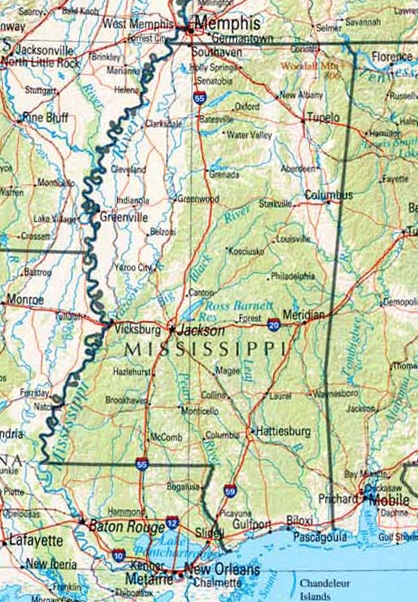
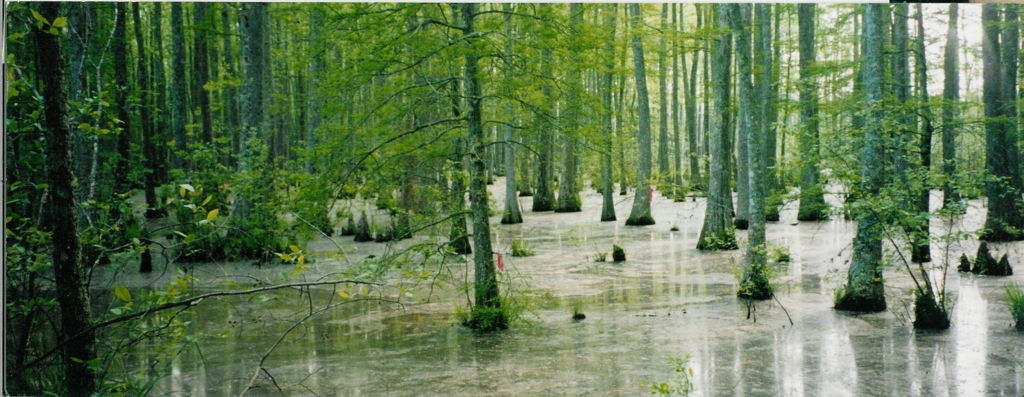
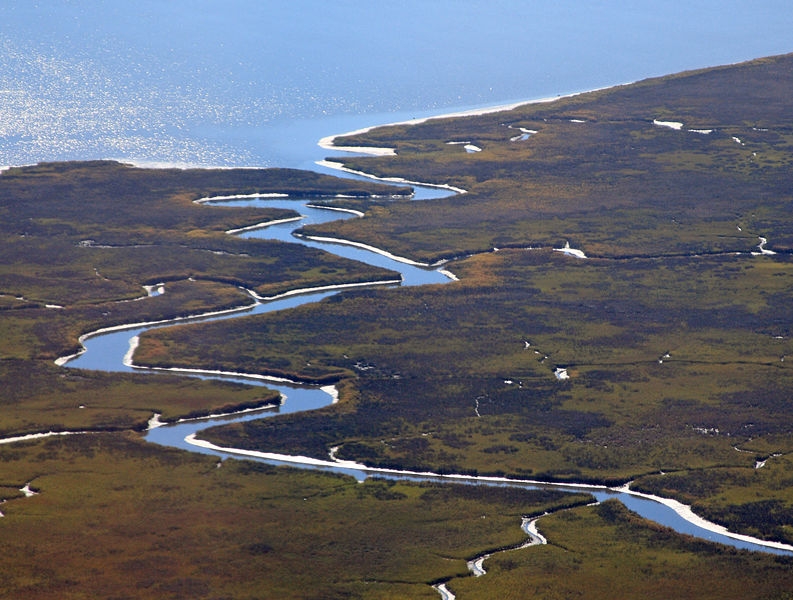
Mississippi is located in the Deep South of the United States. Most of the state consists of rolling, low hills that slope gently down to the coast of Gulf of Mexico. In the north, the land rises to the foothills of the Cumberland Mountains. In the west of the state lies the flat Mississippi alluvial plain, sometimes referred to as the Mississippi Delta. The Mississippi River itself follows a meandering course as it flows south. The plain is narrow in the south, but widens north of Vicksburg where the Yazoo River flows into the Mississippi. The land is covered by rich soil, consisting partly of silt which has been deposited by the floodwaters of the Mississippi River over many years. Outside the alluvial plain and coastal strip, the land is mostly covered by thick forest.

Name
The state is named after the Mississippi River, which traces most of its western boundary. The word Mississippi itself comes from Messipi, the French version of the Native American Ojibwe word for the river, misi-ziibi, which means “Great River”.

Climate
The climate of Mississippi is subtropical in the southern part of the state and temperate in the northern part. The south has long, hot summers and short, mild winters (the region near the coast has warmer winter temperatures than inland areas). Late summer and autumn is when the risk for hurricanes moving inland from the Gulf of Mexico is greatest. Hurricane Katrina in 2005 was one of the most devastating hurricanes to hit the state. Thunderstorms are common in Mississippi, especially in southern areas. The state is also vulnerable to tornadoes.
Economy
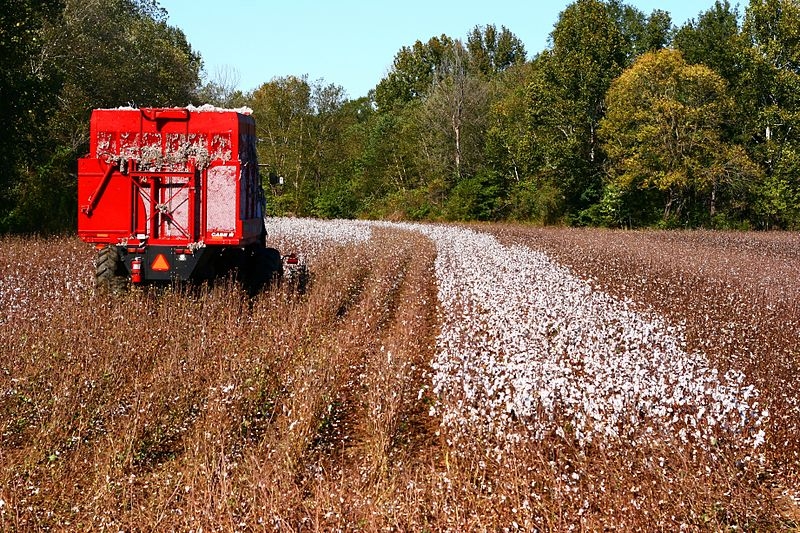
Mississippi has long been an agricultural state, dominated by the cultivation of cotton and soya beans in the river bottomlands and the Mississippi alluvial plain. Farm products also include maize, peanuts, pecans, rice, sugar cane, sweet potatoes, dairy, poultry, eggs, livestock and horticulture.
Manufactures include cars (there are major Toyota and Nissan plants in the state), chemicals, plastics, food processing and wood products. On the Gulf coast there is a thriving seafood processing industry. Gambling towns in Mississippi, such as Biloxi, have attracted tourism.
Facts about Mississippi
Area 46,907 sq miles (121,489 sq km)
Highest point Woodall Mountain 807 ft (246 m)
Population 2,939,690
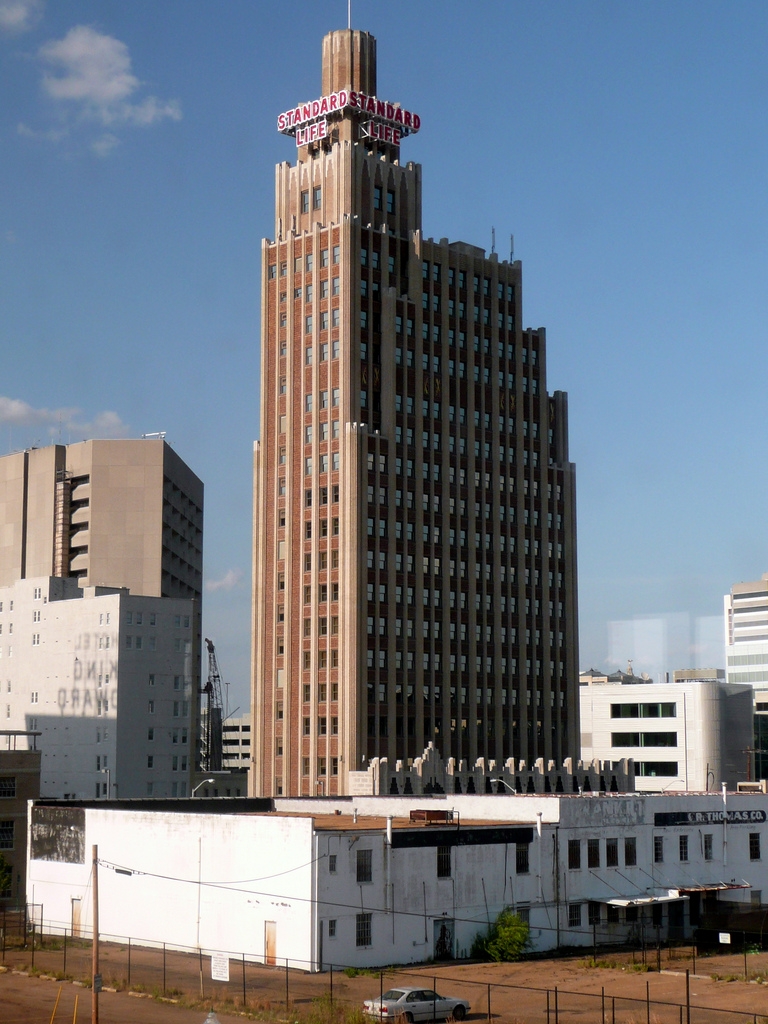
Capital Jackson
Largest cities Jackson, 143,709; Gulfport, 72,823; Southhaven, 56,851 Hattiesburg, 48,414; Biloxi, 48,235; Olive Branch, 47,029
Nickname The Magnolia State, The Hospitality State
State bird Mockingbird
State flower Magnolia
State tree Southern magnolia


Consultant: Nicholas Harris
History of Mississippi
16th century
At the time of the first European explorers, Native American descendants of the Mississippian culture, including the Chickasaw and Choctaw, inhabit the area; other peoples include the Natchez, Yazoo and Biloxi
1540–42
Spanish explorer Hernando de Soto passes through the northeastern part of the state
17th century
French claim the territory that includes Mississippi as part of their colony of New France
1699
A French group under Pierre le Moyne establishes the first permanent settlement at Fort Maurepas (also known as Old Biloxi) near present-day Ocean Springs
1716
The French found Fort Rosalie (now Natchez) on the Mississippi River; it becomes the main trading post in the area
1718
The colony comes under the authority of the French Mississippi Company
1763
Great Britain takes over the area after the French and Indian Wars
1783
Britain cedes the area to the US after the American Revolution
1798
US takes control and creates Mississippi Territory (the northern parts of present-day Mississippi and Alabama combined) with Natchez as its capital
1802
Georgia gives up its claim to its western lands (which include most of present-day Mississippi)
1810
US annexes West Florida from Spain, including what is now southern Mississippi; part of it is added to Mississippi Territory in 1812
early 19th century
The population in Mississippi Territory rises dramatically, from less than 9000 to more than 220,000 as American settlers bring African American slaves with them to work on the cotton plantations
1817
Mississippi becomes the 20th state admitted to the Union; the eastern section of Mississippi Territory becomes Alabama Territory
1830
Treaty of Dancing Rabbit Creek signed between the US Government and the Choctaw Native American people; the Choctaw agree to sell their homelands in Mississippi and Alabama and move to reservations in Indian Territory (now Oklahoma), opening up land for European-American settlement
1850s
Cotton is king: Mississippi plantation owners became wealthy due to the high price of cotton on the international market; they use their profits to buy more land for cultivation and more slaves
1861
Mississippi secedes (breaks away) from the Union
1863
During Civil War, General Ulysses S. Grant's long siege of Vicksburg finally gives control of the Mississippi River to the Union
1870
Mississippi is readmitted to the Union after it abolishes slavery
1870s–80s
Many African American farmers succeed in gaining land ownership, but as cotton prices slump, many of them are forced to sell their land to pay off debts
1910–40
Tens of thousands of African Americans leave Mississippi for the North in the First Great Migration. Seeking jobs, better education for their children, the right to vote and freedom from discrimination, they head for industrial cities such as St Louis, Chicago, Detroit, Cleveland, Philadelphia and New York. Most migrants from Mississippi take trains directly north to Chicago
1912–13
Flooding overwhelms northwestern Mississippi
1927
The Great Mississippi Flood: in the most destructive river flood in the history of the US, 70,000 sq km (27,000 sq miles) are inundated. More than 200,000 African Americans are displaced from their homes in Arkansas, Mississippi and Louisiana. As a result of this disruption, many join the Great Migration to the industrial cities of the North and Midwest
1940s–70
Second Great Migration: almost half a million people leave Mississippi, three-quarters of them black. Many head west, especially to California, where the growth of the defence industry offers higher-paying jobs.
1962
Ole Miss riot, also known as the Battle of Oxford: segregationist opponents to the enrolment of James Meredith, an African American, at the University of Mississippi (Ole Miss), in Oxford, Mississippi become violent. The mob assault federal officers, burn and loot property and hijack vehicles. Two civilians are murdered. The riot ends when more than 13,000 soldiers arrive on the scene
1964
Freedom Summer, a volunteer campaign to register as many African American voters as possible in Mississippi, is launched. In response, three civil rights workers, are murdered by members of the white supremacist terrorist organization Ku Klux Klan and buried in an earthen dam outside Philadelphia, Mississippi, along with the bodies of several other black Mississippi residents. President Johnson uses the outrage over their deaths to bring about passage of the Civil Rights Act of 1964
1969
Hurricane Camille hits the Mississippi coast, killing 248 people
2005
Mississippi is hit by Hurricane Katrina, killing hundreds of people, mostly in Harrison County
2020
The previous flag of Mississippi, featuring the Confederate battle flag, is replaced by the "New Magnolia" flag, which becomes the new official state flag in 2021.
2023
(24th March) Violent tornado takes a path through the towns of Rolling Fork, Midnight and Silver City in western Mississippi, causing catastrophic damage and loss of life.
pics
Without in any way limiting Q-files Ltd’s exclusive rights under copyright, any use of this publication to “train” generative artificial intelligence (AI) technologies to generate text is expressly prohibited. Q-files Ltd reserves all rights to license use of this work for generative AI training and development of machine learning language models.