
Slavery

CITE
We have made every effort to follow citation style rules, but there may be some minor differences. If in doubt, please refer to the appropriate citation style manual.
Slavery in the Southern United States. (2024). In Q-files Encyclopedia, History, Slavery. Retrieved from
https://www.q-files.com/history/slavery/slavery-in-the-southern-united-states
"Slavery in the Southern United States." History, Slavery, Q-files Encyclopedia, 28 Jun. 2024.
https://www.q-files.com/history/slavery/slavery-in-the-southern-united-states.
Accessed 6 Aug. 2026.
Slavery in the Southern United States 2024. History, Slavery. Retrieved 6 August 2026, from
https://www.q-files.com/history/slavery/slavery-in-the-southern-united-states
History, Slavery, s.v. "Slavery in the Southern United States," accessed August 6, 2026.
https://www.q-files.com/history/slavery/slavery-in-the-southern-united-states


Slavery in the Southern United States
By the late 18th century, with the land used to grow tobacco now nearly exhausted, the Southern United States faced economic ruin. The continuation of slavery looked highly doubtful with its abolition across the North. No Southern state abolished slavery, but some individual owners took their own decision to free their slaves. During the period of Protestant religious revival in the United States known as the "Great Awakening", which began in the late 18th century, Methodist and Baptist preachers toured the South, urging planters to manumit (free) their slaves on the basis of equality in God's eyes. After independence, the northernmost slave states, Virginia, Maryland and Delaware, made manumission easier by enabling it by deed or will. As a result, the number and proportion of freed slaves in these states rose dramatically until 1810. After that, very few slaves were freed as the demand for them—and their price—suddenly soared.

King Cotton
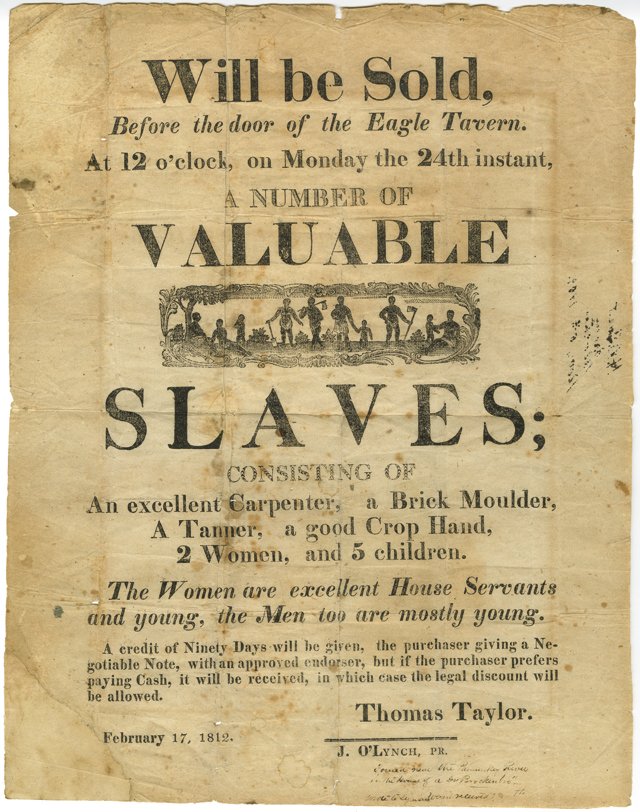
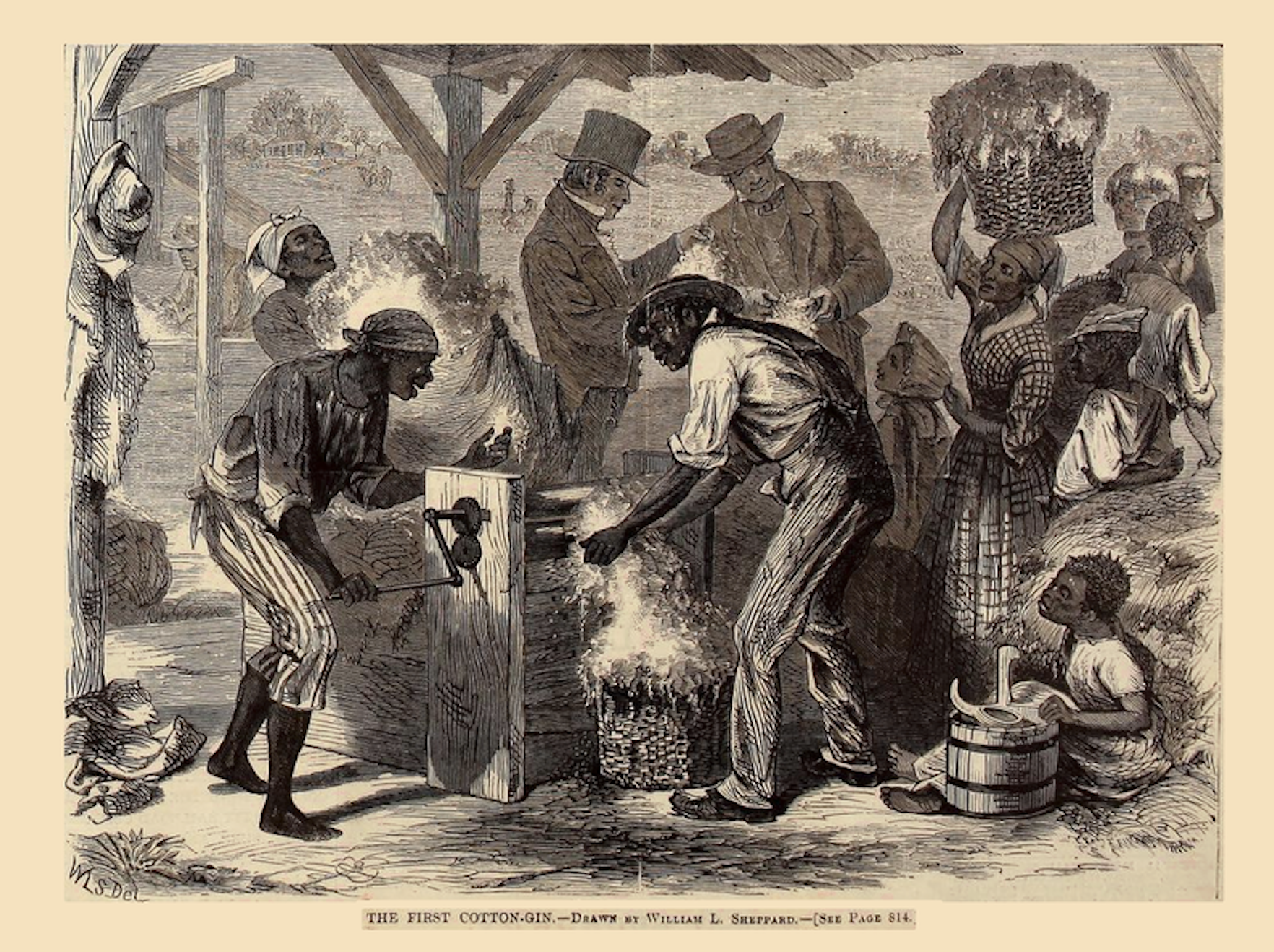
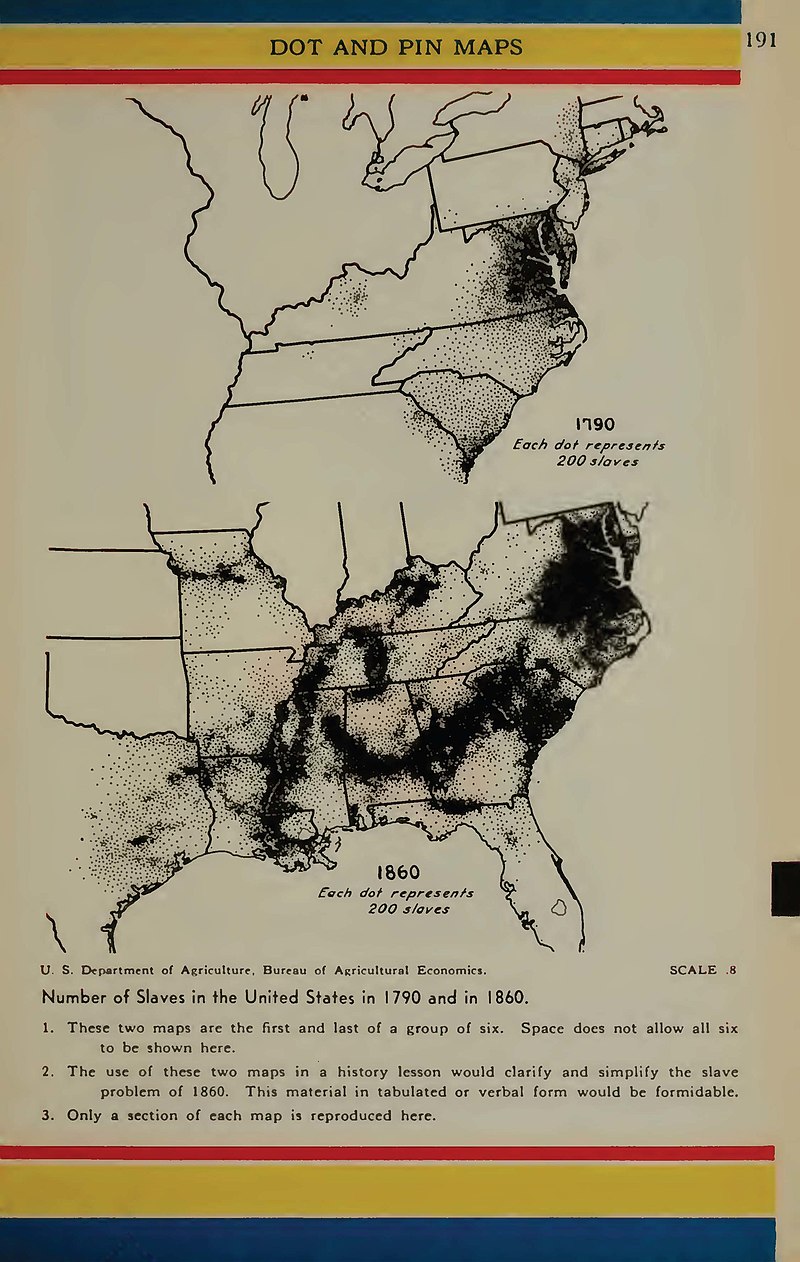
In 1793, the cotton gin, a simple mechanized device that efficiently removed the seeds from raw cotton fibres, was invented by Eli Whitney. Growing cotton now became potentially highly profitable. The crop was labour-intensive and the cheapest labourers were slaves. In the Deep South—Alabama, Mississippi, Louisiana and later, Texas, Arkansas and Missouri, states where there was abundant land perfectly suited to the cultivation of cotton—the demand for slaves exploded.
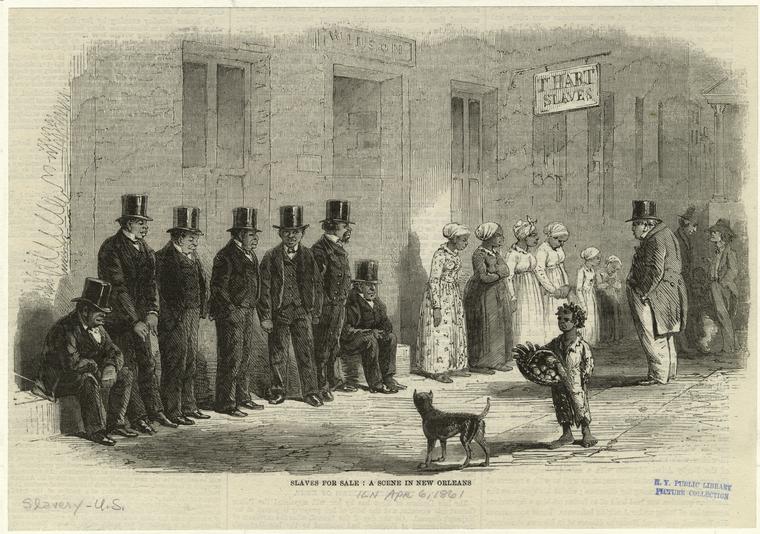
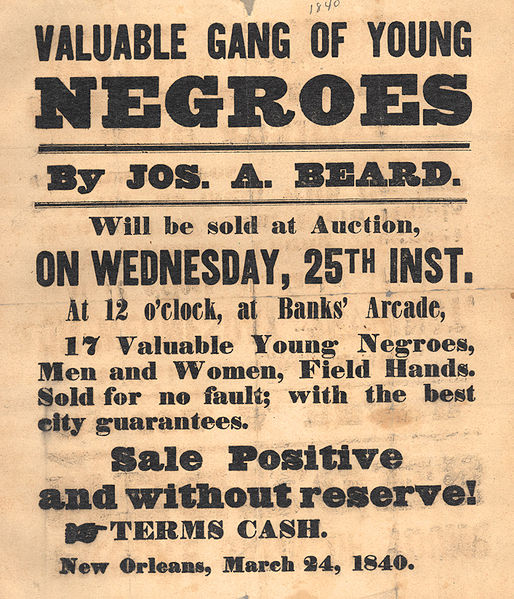
Between the 1810s and 1860s, more than one million enslaved African Americans were transported ("sold South") from the Upper South—Maryland, Virginia and the Carolinas, later Kentucky and Tennessee—where the land was not suitable for plantation agriculture, to the developing "Cotton Kingdom" in the Deep South. This forced migration, later described as the new "Middle Passage", formed the domestic slave trade centred on New Orleans. Cotton cultivation, based on slavery, brought vast wealth to the Deep South.
The United States, still in the first few decades of its existence, became deeply divided over the issue of slavery and split North-South into slave and free states.

Brutal treatment
Enslaved people in the antebellum (pre-Civil War) Deep South made up about a third of the region's entire population. They lived both on large plantations or small farms—many farmers owned fewer than 50 enslaved people. Most slaves who had once worked on tobacco farms back east were unaccustomed to the "sunrise-to-sunset gang labour" required for work on the cotton fields. Slaves were driven much harder than when they had been growing tobacco. They had less time to raise their own livestock or tend vegetable gardens as they had been allowed before.
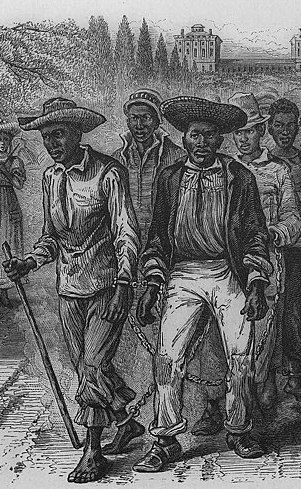
The harsh conditions increased slave resistance, which in turn led owners (and their overseers) to rely on brutal measures to maintain control. Masters and overseers used physical punishment to impose their will: whipping, shackling, hanging, beating, burning, mutilation, branding and imprisonment. Some slavemasters assaulted women. Swift executions of innocent slaves as well as suspects usually followed any attempted slave rebellions. Treatment was usually harsher on large plantations owned by absentee slaveholders, which were often managed by overseers.

Slave codes
To help regulate the relationship between slave and owner, states established slave codes. While each state had its own code, many were shared throughout the slave states. For example, teaching a slave to read or write was declared illegal. Unique to American slavery, this prohibition was intended to stop slaves having ideas that could lead them to escape or rebel. Slaves were generally prohibited by law from gathering in groups, with the exception of attending church services. Some states later also prohibited or restricted even this.

Nat Turner's rebellion
Rebellions among enslaved people did break out, notably those led by Gabriel Prosser in Richmond in 1800 and by Denmark Vesey in Charleston in 1822, but few succeeded. The revolt that worried enslavers the most was that led by Nat Turner in Southampton County, Virginia, in August 1831. Turner’s group, which eventually numbered around 75 men, killed 55 white people in two days before state militia forces overwhelmed them. Although he evaded capture for a few weeks, Turner and 19 other rebels were captured and hanged. The militia also murdered more than 100 other slaves who had not been involved in the rebellion. Fears of similar uprisings led Virginia and other southern states to strengthen their slave codes to limit the movement and assembly of enslaved people.

Louisiana
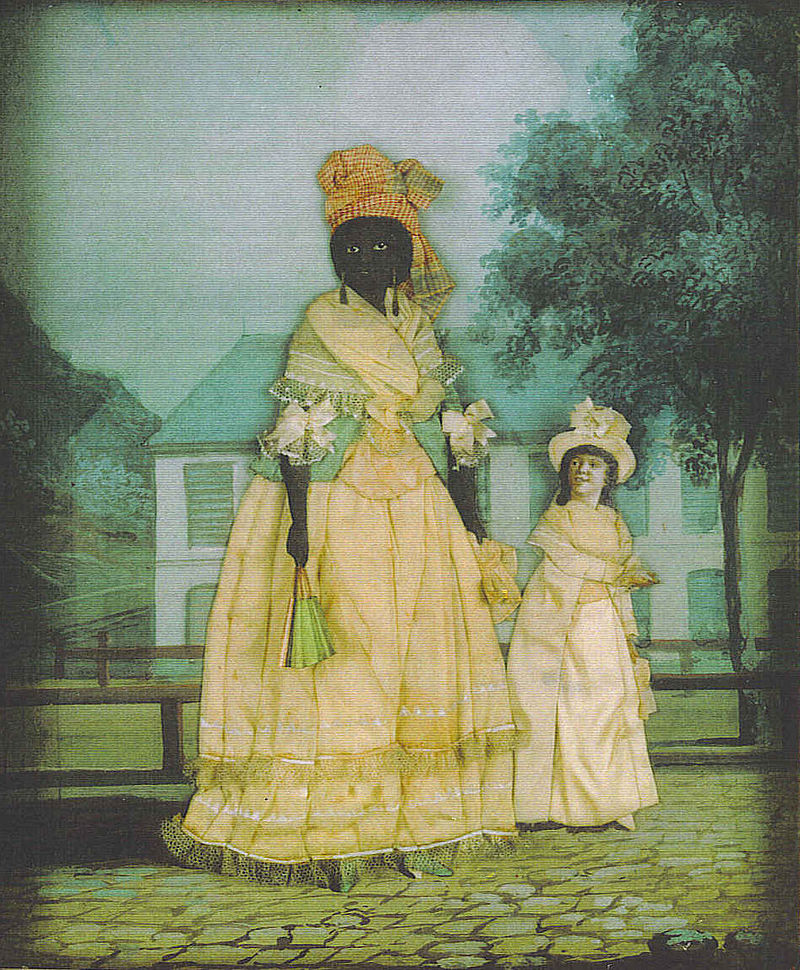
African Americans living in Louisiana (then the name for all the lands between the Mississippi and the Rocky Mountains), which was under French rule until 1803, had more freedom than other black people of the Deep South. Mostly of mixed race, they formed a "third class" of free people of colour (gens de couleur), and most of them lived in New Orleans. They were often literate and educated, with a significant number owning businesses, properties and even slaves themselves.
Decades before, the French had developed sugar cane plantations along the Mississippi River and imported Africans as labourers. In 1724 a revision of King Louis XIV's 1685 Code Noir regulated the slave trade and the institution of slavery in the French colonies, granting enslaved people certain rights not possessed by those in the British colonies and their American successors. However, after Louisiana joined the US in 1803, the gens de couleur gradually lost their status as they became grouped in with the enslaved African American population.
"A positive good"?
In the 19th century, supporters of slavery often defended it as a "necessary evil". At that time, it was feared that emancipation (freedom) of black slaves would have more harmful consequences than the continuation of slavery. However, as the abolitionist movement's voice grew louder and more insistent, defenders of slavery became more assertive, declaring that slavery was "a positive good", reasoning that in every civilized society one portion of the community must live on the labour of another. The African slave, kindly treated by his master, was, according to them, better off than the free labourers of Europe.

Consultant: Philip Parker
pics


Without in any way limiting Q-files Ltd’s exclusive rights under copyright, any use of this publication to “train” generative artificial intelligence (AI) technologies to generate text is expressly prohibited. Q-files Ltd reserves all rights to license use of this work for generative AI training and development of machine learning language models.