
Slavery

CITE
We have made every effort to follow citation style rules, but there may be some minor differences. If in doubt, please refer to the appropriate citation style manual.
Slavery in Africa. (2024). In Q-files Encyclopedia, History, Slavery. Retrieved from
https://www.q-files.com/history/slavery/slavery-in-africa
"Slavery in Africa." History, Slavery, Q-files Encyclopedia, 30 Jul. 2024.
https://www.q-files.com/history/slavery/slavery-in-africa.
Accessed 21 Sep. 2026.
Slavery in Africa 2024. History, Slavery. Retrieved 21 September 2026, from
https://www.q-files.com/history/slavery/slavery-in-africa
History, Slavery, s.v. "Slavery in Africa," accessed September 21, 2026.
https://www.q-files.com/history/slavery/slavery-in-africa


Slavery in Africa
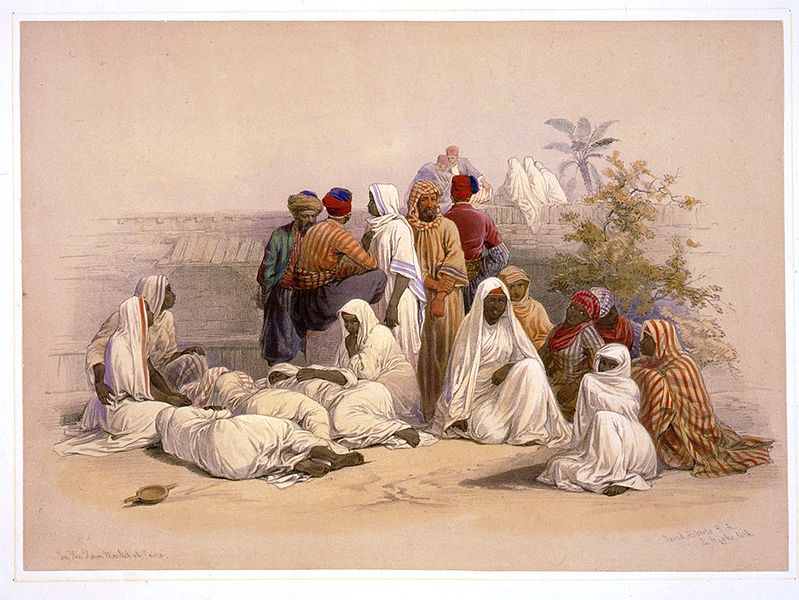
As a result of the slave trade, many millions of Africans were sold into slavery—via several routes—over the centuries. They were taken across the Sahara Desert; shipped from Red Sea or East African ports to the Middle East or across the Indian Ocean; transported westwards to the Americas. Slavery had been practised in Sub-Saharan Africa (that part of Africa south of the Sahara) before the involvement of outsiders. When trading in slaves began, many local African rulers agreed to hand over captives to Arabs, Berbers (people of North Africa before Arab migrations) and, later, Europeans in exchange for rum, spices, cloth or other goods. Some African kingdoms, including Dahomey, Benin and Khasso, came to depend on the slave trade for their economies. Between the 9th and 19th centuries, perhaps as many as 30 million Africans were forced from their homelands into enslavement.


Saharan slave trade
Slaves from West and Central Africa were transported across the Sahara Desert to North Africa to be sold in Mediterranean and Middle Eastern towns and cities since the days of the Roman Empire. This trans-Saharan slave trade continued after the rise of the Islamic Empire in North Africa. The trade was then handled by Arabs and Berbers, who introduced large numbers of camels for the purpose. Between about 650 AD and the 20th century, up to 10 million black African slaves were transported across the Sahara.
The slaves were obtained either through violent raids or from purchasing them from local African rulers in exchange for food and clothing. A number of major African states became organized around the slave trade, including the Ghana Empire, the Mali Empire, the Bono State and Songhai Empire. Between 1300 and 1900, about a third of the population of the Senegambia region was enslaved. Elsewhere, substantial numbers of Africans—up to three-quarters of the entire population in certain regions—were enslaved. Slavery was extremely common among the Tuareg, a Berber people who inhabit the Sahara, some of whom still hold slaves (unofficially) today.

Indian Ocean slave trade
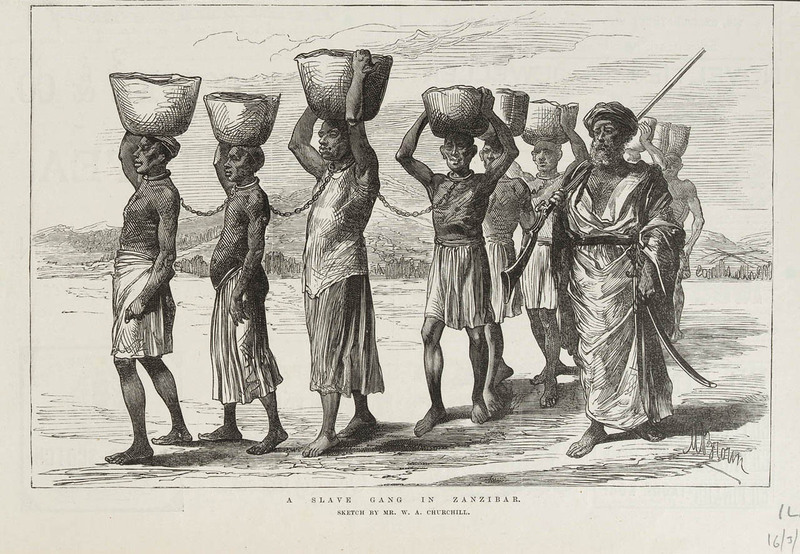

The enslavement of Africans for markets in the Middle East and Asia started in the 8th and 9th centuries AD. Islamic law allowed slavery, but prohibited slavery involving other Muslims. The main target for slavery was therefore people who lived just outside Muslim lands in Africa. A few thousand enslaved people were taken each year from the Indian Ocean coast of Africa, called the Swahili coast, to be sold throughout the Middle East. This trade accelerated in the 18th century as demand for labour grew. Eventually, tens of thousands of Africans per year were captured.
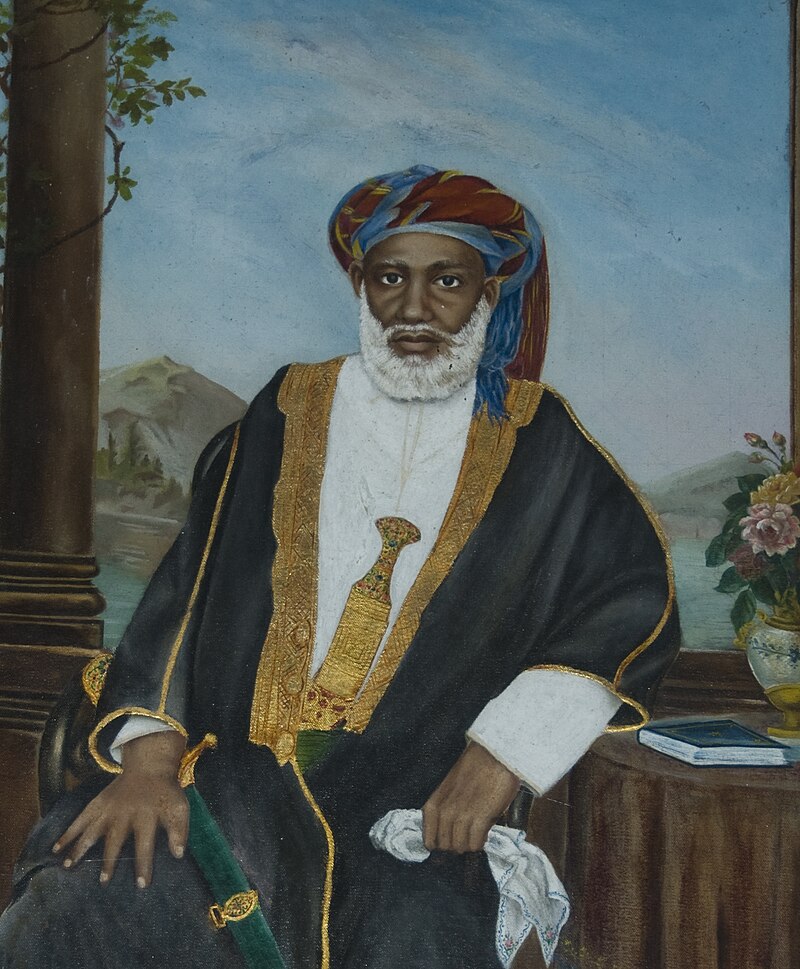
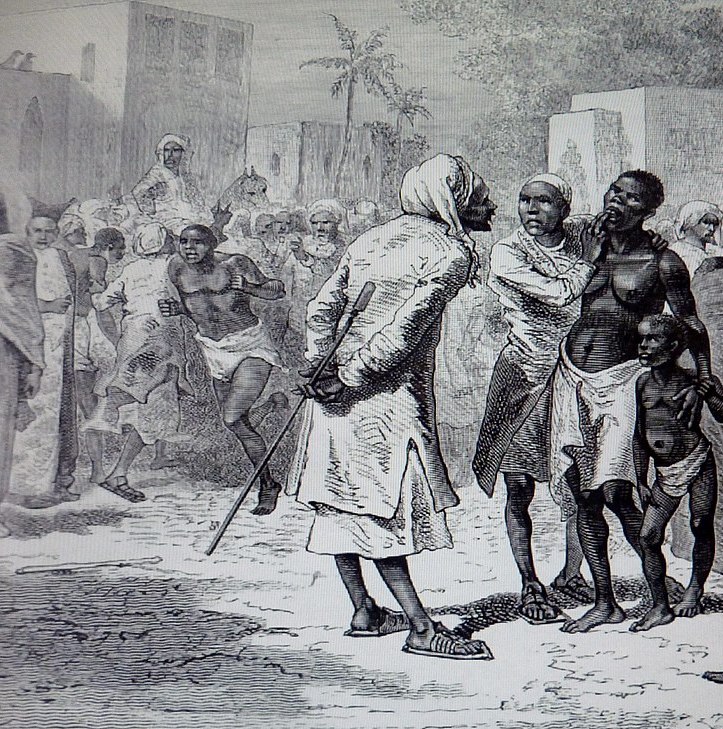
Afro-Arab slavers captured black Africans, known in Arabic as zanj, and brought them to the east coast islands of Zanzibar (also called Unguja) and Pemba (today they are part of Tanzania). Many worked on the plantations there set up by the Arabs, or were shipped to Arabia, India or the Indian Ocean islands. Zanzibar became East Africa's main slave port. During the 19th century, when the port was under Omani Arab control, as many as 50,000 enslaved Africans passed through it every year. Zanzibari slave trader Tippu Tip owned 10,000 slaves himself.
Between the 9th and the 19th centuries, several millions of Africans were captured for enslavement. But a large proportion of them never completed the journey: for every slave who arrived at a market, perhaps three or four died on the way. The Umayyad and Abbasid caliphs recruited many zanj slaves as soldiers, while most of the others were used as labour on farms.
Until the Indian Ocean trade ended in around 1900 with the near-total European colonization of Africa, up to 17 million Africans slaves had been transported by Muslim traders to the coast of the Indian Ocean, the Middle East and North Africa.
Europeans also took part in the Indian Ocean slave trade as well, beginning when Portugal founded colonies in India in the early 16th century. After the Dutch East India Company (VOC) was established in the early 17th century, slaves were shipped to their colonies of Dutch Ceylon, Bali and neighbouring islands. The French also set up colonies on the islands of Réunion and Mauritius in 1721. Planters shipped African slaves there over the following decades.
Atlantic slave trade
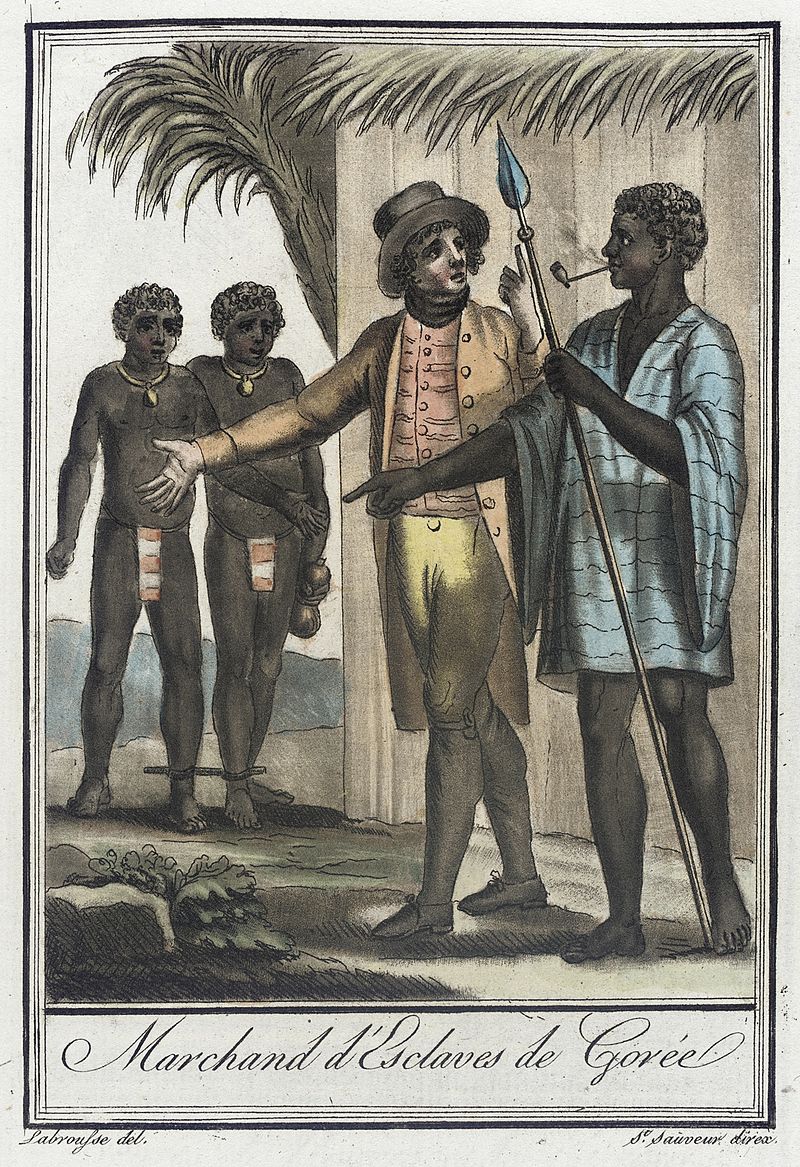
The Atlantic slave trade, which began in the early 16th century, continued until the mid-19th century. African people were captured and enslaved on raiding expeditions into the interior of West Africa. Europeans rarely entered the African interior of Africa, due to fear of disease or fierce resistance, so it was traders working for African states who carried out the raids. The enslaved people were brought to European trading posts on the coast where they were exchanged for goods. The captives were then shipped by European traders to the colonies of the New World. It is estimated that, over the centuries, around 12 million enslaved people were shipped from Africa by European traders. Around 15% of the captives died during the terrible voyage. You can read more about the Atlantic slave trade here.

Consultant:Philip Parker
pics
Without in any way limiting Q-files Ltd’s exclusive rights under copyright, any use of this publication to “train” generative artificial intelligence (AI) technologies to generate text is expressly prohibited. Q-files Ltd reserves all rights to license use of this work for generative AI training and development of machine learning language models.