
Africa

CITE
We have made every effort to follow citation style rules, but there may be some minor differences. If in doubt, please refer to the appropriate citation style manual.
African countries. (2026). In Q-files Encyclopedia, Geography, Africa. Retrieved from
https://www.q-files.com/geography/africa/african-countries
"African countries." Geography, Africa, Q-files Encyclopedia, 30 Mar. 2026.
https://www.q-files.com/geography/africa/african-countries.
Accessed 22 Sep. 2026.
African countries 2026. Geography, Africa. Retrieved 22 September 2026, from
https://www.q-files.com/geography/africa/african-countries
Geography, Africa, s.v. "African countries," accessed September 22, 2026.
https://www.q-files.com/geography/africa/african-countries


African countries
There are 54 countries in Africa. A further two countries have established themselves but are not officially recognized by other countries: Somaliland (part of northern Somalia) and the Sahrawi Arab Democratic Republic (Western Sahara). Algeria is the continent's largest country by area, while Nigeria is the largest by population. The African Union is a union of African countries. All are members but six (as of May 2025) are currently suspended as a result of military coups. They are: Burkina Faso, Gabon, Guinea, Mali, Niger and Sudan. The key aim of the union is to achieve greater unity between African countries and peoples.


North Africa
The northern half of Africa stretches down from the fertile coast bordering the Mediterranean Sea, through vast areas of desert and savanna, into the forests of west and central Africa. Apart from the Atlas Mountains, the Ethiopian Highlands and Saharan ranges, much of the region is a level plateau.

The River Nile, which rises in the uplands to the south (the Ethiopian Highlands for the Blue Nile; streams flowing into Lake Victoria for the White Nile), winds its way across swampy grasslands before laying a fertile strip through the Sahara Desert and flowing into the Mediterranean Sea. At 6670 kilometres (4140 miles) long, the Nile is the longest river in Africa—and the world.

One of the world's greatest civilizations, ancient Egypt, grew up on the banks of the River Nile. Today, most of modern Egypt's people are Arab, and the capital, Cairo, is the largest city in Africa. The Nile Valley is still intensely cultivated, with the main crops cotton, rice, sugar and dates. Egypt's economy is based on exports of oil and gas, agricultural products, tourism and revenues from ships passing through the Suez Canal.
The Atlas Mountains, home to the Berber people who ruled the region before the Arabs came, separate the lush farmlands of Morocco, Algeria and Tunisia to the north from the Sahara Desert to the south. These countries also rely on tourism and the manufacture of textiles and carpets. Algeria and Libya have natural resources of oil and gas.


The world’s largest desert, the Sahara stretches across an area of North Africa that is almost the size of the USA. It is constantly growing larger as the sparse grassland at its southern edges dies away. There are areas of sand that often drift into large dunes, but much of the Sahara is made up of rocky ground and mountains. Small towns survive around oases, places in the desert where water comes up from beneath the ground. They form stopping-off points on desert roads for groups of nomads, such as the Tuareg, travelling across the harsh landscape to trade in town markets.
Central Africa

The Sahel region runs across Central Africa, between the Sahara Desert to the north and the grasslands to the south. It has a semi-arid climate, with lower than average rainfall. In the Sahel countries, which include the Gambia, Senegal, Mali, northern Nigeria and Cameroon, agriculture is often the primary industry. Rivers such as the Nile, Niger and Senegal provide essential water with which to irrigate crops. The region frequently suffers long droughts. In the driest areas, nomadic cattle-herders travel vast distances in search of good grazing. Countries such as Chad, Sudan and South Sudan have been hit hard, both by the loss of crops and grazing land and by the wars that rage between the peoples of the region.

Near the Equator, great rivers wind north and westwards through the vast Congo Basin rainforest. Countries wholly or partly in the basin include: Central African Republic, Democratic Republic of the Congo, Republic of the Congo, Burundi and Rwanda. To the south and east, the forests give way to savanna—dry grasslands dotted with trees—where enormous numbers of animals gather to graze.
West Africa
Inland from the coast of West Africa, much of the rainforest is being cut down to make room for plantations of cocoa, coffee, bananas, citrus fruits and groundnuts. For many years, timber has been an important product of countries such as the Côte d’Ivoire. Mining of oil, gas and metal ores is a rich resource in Ghana. Oil-rich Nigeria has the highest population of any country in Africa. Nigeria's GDP is growing fast. It is expected to be one of the world's top 20 economies by 2050.
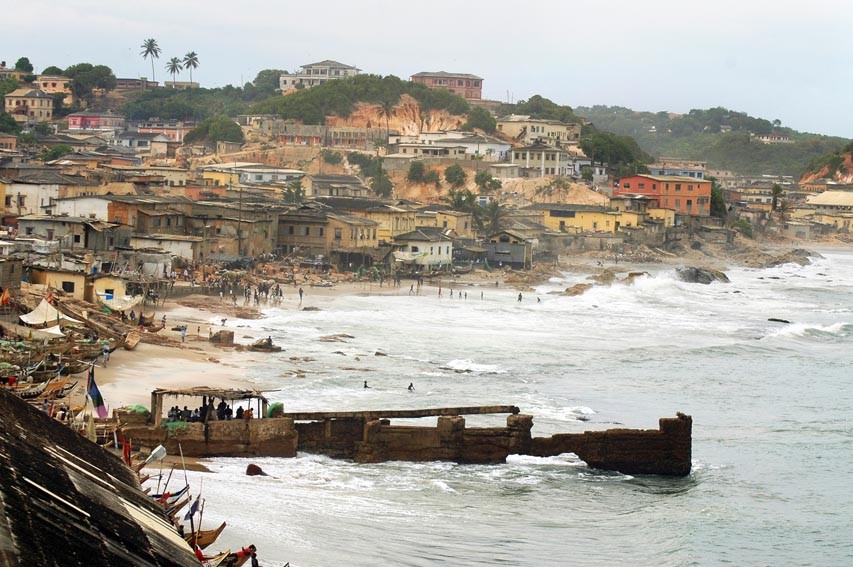

Twelve West African states are members of the Economic Community of West African States (ECOWAS), which aims to encourage cooperation within the region and self-sufficiency (not needing to rely on aid from foreign countries). Six ECOWAS countries, Gambia, Ghana, Guinea, Liberia, Nigeria and Sierra Leone, plan to share a common currency, the Eco. Eventually their aim is to create a common currency across much of West Africa—just like the Euro in many EU countries in Europe.

East Africa
The countries of Somalia, Djibouti, Ethiopia and Eritrea make up what is known as the Horn of Africa, so called because its shape is similar to that of a rhino's horn. Ethiopia is the second most populous country in Africa after Nigeria, and one of the fastest-growing economies in the world. Its chief exports are coffee, other agricultural produce and gold.
In East Africa, high volcanic mountains and huge lakes have formed along the Great Rift Valley. Tourism is important to the savanna countries of East Africa, Kenya, Uganda and Tanzania, where large national parks have been set up to protect the wildlife. In the eastern highlands, crops of tea and coffee are grown for export. Cattle are farmed for their meat and dairy products.


Southern Africa
Much of the southern half of Africa is high ground, but quite flat, like a table. This plateau is rimmed by mountains in the far south, the Drakensberg. To the southwest, the climate is drier and the savanna merges into the Kalahari Desert. This is actually a semi-desert with areas of green grasses after rains. A wide range of animals are found there, such as the Kalahari lion and the endangered African wild dog.
Southern Africa is rich in natural resources such as oil, metals—particularly platinum, copper, gold and uranium—and diamonds. Mining is a vitally important industry, especially in Zambia, Botswana, Namibia and South Africa. Due to issues such as drought and political instability, only a few southern African nations, South Africa, for example, grow enough food to meet their own needs. Others, such as Namibia and Botswana, rely on imported food, while the least developed (such as Lesotho and Malawi) receive food aid.


Lying at the southern tip of the continent is South Africa. The western part of the country, known as the Karoo, merges into desert. The eastern half, the high Veld, is a wetter grassland region providing good farmland. Near the Cape of Good Hope, the point where the Atlantic and Indian Oceans meet, fruit and vines are grown. South Africa has the richest economy in Africa, with its chief exports of gold, diamonds and manufactured goods. The peoples of South Africa include both black Africans (about 80%) and Europeans and Asians. Because of its multicultural make-up, it is sometimes called the Rainbow Nation.
Consultant: Lloyd Jenkins
pics
Without in any way limiting Q-files Ltd’s exclusive rights under copyright, any use of this publication to “train” generative artificial intelligence (AI) technologies to generate text is expressly prohibited. Q-files Ltd reserves all rights to license use of this work for generative AI training and development of machine learning language models.