
Africa

CITE
We have made every effort to follow citation style rules, but there may be some minor differences. If in doubt, please refer to the appropriate citation style manual.
Congo. (2026). In Q-files Encyclopedia, Geography, Africa. Retrieved from
https://www.q-files.com/geography/africa/congo
"Congo." Geography, Africa, Q-files Encyclopedia, 30 Mar. 2026.
https://www.q-files.com/geography/africa/congo.
Accessed 21 Sep. 2026.
Congo 2026. Geography, Africa. Retrieved 21 September 2026, from
https://www.q-files.com/geography/africa/congo
Geography, Africa, s.v. "Congo," accessed September 21, 2026.
https://www.q-files.com/geography/africa/congo


Congo
Congo is sometimes known as the Republic of the Congo or Congo-Brazzaville (after its capital city) to distinguish it from its larger neighbour, the Democratic Republic of the Congo (DRC). The Equator runs across the middle of the country. In the north is a swampy, thickly-forested region, part of the vast Congo rainforest. In the south, the land rises to a low plateau, the Batéké Plateau, part of the Crystal Mountains, before sloping down to wide plains at the coast. The country’s eastern border is formed by the River Oubangi, and further south by the immense River Congo. Congo’s location on the Equator gives it a hot, humid climate all year round; its main rainy season is between October and December.


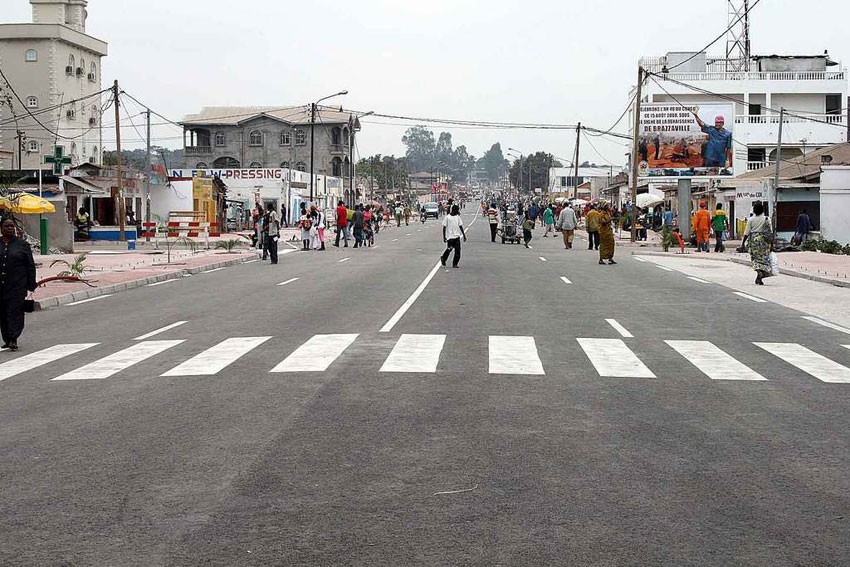
People
Congo’s population is made up of Bantu peoples; about half belong to the largest group, the Kongo. Other groups include the Teke and Sanga. About three-quarters of the population live in the cities of Brazzaville and Pointe-Noire, or in towns along the railway that runs between them. Congo’s Baka people, who live by hunting and fishing, have inhabited an area in the northeastern rainforest for centuries. Vast areas of Congo are almost completely uninhabited. Many Congolese people follow Christianity alongside traditional beliefs such as animism. Animists believe that non-human things, such as hills, trees and rivers, have spirits.
Economy
Oil is an important industry: it provides nearly all Congo’s foreign income. In 1997, a civil war, called the War of 5th June, broke out between supporters of rival presidential candidates—with control over Congo's oil resources a key factor. The war, which lasted until 1999, left a lot of people living in poverty: ordinary people see little of the wealth created by oil. Many people work in construction and in shops and factories.

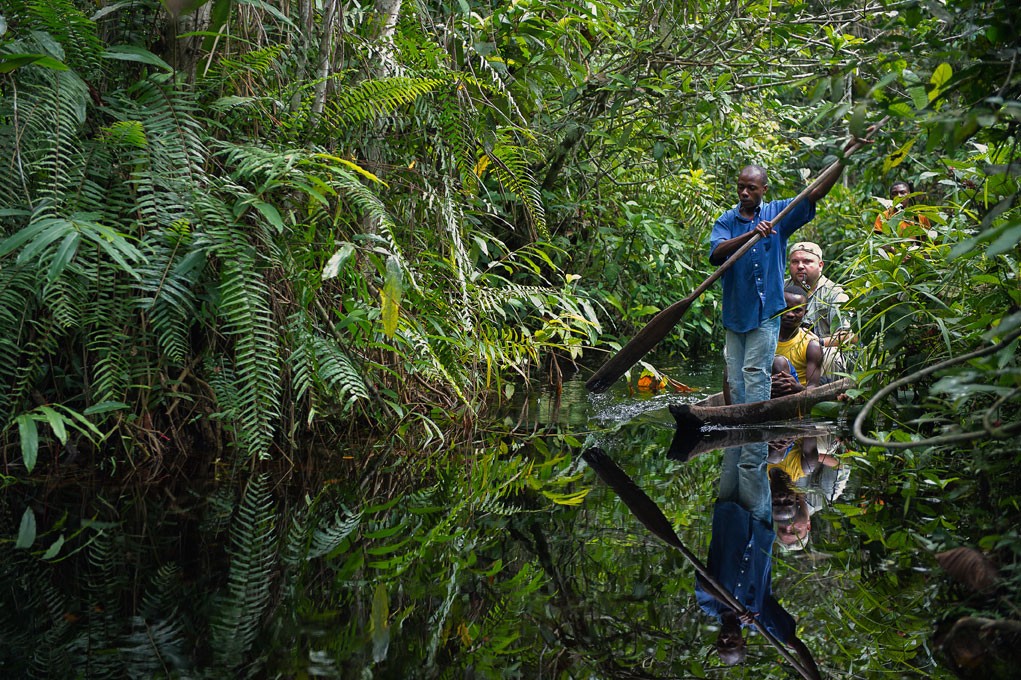
River Congo
The Congo is Africa’s second-longest river and the fifth-longest in the world. It flows through the dense Congo rainforest to the Atlantic Ocean, providing a vital lifeline for travel and trade. Congo’s capital, Brazzaville, is situated on the River Congo. Downstream from here the river is wide enough for large merchant ships to set out for the Atlantic Ocean. Further upstream, local people use a type of dugout canoe, called a pirogue, to travel on the river. The Congo has huge potential for producing hydro-electric power—more than any other river in the world. Were all its power to be harnessed, it could produce enough electricity to supply the whole of Sub-Saharan Africa.

Consultant: Nicholas Harris
Facts about Congo
Population 5,399,895
Area 341,500 sq km
Highest point Mont Nabemba 1020 m (3350 ft)
Capital Brazzaville, population 1.61 million
Other major cities Pointe-Noire (pop. 834,000)
Languages French, Kikongo
Religions Christian (Roman Catholic) 33%, Christian (Protestant) 20%, other Christian 22%, Muslim 2%, others 23%
Ethnicity Kongo 48%, Sanga 20%, Teke 17%, Mbochi 12%, others 3%
Currency Central African CFA franc (XAF)
Chief exports oil, timber, sugar, coffee, cocoa, diamonds

History of Congo
500 BC
Bantu peoples including the Bakongo arrive in the region
1380s
A powerful trading state, the Kingdom of Kongo, flourishes in the region of modern Congo
1482
Portuguese navigator Diogo Cão is the first European to discover the mouth of the Congo River
1491
The Kongolese king converts to Christianity
1500s
The kings of Portugal and Kongo rule the region jointly
16th century
The north breaks away from Kongo and forms a new Bakongo kingdom called Loango. It trades copper and cloth with Europe
1665
Violent rebellion at Portuguese rule: 20,000 Kongolese fight against Portuguese troops
1880
Batéké sign an agreement with France and the north bank of the River Congo comes under French control
1891
French join the region with neighbouring Gabon, calling it “Colony of French Congo”
1910
The region becomes an official French colony, part of French Equatorial Africa
1921–34
The Congo Ocean Railway is built: thousands are forced to work on its construction and 17,000 workers die
1928
Congolese people rebel at forced labour and the poor treatment of railway construction workers
1946
Congo is given representation in the French parliament
1958
Congolese vote for their country to have autonomy (more independence to govern itself) within France
1960
Congo becomes independent. Fulbert Youlou is president
1964– 68
Alphonse Massamba-Debat becomes president, but he is soon removed from power in a coup
1970
President Marien Ngouabi declares Congo a Marxist (Communis) state
1977
President Ngouabi is assassinated, along with ex-president Massamba-Debat and the Archbishop of Brazzaville
1990
The ruling party, the Congolese Workers Party (PCT) abandons Marxism
1992
A new multi-party system of government is set up and Congo’s first democratic elections are held. Pascal Lissouba becomes president
1997–99
Civil war breaks out between the government and rebels. The rebels, helped by troops from Angola, capture Brazzaville and force President Lissouba into exile; Denis Sassou Nguesso declares himself the new president
2002
Thousands of people are forced to leave their homes to escape fighting between the government and rebel forces, calling themselves “Ninjas”
2012
Ammunition dump in Brazzaville explodes: more than 2300 people are injured and 282 are killed
2016
President Denis Sassou Nguesso wins re-election in the presidential election, the first to be held after the adoption of a new constitution, allowing him to stand for a third term
pics

Without in any way limiting Q-files Ltd’s exclusive rights under copyright, any use of this publication to “train” generative artificial intelligence (AI) technologies to generate text is expressly prohibited. Q-files Ltd reserves all rights to license use of this work for generative AI training and development of machine learning language models.