
Africa

CITE
We have made every effort to follow citation style rules, but there may be some minor differences. If in doubt, please refer to the appropriate citation style manual.
South Sudan. (2026). In Q-files Encyclopedia, Geography, Africa. Retrieved from
https://www.q-files.com/geography/africa/south-sudan
"South Sudan." Geography, Africa, Q-files Encyclopedia, 30 Mar. 2026.
https://www.q-files.com/geography/africa/south-sudan.
Accessed 22 Sep. 2026.
South Sudan 2026. Geography, Africa. Retrieved 22 September 2026, from
https://www.q-files.com/geography/africa/south-sudan
Geography, Africa, s.v. "South Sudan," accessed September 22, 2026.
https://www.q-files.com/geography/africa/south-sudan


South Sudan
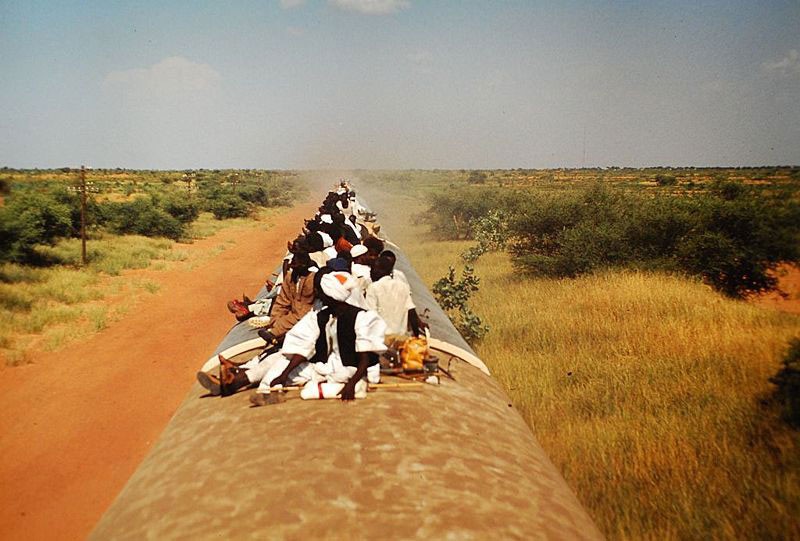
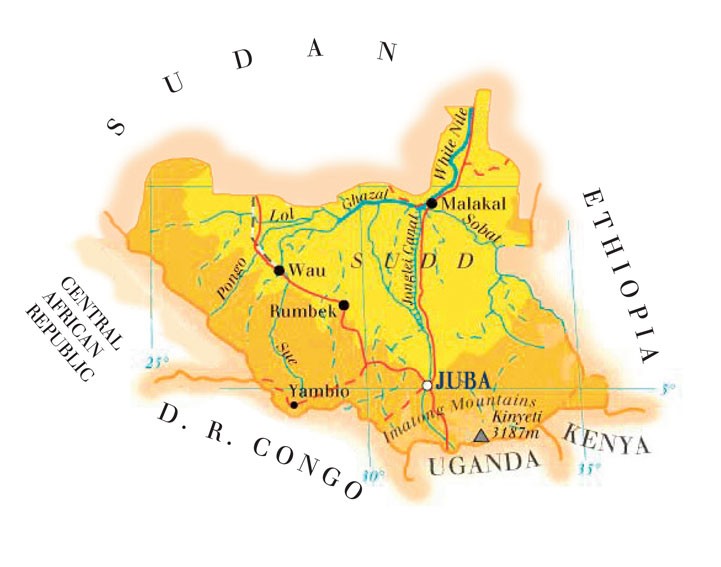
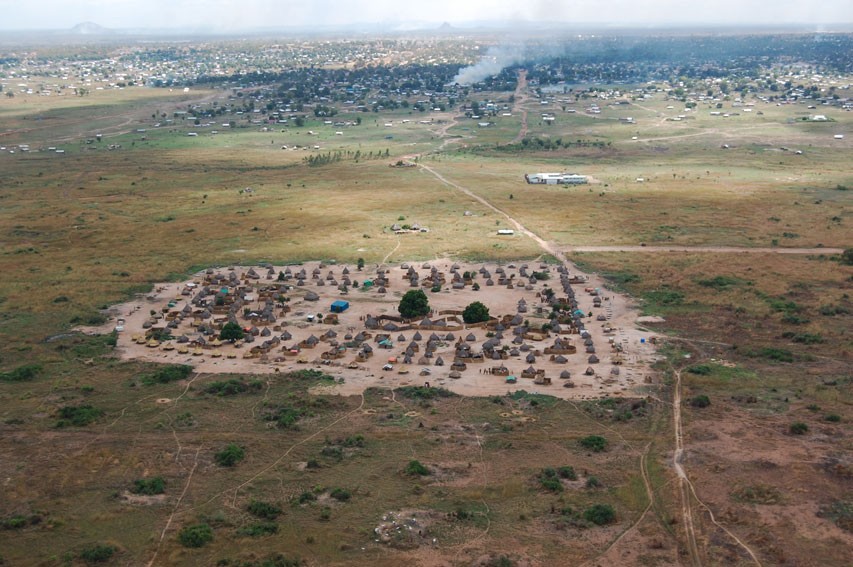
South Sudan is the world’s newest country. It was formed in 2011 when people living in the southern part of Sudan voted for independence. Since it was created, South Sudan has been one of the world’s poorest countries. Decades of civil war in the region have left its economy in ruins and its people scattered all over the country, living as refugees. Lying close to the Equator, South Sudan has a tropical climate with a rainy season between May and October. For the rest of the year, its climate is hot and humid. The landscape is a patchwork of rainforest, grassy savanna and wetland. The White Nile river and its tributaries wind across a vast area of swampy wetland called the Sudd. This region is a haven for wildlife: pelicans and storks make their homes amid the reeds.
People
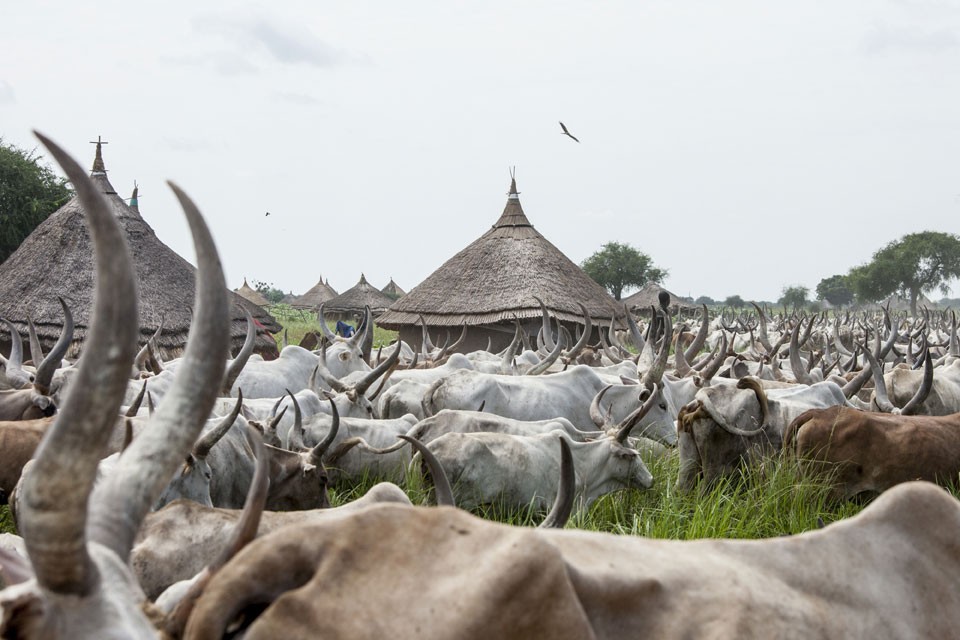
There are five main ethnic groups in South Sudan, along with many smaller ones. Most people speak the language of their group, although many also speak English. The most numerous are the Dinka, nomadic herders who graze their cattle in the western grasslands. Most of the rest of the Sudanese population keep cattle and grow millet and cassava for their families.
In South Sudan, most people follow Christianity or traditional beliefs such as animism. Healthcare is very poor: about half the population does not have access to clean, safe drinking water. In addition, many people suffer from diseases such as HIV/AIDS and malaria.
South Sudan is second only to Chad in the number of refugees fleeing the war in neighbouring Sudan it has received (as of October 2024). More than 810,000 people have arrived since April 2023, including returning South Sudanese refugees who were sheltering in Sudan (see below).

Economy
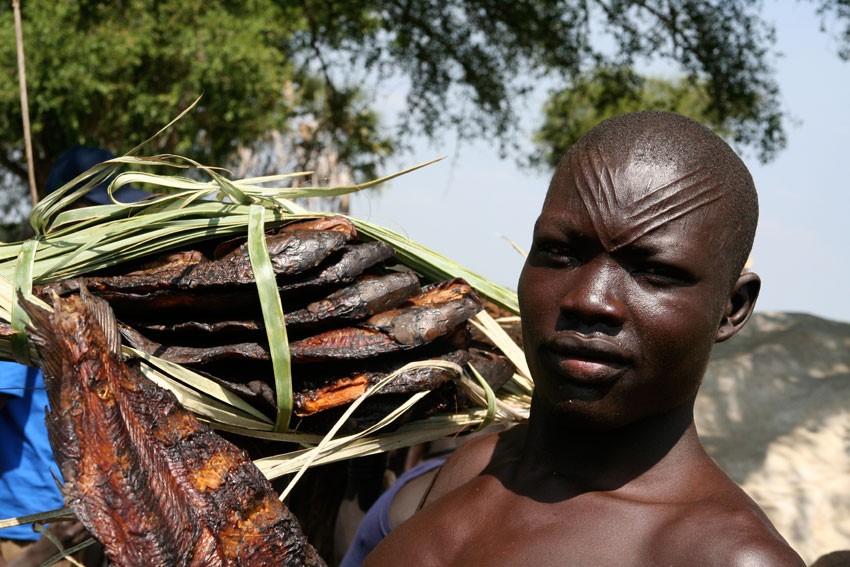
Although it has large reserves of oil, South Sudan’s economy is one of the world’s least-developed, and its people are some of the poorest. When it split from Sudan, South Sudan took possession all the major oilfields, but most of the pipelines and refineries are in Sudan. Since independence, it has had to pay fees to Sudan to be able to use them. Oil makes up about 98% of South Sudan’s exports. Much of its income, however, comes from international aid.
Civil War
When South Sudan gained its independence in 2011, it brought to a close Africa’s longest-running civil war. The war started in 1955 when Sudan became independent from Britain and Egypt. Leaders in the south wanted the new government to recognize that the southern states had different cultures and religions to the Islamic north, and to give them more freedom to rule themselves.
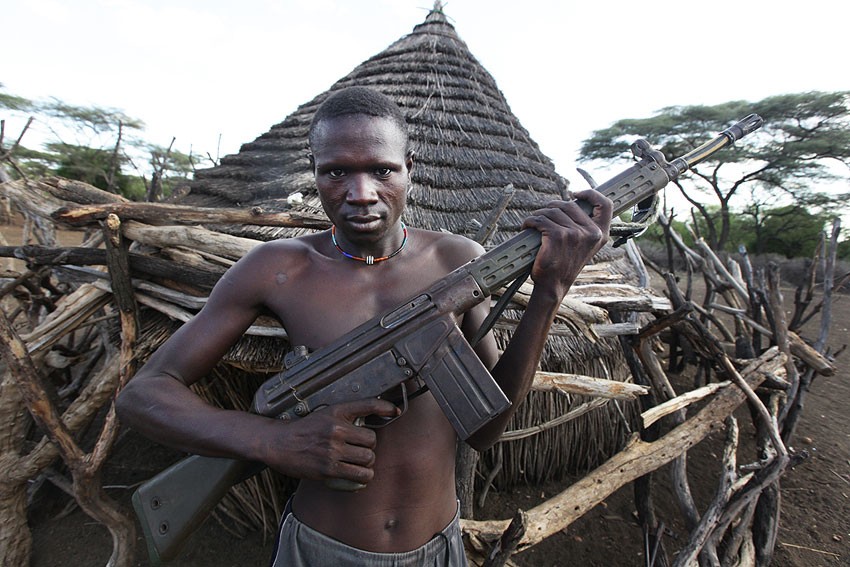

The south was granted this freedom (“autonomy”) in 1972, but when this was cancelled in 1983, the Sudan People’s Liberation Movement (SPLM), rose up violently in protest. At least 1.5 million people were killed in the 22 years of civil war that followed, with 4 million fleeing their homes. The conflict finally ended in 2005, but it took six years to lay the foundations for a new country.
In December 2013, civil war broke out in South Sudan, with government forces under President Kiir fighting those of the opposition led by Kiir’s former deputy, Riek Machar. Despite the signing of a peace agreement in August 2015, violence flared up again in July 2016, with fighting also between different rebel factions. The war came to an end in 2018. An estimated half a million South Sudanese people moved abroad to escape the conflict.
Flooding
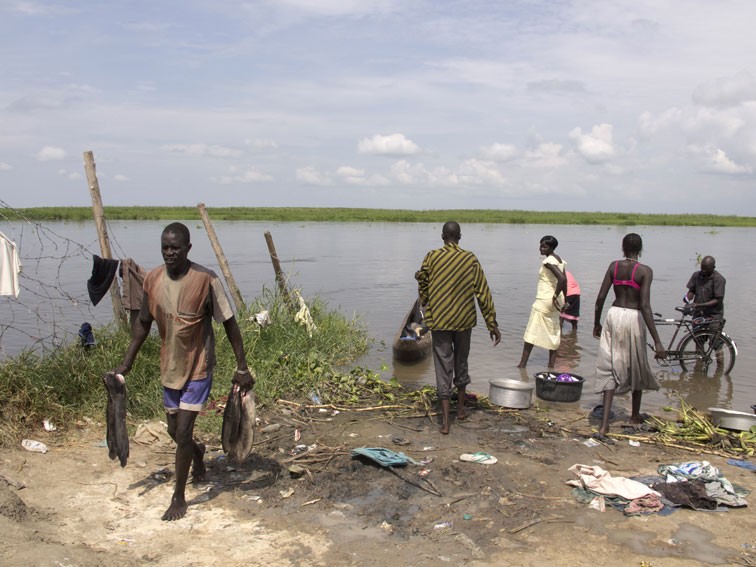
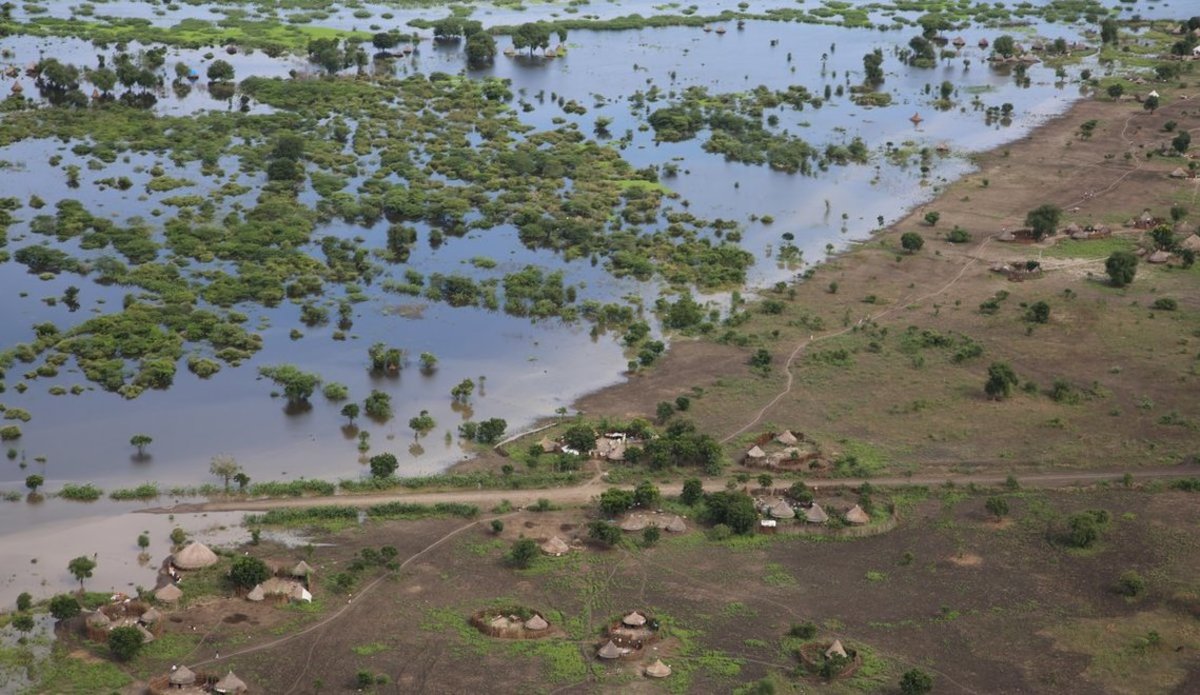
South Sudan is one of the most vulnerable countries in the world to climate change. Heavy rainfall has caused severe flooding for three years in a row—2019, 2020 and 2021. It is predicted to worsen if global temperatures continue to rise, altering climatic patterns. People living close to the banks of the White Nile in the north of the country have lost their homes to the flooding, and are forced to sleep in the open on small, overcrowded areas of higher ground. Villagers are unable to cultivate their crops of maize and sorghum and have also lost their livestock to diseases caused by the animals grazing on flooded fields. To stave off hunger, many families have resorted to collecting water lily bulbs which they grind up to make a meal. Wading through the floodwaters, they risk attack from crocodiles.
Consultant: Nicholas Harris
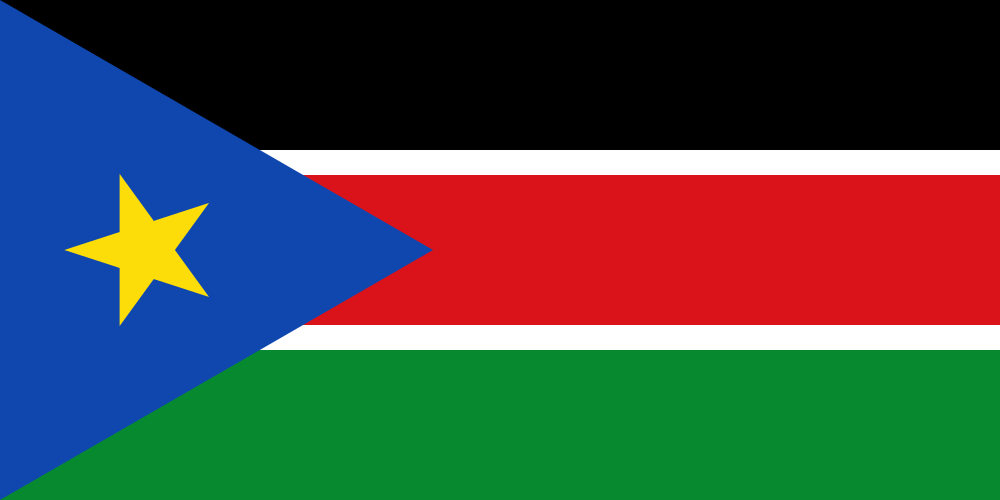
Facts about South Sudan
Population 12,703,714 (2024 estimate)
Area 644,329 sq km
Highest point Kinyeti 3187 m (10,456 ft)
Capital Juba, population 525,953
Other major cities Wau (pop. 320,752), Malakal (165,935)
Languages Arabic, English
Religions Christian, Animist
Ethnicity Dinka 35%, Nuer 16%, Shilluk, Azande, Bari and others 49%
Currency South Sudanese pound (SDG)
Chief exports timber, oil

History of South Sudan
8000 BC
Neolithic peoples build mud-brick settlements in the region
10th century
Nilotic peoples including the Acholi and Bari settle in the region
16th century
Bantu peoples settle in the area, forming a large state: Equatoria Region
19th century
Slave trade flourishes in southern Sudan; thousands of people are sold into slavery in North Africa
1899–1955
Control of Sudan is shared between Britain and Egypt. The southern part (Equatoria) is governed separately from the north
1956
Sudan becomes independent from Britain
1962
A group called the Anya Nya begin fighting for independence against the Sudanese government; Civil War begins
1972
Peace agreement signed; southern part of Sudan is given more autonomy (right to rule itself)
1978
Oil is discovered in southern Sudan
1983
President Numeiri ends autonomy in the south and civil war breaks out in the south again between the government and the Sudan People’s Liberation Movement (SPLM)
1989
Military coup takes over the government and seizes power
2002
The SPLM’s army signs a ceasefire with the Sudanese government
2005
Permanent ceasefire is agreed along with autonomy for the south
2011
People of the south vote for independence from the north and become a new country, South Sudan (9th July)
2012
Thousands of people flee fighting between the army and rebels in states bordering South Sudan
2013
South Sudan’s president, Salva Kiir, accuses his ex-vice-president, Riek Machar, of plotting to kill him and seize power. The army divides into two sides and another civil war breaks out; thousands die in the fighting
2014
United Nations describes South Sudan’s food crisis as the worst in the world
2017
South Sudan and the United Nations declare a famine in parts of the country. Over 100,000 people are affected.
2018
Peace agreement signed in Addis Ababa, Ethiopia, signals end of Civil War. The deal commits forces loyal to President Kiir to share power with the coalition of rebel groups led by Riek Machar
2023 onwards
Hundreds of thousands of people fleeing the war in Sudan arrive as refugees in South Sudan
pics

Without in any way limiting Q-files Ltd’s exclusive rights under copyright, any use of this publication to “train” generative artificial intelligence (AI) technologies to generate text is expressly prohibited. Q-files Ltd reserves all rights to license use of this work for generative AI training and development of machine learning language models.