
Africa

CITE
We have made every effort to follow citation style rules, but there may be some minor differences. If in doubt, please refer to the appropriate citation style manual.
Côte d'Ivoire (Ivory Coast). (2026). In Q-files Encyclopedia, Geography, Africa. Retrieved from
https://www.q-files.com/geography/africa/cote-divoire-ivory-coast
"Côte d'Ivoire (Ivory Coast)." Geography, Africa, Q-files Encyclopedia, 22 Apr. 2026.
https://www.q-files.com/geography/africa/cote-divoire-ivory-coast.
Accessed 6 Aug. 2026.
Côte d'Ivoire (Ivory Coast) 2026. Geography, Africa. Retrieved 6 August 2026, from
https://www.q-files.com/geography/africa/cote-divoire-ivory-coast
Geography, Africa, s.v. "Côte d'Ivoire (Ivory Coast)," accessed August 6, 2026.
https://www.q-files.com/geography/africa/cote-divoire-ivory-coast


Côte d'Ivoire (Ivory Coast)
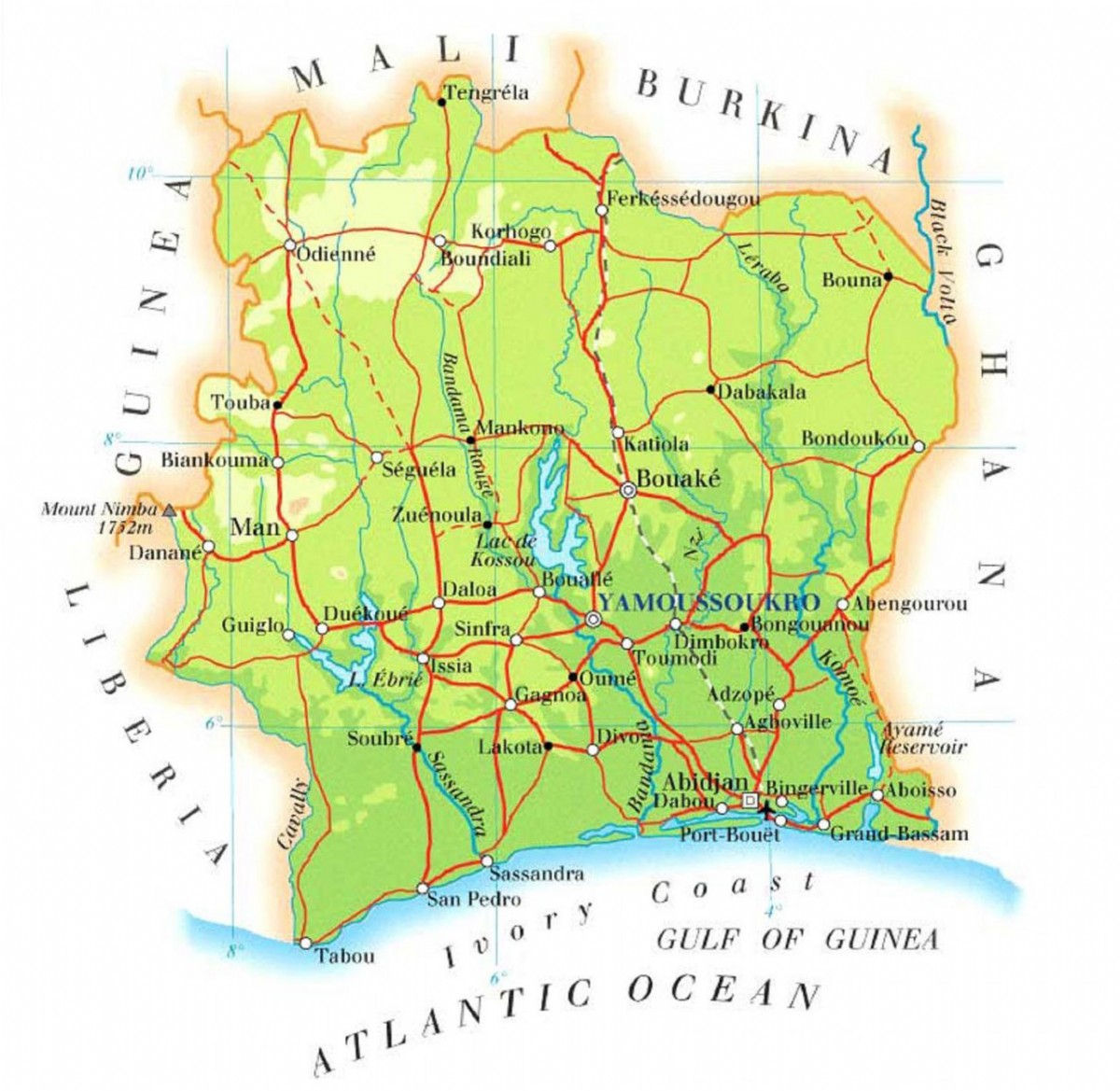
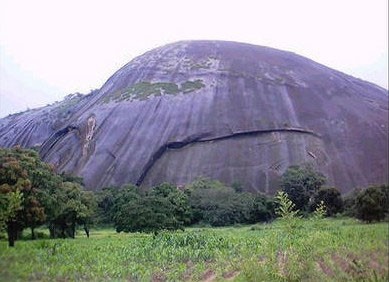
Côte d'Ivoire (Ivory Coast) lies on a flat plateau that slopes gently southwards to the coast of the Gulf of Guinea. The coastline is edged by sandy beaches, lagoons and rocky cliffs. Just inland there is a belt of thick rainforest. Further north, the climate becomes drier and the forests thin out into grassland plains, scattered with trees, known as the savanna. The only uplands are the high Nimba Mountains, on the western border. Lying close to the Equator, Côte d'Ivoire has a tropical climate with hot, humid weather all year round and two different seasons: rainy and dry. The south is wettest: some parts receive as much as 200 centimetres (80 inches) of rain every year.


People
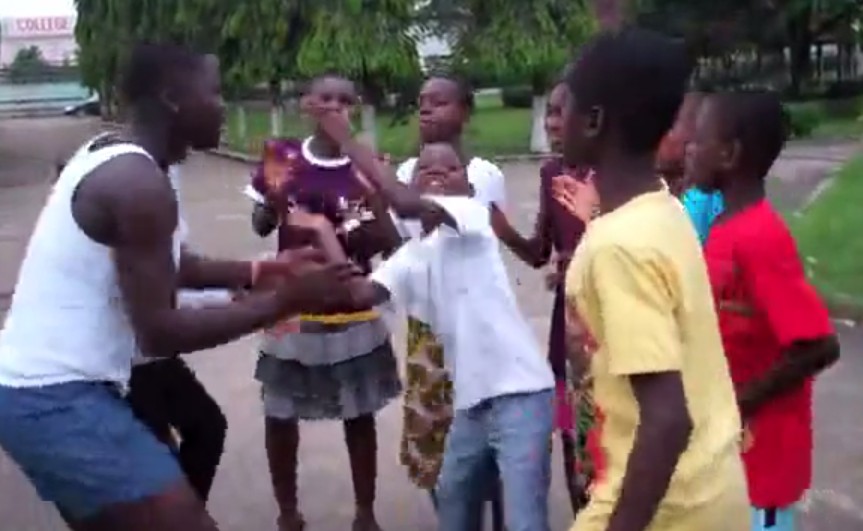
People from Côte d'Ivoire are called Ivorians. The country is home to about 60 different ethnic groups; the largest, the Baoulé, makes up about a fifth of the population. About 1000 years ago, Muslim traders crossing the Sahara introduced Islam to the country; today, Islam is its largest religion, especially in the north. Many others follow traditional beliefs such as animism. Over a century of French rule has resulted in French becoming the official language; some people also speak local languages or a mixture of the two called “français de Moussa”.

Economy
After it became independent in 1960, Côte d'Ivoire was one of the wealthiest countries in West Africa, with successful cocoa and coffee industries. An economic crisis in the 1980s hit farmers badly, and periods of civil war and unrest in 2002 and 2010 damaged its economy further. Today, agriculture is very important; people in the countryside grow almost all the food they need as well as crops such as bananas, pineapples, coconuts and mangoes for export. The oil industry is also developing quickly. Oil is piped from offshore rigs to be processed in Abidjan. This refinery produces enough oil for the whole country, as well as some to export abroad.

Cocoa
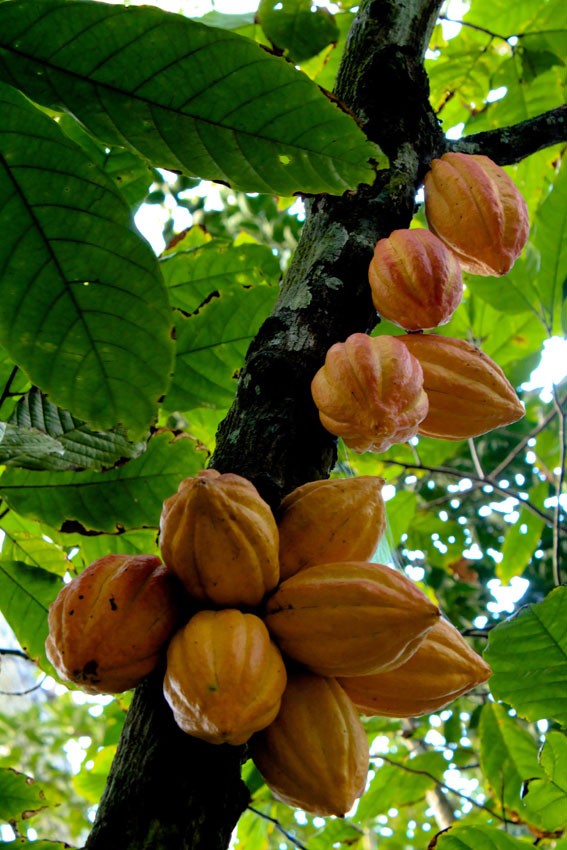
Côte d'Ivoire is the largest supplier of cocoa in the world: it produces over 2 million tonnes annually, which is more than one third of all the world’s cocoa. Almost all of it is used to make chocolate. About one in four Ivorians are involved in cocoa-production, growing, picking and packing cocoa beans for export. Cocoa is Côte d'Ivoire's most important industry, but it faces a number of threats. Farmers have to pay high taxes when they export their beans, which means they receive only a small profit. They also have to replant their cocoa trees every 30 years, because old trees become less productive. Many of today’s farmers can barely afford to do this.
Consultant: Nicholas Harris
Facts about Côte d'Ivoire
Population 31,500,000 (2024 estimate)
Area 318,003 sq km
Highest point Mount Nimba 1752 m (5748 ft)
Capital Yamoussoukro, population 258,323
Other major cities Abidjan (pop. 5,866,700)
Languages French, Dioula, Baoulé and other indigenous languages
Religions Muslim 42.5%, Christian 40%, indigenous beliefs 2%, others and none 15.5%
Ethnicity Akan (including Baoulé) 42%, Gur 18%, Mandé 17%, Krous 11%, others 12%
Currency West African CFA franc (XOF)
Chief exports cocoa, coffee, timber, petroleum, cotton, bananas, pineapples, palm oil, fish


History of Côte d'Ivoire
1300s
Dioula peoples begin to arrive in the region from the Niger river basin. The northwest forms part of the Mali Empire, a powerful Muslim state
16th–18th centuries
The region is split into several states, or kingdoms, including the Kong Empire in the north and Sanwi in the southeast
1600s
Portuguese begin to trade pepper, gold, ivory and slaves with towns and villages along the coast. Local chiefs begin to sell West Africans into the European slave trade
1637
First French missionaries arrive in the region
1750s
Akan peoples from Ghana, fleeing the Asante Empire, arrive in the region and set up a kingdom called Baoulé
1830s
France sets up trading posts along the coast
1842
The coast comes under French rule as a French protectorate
1893
The country becomes an official colony of France, named Côte d'Ivoire
1890s
French set up coffee, cocoa and banana plantations in the country and local people are forced to work on them
1898
The country’s current borders are agreed
1905
France abolishes slavery in French West Africa
1944
A union of African farmers is set up by Felix Houphouet-Boigny. It later becomes a political party, the Ivory Coast Democratic Party
1958
Côte d'Ivoire becomes a republic but remains under French rule
1960
Côte d'Ivoire becomes independent from France with Felix Houphouet-Boigny as its president
1979
Côte d'Ivoire is the world’s biggest producer of cocoa
1980s
Economic crisis: national debt begins to increase and cocoa prices fall worldwide, hitting the cocoa industry badly
1993
President Houphouet-Boigny dies, ending his 33-year rule
1999
The new president, Henri Konan Bedie, is overthrown in a military coup and flees to France
2000
Political violence breaks out between Christians in the south and Muslims in the north
2009
The International Monetary Fund (IMF) writes off about a quarter of Côte d'Ivoire’s national debt
2011
Civil war: 3000 people are killed in a country-wide outbreak of violence following the presidential election
pics

Without in any way limiting Q-files Ltd’s exclusive rights under copyright, any use of this publication to “train” generative artificial intelligence (AI) technologies to generate text is expressly prohibited. Q-files Ltd reserves all rights to license use of this work for generative AI training and development of machine learning language models.