
Africa

CITE
We have made every effort to follow citation style rules, but there may be some minor differences. If in doubt, please refer to the appropriate citation style manual.
Togo. (2026). In Q-files Encyclopedia, Geography, Africa. Retrieved from
https://www.q-files.com/geography/africa/togo
"Togo." Geography, Africa, Q-files Encyclopedia, 30 Mar. 2026.
https://www.q-files.com/geography/africa/togo.
Accessed 7 Aug. 2026.
Togo 2026. Geography, Africa. Retrieved 7 August 2026, from
https://www.q-files.com/geography/africa/togo
Geography, Africa, s.v. "Togo," accessed August 7, 2026.
https://www.q-files.com/geography/africa/togo


Togo
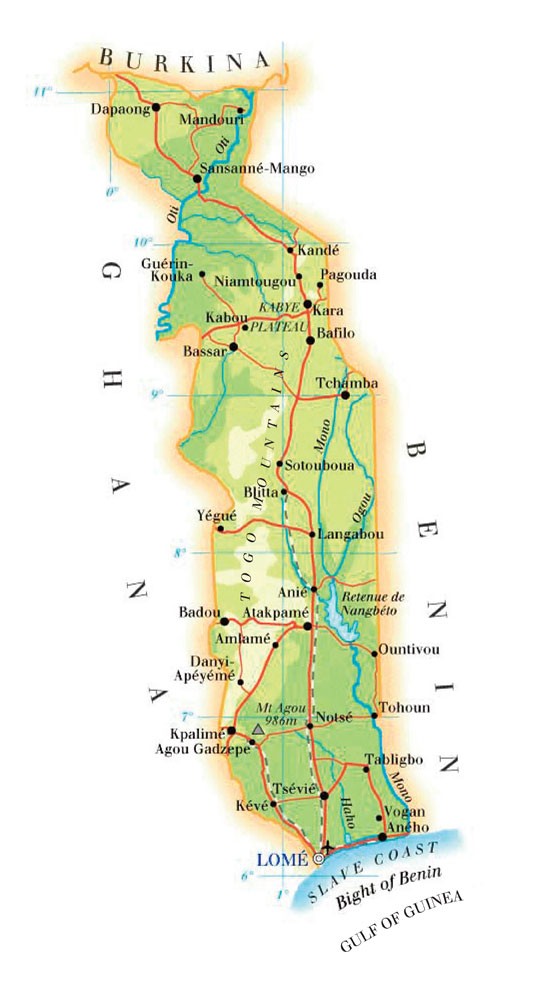
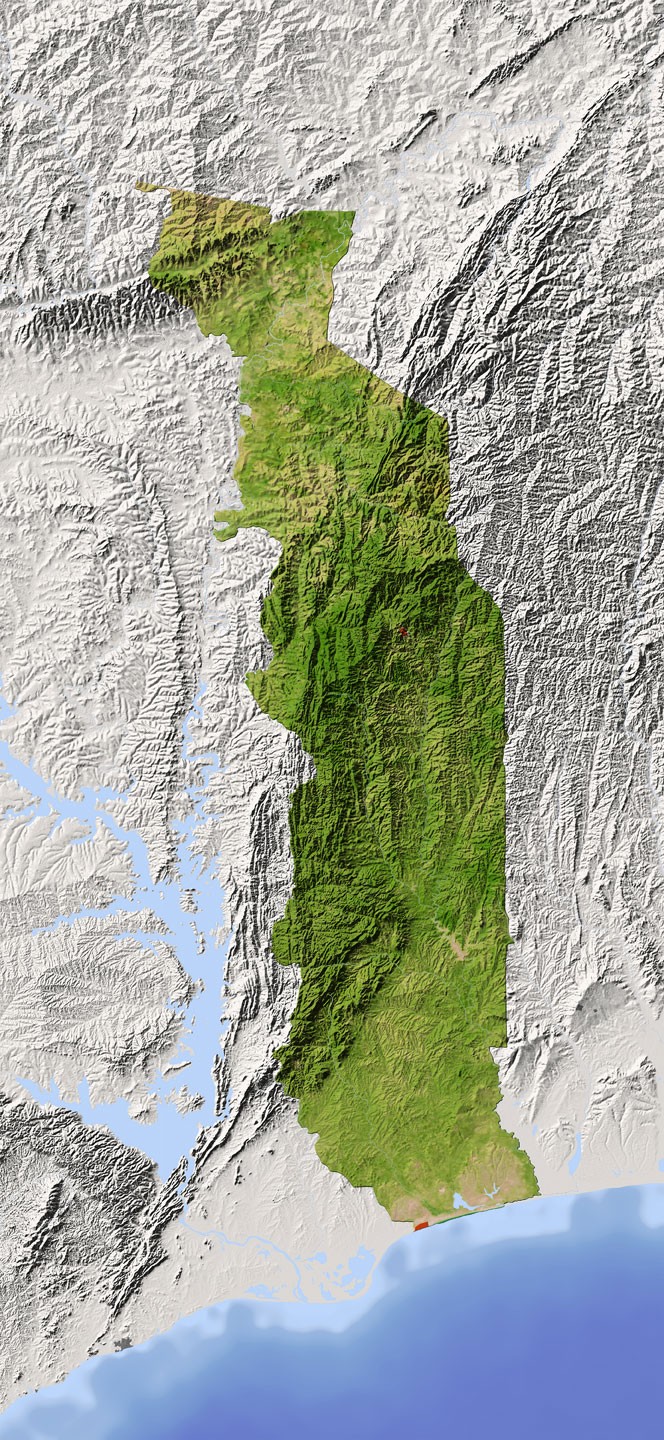
Togo is a narrow strip of land—no more than 130 kilometres (80 miles) wide—lying between Ghana and Benin in West Africa. It is one of Africa's smallest countries by area. At Togo's southern end is a strip of coast, just 56 kilometres (35 miles) long, edged by sandy beaches and lagoons. Here, the capital and port city of Lomé looks out across the Gulf of Guinea. Further inland, the land rises to the slopes of the Togo Mountains, which cover much of central Togo. North of these mountains lie savanna grasslands, across which flows the River Oti. Nearly all of Togo has a tropical climate with hot, humid weather all year round. The far north is hotter and drier. From the 16th century to the 18th century, this region of Africa was a major trading centre for Europeans to obtain slaves. Togo and the surrounding region thus became known as the "Slave Coast". Towards the end of the 19th century, the area came under German control and was known as Togoland.

People
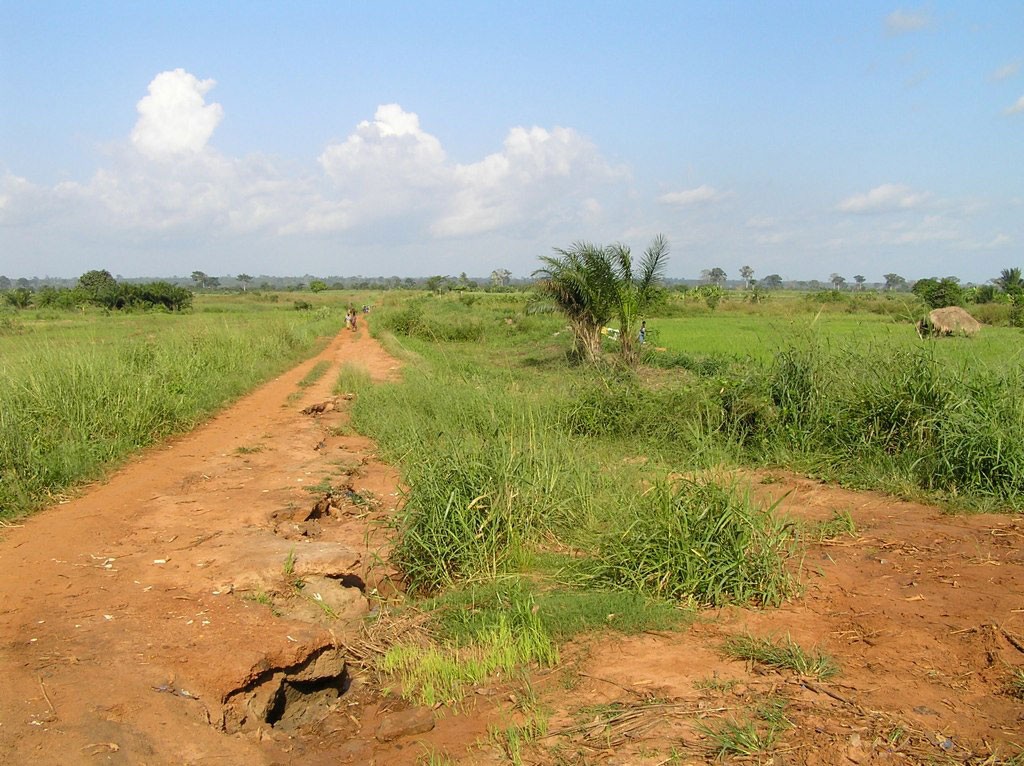
There are about 40 different ethnic groups in Togo. The Ewe, who live in the south, are the largest group; the majority in the north are Kabye. Togo was ruled by France from 1914–60. Today the country is independent but French is still the official language. Children learn French at school, but most people speak the language of their ethnic group as a first language.
Economy
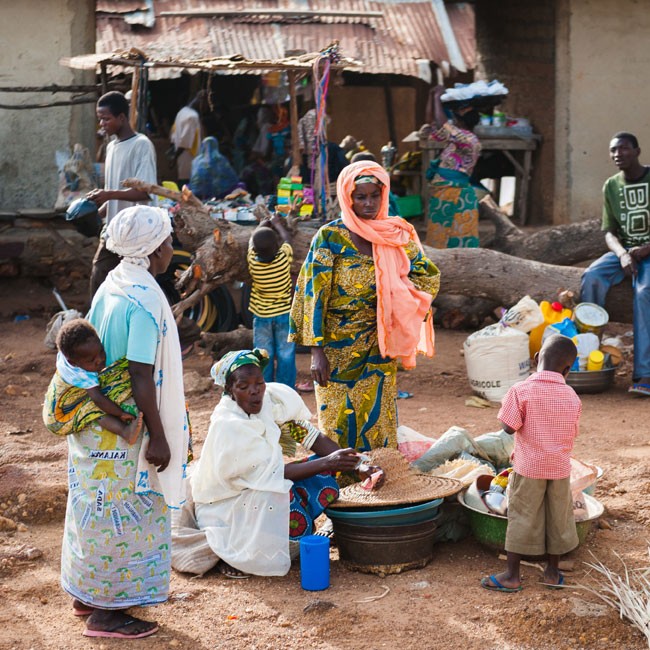
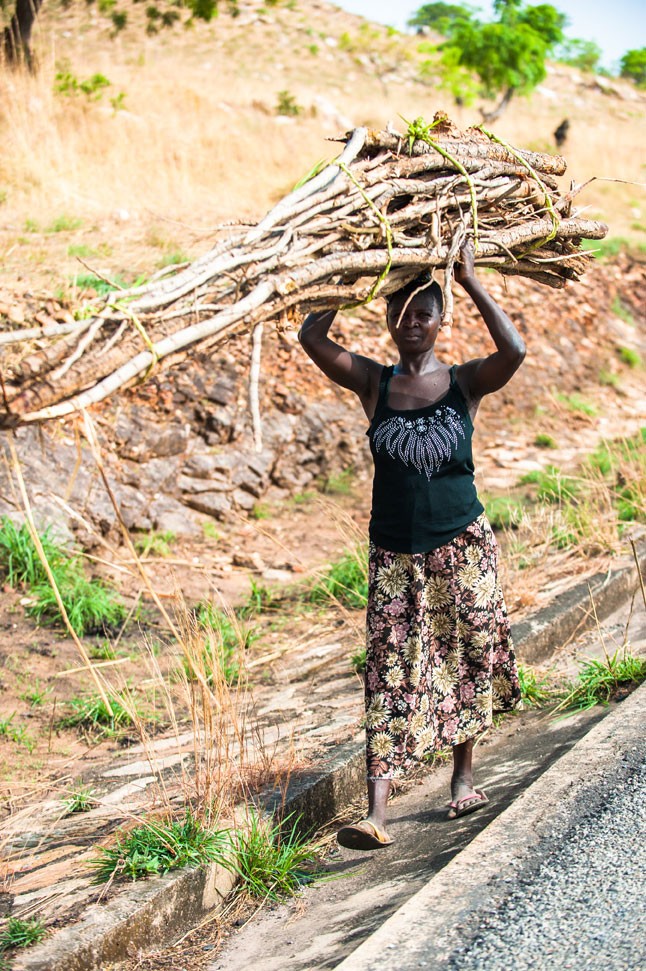
Togo’s economy relies on agriculture. About two-thirds of its people work on small farms growing maize, rice and yams for themselves and their families. Although it is a poor country, Togolese farmers are able to produce all the food the country needs. Along the coast, many people also fish for a living. There are some larger commercial farms producing cocoa, coffee beans and cotton.

Another large industry is phosphate mining. Togo has large reserves of phosphates, minerals used to make fertilizers, and the phosphate mining industry is vitally important. Because phosphates provide such a large part of its foreign income, Togo’s economy suffers badly when world prices of phosphates fall.
Animism
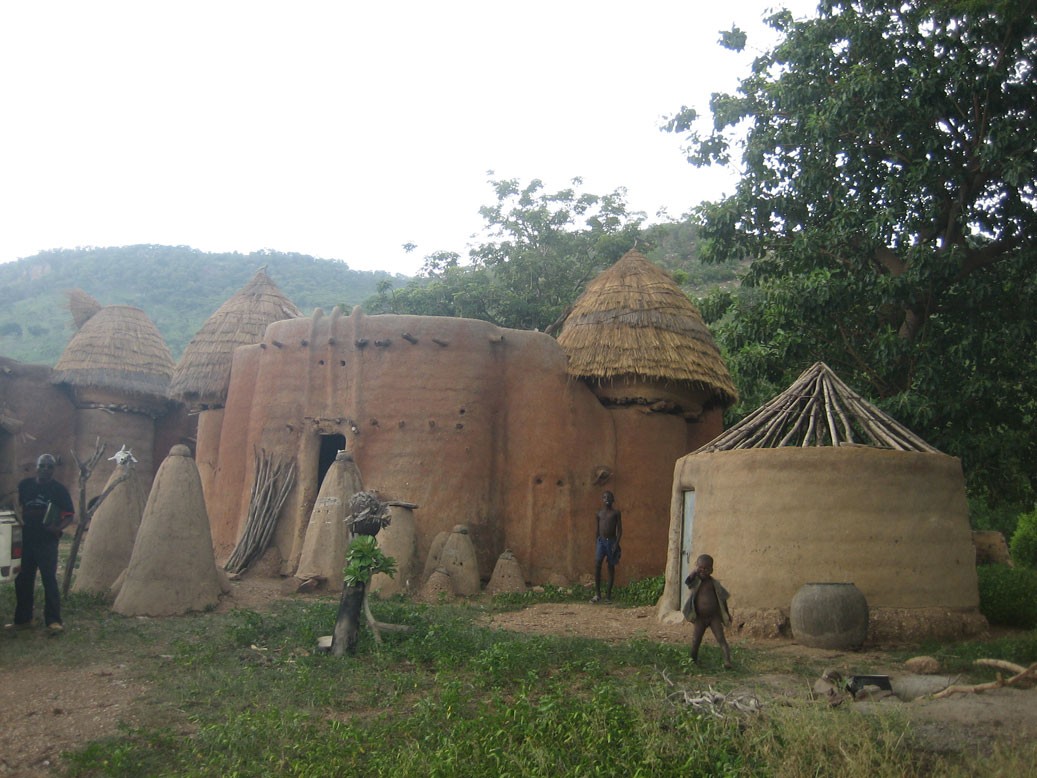
About half of Togo’s people follow a system of beliefs called animism. Animists believe that non-human things, such as plants, animals, mountains—even the weather—have spirits and can influence the human world. In some communities, people make statues or carve sculptures as dedications to these spirits. They might also put on village dances to ask the spirits for good health or a good harvest. Many people in Togo follow Christianity or Islam as well as animist beliefs.
Consultant: Nicholas Harris
Facts about Togo
Population 9,583,381 (2024 estimate)
Area 54,385 sq km
Highest point Mont Agou 986 m (3235 ft)
Capital Lomé, metro area population 2,188,376
Other major cities Sokodé (pop. 189,000), Kara (104,207), Kpalimé (75,084)
Languages French, Ewe, Mina, Kabye, Dagomba
Religions Christian 48%, Muslim 128%, indigenous beliefs (animist) 33%
Ethnicity Ewe, Mina, Kabye and others
Currency West African CFA franc (XOF)
Chief exports cotton, phosphates, coffee, cocoa

History of Togo
1000
Kwa and Voltaic peoples live in the region
15th century
Ewe peoples arrive from Nigeria and the Ane migrate from Ghana and the Ivory Coast
1700s
Denmark controls Togo’s coast as part of the “Slave Coast”, where thousands of West Africans are sold into the European slave trade
1847
German missionaries arrive in Togo and set up a trading post at Anécho
1884
Togo comes under German rule as a protectorate (colony) called Togoland. A forced labour scheme is set up to develop plantations in the south
1897
The coastal town of Lomé is made the colony’s capital
1914
British and French forces occupy and take control of Togoland during World War I
1922
Britain receives the League of Nations mandate to govern the western part of Togo while France governs the eastern part
1956
British-ruled area becomes part of the Gold Coast (now known as Ghana). The French part is renamed Togo
1960
The country, officially called the Togolese Republic, becomes independent from France
1963
Togo’s first president, Sylvanus Olympio, is assassinated by rebels and replaced by Nicolas Grunitzky
1967
Eyadéma Gnassingbé overthrws Grunitzky and assumes the presidency
1985
Rebels attempt to take over the government but French troops and Togolese authorities work together to stop them. Conflict between Ghana and Togo over the coup attempt closes the border between the two countries
1992
A new constitution is approved
1993
President Gnassingbé Eyadema dissolves the government, leading to protests and violent clashes. Thousands of people flee the country
1998
Eyadema is re-elected president
2005
Eyadema dies and his son, Faure Gnassingbé, takes over with the help of the military; uprisings across the country are brutally suppressed by the army; elections are held later and Gnassingbé is voted in as president
2009
Togo abolishes the death penalty
2010
Togo's $203 million debt is cancelled
2017–18
Protests against the 50-year-rule of the Gnassingbé family
2022
Togo joins the Commonwealth
pics


Without in any way limiting Q-files Ltd’s exclusive rights under copyright, any use of this publication to “train” generative artificial intelligence (AI) technologies to generate text is expressly prohibited. Q-files Ltd reserves all rights to license use of this work for generative AI training and development of machine learning language models.