
Africa

CITE
We have made every effort to follow citation style rules, but there may be some minor differences. If in doubt, please refer to the appropriate citation style manual.
Malawi. (2026). In Q-files Encyclopedia, Geography, Africa. Retrieved from
https://www.q-files.com/geography/africa/malawi
"Malawi." Geography, Africa, Q-files Encyclopedia, 30 Mar. 2026.
https://www.q-files.com/geography/africa/malawi.
Accessed 6 Aug. 2026.
Malawi 2026. Geography, Africa. Retrieved 6 August 2026, from
https://www.q-files.com/geography/africa/malawi
Geography, Africa, s.v. "Malawi," accessed August 6, 2026.
https://www.q-files.com/geography/africa/malawi


Malawi
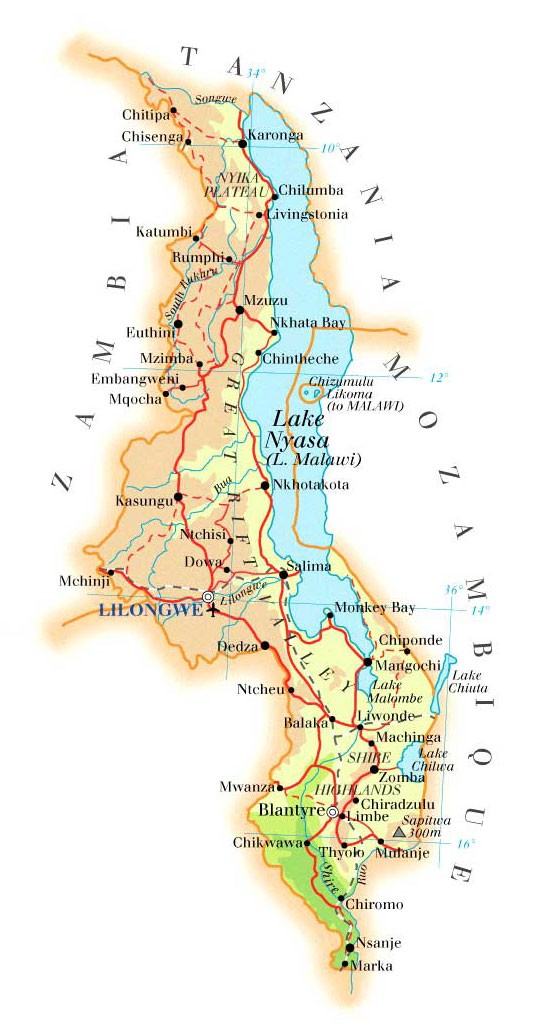
Much of eastern Malawi is taken up by Lake Nyasa (also called Lake Malawi), a large freshwater lake lined with beaches that lies in East Africa’s Great Rift Valley. In the west the land rises—quite steeply in the far north—to forested plateaux. Malawi has a tropical climate; it is hot and humid for much of the year with a warm, rainy season between November and April. High on the plateaux, temperatures are cooler. Malawi is one of the least developed countries in Africa. It is highly dependent on agriculture—especially tobacco—but suffers from frequent crop failures. However, the Malawian government has put in place programmes to improve the nation’s economy, education and health. The number of people living in poverty—and the nation’s dependence on foreign aid—are slowly decreasing.


People
Around nine major tribes live in Malawi. Several of them are descended from Bantu people who migrated from West Africa starting around 3000 years ago. Malawi takes its name from the Maravi, a people who arrived in the region 600 years ago. One group settled west of Lake Nyasa: their descendants today are the Chewa, Malawi’s largest ethnic group. Another group of Maravi settled in the south: their descendants are the Nyanja. Malawi has suffered from conflicts between different ethnic groups, but today most people live peacefully side by side.
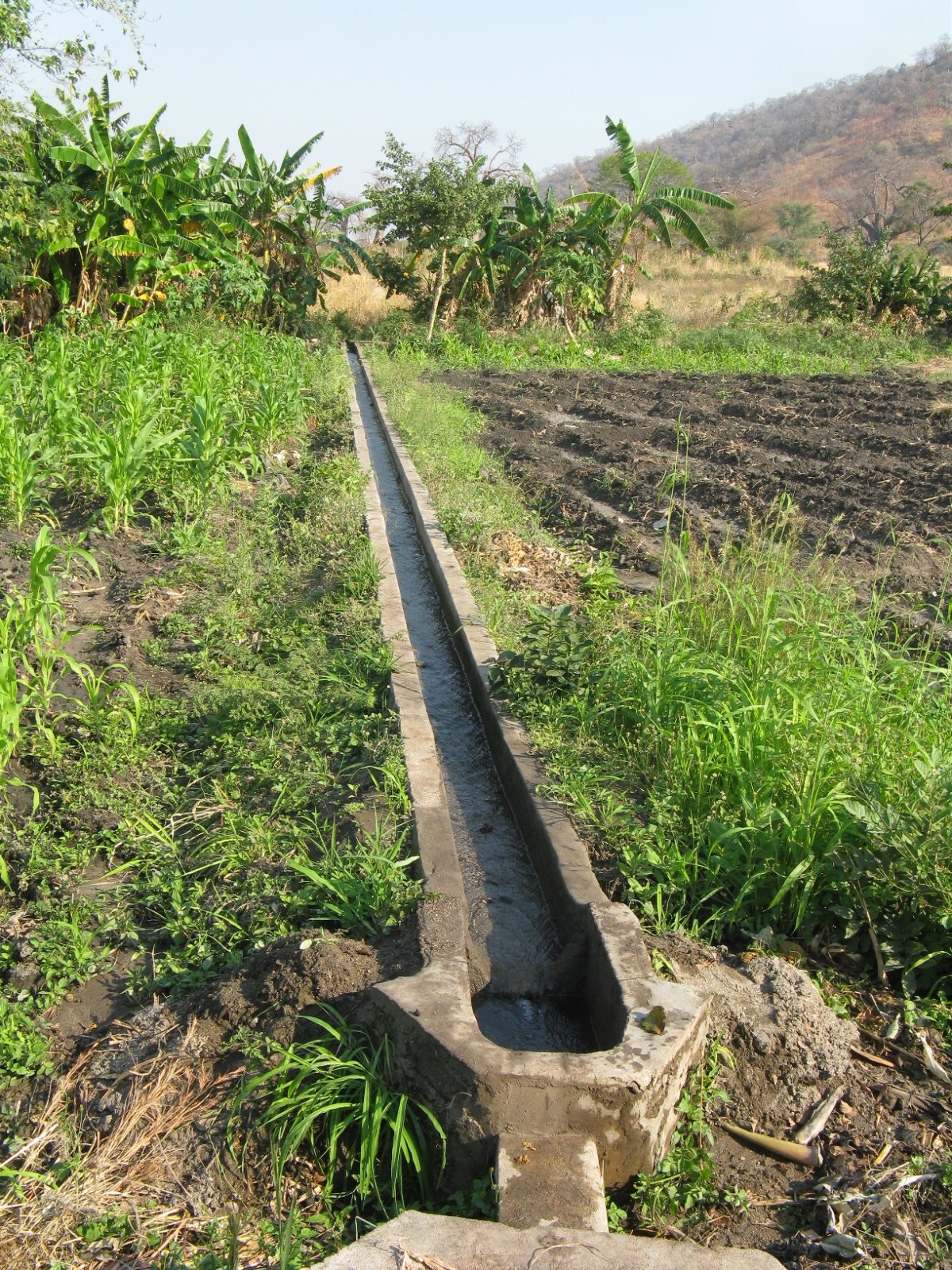
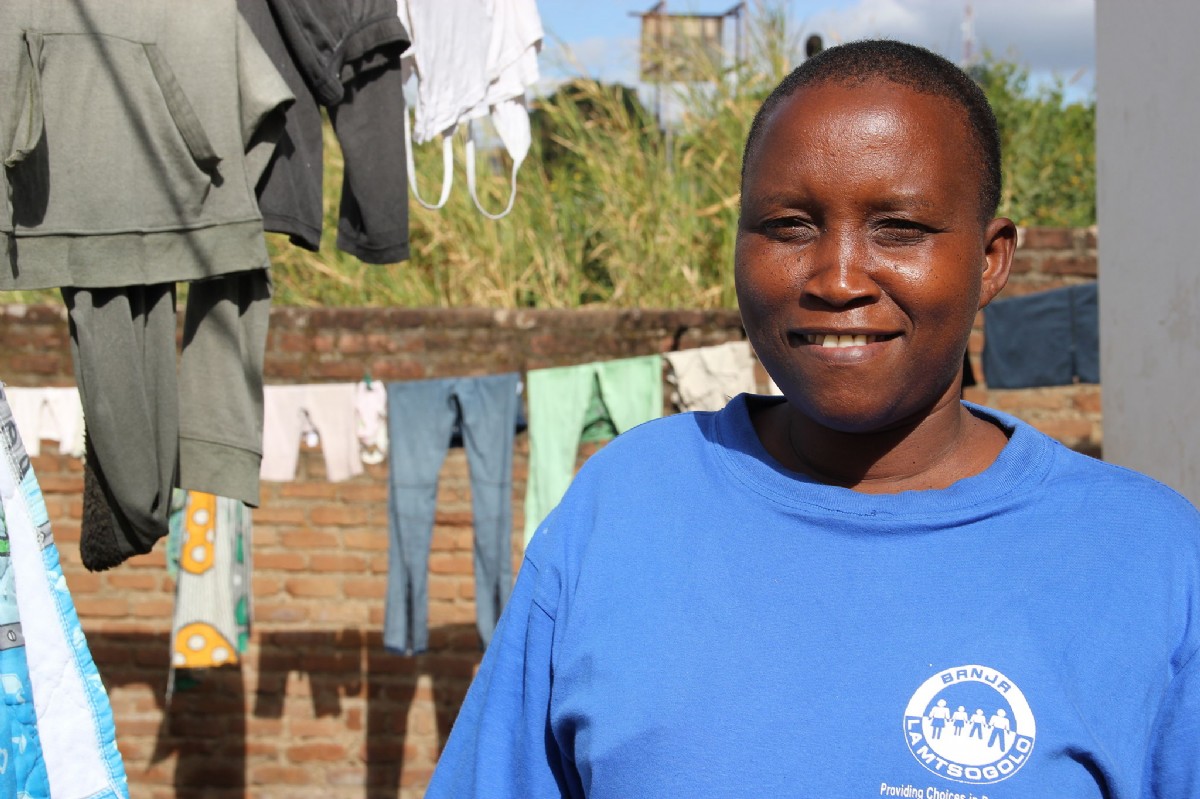
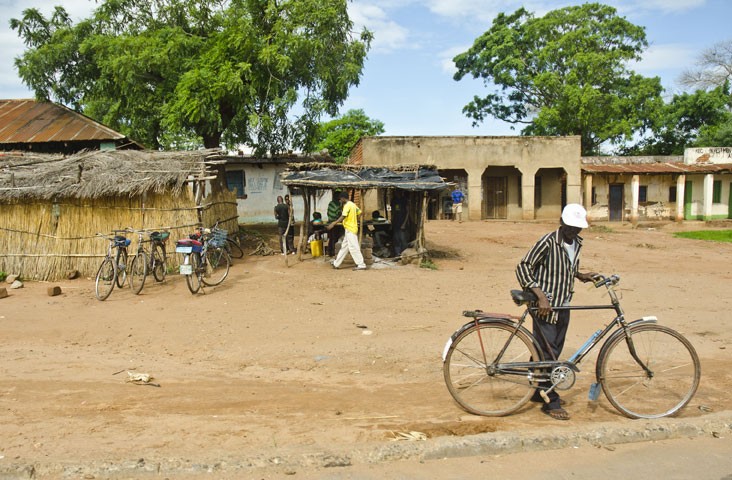
Around 9 out of 10 people in Malawi live in the countryside. Their houses are usually built with mud walls and thatched roofs. Inside are bamboo mats for sleeping on, and pots and pans to cook with. Outside, many families grow maize and vegetables, and tend cattle or goats.
Economy
Agriculture is the country’s main industry, employing 80% of the workforce. Most of Malawi’s foreign income comes from tobacco, which is grown on plantations in the central uplands. However, the world demand for tobacco is diminishing, so Malawi’s government is encouraging farmers to grow different crops, such as spices. Tea, also grown in the warm, wet highlands, is another major cash crop. A combination of natural disasters, such as droughts and floods, has led to frequent crop failures and food shortages, and Malawi needs thousands of tonnes of food aid each year. Since 2006, a government programme to help farmers buy fertilizer has been a huge boost to farming.
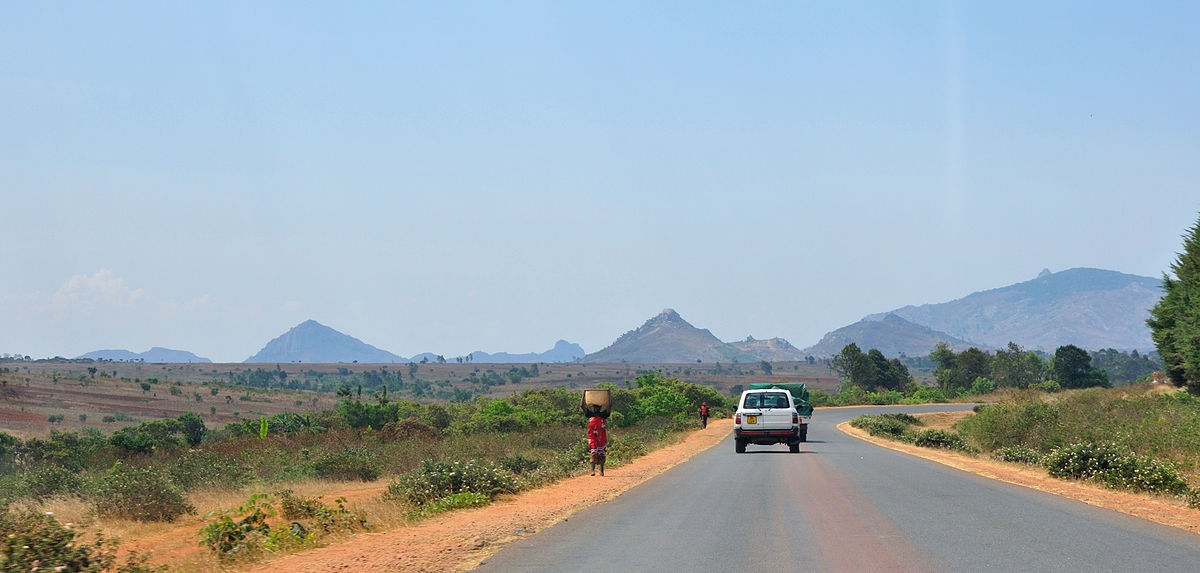
Malawi’s economy has been held back by bad roads, poor electricity and water supply, and lack of a widespread telephone network. Today, programmes are slowly tackling these problems. Malawi’s manufacturing industry is based around food processing and making wood products, medicines, cement, clothes and shoes.
Health
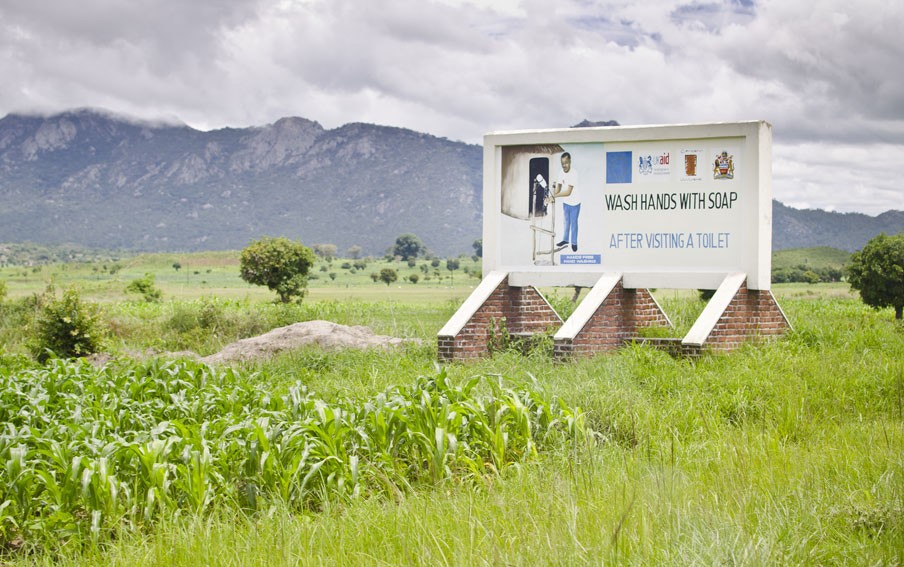
The life expectancy of someone born in Malawi is about 67 years old. Around 38 out of every 1000 babies born are likely to die before their first birthday. In addition, Malawi has been badly hit by the HIV/AIDS epidemic: at least 10% of adults are living with the disease. Other infectious diseases, such as tuberculosis, typhoid and malaria, are common. The key reasons for Malawi’s healthcare problems are lack of hospitals, clinics and trained healthcare workers (such as doctors and nurses). The government and international organizations are working towards improving the shortfall.
Consultant: Nicholas Harris
Facts about Malawi
Population 21,240,689 (2024 estimate)
Area 118,480 sq km (45,745 sq miles)
Highest point Sapitwa (Mount Mlanje) 3002 m (9849 ft)
Capital Lilongwe (population 1,122,000)
Other major cities Blantyre (800,264), Mzuzu (221,272), Zomba (105,013)
Languages Chichewa and English (official languages), Chinyanja, Chiyao, Chitumbuka
Religions Christian 82%, Muslim 13%, traditional religions and other 5%
Ethnicity Chewa 33%, Lomwe 17%, Yao 13%, Ngoni 12%, Tumbuka 9%, Nyanja 6%, Sena 4%, Tonga 2%, Ngonde 1%, other 3%
Currency Kwacha (MWK)
Chief exports Tobacco, tea, sugar, cotton, coffee, peanuts, wood products

History of Malawi
AD 10th century
Bantu people from West Africa start to settle in the area that is now Malawi.
15th century
The Maravi Empire is founded by ancestors of Malawi’s modern Chewa people. The empire trades slaves, ivory and iron with Arab and Portuguese traders.
19th century
Yao people from Mozambique arrive in southern Malawi, and Zulu people settle in north and central Malawi.
1840
Arab traders set up a post at Nkhotakota for the trading of slaves.
1859
Missionary and explorer David Livingstone reaches Lake Nyasa
1889
A British protectorate is proclaimed over the Shire Highlands. This is extended in 1891 to include the whole of present-day Malawi as the British Central Africa Protectorate
1907
The British Central Africa Protectorate is renamed Nyasaland
1915
A rebellion against British colonial rule in Nyasaland is led by John Chilembwe, a Baptist minister, who protests against the treatment of Africans working on European-owned plantations. The revolt is put down by the authorities after only a few days and the rebel leaders, including Chilembwe, are executed. Today, Chilembwe is celebrated as a hero of independence, and John Chilembwe Day is observed annually on 15th January
1950s
Led by Dr Hastings Banda, the Nyasaland African Congress party pushes for Malawian independence.
1953
Nyasaland becomes part of the Central African Federation, a semi-independent group of countries including modern Zambia and Zimbabwe.
1964
Nyasaland becomes independent, renaming itself Malawi. Dr Hastings Banda is the new president. Malawi is a single-party state, in which only one party has the right to form a government.
1994
President Hastings Banda is voted out in Malawi’s first democratic elections.
2012–14
Joyce Banda (no relation to Hastings Banda) serves as Malawi’s first female president.
2022
Deadliest outbreak of cholera in Malawi’s history breaks out. It starts in Machinga district following tropical storm Ana (January) and Cyclone Gombe (March). Floods lead to the displacement of people who lack access to safe water and sanitation.
2023
(February-March) Cyclone Freddy, an exceptionally long-lived and powerful tropical storm, brings high winds and torrential rains to southeast Africa. It causes devastation in large areas of Malawi, with widespread flooding, landslides in Blantyre, houses, roads and bridges washed away, power lines brought down and the nation's hydro-electric dam made inoperable. More than 500 people lose their lives and 180,000 people are forced to evacuate their homes.
pics

Without in any way limiting Q-files Ltd’s exclusive rights under copyright, any use of this publication to “train” generative artificial intelligence (AI) technologies to generate text is expressly prohibited. Q-files Ltd reserves all rights to license use of this work for generative AI training and development of machine learning language models.