
British Empire

CITE
We have made every effort to follow citation style rules, but there may be some minor differences. If in doubt, please refer to the appropriate citation style manual.
British Imperial Century: Africa. (2026). In Q-files Encyclopedia, History, British Empire. Retrieved from
https://www.q-files.com/history/british-empire/british-imperial-century-africa
"British Imperial Century: Africa." History, British Empire, Q-files Encyclopedia, 30 Mar. 2026.
https://www.q-files.com/history/british-empire/british-imperial-century-africa.
Accessed 21 Sep. 2026.
British Imperial Century: Africa 2026. History, British Empire. Retrieved 21 September 2026, from
https://www.q-files.com/history/british-empire/british-imperial-century-africa
History, British Empire, s.v. "British Imperial Century: Africa," accessed September 21, 2026.
https://www.q-files.com/history/british-empire/british-imperial-century-africa


British Imperial Century: Africa
British interest in Africa began at the end of the 18th century with the founding of Sierra Leone, a settlement for black Britons and freed African American slaves. The first British settlers arrived in southern Africa after the British Empire took over the Cape Colony from the Dutch at the beginning of the 19th century. Apart from a few trading posts on the coast of West Africa, British colonization of the continent began in the 1880s, firstly through the establishment of a British Protectorate in Egypt and Sudan, and then as part of the "Scramble for Africa". By the early years of the 20th century, the British Empire had annexed a significant portion of African territory.


South Africa
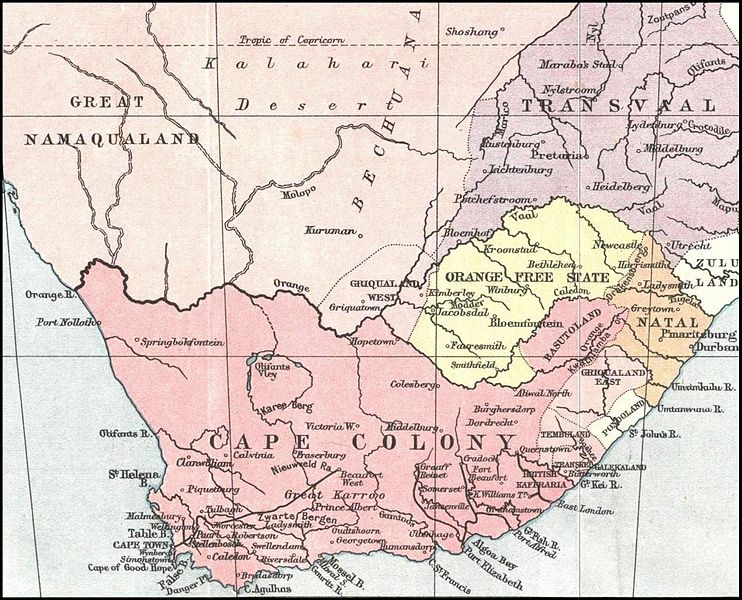
The Dutch East India Company founded the Cape Colony, named after the Cape of Good Hope, on the southern tip of Africa in 1652. It served as a port for its ships travelling to and from its colonies in the East Indies. The port and surrounding land rapidly expanded into a colony for Dutch and Huguenot (French Protestant) settlers, who became known as Boers or Afrikaners. In the winter of 1794-95, during the French Revolutionary Wars, French troops invaded the Dutch Republic. Britain occupied Cape Colony in 1795 to prevent it falling into French hands. The British occupation continued until the Peace of Amiens in 1802, when it was returned to the Dutch. In 1806, during the Napoleonic Wars, the British re-occupied the colony. This time its control was confirmed at the Congress of Vienna in 1815.

Britain inherited Cape Colony's large Dutch-speaking population as well as the indigenous Khoisan people. British immigration began to rise after 1820. Thousands of Boers, who were resentful of British rule, migrated inland during what was called the Great Trek in the late 1830s and early 1840s. The Boers eventually established two permanent republics: the South African Republic or Transvaal Republic and the Orange Free State. Their attempt to establish a third, the Natalia Republic, around the British settlement of Port Natal (now Durban) on the southeast coast failed when, in 1843, the British annexed it, proclaiming it the Colony of Natal.

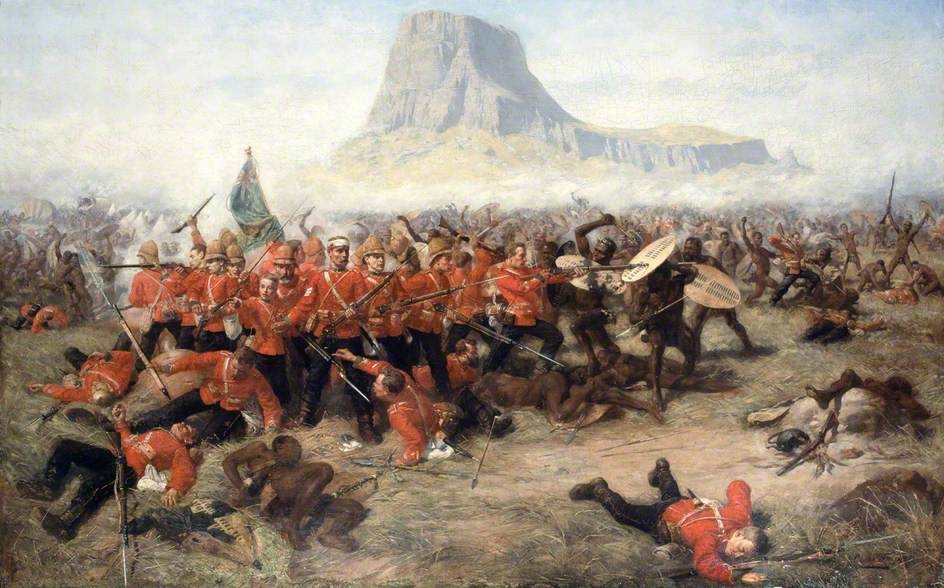
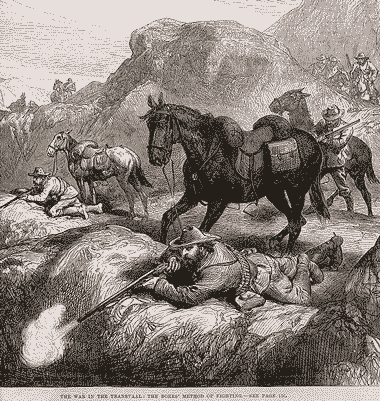
Following the discovery of diamonds in 1867 and gold in 1884, the British intensified their efforts to conquer the territories northeast of Cape Colony. This brought them into conflict with both the Boer republics and the indigenous African peoples. The British defeated Zulu resistance in the Anglo-Zulu War of 1879, despite an early Zulu victory at the Battle of Isandlwana. The Boers resisted British attempts to take over the Transvaal Republic (which was annexed as a British colony in 1877) during the First Boer War (1880–81) through the successful use of guerrilla warfare tactics.
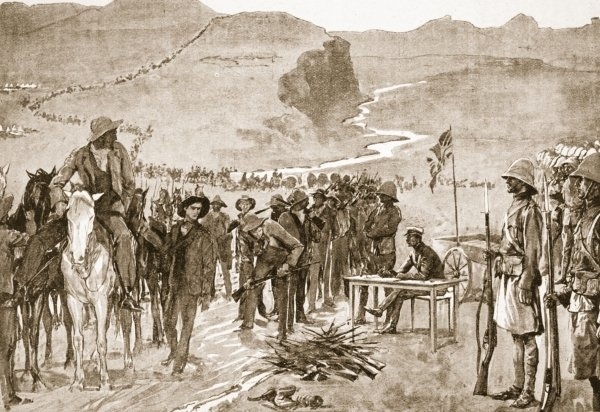
The British returned with greater numbers and more experience of local conditions to fight the Second Boer War in 1899. Despite suffering heavy casualties, this time they were victorious in 1902. The two independent Boer republics were absorbed into the British Empire as the Transvaal Colony and the Orange River Colony. More than 27,000 Boer women and children perished in the British concentration camps. With the unification of the Cape Colony, Natal Colony, Transvaal Colony and the Orange River Colony, the Union of South Africa came into being as a Dominion of the British Empire in 1910.
Egypt and Sudan
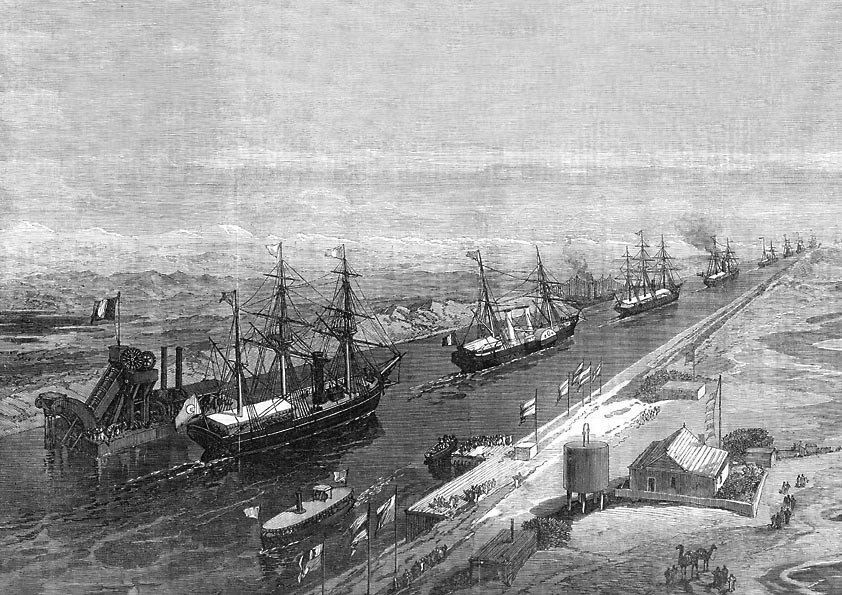
Built by the French Suez Canal Company, the Suez Canal in Egypt, linking the Mediterranean with the Indian Ocean, opened in 1869. To begin with, the British opposed the Canal, but once it was opened, its strategic value quickly became obvious; it was soon dubbed the "jugular vein of the Empire". In 1875, Britain bought the indebted Egyptian ruler Isma'il Pasha's 44% shareholding in the Suez Canal. Now Britain and the co-owners of the Canal, France, had a significant say in the government of Egypt itself.
Local unrest caused the British to invade in 1882. Following the crushing of the Egyptian army at the Battle of Tel El Kebir, the British gained full control of the Canal, despite the fact it remained, in name at least, part of the Ottoman Empire. Egypt, along with the territories it had annexed in Sudan, became a British Protectorate. The 1888 Convention of Constantinople made the Suez Canal officially neutral territory.


Egypt's possession of Sudan fell to rebel Mahdist forces led by Muhammad Ahmad, who defeated an Egyptian garrison at the Siege of Khartoum in 1885. General George Gordon, who attempted to defend the city, was killed in the fighting. In the 1890s, the British sought to re-establish their control over Sudan. General Herbert Kitchener led the British forces against the Mahdists in 1896. Kitchener's campaigns culminated in a decisive victory in the Battle of Omdurman in 1898. Sudan was now to be run by a governor-general appointed by Egypt with British consent. In effect, Sudan had become another colony of the British Empire.
Scramble for Africa
Keen to obtain cheap sources of raw materials, such as copper, cotton, rubber, palm oil, cocoa, diamonds, tea and tin, and driven by rivalry for colonial gains, Britain, France, Germany and the other Western European powers turned their attention to Africa in the late 19th century.
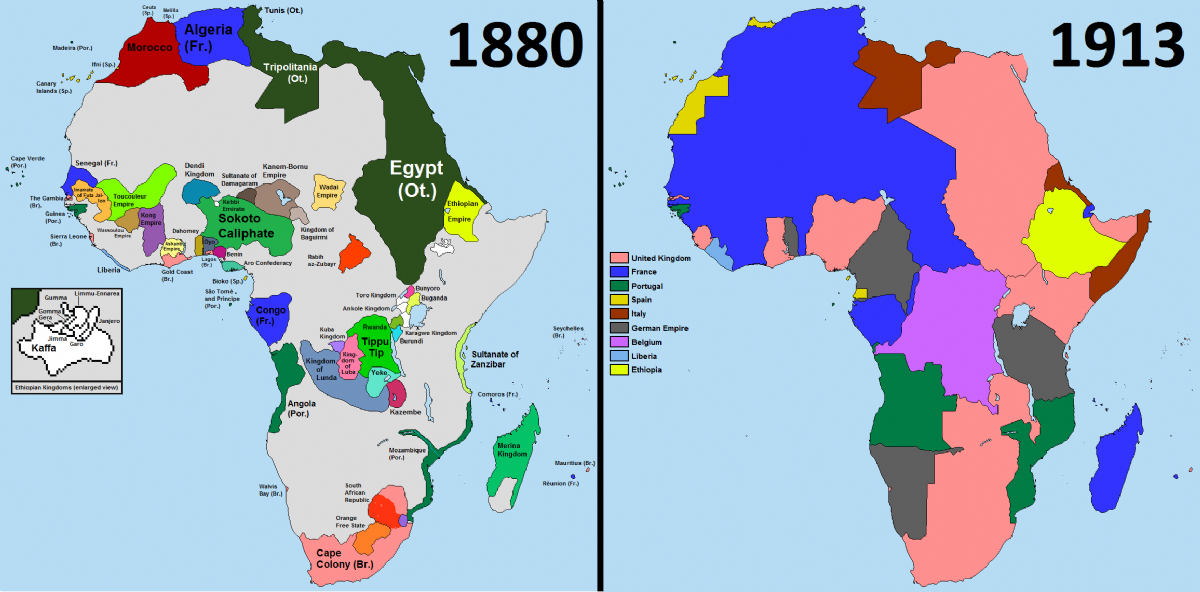
In 1880 only a tiny portion of Africa was colonized by European nations. Just 20 years later, Europe had laid claim to the entire African continent, with the exception of Ethiopia and Liberia. In 1884–85 a conference was held in Berlin to decide how Africa was to be divided up—but no African representatives were present to decide their own future. In what was later called the "Scramble for Africa", the Berlin Conference decided that a European power's claims would be recognized if it had "effective occupation" of an African territory—in other words, if it had made treaties with local leaders, if it flew its flag there and if it established an administration to govern it with a police force to keep order. On this basis, African territory was rapidly shared out between the European powers, with Britain one of the main claimants.
East Africa
Following negotiations with Germany, which had set up a protectorate over the Sultan of Zanzibar's coastal possessions in 1885, the British East Africa Company gained control over the coast of what is now Kenya in exchange for recognition of German control over the coast of Tanganyika (present-day Tanzania). The British government took over the territory in 1895. It also claimed the interior as far west as Lake Naivasha, forming the East Africa Protectorate. This expanded to include present-day Uganda in 1902. With the beginning of colonial rule, the cooler inland highlands were settled by white settlers from Britain and South Africa, who set up coffee plantations there using the local Kikuyu people for labour.
A railway, the Uganda Railway, linking the port city of Mombasa with the shore of Lake Victoria, was built by the British in 1896. Built using Indian coolies as labourers, the rail link allowed the British to transport people, soldiers and goods across the East Africa Protectorate and helped ensure their domination of the African Great Lakes region.

Sierra Leone and the Gambia

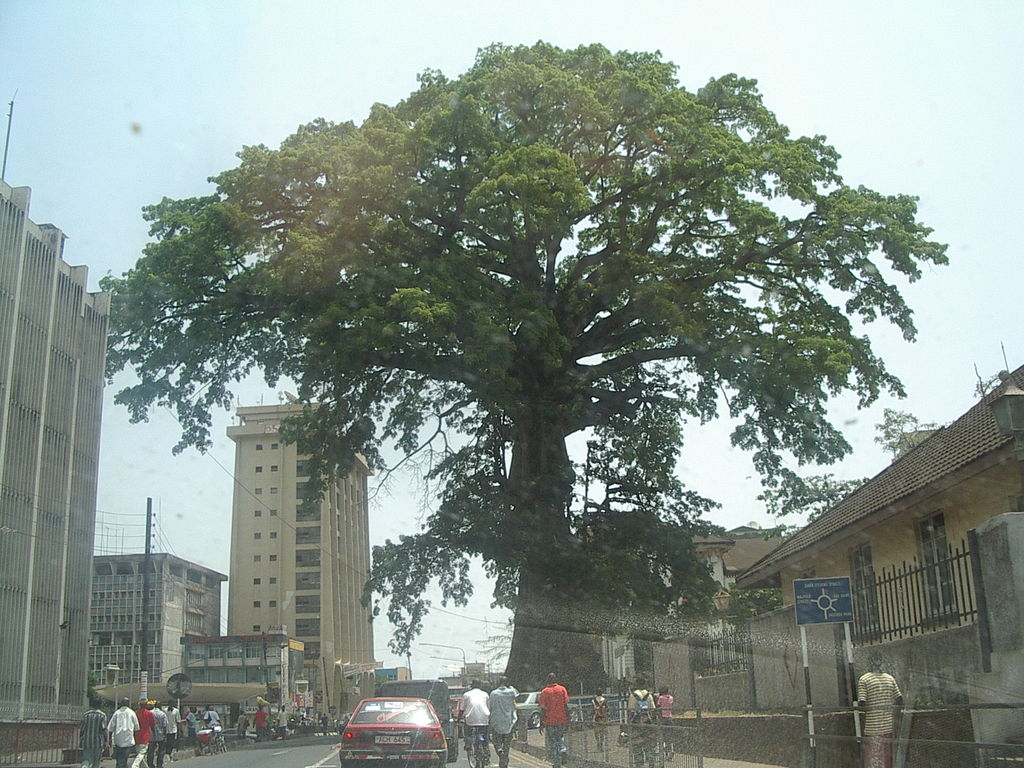
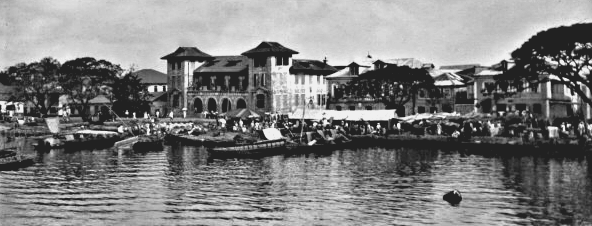
A piece of land on the coast of Sierra Leone in West Africa, purchased from a local chief, was first settled by black Britons and freed African American slaves (many of them who had moved north to Nova Scotia) after 1787. The settlement of Freetown was founded in 1792. The population expanded following the abolition of the slave trade in 1807 and Sierra Leone became established as a Crown Colony in 1808. Former West Indian and African soldiers also settled there after fighting for Britain in the Napoleonic Wars (1803–15). The descendants of these black settlers are called Creoles or Krios.
Following the Berlin Conference in 1884–85, Britain decided it needed to establish its rule over the area inland, so in 1896, Britain annexed it, naming the new territory the Sierra Leone Protectorate. The Gambia became a Crown colony, called British Gambia, in 1888. An agreement with France in 1890 established the present boundaries.
Gold Coast (Ghana)
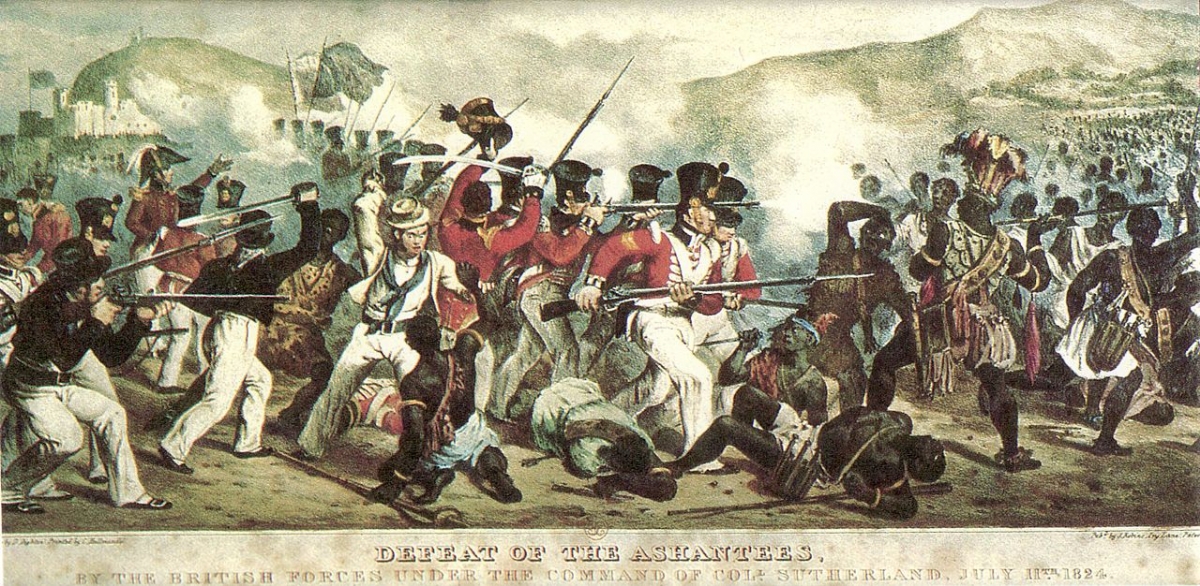
In 1874, the British government formed the Gold Coast colony, having taken over lands privately held by British trading companies after 1821 and purchased territory from Denmark and the Netherlands. Britain was keen to acquire the region's gold, metal ores, diamonds, ivory, pepper, timber, grain and cocoa. It steadily expanded its colony through the invasion and subjection of local kingdoms—four wars were fought against the Asante (Ashanti) people between 1822 and 1900. Following British victories, the Gold Coast Protectorate (present-day Ghana) was established in 1901.
Nigeria
Britain established a foothold in what would one day become Nigeria with the annnexation of Lagos in 1861. British claims to territories inland received recognition from other European nations at the Berlin Conference in 1885. By gaining the ancient Kingdom of Benin (and its resources of palm oil and rubber) through conquest in 1897, and acquiring control of the Royal Niger Company's territory in 1900, Britain consolidated its hold over the area of modern Nigeria. In 1901, Nigeria became a British Protectorate, and part of the British Empire.


Nyasaland (Malawi)
After Scottish explorer David Livingstone explored the area around the River Zambezi from 1858 onwards, a number of British missionaries and settlers came to the region around Lake Nyasa. When the Portuguese disputed British claims to the area, the British Central Africa Protectorate (BCA) was proclaimed in 1889. Under the terms of the Berlin Conference, negotiations with the Portuguese and German governments established its boundaries (the same area as present-day Malawi) and the Protectorate was formally ratified (approved) by the British government in May 1891. The Protectorate was renamed Nyasaland in 1907.
Bechuanaland (Botswana)
Alerted by reports that Boers from the Transvaal Republic were intending to expand their territory northwestwards into Bechuanaland, the British government sent troops north from Cape Town to press their own claims. After making treaties with several African chiefs, the British established the Bechuanaland Protectorate in 1885. Ten years later, Tswana country south of the Molopo River, the Crown Colony of Bechuanaland, was incorporated into the Cape Colony.


Cecil Rhodes
The expansion of British-ruled territories in Africa north of Cape Colony was led by an enthusiastic champion of the British Empire, British-born businessman Cecil Rhodes (1853–1902). Having moved to South Africa as a young man and built up a successful diamond mining business, Rhodes used his wealth and that of other investors to pursue his dream of expanding the British Empire into territories to the north of Cape Colony. His goal was to obtain from the most powerful African chiefs mineral concessions (agreements to mine the land) for his privately owned British South Africa Company (BSAC).

Having finally negotiated a concession from Lobengula, king of Matabeleland (in present-day Zimbabwe) in 1888, Rhodes obtained a charter from the British Government for the BSAC to rule, police and make new treaties and concessions elsewhere. White settlers moved north to farm the new BSAC lands of "Zambesia", a large area of fertile land between the River Limpopo and Lake Tanganyika. This triggered rebellion by the local Ndebele and the Shona people, but in the two Matabele Wars (1893–94 and 1896–97), BSAC troops were victorious.
In 1895 Zambesia became known as "Rhodesia", reflecting Rhodes's popularity among the settlers. "Southern Rhodesia" was officially adopted in 1898 for the part south of the River Zambezi (which later became Zimbabwe). The northern part later became Northern Rhodesia (now Zambia).
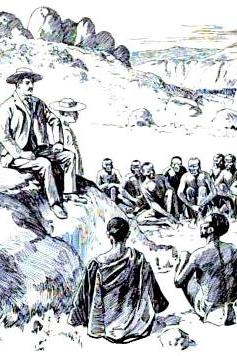
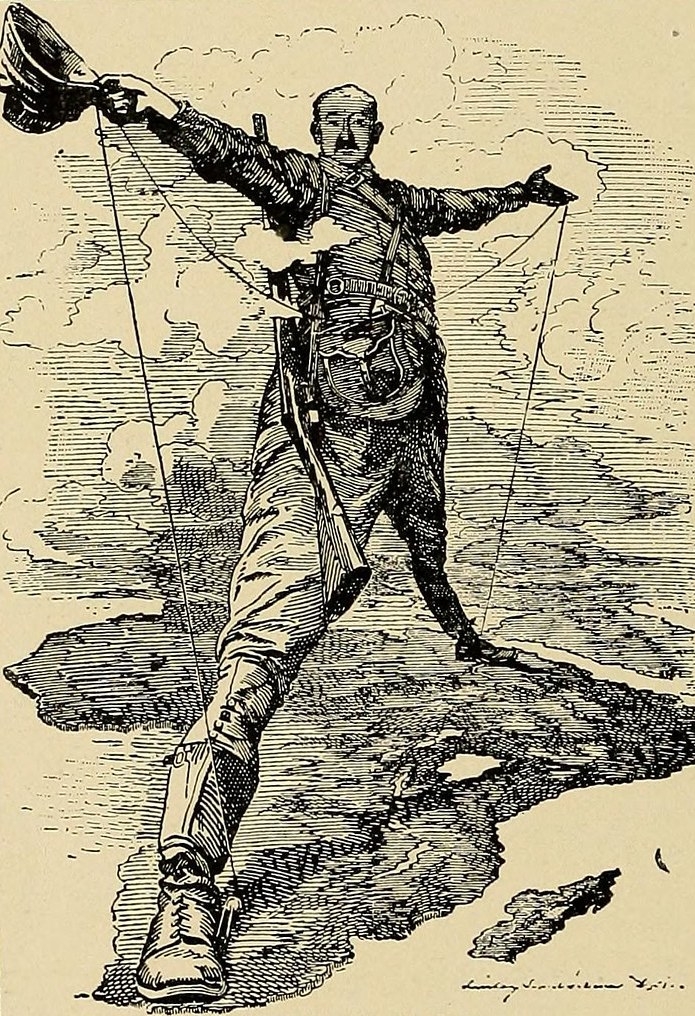
Meanwhile, in 1890, Rhodes became Prime Minister of the Cape Colony. He introduced an Act to push the native African people, whom he described as "in a state of barbarism", from their lands and make way for industrial development. His ambition was for British people to settle in colonies across the Empire and for each to be self-governing and represented in a single parliament in London.
British gains in Southern and East Africa prompted Rhodes to urge the British government to build a "Cape to Cairo" railway, linking the Suez Canal to the south of the continent. It would run through what Rhodes envisaged as a continuous "red line" of British possessions (many maps of the time coloured British possessions pink or red). However, in 1891, Germany secured the territory of German East Africa (present-day Tanzania), which meant that his dream could not be fulfilled.
Dogged by ill health throughout his life, Rhodes died from heart failure in 1902, aged 48. He was buried in the Matobo Hills of what was then Southern Rhodesia.
Consultant: Philip Parker
pics

Without in any way limiting Q-files Ltd’s exclusive rights under copyright, any use of this publication to “train” generative artificial intelligence (AI) technologies to generate text is expressly prohibited. Q-files Ltd reserves all rights to license use of this work for generative AI training and development of machine learning language models.