
Africa

CITE
We have made every effort to follow citation style rules, but there may be some minor differences. If in doubt, please refer to the appropriate citation style manual.
Liberia. (2026). In Q-files Encyclopedia, Geography, Africa. Retrieved from
https://www.q-files.com/geography/africa/liberia
"Liberia." Geography, Africa, Q-files Encyclopedia, 30 Mar. 2026.
https://www.q-files.com/geography/africa/liberia.
Accessed 22 Sep. 2026.
Liberia 2026. Geography, Africa. Retrieved 22 September 2026, from
https://www.q-files.com/geography/africa/liberia
Geography, Africa, s.v. "Liberia," accessed September 22, 2026.
https://www.q-files.com/geography/africa/liberia


Liberia
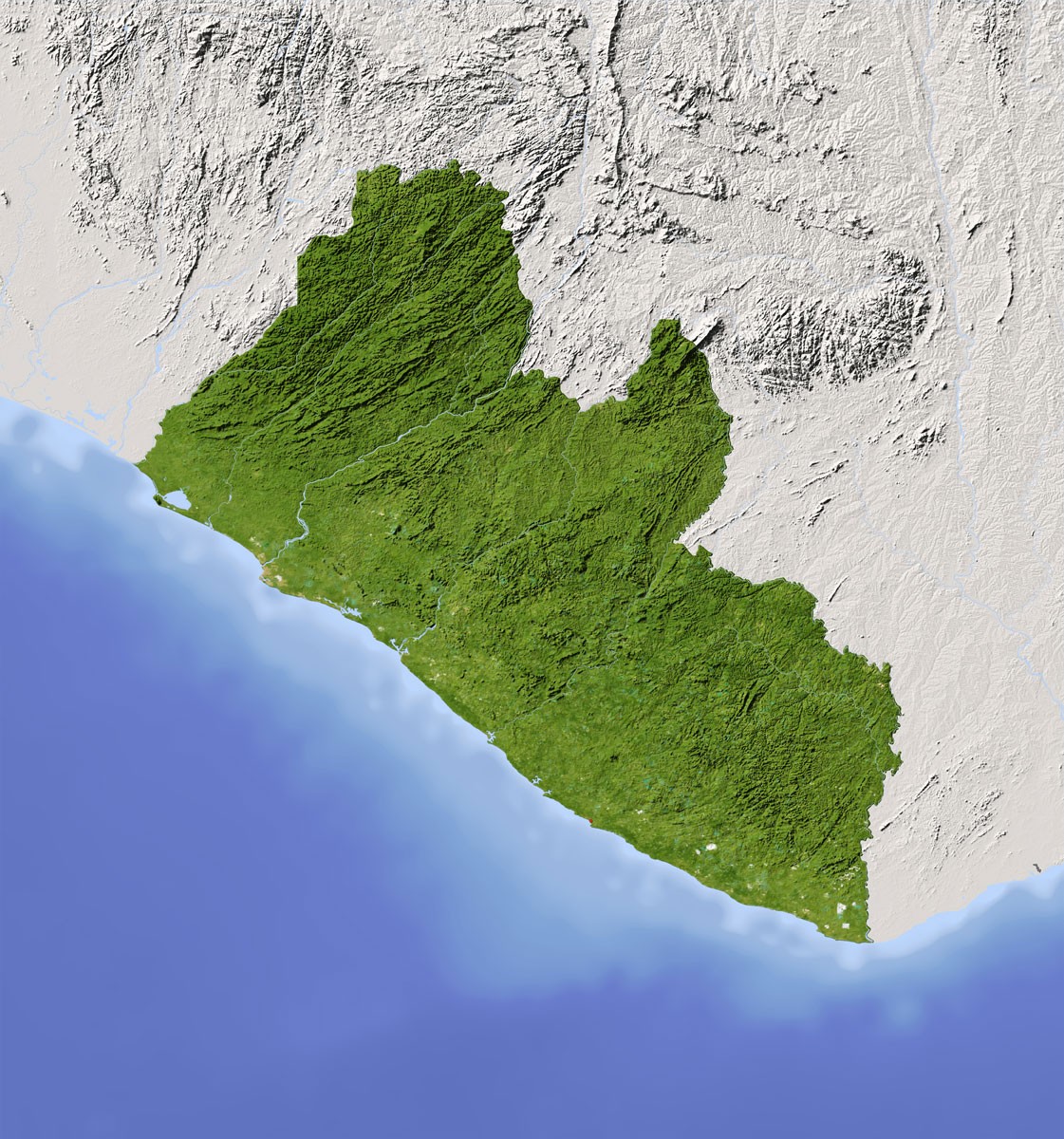
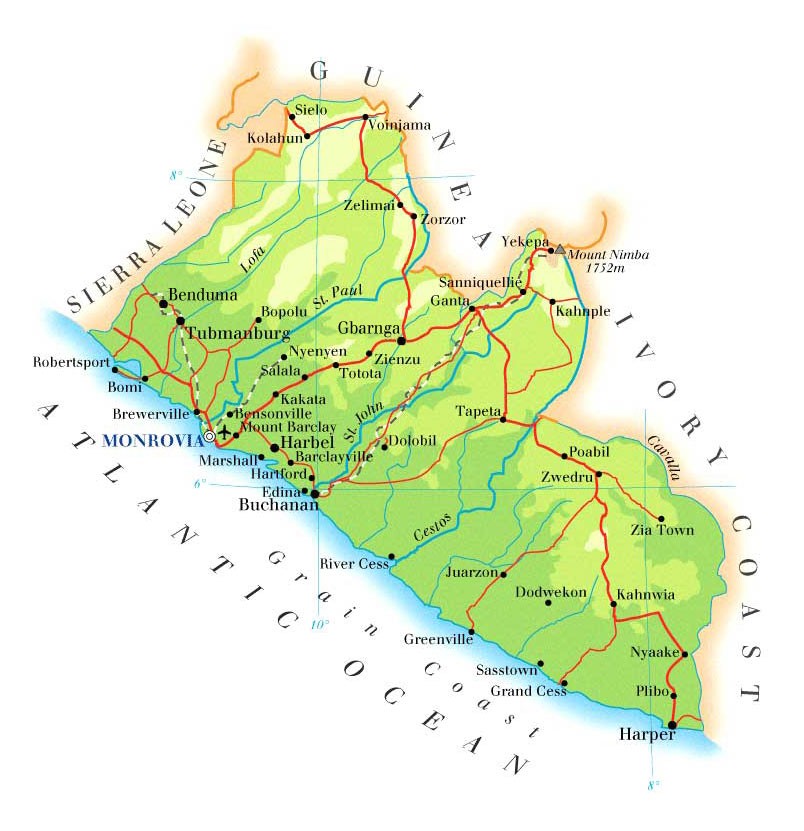
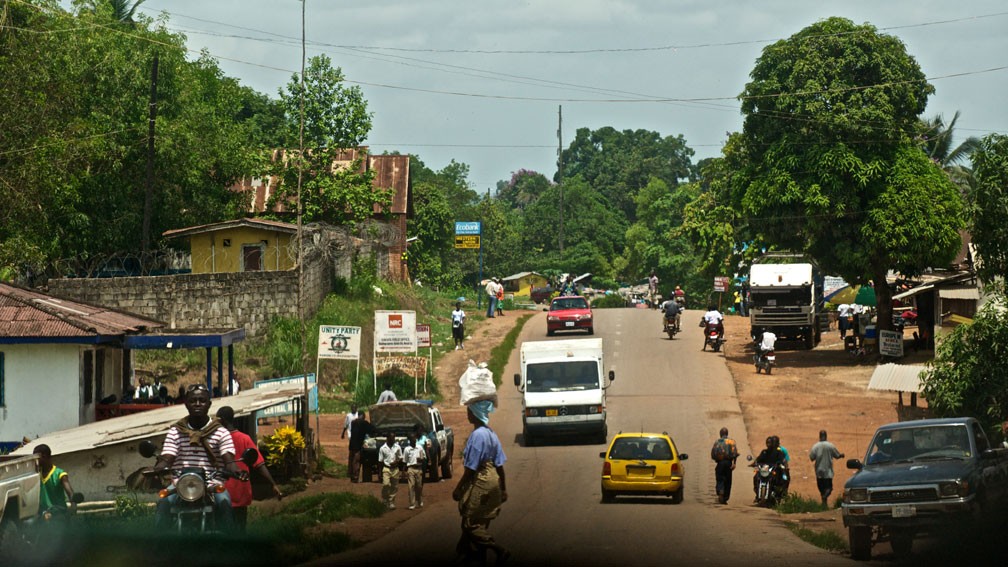
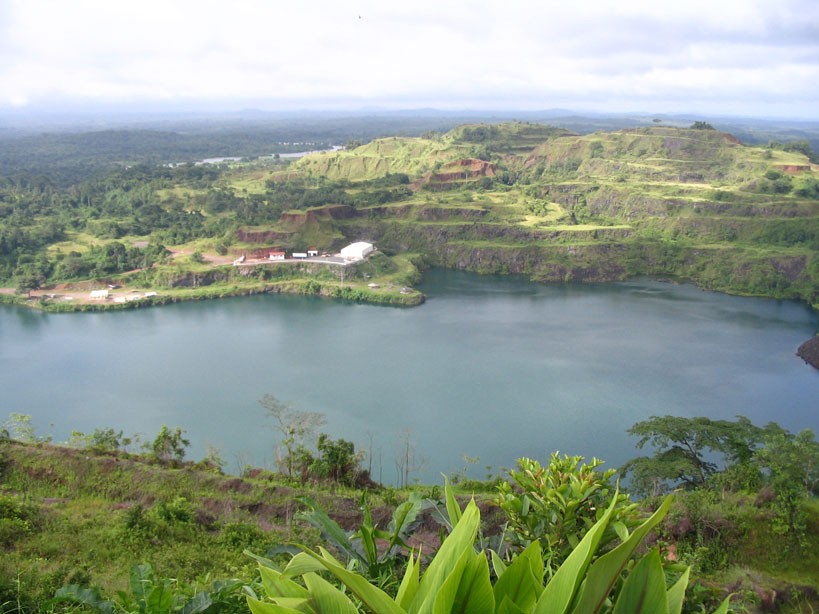
Liberia’s name means “free land”. It was set up in 1820 by an American organization as a place for freed African American slaves to live. A green, hilly plateau makes up most of the country’s land; it is covered by a mixture of grassland and rainforest. Nearer the coast, the land flattens to marshy lowlands, crossed by rivers and streams. Swampy mangrove forests and lagoons fringe the coast. Liberia has a hot, tropical climate with a rainy season between May and October. Between November and March, a dry, cool wind called the harmattan blows over the land, bringing dust and sand from the Sahara Desert.
People
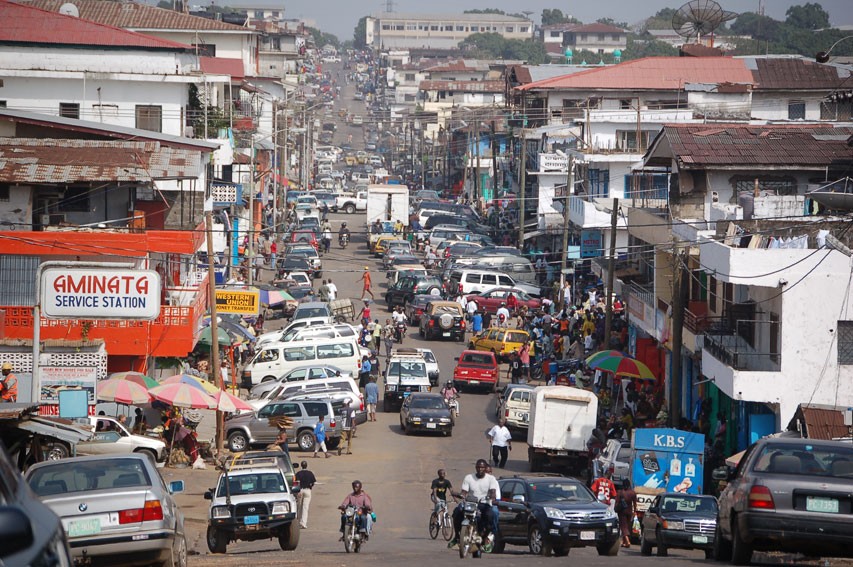
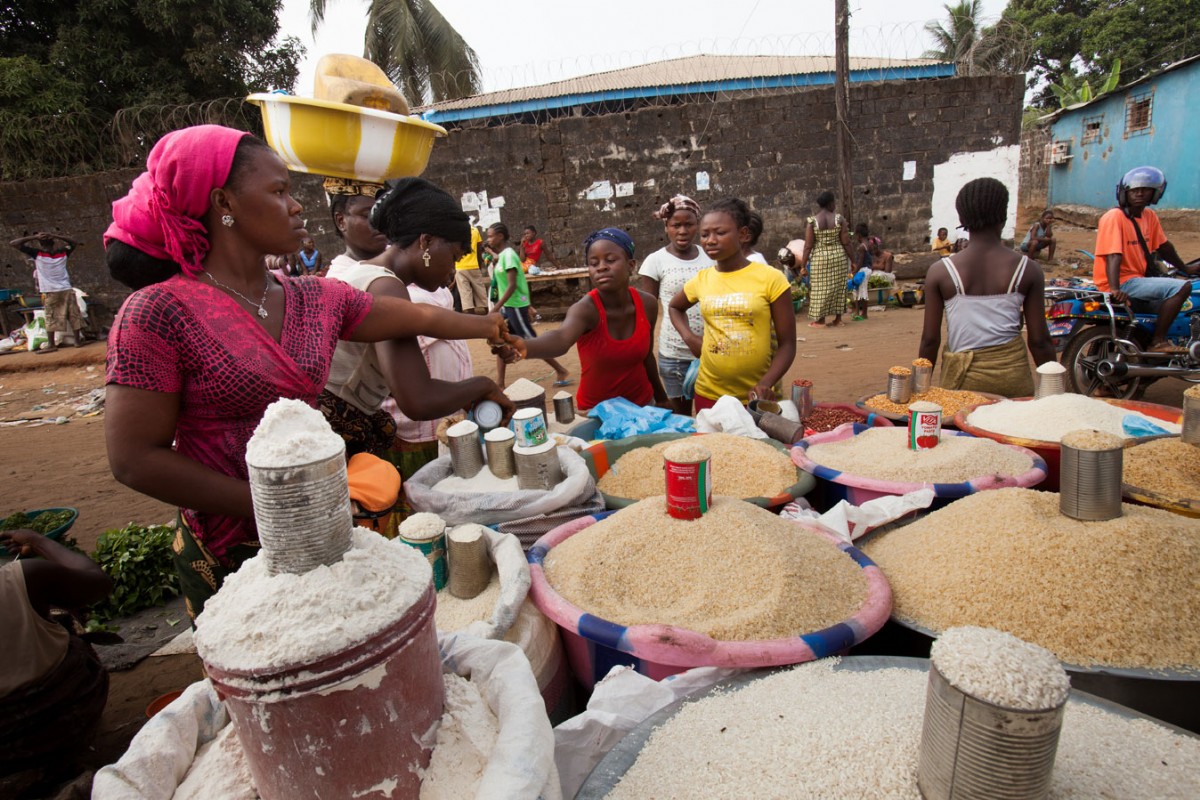
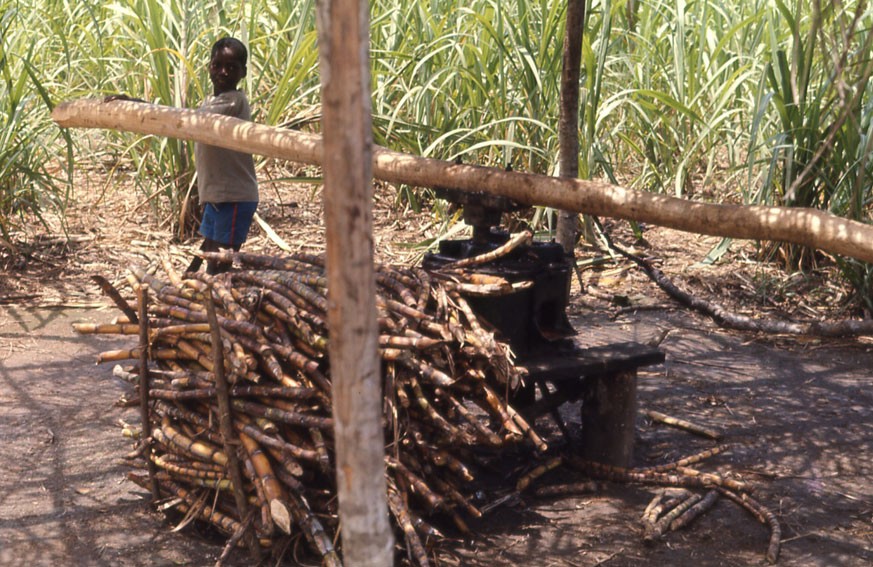
There are 16 different ethnic groups in Liberia. Only a small number—about 3%—are descendants of the African Americans who arrived in the 1800s; these people are known as Americo-Liberians. Because there are so many different local languages, people from different communities use English to speak to one another. The capital, Monrovia, is the only large city in Liberia. Outside it, nearly everyone lives in small villages and makes a living from farming. As well as growing crops to feed their families, some people work on commercial plantations growing coffee, cocoa or rubber.
Rubber
For more than 80 years, the rubber industry has been essential to Liberia’s economy. Rubber is made from the sticky sap of the rubber tree, called latex. It is “tapped” (drained) from the trunk before being mixed with water and acid to make sheets of natural rubber. Many plantations are owned by American companies, which use rubber to manufacture tyres and other products. During the Civil War in the 1990s, the economy plunged into crises and Liberia went from being a fairly prosperous country to one of the poorest in West Africa. Today, it is recovering; exports of rubber and timber have helped to grow the economy once again.
Consultant: Nicholas Harris
Facts about Liberia
Population 5,437,249 (2024 estimate)
Area 96,320 sq km
Highest point Mount Nimba 1752 m (5748 ft)
Capital Monrovia (metro pop. 2,225,911)
Other major cities Gbarnga (pop. 56,986)
Language English, indigenous languages
Religions Christian 85%, Muslim 12%, indigenous beliefs and other 3%
Ethnicity Kpelle 20%, Bassa 13%, Grebo 10%, Gio 8%, Mano 8%, Kru 6%, Lorma 5%, Kissi 5%, Gola 4%, others 21%
Currency Liberian dollar (LRD)
Chief exports rubber, timber, iron, diamonds, coffee, cocoa

History of Liberia
12th century
Mende peoples arrive in the region from the southern Sahara
1300s
Kru, Gola and Bassa peoples live in the region
1461
Portuguese explorers arrive; they name the area “Grain Coast” after the plentiful crop of melegueta pepper or “grains of paradise”
16th century
Portuguese, British and Dutch set up trading posts along the coast, trading with the local Kru people
1820
An American organization, the American Colonization Society (ACS), sets up a colony in the country for freed African American slaves. The first 86 citizens arrive in the colony
1824
The ACS names the colony Liberia, meaning “free land”. The capital, Monrovia, is named after the US president of the day, James Monroe
1847
A new constitution is drawn up and Liberia becomes an independent republic
1904
Indigenous Africans are allowed to become citizens of Liberia
1917
During World War I, Liberia declares war on Germany. The Allies use the country as a base in West Africa
1926
Rubber production becomes Liberia’s biggest industry
1936
The practice of forced labour is abolished
1958
Racial discrimination is made a crime in Liberia
1980
Military coup led by Samuel Doe overthrows the government, which, since Liberia's foundation, has been run by Americo-Liberians. President Tolbert and many of his ministers are killed. The coup leaders form the People's Redemption Council (PRC) to govern the country.
1989
A new political party, the National Patriotic Front of Liberia (NPFL) led by Charles Taylor, begins an uprising against Doe's government, sparking a civil war
1989–96
Liberian Civil War: more than 200,000 Liberians are killed in the fighting, while more than a million flee the country as refugees
1997
Taylor wins the presidential election
1999
Nigeria and Ghana accuse Liberia of supporting Revolutionary United Front rebels in Sierra Leone’s Civil War. Britain and the USA threaten to suspend aid to Liberia
2003
Charles Taylor is put on trial for war crimes and resigns as president
2005
Ellen Johnson Sirleaf becomes Liberia’s—and Africa’s—first female president
2010
$1.2 billion worth of international debt owed by Liberia is written off
2011
President Johnson Sirleaf is awarded the Nobel Peace Prize
2012
Ex-president Charles Taylor is sentenced to 50 years in prison for war crimes in the early 1990s
2014–16
Liberia faces a medical emergency as an outbreak of the Ebola virus spreads through the country. In all, 10,675 cases are recorded with 4809 deaths.
2017
Former professional footballer George Weah wins presidential election and is sworn in as president in January 2018. The inauguration marks Liberia's first fully democratic transition in 74 years.
2024
Joseph Boakai is sworn in as Liberia's new president
pics
Without in any way limiting Q-files Ltd’s exclusive rights under copyright, any use of this publication to “train” generative artificial intelligence (AI) technologies to generate text is expressly prohibited. Q-files Ltd reserves all rights to license use of this work for generative AI training and development of machine learning language models.