
Africa

CITE
We have made every effort to follow citation style rules, but there may be some minor differences. If in doubt, please refer to the appropriate citation style manual.
Equatorial Guinea. (2026). In Q-files Encyclopedia, Geography, Africa. Retrieved from
https://www.q-files.com/geography/africa/equatorial-guinea
"Equatorial Guinea." Geography, Africa, Q-files Encyclopedia, 30 Mar. 2026.
https://www.q-files.com/geography/africa/equatorial-guinea.
Accessed 6 Aug. 2026.
Equatorial Guinea 2026. Geography, Africa. Retrieved 6 August 2026, from
https://www.q-files.com/geography/africa/equatorial-guinea
Geography, Africa, s.v. "Equatorial Guinea," accessed August 6, 2026.
https://www.q-files.com/geography/africa/equatorial-guinea


Equatorial Guinea
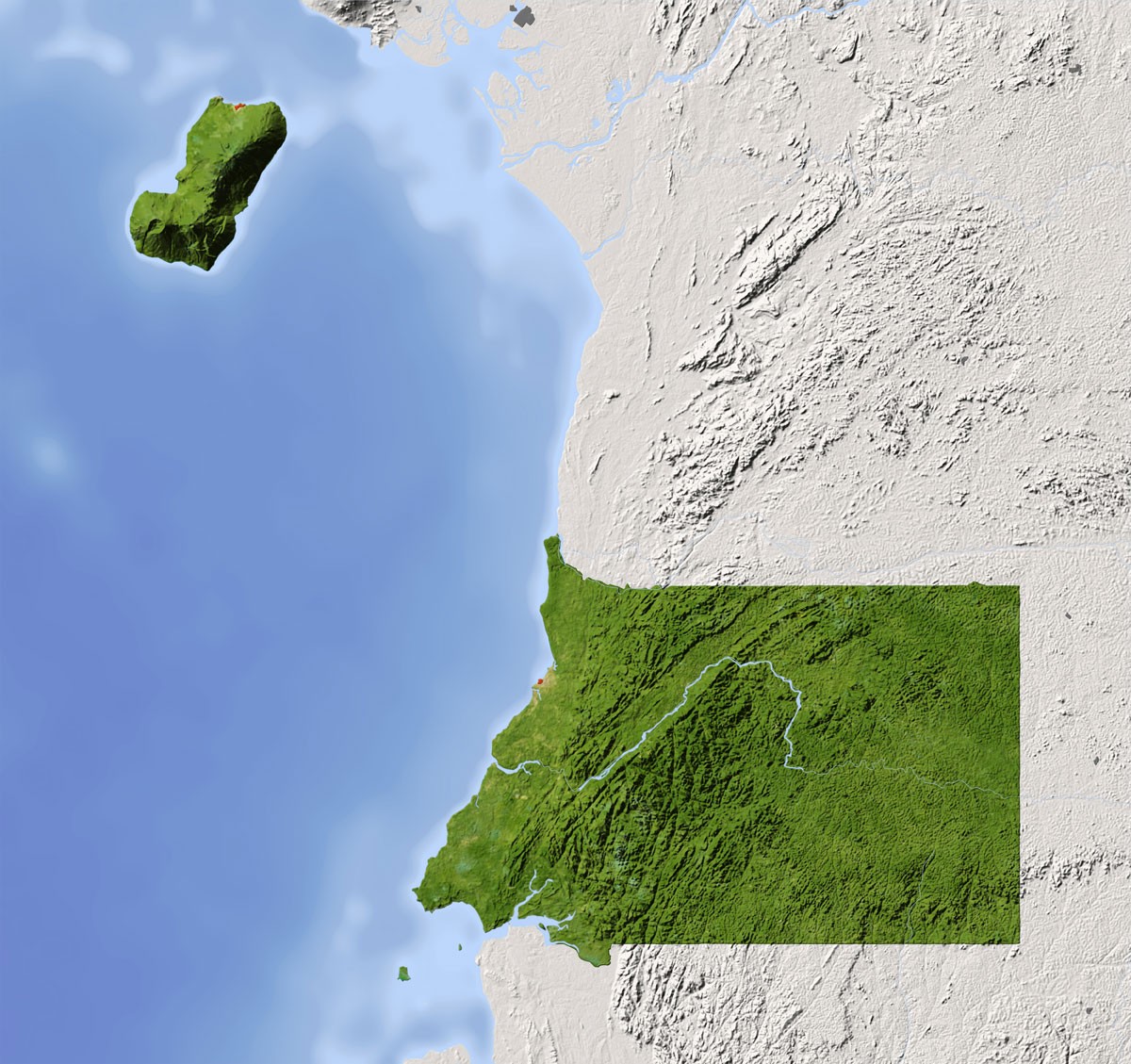
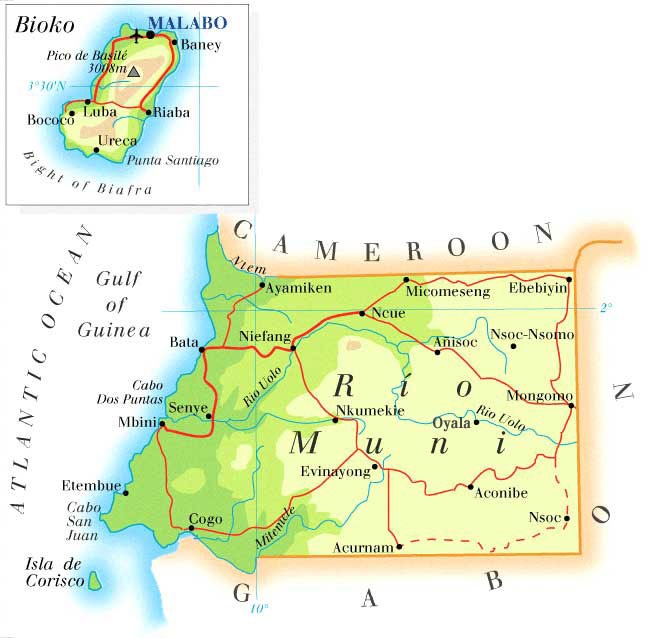
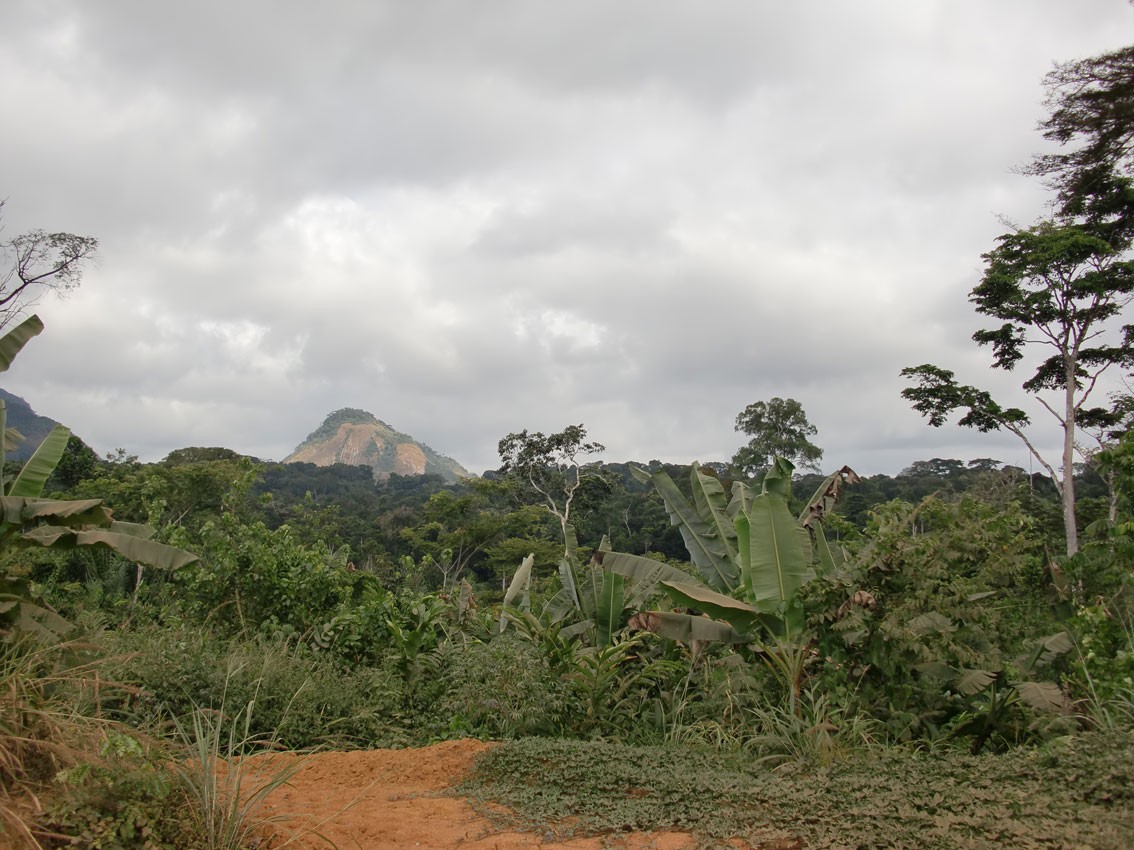
Equatorial Guinea is one of Africa’s smallest countries. It lies tucked into the coast of Central Africa, just above the Equator. The country is made up of a mainland portion, called Río Muni, and five small offshore islands. The largest island, Bioko, is where the capital, Malabo, is situated and lies about 40 kilometres (25 miles) off the coast of Cameroon. Much of the island is rugged, covered by volcanic mountains, and it has a hot, rainy climate nearly all year round. The mainland part, Río Muni, has a slightly drier climate, with shorter rainy seasons. The land is flat at the coast, but inland it rises to wooded hills.
People
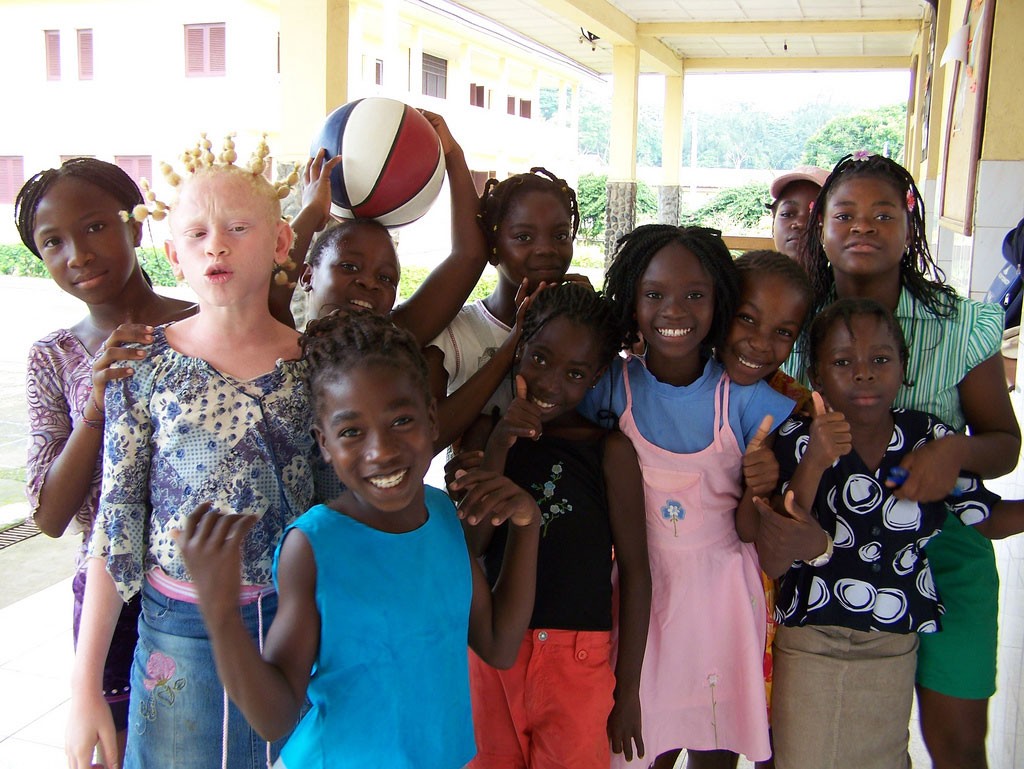
Nearly all Equatorial Guineans are Bantu. The largest ethnic group, the Fang, make up nearly 90% of the population. The Bubi, whose ancestors have lived on Bioko island for centuries, are a much smaller group. They have suffered waves of ethnic violence since the arrival of the Portuguese in the 15th century. Today, fewer than 100,000 Bubi people remain.
Most Equatorial Guineans live along the coast of the mainland and on the islands, where they make a living from farming or fishing—tuna is an especially important catch. Many families have small plots of land where they grow crops such as cassava and sweet potatoes; some people also work on large cocoa or coffee plantations.

Oil and gas
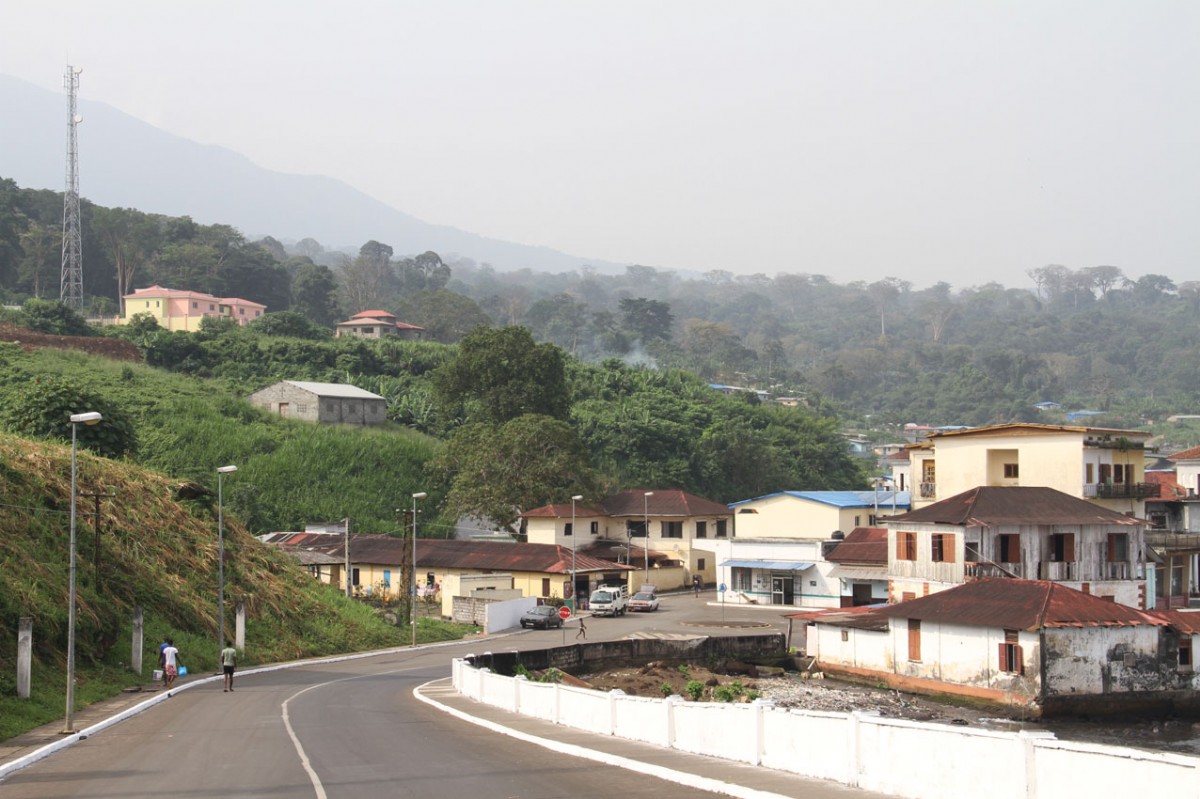
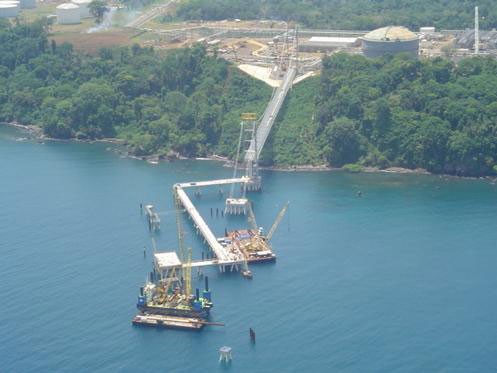
In 1996, huge reserves of oil and gas were discovered in Equatorial Guinea, dramatically boosting the country’s economy. It soon became one of the world’s fastest-growing economies. However, most of the income from oil went to people who are already wealthy and most of the country's people still lived in poverty, without access to clean drinking water and electricity. Although new roads and apartment blocks have been built with the money from oil, most ordinary people could not afford to use them. Today, Equatorial Guinea's oil and gas reserves—all found in offshore fields—have shrunk. As of 2024, the US oil giant ExxonMobil has ceased production.
Consultant: Nicholas Harris
Facts about Equatorial Guinea
Population 1,795,834 (2024 estimate)
Area 28,051 sq km
Highest point Pico de Basilé 3008 m (9869 ft)
Capital Malabo, population 297,000
Other major cities Bata (250,770)
Languages Spanish, Fang, Bubi
Religions Christian (Roman Catholic), traditional beliefs
Ethnicity Fang 86%, Bubi 7%, Mdowe 4%, Annobon 2%, others 1%
Currency Central African CFA franc
Chief exports oil and petroleum products, timber

History of Equatorial Guinea
1400s
The Bubi, a Bantu people, live on Bioko Island
1471
Portuguese navigator Fernando Pó spots the island of Bioko and it is named after him
1474
Portugal colonizes the islands of Fernando Pó and Annobón
1777
Control of the islands passes to Spain
1827–43
British set up a base on Bioko to try and end slave-trading in the region
1844
Spanish settle on the mainland (modern-day Río Muni)
1904
The mainland and islands become the Western African Territories (Spanish Guinea). Spaniards set up big cocoa and coffee plantations and employ local Bubi people to work on them
1920s
Timber and coffee industries thrive; thousands of Liberians come to work on plantations
1968
Spanish Guinea becomes independent as the Republic of Equatorial Guinea; Francisco Macias Nguema becomes president
1972
Nguema declares himself president for life
1975
150 people are sentenced to death, charged with plotting to overthrow the government
1979
President Nguema is overthrown in a military coup, led by Teodoro Obiang Nguema Mbasogo
1993
First multi-party elections are held
1996
Huge oil and gas reserves are discovered in Equatorial Guinea
2001
As oil industry grows, Equatorial Guinea becomes one of the world’s fastest-growing economies
2002
68 people are jailed for plotting to overthrow Nguema’s government. The EU is concerned at their treatment
2011
President Obiang announces plans to build a new capital inland, named Ciudad de la Paz (or Oyala)
2012
Gabon and Equatorial Guinea jointly host Africa’s biggest football tournament, the Africa Cup of Nations
pics


Without in any way limiting Q-files Ltd’s exclusive rights under copyright, any use of this publication to “train” generative artificial intelligence (AI) technologies to generate text is expressly prohibited. Q-files Ltd reserves all rights to license use of this work for generative AI training and development of machine learning language models.