
Africa

CITE
We have made every effort to follow citation style rules, but there may be some minor differences. If in doubt, please refer to the appropriate citation style manual.
Western Sahara. (2026). In Q-files Encyclopedia, Geography, Africa. Retrieved from
https://www.q-files.com/geography/africa/western-sahara
"Western Sahara." Geography, Africa, Q-files Encyclopedia, 30 Mar. 2026.
https://www.q-files.com/geography/africa/western-sahara.
Accessed 21 Sep. 2026.
Western Sahara 2026. Geography, Africa. Retrieved 21 September 2026, from
https://www.q-files.com/geography/africa/western-sahara
Geography, Africa, s.v. "Western Sahara," accessed September 21, 2026.
https://www.q-files.com/geography/africa/western-sahara


Western Sahara
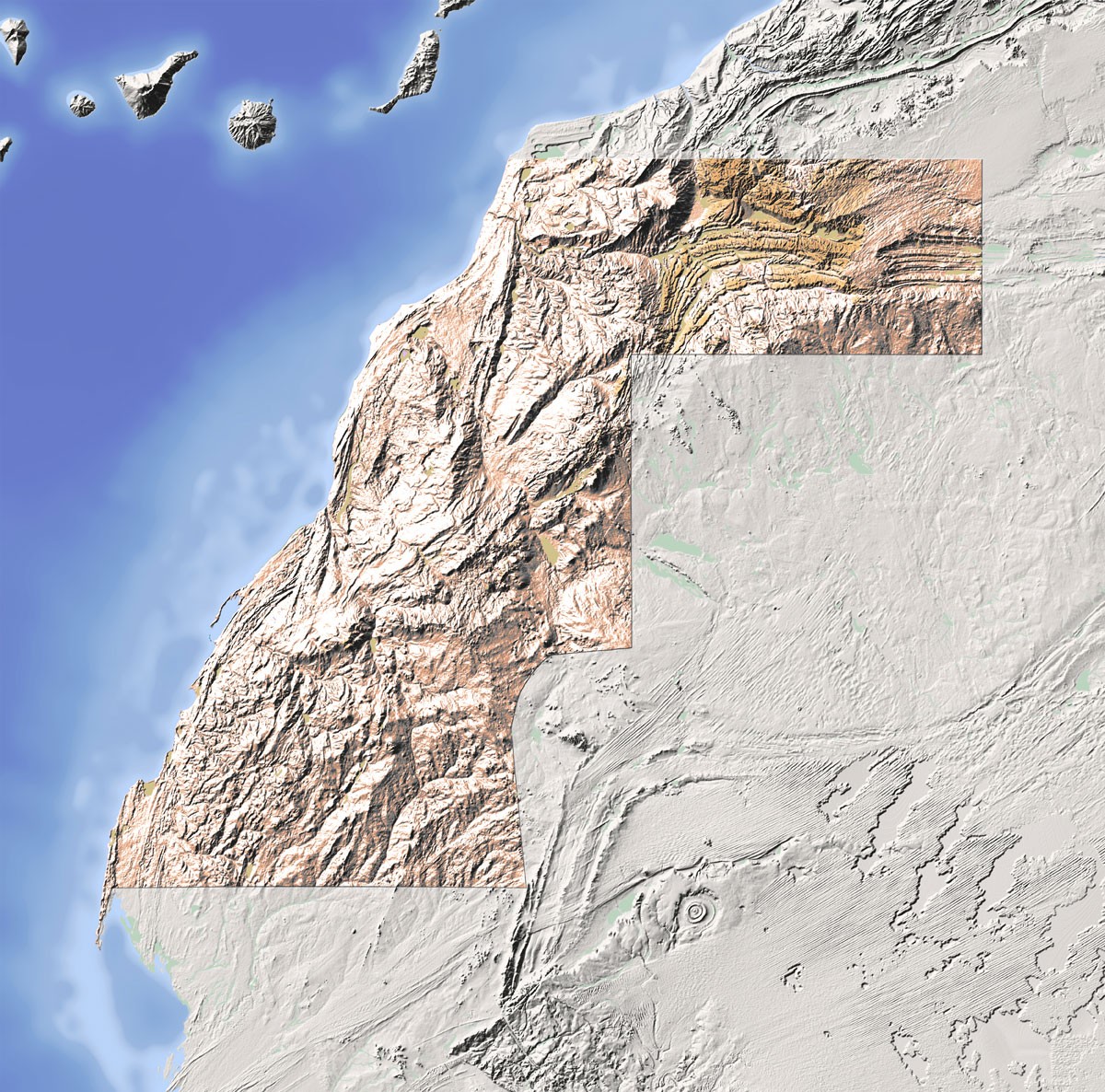
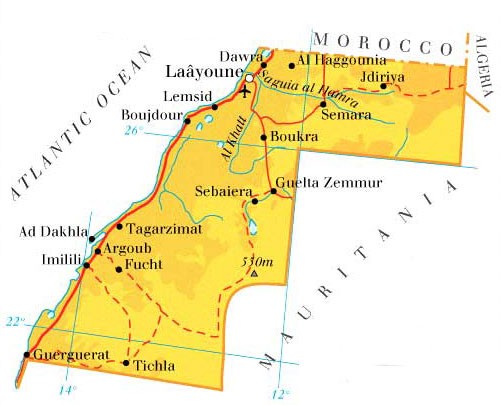
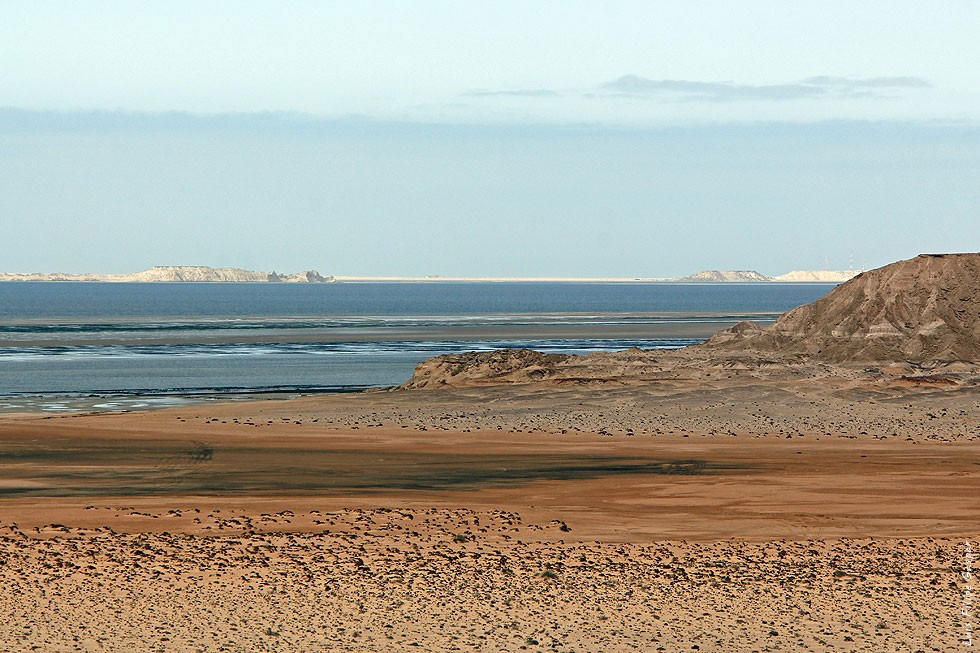
Described by the United Nations as a "non-self-governing territory", Western Sahara is claimed by both Morocco and the Polisario Front, a political group representing the Sahrawi people who live there. Today, most of the Western Sahara is under Moroccan control, while the Polisario controls some 30% of the territory in the east. The majority of Western Sahara is made up of flat desert. The only uplands are in the north, where the land rises to low mountains. The arid climate makes it one of the harshest places on Earth; all year round, it is extremely hot and dry.
Disputed territory
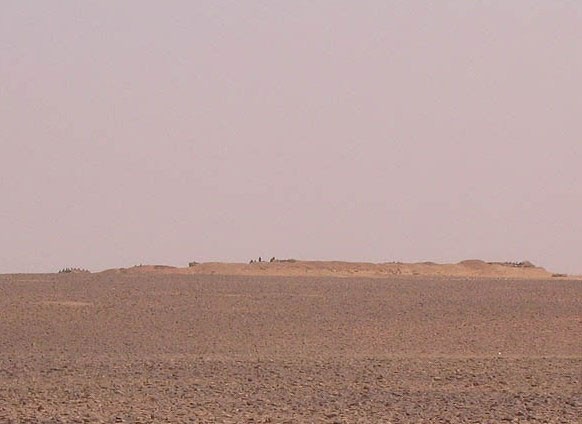
The Polisario Front, who represent Western Sahara's native Sahrawi people, is supported by neighbouring Algeria: it wants Western Sahara to become independent. Morocco, on the other hand, is willing only to grant autonomy, the power for the region to rule itself, while remaining part of its territory. A referendum (national vote) on independence has yet to be held. In the meantime, a long sand wall called the “Moroccan Wall” separates Moroccan-controlled areas in the west from Polisario-controlled land in the east.
People
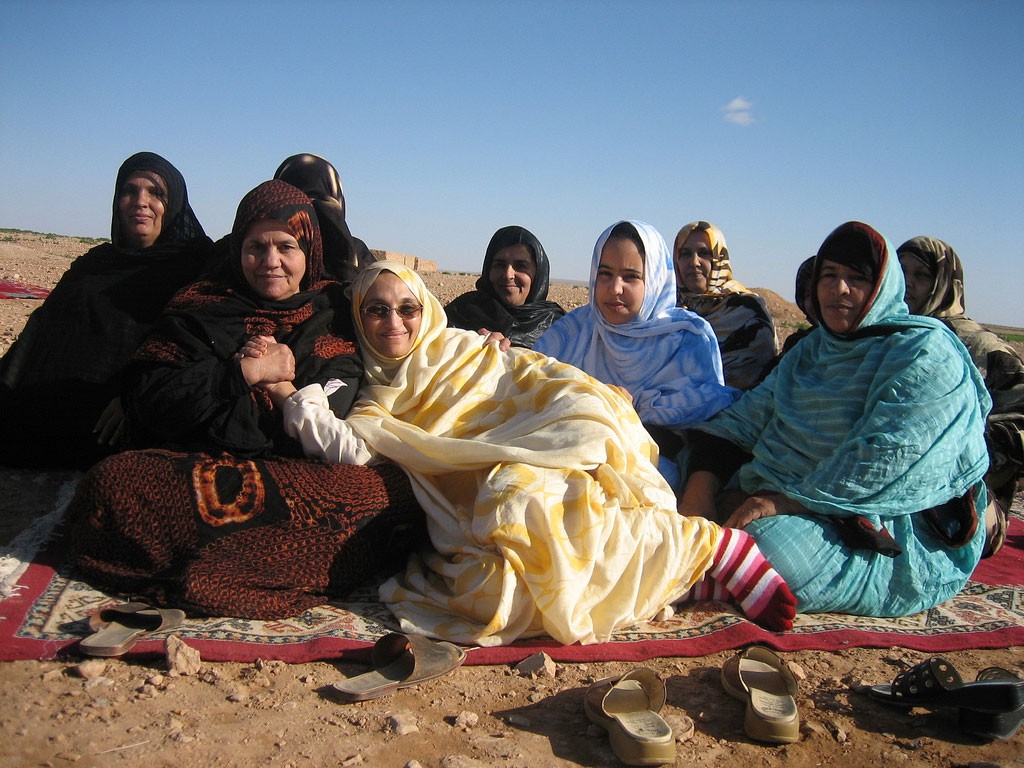
Western Sahara is one of the most sparsely-populated places on Earth. Just over 500,000 people live in this desert region—and about half of them live in and around the coastal city of Laayoune, the capital. People from Western Sahara are known as the Sahrawi. Most are descended from both Arab and Berber peoples.
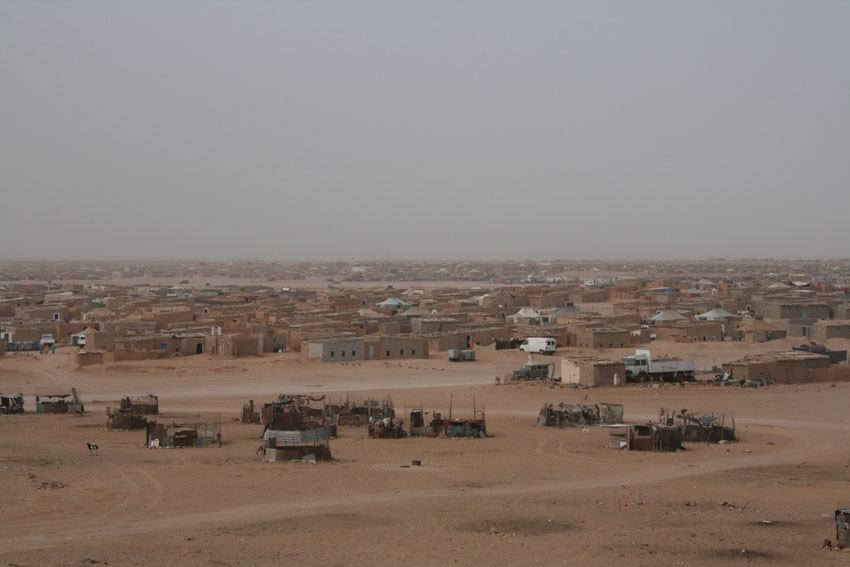
During the Western Sahara War (1975–91), thousands of Sahrawi people fled the region as refugees, escaping the fighting between Polisario and Moroccan troops. Today, about 165,000 Sahrawi refugees and their children live in camps in Tindouf, Algeria. Life in the camps is very difficult: food and water shortages mean that people have to rely on foreign aid.


Economy
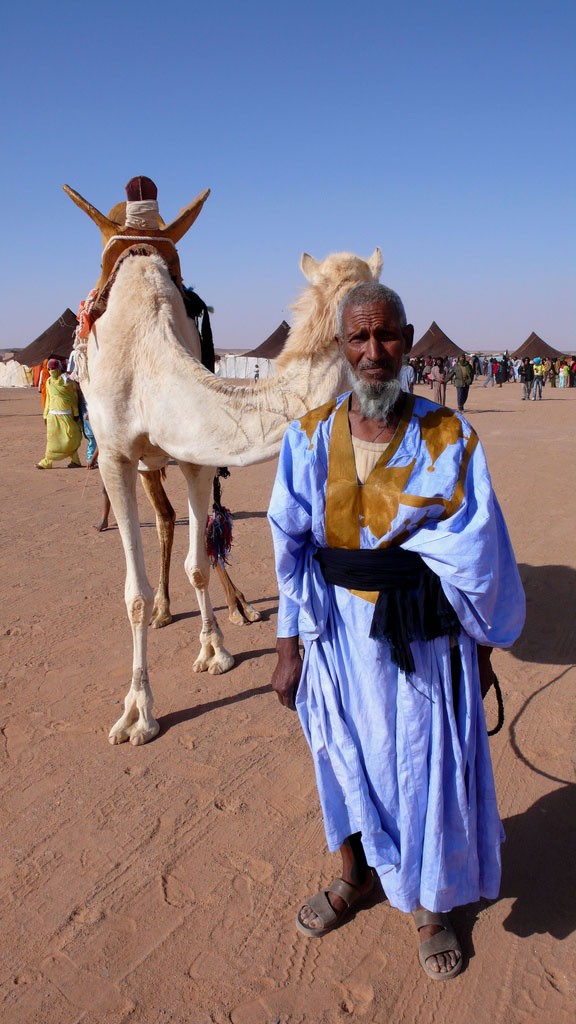
Western Sahara has huge deposits of phosphates, valuable minerals used to make fertilizers and chemicals and phosphate mining is its largest industry. There are also thought to be large oil reserves offshore. Another important industry is fishing—Western Sahara's coastal waters are teeming with fish. In the desert, many people still live and work as nomadic camel herders.

Facts about the Western Sahara
Population 596,521 (2025 estimate)
Area 266,000 sq km
Highest point unnamed elevation 805 m (2641 ft)
Major city Laayoune (El Aaiún), population 271,344
Language Arabic
Religion Muslim
Ethnicity Arab, Berber
Currency Moroccan dirham (MAD)
Chief exports phosphates
Consultant: Nicholas Harris
History of the Western Sahara
1120
The region is ruled by Morocco’s Almoravid dynasty
1884
Spain occupies and colonizes the territory, naming it Spanish Sahara
1947
Large phosphate reserves are discovered in the region
1957
Morocco claims control over Spanish Sahara
1958
Spanish Sahara becomes an overseas province, rather than a colony, of Spain
1965
United Nations (UN) asks Spain to give up control of the territory
1973
Indigenous Sahrawi people set up the Polisario Front, a group calling for independence from Morocco
1975
Spain pulls out of the territory; Morocco and Mauritania lay claim to the region, but Mauritania later pulls out
1975–91
Western Sahara War, fought between the Polisario Front (the forces of the native Sahrawi people) and Morocco
1992
Plans are drawn up for a referendum (vote) for local people to vote for either independence or Moroccan rule. But it is not clear who is eligible to vote and the referendum is cancelled
2005
Demonstrations and protests break out in Moroccan-controlled Western Sahara, calling for a referendum on independence
2010
About 12,000 displaced Sahrawi people set up a refugee camp, Gadaym Izik, near El Aaiún, but Moroccan security forces evict the camp
2011
Widespread protests by Sahrawi people over the failure of police to prevent anti-Sahrawi looting in Dakhla
2020
Ceasefire agreement of 1991 between the Polisario Front and Morocco breaks down, leading to armed clashes between them
2021
Morocco proposes autonomy (self-government) for Western Sahara under the sovereignty of the King of Morocco. The proposal is supported by Spain and France
pics
Without in any way limiting Q-files Ltd’s exclusive rights under copyright, any use of this publication to “train” generative artificial intelligence (AI) technologies to generate text is expressly prohibited. Q-files Ltd reserves all rights to license use of this work for generative AI training and development of machine learning language models.