
Africa

CITE
We have made every effort to follow citation style rules, but there may be some minor differences. If in doubt, please refer to the appropriate citation style manual.
Mali. (2026). In Q-files Encyclopedia, Geography, Africa. Retrieved from
https://www.q-files.com/geography/africa/mali
"Mali." Geography, Africa, Q-files Encyclopedia, 30 Mar. 2026.
https://www.q-files.com/geography/africa/mali.
Accessed 6 Aug. 2026.
Mali 2026. Geography, Africa. Retrieved 6 August 2026, from
https://www.q-files.com/geography/africa/mali
Geography, Africa, s.v. "Mali," accessed August 6, 2026.
https://www.q-files.com/geography/africa/mali


Mali
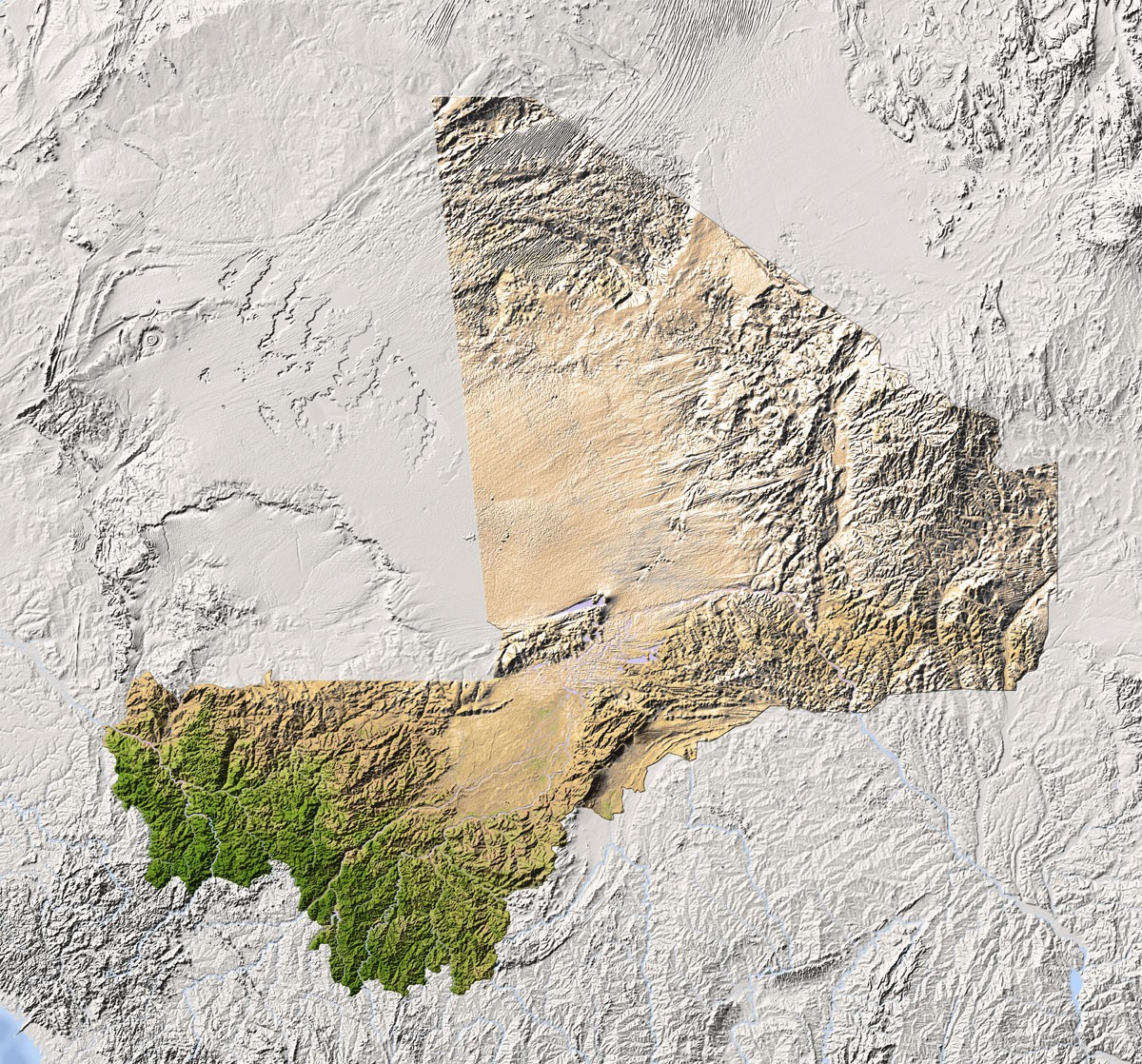
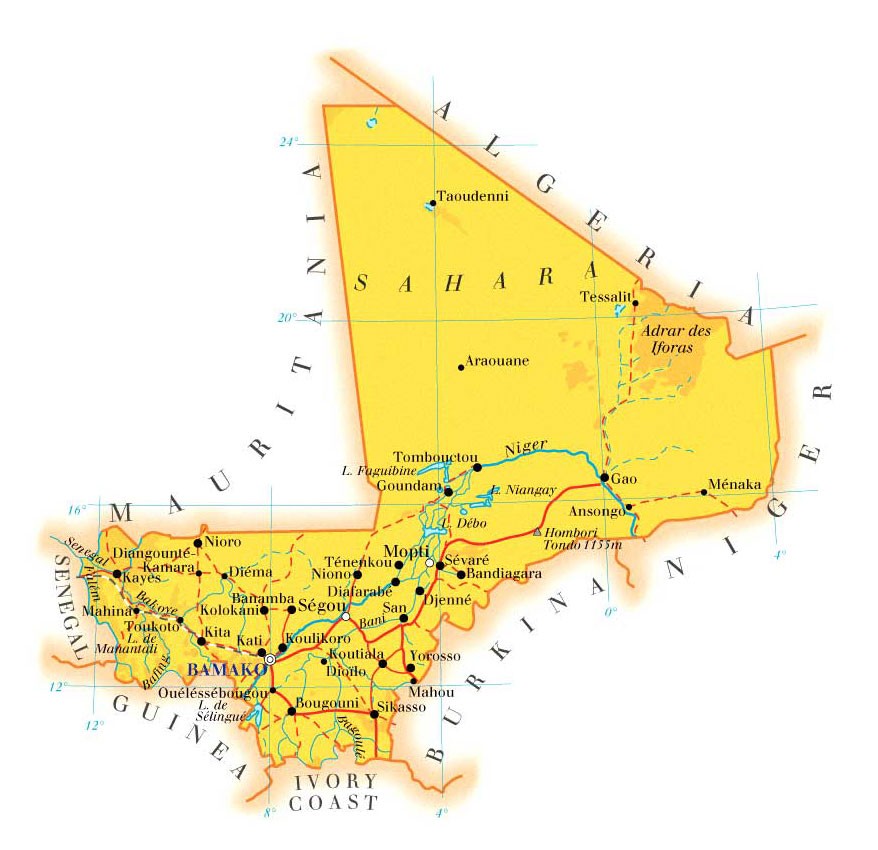
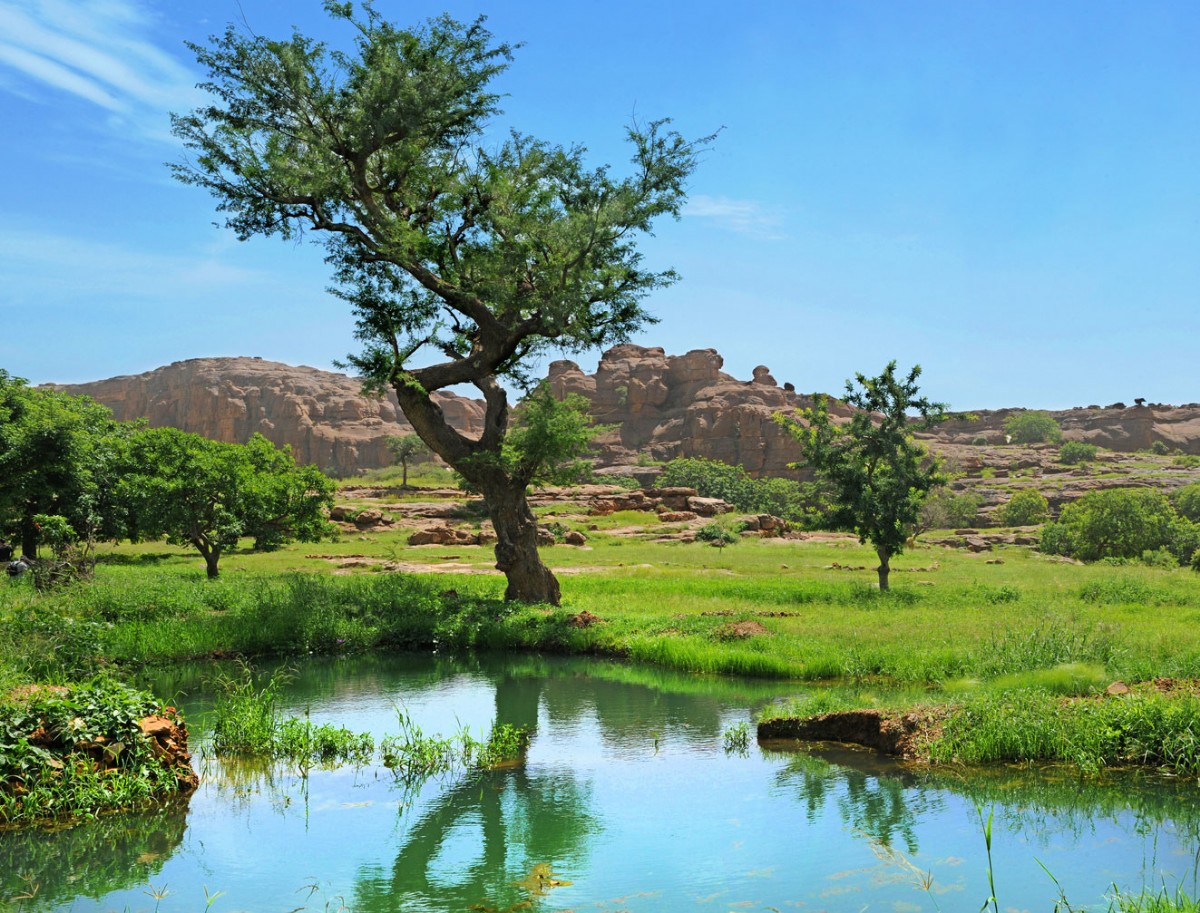
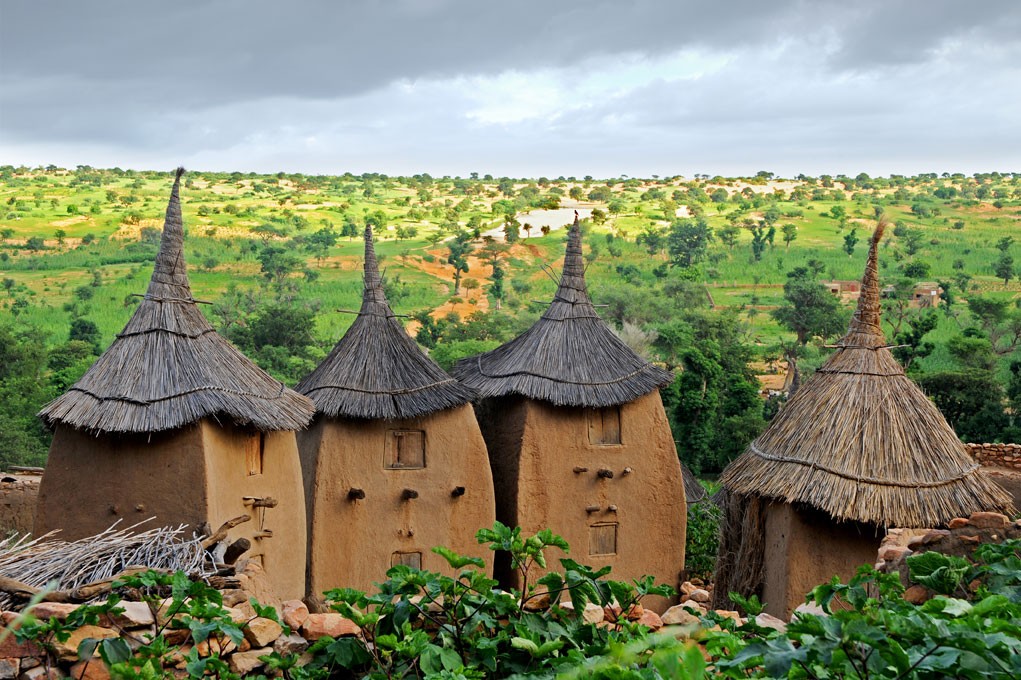
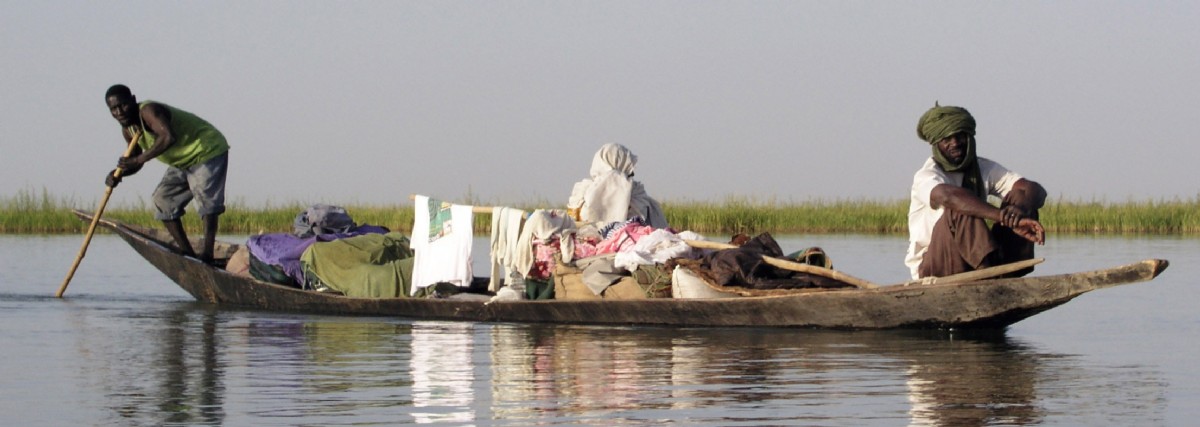
Mali is one of the emptiest countries in Africa. Most of the country is flat, except for a mountain range, the Adrar des Iforas (Ifoghas), that runs along the Algerian border and the Hombori Mountains in the east. The northern part of Mali is taken up by the Sahara Desert and its vast sand “seas”, called ergs. Bordering the Sahara to the south is the scrubland of the Sahel. Southern Mali, a land of savanna grasslands, is much greener. Here, the great River Niger winds across the landscape. It divides into a number of smaller rivers, creating an inland delta, a swampy region of lakes and floodplains. The south has a hot, tropical climate. Most of the rain falls between July and November.
Economy
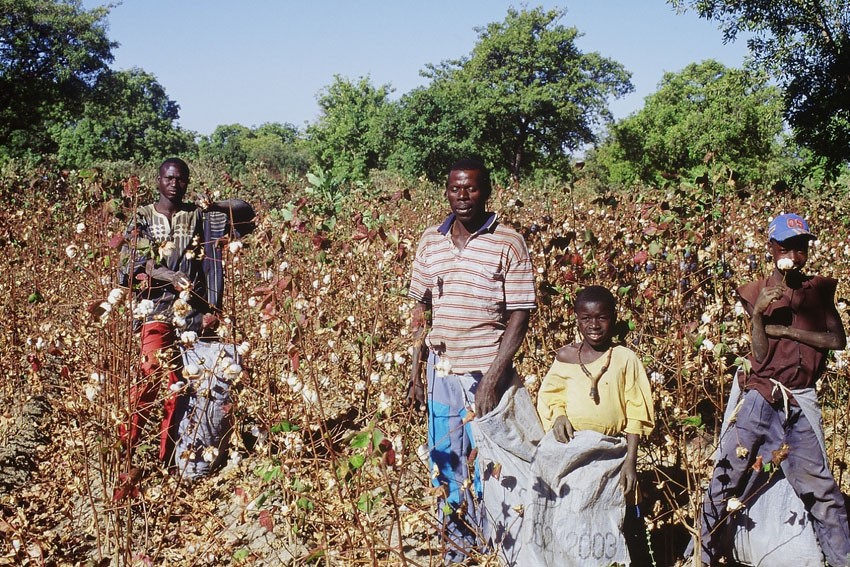
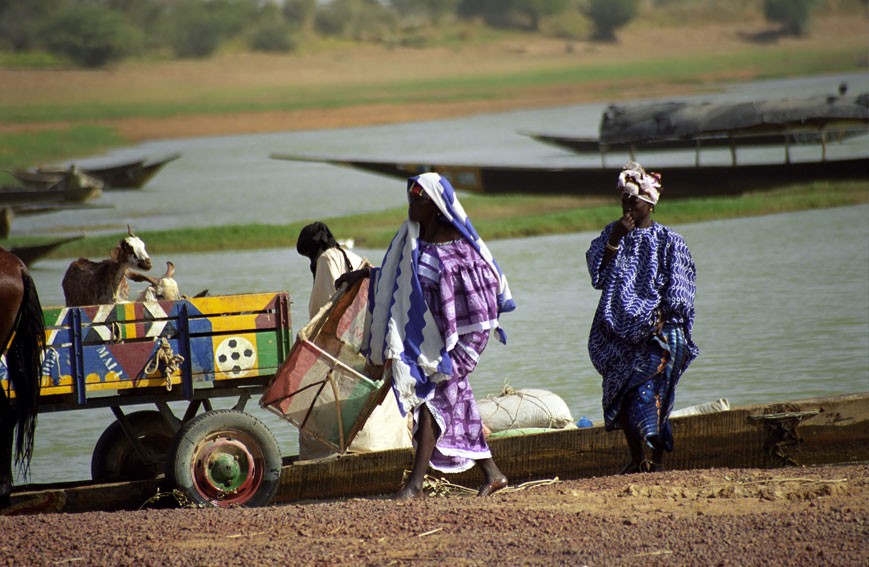
Most of the country’s people make their living from farming. The fertile banks of the River Niger have Mali’s best farmland: here, farmers grow cotton, a major cash crop, as well as rice, millet and vegetables for their families. Because its economy depends so heavily on farming—especially on cotton—Mali’s farmers suffer badly when there is a drought, or when world cotton prices fall. Another important industry is goldmining: Mali is Africa’s third largest gold producer after South Africa and Ghana.

People
Most of Mali’s people live in the south of the country, where the climate is warm and humid. The largest ethnic group are the Mande: the Bambara, Soninke and Malinke are all Mande peoples, and together they make up about 50% of the population. The Tuareg live mainly in Saharan and Sahelian regions.
More than 40 different languages are spoken in Mali, with French the official language. Most of Mali’s different peoples speak Bambara to one another. Mali is an extremely poor country: about half of its people live on less than $1.90 (around £1.55) a day.
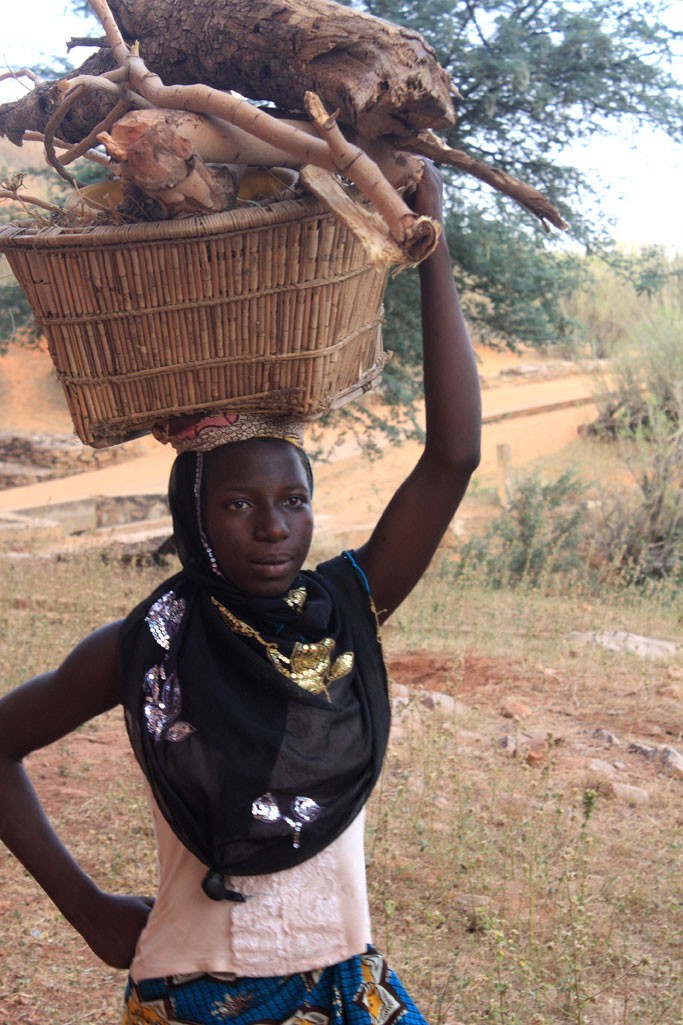
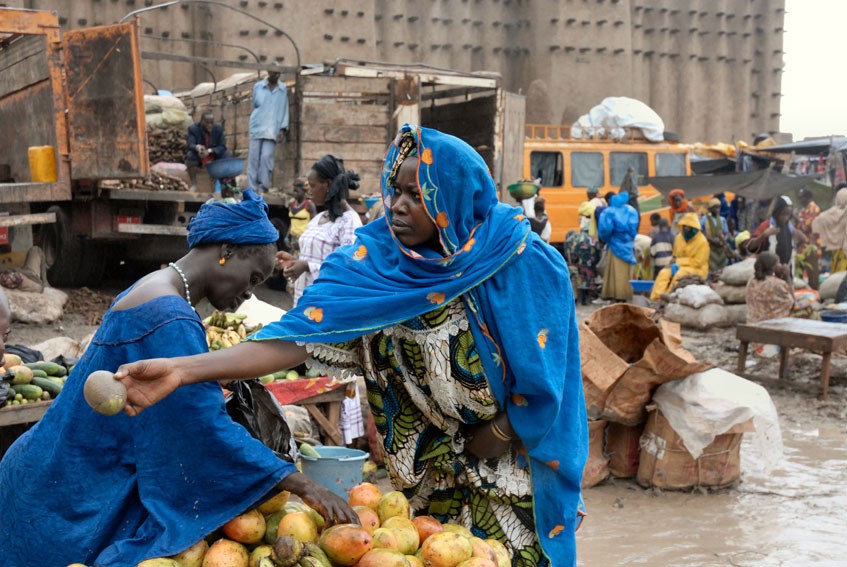

Tuareg
The Tuareg are semi-nomadic people of the Sahara and Sahel: they travel with their herds season to season, but nowadays they have settled in areas where they grow crops. A Berber people, most of the Tuareg (who call themselves the Imuhagh) live in southern Algeria, western Libya, northern Mali, northern Niger and northern Burkina Faso. Many Tuareg have now migrated to live in towns and cities farther south in Mali. The total population is about 1.2 million. Deeply resentful at not having been granted an independent homeland, the Tuareg have been involved in several violent uprisings in the last 50 years.

Tuareg culture
Tuareg men wear a turban (tagelmust) and veil their faces with an alasho, a cloth dyed indigo-blue: the Tuareg were once described as the "Blue Men" of the Sahara Desert. Although most Tuareg are followers of Islam, this is often mixed with a traditional belief in spirits. Most Tuareg women do not wear veils in public.
The Tuareg in rural areas still observe traditional social rank, based on family descent. They are: the Imajaghen, those of noble birth; the Imghad, herdsman and warriors; the Inadan, the craftworkers; the Izeggaghan, the farmworkers. The tradition of holding some people as slaves, the Bella, still persists in some areas.
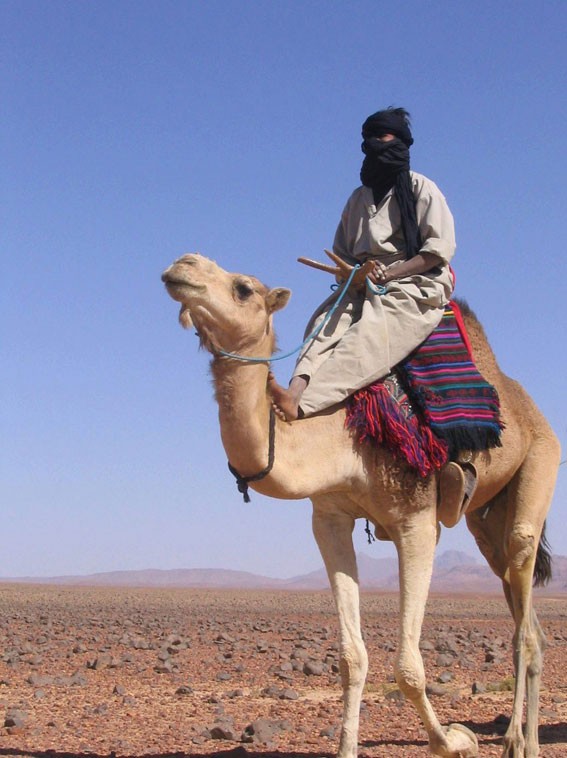
Today, it is difficult for the Tuareg to make a living from nomadic herding alone. Most combine herding with farming, oasis gardening, caravan trading and producing crafts for the tourist trade.
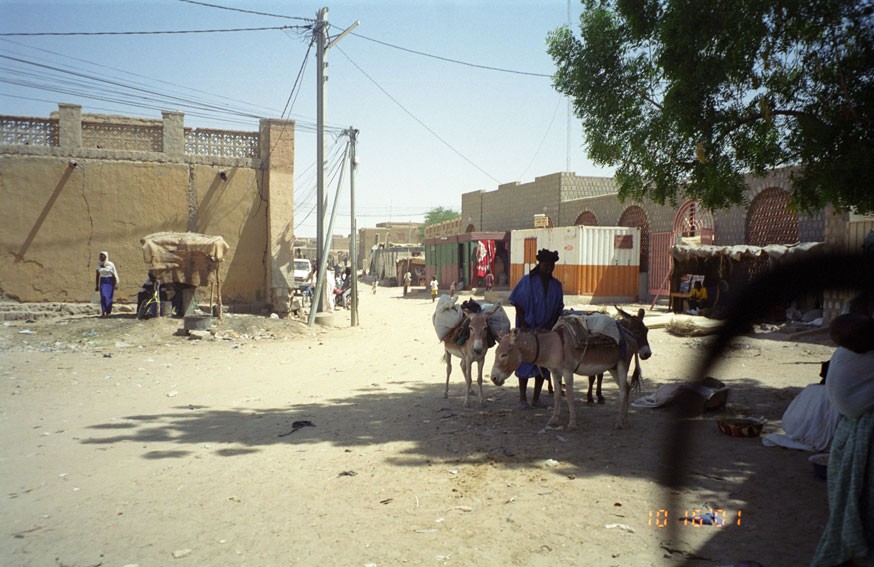
Desertification
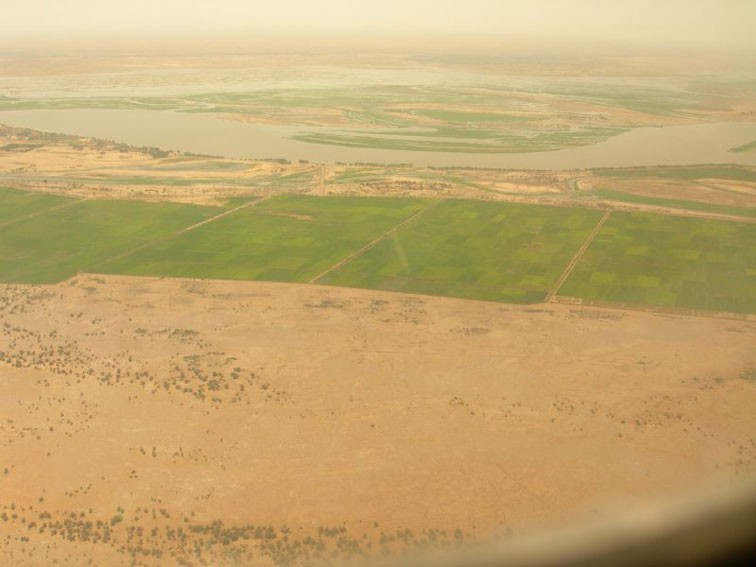
Only the southern part of Mali is suitable for farming, but as the country's population grows, more and more of the land is needed for cultivation and grazing. When farmers graze their animals in the Sahel at the edge of the desert, the threat of desertification increases. As grass and trees are removed, the soil can more easily blow away, and become replaced by desert sands. In this way, more and more of the Sahel is turning into the dry Sahara.
Timbuktu
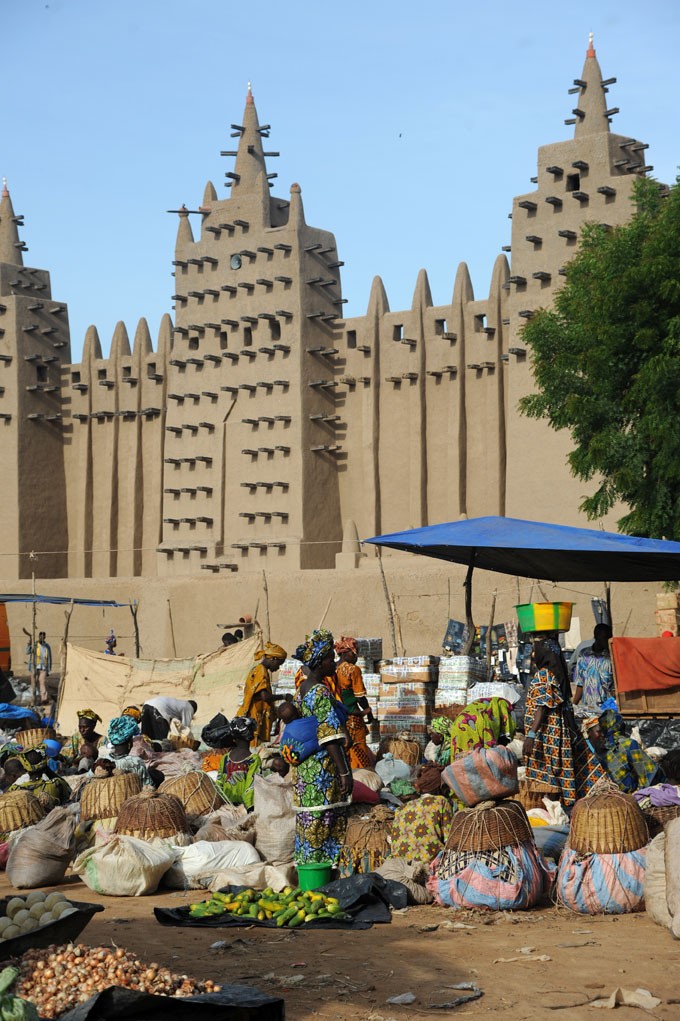
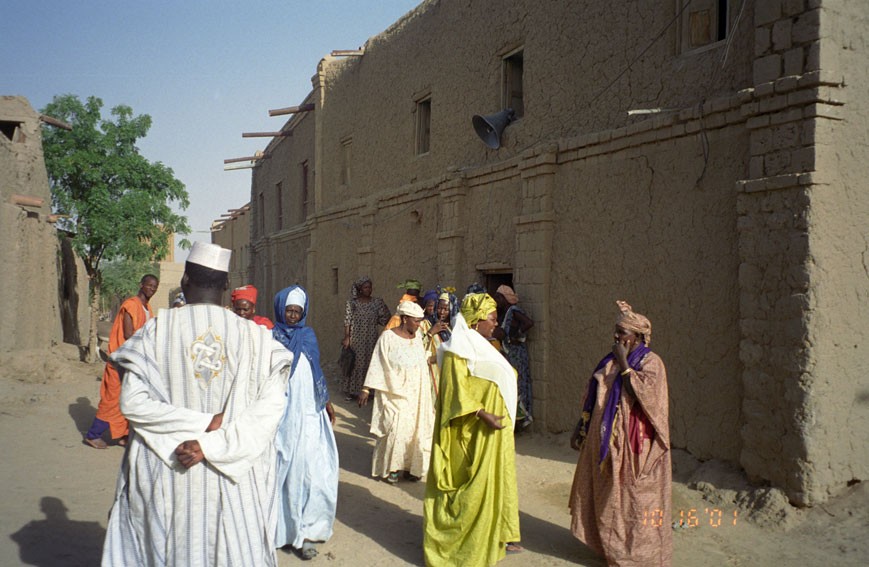
Timbuktu (Tombouctou) is famous for being one of the most inaccessible places on Earth. It lies on the southern edge of the Sahara Desert, surrounded by one of the harshest landscapes on the planet. Its name means “hollow” in the local Songhai language (the city lies in a depression).
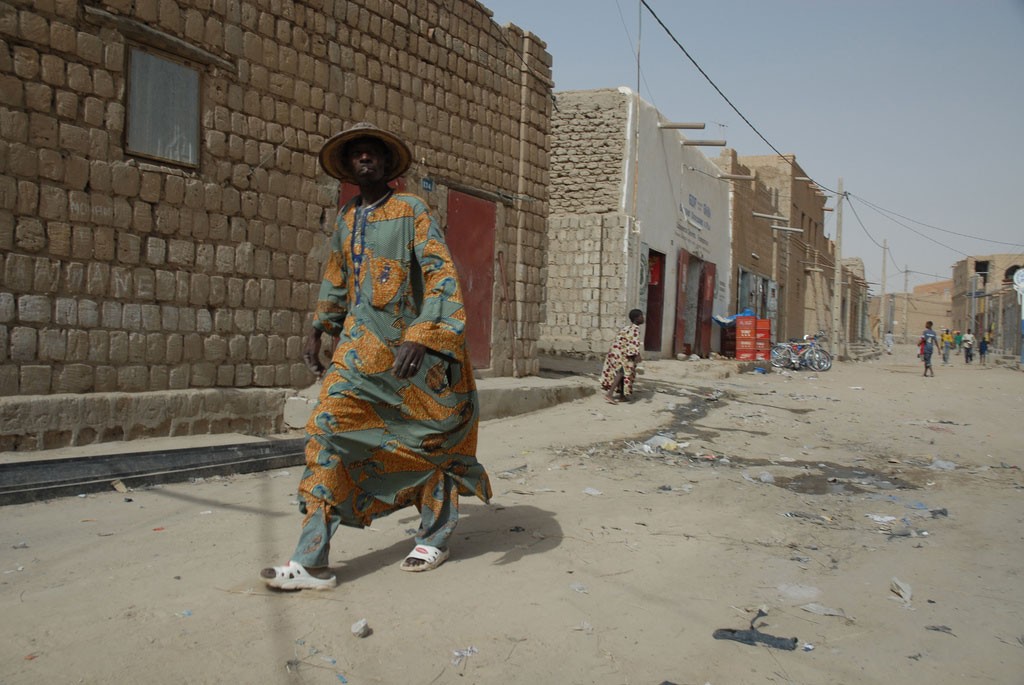
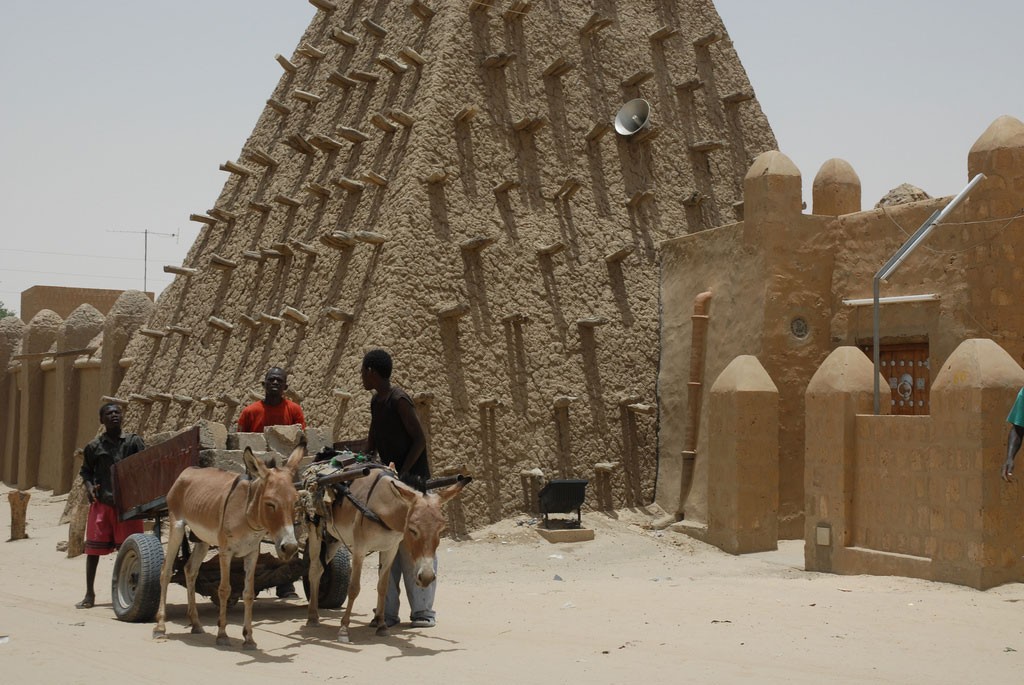
At first, Timbuktu was a meeting place for nomads. But in the 12th century Timbuktu became a permanent settlement, thriving on the trade in trade gold, salt, ivory and slaves. By the 16th century, Timbuktu, now the capital of the great Songhai Empire, was an important centre of learning, with three universities. Today, this ancient city attracts thousands of visitors every year—an important source of income for its residents and Mali.
Consultant: Nicholas Harris
Facts about Mali
Population 21,990,607 (2024 estimate)
Area 1,220,190 sq km
Highest point Hombori Tondo 1155 m (3789 ft)
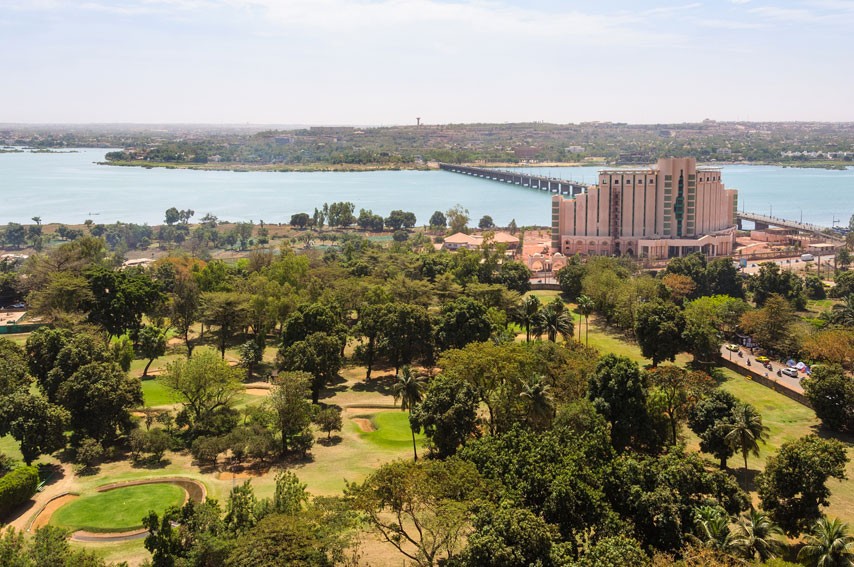
Capital Bamako (metro area population 4,227,569)
Other major cities Sikasso (pop. 226,618), Koutiala (137,919)
Languages French, Bambara, Ful, Dogon
Religions Muslim 95%, Christian 2%, animist 2%, others 1%
Ethnicity Mande 50% (including Malinke, Bambara and Soninke), Ful 17%, Voltaic 12%, Songhai 6%, Tuareg 10%, others 5%
Currency West African CFA franc (XOF)
Chief exports cotton, gold, livestock
History of Mali
4th–11th century
The Ghana Empire grows up in western Mali, thriving on the trade in gold, salt and ivory
11th–15th centuries
Central and southern parts of Mali are part of the great Mali Empire, which rules much of West Africa and extends as far as the Atlantic Ocean
15th century
The Songhai Empire grows more powerful than the Mali Empire: it rules the region from its capital, Timbuktu
1591
Morocco invades the Songhai Empire, seizing Timbuktu and taking control of the empire
1730s–50s
Severe drought strikes Mali, causing the worst famine in recorded history
19th century
The region comes under French colonial rule
1900
Most of Mali is ruled by France as part of French Sudan
1905
Slavery is abolished in French West Africa
1959
Mali and Senegal join together to form the Mali Federation. It breaks up after just one year
1960
Mali becomes independent, with Modibo Keita as president. It quickly becomes a one-party state and cuts all links with France
1968
Lieutenant Moussa Traoré overthrows Keita’s government and seizes power in a military coup
1990
Tuareg people protest against the government, calling for more independence in their traditional northern homeland
1991
President Traoré is removed from power in a coup and replaced by a temporary committee
1992
Multi-party elections are held; Alpha Konaré becomes Mali’s first democratically-elected president
1995
Government signs a peace agreement with Tuareg tribes: thousands of Tuareg refugees return to Mali
2001
Manantali dam in southwestern Mali opens, producing Mali’s first hydro-electric power
2004–05
Locust plague destroys around half of Mali’s cereal harvest, causing severe famine the following year
2010
Mali, Algeria, Mauritania and Niger set up a joint organization to tackle terrorism within their countries
2012
Mali War begins: Tuareg rebels led by the National Movement for the Liberation of Azawad (MNLA) seize control of northern Mali and declare it an independent state called Azawad. Initially backed by the Islamist group Ansar Dine, the rebels fall out with them. The Islamists take control of the region.
2013
France and other African Union states assist the government of Mali by sending troops to fight against the Islamists. A United Nations peacekeeping force (MINUSMA) is established in the country. A peace deal between the government and Tuareg rebels is signed, but the rebels later pull out of the agreement. Rebel attacks continue.
2014
Conflict breaks out again between the government and Tuareg rebels; Tuareg seize control of northern towns and cities
2015
Despite a ceasefire agreement and a peace accord, fighting continues
2020
In a coup, Malian soldiers capture President Ibrahim Boubacar Keïta, who resigns and dissolves the government
2021
In a second coup, Malian army led by Vice President Assimi Goïta takes over the government
2022
Following anti-French protests and increasing involvement in the war on the side of the Malian government by the Russian Wagner Group (a private military force made up of mercenaries—professional soldiers hired to fight), the French withdraw their forces from the country. Islamic State make major gains, occupying territory in the southeast.
2023
In reponse to Russian financial and military backing of the Malian government, the UN announces MINUSMA is to be withdrawn from Mali. (September) Islamist militants attack a vessel on the River Niger, killing at least 154 civilians.
2024
Battle of Tinzaouaten: Islamist militants kill dozens of Russian mercenaries and Malian government forces
pics



Without in any way limiting Q-files Ltd’s exclusive rights under copyright, any use of this publication to “train” generative artificial intelligence (AI) technologies to generate text is expressly prohibited. Q-files Ltd reserves all rights to license use of this work for generative AI training and development of machine learning language models.