
Slavery

CITE
We have made every effort to follow citation style rules, but there may be some minor differences. If in doubt, please refer to the appropriate citation style manual.
Abolition of slavery in the British Empire. (2023). In Q-files Encyclopedia, History, Slavery. Retrieved from
https://www.q-files.com/history/slavery/abolition-of-slavery-in-the-british-empire
"Abolition of slavery in the British Empire." History, Slavery, Q-files Encyclopedia, 17 Oct. 2023.
https://www.q-files.com/history/slavery/abolition-of-slavery-in-the-british-empire.
Accessed 21 Sep. 2026.
Abolition of slavery in the British Empire 2023. History, Slavery. Retrieved 21 September 2026, from
https://www.q-files.com/history/slavery/abolition-of-slavery-in-the-british-empire
History, Slavery, s.v. "Abolition of slavery in the British Empire," accessed September 21, 2026.
https://www.q-files.com/history/slavery/abolition-of-slavery-in-the-british-empire


Abolition of slavery in the British Empire
No nation transported more enslaved Africans to the Americas than Britain during the course of the 18th century. Approximately 2.5 million captives were sent from West Africa on British ships for a terrible life of toil in the plantations of its colonies in the Caribbean and North America. That these African people endured enslavement far away across the Atlantic Ocean made it possible for slavery to be hidden from the British public view—no one was enslaved in the "mother country". By the 1770s, however, public opinion in Britain started to turn against slavery. People regarded the trade in human beings as shameful rather than as a source of national pride.


The Somersett Case
While slaves were not bought and sold in England, by the 18th century traders were importing slaves from Africa, India and East Asia to London and Edinburgh where they were made to work as personal servants in private residences.
James Somersett had been enslaved in West Africa as a young man and taken to Virginia, then a British colony. He was purchased and brought to London in 1769, but escaped after two years. His master, Charles Steuart, had him captured and imprisoned on board a ship, intending to send him to Jamaica where he would be resold into slavery.
Somersett's British godparents, who were abolitionists, asked the scholar and campaigner Granville Sharp to help their godson. Sharp used Somersett’s situation to test the rights of enslaved people in England. He argued that legally none could be forcibly moved and resold. On 22nd June 1772, the judge, Lord Mansfield ruled in his favour. He said: "The state of slavery is of such a nature that it is incapable of being introduced on any reasons, moral or political, but only by positive law...No master ever was allowed here (England) to take a slave by force to be sold abroad because he deserted from his service. Therefore the man must be discharged".


Mansfield's ruling was widely taken to mean that slavery was illegal in England. Until then, enslaved people's legal status was unclear. The judgement also laid down the principle that enslavement, even if it were legal in other countries, could not be enforced in England.
In the Knight v. Wedderburn decision in Scotland in 1778, former slave Joseph Knight won a similar claim against arrest by John Wedderburn. The judgments in this case together with the Somersett case meant that slavery could not exist anywhere in the British Isles. They helped to launch the British movement to abolish slavery.
The English and Scottish rulings did not, however, apply to the British colonies. This included Britain's territories in North America which had by then established slavery by "positive laws".
The Zong Massacre

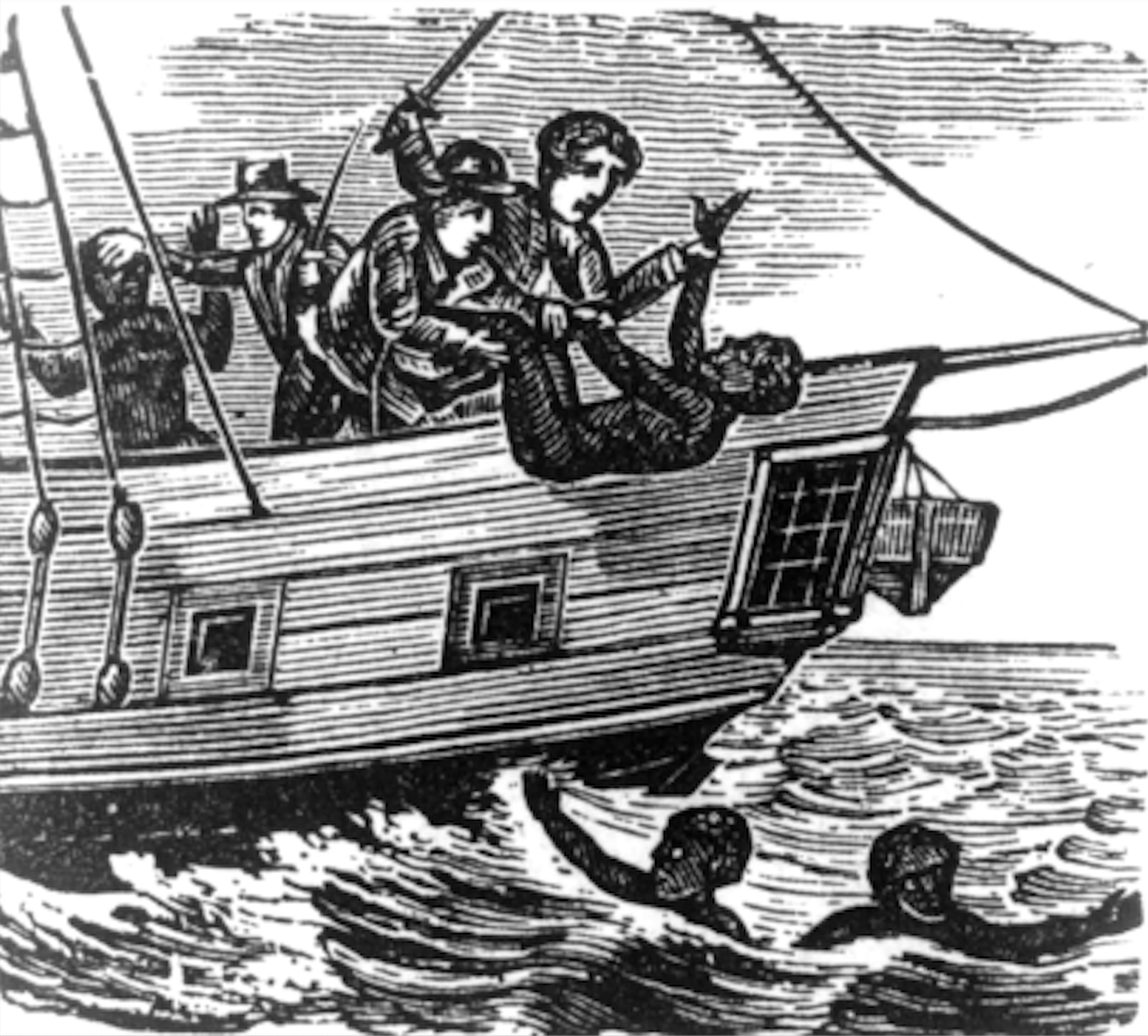
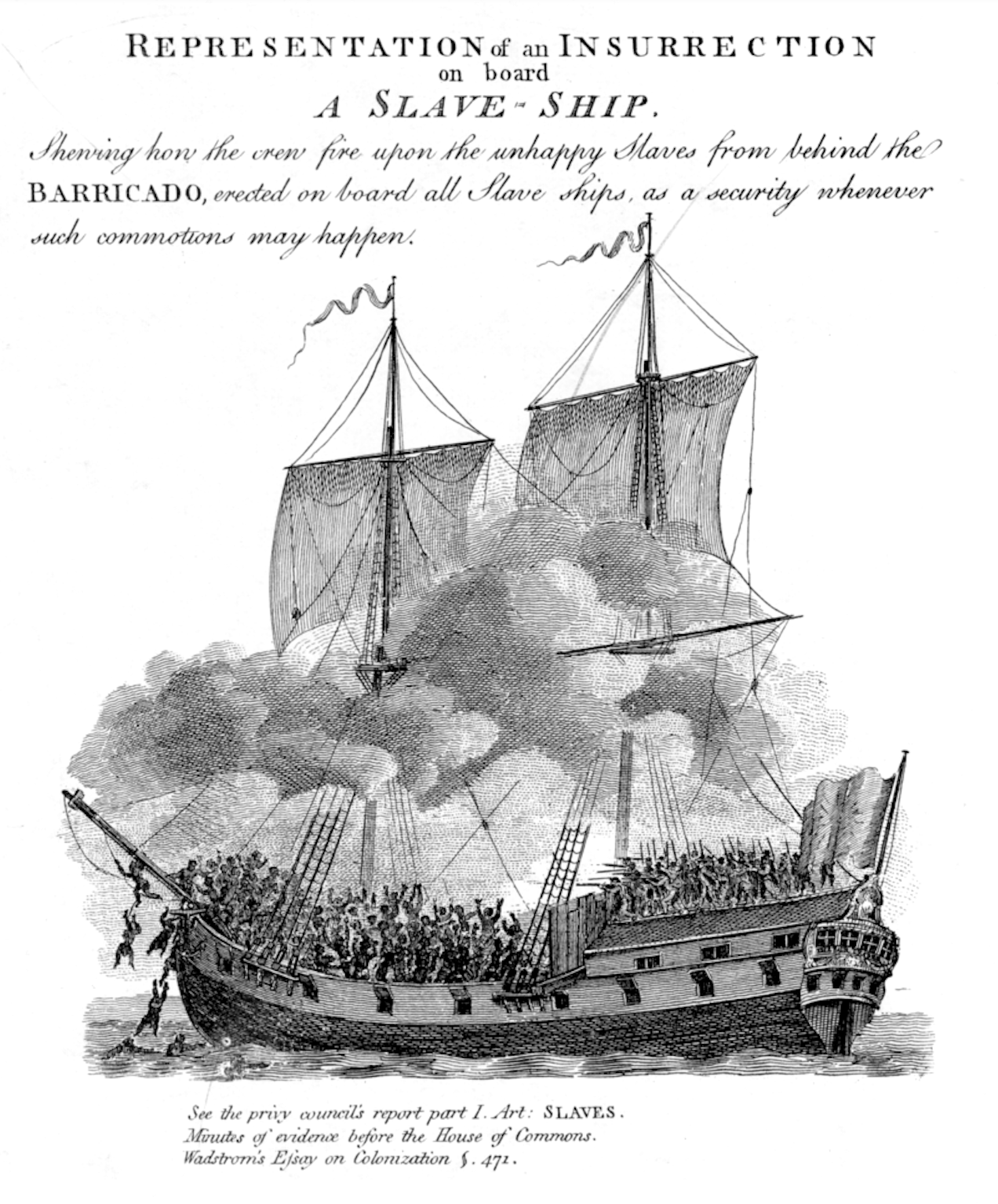
In August 1781, the Zong slave ship sailed from Accra, West Africa, with 442 enslaved people—twice the number it could safely transport—on board, bound for Jamaica. Because of a navigational error, the ship had to spend an additional three days at sea. With supplies and water running low, the crew decided to throw 131 of the enslaved people overboard to their deaths. If they had died on board the ship, the owners, the William Gregson slave-trading syndicate of Liverpool, would not have been able to make an insurance claim for compensation. The case was used by abolitionists to highlight the extreme brutality of the traders in enslaved people.
When the Gregsons claimed compensation for their commercial loss, the insurers refused to pay, so they were taken to court. The judge found in favour of the Gregsons. The insurers made an appeal against the decision, which was heard before Lord Justice Mansfield and two colleagues in 1783. He overturned the earlier decision, ruling against the slave traders, because of new evidence indicating the crew were responsible. Granville Sharp tried to have murder charges brought against them, but he was unsuccessful.
British abolitionist movement
Soldier and Member of Parliament James Oglethorpe was among the first to oppose slavery, banning it in the Province of Georgia, the colony he founded in British America in the 1730s, and arguing against it in Parliament. But it was not until the 1770s that the British abolitionist movement started to gain influence when Quakers, a Protestant group (formerly known as the Society of Friends) in Britain and the American colonies began to argue that slavery was wrong.

In 1783 the Quakers petitioned the House of Commons for an end to Britain’s slave trade and followed it with a campaign to get public opinion behind their cause. Soon after Oglethorpe's death in 1785, his friends Granville Sharp and Hannah More joined with William Wilberforce (see below), Zachary Macaulay, Thomas Fowell Buxton and others to form the Clapham Sect, a group committed to bringing the British slave trade to an end—then slavery itself.
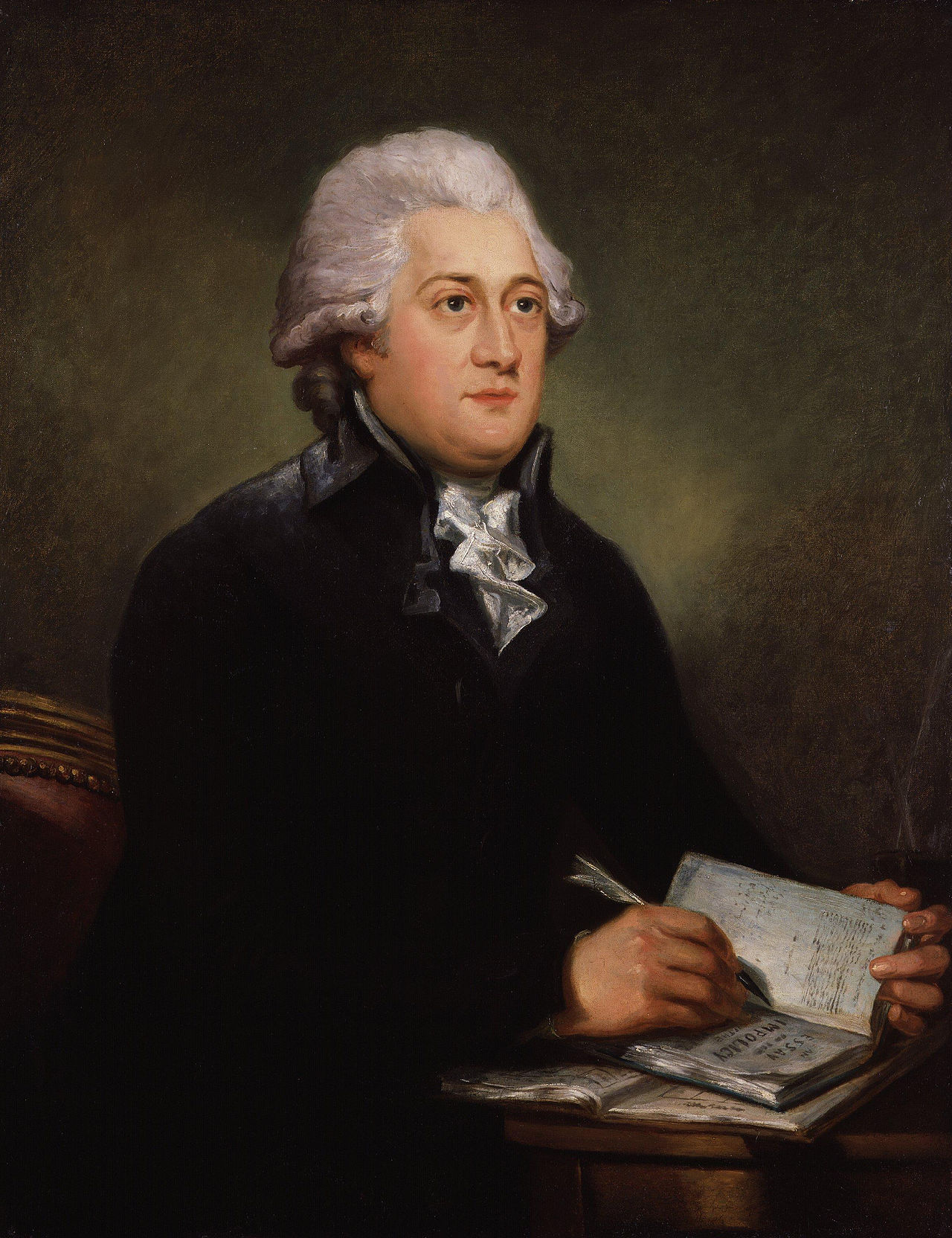
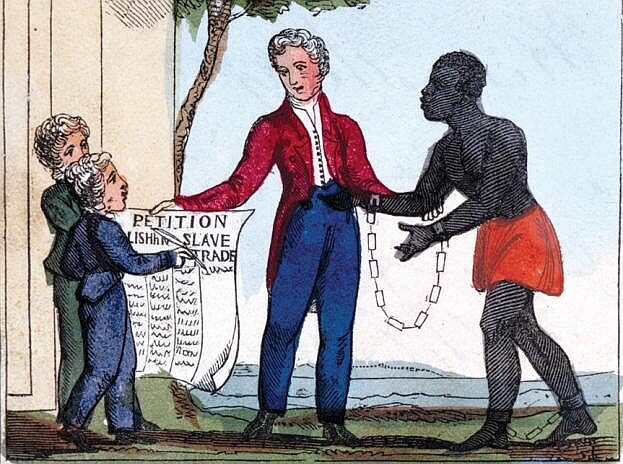
Sharp, along with Anglican churchman Thomas Clarkson, was among a group of 12 men who established the Society for Effecting the Abolition of the Slave Trade on 22nd May 1787. Nine of the founders were Quakers. The new society encouraged petitions—then a common form of protest and request to the House of Commons—against the slave trade. More than 100 petitions requesting it to be banned arrived at the Commons by the close of the 1788 parliamentary session.
Olaudah Equiano
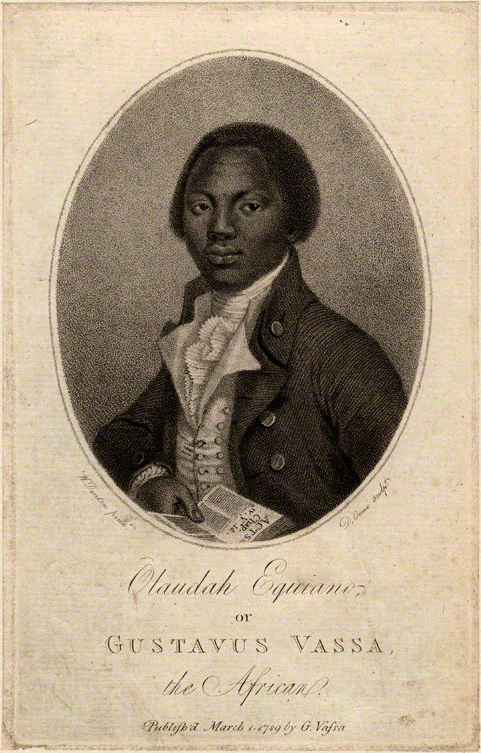
Olaudah Equiano was born the Kingdom of Benin in around 1745. Seized as a child by kidnappers, he was was sold and re-sold a number of times before being dispatched to Barbados in the West Indies. The voyage was terrifying, with many captives dying from injuries caused by flogging or from starvation. Sold to a Virginia tobacco planter, Olaudah was later, still only 12 years old, purchased by Lieutenant Michael Pascal of the British Royal Navy. While serving his master in various places for eight years, he learned to read and write. He also became baptized in 1759. Finally, after being bought and sold twice more, in 1766, aged 21, Olaudah Equiano had earned enough money to buy his freedom. He then spent much of the next 20 years of his life travelling the world aboard trading vessels.
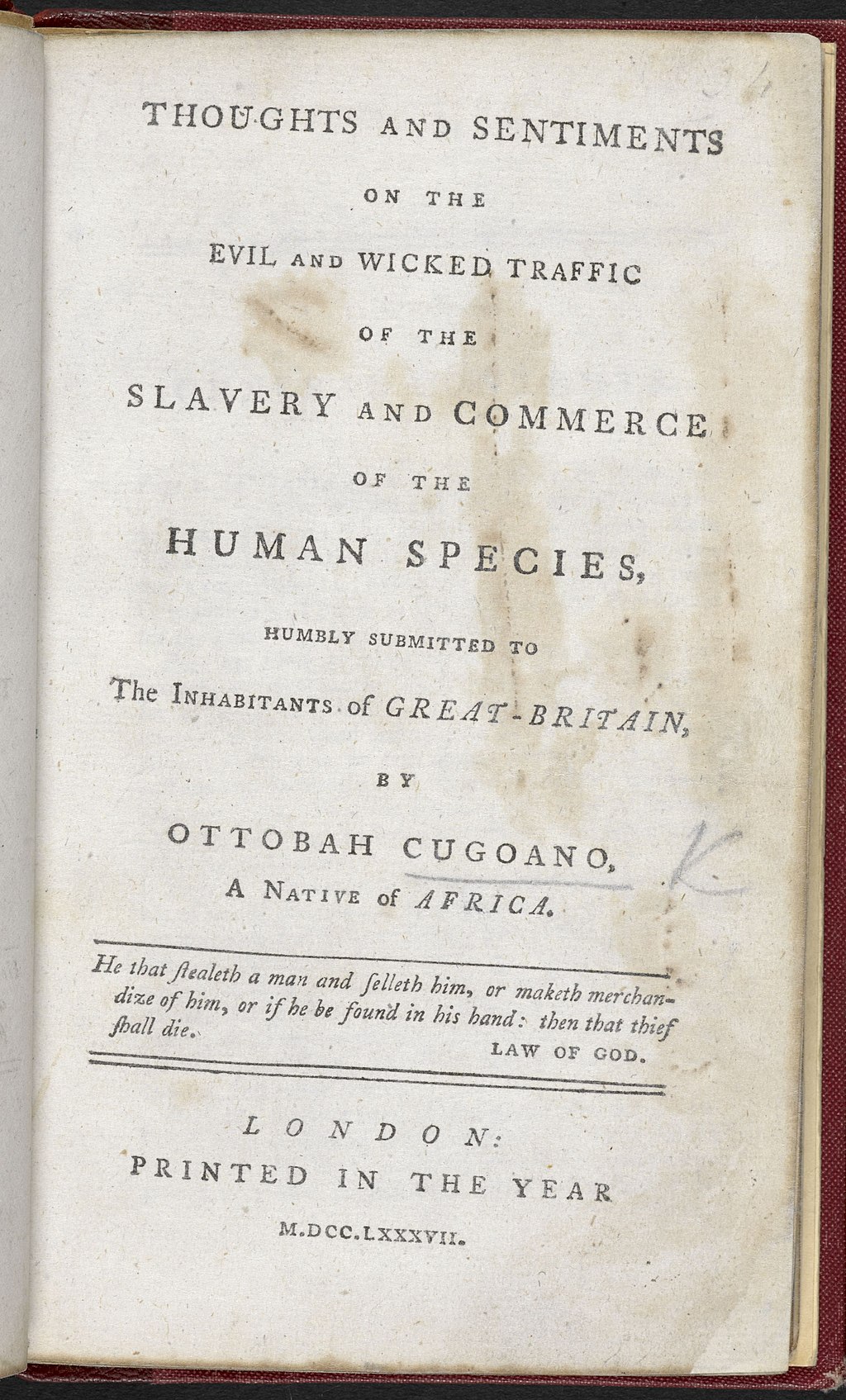
By the early 1770s Equiano was campaigning for the rights of other black Londoners. In 1783, he worked to raise awareness of the horrors of the Zong Massacre and, in 1786, added his voice to the growing movement to abolish slavery. Together with other members of London’s black community— including fellow freed slave Ottobah Cugoano—Equiano founded the Sons of Africa abolitionist group in 1787. The group was closely associated with the Society for Effecting the Abolition of the Slave Trade. The following year, Equiano presented Queen Charlotte, wife of King George III, with a petition on behalf of enslaved Africans, begging her to help end the oppression of slaves in the Caribbean colonies.


Equiano's autobiography, The Interesting Narrative of the Life of Olaudah Equiano, Or Gustavus Vassa, The African was published in 1789. It did much to publicize the horrors of slavery and was key to the surge of abolitionist activity at the time. However, the French Revolution, which broke out that year, so horrified the British establishment that such a radical step was dismissed as one too dangerous to take.
Equiano spent several years travelling and promoting his book, speaking out against slavery with the authority of a man who had witnessed its horrors himself. In 1792 he married Englishwoman Susannah Cullen from Soham in Cambridgeshire. They had two daughters. He died in 1797.
Campaign for abolition

British Member of Parliament William Wilberforce was another key figure in the abolitionist movement. After the formation of the Committee for the Abolition of the Slave Trade in 1787, Wilberforce led the cause of abolition through a parliamentary campaign. Although his proposals met with fierce resistance, from 1789 Wilberforce began to draw up anti-slavery motions. He introduced bills for the general abolition of the slave trade every year from 1794 to 1799. All were voted down, albeit narrowly in some cases.
Another influential campaigner was Thomas Clarkson, who came to prominence in 1786 when his work An essay on the slavery and commerce of the human species, particularly the African was published. He gathered vast amounts of data and information on the slave trade.
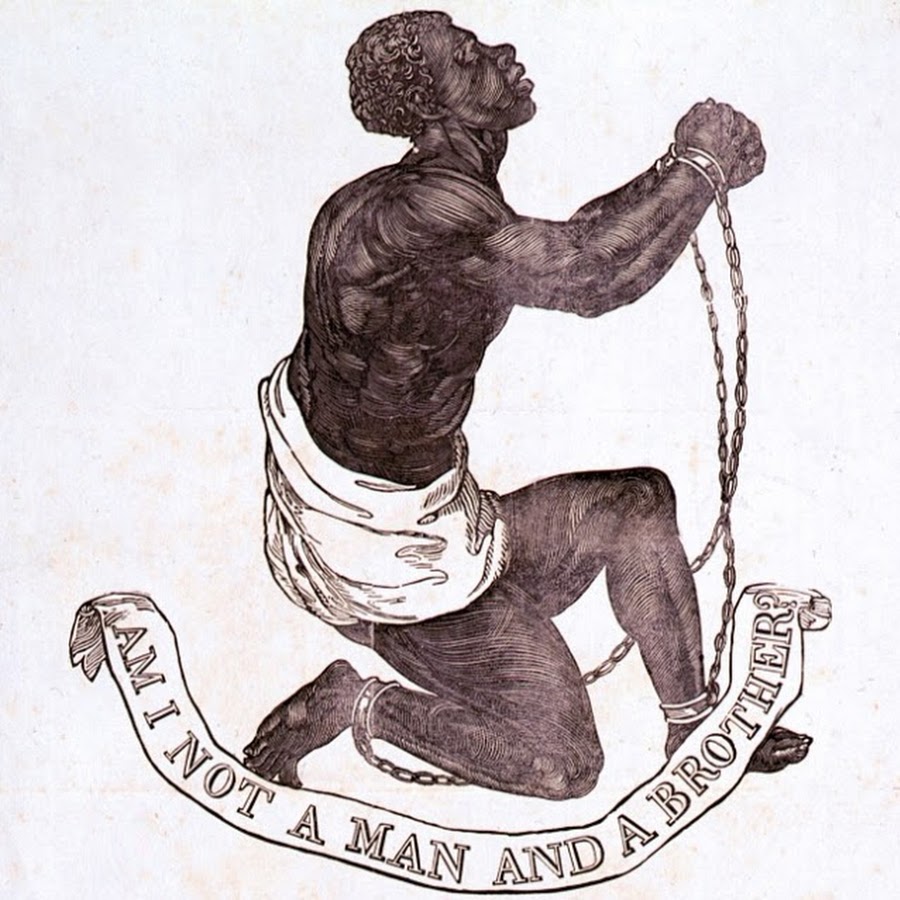
One aspect of abolitionism during this period was the effective use of images intended to raise awareness of the issue among the general public. They included the famous Josiah Wedgwood "Am I Not A Man and a Brother?" anti-slavery medallion of 1787.

Brooks diagram
A diagram of the Brooks slave ship, loaded with enslaved people to its full capacity, was probably the most widely copied image used by those campaigning to abolish the slave trade in the late 18th century. It was designed by Clarkson (along with two models of the ship he had had built) following an investigation of the ship by British MP, Sir William Dolben. The Plymouth chapter of the Society for Effecting the Abolition of the Slave Trade published it in 1788.
The diagram portrayed how enslaved Africans were transported to the Americas arranged on the ship's lower deck and poop deck, in accordance with the Slave Trade Act of 1788 (also known as Dolben's Act). Brooks was reportedly allowed to stow 454 African slaves, by allowing a space of 6 feet (1.8 m) by 1 foot 4 inches (0.41 m) to each man, 5 feet 10 inches (1.78 m) by 1 foot 4 inches (0.41 m) to each woman and 5 feet (1.5 m) by 1 foot 2 inches (0.36 m) to each child.
The poster's text reports a confession by a slave trader that, before the Act, the Brooks had carried as many as 609 slaves at one time. On the two voyages made just before the measurements were taken, the ship held respectively 638 and 744 enslaved persons.

Clarkson later commented in his History of the Rise, Progress, and Accomplishment of the Abolition of the African Slave Trade (1808) that the "print seemed to make an instantaneous impression of horror upon all who saw it, and was therefore instrumental, in consequence of the wide circulation given it, in serving the cause of the injured Africans."
The diagram instantly became widely known across Britain, appearing in newspapers, pamphlets, books and even posters pasted on the walls of coffee-houses and taverns.
Abolition of the Slave Trade Act
By 1792 the abolition of the slave trade had become a national cause in Britain. It is thought that around half a million people across the country refused to consume sugar from the Caribbean to show solidarity in their opposition to slavery. Over the course of just a few weeks, 519 petitions carrying around 400,000 signatures were submitted to the House of Commons.
Many MPs believed, however, that the abolition of the slave trade would mean risk losing some of the wealth and power of the British Empire—a matter they saw as more important than the religious or moral principle. The revolution in Saint-Domingue (later named Haiti) in the 1790s, which destroyed the most profitable plantation economy in the Caribbean, supported their case. The opposition by MPs successfully halted the anti-slavery movement in its tracks. Between 1794 and 1798 the British government supported French slave-owners in Saint-Domingue by sending British forces to fight against the slave insurrection, a cause for which tens of thousands soldiers lost their lives.


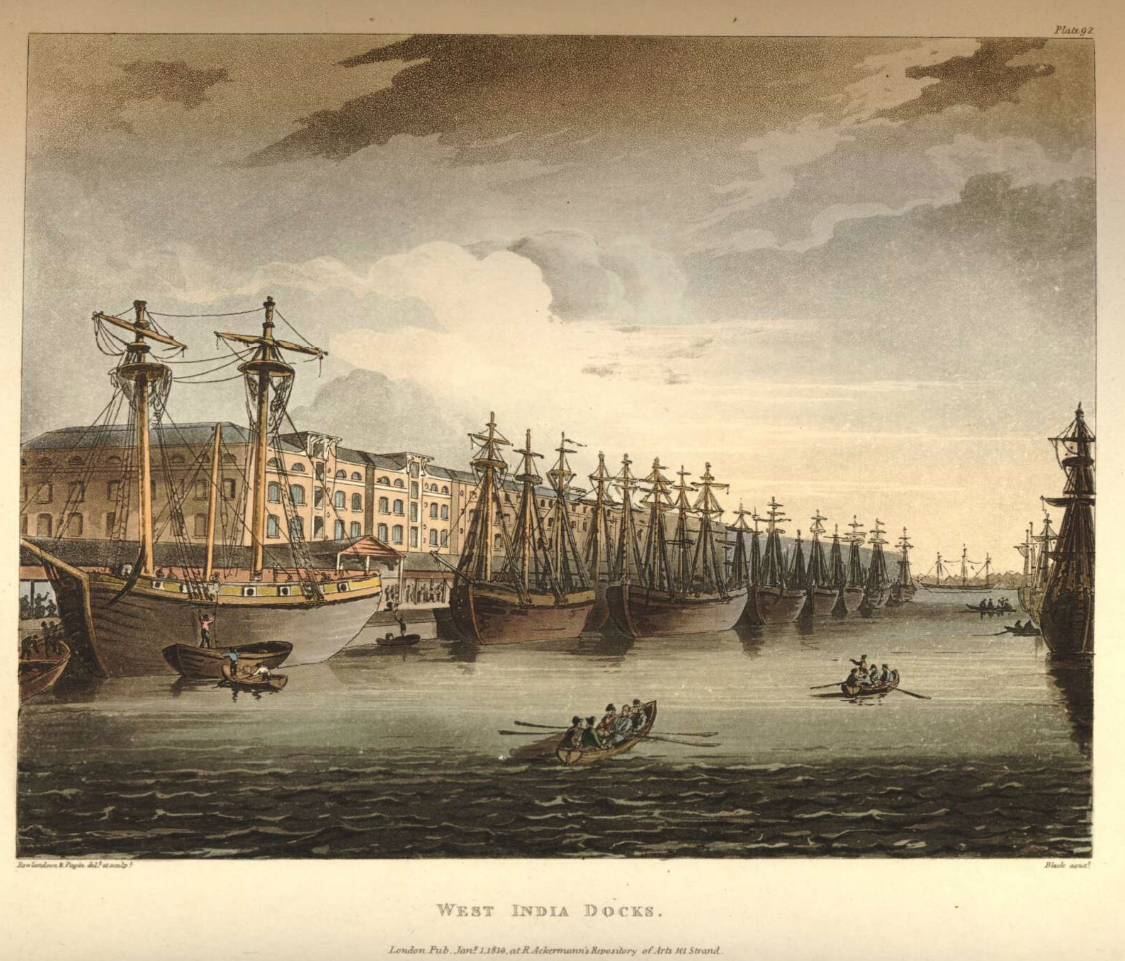
The defenders of the Atlantic slave trade—merchants in the trade who profited from its success—were small in number, but, through their close ties to decision-makers in Parliament, wielded great influence. These men were based in the major slaving ports in England—London, Bristol and Liverpool—and some, including George Hibbert and William Beckford, themselves held seats in the House of Commons. The slave traders formed a group known as the West India Interest, a lobby group who viewed abolition as a threat to the sugar business. Hibbert and Beckford even argued that the economy of the British Empire would collapse without the slave trade.
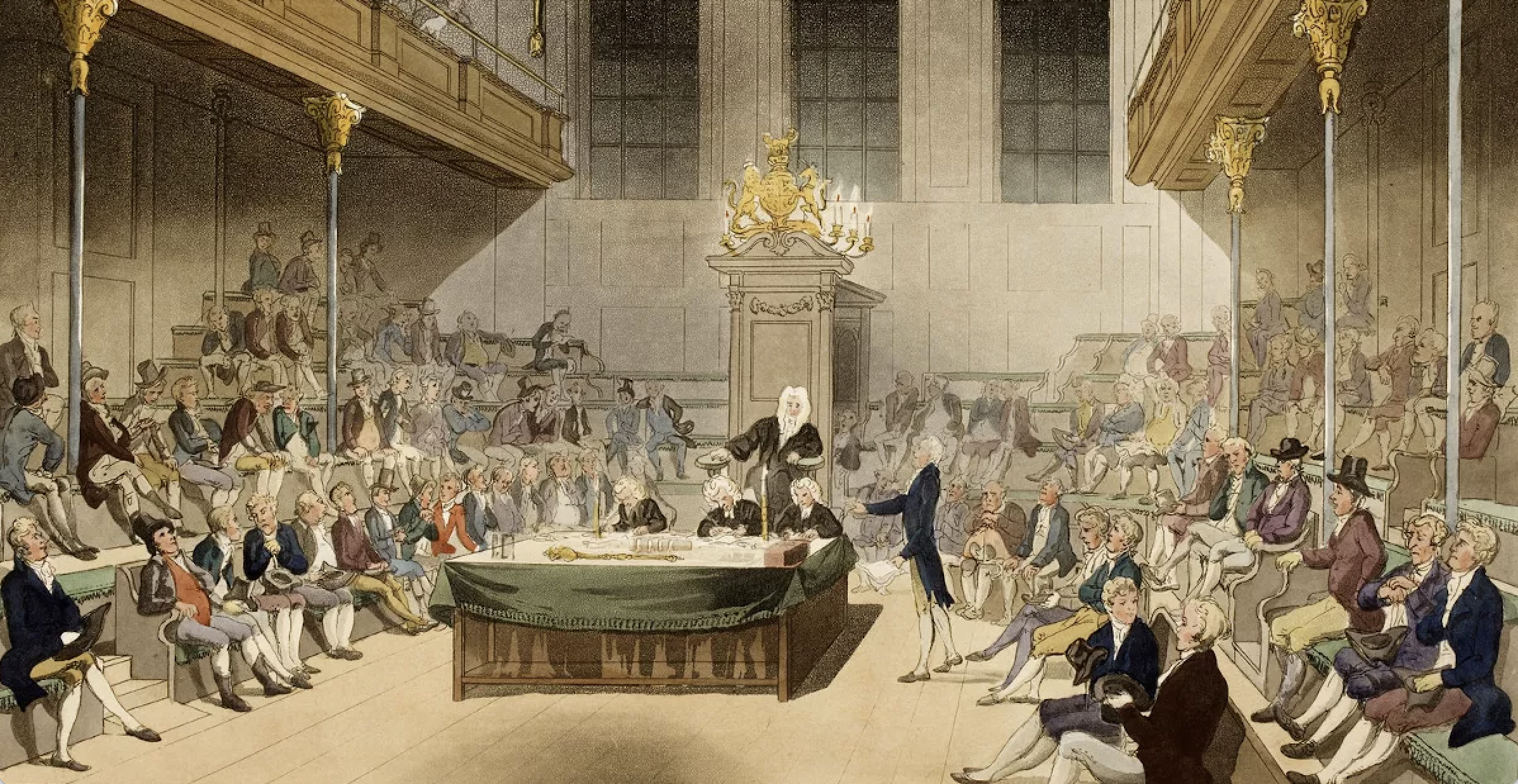
In 1805, the mood in Parliament began to shift. A younger generation of MPs more sympathetic to abolition had replaced pro-slavery members who had either retired or died. The Acts of Union of 1800 also brought 100 Irish MPs into Parliament, most of whom supported abolition. With the encouragement of the Prime Minister Lord Grenville, Wilberforce seized his chance. His new abolition bill passed through both houses of Parliament and received the Royal Assent from King George III on 25th March 1807.
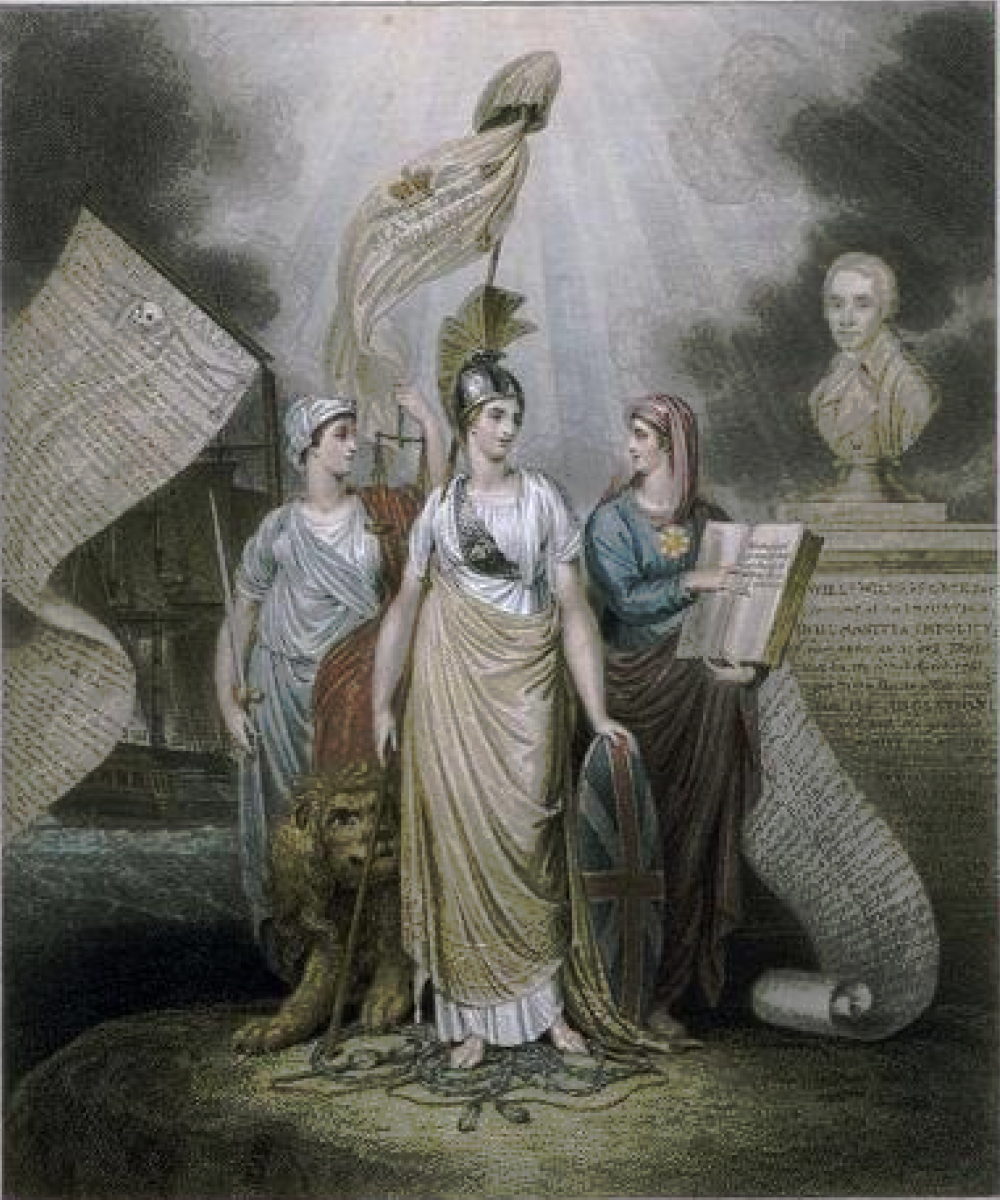
The Act imposed a fine of £100 for every slave found aboard a British ship. This ended the buying and selling of enslaved people within the British Empire—although it did not protect those who were already enslaved. Plantation owners were still able to use their existing enslaved labour forces.
Enforcing the Act
The 1807 Act’s intention was to outlaw the slave trade within the British Empire—but many enslavers continued to trade illegally, through smuggling. If they were ever in danger of getting caught, slave ship captains simply threw their slaves into the sea to reduce their fines. The Slave Trade Felony Act of 1811 proved far more effective and ended the trade across the Empire for good.
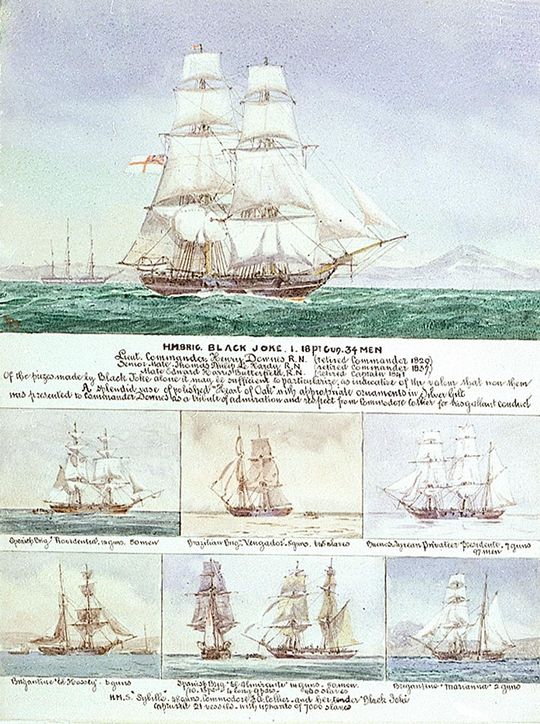
Between 1808 and 1860, the Royal Navy’s West Africa Squadron seized approximately 1600 slave ships and freed the 150,000 Africans who were aboard. But despite these efforts, the Atlantic trade continued, mainly with traders from France, Spain, Portugal, Brazil and United States sailing under false flags (the ships flew flags of other countries in order to hide their true nationality). More than three million Africans were shipped between 1808 and 1862, mostly to Brazil and Cuba.
Britain used its influence to force other countries to agree to treaties to end their slave trade and allow the Royal Navy to seize their slave ships. Britain signed anti-slavery treaties with more than 50 African rulers and action was taken against those who refused to agree to them.


Abolition of slavery
For years following the abolition of the slave trade, little was done to oppose the continuation of slavery itself. Fearing that slaves were ill-equipped for freedom and that chaos or violence might result, abolitionists adopted a "gradualist" stance: a wish for slavery to be dismantled—but slowly. The resistance of hundreds of thousands of people still enslaved across the British Empire, which led to uprisings against their enslavers, would become a huge factor in the drive towards abolition and their emancipation (granting of freedom).
In the 1820s, the case for complete abolition became harder for the British public and their politicians to ignore. Unable to buy any new slaves, slave-owners had begun to work their existing ones harder, and conditions worsened. The abolitionist movement revived with the founding of the Society for the Mitigation and Gradual Abolition of Slavery Throughout the British Dominions in 1823. Growing numbers of enslaved people had become Christians and the violent suppression of enslaved Christians began to cause outrage among fellow worshippers in Britain. The British government came to realise that the large-scale rebellions such as those in Barbados, Demerara and Jamaica, would continue to break out unless enslaved people were emancipated.

The Slavery Abolition Act, passed on 28th August 1833, would liberate some 800,000 human beings from enslavement in the British Empire. However, it excluded the territories administered by the East India Company, including India itself, the islands of Ceylon (present-day Sri Lanka) and Saint Helena. Enslaved people on Company territory—some 8 to 10 million people—were emancipated only in 1843 with the Indian Slavery Act.
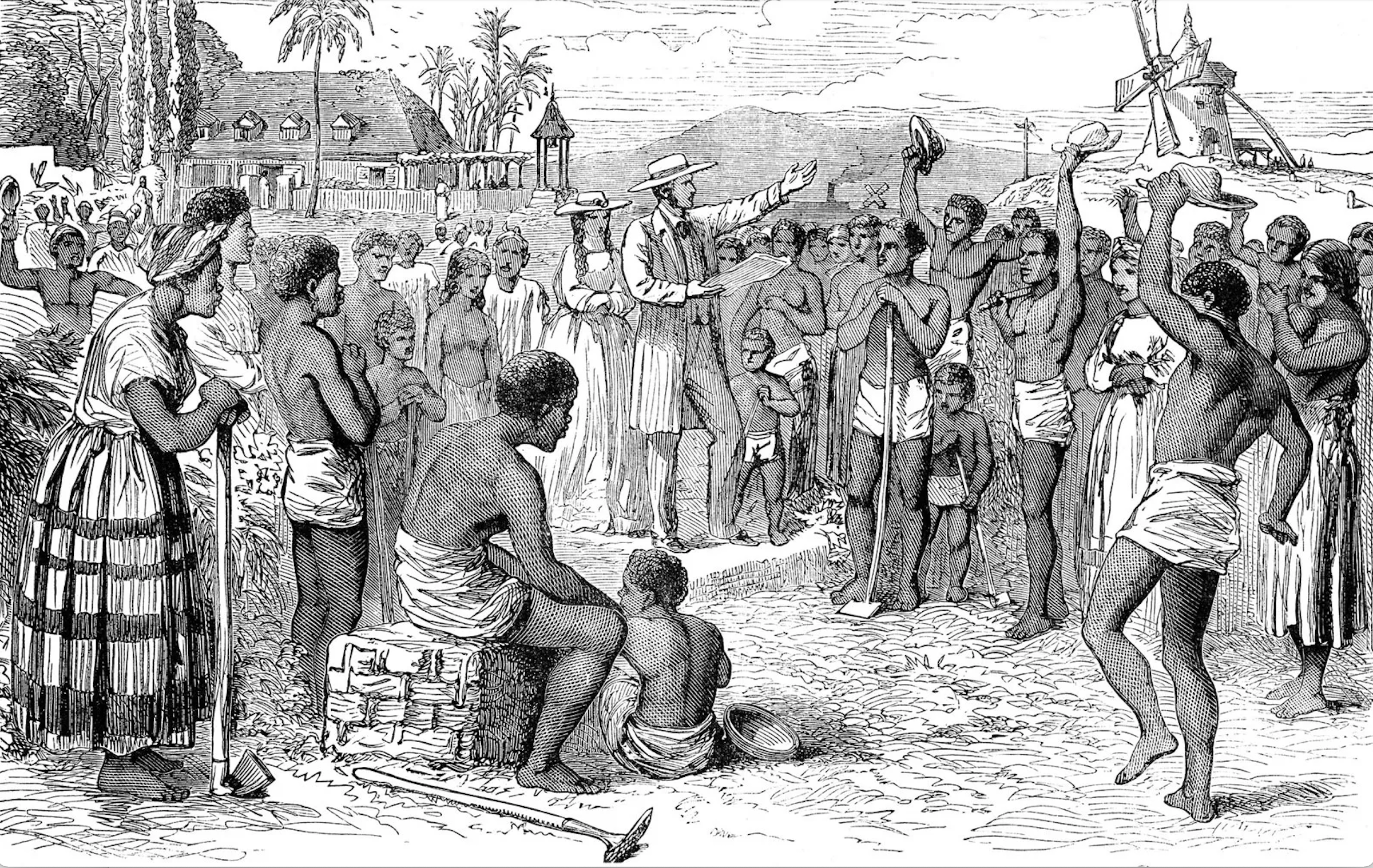
The newly emancipated people of the Caribbean, who received no compensation for their suffering, were forced to join new "apprenticeship" schemes, which tied them to their plantations for up to a further six years, starting from August 1834. It meant little would change for them. They were still expected to work 10-hour days and punishments such as flogging were still permitted. The apprenticeships were finally ended on 1st August 1838—two years earlier than scheduled—when full emancipation was at last achieved.

In 1839, the British and Foreign Anti-Slavery Society was formed by Joseph Sturge. Its goal was to outlaw slavery worldwide. The world's oldest international human rights organization, it continues its work today as Anti-Slavery International.

Compensation
Under the terms of the Slave Compensation Act of 1837, slave owners were to receive a share of £20 million—around £2.4 billion in today's money (or £17 billion if rising incomes are taken into account)—in compensation from the British government for the loss of their "property".

Though the number of slaves and the total amount of compensation payable were known to the government, the number of slave owners, who they were and where they lived, were not. The big plantation owners—men who had demanded compensation and lobbied in defence of slavery—were well known and all came forward to claim their share. George Hibbert, for example, was awarded £63,067 and another 10 members of his family also received large payouts. John Gladstone, owner of the slaves who rose up in the Demerara Rebellion received £106,769. His son William Gladstone went on to be Prime Minister of Great Britain four times between 1868 and 1894.
But around 46,000 other British people also claimed their share of the compensation payouts, registering their claims with the Slave Compensation Commission. They came from all over the country and included people from the middle and lower middle classes. Many owned only a small number of slaves.

Consultant: Philip Parker
pics
Without in any way limiting Q-files Ltd’s exclusive rights under copyright, any use of this publication to “train” generative artificial intelligence (AI) technologies to generate text is expressly prohibited. Q-files Ltd reserves all rights to license use of this work for generative AI training and development of machine learning language models.