
States of the US

CITE
We have made every effort to follow citation style rules, but there may be some minor differences. If in doubt, please refer to the appropriate citation style manual.
Rhode Island. (2026). In Q-files Encyclopedia, Geography, States of the US. Retrieved from
https://www.q-files.com/geography/states-of-the-us/rhode-island
"Rhode Island." Geography, States of the US, Q-files Encyclopedia, 2 Sep. 2026.
https://www.q-files.com/geography/states-of-the-us/rhode-island.
Accessed 22 Sep. 2026.
Rhode Island 2026. Geography, States of the US. Retrieved 22 September 2026, from
https://www.q-files.com/geography/states-of-the-us/rhode-island
Geography, States of the US, s.v. "Rhode Island," accessed September 22, 2026.
https://www.q-files.com/geography/states-of-the-us/rhode-island


Rhode Island
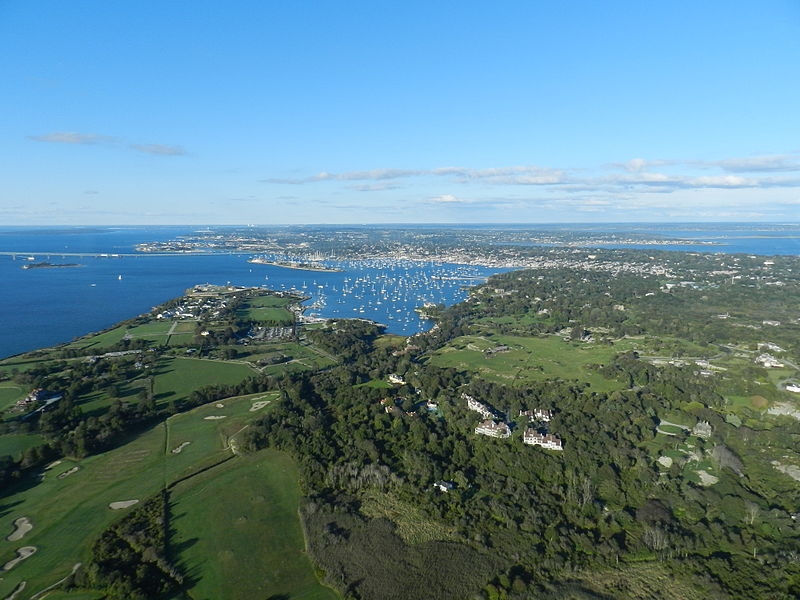
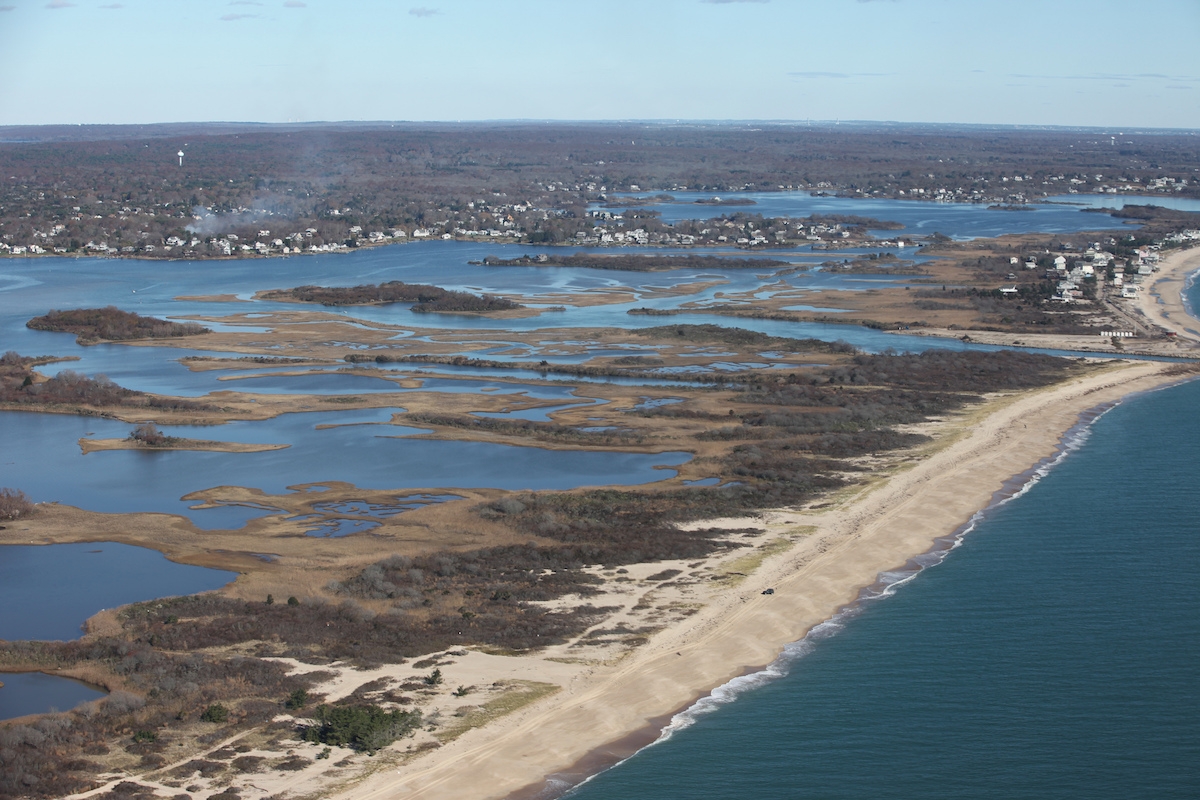
The state of Rhode Island is located in the northeastern region of the United States. It is one of six states that make up New England. The smallest of all the 50 states, Rhode Island is densely populated and highly industrialized. Despite its name, most of Rhode Island is located on the mainland. The eastern part of the state includes the lowlands surrounding Narragansett Bay, together with the 30 or so islands within the bay itself. Western Rhode Island forms part of the New England Uplands, a heavily forested region. The state has warm, rainy summers and cold winters.


Name
There are two theories as to why Rhode Island is so called. One dates back to the 16th century when a colony was first established on Aquidneck Island (now called Rhode Island), the largest of several islands in Narragansett Bay. In 1524, explorer Giovanni da Verrazzano likened it in shape to the island of Rhodes, a Greek island in the Aegean Sea. The Pilgrims, who later established a settlement on Aquidneck, assumed the island to be Verrazzano's "Rhodes".
A second theory gives the name a Dutch origin. In 1625, Dutch explorer Adriaen Block described Aquidneck as een rodlich Eylande, "an island of reddish appearance”, perhaps because of its red autumn foliage, or the red clay on the shore. Later Dutch maps labelled the island Roodt Eylant, the “Red Island”, from which the English version, Rhode Island, is derived.
Economy
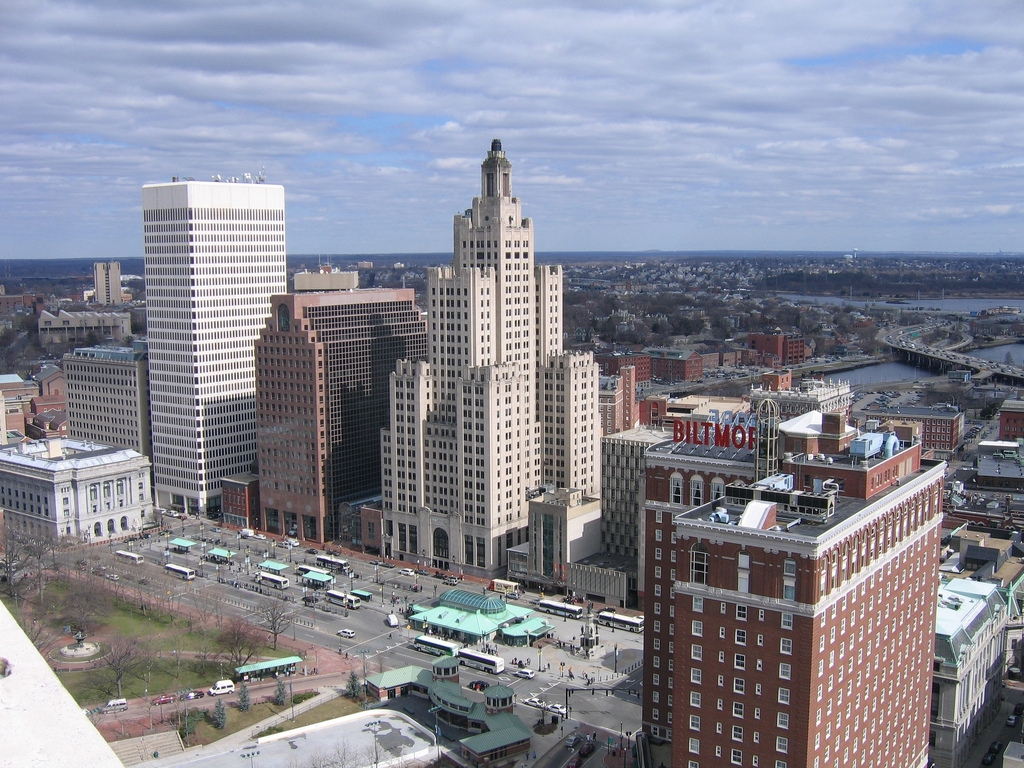
Once dominated by manufacturing and shipbuilding, Rhode Island’s economy is nowadays based on services, particularly healthcare, education and tourism. Its traditional products include jewellery, silverware, textiles, metals, machinery, electrical equipment and rubber and plastics. Most of the farmland is used for growing vegetables, dairying and poultry raising (the state is known for its Rhode Island Red chickens).
Facts about Rhode Island
Area 1214 sq miles (3144 sq km)
Highest point Jerimoth Hill 812 ft (247 m)
Population 1,095,962
Capital Providence
Largest cities Providence, 190,792; Warwick, 82,999; Cranston, 82,632; Pawtucket, 75,321; East Providence, 46,900
Nickname The Ocean State
State bird Rhode Island red hen
State flower Violet
State tree Red maple


Consultant: Nicholas Harris
History of Rhode Island
before 16th century
The state was inhabited by Native American Wampanoag, Narragansett and Pequot peoples
1524
The Rhode Island region is visited by explorer Giovanni da Verrazzano
1614
The Rhode Island region is explored by the Dutchman Adriaen Block.
1636
Roger Williams, banished from the Massachusetts Bay Colony for his religious views, establishes the first settlement, Providence, on land purchased from the Narragansett people
1638
Puritan exiles buy the island of Aquidneck (now called Rhode Island) from the Narragansett, where they establish the settlement of Pocasset (later Portsmouth)
1639
Newport is founded on the southwest side of Rhode Island
1642
Warwick is founded on the western shore of Narragansett Bay
1644
Providence, Portsmouth, Newport and Warwick unite for their common independence as the Colony of Rhode Island and Providence Plantations
1652
Rhode Island enacts the first law prohibiting slavery in North America
1663
A royal charter is granted by King Charles II of England for the Colony, guaranteeing the settlers their religious freedom
late 17th century
Settlers live by farming, raising livestock, fishing and trade
1675
Great Swamp fight: during King Philip's War, an alliance of Massachusetts, Connecticut and Plymouth militias under General Josiah Winslow destroy the Narragansett village in the Great Swamp (in what is now South Kingstown) in response to earlier attacks by the Wampanoag tribe under Metacomet, known locally as ”King Philip”
18th century
Newport thrives on the trade of rum, slaves and molasses
1772
British officials are burned by patriots in protest against the enforcement of revenue laws
1776
Rhode Island becomes the first of the Thirteen Colonies to renounce its allegiance to the British Crown
1778
Battle of Rhode Island: British forces in Newport attack the retreating American militia; American forces withdraw to the mainland, leaving Aquidneck Island (Rhode Island) in British hands. The following year, the British abandon Newport before the arrival of the French fleet. Newport then becomes the base of the French forces, allies of the Americans, for the rest of the Revolutionary War
1790
Rhode Island is the 13th and last state to ratify (sign up to) the US Constitution
1793
Samuel Slater sets up Slater Mill in Pawtucket using the waterpower of the Blackstone River to power his cotton mill. With the first successful, fully mechanized mill, Pawtucket becomes the birthplace of the Industrial Revolution in the US
19th century
With the growth of industry, especially textiles, Rhode Island towns increase rapidly in population; Providence surpasses Newport as the commercial centre
1842
Dorr Rebellion: frustrated in their repeated attempts to amend the constitution (to give them the right to vote in elections) many Rhode Islanders join Thomas Wilson Dorr in establishing an illegal state government in Providence. The rebellion fails, but afterwards most American-born men are given the right to vote
1935
Democrat majorities in the state House and Senate replace a Republican dominance that has existed since the middle of the 19th century in what becomes known the "Bloodless Revolution". The Rhode Island Democratic Party will dominate state politics from this date onwards
2003
Nightclub fire in West Warwick claims 100 lives and results in nearly twice as many injured
2010
Areas of the state experience record flooding due to rising rivers from heavy rain, especially the Pawtuxet River which runs through central Rhode Island
pics
Without in any way limiting Q-files Ltd’s exclusive rights under copyright, any use of this publication to “train” generative artificial intelligence (AI) technologies to generate text is expressly prohibited. Q-files Ltd reserves all rights to license use of this work for generative AI training and development of machine learning language models.