
States of the US

CITE
We have made every effort to follow citation style rules, but there may be some minor differences. If in doubt, please refer to the appropriate citation style manual.
Georgia. (2026). In Q-files Encyclopedia, Geography, States of the US. Retrieved from
https://www.q-files.com/geography/states-of-the-us/georgia
"Georgia." Geography, States of the US, Q-files Encyclopedia, 1 Apr. 2026.
https://www.q-files.com/geography/states-of-the-us/georgia.
Accessed 6 Aug. 2026.
Georgia 2026. Geography, States of the US. Retrieved 6 August 2026, from
https://www.q-files.com/geography/states-of-the-us/georgia
Geography, States of the US, s.v. "Georgia," accessed August 6, 2026.
https://www.q-files.com/geography/states-of-the-us/georgia


Georgia
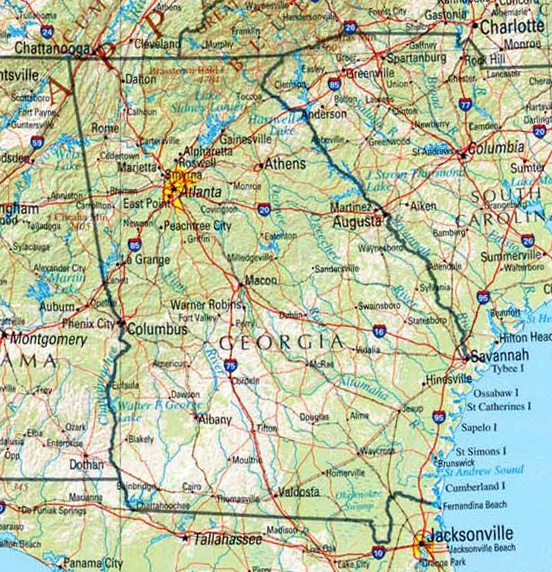
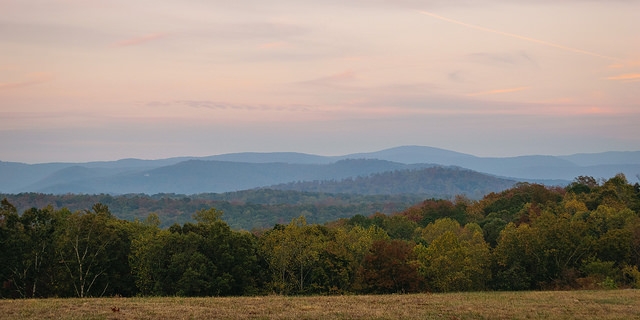
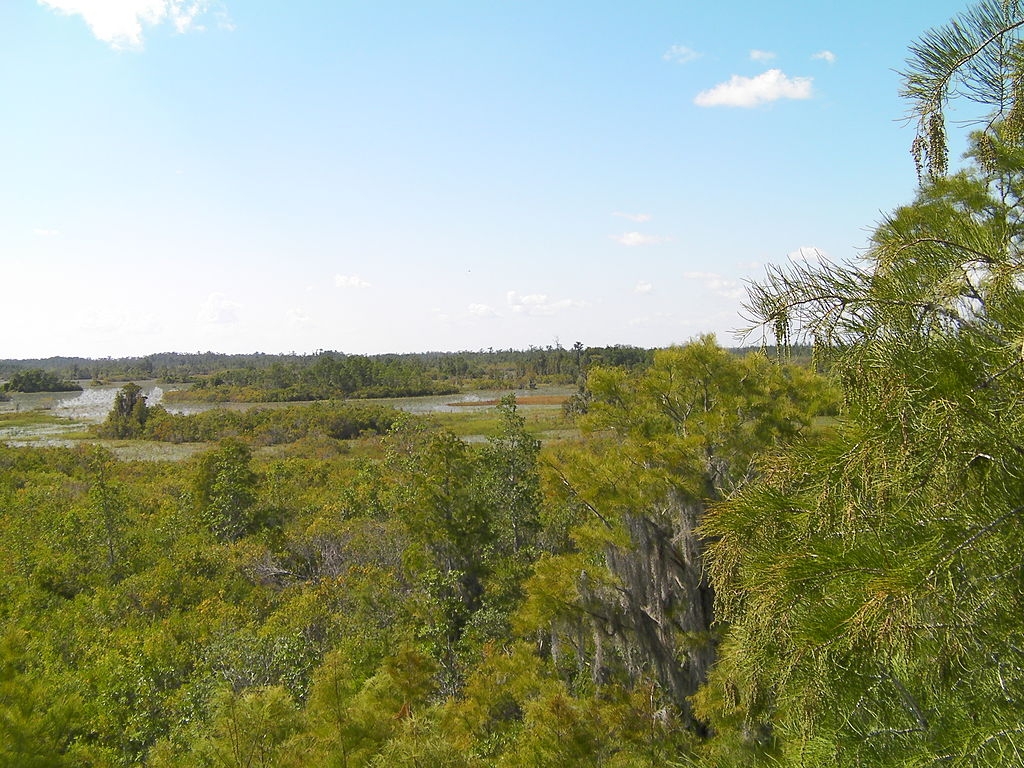
The state of Georgia is located in the southeastern United States. The Blue Ridge Mountains run across the northeast of the state, while the ridge-and-valley Appalachians occupy the northwest. The Piedmont foothills extends from the mountains down to the Fall Line, the “edge” over which rivers cascade down to the low-lying coastal plain in the southeast. (The Fall Line is a feature that extends diagonally northeast-southwest down the Eastern Seaboard). Parts of Georgia's coastal plain, especially near the sluggish rivers, are swampy. A chain of barrier islands, called the Sea Islands, hugs the coastline.
Name
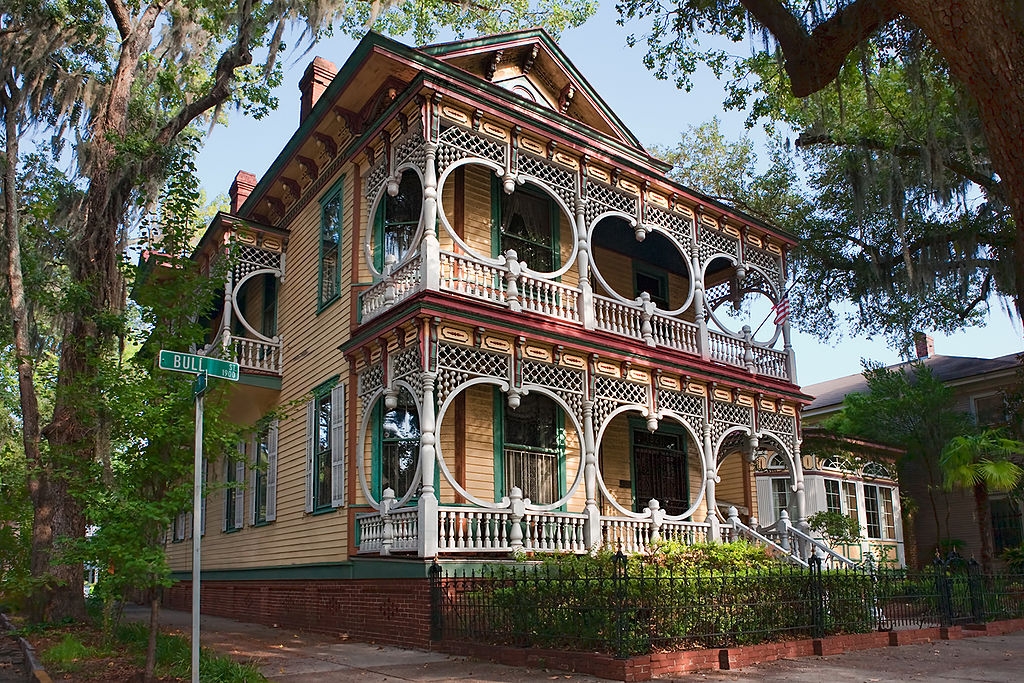
Georgia was named after King George II of Great Britain. British soldier, Member of Parliament and social reformer, James Oglethorpe received a charter from George II to settle the colony of Georgia in 1732. Oglethorpe saw Georgia as a place to resettle English subjects who had been imprisoned for debt, along with "the worthy poor”. The colony's charter prohibited slavery and alcohol, although these restrictions were lifted in 1749.
Climate
Most of Georgia has a humid subtropical climate, with hot summers and mild winters, apart from in the mountains which are cooler. Precipitation is moderate to heavy, with average annual rainfall as much as 75 inches (200 centimetres) in the the north. The state has frequent tornadoes and is vulnerable to hurricanes sweeping in from the Atlantic Ocean, although the coast rarely experiences a direct strike.


Economy
Once a major cotton-growing area, Georgia is now the US’s largest producer of peanuts (it produces twice as many as the next highest-producing state) and pecans. Tobacco is the principal crop in central and southern parts, while peanuts dominate the southwest. Maize, soya beans, peaches, cattle, poultry and eggs are also important.
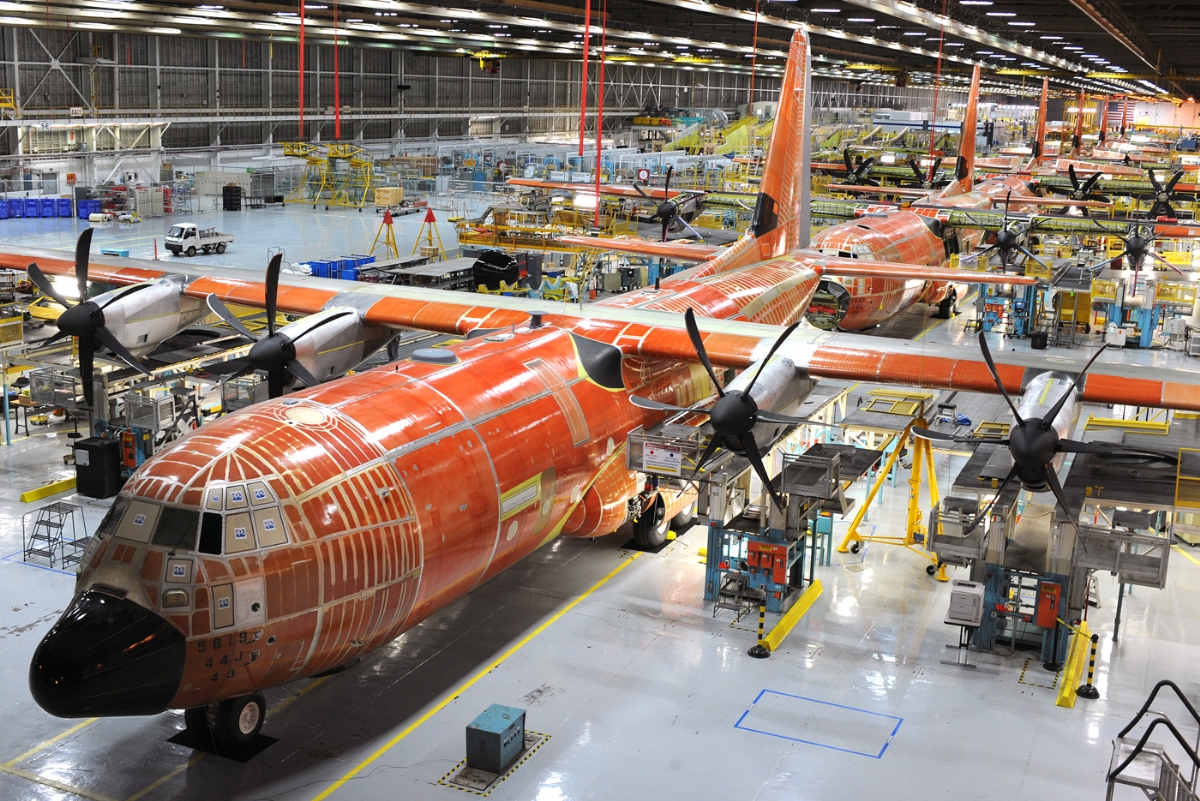
The manufacture of textiles has long been Georgia's leading industry. Other major manufactures include aircraft, cars, foods, paper products and chemicals. Atlanta is a centre of information technology, media and banking industries. Much of Georgia is heavily forested and the state is a leading producer of timber, as well as other tree products such as resin and turpentine. Georgia is well known for its fine marble.
Atlanta
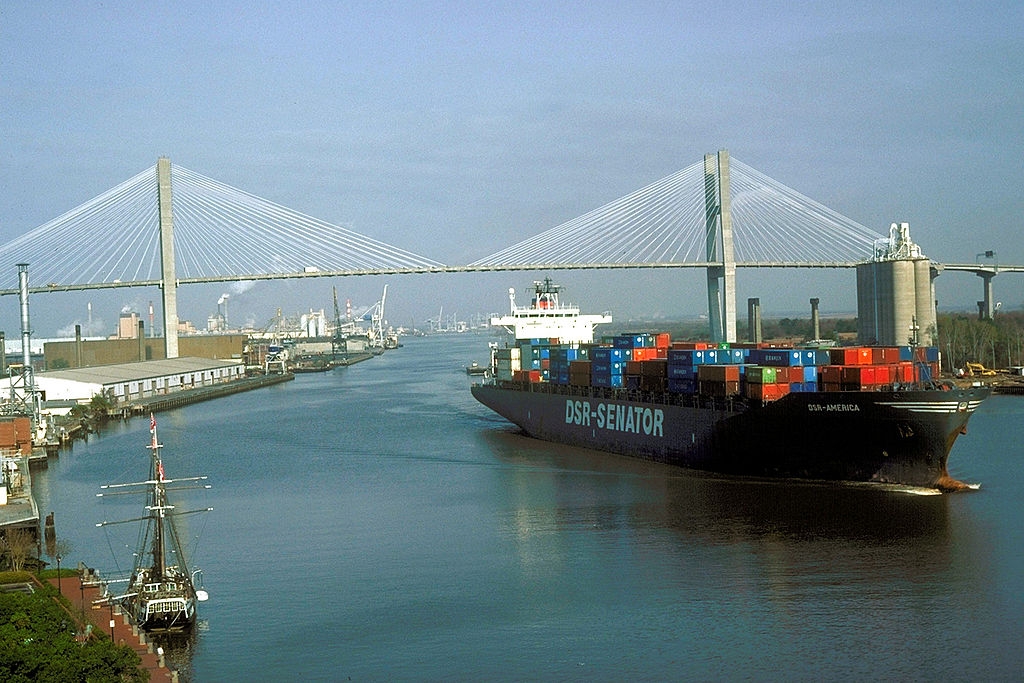
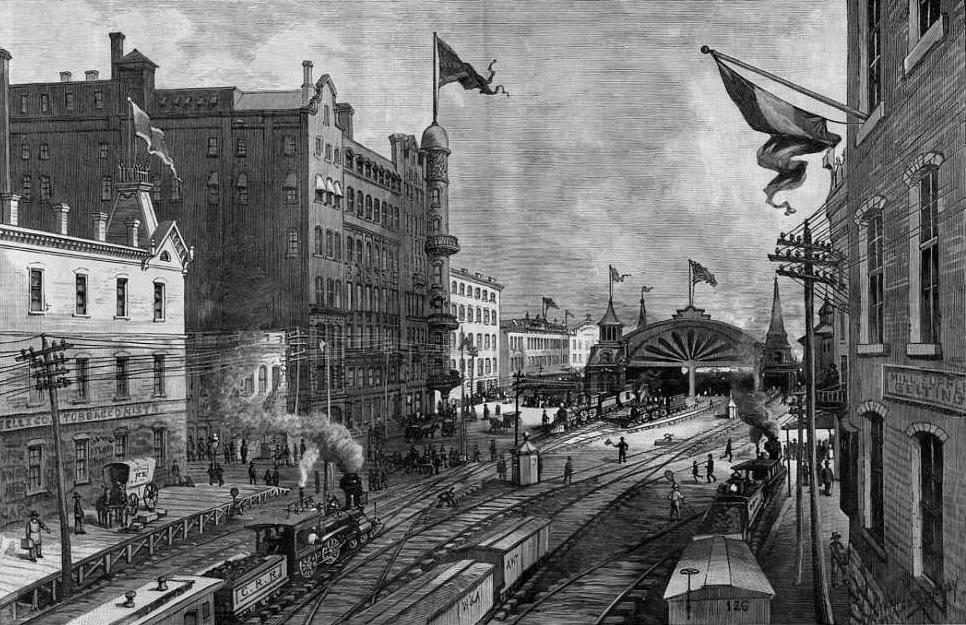
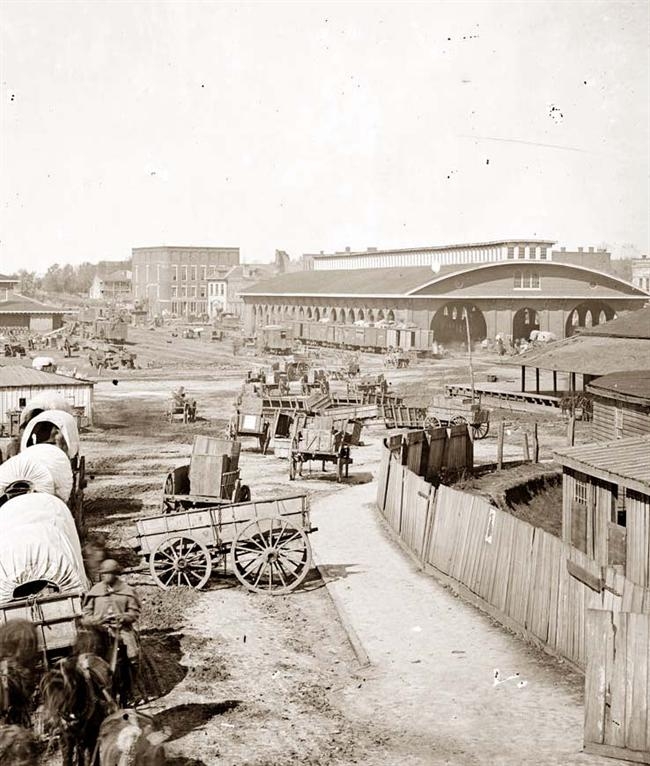
Situated among the foothills of the Appalachian Mountains, Atlanta is Georgia’s capital and most populous city. It was founded in 1837 at the junction between two railways linking the port of Savannah with Chattanooga and the Midwest. A settlement, named "Atlantica-Pacifica”, grew up around the railway terminus. The name was later shortened to Atlanta. During the Civil War, the area around Atlanta, which had grown into an important railway hub, became the scene of several major battles, culminating in a four-month-long siege of the Confederate city by the Union Army. On the 2nd September 1864, Atlanta surrendered and a few days later, on the orders of General Sherman, it was burned to the ground.
Atlanta was soon rebuilt and, during the first decades of the 20th century, it grew rapidly. In the 1960s, Atlanta became a focus of the Civil Rights Movement, led by Martin Luther King and others. Atlanta was selected to host the 1996 Olympic Games, an event that triggered a fundamental transformation of the city over the following decade.
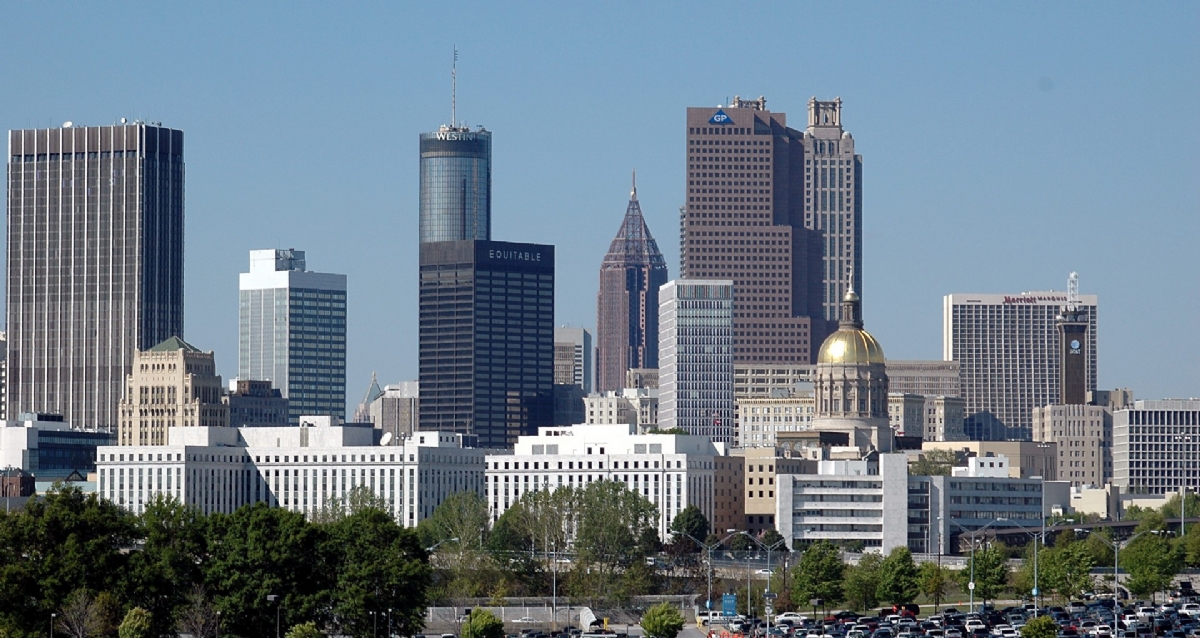
While its economy boomed, Atlanta became a modern, multicultural city with gentrified neighbourhoods, towering skyscrapers and a thriving arts scene. A centre for banking, information technology and media businesses, the city hosts the global headquarters of corporations such as the Coca-Cola Company, Delta Air Lines, CNN and UPS. Hartsfield–Jackson Atlanta International Airport is the world's busiest airport.
Facts about Georgia
Area 57,906 sq miles (149,977 sq km)
Highest point Brasstown Bald 4784 ft (1458 m)
Population 11,029,227
Capital Atlanta
Largest cities Atlanta, 510,823; Columbus, 201,877; Augusta, 200,884; Macon, 156,512; Savannah, 147,748
Nicknames Peach State, Empire State of the South
State bird Brown thrasher
State flower Cherokee rose
State tree Live oak
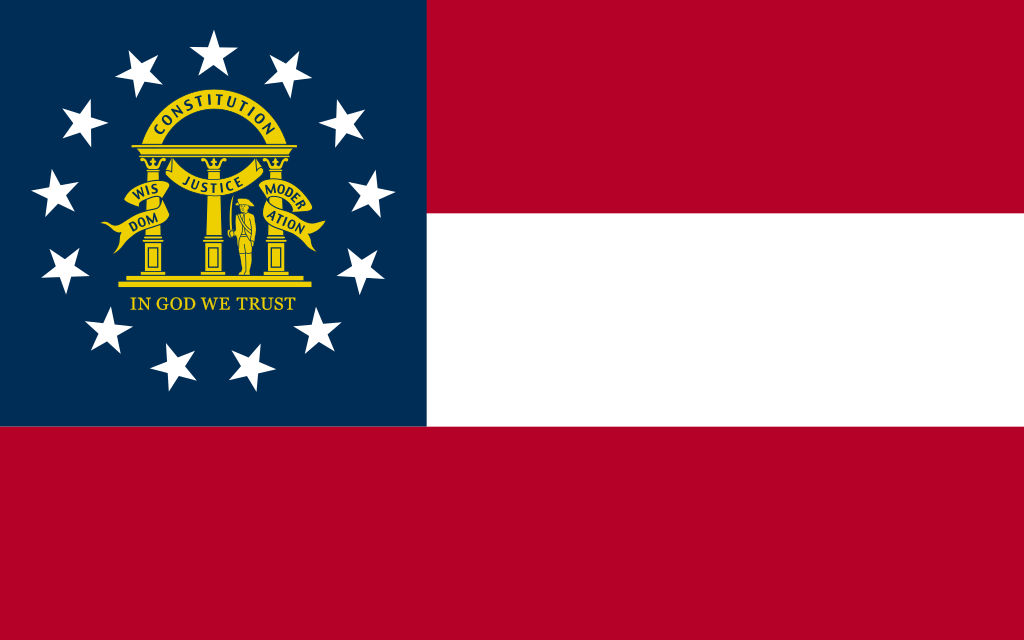
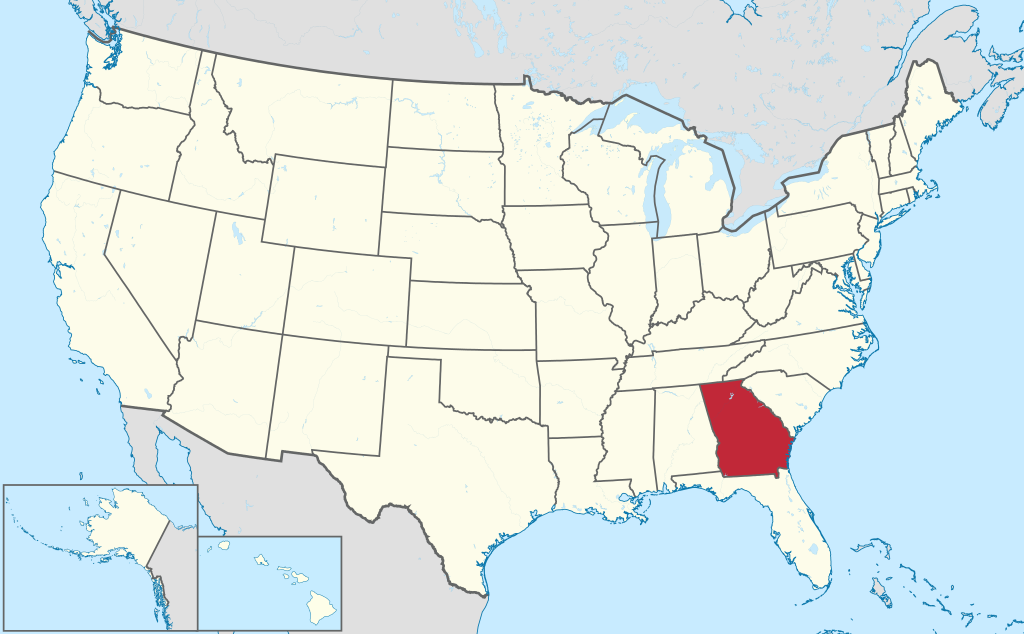
Consultant: Nicholas Harris
History of Georgia
16th century
Creek and Cherokee Native American peoples inhabit the Georgia area at the time when European explorers first arrive
1540
Spanish explorer Hernando De Soto and his expedition pass through the region; the Spanish later establish missions and forts on the Sea Islands.
1663
King Charles II of Great Britain grants land that includes Georgia to eight landowners from Carolina; Spain, which claims large parts of southeastern United States as its territory of La Florida, disputes this grant
1732
Englishman James Oglethorpe receives a charter from King George II to settle the colony of Georgia. Oglethorpe sees Georgia as a location for the resettlement of English subjects who have been imprisoned for debt and "the worthy poor”. The colony's charter prohibits slavery and alcohol, although these restrictions are later lifted.
1733
The first colonists, led by Oglethorpe, reach the mouth of the Savannah River; they found the town of Savannah on a bluff overlooking it
1739
War breaks out between Spain and Britain
1742
Oglethorpe's troops defeat a Spanish army in the Battle of Bloody Marsh, near Fort Frederica on St Simons Island, thus ending Spain's claim to Georgia
1740s
Georgia's early settlers include English, Welsh, Scots, Germans, Italians and Swiss; early colonists plant mulberry trees for the cultivation of silkworms
1754
Georgia becomes a royal colony; it exports rice, indigo, deerskins, timber, beef and pork to Britain
1776
The Province of Georgia revolts against British rule in the American Revolution by signing the Declaration of Independence
1778
British forces capture Savannah and take every important town in Georgia by the end of the following year
1788
Georgia becomes the first Southern state to ratify (sign up to) the Constitution of the US
early 1800s
Cotton is grown under the plantation system with labour supplied by slaves
1827
Cherokees establish themselves as an independent nation
1829
Gold is discovered in the northern Georgia mountains, sparking the Georgia Gold Rush
1830
Indian Removal Act becomes law, sending many eastern Native American peoples, including those of Georgia, to reservations in present-day Oklahoma
1838
Federal troops forcibly relocate the Cherokee to the west of the Mississippi; their journey, known as the Trail of Tears, leads to the deaths of more than 4000 Cherokee people
1861
Georgia declares its secession from the Union and becomes one of the original seven Confederate states
1864
Georgia becomes a major Civil War battlefield when General Sherman sets fire to Atlanta and marches through Georgia to take Savannah
1870
Georgia is restored to the Union
1906
Atlanta Massacre. Armed mobs of white Americans attack African Americans in Atlanta following newspaper reports of assaults on local white women, allegedly by black men. The underlying cause was growing racial tension in the city. The official death toll was 25 African Americans and two white Americans, but it is believed up to 100 black Americans were killed during the riots.
1920s
Cotton production suffers major setbacks as the boll weevil destroys the crops and the soil becomes exhausted through overuse
1996
Atlanta hosts the Summer Olympic Games
pics
Without in any way limiting Q-files Ltd’s exclusive rights under copyright, any use of this publication to “train” generative artificial intelligence (AI) technologies to generate text is expressly prohibited. Q-files Ltd reserves all rights to license use of this work for generative AI training and development of machine learning language models.