
States of the US

CITE
We have made every effort to follow citation style rules, but there may be some minor differences. If in doubt, please refer to the appropriate citation style manual.
New Hampshire. (2026). In Q-files Encyclopedia, Geography, States of the US. Retrieved from
https://www.q-files.com/geography/states-of-the-us/new-hampshire
"New Hampshire." Geography, States of the US, Q-files Encyclopedia, 2 Sep. 2026.
https://www.q-files.com/geography/states-of-the-us/new-hampshire.
Accessed 21 Sep. 2026.
New Hampshire 2026. Geography, States of the US. Retrieved 21 September 2026, from
https://www.q-files.com/geography/states-of-the-us/new-hampshire
Geography, States of the US, s.v. "New Hampshire," accessed September 21, 2026.
https://www.q-files.com/geography/states-of-the-us/new-hampshire


New Hampshire
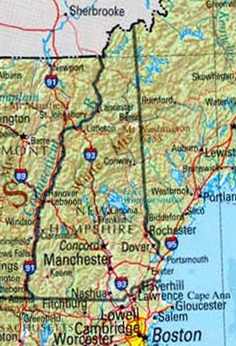
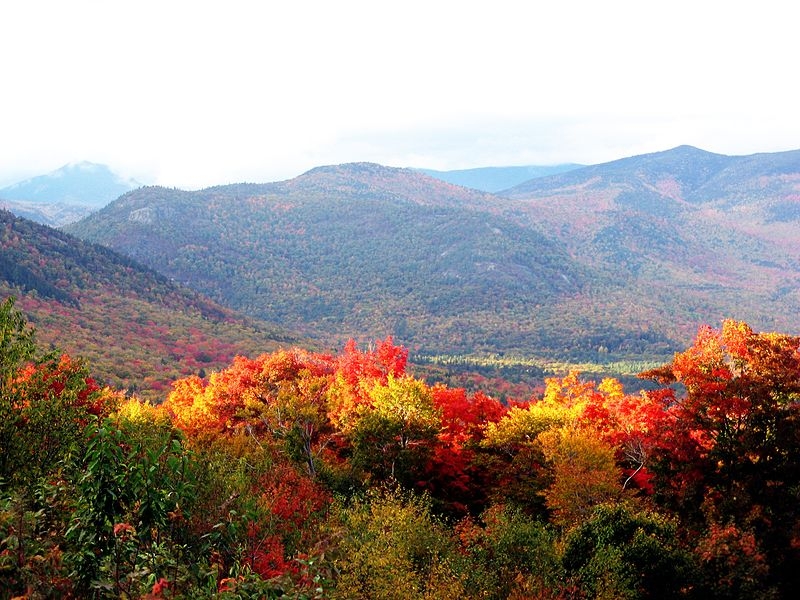
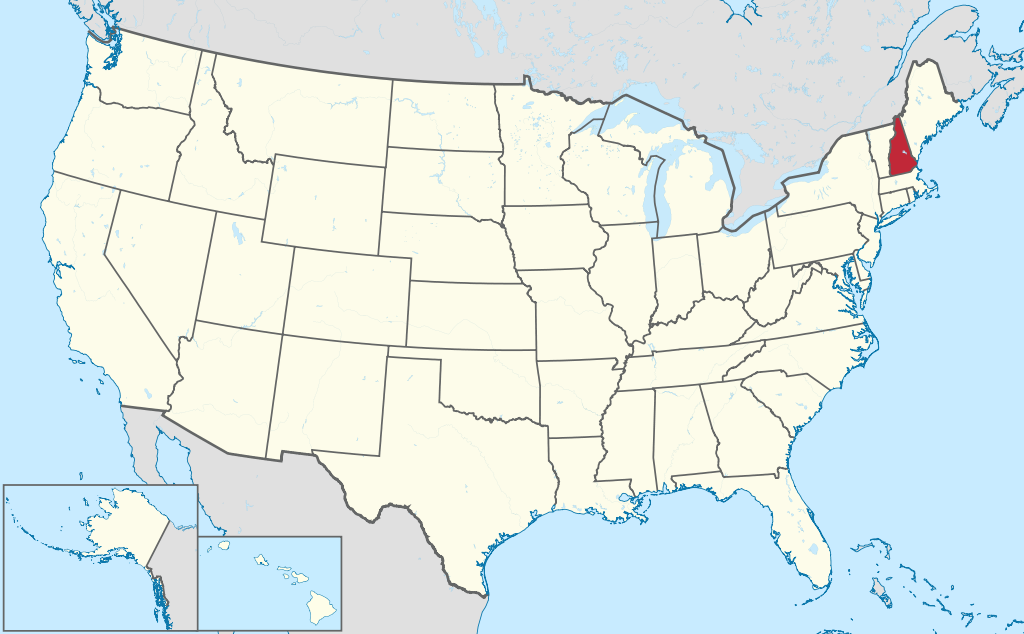
New Hampshire, one of the six states of New England, is located in the northeastern region of the United States. Much of the state is forested uplands, with the peaks of the White Mountains spanning its north-central portion. Part of the Appalachian range, the peaks of the White Mountains are separated by passes known locally as “notches”. During the last Ice Age, an ice sheet covered the entire state, gouging out the river valleys and leaving behind numerous lakes after ice melted. South of the White Mountains, the landscape is dotted with isolated peaks known as "monadnocks”. New Hampshire’s western boundary with Vermont is formed by the Connecticut River and its broad valley. In the extreme southeast of New Hampshire there is a small area of flat coastal plain bordering the Atlantic Ocean.
Name
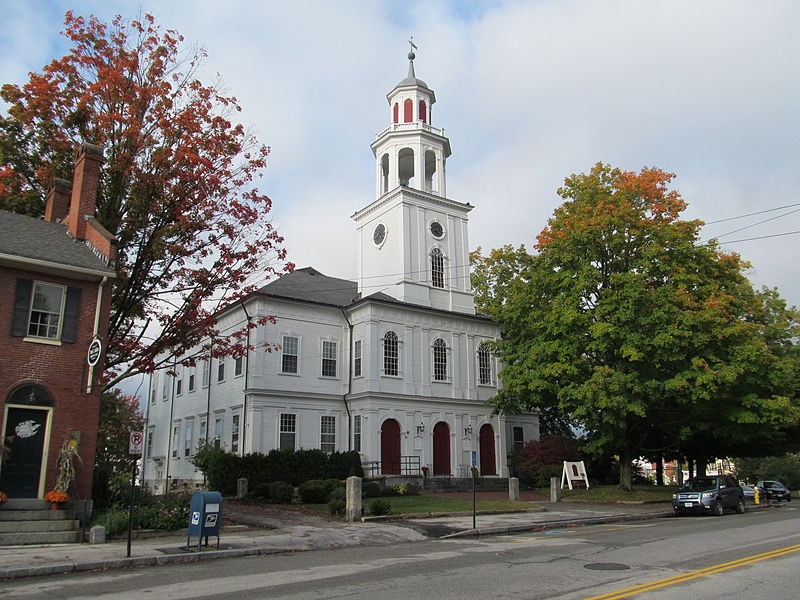
New Hampshire takes its name from the county of Hampshire in southern England. The area was named in honour of Captain John Mason, Governor of Portsmouth, Hampshire, England. In 1622 Mason, along with Sir Ferdinand Gorges and others, obtained from the Council of Plymouth a grant of land partly in present-day Maine and partly in present-day New Hampshire. They called it Laconia. In 1629 Mason acquired in his own right a portion of Laconia that lay between the Piscataqua and the Merrimack rivers. He named this land New Hampshire. The settlement of Portsmouth, named after the city of the same name in England, was founded by farmers and fishermen in 1630.
Climate
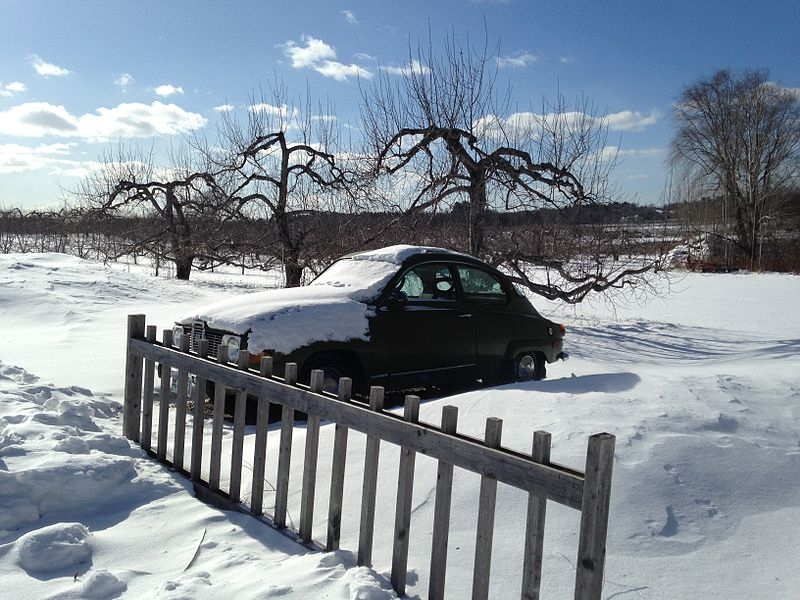
New Hampshire has warm, wet summers and cold, wet winters. The climate of the southeastern coastal area is moderated by the Atlantic Ocean, which gives it milder and wetter weather. Central and northern areas experience cooler temperatures and lower precipitation than in the south. Winters are snowy throughout the state—especially so in the mountains, where blizzards often blast through the narrow valleys.
Economy
Agriculture in New Hampshire is limited by the mountainous terrain and poor soils. The state's main farm products are dairy, fruit and vegetables, cattle and eggs.
Industrialization came early to New Hampshire. Power from the state’s many fast-flowing streams was used in the manufacture of textiles and shoes. Today, its chief industrial products are machinery, electrical equipment, rubber and plastics. Although known as the Granite State, its deposits of granite rock are no longer extensively quarried.
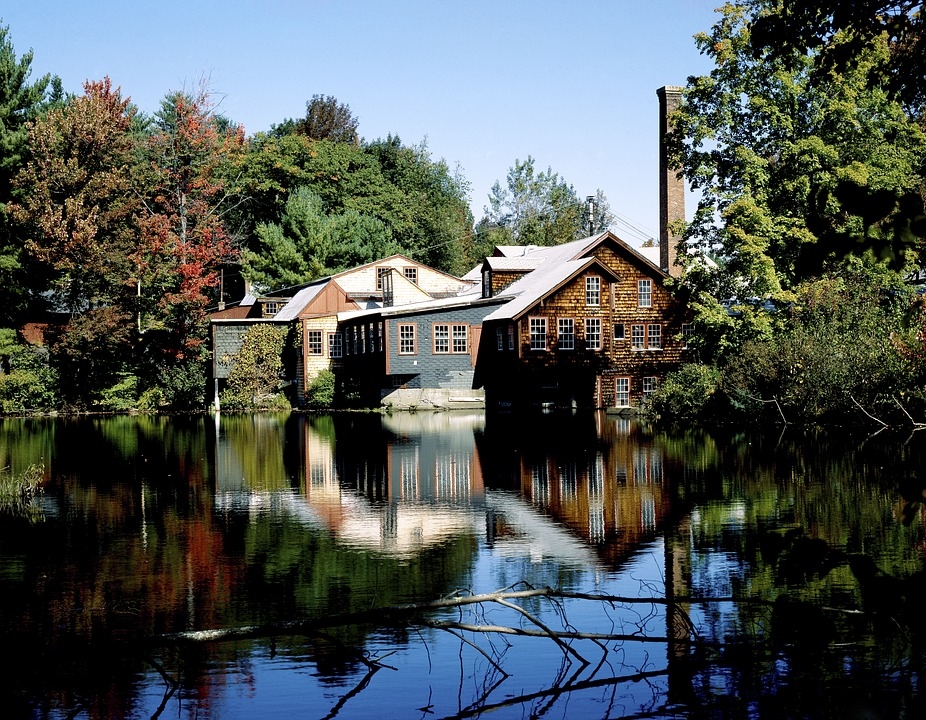
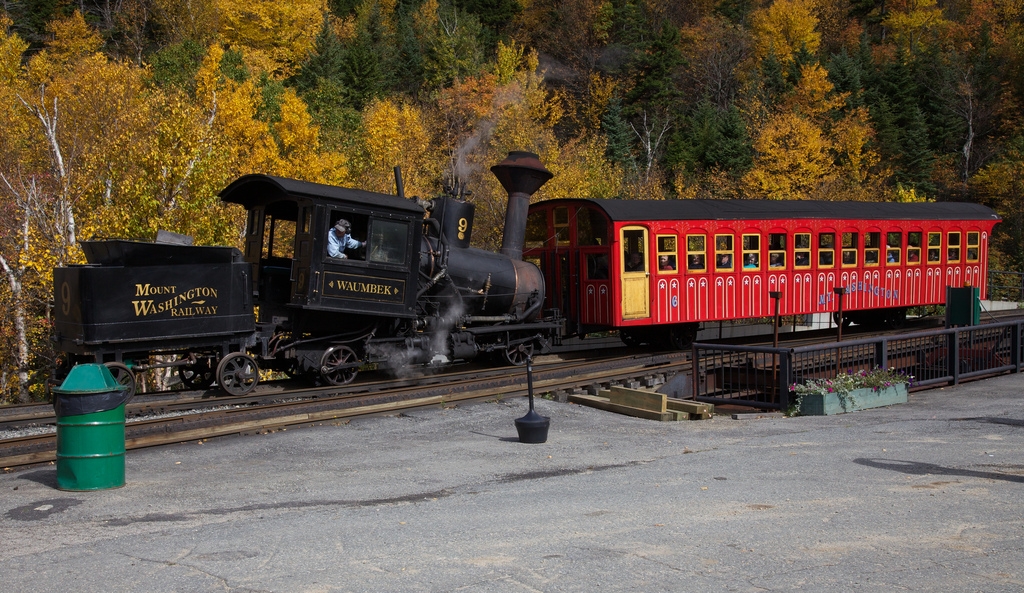
The northern part of New Hampshire has less than 5% of the state's population and is less prosperous than other parts. Although its logging and paper industries have declined, tourism—based around skiing, snowboarding, hiking and mountain biking—has thrived. Many visitors also come to enjoy the state's beaches, lakes and fall scenery.

Facts about New Hampshire
Area 9349 sq miles (24,214 sq km)
Highest point Mount Washington 6288 ft (1917 m)
Population 1,402,054
Capital Concord
Largest cities Manchester, 115,474; Nashua, 91,003; Concord, 44,629; Rochester, 33,519; Dover, 33,485
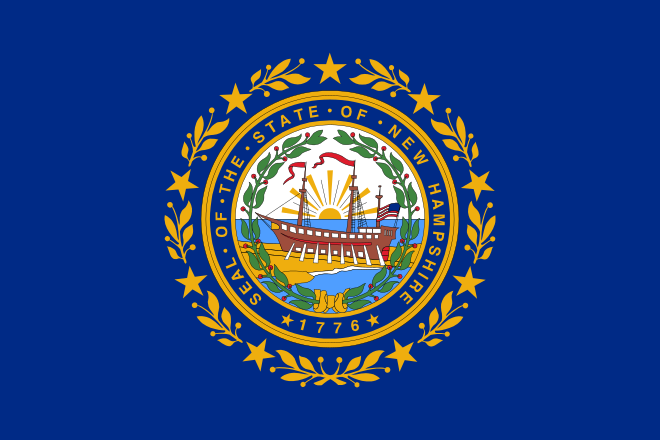
Nickname The Granite State
State bird Purple finch
State flower Purple lilac
State tree White birch
Consultant: Nicholas Harris
History of New Hampshire
Before 17th century
Abenaki and Pennacook, Algonquian-speaking Native American peoples, inhabit the area of present-day New Hampshire before Europeans arrive
1603–05
English explorer Martin Pring (1603) and French explorer Samuel de Champlain (1605) visit the area
1622
English Captain John Mason, along with Sir Ferdinand Gorges and others, obtains a grant of land in the area from the Council of Plymouth; they call it Laconia
1623
English fishermen establish colonies at the mouth of the Piscataqua River, near present-day Rye, and at Hilton’s Point, present-day Dover
1629
Mason acquires part of the area of Laconia that lies between the Piscataqua and the Merrimack rivers in his own right; he names it New Hampshire
1630
The settlement of Portsmouth is founded by farmers and fishermen
1641–43
Massachusetts annexes the southern part of New Hampshire
1679
After a period of union with Massachusetts, New Hampshire is made a separate royal colony; it is known as the "Royal Province"
1722–25
Dummer's War, also known as Father Rale's War, is fought between New England and the Native American peoples of the Wabanaki Confederacy (allied with France) over territory. Although victorious, the New Englanders are forced to acknowledge that the native peoples have a right to possess their land.
1741
Benning Wentworth is made the first governor of New Hampshire as a separate colony
1764
A royal order establishes the Connecticut River as the western boundary of New Hampshire
1760s-70s
Sawmills are built along New Hampshire streams; Scottish-Irish settlers establish the textile industry there
1774
Patriots overpower Fort William and Mary and secure arms to fight the cause of American independence
1776
New Hampshire becomes the first colony to declare its independence from Britain
1788
New Hampshire becomes the ninth state to ratify (sign up to) the new constitution of the US
1842
New Hampshire's northern boundary with Canada is fixed
1930s–1960s
Textile mills and other manufacturing companies in New Hampshire go into decline
1952
First-in-the-nation presidential primary. New Hampshire gains national and international attention for its presidential primary held early in every presidential election year from this year onwards. It will become the most important testing grounds for candidates for both the Republican and Democratic nominations
1982
DEKA Research & Development Corporation, a technology company is founded in Manchester, New Hampshire, by Dean Kamen, inventor of the Segway personal transporter
pics
Without in any way limiting Q-files Ltd’s exclusive rights under copyright, any use of this publication to “train” generative artificial intelligence (AI) technologies to generate text is expressly prohibited. Q-files Ltd reserves all rights to license use of this work for generative AI training and development of machine learning language models.