
States of the US

CITE
We have made every effort to follow citation style rules, but there may be some minor differences. If in doubt, please refer to the appropriate citation style manual.
Arkansas. (2026). In Q-files Encyclopedia, Geography, States of the US. Retrieved from
https://www.q-files.com/geography/states-of-the-us/arkansas
"Arkansas." Geography, States of the US, Q-files Encyclopedia, 2 Sep. 2026.
https://www.q-files.com/geography/states-of-the-us/arkansas.
Accessed 21 Sep. 2026.
Arkansas 2026. Geography, States of the US. Retrieved 21 September 2026, from
https://www.q-files.com/geography/states-of-the-us/arkansas
Geography, States of the US, s.v. "Arkansas," accessed September 21, 2026.
https://www.q-files.com/geography/states-of-the-us/arkansas


Arkansas
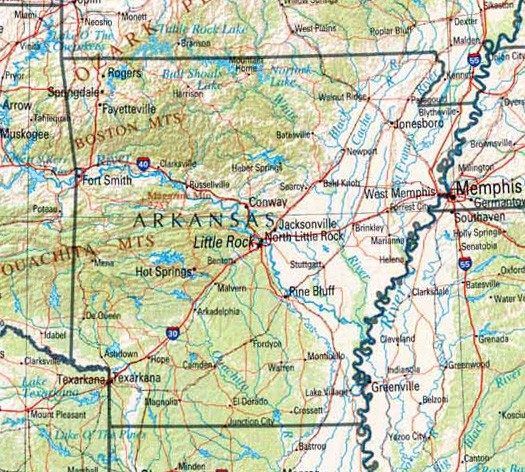
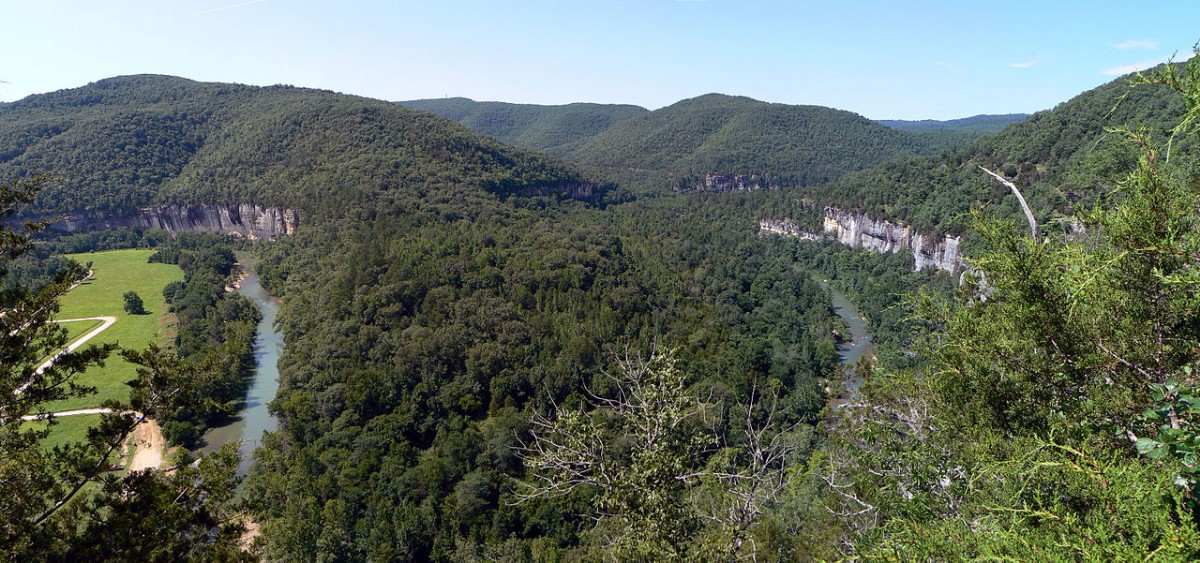
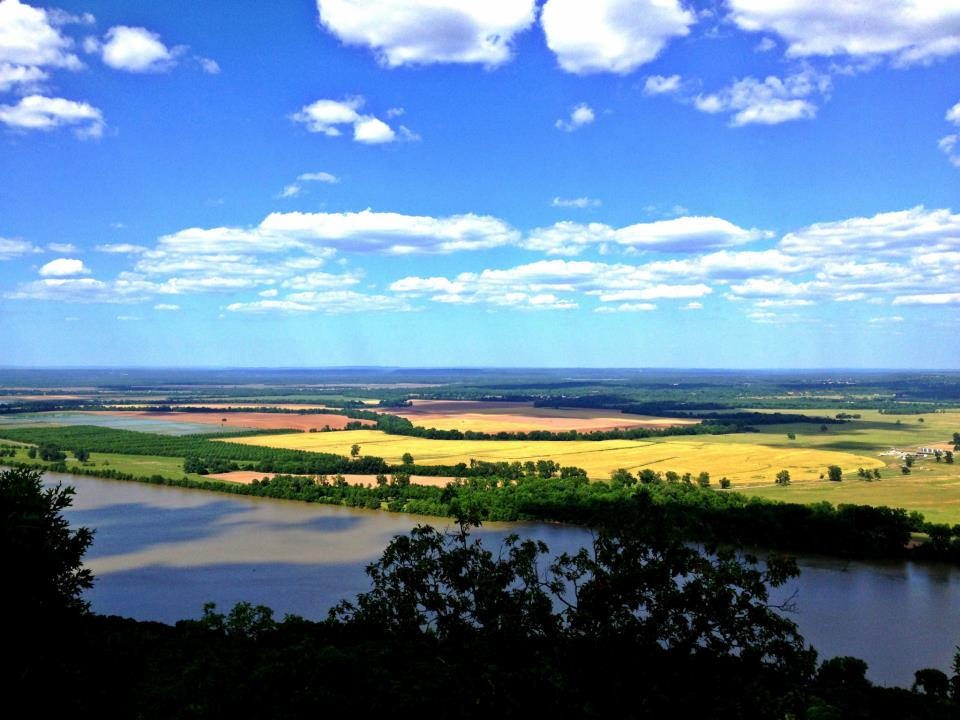
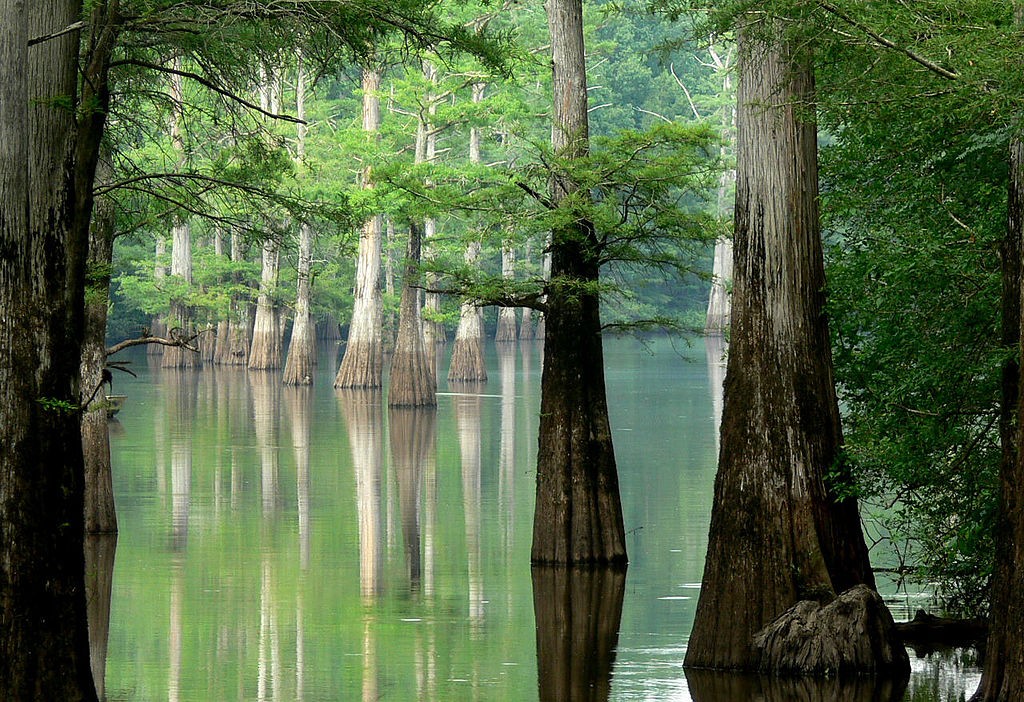
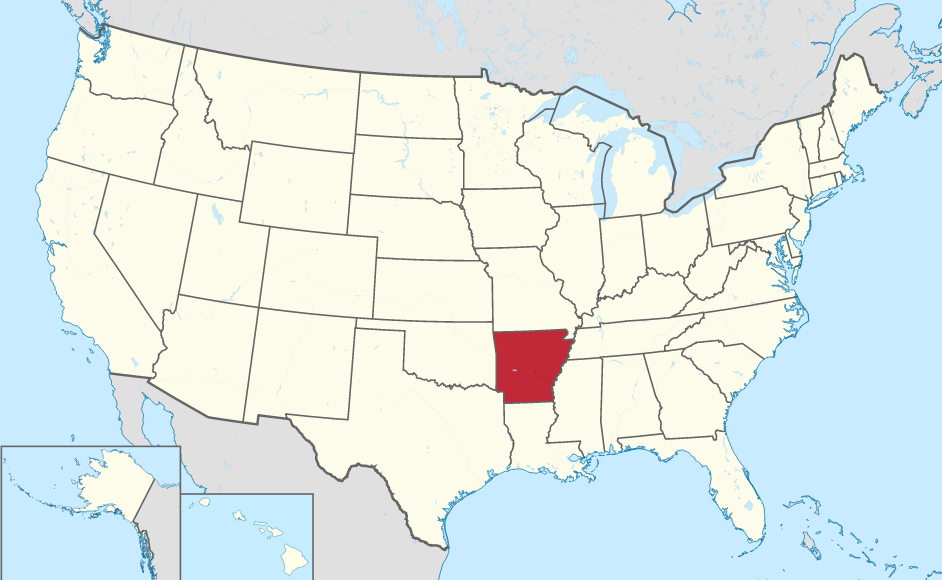
Arkansas is situated in the southeastern region of the United States. Eastern Arkansas forms part of the Mississippi alluvial plain. This lowland region is covered with rich alluvial soils spread across the flat landscape by the repeated flooding of the Mississippi River. The Arkansas flows into the Mississippi in an area known as the Arkansas Delta. In the southwestern part of the state lie the more undulating lands of Grand Prairie. Northwestern Arkansas occupies part of the Ozark Plateau. The Arkansas River Valley separates the Ozark Mountains from the Ouachita Mountains further south. These ranges form part of the Interior Highlands, the only major mountainous region between the Rocky Mountains and the Appalachian Mountains. The densely forested belt stretching from the Arkansas Delta to Texas is known as the Arkansas Timberlands.
Name
The name Arkansas (pronounced AH-kan-saw) is a French pronunciation of a word in the language of the Native American Quapaw people, akakaze, which means "land of downriver people”. The name has the same roots as the name for the state of Kansas, named after the local Kansa people, another Siouan language speaking tribe.
Climate
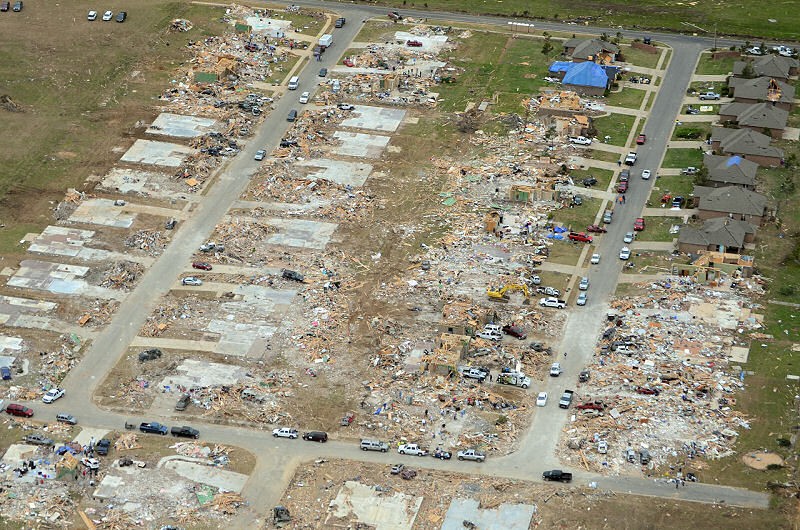
Arkansas has a humid subtropical climate: hot, wet summers and slightly drier, mild winters. It frequently experiences extreme weather, including many storms and tornadoes. It has around 60 days of thunderstorms. Arkansas is located in Tornado Alley: some of the most destructive tornadoes in US history have struck the state.
Economy
Once known for its cotton plantations in the Mississippi lowlands, Arkansas now produces a range of agricultural products, including rice, poultry, soya beans, dairy and sorghum as well as cotton. Timber and wood products from the forests of the Arkansas Timberlands are important to the state’s economy. Mineral products include petroleum, bauxite, bromine and natural gas. Arkansas’s chief manufactures are food processing, electrical equipment, vehicle and aircraft parts, other machinery and paper products.
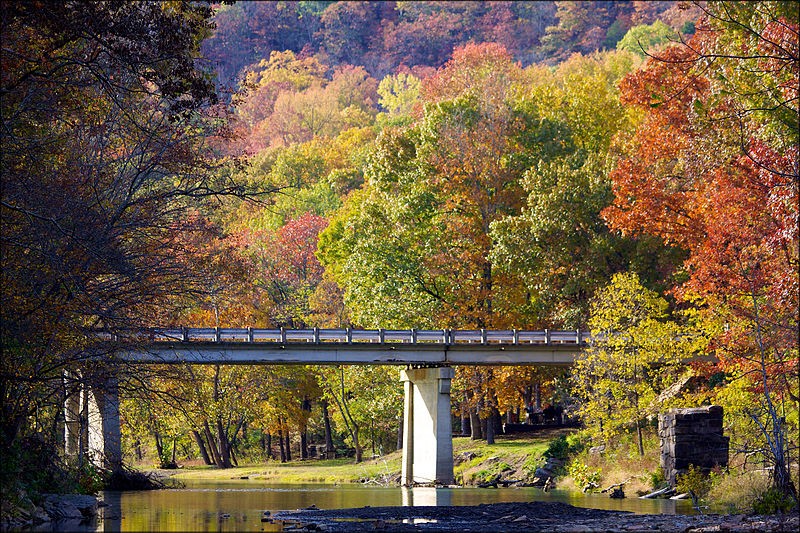
Known as “The Natural State”—after its 52 state parks—Arkansas has an important tourism industry. The US’s only active diamond mine, near Murfreesboro, is operated as a tourist attraction.

Facts about Arkansas
Area 52,068 sq miles (134,856 sq km)
Highest point Magazine Mountain 2753 ft (839 m)
Population 3,067,732
Capital Little Rock
Largest cities Little Rock, 203,842; Fayetteville, 101,680; Fort Smith, 89,770; Springdale, 88,224; Jonesboro, 80,650
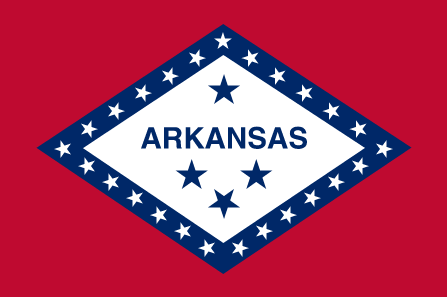
Nickname The Natural State
State bird Mockingbird
State flower Apple blossom
State tree Pine
Consultant: Nicholas Harris
History of Arkansas
16th century
The Caddo, Osage and Quapaw Native American peoples inhabit the region at the time the first European explorers arrive
1541
Spanish explorer Hernando de Soto crosses the Mississippi and treks across what is now central Arkansas
1542
De Soto attacks and kills members of the Quigualtam near what is now McArthur; he himself dies there the following day
1686
French explorer Henri de Tonti establishes a settlement at Arkansas Post, a Quapaw village; La Salle claims the Mississippi valley for France, and the region becomes part of the French territory of Louisiana
1803
The Louisiana Purchase: Napoleon Bonaparte sells French Louisiana to the US, including all of Arkansas
1812
Arkansas becomes part of the Territory of Missouri
1818
The cotton boom brings the first large wave of European American settlers
1819
The Territory of Arkansas is established: it is organized as a slave territory
1821
The capital is relocated from Arkansas Post to Little Rock
1820s
The rich owners of the cotton plantations in eastern Arkansas support slavery, while poorer farmers in the ”hill country" of western Arkansas, who are unable to grow cotton, rely on subsistence farming
1830s
As European American settlers flood into the Midwest, the US government forces the removal of many Native American tribes to Arkansas
1833
Quapaw people are forced to move into Indian Territory further west
1836
Arkansas is admitted to the Union as the 25th state
1861
Arkansas votes to secede (break away) from the Union and join the Confederate States of America at the outbreak of the Civil War
1863
After Confederate defeats at Pea Ridge, Prairie Grove and Arkansas Post, the northern part of the state is occupied by Union troops
1868
US Congress declares Arkansas restored to the Union, when a new constitution gives African Americans the right to vote and hold office.
1919
Elaine massacre: several hundred African Americans and five white men are killed by white mobs aided by federal troops and Ku Klux Klan white supremacist terrorists in rural Phillips County. After the massacre, state officials falsely claim that black people were planning an insurrection.
1927
The Great Mississippi Flood: in the most destructive river flood in the history of the US, 70,000 sq km (27,000 sq miles) are inundated. More than 200,000 African Americans are displaced from their homes in Arkansas, Mississippi and Louisiana. As a result of this disruption, many join the Great Migration to the industrial cities of the North and Midwest.
1957
Governor Orval Faubus orders the Arkansas National Guard to aid segregationists in preventing nine African American students (the “Little Rock Nine”) from enrolling at Little Rock's Central High School; President Eisenhower sends 1000 troops to protect the African American students as they enter school
1962
Arkansan Sam Walton founds the Wal-Mart merchandise chain as a small-town discount store
1971
Arkansas and Oklahoma join the Arkansas River Navigation System, a project to provide water transportation to the Mississippi
pics
Without in any way limiting Q-files Ltd’s exclusive rights under copyright, any use of this publication to “train” generative artificial intelligence (AI) technologies to generate text is expressly prohibited. Q-files Ltd reserves all rights to license use of this work for generative AI training and development of machine learning language models.