
States of the US

CITE
We have made every effort to follow citation style rules, but there may be some minor differences. If in doubt, please refer to the appropriate citation style manual.
Massachusetts. (2026). In Q-files Encyclopedia, Geography, States of the US. Retrieved from
https://www.q-files.com/geography/states-of-the-us/massachusetts
"Massachusetts." Geography, States of the US, Q-files Encyclopedia, 2 Sep. 2026.
https://www.q-files.com/geography/states-of-the-us/massachusetts.
Accessed 21 Sep. 2026.
Massachusetts 2026. Geography, States of the US. Retrieved 21 September 2026, from
https://www.q-files.com/geography/states-of-the-us/massachusetts
Geography, States of the US, s.v. "Massachusetts," accessed September 21, 2026.
https://www.q-files.com/geography/states-of-the-us/massachusetts


Massachusetts
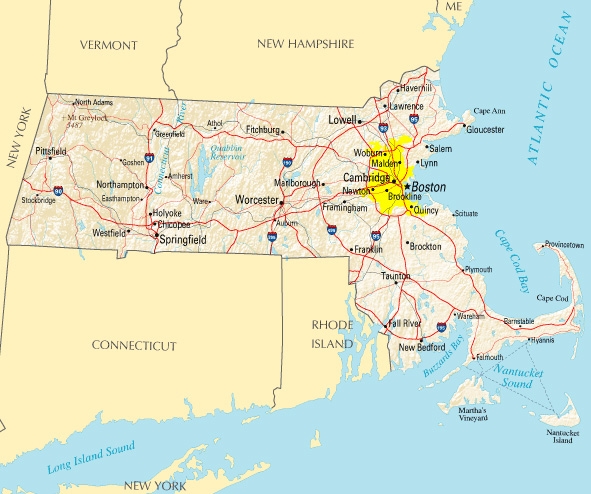
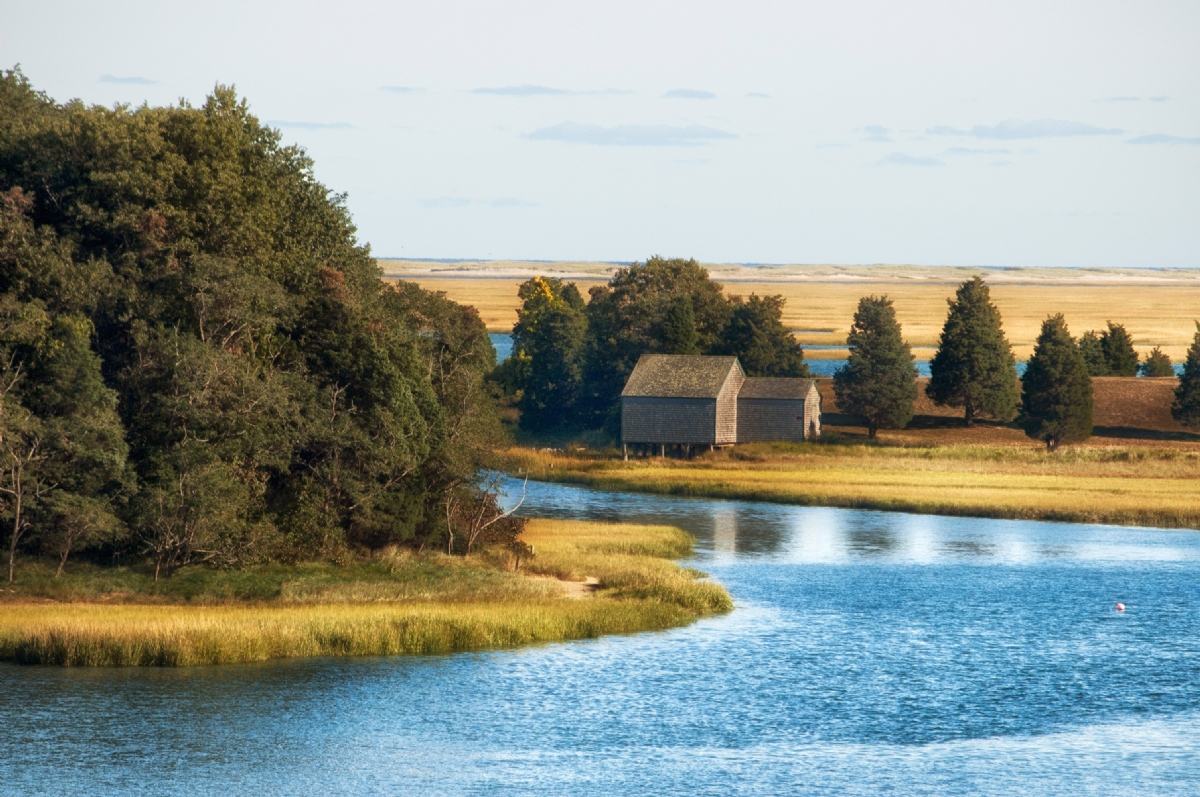
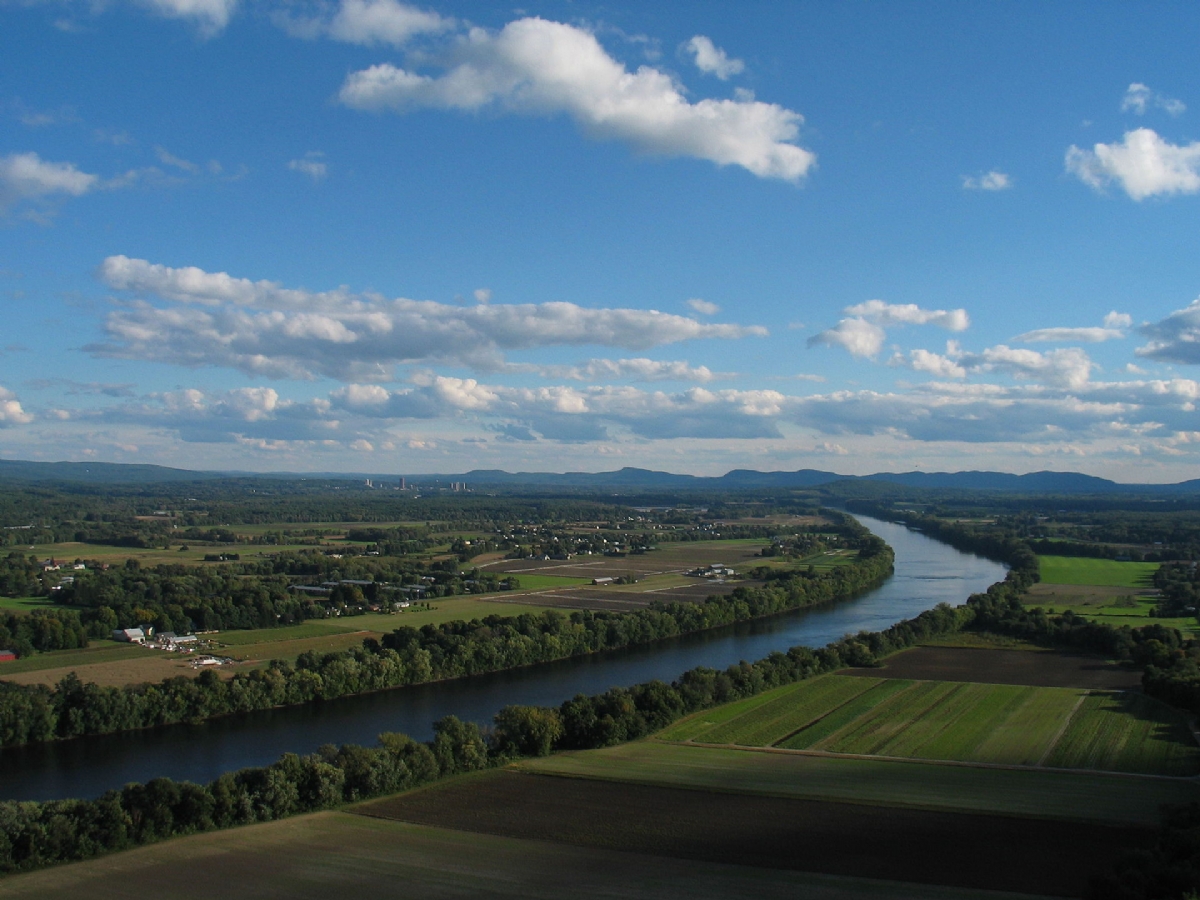
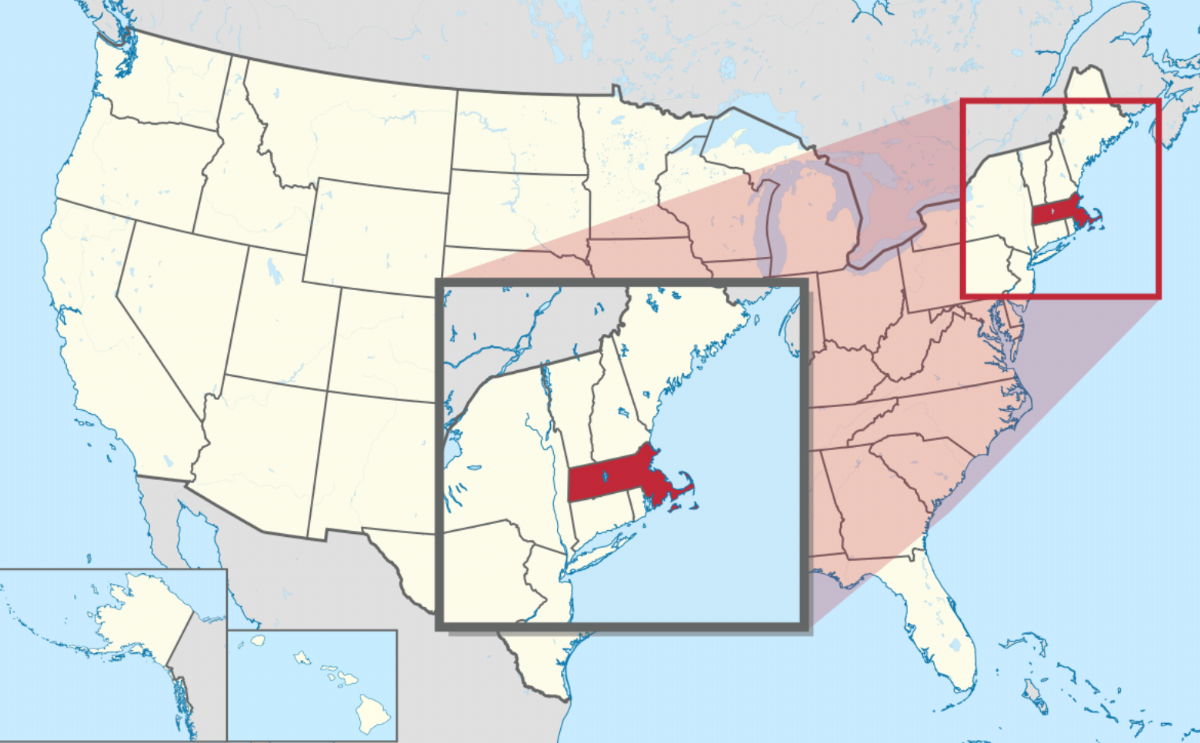
Massachusetts is located in the northeastern region of the United States: it is one of the six New England states. The low-lying eastern portion, including the Cape Cod peninsula, is part of the Atlantic Coastal Plain. The Massachusetts coastline features many bays and inlets, providing a number of excellent natural harbours of which Boston's is one. Inland there are forested uplands, part of the Appalachian range. To the west of the Connecticut River valley, which flows north-south through the state, lie the Berkshire Hills, part of the Taconic Mountains.
Name
The state is named after its Bay. The word itself may have come from the name of the native population, called the Massachusett, which has been variously translated as "near the great hill" or "by the blue hills", a reference, perhaps, to the Great Blue Hill. Alternatively, “Massachusett” may be another spelling of Moswetuset, from the name of the Moswetuset Hummock. This is where in 1621 the leader of the Plymouth Colony, Miles Standish, met the Massachusett chief Chickatawbut. Massachusetts' official name is the "Commonwealth of Massachusetts”. The state is often known simply as "the Commonwealth".
Climate
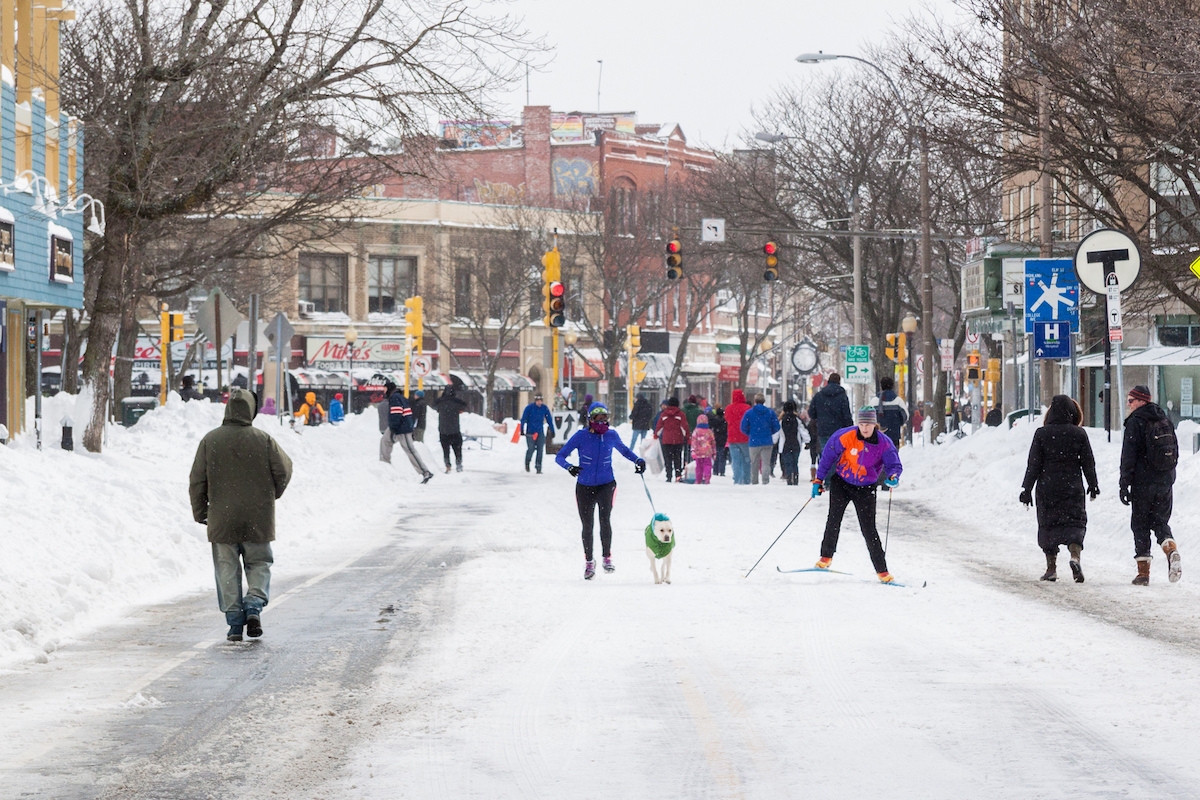
Massachusetts has a continental climate: hot summers and cold, snowy winters. Winter temperatures are generally milder along the coast, while areas further inland are colder. The state is vulnerable to storms (called "nor'easters" during the winter months) and hurricanes. The New England Hurricane of 1938 killed around 700 people. As in other states of New England, the Fall brings colourful autumn foliage to the thick forests.

Economy
Massachusetts is traditionally an industrial state; in the 19th century, its main industries included textiles, shoes, jewellery, commercial fishing and shipping. Its main manufactures today are electrical and electronic equipment, plastics, paper, rubber, machinery, tools and metals. Massachusetts is famous as a centre of education, hi-tech research and development, finance and trade. Boston is a major port, and Cape Cod Bay a leading tourist destination. The state's chief agricultural products are fruit, including cranberries and apples, vegetables, greenhouse produce, poultry and dairy goods.

Boston
The city of Boston has one of the longest histories in the United States. The first settlers were Puritans from England, who arrived on the Shawmut Peninsula, Massachusetts Bay in 1630. They named their new settlement Boston, after the former home of many of them in Lincolnshire, England. By 1634, the US’s first public park, Boston Common, had been created.
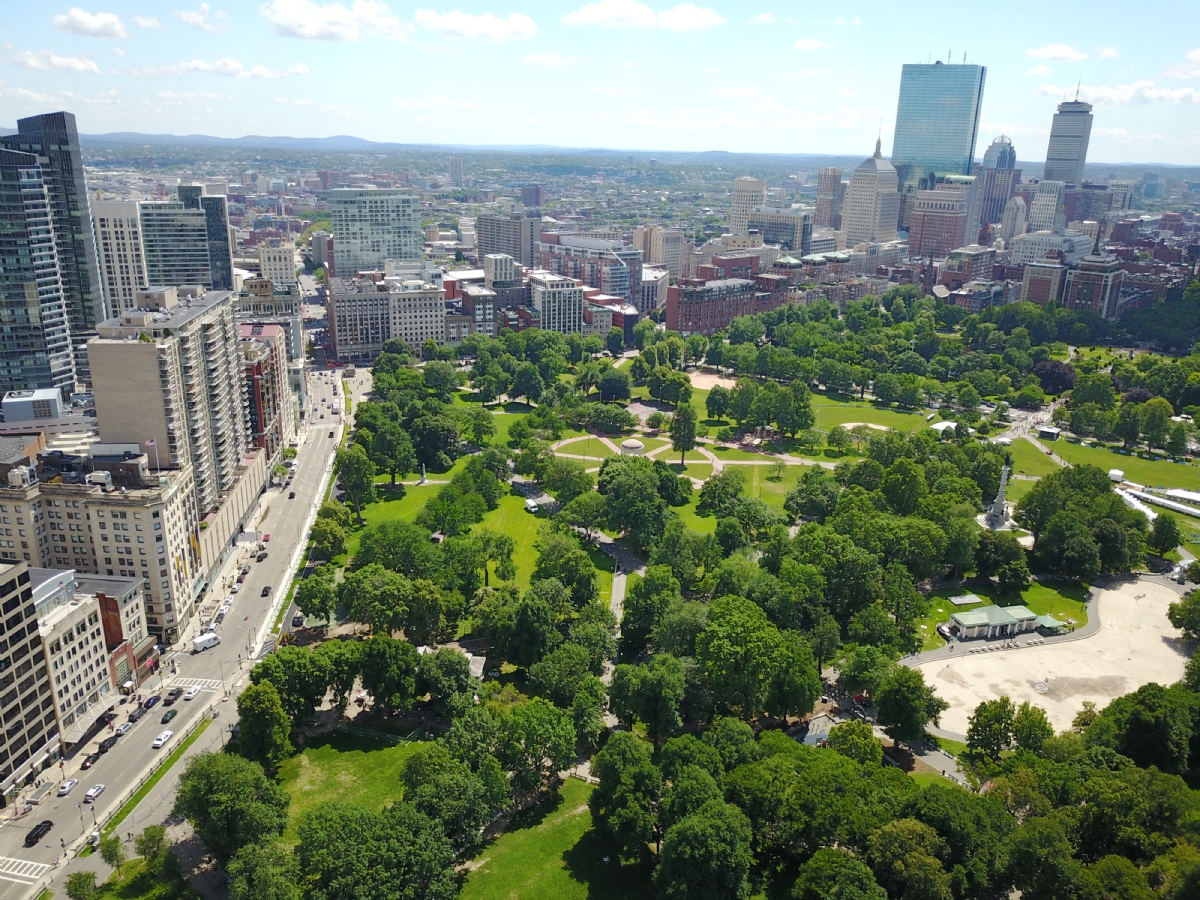
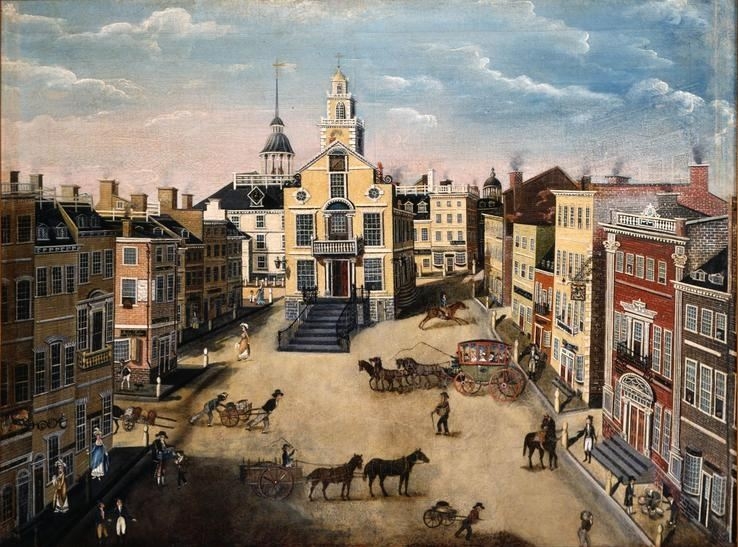
The city was the scene of several key events of the American Revolution, such as the Boston Massacre, the Boston Tea Party, the Battle of Bunker Hill and the Siege of Boston. After the Revolution, Boston became an important port, trading in slaves, rum, fish, salt and tobacco, before turning to manufacturing, especially of textiles and leather goods.
From the 1820s, Boston's population grew rapidly with increasing numbers of Irish, Italians and Russian and Polish Jews settling in the city. The city grew geographically by reclaiming land along its waterfront. Boston went into decline in the first half of the 20th century, as factories gradually fell out of use and businesses moved away from the region. Thanks to urban renewal projects, Boston revived towards the end of the century.


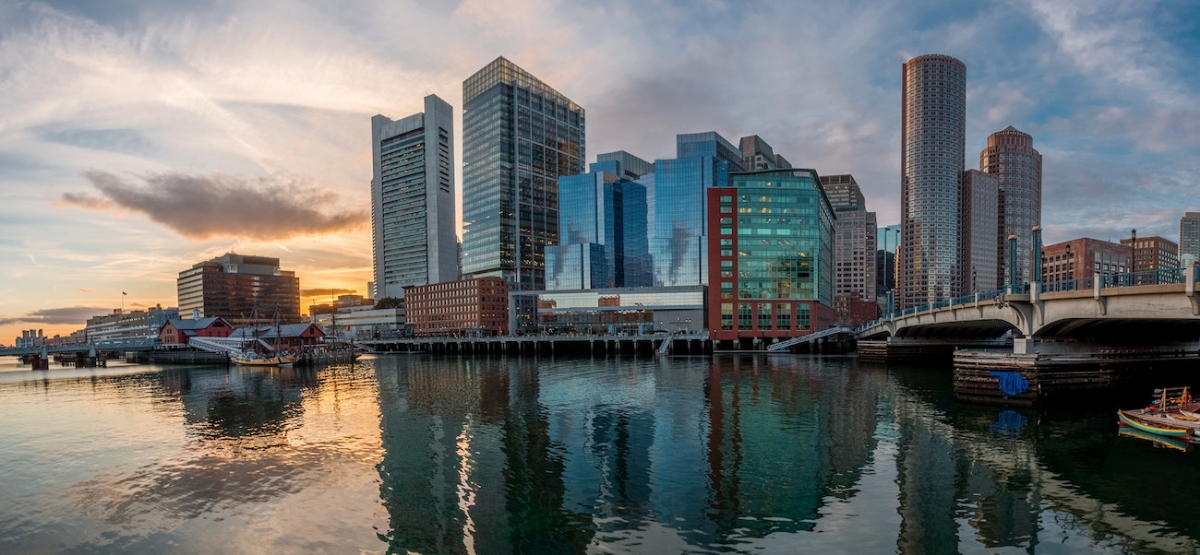
Today, Boston lies at the heart of an urban area with a population of 4.8 million people. It is a major financial and educational centre (there are many colleges and universities in the Boston area, including Harvard, MIT and Tufts), with hi-tech, biotechnology, software and electronics among its chief industries.
Facts about Massachusetts
Area 7840 sq miles (20,306 sq km)
Highest point Mount Greylock 3489 ft (1063 m)
Population 7,001,399
Capital Boston
Largest cities Boston, 653,833; Worcester, 207,621; Springfield, 153,672; Cambridge, 118,214; Lowell, 114,296; Brockton, 104,890; Quincy, 101,597; Lynn, 101,241; New Bedford, 100,695; Fall River, 93,840
Nicknames The Bay State
State bird Chickadee
State flower Mayflower
State tree American elm

Consultant: Nicholas Harris
History of Massachusetts
before 17th century
Massachusetts is inhabited by Algonquian-speaking Native American peoples, including the Wampanoag, Narragansett, Nipmuc, Pocomtuc, Mohegan, Nauset and Massachusett tribes
early 1600s
Fishing expeditions from Europe engage in trade with some of the native peoples
1617–19
Smallpox kills 90% of the Native American population in the region
1620
The first English settlers in Massachusetts, the Pilgrims, arrive on the Mayflower at Plymouth. They develop friendly relations with the native Wampanoag people
1621
The first governor, John Carver, dies but under his successor, William Bradford, the Plymouth Colony begins to prosper
1622–28
Fishing and trading posts are established nearby, including Wessagusset (now Weymouth), Merry Mount (now Quincy) and Naumkeag (Salem), the last a Puritan colony and the base of the New England Company
1629
The New England Company is re-organized as the Massachusetts Bay Company
1630
John Winthrop leads the first large Puritan migration of 900 settlers from England; they found villages, each grouped around a common and a meetinghouse
1634–38
Pequot War: Native American Pequot (a people once part of the Mohegan group) oppose the colonists’ presence, leading to war. After their victory, the four Puritan colonies (Massachusetts Bay, Plymouth, Connecticut and New Haven) form the New England Confederation
1636
Harvard College established at what is now Cambridge
1675–78
King Philip's War: the Confederation defeats Native American forces
1691
A new royal charter unites Massachusetts Bay, Plymouth and Maine into the single English royal colony of Massachusetts
1692
Nineteen people are hanged for refusing to confess to practising witchcraft at trials held in Salem
1700s
Exports of fish, timber and farm products from Massachusetts expand
1770
Boston Massacre: British soldiers kill five men; American patriots, such as Paul Revere and Samuel Adams, use the incident to fuel hatred towards the British authorities
1773
Boston Tea Party: colonists board ships in Boston harbour and throw chests of tea into the water in a protest against tea taxes levied by the British Government
1775
Massachusetts patriot soldiers fight the British army at the battles of Lexington and Concord; after the Battle of Bunker Hill in June, George Washington takes command of the Massachusetts forces
1775–76
Siege of Boston: British are forced to evacuate the city
1777
General Henry Knox founds the Springfield Armory, which will use many important technological advances during the Industrial Revolution to come
1780
A new Massachusetts Constitution is drawn up under the leadership of John Adams and is ratified (approved) by a direct vote of the population
1786
Shays's Rebellion: an armed uprising by discontented Berkshire farmers, led by Daniel Shays
1788
Massachusetts becomes the sixth state to ratify the United States Constitution
early 19th century
Manufacturing industries, including cotton textiles and leather goods, grow rapidly; they make use of water power and, later, steam engines to power factories; canals and railroads are used for transporting raw materials and finished goods
1820
Maine is separated from Massachusetts and admitted to the Union as a separate state
1830s
Reformers begin an anti-slavery crusade
1861
Massachusetts enters the Civil War on the Union side
late 19th century
Massachusetts experiences further rapid industrial expansion; immigrants stream into the state to work in the factories, including, firstly, the Irish, then French Canadians, Portuguese, Italians, Poles, Slavs, Russian Jews and Scandinavians
1966
Massachusetts politician Edward Brooke becomes the first African American to be popularly elected to the US Senate
1971
Ray Tomlinson of Bolt Beranek and Newman Inc., a research and development company based in Cambridge, Massachusetts, sends the first email. The message, "QWERTYUIOP", is sent between two side-by-side computers connected via ARPANET, the forerunner to the Internet.
1980s
Massachusetts Miracle: a decade of rapid of economic growth following a long period deindustrialization and unemployment in the 20th century. The growth is centred on financial services and high-tech industry in Boston, Harvard University, MIT and the suburbs along Route 128
2007
Central Artery/Tunnel Project (CA/T), commonly known as the Big Dig, a major road construction programme for which Boston began in 1991, is completed. Plagued by cost overruns and delays, it is the most expensive highway project in the US.
2013
Bombs planted by two Chechen Islamist brothers explode near the finish line of the Boston Marathon race. Three people are killed, including an 8-year-old boy, while more than 260 people are injured
pics
Without in any way limiting Q-files Ltd’s exclusive rights under copyright, any use of this publication to “train” generative artificial intelligence (AI) technologies to generate text is expressly prohibited. Q-files Ltd reserves all rights to license use of this work for generative AI training and development of machine learning language models.