
States of the US

CITE
We have made every effort to follow citation style rules, but there may be some minor differences. If in doubt, please refer to the appropriate citation style manual.
Minnesota. (2026). In Q-files Encyclopedia, Geography, States of the US. Retrieved from
https://www.q-files.com/geography/states-of-the-us/minnesota
"Minnesota." Geography, States of the US, Q-files Encyclopedia, 1 Apr. 2026.
https://www.q-files.com/geography/states-of-the-us/minnesota.
Accessed 6 Aug. 2026.
Minnesota 2026. Geography, States of the US. Retrieved 6 August 2026, from
https://www.q-files.com/geography/states-of-the-us/minnesota
Geography, States of the US, s.v. "Minnesota," accessed August 6, 2026.
https://www.q-files.com/geography/states-of-the-us/minnesota


Minnesota
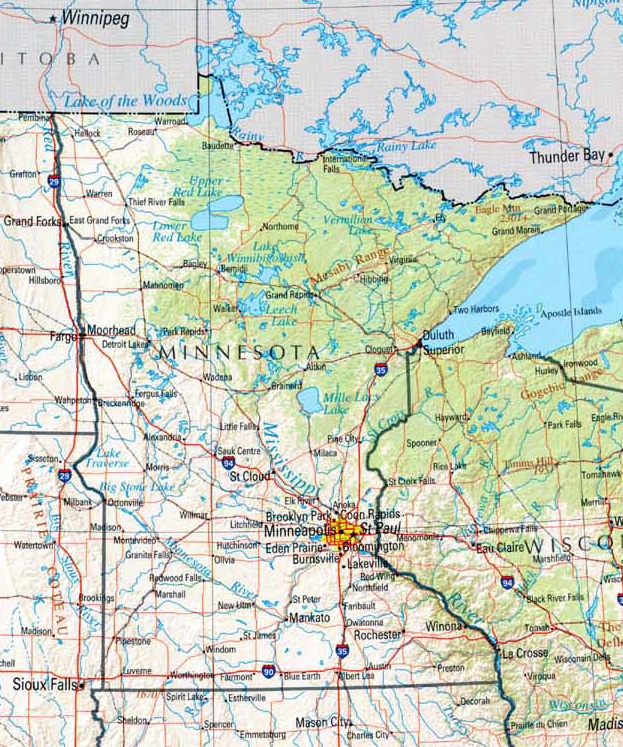
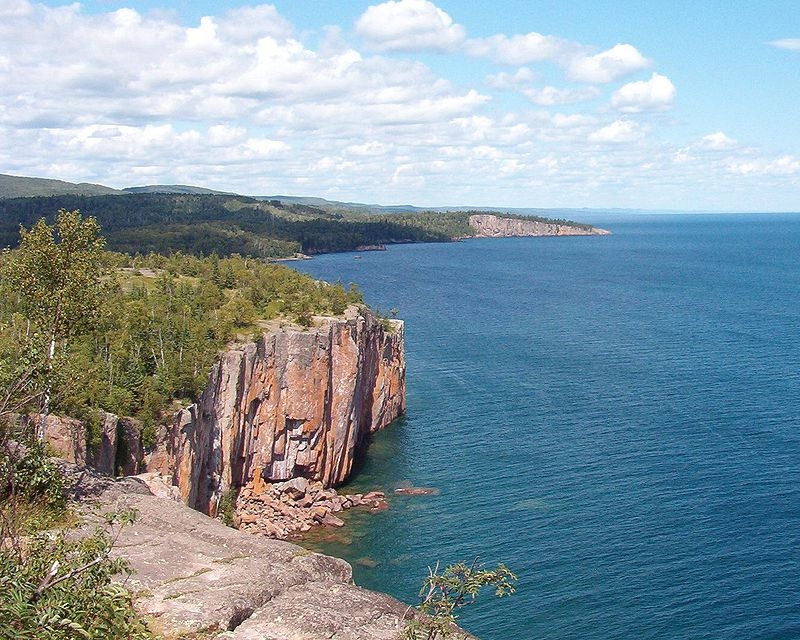
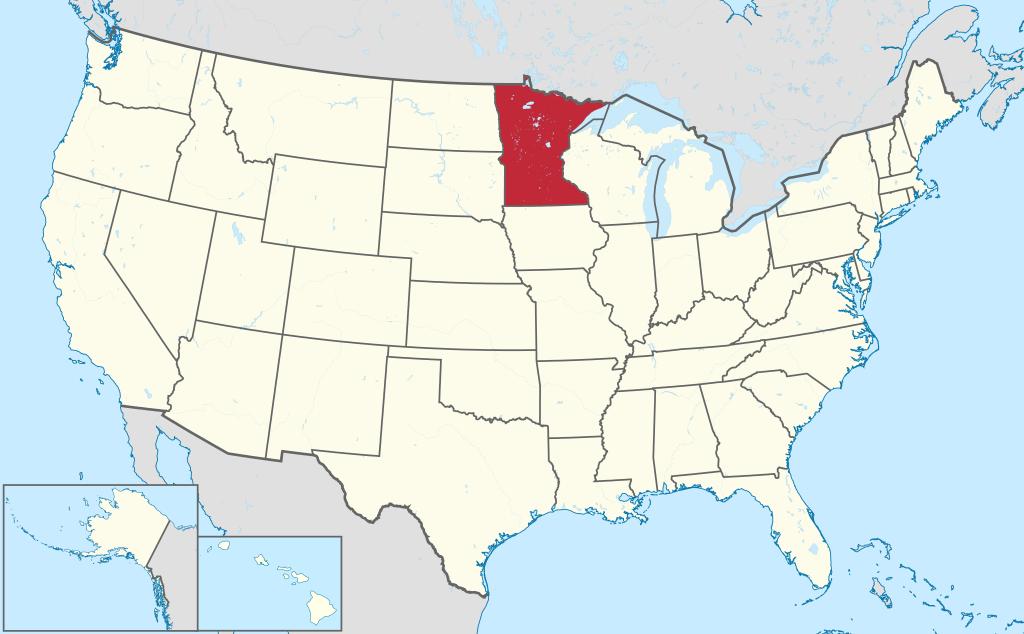
Minnesota is located in the Midwest region of the United States. Its landscape has been largely shaped by the massive ice sheet, more than a kilometre (0.6 mile) thick, that once lay across much of northern North America. During the last phase of the Ice Ages, known as the Wisconsin glaciation, which ended around 12,000 years ago, the ice scoured the terrain. The melting ice left behind thousands of lakes, boulder-strewn hills and a thick covering of rich fertile soil, called glacial till, in all but the far southeast of Minnesota (an area called the Driftless Zone). Northeastern Minnesota, above Lake Superior, is part of the Canadian Shield, made up of the most ancient rocks on Earth. To the south and west are rolling hills, which give way to plains and the prairie croplands.
Name
The name Minnesota comes from the Native American Dakota word for the Minnesota River, mnisota, meaning "clear blue water" or “clouded blue water”. The mni part of the word, also spelled mini or minne, means "water”. Many places in the state also have names connected to water, such as Minnehaha Falls ("laughing water”), Minnetonka ("big water") and Minneapolis, a combination of mni and polis, the ancient Greek word for "city”.
Climate
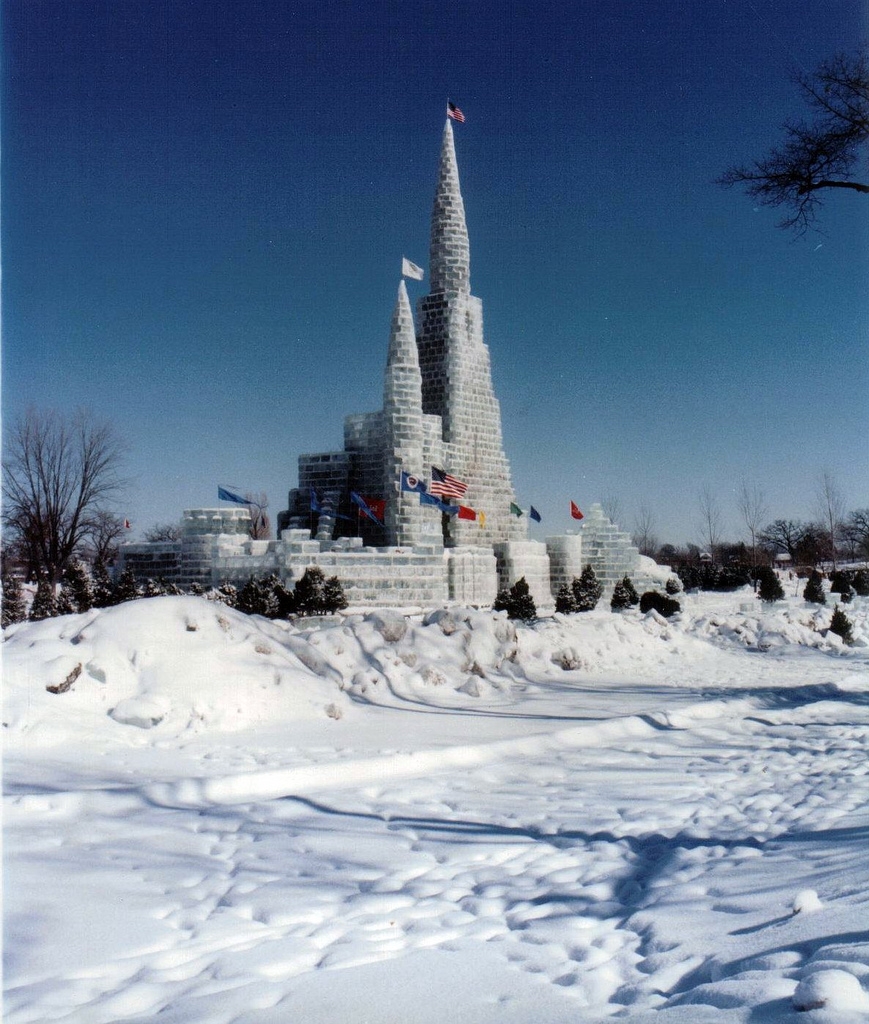
Minnesota has a continental climate, with cold, snowy winters and hot summers. Spring and autumn are both brief. Areas close to Lake Superior's shores are cooler in the summer and warmer in the winter. Southern Minnesota has hotter, more humid summers than the north.
During the winter months, fast-moving areas of low pressure move through Minnesota. Known as Alberta Clippers, they get their name from Alberta, Canada, the province where they begin their southwards track, and the swift sailing ships of the 19th century. They bring Arctic air and high winds, often resulting in blizzard conditions.
Economy

Minnesota's earliest industries were fur trading, farming and logging. The city of Minneapolis grew around the flour mills powered by Saint Anthony Falls. The iron mining boom, beginning in the 19th century, created the port of Duluth. Mines in the Mesabi, Cuyuna and Vermilion mountain ranges still produce more than three-quarters of the US’s iron ore.

Minnesota’s industries are now dominated by the technology and biomedical sectors. Factories in the state produce machinery, metals, plastics, paper, computers, scientific instruments and processed foods.
The state's farms produce wheat, maize, rye, soya beans, alfalfa, green peas and sugar beet. Other leading agricultural products include dairy, eggs, potatoes, poultry and livestock.
Twin Cities
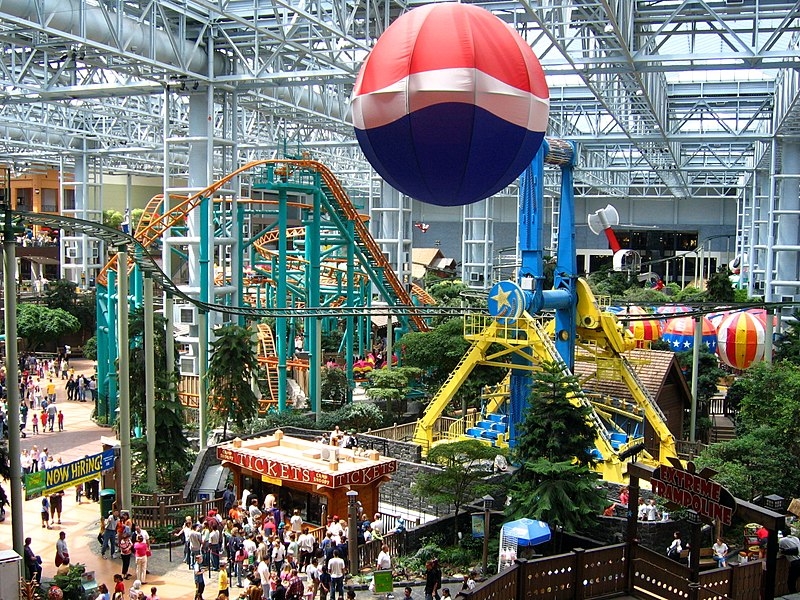
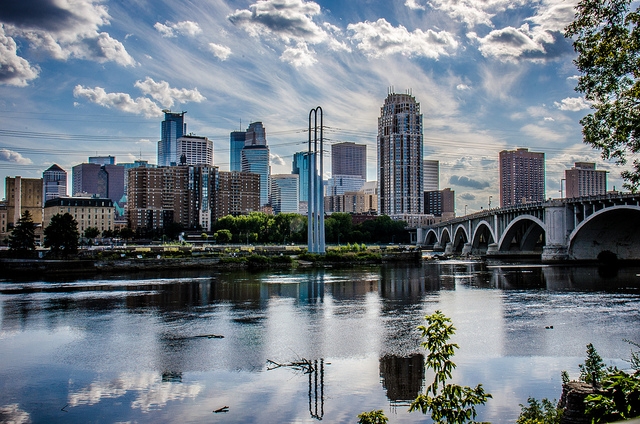
Minneapolis-Saint Paul are commonly known as the Twin Cities—or to Minnesotans simply as “The Cities”. They are located so close to another that the cities and their suburbs have merged to form one metropolitan area with a population of nearly 4 million people.
Both cities are independently governed, and have distinct characters. Minneapolis is younger and has modern skyscrapers, while many of Saint Paul’s neighbourhoods boast well-preserved late-Victorian architecture. In the late 19th and early 20th centuries, the two cities were fierce rivals, each endeavouring to build ornate cathedrals to “outdo” the other.
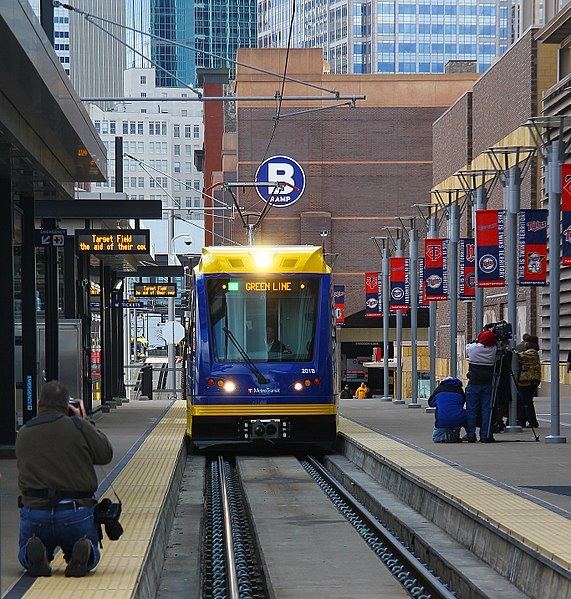
Saint Paul grew up around Lambert's Landing on the Mississippi, the last easily accessible port on the river before the Saint Anthony Falls, some 7 miles (11 kilometres) further upstream. Minneapolis, meanwhile, owes its origin to the flour mills powered by the Falls, giving its nickname the “Mill City”.
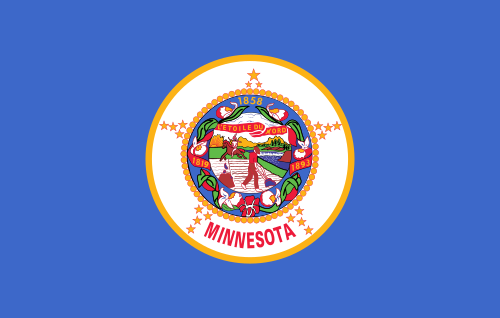
Facts about Minnesota
Area 79,610 sq miles (206,190 sq km)
Highest point Eagle Mountain 2301 ft (701 m)
Population 5,737,915
Capital Saint Paul
Largest cities Minneapolis, 425,115; Saint Paul, 303,820; Rochester, 122,413; Duluth, 87,680; Bloomington, 87,398; Brooklyn Park, 82,017; Woodbury, 79,538
Nicknames North Star State; Gopher State; Agate State; Land of 10,000 Lakes
State bird Common loon (great northern diver)
State flower Lady slipper
State tree Red (or Norway) pine
Consultant: Nicholas Harris
History of Minnesota
17th century
Before the arrival of European settlers, Minnesota is populated by the Native American Dakota people, part of the Sioux, in the west, and by the Ojibwe (Chippewa) in the east. The Anishinaabe peoples, of whom the Ojibwe are one, moved into the Minnesota area when European settlers took over their lands further east
1679
Following earlier visits by French explorers, fur traders and missionaries, the region is claimed for the French king Louis XIV by Daniel Greysolon, Sieur du Lhut (Duluth); Minnesota becomes part of French Louisiana.
1762
The region, including western Minnesota, becomes part of Spanish Louisiana; the area including eastern Minnesota is ceded by France to Britain the following year after her defeat in the French and Indian War (1763)
1783
All land east of the Mississippi River, including that in Minnesota, is granted to the US by the Second Treaty of Paris after the American Revolution: it is named the Northwest Territory
1803
The US buys a vast area of land, which includes western Minnesota, from France in what is known as the Louisiana Purchase (France having re-acquired Louisiana from Spain the previous year)
early 19th century
US settlement of Minnesota begins
1818
The northern strip of Minnesota bordering Canada, known as Rupert’s Land, is ceded by Britain to the US
1820
Fort St Anthony (later Fort Snelling) is founded; soldiers build a grist mill and a sawmill at St Anthony Falls, the first of the water-powered industries around which the city of Minneapolis later grew
mid-19th century
Treaties signed with the Ojibwe and Dakota, leading to a US government takeover of Native American lands. This begins a period of rapid increase in population, with immigrants arriving from Britain, Ireland and Germany
1849
Minnesota Territory is established
1853
Building of the Soo Ship Canal at Sault Ste Marie opens a water route for ships travelling to and from the east via the Great Lakes
1858
Minnesota becomes the 32nd US state with St Paul as its capital
1862
Dakota War: Dakota people react to broken promises and the encroachment of settlers on their lands; a force led by Little Crow is defeated, resulting in the exile of the Dakota from Minnesota to the Crow Creek Reservation in Dakota Territory
late 19th century
Settlement booms, with immigrants arriving in numbers from Scandinavia; logging and farming are mainstays of Minnesota's economy; railroads push west, allowing Minnesota’s flour mills and sawmills to sell their products in the east
1880s
The state's iron mining industry is established with the discovery of iron in the Vermilion Range and the Mesabi Range, and later the Cuyuna Range; the ore is shipped by rail to Duluth and Two Harbors, then transported eastwards via the Great Lakes
1902
Minnesota Mining and Manufacturing Company (3M) is founded in Two Harbors and later moves to Duluth, Saint Paul then Maplewood. It will grow into a giant multinational corporation operating in the fields of industry, worker safety, health care and consumer goods.
1959
Opening of the St Lawrence Seaway makes the port of Duluth accessible to the Atlantic Ocean
1998
Minnesota becomes home to largest ethnic Hmong population in America. The Hmong are a people who mainly live in Southwest China, Vietnam, Laos, Thailand and Myanmar.
2007
Interstate 35W Mississippi River Bridge in Minneapolis collapses killing 13 people and injuring 145
2020
George Floyd, an African American man, is arrested by Minneapolis police officers. Officer Derek Chauvin holds his knee to the back of Floyd's neck for over nine minutes while Floyd repeatedly says that he cannot breathe. Floyd dies later in hospital. Darnella Frazier records the assault, the video goes viral and large protests erupt in Minneapolis and in other cities across the US.
2021
Derek Chauvin is found guilty of Floyd's murder, while in February 2022, three other police officers on the scene are convicted of failing to provide aid to Floyd
2024
A high-concentration helium gas deposit is discovered in Babbit, Minnesota. Helium's extremely low boiling point (-268.9°C) makes it an ideal liquid coolant, used in MRI machines, nuclear reactors and semiconductor manufacturing.
2026
In an operation carried out in Minneapolis by the US Immigration and Customs Enforcement (ICE) and Customs and Border Protection, aimed at apprehending and deporting undocumented immigrants, federal agents shoot and kill two civilian observers: Renée Good and Alex Pretti, both US citizens
pics
Without in any way limiting Q-files Ltd’s exclusive rights under copyright, any use of this publication to “train” generative artificial intelligence (AI) technologies to generate text is expressly prohibited. Q-files Ltd reserves all rights to license use of this work for generative AI training and development of machine learning language models.