
States of the US

CITE
We have made every effort to follow citation style rules, but there may be some minor differences. If in doubt, please refer to the appropriate citation style manual.
Vermont. (2026). In Q-files Encyclopedia, Geography, States of the US. Retrieved from
https://www.q-files.com/geography/states-of-the-us/vermont
"Vermont." Geography, States of the US, Q-files Encyclopedia, 2 Sep. 2026.
https://www.q-files.com/geography/states-of-the-us/vermont.
Accessed 21 Sep. 2026.
Vermont 2026. Geography, States of the US. Retrieved 21 September 2026, from
https://www.q-files.com/geography/states-of-the-us/vermont
Geography, States of the US, s.v. "Vermont," accessed September 21, 2026.
https://www.q-files.com/geography/states-of-the-us/vermont


Vermont
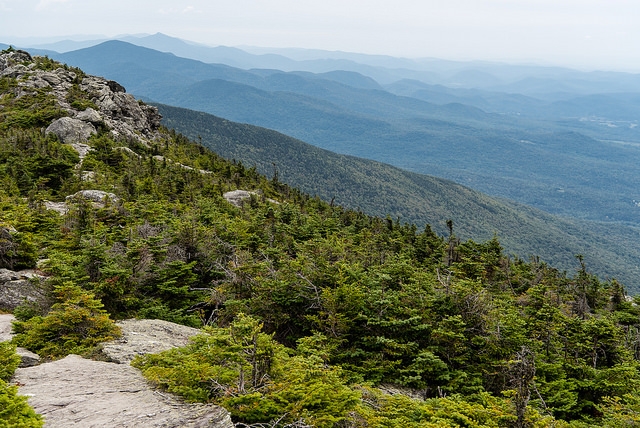
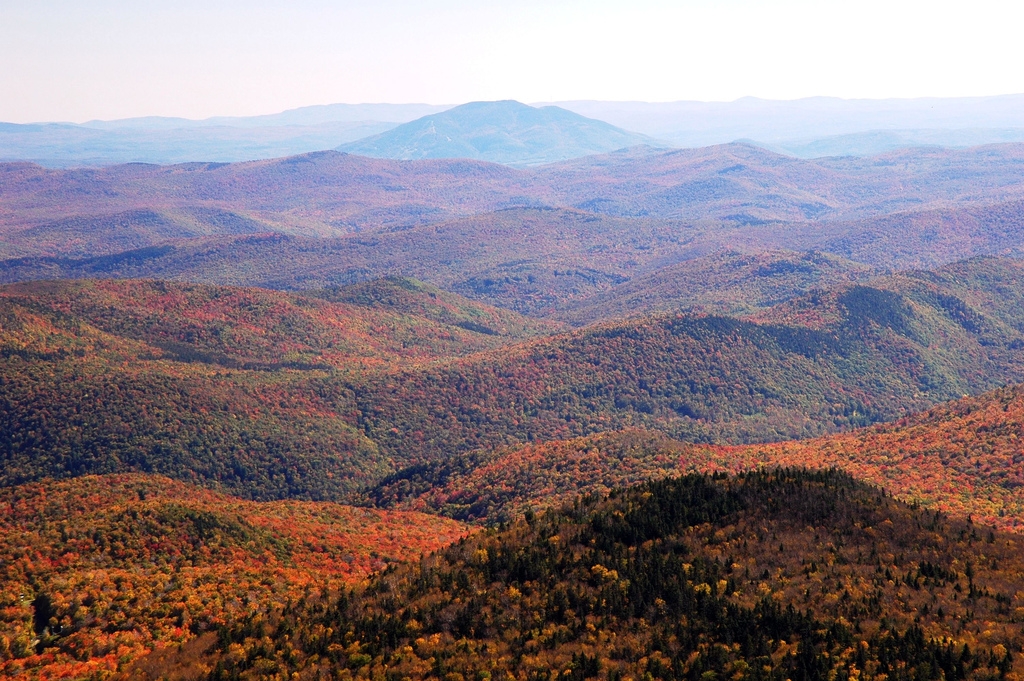
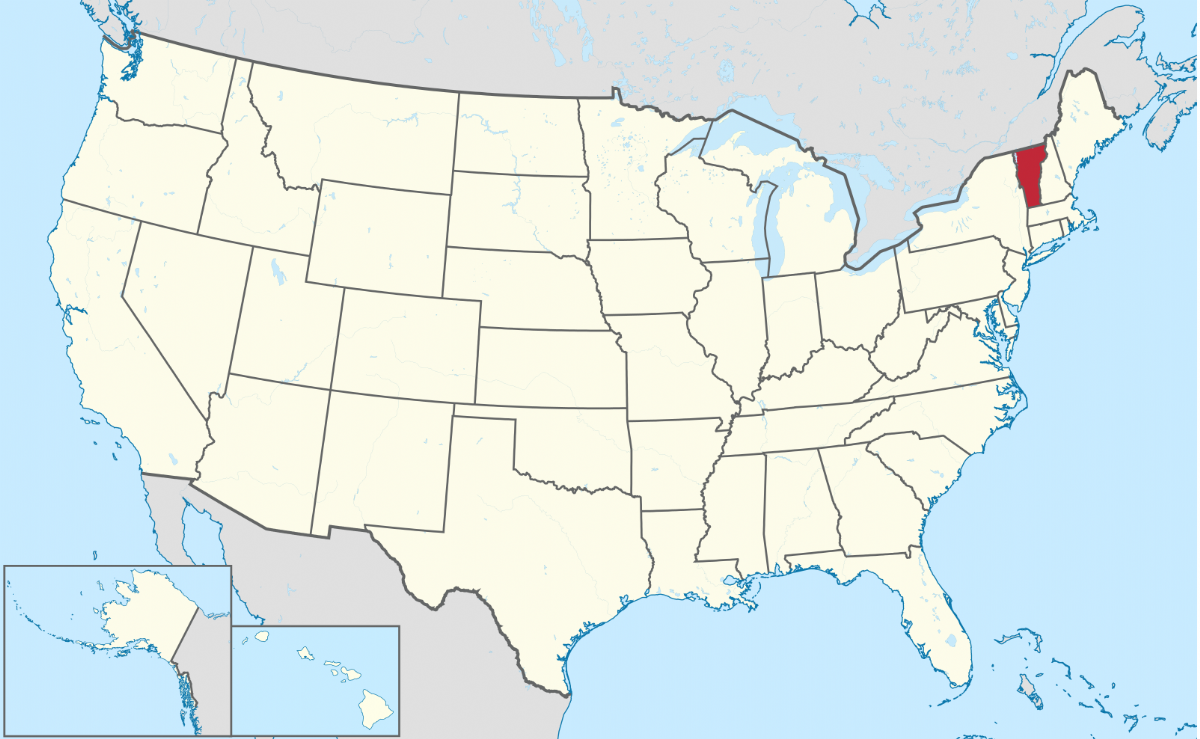
Vermont is located in the northeastern region of the United States. It is one of six states that make up the region known as New England. The Green Mountains, densely forested with conifers and northern hardwood trees, form a spine running north–south through Vermont. In the southwest are the Taconic Mountains, while the Granite Hills rise in the northeast. Dotted across eastern Vermont are isolated peaks, known as monadnocks. Lake Champlain lies in the fertile Champlain Valley, which runs along Vermont’s western border with New York State. The Connecticut River forms Vermont’s eastern border with New Hampshire. Having mostly rugged terrain, much of it densely wooded, Vermont has only a small area of arable land.

Name
The name Vermont probably comes from the French les verts monts, meaning "green mountains". The name was first proposed by Pennsylvanian Dr Thomas Young in 1777 following Vermont's independence from New Hampshire. The mountains may have been described as green because they were more forested than the higher White Mountains of New Hampshire. Others say that the green colour of the mountains’ shale rocks is the origin of their name.
Climate
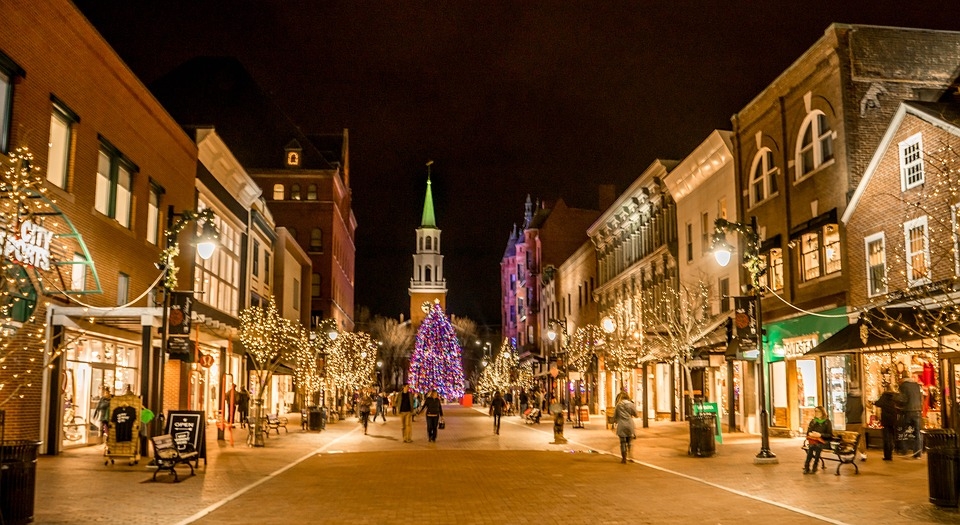
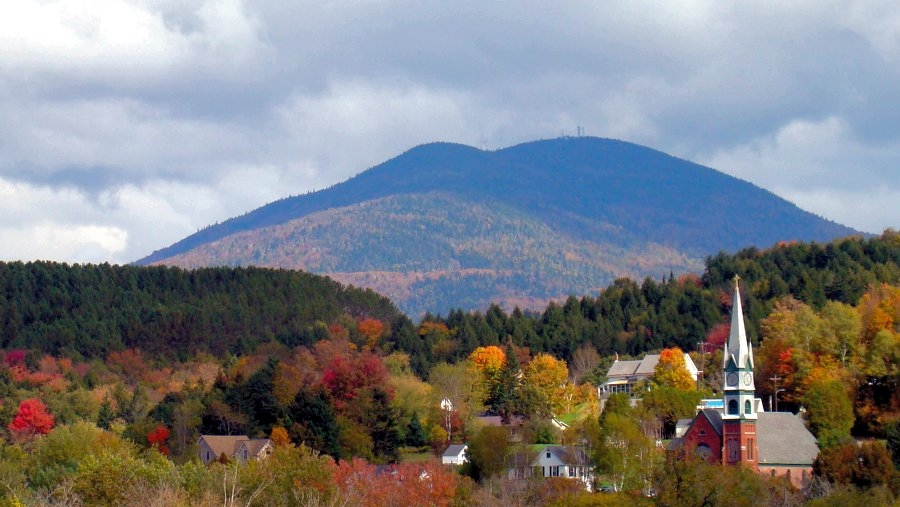
Vermont has a continental climate, with short, hot summers (milder at higher elevations) and cold winters. It receives abundant rainfall with heavy snowfalls in winter, which usually cover the ground for at least three months. In the fall months of autumn, Vermont's trees turn red, orange and gold as cold weather approaches.

Economy
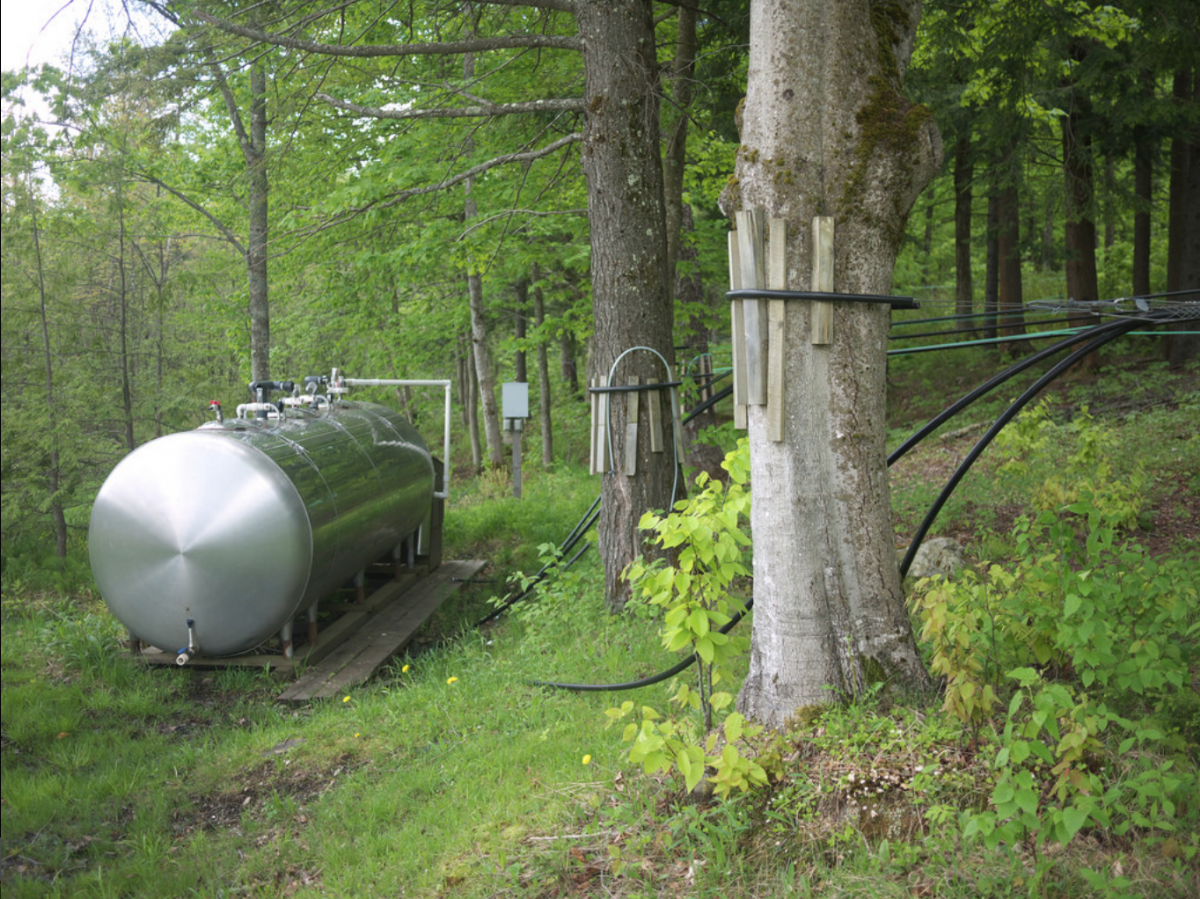
Vermont has plentiful resources of granite, marble and maple wood, which are among its chief products. Manufactures include electrical equipment, metal products and paper. The state is the US’s leading producer of maple syrup, made from the sap of maple trees. An important part of Vermont's economy is the manufacture and sale of foods and other items trading under the Vermont "brand”. Tourism is a major industry in the state. Dairy farming is the chief form of agriculture.
Facts about Vermont
Area 9616 sq miles (24,923 sq km)
Highest point Mount Mansfield 4395 ft (1340 m)
Population 647,464
Capital Montpelier (pop. 7991)
Largest cities Burlington, 44,528; South Burlington, 21,043; Colchester 17,067; Essex Junction, 10,817; Rutland, 15,630
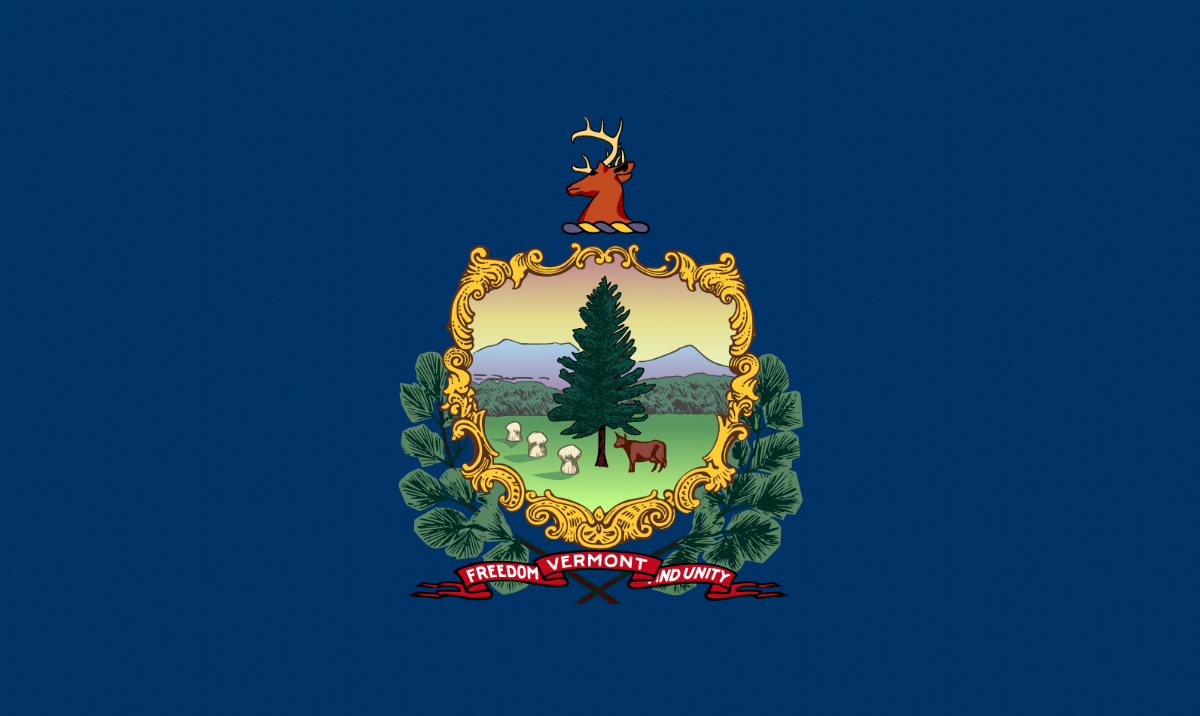
Nickname The Green Mountain State
State bird Hermit thrush
State flower Red clover
State tree Sugar maple
Consultant: Nicholas Harris
History of Vermont
before 17th century
The Vermont region is inhabited by Native American peoples, the Algonquian-speaking Abenaki and Mohawk. The Iroquois, based in present-day New York state, use the area as a hunting grounds and wage war against the Abenaki
1609
The Vermont region is explored and claimed for the French colony of New France by Samuel de Champlain
1666
The first French settlement is established at Fort Ste. Anne on the Isle La Motte in Lake Champlain
1724
British settlers move into the area and build Fort Dummer on the site of present-day Brattleboro; it is the first permanent settlement in what is now Vermont
1741
Benning Wentworth beomes royal governor of New Hampshire and makes a claim on land west of the Connecticut River (present-day Vermont), beginning a long-running dispute with New York, which also claims the area
1759
British troops under Sir Jeffery Amherst capture Fort Carillon (in present-day Ticonderoga, New York) and secures British control over the area
1763
Following its victory in the French and Indian Wars, Britain gains the area from the French. The British uphold New York's territorial claim to Vermont
1770
Ethan Allen, his brothers Ira and Levi, and the Allens' cousins Seth Warner and Remember Baker, recruit a militia known as the Green Mountain Boys to resist incomers from New York
1775
The Green Mountain Boys capture Fort Ticonderoga from the British in the early days of the Revolutionary War
1777
Vermont proclaims itself as an independent state (the “Vermont Republic”) and adopts its first constitution, abolishing slavery (the first in North America to do so) and granting a vote to all male inhabitants without property qualifications
1777
The Battle of Bennington (16th August): American troops defeat a Hessian force (German soldiers hired by the British) at Hoosick, New York, just across the border from Bennington. The anniversary of the battle is still celebrated in Vermont as a state holiday
1791
After the dispute with New York is finally settled, Vermont enters the Union as the 14th state—the first to be admitted to the union after the original 13 colonies. Settlers migrate to Vermont from southern New England in search of new farmland
1814
US troops under Thomas Macdonough win the Battle of Plattsburgh on and around Lake Champlain against British troops threatening to invade from Canada
1858
Slavery is fully banned by state law. Vermont later plays an important role in the Underground Railroad, which helps American slaves escape to Canada
1927
Great Vermont Flood kills 84 people and causes extensive damage across the state
1980s–90s
Population boom in Vermont as many people move to the state from elsewhere in New England and New York
2011
Tropical Storm Irene causes major floods
pics
Without in any way limiting Q-files Ltd’s exclusive rights under copyright, any use of this publication to “train” generative artificial intelligence (AI) technologies to generate text is expressly prohibited. Q-files Ltd reserves all rights to license use of this work for generative AI training and development of machine learning language models.